Also known as
Maid Marion
User Contributed Collection
Documents and descriptions supplied by archive contributors. All submissions are reviewed in accordance with our Terms and Conditions.
No user-contributed documents have been approved for this vessel yet. Use the forms below to contribute images or documents relating to this vessel.

Help complete the archive
Do you have a photo of this vessel you can share?
Contribute photographs of Maid Marion to the archive for editorial review. Submissions remain private and will only be published following approval by an administrator.
How your photograph will be credited
Exterior · 1940 · Copyright © Example Contributor
Source: Copyright ownership confirmed at submission by Example Contributor.
This example uses the photograph group, year and copyright-holder name supplied in the form. Your own details will replace the example above when an approved image is published.
Already have an account? Log in before uploading to link new photographs immediately.

Help complete the archive
Contribute a document
Share documents or images relating to Maid Marion for editorial review. Upload up to 12 PDF, JPG, PNG or WebP files per submission, with a maximum size of 20 MB each. Your submission remains private and will only be published following approval by an administrator.
How your document will be credited
Example Document Title · Contributed by Example Contributor
Source: Archive reference supplied by Example Contributor.
This example uses the document title, contributor name and source or archive reference supplied in the form. Your own details will replace the example above when an approved document is published.
ORDE Registry
0 records0 potential matching records have currently been identified.
Further indexing may identify vessel particulars, reported movements, participation assessments, named personnel and source references. The absence of a current match does not establish that no relevant source exists.
We are compiling and checking transcriptions, metadata, vessel-name matches, source references and reuse permissions before publishing further detail. This work helps prevent incomplete OCR, historic spelling variations or unverified associations from being presented as established fact.
Account registrations and access to these developing records are temporarily unavailable. Existing account holders may log in, and everyone can join the newsletter for publication updates.
Small Craft Service List
0 records0 potential matching records have currently been identified.
Further indexing may identify service-list entries, vessel metadata, source-page references and protected full-size document images. The absence of a current match does not establish that no relevant source exists.
We are compiling and checking transcriptions, metadata, vessel-name matches, source references and reuse permissions before publishing further detail. This work helps prevent incomplete OCR, historic spelling variations or unverified associations from being presented as established fact.
Account registrations and access to these developing records are temporarily unavailable. Existing account holders may log in, and everyone can join the newsletter for publication updates.
No Small Craft records.
Red List (1939–40) — indexed references
These references come from the Red List index. Printed page numbers may differ from digitised image numbers; OCR may not reproduce the vessel name accurately.
- Westward — ADM 208/3, printed page 22
- Maid Marion — ADM 208/3, printed page 3
- Maid Marion — ADM 208/2, printed page 2
- Maid Marion — ADM 208/2, printed page
- Maid Marion — ADM 208/2, printed page 12
- Maid Marion — ADM 208/2, printed page
Red List (1939–40) — OCR
54 records54 potential matching records have been identified.
These records may contain OCR text matches, source files, page references and digitised page imagery. A match does not by itself prove that the vessel participated in Operation Dynamo.
“Potential match” means a candidate returned by one or more indexing rules; it is not necessarily an exact identity match. Depending on the source, matching may use a normalised vessel name, a partial text or OCR hit, an alias, or related metadata. Roman-numeral suffixes such as I, II, III, IV and V may be absent, misread or separated from the base name, so records for similarly named vessels can be grouped incorrectly. Multi-word names can also produce candidates where only one significant word matches. Confirm the full name, numeral, vessel type, dimensions, builder, ownership, dates and source context before treating two records as the same vessel.
We are compiling and checking transcriptions, metadata, vessel-name matches, source references and reuse permissions before publishing further detail. This work helps prevent incomplete OCR, historic spelling variations or unverified associations from being presented as established fact.
Account registrations and access to these developing records are temporarily unavailable. Existing account holders may log in, and everyone can join the newsletter for publication updates.
Ship Details
These details have been aggregated from multiple sources and may include contemporary records, later recollections, claims or assertions for which no corroborating evidence has been identified. Inclusion does not establish that any account or assertion is accurate. The information may be incomplete, out of date, disputed or incorrect and should be checked against the underlying source records and independent evidence before being relied upon.
- Ship type: Cornish Lugger
- Beam: 13ft
- Length: 39ft 6ins
- Engine: Ford 6 cyl 120hp Diesel
- Build year: 1925
- Draft: 5ft
- Builder: P. Mitchell, Portmellon
- Construction: Pitch Pine on Oak
- Displacement: 18 tons
Lloyd’s Yacht Register (1939)
Source: Lloyd’s Register Foundation, Heritage & Education Centre, Lloyd’s Register of Yachts 1939, digitised via Internet Archive. Licensed under CC BY-NC-SA 4.0. Images have been converted, resized and watermarked for web display; machine-generated table OCR has been added.
Details
Details
Details
Details
Document Collections — Tagged Pages
327 pagesImaged document collections containing pages whose OCR text or table data has been tagged with the name Maid Marion. Open a collection to view the page images and transcriptions.
Source: Lloyd’s Register Foundation, Heritage & Education Centre, Lloyd’s Register of Yachts 1939, digitised via Internet Archive. Licensed under CC BY-NC-SA 4.0. Images have been converted, resized and watermarked for web display; machine-generated table OCR has been added.

Details
| 7728 148556 MNDX | Westward Steel (erDanefolk) OilEng. Wireless 6BH Elec.Light 4Masts 2Dks(Stl-U.pt.ws) | AuxTwn SeSch | 1176-44 2000.83 1809 | 2506 402 220 P&B172'F42' | A/S Rödby Havns Jernskibs. | RödbyHavn 1920 9mo | Oil Engines 4S.C.SA 109 A/S HolebyDieselmot.Fab. CellDBuE32'a38'f76'188t | H. K. Hales NIP S.S. NDB25 100lb MT58'820tFPT63tAPT50t | London Sou. No.3-4,36 | Lon t S1,380G | +100A1 3.38 *LMC4,36 DBS4,38 |
| 7729 | Westward Steel | AuxTwn | 16881 | 1098 271 14.5 | Herreshoff | Bristol,R.I. | 2 Oil Engines | *T. B. F. Davis | Jersey,C.I. | Jer | |
| MKYK | ezWestward) Cem | Yacht's | 323 | 96.1 13455 | N.G.Herreshoff | 4mo | AilsaCraig | S. | s.Jer.No.2-35 | ||
| 7730 | Westward Wood | TwnSc | 13:38 | 390 13.6 5.8 | J.Noble | Fraserburgh | 2 Paraffin Motors | E. D. Kennedy | Glasgow | ||
| 7731 130186 MPCD | Westward Wood Pet.Mot. | AuxCut Finch,24 | 3.82 7.48 8 | 285 90 5.4 285 5.8 5.8 28.0 | Philip&Son, Ld. Builders | Dartmouth 1913 | Petrol Motor Thornycroft,38 | E. Dent Brough alt.fromKetch | Dartmouth |

Details
| 2 Astra, 4 Endeavour, 5 Westward. 6 Endeavour II., 7 Velsheda. | 56 Iseult. 57 Elsa, 58 Tresca. 59 Thalia, 60 Coryphée, 61 Colona, 62 Kay II., 62 Otter. 63 Caroline, 64 Narua, 65 Meneen, 66 Nokomis, |

Details
| 65 SUNBEAM кси A.S. GULSTON. | 66 BRAT. SLP. MRS W. BIRCH-REYNARDSON. | 67 DOLPHIN.BGN. LICOM SIR WARDEN CHILCOTT D.L.,J.P. | 68 WESTWARD SCH. T.8. F. DAVIS | 69 COMEDY SLP C.H.W. CROSS | 70 SEVERN SLP G.G. WATSON | 71 VIOLETA SLP. A. CHUPIN, | 72, HAZE YWL C. WILLIS J.P. |

Details
| Vert Galant II | Slp. | G. Romieux & | Westward | Sch. | T. B. F. Davis | 68 | Zigeuner | Ywl. | Ian Fraser-Marshall | 26 |

Details
| E.I.G.S. | Saoirse | G.K.K.R. Maid Marion | G.Y.Z.T. Charles Maciver | I.I.K.O. Meteor V | K.G.W.J. Kenkora II |

Details
| M.J.D.D. Gelert | M.J.T.J. Owl | M.K.L.J. Zona | M.K.Y.K. Westward | M.L.L.R. Strombus |

Details
| M.L.T.N. Marietta | M.M.F.L. Severn | M.M.N.T. Fiona | M.M.T.W. Dorothea | M.N.D.X. Westward |

Details
| M.N.S.W. Cyrilla | M.P.C.D. Westward | M.P.N.C. Jana | M.P.W.L. Firefly | M.Q.G.L. Florinda |

Details
| Columbia | 680 | S. Moonlight | Cormorant | 3 | a. Sunbeam. | Chamar II. | Danefolk | 1809 | a. Westward. |

Details
| Izarra | 591 | 8. Tuscarora. | Grouper II | 9 | Paulina. | Hamburg II | 323 | a. Westward. | Hennysi | 13 | Aku. |
| Golden Dawn | 10 | m. Watersnail. | Gudrun | 8 | a. Maid Marion. | Hantise | - | Gwalarn. | Hermia | 11 | m. Raukle Belle. |

Details
| Lorna Doone | M. L. | 52 | m. Cherokee. | M. L. 488 | 50 | m. Sorcha. | Maid Marion. | 225 | a. Chimere. | ||
| III | 82 | m. Scout VI. | M. L. | 52 | m. Cormorant. | M. L. 490 | 53 | m. Musmé. | Maid Marion | 5 | Cutty Sark. |

Details
| Westward | 47 | a. Fleur-de-Lys. | Laura | 25 | m. Libo. | Zinita | 15 | m. White Horse. | |||
| Westward Ho | 34 | a. Estrilda. | William Eger | 40 | a. Robanne. | Y | Zip | - | Alarc'h. |

Details
| m. Sea Cloud 2990 | m. Chalena 1150 | a. Intrepid 809 | S. Medusa 627 | m. Maid Marion | 506 | m. Vedette 458 |
| a. Westward 1809 | S. Sea Belle II 1057 | S. Sayonara 762 | S. Lucinda 588 | S. Whileaway 446 |

Details
| a. Westward | 323 | m. Stevana | 248 | a. Veronica | 160 | m. La Falaise | 136 | m. Nymphaea | 118 |

Details
| m. Westward | 25 | m. Lanivet | 24 | m. Dido of Eigg 23 | a. Varesta 23 | m. Ninon-Ann II 22 | m. Concorde 21 |

Details
| Freya | a. Apache IV 14 | Evaine | 34 | a. Nora | 6 | Westra | 36 | m. Maid Marion |

Details
| m. Shemar 10 | a. Maid Marion 4 | (See Fried Krupp | m. Althea | | Providence 18 | a. Triune of Troy 10 |

Details
| Sonja 7 | a. Westward 323 | a. Cimbria 17 | a. Marieleen (see page | a. Survive | 17 |

Details
| Estelle | 6 | a. Maid Marion | 5 | a. Stroma | 4 | a. Etain 11 | a. Aello II 292 |

Details
| Ella Dorothy II | 6 | m. Maid Marion | 506 | m. Sulara 94 | Elisabeth III 5 | a. Maitenes 17 | m. Blue Horizon 12 Blue Moon 10 |

Details
| m. Raven | 3 | (Designed only.) | m. Cypris 26 | a. Westward 8 | Maritimes), France. |

Details
| Bourne, Stafford, Flat No. 8, 22, Grosvenor Square, London, W.1.-Tms. a. Eila 9 m. Eila II 60 | Bowden, Harold, Bart., G.B.E., South Manor, Ruddington, nr. Nottingham.-Srn.-Tms. m Maid Marion 506 | Bowker, Miss Susan, Hilltops, Ridge Grove, Heysham Road, Heysham, Lancs. a. Shulah 6 | Boyd, Henry, 17, Rue du Marechal Gallieni, St. Germain-en-Laye (S. et 0.), France. C.P.V.-Hàv. Tara 5 | Brackpool, F. H., 228, Stanstead Road, Forest Hill, London, S.E.23.-L.S.-M.B.A. m. Calloo (P.O.) 15 |

Details
| Brough, E. Dent, 30, Moorfield, High West Jesmond, Newocastle-on-Tyne.-Bxm.-Lon. a. Westward 8 | Brown, F. M., 334-6, New Cross Road, London, S.E.14. L.S.-Mtr. a. Shiris 22 m. Summer Girl 23 | Brown, R., Merlyn, Somerset Avenue, Westcliff- on-Sea, Essex. a. Lyndall 5 | Browne, Owen H. G., The Gleanings, Rochester, Kent. Med.-Mtr. m. Lough Conn 9 | Brusau, Luis P., Av. Roque Saenz Реña No. 760-Piso 4° Departamento D," Buenos Aires.-Arg. a. Atair 120 |

Details
| Davies, E. Sparke, Oaklands, Trinity, Jersey, C.I. | 89, Drayton Gardens, South Kensington, London, S.W.10.-Hay.-Mtr. m. Kangaroo 6 | a. Westward 323 Davis, Mrs. Victoria | Day, E. C., 35, Ingrebourne Gardens, Upminster, Essex.-L.S. | de Amézaga, Miguel, a. Niawing II 50 |

Details
| a. Sunbeam 16 | a. Creole 699 | m. Hobby | a. Catalina 7 | a. Westward 1809 |

Details
| a. Maid Marion 5 Hanan, T. J., | Hancox, N. M., Grasmere, Oaksway, Heswall, Cheshire.-Mer.-S.Cr. a. Bertha II 3 | Hazel Hurst, Kerne Bridge, Ross-on- Wye, Herefordshire.-Bry. a. Fairlight 17 | Hansen, J. A., Strandboulevard 9III, Copenhagen. Kbn. Bonit 5 | Skelskor, Denmark. Jytte - Harden, Maj. J. E., |

Details
| Hutchinson, A. E., 2, Preston Street, Whitehaven, Cumberland. a. Bonito 10 | Hyde, John W., 14, Glenalmond House, Manor Fields, Putney Hill, London, S. W.15.-Bos.- C.A.-L.S.-Tms. a. Maid Marion 4 | Ikin, Frank, c/o Lowe, Bingham & Matthews, 2, Peking Road, Shanghai.-Shi. Spook (P.O.) 5 | Imperial Airways, Ltd., Southampton, Hants. m. Imperia 150 | Innes, Dr. R. F., Northwood, Belgrave, Chester.-C.Crz. a. Primrose 10 |

Details
| Kemp, L. C., Psychico, Athens, Greece.-Cor.-Gre. a. Irene 26 | Kennedy, E. D., Windy Knowe, Killearn, Stirlingshire. Nav.-S.M.Y.C. m. Westward 25 | Kenneth, A. G., Stronachuilin, Ardrishaig, Argyll. m. Vital Spark 8 | m. Curlew 8 Kenyon, Percy, Hatherlow House, Romiley, Cheshire. Bpl.-Grk. | Ketley, A. M., 13, Bay View Crescent, Falmouth, Cornwall. m. Pyy 4 |

Details
| a. Maid Marion 8 | Martin, Walter, | m. Ranger 6 |

Details
| Scarba | Sc Sch | 225 | Broken up | Westward Ho | Aux Ywl | 28 | Sold to U.S.A. |

Details
| 3120 | Iorangi | Sails made by Ratsey, 1938 | 4099 | Maid Marion | Date of Survey 5,39 Cws |
Contains public sector information licensed under the Open Government Licence v3.0.
Details
ALFRED PAUL
D.2)
French trawler
Lieut. M.M. Glater, R.N.
Lient.
See under Prins Boudewijn
R.N., lot Lieo
26th May
0000
Seiled from Southampton for Dover
loaded with stores; is company were
the skoots Kaan Pelps and Abel
Tasman (s.o.)
27th May
1600
Arrived Dover. Ordered to La Panne to
discharge stores.
-
4 miles from La Fanne picked uppilot
Sergeont T. Boyd, 516716, from & sho
down Hurricane of 213 Fighter Squadro
28th May
0500ca
Arrived La Panne. The Abol Tasman vas
blose in shore unloading: close to
her the Karp Falgn was anchored.
The Alice closed the Abel Tesuan and
grounded.
Licut. Slater went ashore to arrange
labour for unloading.
1500ca
On his return he found that the senior
officer (Lt. Cdr. Crick in Abel
Tasmen) had been wounded in the cours
of 4 air attacks. Lieut. Beal of the
Kaap Falga had transferred to the
Abel Tasman as Senior Officer; Liest
Wykeham-Martin had been put In
consend of the Kaap Falga. The Kaap
Falga could been seen about 2 miles
distant, proceeding westward; the
Abel Tasman was endeavouring to
refloat, and there appeared to be no
signs of life on board the Allice
Lieut. Slater went on board the Seal
Tasman, and ascertained that the Alia
had been refloated and enchored, but
that her engines had seized up 08 0
reoult of damage during the air
attacks; her crew had gone over to
the Knap Falge.
It was decided to abandon the Alice (1)
and Lieut. Slater examed the daties
of 1st Lieutement of the Abel
Tasman.
N11
Authority - Portswooth 8520/601 of 26/7/40.
ILO.II, pp+ 11, 13, 15.
(1) Licut. Wykahem-Martin had proviously abandoned ship, after
flooding the ballast tanks, DO that water should enter
the engine room through the damaged hull, when the tide rose
34
Details
ALICE (D.B.2)
Skoot
Lieut. H.M. Slater, R.N.
Lieut. H.R. Wykenham-Martin,
R.N., 1st Lieut.
26th May
2000
Sailed from Southampton for Dover
loaded with stores; in company were
the skoots Kaap Falga and Abel
Tasman (s.o.)
27th May
1600
Arrived Dover. Ordered to La Panne to
discharge stores.
-
4 miles from La Panne picked uppilot
Sergeant T. Boyd, 516716, from a shot
down Hurricane of 213 Fighter Squadron.
28th May
0500ca
Arrived La Panne. The Abel Tasman was
close in shore unloading; close to
her the Kaap Falga was anchored.
The Alice closed the Abel Tasman and
grounded.
Lieut. Slater went ashore to arrange
labour for unloading.
1500ca
On his return he found that the senior
officer (Lt. Cdr. Crick in Abel
Tasman) had been wounded in the course
of 4 air attacks. Lieut. Beal of the
Kaap Falga had transferred to the
Abel Tasman as Senior Officer; Lieut.
Wykeham-Martin had been put in
command of the Kaap Falga. The Kaap
Falga could been seen about 2 miles
distant, proceeding westward; the
Abel Tasman was endeavouring to
refloat, and there appeared to be no
signs of life on board the Alice.
-
Lieut. Slater went on board the Abel
Tasman, and ascertained that the Alice
had been refloated and anchored, but
that her engines had seized up as a
result of damage during the air
attacks; her crew had gone over to
the Kaap Falga.
It was decided to abandon the Alice (1)
and Lieut. Slater assumed the duties
of 1st Lieutenant of the Abel
Tasman.
Nil
Authority - Portsmouth 8520/601 of 26/7/40.
R.O.II, pp. 11, 13, 15.
(1) Licut. Wykeham-Martin had previously abandoned should ship, enter after
flooding the ballast tanks, BO that water
the engine room through the damaged hull, when the tide rose
35
Details
BEN & LUCY
M/S drifter
Capt. W.A. Watling, R.N.R.,
(Portsmouth)
Skipper
Actg. Lt. F.G.M. Iles, R.N.V.R.
Unit Officer
29th May
2400
Left Portsmouth the dfr. Dorienta in
company.
30th May
1645
Arrived off Ramsgate.
31st May
1350
Proceeded to Dunkirk, with 4 pulling
boats in tow. The Dorienta was in
company also towing small craft.
2000
Off Dunkirk channel. Air attack.
The dfrs. Lord Hood and Fair Breeze(1)
2100
Off Dunkirk beach. Sent the boats
inshore. Dorienta was instructed to
return as soon as she was loaded.
One of Ben & Lucy's 4 boats destroyed
by a shell.
-
Embarked troops. The dfr. Feasible's
engines having been disabled by a
shell, took her in tow. Proceeded
westward in search of troops.
-
Off harbour entrance, embarked 3 boat-
loads of troops and put the boats in
tow, astern of Feasible. Proceed
homewards. Embarked a rating from a
water-logged whaler.
1st June
0100ca
Took a fishing smack (the Letitia),
short of fuel, in tow.
0230ca
Aircraft heard overhead.
0330ca
Heavy explosion on port quarter of
Feasible.
(Subsequently informed by Letitia that
another smack, the Rowan" [i.e. the
Renown which had attached herself to
the tow had been sunk).
0700
Gave course for N. Goodwins to Vernon
Pinnace V.4, which proceeded ahead.
0745
Making water at about 1 ft. per hour.
Sighted N. Goodwins. 3 miles from
Ramsgate Letitia slipped and made off.
1 mile from Ramsgate, Ben and Lucy
fouled her propeller. A launch came
off and 100 troops were transferred. (2)
Ben & Lucy and Feasible anchored.
3rd June
1000
Both vessels towed in by the dfr.
Renascent.
Total 100
Authority - R.O.II, p.339.
(1) A bomb fell 50 yards from Fairbreeze, but did not explode
(s/Lt. Gabbett-Hulhallen R.N.)
(2) D.R. dates this 2nd June. 94
Details
CERVIA
Tug (william
Watkins Ltd.)
W.H. Simmons, Master.
31st May
2145
Left in Dover, sailing barge Royalty
two tow, and the tug Persia towing
in company.
sailing barges Sark and Shetland]
1st June
0720
1 mile east of Dunkirk pier, Royalty
being towed at full speed, slipped the
tow, and beached herself head on, on
Malo beach.
Air attack. Nine bombs fell in a line
along the starboard side of dr.
Keith, which was outside Cervia.
Cervia got under way to avoid the
turning and twisting destroyer.
Picked up crew and boat of Royalty
and also of S/B Duchess.
0800ca
Keith began to list, and was again
bombed; her guns were going all the
time as she steamed round and round.
She then stopped and let go her
anchor. As the crew began to abandon
ship, the bombers machine gunned them.
The tug Vincia began to pick up
survivors, and the tug St. Abbs got
alongside Keith's starboard bow. A
sloop(1) also went to her assistance.
Cervia turned round and picked up
soldiers from a M/B.
0815ca
At this time, the dr. Ivanhoe, to the
westward, was seen to be disabled,
and a "small tanker" [the M/S
Skipjack] astern of Vincia, went up
in flames.
-
Cervia then took the sailing barge
Tollesbury, which had 200 troops under
hatches, in tow. The M.L.B. Orient IV
was added to the tow, and Cervia
proceeded down Dunkirk roads. When
west of the pierhead, Ivanhoe was
seen to be in tow of the Persia and
Vincia, with decks full of survivors,
At No.5 W. buoy, about 20 planes
passed the Cervia.
0900ca
appeared. Ivanhoe put up a smoke
screen, and 9 bombs fell near a
cross-channel boat which, however,
kept on Cervia's port bow, bomb
going. 5 bombs fell about lifting 100
feet tug cut of the water. A the
the between a sloop and towing
exploded destroyer she was
In disabled [M/8 the Downs Saltash Cervia towing to was dr. Ramsgate. met Havant] by the
Java brought about 230 troops( and
and ordered 2) all
"In tug
1500ca
Cervia Dunkirk, the Tollesbury and the crew
out crews of of Duchess and Royalty,
Orient IV."
(1) The sk. Hilda and that the M/S this the up survivors. troops in
(2)
It
1s
considered
Tollesbury.
170
Details
FAIR BREEZE
Drifter
Lt.Car. A.R.W. Sayle, R.N.R.
30th May
1130
Lt. Cdr. Sayle embarked in the Fair
Breeze and with S/Lt. J.E. Washbourn, R.N.
and Mr. Golding (Trinity House pilot)
1600
whalers in tow.
proceeded for Dunkirk with 2
Arrived off Dunkirk and proceeded to
Bray beach.
1630
Arrived off Bray beach and hove-to in
2 fathoms.
1645
The after whaler, found to be holed,
was cut adrift; the other was sent
in shore. Requested the M/L Canvey
Queen to tow off any boats she could
find; she rendered valuable assist-
ance in this way.
1700
Commenced embarking troops.
1800
Filled with troops, proceeded to the
westward. Instructed by the Sp. S/V
Royal Eagle to transfer the troops
to her.
1815
Having transferred the troops, returned
to Bray beach.
1830
Recommenced embarking troops.
1900
Air attack on beach.
2030
Filled up with troops and proceeded.
31st May
0440
Disembarked 307 British and 9 Allied
troops at Ramsgate. (1)
1200
Left Ramsgate 2) towing a motor life-
boat (s/Lt. G.A. Gabbett-Mulhallen,
R.N. in charge) and 3 other lifeboats.
1700ca
Approaching Dunkirk, heavily bombed;
one bomb landed 50 yards away but did
not explode.
The M.L/B, with the 3 lifeboats in
tow proceeded in shore. They found
no troops, so left one L/B behind
and proceeded with the other two
towards La Panne.
The lifeboats ferried troops to the
Fair Breeze. After 2 trips, 2 of the
L/B's broached to and were swamped.
The others continued to ferry troops
to the Fair Breeze.
lst June
0330ca
Fair Breeze being filled with troops,
0400
Struck proceeded. a sunken wreck; heavy list.
s/Lt. Gabbett-Mulhallen sent out an
S 0 S on the siren, which was answered
Transferred troops to the skoot which
by a skoot [ the Atlantic].
0425
proceeded, leaving the Fair Breeze
to sink(
(1) (2) It Ramsgate is not report. clear who was in command of the Fair Breeze
(3) D.R. for does this not second mention trip. the sinking of the Fair Breeze.
307
Contains public sector information licensed under the Open Government Licence v3.0.
Details
HAIG - Continued
1st June
-
sent her to Margate for doctors
(contd.)
for the Ivanhoe. These were put
aboard her near S.W. Spit; the
Halcyone took off troops from the
1740
Ivanhoe and disembarked them at
Margate. (1)
The Haig then proceeded to Ramsgate and
Lt. Cdr. Pisani disembarked.
2nd June( 2)
-
Cdr. H.R. Troup R.N. assumed command of
the Haig, assisted by Lt. V.A. de
Mauny R.N. (3), Lt. A.W. McMullan,
R.N.R., and S/Lt. J.G. Hollingshead,
R.N.R. The French Naval Attache -
Capitaine de Revoir was embarked.
2100
The Ha1g left Ramsgate, the W.D/M.L.
Marlborough in company, and a lifeboa
in tow.
3rd June
0030
The lifeboat became waterlogged and was
cut adrift.
-
Entered Dunkirk harbour and proceeded
alongside the centre pier.
Embarked 40 French troops and ferried
them to a ship outside. Embarked 39
troops from a ship grounded off the
Nouveau Avant-Port. Proceeded.
0200
Off the entrance of the harbour was
rammed by 2 French M/V's in rapid
succession, and holed amidships and
for'd on the port side. The fore
peak filled with water.
0300
Proceeded alongside the P.M/S Westward
Ho and hastily abandoned ship,
via the Westward-Ho's port paddle-box
door.
0650
The Westward-Ho landed Cdr. Troup,
Capt. de Revoir, the officers and
crew of the Haig and 48 troops at
Margate. (4)
Total 60
p.m.
The Haig was salved by R.A.F. personnel
and sailed to Ramsgate.
Authority - R.O.II, pp. 118, 369, 491, 548-9.
R.O.III, P. 271, 302.
The following awards were made: (5)
Mention in Despatches
Mr. R. Walter, First Engineer.
(1) Margate report records that the "Halcyon" landed 58 troops.
(2) According to a report by Asst. Dir. Mil. Transport, the
Haig landed 80 troops on 2nd June.
(3) Lieut. de Mauny had previously been over in the dfr. Ocean
Breeze.
(4) Lieut. de Mauny then joined the Sk. Pascholl.
(5) See also Patria.
8
Details
HEBE (continued)
30th May
1530
[but Capt. Bush took passage in the
(contd.)
(contd.)
Hebe "to stress the vital necessity
for boats and crews if any numbers
were to come off from the beaches" (1)
The Hebe proceeded by route X to
Dover.
(2)
2000
Arrived Dover. Disembarked 270 troops.
2345
Disembarkation completed.
31st May
0618
Sailed from Dover, with Capt. Bush on
board [carrying plans for the
evacuation that night, for delivery
to R.A. Dover (1)
1035ca
Arrived at La Panne. Embarked troops
during the forenoon and afternoon
from ship's and other boats. The
Hebe's M/B capsized and was lost and
a whaler was sunk in collision.
1200ca
Hebe came under fire from shore batter-
ies and moved further west. (1)
1700ca
Attacked by 4 dive bombers. 12 heavy
bombs dropped by 3 of them; the 4th
machine-gunned the ship. Hebe
severely shaken by near misses and
some damage caused. One Heinkel shot
down in flames.
1800
Signal from the shore, saying that
G.H.Q. would embark from La Panne
beach. Hebe proceeded to La Panne
beach but was then informed that
G.H.Q. would embark from a point
2 miles to the westward of the beach,
instead. Proceeded accordingly and
"sent boats in". (3)
1830
Lord Gort and his A.D.C. embarked
from the yacht Lahloo]. During
the embarkation there was an air raid
by about 40 aircraft, and considerable
shelling was directed on to La Panne
beach, then 2 miles to the eastward.
2000
Hebe returned to La Panne to continue
embarkation of troops.
2300
From this time onwards the beach and
town at La Panne was heavily
bombarded and the latter was set on
fire(4).
lst June
0015
Lord Gort transferred to the dr. Keith
[in the yacht Bounty].
0300
Because of the heavy bombardment of
La Panne, Capt. Bush ordered the
troops there to move to the westward.
0350
Hebe proceeded to Bray, but finding
that all small boats there were fully
occupied, she continued on to
Dunkirk and filled up to 420 troops.
A larger number was not taken as the
ship was short of ammunition and fuel.
(1) R.A. Dover's report.
(2) D.R. This is evidently an error for 570, as the Hebe was
filled to capacity.
3) Actually, the yacht Lahloo towed in Hebe's whaler (see
note (4) below).
See Harvester, footnote (1).
23
Details
HILDA - Continued
31st May
0600
Six volunteer motor boat drivers
joined.
Lieut. Beery, suffering from
exhaustion, was discharged ashore,
sick. The Hilda sailed for Deal.
0830
Arrived Deal. The ship was placed
under the orders of Captain R. Pim,
R.N.V.R.
-
Sailed for Dunkirk, towing six M/B's
[ the Britannic, the Rose Marie, the
Lady Haig, the Moss Rose, the
Golden Spray II and the Gipsy King] (1)
and two life boats [ex the Belgian
steamer Flandres (1).
1600ca
Arrived La Panne. Lay off for 30
minutes until the enemy shore guns
ceased shelling.
1630ca
Closed the beach slightly and Capt.
Pim went ashore to organise the
embarkation.
2030
Having embarked 600 troops, they were
transferred to the dr. Scimitar.
Returned to the beach and embarked
100 troops. Capt. Pim re-embarked
and the Hilda shifted to the westward.
1st June
0400ca
Closed the beach and embarked about 100
stragglers from the main body of
troops marching on Dunkirk.
0800ca
Closed the dr. Keith, which was flying
the flag of Rear-Admiral Wake-Walker.
Captain Pim reported the situation
and was ordered to close the beaches
east of Dunkirk and if there were no
troops to proceed to England.
0820ca
Shortly after, the Keith was repeatedly
attacked by strong formations of
bombers, put out of action and
abandoned. During this period,
the Hilda remained under way, zig-
zagging (as apart from the Keith and
the M/S Skipjack, there was little
else for the A/C to attack).
The Hilda at once proceeded to
rescue Keith's survivors, and assisted
by M/B's, recovered a large number,
including 2 British brigadiers and a
French general. (2) While so engaged,
0849
aircraft re-appeared and sank the
Skipjack half a mile distant.
Hilda then proceeded to pick up all
Skipjack's survivors( except
about 12, which were recovered by
a tug [the St. Abbs].
1100ca
Sailed for England with more than a
full load of troops.
1130ca
Passed Dunkirk breakwater. Shortly
after passing 6 W buoy, was overtaken
and passed by the P/V Scotia and a
paddle steamer [the P.M/S Brighton
Queen] laden with troops. When
these 2 ships were about 1 mile
ahead, dive bombers appeared and
sank them very rapidly.
The Hilda proceed to the spot and
(1) George Hammond & Co. Lloyd's Agency, Deal.
(2) Capt. Pim says "some 50, including the Q.M.G. of the B.E.F.
and other Staff Officers".
(3) Capt. Pim says "some 60 or 70".
32
Details
HOWSON. Captain J.M., R.N. (N.O.I.C. beaches)
Report by
29th May
At 1600 an additional beach party of 7 officers
[among them Cdr. H.G. Gorton, R.N. and Cdr.
R.J.O. Otway-Ruthven, R.N. under Captain J.M.
Howson, R.N. was sailed from Dover in the dr.
Sabre for Dunkirk. [Captain E.W. Bush, D.S.C.,
R.N., who had already visited Dunkirk, also
took passage in the Sabre, to act as S.N.O.
Afloat off the beaches, in the M/8 Hebel.
"on leaving Dover", says Capt. Howson, "the
intention had been that ..... my officers
should work on the beaches in two batches either
side of Bray, and that I should either double-
bank the S.N.O. [Capt. Tennant, R.N., S.N.O.
Dunkirk] or alternatively, work on the beaches,
with H.Q. at or near Bray, the whole being
subject to S.N.O.'s [capt. Tennant's] wishes
on arrival".
On the party's arrival at Dunkirk, Capt.
Tennant was found to be away on a visit to
Lord Gort at La Panne, and Capt. Howson was not
able to confer with him until 2300/29. On
his return to Dunkirk Capt. Tennant decided that
he did not wish to be double-banked.
At about 2330 Capt. Howson therefore divided his
force into 2 parties; one party under Cdr.
Gorton, proceeded along the beach to work east
of Bray, the other, under Cdr. Otway-Ruthven
proceeded to Bray. Capt. Howson went with the
latter party.
30th May
About 0100, a boat from the M/S Medway Queen,
which was anchored off, was hailed. A second
pulling boat and later a power boat also
appeared. Troops in the vicinity were hailed
and some 700-750 were sent off by early morning.
Later, the Sp. S/V Crested Eagle was passed,
high and dry, and still burning after being
bombed.
on approaching Bray, at about 0300, Capt.
Howson saw 4 or 5 destroyers and minesweepers,
and some skoots off shore; men were embarking
in the few odd boats that were available.
Several boats were ashore, holed, or without
oars.
Capt. Howson made contact with Corps H.Q. in a
house at Bray at about 0600 and met Cdr.
Gorton. He also met some naval officers
[probably the beach party working under Cdre.
T.H. Hallett, C.B., C.B.E., R.N.] who had been
working on the beach before his arrival
[1.e. since 2330, 29th May].
It was then about 0800, and Capt. Howson proceeded
by motor cycle to La Panne where he met Care.
J.S. Dove, O.B.E., R.N., who took him to see
the Q.M.G. with whom he discussed the situation.
Having learnt of R.A. Dover's presence in a
ship lying off [the M/S Hebe], Capt. Howson
signalled to him the urgent need of boat
keepers. Throughout this day, says Capt.
Howson, vast bodies of French troops covered
the beaches and dunes on their westward
march to Malo; fortunately the visibility was
poor. "More and more British troops continued
to arrive, but there were practically no ships
for them to embark in and only a few boats and
pontoon craft and perhaps a couple of power
boats. An A.L.C. A.L.C.5 operating off La
44
Details
HOWSON. Captain J.M., R.N. (continued)
31st May
R.A. Dover, his staff, and Capt. Howson
transferred to the dr. Express at about 0130;
and Captain Howson transferred to the tr. Olvina
off Bray at 0300; later, still off Bray, he
transferred to the dr. Scimitar's M/B.
The 9 yachts of the Portsmouth Inner Patrol
arrived at 0610(1) and Capt. Howson transferred
to the Inner Patrol Yacht Ankh, and used her
as his H.Q. for the remainder of the day.
During the forenoon there were ample ships for
embarkation but a lop had developed which
seriously hampered heavily laden boats. With
the falling tide a considerable number of boats
grounded and remained ashore till the afternoon,
but thanks to the organisation of boat keepers,
few were left to drift.
At La Panne, there appears to have been a great
shortage of boats and power boats, but at Bray
there was a great improvement on the previous
day.
At noon the lop subsided. The G/B Mosquito
anchored close to Bray pier, and embarkation
accelerated rapidly.
An enemy gun beyond La Panne opened up on the
Mosquito and other craft, forcing them to
withdraw to the westward. Some 30 enemy
bombers escorted by many fighters appeared at
1930. Most of them went on to bomb Dunkirk;
the remainder bombed the Mosquito and other
craft in the vicinity.
The Ankh was damaged by a near miss and started
making water forward and through the stern glands
Being of the opinion that the Ankh was unlikely
to stand up to further "rough treatment", Capt.
Howson decided at about 2000 to return to
Dover, and ordered the yacht Amulree to keep
company. Being some 2 or 3 miles to seaward,
in the failing light, Ankh was unable to pass
a message to R.A. Dover's flagship [at this time
the dr. Keith].
Shortly after, the Inner Patrol yachts Caryanda
and Eilla II 2) closed the Ankh; the former
reported that she needed fuel, the latter that
she was leaking, had slipped her astern gear,
and also needed lubricating oil.
As the fuel drifters Lord Keith and Lord
Collingwood, which had been promised, had not
turned up, the Caryanda was ordered to Dover to
refuel.
The Eilla II was ordered to close destroyers
inshore, if she had fuel; in the event, she too
proceeded to Dover.
1st June
At 0145, the escorting yacht Amulree was rammed
by the dr. Vimy in the Downs and sunk; her
crew were picked up.
The Ankh, which had kept down the water by baling
arrived at Dover at 0815. Capt. Howson reported
to V.A. Dover's office and requested to return
to the beaches; he was however in an extremely
fatigued condition and had completely lost his
voice.
(1) Capt. Howson says there were 10 or 12 yachts, and that he
directed half of them to work off Bray and half off La Panne.
Actually, 3 of the I.P. yachts worked off La Panne and six
(2) Referred to by Capt. Howson as the "Isla II".
off Bray.
46
Details
M.A/S.B.7
89th A/S Group, Portland s/Lt. A. Ecclestone,
R.N.
27th May
1700
Arrived Dover from Felixstowe,
1952
M.A/S.B.6 in company.
Embarked the "Chef de Cabinet" and the
"Secretaire" of the King of Belgium;
also the "Ancien Ministere".
1955
Left Dover for Nieuport, M.T.B.107(1)
in company.
28th May
0300
Disembarked Belgian Ministers at
Nieuport jetty.
0315
Left Nieuport jetty, M.T.B's 107(1)
and 22 in company.
0330
Set course for Dover. The two M.T.B's
set course for Harwich.
0525
Arrived Dover.
30th May
0020
Left Dover for Dunkirk with 13 Military
Officers carrying secret messages.
0240
off Dunkirk. The military officers
were landed at the 3 beaches.
Entered harbour to deliver secret
message to S.N.O. Dunkirk. 38 French
troops embarked.
I
0725
Proceeded.
1035
Arrived Dover.
1100
Disembarked 38 French troops.
1135
Left Dover to rendezvous off Ramsgate
31st May
with M.A/S.B. No.6 to escort convoy
of small craft.
1147
Off Deal, developed a fire in port
1203
Fire engine. extinguished. M.A/S.B.7 taken in
tow by tug Doria.
1517
Arrived Dover for repairs.
1730
Repairs completed.
2nd June
2100
Left Dover.
2117
Joined 3 blockships, in convoy off
South Goodwin L.V.
3rd June
0200
Proceeded to lead the 3 blockships
Westcove, Edvard Nissen and Holland]
0230ca
The rear blockship Holland] was
into Dunkirk Channel.
"rammed and sunk by a troopship
this blockship to take off the C.O. to
leaving Dunkirk". Went alongside
and Vivacious]. Proceeded of
crew, who were transferred
a the
THE the
them
107 to brought off the crew
Left blockship. Dunkirk. 7 miles to lifeboat, the westward,
0400
picked down and on fire [the
up the crew of a Jane
Holland]. broken Abandoned the life boat.
0625
2100
Left Arrived for Dover. Dunkirk ]. escorting an R.A.F.
M/B [
(1) Error for M.T.B.67.
254
Details
| Group 2 | Grosto 5 | Opera Group |
| Halayon | Nigor | Kalleys |
| Skipinok | Galamander | Beltssh |
| Speedwell | Lyde | |
| bandale | Button |
Details
MINESWEEPER GROUPS
On the forenoon of 30th May, representatives of the
C. in C. of the B.E.F. attended a conference with the V.A.
Dover.
The Military officers gave daylight, 1st June, as the
latest date up to which the British rear guard of 4,000 men
could hold the eastern perimeter.
Inter alia, the conference reached agreement on the following:-
(1) that by 0130 on lst June, the British forces ashore
should be reduced to the rear guard of 4,000,
(2) that special boats and tugs should be accumulated
and reserved for service in the early hours of
1st June
(3) that the rear guard of 4,000, plus R.N. beach parties
should be lifted between 0130 and 0300 on 1st June.
Accordingly, on 31st May, V.A. Dover ordered [0400/31]
that the M/S's be organised in 3 groups as follows:-
Group 1
Group 2
Group 3
Spare Group
Gossamer
Halcyon
Niger
Kellett
Leda
Skipjack
Salamander
Saltash
ROBB
Speedwell
Fitzroy
Lydd
Albury
Dundalk
Sutton
Further, the M/S's were to rendezvous, empty, with
S.0's of groups, at W buoy at 2200/31; the Groups were then
to proceed so as to arrive off the beach east of Dunkirk at
2400/31 in the following positions:-
Group 1 - Braye Dunes Hotel
Group 2 - La Panne Light
Group 3 - Niger and Salamander off Rosendael just east of
Malo], Fitzroy and Sutton off "Battery",
02° 27" E. [2 miles west of Zuydecoote Church].
Spare Group - Kellett between Groups 1 and 3.
Saltash Lydd (if not required to complete groups) to lie
betweer. Groups 1 and 2.
off Bray.
Troops were to be brought off in 3 flights by waiting motor
boats, the operation to commence at 0130.
of 31st May, however, the to military hold the plan
on the afternoon it was no longer possible Instead, the
was changed, because position with 4,000 troops. withdrawn
original covering the La Panne area was to be flight
westward, easternmost and Division lifted in from the beaches by the special
of boats.
This change of plan the the special the between
Bray tows and the mile M/S's east into of La hour.
nommencement and 1 of the operation by 1
276
Details
MINESWEEPER GROUPS
on the forenoon of 30th May, representatives of the
C. in C. of the B.E.F. attended a conference with the V.A.
Dover.
The Military officers gave daylight, 1st June, as the
could hold the eastern perimeter.
latest date up to which the British rear guard of 4,000 men
Inter alia, the conference reached agreement on the following:-
(1) that by 0130 on lst June, the British forces ashore
should be reduced to the rear guard of 4,000,
(2) that special boats and tugs should be accumulated
and reserved for service in the early hours of
1st June
(3) that the rear guard of 4,000, plus R.N. beach parties
should be lifted between 0130 and 0300 on 1st June.
Accordingly, on 31st May, V.A. Dover ordered [0400/31]
that the M/S's be organised in 3 groups as follows:-
Group 1
Group 2
Group 3
Spare Group
Gossamer
Halcyon
Niger
Kellett
Leda
Skipjack
Salamander
Saltash
ROSS
Speedwell
Fitzroy
Lydd
Albury
Dundalk
Sutton
Further, the M/S's were to rendezvous, empty, with
S.0's of groups, at W buoy at 2200/31; the Groups were then
to proceed 80 as to arrive off the beach east of Dunkirk at
2400/31 in the following positions:-
Group 1 - Braye Dunes Hotel
Group 2 - La Panne Light
Group 3 - Niger and Salamander off Rosendael [just east of
Malo], Fitzroy and Sutton off "Battery",
02° 27' E. [2 miles west of Zuydecoote Church].
Spare Group - Kellett between Groups 1 and 3.
Saltash betweer. Groups 1 and 2.
Lydd (if not required to complete groups) to lie
off Bray.
Troops were to be brought off in 3 flights by waiting motor
boats, the operation to commence at 0130.
on the afternoon of 31st May, however, the military plan
wrighanged, because it no longer possible to hold the
was with 4,000 troops. Instead, the
La Panne area was to be withdrawn
westward, and lifted from the beaches by the special flight
of boats.
tows and the M/S's into plan the stretch opposite the beach between
This change of involved concentrating the special
Bray east of La Panne, and also advancing the
commencement of the operation by 1 hour.
276
Details
SEAL
accieo
/
MOSQUITO
Gunboat
Lieut. D.H.P. Gardiner, R.N.
Toy
/
29th May
1345
Left Sheerness for Braye-Dunes, the
1830ca
G/B Locust in company.
The Mosquito arrived off Braye-Dunes.
Anchored, with the bow afloat and
the stern Just on the bottom. Rigged
a grass line from ship to shore, Bo
that army pontoons and the ship's
whalers could haul out and back.
Dive-bombing attacks at 1/2 hour
intervals, in which two ships on
either side (the Sp. S/V Crested
1900
Eagle and the sl. Bideford) were hit.
Mosquito's poni-pom shot down one
plane. (1)
2230
Sailed with 550 troops on board, among
them 50 serious casualties.
2245oa
Hailed by the P/V Normania and asked
to take her in tow. She had been hit
by a bomb earlier in the day, and her
engines were out of action.
Took the Normania in tow and got her
about 2 miles past Dunkirk harbour
entrance, when she began to sink and
her crew abandoned ship.
30th May
0210ca
Mosquito towed Normania clear of the
channel, and then with the M/S
ROBB, which was passing, picked up
the crew and the few soldiers that
were on board. The Mosquito then
proceeded.
0930ca
Arrived Dover. Disembarked 563 troops.
Remained in harbour to repair steering
gear.
31st May
a.m.
Sailed for Bray.
1600
Arrived off Bray.
A small M/B overloaded with troops,
X
sunk about 1/2 cable from the
Mosquito. While going to the rescue
of the troops, an R.N.L.I. lifeboat
fbuled the Mosquito's grass line.
About 12 of the Mosquito's ship's
company, led by S/Lt. E.S. Flint,
R.N.R. then went over the side. Five
of the soldiers sank like stones,
but the remainder were rescued.
One of the ship's whalers became
swamped and had to be abandoned in
the surf. About 200 troops were
embarked by whaler and army pontoon.
Enemy commenced shelling with balloon
observation. Mosquito's aerials were
shot away and a number of troops on
board were wounded, Shifted to the
westward. Air attack; no damage.
Mosquito returned to her position
opposite the lorry pier. Assisted
420 troops, including the G.O.C. 1st
by several M/B's, embarked a further
Corps. Passed by signal a situation report
(1)
from the officer ashore at La Panne
to the R.A. Dover in the dr. Keith.
(3)
Lieut, 2215ca
Sailed.
(1) D.R.
302
Details
NIGER - Continued
1st June
0500
(contd.)
Aircraft made machine gun attacks
0610
on ships and beaches.
With about 330 troops, Niger proceeded,
the M/S Sutton in company. A
message was received from Major-
General Montgomery, through the M/S
Salamander, that troops had been
ordered to proceed to Dunkirk.
Arrived Ramsgate. Disembarked 310
troops. (1)
1800
2215
Sailed for Dunkirk, Sutton in company.
The Niger anchored off Malo. The
Sutton proceeded into Dunkirk.
2225
No boats being worked from the heach.
The Niger lowered her M/B, one
whaler and a boat which had been
borrowed from the Sk. Vrede in Dover.
2230
The boats were sent in, in charge of
Lieut. Hichens. 5 cables to the
westward he found some French troops
and embarked 50 of them.
2nd June
0000
British troops were then embarked some
6 cables further eastward.
0255
Proceeded with about 300 troops.
-
Arrived Ramsgate. Disembarked 300
troops. (1)
2055
Sailed for Dunkirk.
3rd June
0015
Secured alongside Dunkirk east pier.
Embarked about 700 French troops.
0120
Slipped, whilst turning, an unknown
French craft crossed Niger's bows
and was rammed. The Skipper came
on board. A few minutes later the
French craft came back and rammed
the Niger.
-
Arrived Folkestone. Disembarked 700
French troops. (2)
The Skipper of the French craft was
turned over to the military
authorities.
2100
Sailed for Dunkirk.
2233
Dense fog; speed 8 knots.
4th June
0030
Visibility unimproved. Passage
abandoned.
0135
Anchored 3 miles from N. Goodwin
Light.
Total 1,515
Authority - R.O.I., p.313.
(1) D.R.
(2) D.R. states 430.
344
Details
P.M/S (7th M.S.F.)
PLINLIMMON (J.66)
Lt. G.P. Baker,
R.N.V.R.
1410
Arrived Harwich in company with the
30th May
P.M/S's Queen of Thanet, Westward-Ho,
Devonia and Brighton Queen.
Each ship was then ordered by the
Queen of Thanet to act independently.
0455
Plinlimmon left Harwich for La Panne.
31st May
1225
Arrived off La Panne. Anchored close
in. Enemy commenced shelling.
Ordered by a F.M/S to weigh anchor.
Took in tow a partially disabled M/B
with 30 troops on board.
Subsequently embarked these troops
and advised the M/B to proceed on
her one good engine.
1330
Ordered by "a flag officer in a
destroyer" [1.e. R.A. Dover, in the
Keith] to proceed into Dunkirk.
1415
Secured alongside east pier,
immediately southward of a sunken
trawler, [the Calvi].
Embarked troops slowly, after sending
officers along the pier to collect
Cast them. off and proceeded with about 900
1740
troops on board.
1755
Pilot officer Verity (of Biggin Hill
Aerodrome) having just shot down a
Messerschmitt, was at the same moment,
himself shot down, and parachuted
into the sea 300 yards ahead of the
Arrived Margate. Disembarked 900
ship. He was hauled on board.
2100
troops. (1)
participation in Operation Dynamo.
The degaussed, was debarred from further
Plinlimmon, not having been
3rd June
The ship's company volunteered (q.v.)
0900
entire take over the P.M/S Oriole
whose to crew were exhausted.
4th June
1400ca
The ship's company returned to
Plinlimmon. (2)
Total 900
Authority - R.O.I, p.333.
(1) (2) Margate According June.R. Plinlimmon disembarked 150 troops
Junn & Wilson Ll
-
This the is clearly an error.
Details
| Lieut. let Division | Troops ferried to ships | Troops transported |
| (Lieut. C.C.Bone R.N.V.R.) | 950 | buoy, |
| Ankh | 1,000 | Dunkirk, |
| Bounty you | 250 | |
| Caryanda | ||
| Lahloo | 500 | 15 |
| Thele 1700 To May | Dunki 250 X | in |
| 2030 2nd Division Ship | ||
| Seriola Lady | 900 | by the |
| 2245 Billa II | 200 | |
| 0648 Ahola | 700 | 5 |
| Noneta 0355 To 0700 In | 700 | |
| the 0715 | 5,450 | 20 |
| French |
Details
| 30th May | other 4 P.M/S's of the 7th M.S.F. in company, viz: the Westward |
Contains public sector information licensed under the Open Government Licence v3.0.
Details
RENASCENT
Drifter (Sheerness
Skpr. R.E. Hannaford,
M/S Command)
R.N.R.
31st May
0500ca
Left Ramsgate for Dunkirk.
-
Arrived Dunkirk. Directed by a
destroyer to the beach 8 miles to the
eastward.
-
Air attack. Embarked troops from small
boats.
-
Ordered by a destroyer to go back to
the westward.
1700ca
On the way west, ordered by an "Eagle"
paddle-steamer [the Golden Eagle]
to transfer the troops then on board
to her.
-
Ran the Renascent on to the beach and
embarked troops.
-
Refloated, having embarked 180 troops.
2030
Proceeded. Air attack.
1st June
0800
Arrived Ramsgate. Disembarked 180
troops. (1)
1740
Sailed for Dunkirk.
2300
While in Dunkirk roads, and "following
a large steam yacht" [the F.A.A.
Yacht Grive], the yacht blew up and
disappeared. She had been mined.
Renascent lowered a boat and picked
up 4 survivors. Visibility was very
poor and the smoke from the shore was
hanging on the water.
-
Proceeded into Dunkirk harbour.
Embarked 80 British troops. The
French would not embark.
2nd June
0200
Proceeded.
0700
Arrived Ramsgate. Disembarked 80
troops. (2)
Total 260
Authority - R.O.II, p.372.
(1) Ramagate report states 66. D.R. does not mention.
(2) Ramsgate report states 70. D.R. states 80.
18
Details
ROUTES to Dunkirk
The routes to Dunkirk came to be known as Route Z (the
southern route), Route Y (the northern route), and Route X
(the middle route); they are shown on the accompanying Plan.³.
These routes were brought into use in the following
circumstances:
(Appx.n2)
On 27th May, the V.A. Dover reported to the Admiralty/that the
normal channel, Dover to Dunkirk (the southern Route 2) was
impracticable in daylight owing to fire from shore batteries
sited from Les Hemmes to Gravelines.
Consequently, the northern Route y, via Dyck whistle buoy,
Middel Kerke buoy and Zuydecoote pass, had to be used instead,
thus increasing the round trip from 80 miles to 172. Route Y
had to be used before it could be swept. (1)
Work was also commenced on a new channel (the middle Route X)
from the North Goodwin to the Ruytingen Pass, and thence into
£
the Dunkirk roads 2), thus shortening the round trip from 172
miles to 108. (See skipjack)
On 28th May, all ships proceeding to Dunkirk from Dover were
ordered to use the southern Route Z, provided that the passage
from No.6 Calais Bell Buoy to Dunkirk could be made in darkness
This order continued in operation, even after Route X was
brought into general use on 29th May.
(Appx.ns)
On 29th May, during the forenoon, the drs. Jaguar, Gallant and
Grenade were despatched via the middle Route X, to test the
opposition by shore batteries. On arrival at Dunkirk, Grenade
chadveen/
reported no fire from shore batteries.
In the early afternoon, Route X was brought into use for
destroyers! Small ships were still route-ed via Route YD
shortly after noon, however, enemy batteries near Nieuport,
brought the Zuydecoote Pass under spasmodic gunfire.
At 1606, Route X having been fully swept, (3) all ships were
ordered to use it(Appx.K.s).
Note: Route X passed some 26 miles to the south-
westward of the extreme N.E. point of
Route Y, (the locality in which enemy
M.T.B. attack threatened), and was
shielded by the French minefields in the
Ruytingen and Dyck channels. It appears
that the enemy M.T.B. command failed to
appreciate the withdrawal of traffic
to the S.W. and did not follow up. (4)
On the 29th May also, according to D.R., "the northern Route Y
having been swept, (4)(51t was arranged to sail personnel ships
to Dunkirk at daylight, and to continue to sail throughout
(1) L The M/S's Gossamer and Ross swept a section of the route
between the Dyck and Middel Kerke buoys on the forenoon
of 29th May.
however,
Kla
(2) (3) SeeVunder According Impulsive. to D. R..K At Skipjack 1530/29, Gossamer and North ROSS commenced Goodwin
a double Oropesa sweep from W buoy to the
(5)(4) The M/S's Ross and Gossamer commenced sweeping the section at
L.V.
of Route Y between the Dyck and Middel Kerke buoys
about 1100 on 29th May.
(4) Dover Command letter 14/0/876/40
41
Details
SALAMANDER (continued)
31st May
2200
(contd. )
(contd.)
Was Dunkirk, to a position off Bray.
to then ordered by the M/S
[i.e. No. E] buoy.
avoid magnetic mines laid near No.8
anchor 1 mile to his eastward, Niger to
1st June
0015
Anchored accordingly. The beach at
Bray was under enemy shrapnel fire.
0050ca
Sent the ship's whaler in shore.
The whaler returned with a message from
General Montgomery to inform all
ships that he intended moving west-
ward to Dunkirk at once, as the
beach was becoming untenable. The
message was passed to all ships in
V/S touch.
The pontoon pier had been hit by
shell fire; no troops were embarking
so Salamander got under way and
176
closed the beach as closely as
possible.
0300ca
Troops began to come off in boats, and
were embarked. R.A. Dover ordered
all ships to embark men in boats and
then to move to Dunkirk at dawn.
0600
About 450 troops had been embarked
including 29 wounded and 11
stretcher cases.
A bombing attack took place, but no
ships were hit. 1 casualty in
Salamander from m.g. fire
-
Salamander proceeded westward, astern
of the dr. Keith and the M/S
Skipjack.
0820ca
Air attack on all 3 ships. Skipjack
was hit and sank. Keith was hit
and set on fire; she abandoned ship.
Salamander closed Keith and sent
away both whalers.
-
Whilst rescuing survivors, attacked by
Ju.87 dive bombers. A salvo of 4
bombs fell about 50 feet ahead; 2
of these exploded under water abreast
Salamander's bridge. The ship lifted
bodily, heeled to starboard, and
then settled down with a list to
port. She then sank about a foot -
suddenly. Believing the ship to be
sinking, the S.P.'s were thrown
overboard in a weighted bag.
The Engineer Officer and the 1st
Lieutenant reported that the ship
was still seaworthy, but that she
had gained a foot draught because
of flooded compartments. Damage
in the engine room had caused the
steam pressure to fall.
After about 15 minutes, steam was
Air attack; a salvo of bombs astern. fell on
raised for slow speed.
0915ca
the port quarter, 50 yards to proceed,
Salamander leaving Keith's the was survivors whalers about to and assist to take
picking
up to a tug the St. Abbs] standing' then
them but Captain (D) 19 [Keith] asked
by; on the bridge of the tug,
63
Details
SKIPJACK (N.38)
6th M.S.F.
Lieut. Cdr. F.B. Proudfoot,
R.N. (Retd.)
1300
27th May
The M/S's Skipjack and Halcyon, the
destroyer Impulsive, the T.H.V.
Patricia, ing duties and a trawler for minesweep-
[viz:
L.V., for the purpose of laying the
rendezvous-ed off the N. Goodwin
light buoys U, V, and W on, and
sweeping, the new middle Route X.
This operation was carried out under
1919
orders of Skipjack.
The operation being completed, the
Patricia proceeded to Harwich, the
other ships to the Downs.
28th May
1545
The M/S's Sutton, Fitzroy and Salamander
sailed from Dover and
1630ca
were joined by the Skipjack and
Halcyon near S buoy. The 5 ships
proceeded in company to La Panne.
2130
Arrived off La Panne. The Skipjack
embarked troops and proceeded.
29th May
-
The Skipjack disembarked 184 troops
at Dover. (1)
30th May
-
The Skipjack, having apparently again
been over to Dunkirk, disembarked 231
troops at Dover. (2)
1556
V/ Exant/
The Skipjack, towing the ex-Belgian
canal boats Amblene and Sambre, and
in company with the Halcyon and
Salamander, left Dover for Bray.
2100
Arrived off Bray. The Skipjack
embarked troops and proceeded.
31st May
-
Arrived Dover. Disembarked 450 troops (1)
1800
Left Dover in company with Halcyon and
Salamander to rendezvous with other
M/S's at W buoy by 2200.
1st June
0030
The Skipjack anchored off La Panne.
She had only one small boat
(without a rudder); the ship's
boats had been left behind on the
previous trip. No boats came off
from the shore.
0330ca
At break of dawn, weighed, and
proceeding westward, managed to
secure 3 boats. Some troops were
also picked up.
Course was continued to about 1
mile east of Dunkirk, where there
was only one small skoot operating
[probably the Hilda]. Boats were
then sent in and embarkation
0530ca
The commenced. Skipjack was kept under way because
of the considerable air activity.
From this time onwards there was were
{1} D.R.
D.R. According to C.W. 29685/40, however, the Skipjack
made only three trips to Dunkirk, and was sunk on the
third trip.
146
Details
Tug (W.H.J. Alexander
SUN X
and Co. Ltd.
W.A. Fothergill, Master.
S/Lt. A.J. Weaver, R.N.V.R.
1515ca
2nd June
Left them Dover with 4 boats. in tow [one of
was the Skylark III (1)], in
Arrived off Dunkirk. "The town
Fairplay I and Foremost 87.
company with 3 other tugs [Sun XI,
2215
burning furiously, shells and was bombs
exploding all over the place and a
pall of black smoke blowing gently
to the westward, blotting out the
2300ca
coast line". Cast off the tow.
Sun X entered the harbour to assist a
grounded transport [
]
which was full of troops. Found
there was insufficient depth of water.
Picked up several boats loaded with
men from the transport and proceeded
outside the harbour to pick up Sun X's
boats. Embarked troops from small
boats.
3rd June
-
After embarking about 300 troops, re-
entered the harbour to assist berthing
of transports.
0400ca
In the meantime Sun X's boats had
disappeared. Ordered to proceed to
Dover.
-
Half way across took 2 boats in tow.
0900
Arrived Dover. Disembarked 211
troops. (2)
Total 211
Authority - R.O.II, pp.219, 393.
W.W.
(1) S/Lt. "3.30 A.J. Weaver sent states: to tug Sun X (Lieut. Philpotts) which
towed p.m. 3 boats was to Dunkirk. (At destination Lt. Philpotts
left tug to act as beach master and did not return).
Boats loaded tug to capcity with French troops, and tug
(2) D.R. entered Dover at 8.30 a.m."
189
Details
SURREY
M/L (Owner E.T. Thomas)
On arrival at Sheerness from Kingston, the
Surrey was boarded by a rating and 3 reservists.
have Nothing is to known of her movements, but she may
gone Dunkirk, as a French rifle
the owner.
found in a locker when the boat was returned was to
of
Authority - TO.9144.
in the
0 and 2 akcota
were lying DIT, and 2 ships just
The western side of the
harboor was ablass.
0330
Embarked about 370 British troops and
selled for Dover. By this time 6 or
7 other akoots and a hospital ship
had entered the harbour and were
embarking troops.
1130
Arrived DIE Dover, Disemberred 370
B.B.F.(1)
2100
Bailed indepentantly for Dunktrk by
the Oalais route.
30th May
West or Dunkirk sighted a wreck in the
approach channel and a man's ories
were heard. Lowered a boat; but BB
a W/S from Dunkirk arrived on the
ecene, the Surem-Cords proceeded.
(See Hebe II).
:
0430
Suraum-Cords orrived off beach east of
Dunkirk Malol.
Closed the M/D Fitzrov, and was asked
to ferry troops to her and to the
Av. Vanquisher, 32 cables to the
westward. AB there were only 4 or 5
muhll hoats to assist, decided to
close the beach and embark tecops
over the ship's howe.
Two trips were thus made, after which
the Fltaroy and Vanquisher sailed.
A third trip Van then attempted, but
the Gurcum-Corda, overloaded, went
securely aground and, in spite of
the efforts or the Sk. Hebe II, could
not be refloated.
0800
Decided to wait for high mater.
1800/
Purther unsuccessful efforta made to
2030
refloat, which resulted in damage to
the ship's engines.
May
0430
Transferred BOWN sounded to an
0520
Transferred ambulance. of to a
The M/B.
12300a
Capt. and crow the
corvette Kingfisher,
Ramagete.
Authority
Total_370
197
Details
SURSUM-CORDA
Skoot
Lieut. C.L.G. Philpotts, R.N.
Lieut. Brooks, 1st Lieut.
1600
24th May
Left Poole for Portsmouth.
2130
Arrived Portsmouth.
Remained in company with other skoots,
under the orders of the Sk. Fredanja.
28th May
1400
Sailed for the evacuation of troops,
via North Goodwin and Middelkerke.
2230ca
Arrived off the beaches. Entered
Dunkirk harbour. There were a large
number of troops on the mole, but
apparently no other ships in the
harbour; a transport and 2 skoots
were lying off, and 2 ships were just
leaving. The western side of the
harbour was ablaze.
29th May
0330
Embarked about 370 British troops and
sailed for Dover. By this time 6 or
7 other skoots and a hospital ship
had entered the harbour and were
embarking troops.
1130
Arrived off Dover. Disembarked 370
B.E.F.(1)
2100
Sailed independently for Dunkirk by
the Calais route.
30th May
-
West of Dunkirk sighted a wreck in the
approach channel and a man's cries
were heard. Lowered a boat; but as
a M/S from Dunkirk arrived on the
scene, the Sursum-Corda proceeded.
(See Hebe II).
0430
Sursum-Corda arrived off beach east of
Dunkirk [Malo].
Closed the M/S Fitzroy, and was asked
to ferry troops to her and to the
dr. Vanquisher, 3/2 cables to the
westward. As there were only 4 or 5
small boats to assist, decided to
close the beach and embark troops
over the ship's bows.
Two trips were thus made, after which
the Fitzroy and Vanquisher sailed.
-
A third trip was then attempted, but
the Sursum-Corda, overloaded, went
securely aground and, in spite of
the efforts of the Sk. Hebe II, could
not be refloated.
0800
Decided to wait for high water.
1800/
Further unsuccessful efforts made to
2030
refloat, which resulted in damage to
the ship's engines.
31st May
0430
Transferred some wounded to an
0520
Transferred ambulance. remainder of wounded to a
The M/B. Sursum-Corda was abandoned.
-
1230ca
Capt. and crew transferred to the
corvette Kingfisher, which sailed for
Ramsgate.
Total 370
Authority - R.O.II, p. 132.
(1) Not mentioned in D.R. 198
Details
SUTTON (continued)
1706
29th May
Left with La Panne for Dover, in
(contd.)
passage. Salamander. No R.A.F. company seen on
2300
Arrived off Dover. Air raid in
progress. Anchored. Observed a
plane at about 1500 feet, drop 3
magnetic mines about 2 cables ahead.
Sound of mines striking water clearly³
audible. Signalled position of
mines to V.A. Dover.
30th May
0600
Entered Dover and disembarked 193
troops. (1)
1052
Proceeded to Sheerness for repairs
to one boiler, which had been
damaged by a near miss.
31st May
0205
Left Sheerness in company with the
M/S's Lydd and Ross.
0812
Passed 4 planes wrecked on the beach
west of Dunkirk; two of them had
French markings.
0829
Passed Dunkirk harbour; huge fires;
continual gunfire, some from beach
west of Dunkirk [Mardyck].
0835
Hurricanes and Spitfires overhead,
proceeding homewards. One cargo ship
sunk alongside Dunkirk east pier
[i.e. the P/V Fenella]. Two French
destroyers and several cargo ships
sunk east of Dunkirk. Long columns
of troops marching westward into
Dunkirk. A column, 1 mile long, on
Zuydecoote beach (3 miles east of
Dunkirk).
0906
Anchored off La Panne. Embarked troops
using the M/B and whaler, and 2
army pontoons [probably A.L.C's]
Since the previous day, a pier of
lorries had been constructed, which
considerably expedited the loading
of boats, in spite of the risk of
damage to boats against the pier,
in a swell.
Collected troops from an overturned
1137
Transferred pontoon. 120 troops to the Lydd.
1150
Proceeded to N. Goodwin L.V. (Lydd
and Rose proceeded to Margate to
discharge troops.)
1538
Anchored at N. Goodwin L.V. (2)
1855
Sailed for Dunkirk in company with the
M/S Niger. Passed a great number
of small craft, destroyers and
2115
Passed paddlers. Dunkirk harbour. Heavy gunfire
Dunkirk from beach 2 miles west
on of harbour. Fires in Dunkirk more
2147
Anchored extensive. off Bray. No boats.
2235
A boat from the shore reported troops
further eastward; only boat
(1) (2) D.R.
According to D.R. the Sutton disembarked 110 troops on
31st May. This is evidently incorrect.
200
Details
THELE
Portsmouth Inner Patrol
Yacht
Lt. H.M. Glassborow,
1800
R.N.V.R.
29th May
Left other Hamble for Dover in with
(see Seriola)
8 yachts of the Inner company Patrol
30th May
0600
Arrived Dover.
2130
Sailed for Bray in company with the
Inner Patrol flotilla.
31st May
0600
Arrived off Bray. Proceeded to La
Panne under orders from the M/Y Ankh
[Capt. J.M. Howson, R.N. ] to take
0630
troops off the beach.
Arrived off La Panne. Ferried troops
-
from surf boats to destroyers.
Ordered by a destroyer [
]
to place the Thele at the disposal
anchored off the beach. [ Collected
of a "paddle steamer"
]
her boats, and with their assistance,
ferried troops to the "paddle steamer"
-
The Commodore [G.o. Stephenson] in the
M/Y Bounty suggested that Thele used
her M/L. It was however smashed
while being launched.
1040ca
Ordered by Keith to anchor astern of
her.
1113
Keith weighed. Thele remained in situ
as a "despatch boat", but got under
way as bombs were dropping.
-
The Commodore arrived in a small boat,
transferred to the Thele and took
command of her. The Thele then sailed
round La Panne and Bray, boarding
ships and transmitting the Commodore's
orders.
1300
Went alongside the M/S Hebe and embarked
her Captain. Put the Commodore on
board a paddle steamer [the M/S
Devonia]. Air attack - the paddle
steamer weighed and left with the
Commodore on board her.
-
Heavy air attack. The Capt. of the
Hebe ordered Thele to signal all
ships to move 1/2 mile to the westward.
-
The Thele followed the Hebe to try
and transfer her Captain.
Arrived alongside Hebe off Bray, and
after some delay because of an air
attack, the Captain of the Hebe
was transferred to his own ship.
Ordered by Hebe to proceed to La Panne,
-
to deliver Night Operation Orders
to Lord Gort, and to take off G.H.Q.
Proceeded personnel. to La Panne, escorted by the
-
Hebe and lay off the pier.
1630
Sent the dinghy inshore, in charge of
C.P.O. Gutsell, with the Night
Operation Orders for delivery to
Lord Gort. While waiting, embarked
1830
The troops. dinghy returned with S/Lt. E.C.
Croswell, R.N., of the dr. Harvester; since
he had been on La Panne beach
attached 29th himself to Lord Gort's staff.
May, having temporarily
219
Details
VEGA(
Destroyer (Nore Command)
Cdr. C.I. Horton, R.N.
28th May
1230
Sailed from Sheerness with and in sup-
Sheldrake while they conducted a
port of the corvettes Shearwater and
submarine search, and in support
"of the destroyers, ships and small
craft evacuating troops from Dunkirk".
-
Proceeded along searched channel Q. Z.S.
60 until Kwinte Bank buoy was abeam.
2026
Covered ships working on route Y.
Ordered Shearwater and Sheldrake to
patrol channel Q.Z.S.60 to the
westward, and to work in conjunction
with the corvettes Mallard and
Widgeon.
2138
When Vega was east of Kwinte Bank buoy
she was joined by the Polish
destroyer Blyskawica.
2330
Vega and Blyskawica patrolled between
T. & S. buoys.
29th May
0335
Both ships returned to eastward of
west Hinder buoy.
0648
Two torpedoes passed ahead of Vega
1
in position 51° 23' N., 2° 32' E.
Vega and Blyskawica counter attacked
and hunted until 1043.
1130ca
Directed by a plane, closed a sailing
boat and picked up 34 British and
Allied troops from Nieuport.
1715
Vega joined Sheldrake off T buoy and in
1750
company carried out a S/M search.
2010
Patrolling independently.
30th May
0330
Between U and W buoys, Sheldrake re-
joined.
2000ca
Vega and Sheldrake rendezvoused at R
buoy with Blyskawica and Widgeon.
2030
Picked up the crew of an Allied plane
near Y buoy.
2100
In company with Blyskawica, Widgeon and
Sheldrake, Vega patrolled between
R buoy and West Hinder.
2346/
Four French destroyers on opposite
2359
course passed at high speed.
31st May
0121
Heavy explosion heard to the north
eastward.
0145
Tracer bullets seen 4 miles to the
north eastward followed by a column
of flames 200 feet high. The French
destroyer Sirocco had been torpedoed
by an enemy M.T.B. 150 survivors
were picked up by Widgeon and 15 by
Blyskawica. (2)
0700
Vega relieved by the dr. Jackal.
Vega disembarked about 40 soldiers,
-
sailors and airmen.
Total 34
Authority - R.O. III, p.476.
(1) Not mentioned in D.R.
(2) The tr. Wolves picked up 50 and the tr. Stella Dorado, 33.
263
Details
11 & 12 VERITY
Movements may 22-25
22nd
1150 Escorted Canterbury & Maid of Orleans to Calais.
1418
Back at Dover
23rd
2140
To Calais with McNaughton and Canadian staff.
2255
Entered harbour; landed McN. in Gulzar.
Paris (h.s.) slipped and Verity took her place alongside,
24th
0137 McN. re-embarked. To Dunkirk along swept channel.
0247
Attacked by single a/c.
0327
Arrd. Dunkirk; alongside Quai Felix Faure. Quiet.
0500
McN. landed, said would be 2 hours.
0700
Tide falling, nothing from McN., so patrolled outside,
leaving motor boat inside.
0850 Heavy air attack. Another at 0943.
1035 McN. returned. Back to Dover.
1120 Shot down one float plane.
1206 Shelled by Calais shore battery.
1255
Arrd. Dover. Oiled & embarked military ammunition.
1914 Proceeded to salvage Wessex; reported sunk so returned.
1950
Went to assistance of Burza, damaged by bombs. Escorted
her in to Dover (2050).
2120
War Office ordered land military ammunition.
2127 VA Dover ordered embark 80 (actually 76) RM and ammunitia
2230
Somerville took passage.
2335 Proceeded to Calais.
25th
0050 Entered harbour; alongside Gare Maritime.
0105 Shelled by battery to westward - not hit.
0120 Shifted berth to Quai de Maree, ahead of Wolfhound.
Landed men & stores without casualties.
0215
Left for Dover; Somerville still on shore.
0415
Arrd. Dover.
270A
Details
when in company with the drs Shikan and
Esk and the G.B. Mosquito a
VIVACIOUS (continued)
1700
By this time 175 British troops had
been evacuated.
1800
A
15 (including 3/00C)
/ She shore battery got Vivacious's range.
was hit and had/some casualties
and damage. She retired out of range.
31st/lst June
Throughout the night Vivacious
patrolled between La Panne and Bray.
1st June(1)
0530ca
R.A. Dover (in dr. Keith) ordered
Dunkirk. Vivacious to embark troops from
0610
Whilst waiting to enter the harbour
Vivacious was dive-bombed.
0630
Alongside Dunkirk.
0645
650 troops had been embarked. Proceeded
stet
HAT.
0915
Dover. Disembarked 650 troops. (2).
2nd June
1800
Left Dover with Capt. Dangerfield on
board to escort the 3 blockships
"Westgrove" (4), Edvard Nissen and
Holland.
2030
Vivacious leading the blockships, with
n
M.T.B.107 in tow, and M.A/S.B. No.
in company sai led from the Downs
and proceeded for Dunkirk by Z route.
3rd June
0220
Off Dunkirk.
0230
Capt. Dangerfield embarked in M.T.B.107
and proceeded to Dunkirk. The block-
ships were anchored.
0245
Blockships weighed and proceeded with
the intention of blocking the channel.
The Holland, lastin the line, was
rammed and sunk about 5 miles west
of Dunkirk. (3)
0300
Blockship Westcove entered Dunkirk.
0310
Edvard Nissen entered Dunkirk.
the block was not complete ...
[access] to the docks was still
possible" (5)
0320ca
M.A/S.B. No.7 and M.T.B.107 brought off
the crews of the blockships to
Vivacious, which had in the meantime
moved 3 miles to the westward.
0350
Shore batteries to the eastward open
fire on Vivacious. Proceeded.
0630
Arrived Dover. Disembarked 38 men. (6)
4th June
1145
Sailed for Portsmouth, dr. Icarus in
company. (7)
1830
Both ships arrived Portsmouth.
1999
Authority - R.O.I. p.161
Total 2206
(1) Vivacious's report gives this date as 31st May.
(2) D.R. gives 427 troops.
(3) Vivacious's report.
(4) Vivacious's report. This is an error for Westcove. A vessel
evidently an error derived from Vivacious's report; she
named "Westgrove" is included in D.R's list of ships,
is not in Lloyds Register.
(5) Vivacious's report.
(6) Evidently the blockship's crews. Recorded in D.R. as if
(7) D.R. states were that Vivacious disembarked 463 troops on 4th June.
they "troops".
(8) D.R. makes the total 2,612.
286
Details
WESTWARD-HO (J.43)
P.M/S (7th
M.S.F.
Ty.Lieut. A.L. Braithwaite,
-
30th May(1)
-
The 7th Westward-Ho sailed
R.N.V.R.
0400ca
Harwich. for La Panne.
31st May
Arrived boats off La Panne. Sent ship's
parallel work swamped. towing difficult. in. with A Ground M/B the made Boats swell, coast several repeatedly made and the a boat set
then broke the ship's boats; her trips,
and down, she drifted ashore engine
became capsized. The ship's
cutter waterlogged. Picked boats
Dover had been embarked, the
troops which made 2 trips. When up a 150
to signalled the ship to R.A.
order Dunkirk and embark troops. proceed This
and was almost immediately cancelled
stand by to beach herself. This
the Westward-Ho was ordered to
too was cancelled, and the ship
proceeded alongside the outer Dunkirk
east pier and embarked 602 troops.
A heavy bombardment was in progress.
Westward-Ho was ordered to proceed
to Margate.
-
Arrived Margate.
1st June
0600(2)
Disembarked 720 troops. (2)
-
Sailed for Dunkirk.
1400ca
Arrived Dunkirk. Ordered into the lock
entrance to embark French troops.
Embarked 900 French troops including
a French general and staff.
1600ca
Proceeded. Attacked by 2 bombers.
Near misses caused slight leak. The
ship took a heavy list to port, her
sponson was submerged and the port
alleyway filled up. The troops were
moved to the starboard side and the
ship re-assumed an even keel.
The attack continued for about 1/2 hour
and about 90 bombs were dropped.
Machine-gun attacks were also made,
killing 6 and wounding 21. Three
planes were shot down by the ship's
guns. (3)
2030(4)
Arrived Margate. Disembarked 918 troops
and 1 alien under arrest. (4)
The French general decorated P.O.
Wilcox R.N.R. and Ord/Sea. Banner
with the Croix de Guerre for bringing
down the planes.
(1) (2) Lieut. Brai thwaite the 31st May.
Margate Report. D.R. says records it was 752 troops landed on 31st
(3) Notay, The C. C. Bays: and shows in Westward-Ho D.R. as a was fleet engaged minesweeper. at the time
(4) Margate re of our Air "No Force other ship was D.R., there". the Westward-Ho made 3
disembarkations According to one as a fleet minesweeper and
900 troops)
troops), and on two 1st as June; a paddle minesweeper (918
309
Details
WESTWARD-HO (continued)
Ferry
-
Sailed for Dunkirk.
2nd June
2300ca
Arrived the Dunkirk and ordered to be off
31st usy
[it was the W.D/M.L. Haig] which
harbour entrance. A "C.M.B."
had been in collision with another
Admiral Taylor's commander [Cdr.
vessel came alongside and transferred
H.R. Troup, R.N.], the French Naval
1345
Attache [Captain de Revoir], and
1630
about 50 French troops.
0300ca
Proceeded to Margate.
3rd June
0650(1)
Arrived Margate. Disembarked 48
troops
2130
2200
It was discovered at Margate that the
Westward-Ho was not degaussed. She
did not therefore make another trip.
Completed the embarkation of 2,700
about troopa. 12 inches Total 1,686 only
Ship
fire,
led
to
the
rushing
over
to
]
the
port
side,
a
list
of
20°. Chief mechanician Ford checked
Authority - R.O.I., p.388.
the rush and moved the troops back
to starboard this preventing a
disaster. Proceeded.
0800
Ramagate. Ordered to Margate.
0930
Margate.
1130
Disembarked 2,700 troops. (2)
Total 2,700
Authority - R.O.III, PP.75.335.
following awards were made:
Mech. 2nd C1. F.A. Ford.
(1) Margate Eargute report.
report
310
Details
WILD SWAN (D.62) 19th Destroyer Flotilla Lt. Cdr. J.L. Young-
husband, R.N.
1430
Sailed from Dover and proceeded
26th May
towards Dunkirk.
1503
Met the P/V Maid of Orleans in mid-
Dover. channel and escorted her back to
Downe
free
1726
Left Dover, escorting the Maid of
Orleans to Dunkirk.
1929
Attacked by an A/C on entering Dunkirk
Channel; 4 bombs dropped. A/C
driven off by 3 fighters.
2000ca
Having seen Maid of Orleans into
Dunkirk harbour proceeded westward to
find the P/V Canterbury.
-
Sighted Canterbury off Gravelines and
2030
escorted her into Dunkirk harbour.
After some delay due to the P/V Mona's
2040
Queen sailing, Wild Swan went along-
side Canterbury at Monitor's Quay[?]
T.R.
and embarked General/Bastwood, 2
other generals and their staffs.
2145
Proceeded out of harbour, and patrolled
in the vicinity of Calais No.6 buoy,
while waiting for the Maid of Orleans
which was to be escorted to Dover.
27th May
0324
As Maid of Orleans was not sighted
[actually she left Dunkirk about
0300], the Wild Swan proceeded
Arrived to Dover. Dover. Disembarked about 12(1).
-
Total 12
Authority - R.O.I., p.175.
Source: The National Archives, Kew, RED LIST INDEX 1939 40. Contains public sector information licensed under the Open Government Licence v3.0.

Details
| D Eden | Plymouth. ferred. | Scrapping | De- |
| Bilsdean XD - | Tynemouth. | Repairs. | Date |
| [14] Ben Urie XD | uncertain. | ||
| [62] Bervie Braes LL/D | |||
| [11] Lord Inchcape | |||
| X/LL D [11] Luda Lord | |||
| X/LL D [25 Lord Grey X/LL D | Plymouth. | ||
| [40] Asama X/LL D | |||
| [40] St. Melante X/LL D | |||
| [24] Anna Marie C | Swansea. | ||
| [24] D Rhodora A - | |||
| [3] Hiniesta A - | Left Grimsby 4 July for Plymouth. | ||
| [24] D Oracle A D ' | Plymouth. |

Details
3
2
WESTERN APPROACHES COMMAND
WESTERN APPROACHES COMMAND-continued.
(CARDIFF AREA.)
(PLYMOUTH AREA.)
PLYMOUTH-continued.
SWANSEA.
PLYMOUTH.
Harbour Defence Patrol Craft.
SWANSEA-continued.
Base Ship-Defiance.
[11] Black Arrow
Plymouth.
Base Ship-Lucifer.
M/S Trawlers-contd.
20th A/S Group (Trawlers).
[11] Boyne Water
[15] Alexander Scott
Swansea.
[21] Lord Stanhope
f.o. Irvine.
x/s D
[11] Carraig D
-
-
AD
[24] Courtier X/L D
f.o. London.
[21] Lord Snowden AD
Plymouth.
[11] Dahinda II
[24] Damito X/L D
Swansea.
[21] Lord Stamp A D
[11] Duenna
-
-
Plymouth.
[24] Erimo X/L D
[21] Lord Stonehaven
f.o. London.
AD
[11] Harpada
-
-
[15] Harry Melling
Swansea.
x/s D
[11] Siren
-
f.o. Southampton.
[24] Joseph Button
Swansea.
37th AS Group (Trawlers).
x/s D
[11] Susannah Jane
Plymouth.
17th A/S Group (Trawlers).
[24] Lephreto X/L D
Swansea.
[33] British Guiana AD
[24] Lord Wakefield A
[83] British Honduras
Plymouth
Boom Defence Vessel.
[15] Red Gauntlet
Swansea.
(S.O.)
AD
[14] Dunnet
x/s D
-
Plymouth.
[24] Bedfordshire A
[24] Cambridgeshire A
Swansea.
MS Trawlers.
FALMOUTH.
[24] Kirkella A
Group 52.
Base ship-Forte.
[24] Warwick Deeping
[11] Dorinda XD
Plymouth.
83rd A/S Group (Yachts).
A
[11] Brecon Castle
[14] P Maid Marion AD
Falmouth.
Falmouth.
M/S Drifters.
X/SD
[11] Radnor Castle
[14] P Viva II A
Plymouth.
f.o. Liverpool. Date uncertain.
[24] Alcor x/m
-
-
X/S D
[11] Ragian Castle XD
Plymouth.
M/S Trawlers.
[24] Kathleen x/M
-
Swansea.
Group 53.
[24] One Accord X/M
[11] Hatana X
-
Swansea.
M/S Trawler (Ungrouped).
[24] Paramount x/M
[11] Green Howard X
Defective winch.
Plymouth.
D Eden X
Plymouth. Scrapping
86th A/S Group (Yachts).
Deferred.
M/S Drifters.
[24] C Anna Marie C
Swansea.
1st Mine Recovery Flotilla.
[20] Fisher Boy
[24] D Rhodora A
-
Swansea.
M/S Drifters.
[20] Fidget
Grimsby.
[11] Glen Heather X/M
-
[3] D Hiniesta A
Falmouth
f.o. Grimsby. Date uncertain.
[11] Merbreeze X/M
(Paid off.)
Falmouth
[18] Jacketa
[24] D Oracle A
-
f.o. Southampton. Completes
[11] Salpa
Plymouth.
end April.
Harbour Defence Patrol Craft.
[20] Lord Cavan
-
Falmouth.
[24] Hanyards
-
[20] Silver Dawn
Swansea.
[24] Rose Marie
Small Dan-laying Trawler.
[II] Elk
Swansea.
[43] Bystander
Echo Sounding Yacht (attached 1st M.R.F.).
Grimsby.
[14] Comet A
Special Service Trawlers.
[43] Albany
Harbour Defence Patrol Craft.
Plymouth.
Falmouth.
Manor A D.
Plymouth.
Ecila
f.o. Falmouth.
M/S Trawlers.
Nirvana
f.o. Southampton.
[24] Akita X
D/F Calibration Yacht.
BARRY.
[14] Ceto
Contraband Control Service.
[24] Muroto X
,
[20] D Sappho A D
Base Guardships.
Swansea.
87th A/S Group (Yachts).
[24] Stour X
Falmouth.
-
[43] C Migrante A
f.o. Southampton. Date un-
Magnetic Ships.
D Kiloran AD
[24] Tranio X
certain.
Falmouth.
-
Andelle
[24] D Zaza A D
Swansea.
Corburn
[36] Marauder
Rescue Tugs.
(C37441)
2
[20] Salvonia
Milford.
-
-
Falmouth.

Details
| 35A | Westward Ho | 21 | 333 | 18 |

Details
| [11] Black Arrow - | Craft. |
| [11] Boyne Water - | |
| [11] Dahinda II - | Plymouth. |
| [11] Duenna - | |
| [11] Harpada - | |
| [11] Siren - - | f.o. Plymouth. |
| [11] Susannah Jane | Plymouth. |
| [11] Dorinda XD | Plymouth. |
| [11] Brecon Castle X/SD | Arrived Falmouth 15 May. |
| [11] Radnor Castle X/S D | Arrived Plymouth 15 May. |
| [24] Anna Marie C | Swansea. |
| [24] D Rhodora A | Swansea. |
| [3] Hiniesta A | f.o. Grimsby Completes 29 June. (Paid off.) |
| [14] D Oracle A D - | Swansea. |
| Doonie Braes | |
| Liddock - | f.o. Aberdeen |
| Sangarius - | |
| Mirabelle | |
| [1] Strathugie 1 | |
| [1] Calvinia - I | Leith. (Special Service). |
| [1] Anne Melville - | |
| Strath Devon - | Skjel Fiord. |
| [20] Albany I - | Falmouth. |
| [20] Ecila I - | Falmouth. |
| [43] Nirvana | f.o. Southampton. |

Details
| Falmouth | 83 | Maid Marion A D Viva II A D | Liverpool | 88 | Lady Blanche A D Virginia A D Altair A D Evadne A D |

Details
| [8] Coruscation - | f.o. Leith. | |
| [8] Jocelyn - - | ||
| [8] Majesty - - | f.o. Leith. | |
| [8] Rosa - - | f.o. Hull. For | |
| [8] Boy Andrew - | Forth. duty in the | |
| Harbour | Defence Patrol Craft. | |
| [8] Fidra F - - | ||
| [8] Auld Reekie F - | ||
| [8] Girl Christian F - | ||
| [8] Girl Mary F - | Granton. | |
| [8] E. & T.S. F - | ||
| [8] Floreat II F - | ||
| [8] Floreat III F - | ||
| Parachute | Patrol Craft. | |
| [8] Benmore F - | ||
| [8] Craig F - - | ||
| [8] Gleaners F - | ||
| [8] Goodwill F - | Granton. | |
| [8] Jennie Mackay F - | ||
| [8] Jubilee F - | ||
| [8] Mistletoe F - | ||
| [8] Popinjay F - | ||
| Inchkeith | Gate Trawlers. | |
| [8] Craig Island - | ||
| [8] Cramond Island - | ||
| [8] Ocean Brine - | ||
| [8] River Annam - | ||
| [8] Strathspay - | ||
| [39] | Achievable - | Tyne. |
| [39] | Frons Olivae - | North Shields. |
| [39] | Young Cliff - | Dundee. |
| [39] | Sailor King. - | Dundee. |
| [39] | Scotch Thistle - | North Shields. |
| [39] Golden Emblem | Dundee. | |
| [39] Thermopylae - | Dundee. Docked. Date un- certain. |

Details
| Page | |
| Tranio | 13 |
| Tranquil | 19 |
| Trelawney | 27 |
| T. R. Ferrens | 9A |
| Trevo Terceiro | 36 |
| Tritonia | 29 |
| Triumph | 12 |
| Trojan | 2 |
| Trophy | 36B |
| Troubadour | 36 |
| Troup Ahead | 19 |
| True Accord | 14A |
| Tumby | 17 |
| Tunisian | 14 |
| Turcoman | 32 |
| Turquoise | 13 |
| Tuscarora | 19 |
| Tweenways | 35A |
| Twente | 9 |
| Twinkling Star | 20 |
| U. | |
| Uberty | 14 |
| Uberus | 19 |
| Ugie Bray | 24 |
| Uiver | 36A |
| Ullswater | 9A |
| Umbriel | 14A |
| Unicity | 35A |
| Unicorn II | 22 |
| Unitia | 7 |
| Utilise | 27 |
| Ut. Prosim | 10 |
| V. | |
| Vadne | 9 |
| Valena | 9A |
| Valesca | 35A |
| Vandyck | 30 |
| Varanga | 29 |
| Varanis | 35A |
| Vascama | 21 |
| Velia | 14 |
| Velmont | 35A |
| Ventsyssel | 18 |
| Venture | 22 |
| Vernal | 14A |
| Vernon II | 8 |
| Vesterland | 26 |
| Victor | 3 |

Details
| Falmouth | 83 { | Maid Marion A Viva II A | Liverpool | 88 | [ ] [ ] [ ] Lady Blanche A f.o. Virginia A Altair A Evadne A |

Details
| Sir Walter Raleigh | Plymouth. |
| Sir Richard Grenville Sir Francis Drake | Plymouth. Boiler Repairs. Date uncertain. Plymouth. |
| [11] Black Arrow - | |
| [11] Boyne Water - | |
| [11] Dahinda II - | |
| [11] Duenna - - | Plymouth. |
| [11] Romaro - - | |
| [11] Siren - - | |
| [11] Susannah Jane - | |
| [24] Anna Marie C | |
| [24] D Rhodora A - | Swansea. |
| [3] Hiniesta A I - I | Plymouth. |
| [24] D Oracle A D - | Plymouth. |

Details
42
43
Page
Page
Page
37
M/S Groups-contd
Page
37
Mary White
46
Ocean Gain
Page
6
23
M.A.S.B. 1, 4 & 5
30
Ocean Guide
Polly Johnston
Page
Lord Gainford
13
9
49
23
Popinjay
11
Rime
19
Lord Grey
2
M.A.S.B. 6 & 7
29
50-51
9
Ocean Lifebuoy
5
Powis Castle
22
Rinovia
23
Masona
23
52-53
11
Ocean Lux
16
Ocean Retriever
Preston North End
27
Rion
Lord Hailsham
8
15
26
Lord Hood
Master John
28
54
2
36
Prince Leo
River Annam
22
32
10
7
23
Ocean Scout
36A
36B
Lord Hotham
Mayflower
Ocean Spray
Princess Elizabeth
River Clyde
55
13
Lord Howard
10
May II
10
24
23
10
Princess Mary
River Spey
5
60
Lord Howe
Medway Queen
18
20
Ocean Sunlight
M/S Training Flotilla
9
15
Princessa
River Ytham
36A
15
Lord Inchcape
16
20
Ocean Swell
8
27
Riviere
Principal
36B
Melora
27
Muria
Ocean Toiler
27
Lord Irwin
36
Robert Hastie
11
Mentor
3
14
Myris
Proserpine
5
Ocean Treasure
28
Robert Stroud
36
26
Lord Keith
25
Merbreeze
19
12
Lord Lloyd
Myrtle
Prospect Ahead
Ocean View
29
Robin Hood
Mercury
2
28
13
14
12A
Providence
Ocean Vim
6
Robina
7
Lord Melchet
19
Mewslade
5
Ptarmigan
16
Ode
9
Rochebonne
2
Lord Middleton
12
Puffin
36B
M. H. Stephens
N.
5
31
Rodino
Lord Northcliffe
Ohm
16
Michael Griffiths
26
Nab Wyke
Punnet
19
18
Lord Nuffield
10
Okino
Rogate
9
27
25
Midas
37
Nairnside
Pyramus
30
Lord Plender
21
Oku
Roger Beck
3
3
24
11
Migrante
Lord Rodney
Nancy Hague
Pyrope
12A
Milford Duchess
37
Olivae
Romany Rose
23
8
14
2
Naneta
Rona
18
Lord Snowden
20
Olive Tree
Milford Duke
8
28
Ronso
Lord St. Vincent
11
Nautilus
16
2
Milford Earl
26
11
Olvina
9
Rooke
20
Lord Stamp
11
Navicula
Milford King
8
Olympia
35
2
Q.
Rosa
22
Lord Stanhope
12A
Negro
16
Ombra
17
Lord Stonehaven
2
Milford Prince
Milford Princess
Neil Mackay
3
Queen Empress
Rose
36
15
One Accord
13
28
Queen of Kent
Rosebud
8
Lord Wakefield
3
Neil Smith
Onetos
21
13
Roseden
20
Milford Queen
15
9
Queen of Thanet
28
30
Netsukis
Oracle
21
Lorinda
Lormont
11
Minna
10
3
Queen of the South I
Rose Emma
12
12
New Comet
13
23
Oriole
13
Queen of the South II
Rose Haugh
24
12
Lorna Doone
Mine Recovery Flotillas-
Newhaven N.B.
5
Orlando
18
Queen Worth
Rose Hilda
15
14
8
Lowther
Newland
28
36A
Orvicto
35A
Quest
Rose Valley
30
1
11
6
Loyal Friend
New Pride of Essex
Osako
14
Rosel
24
Lucifer
3
2
22
11
Quiet Waters
28
New Prince of Wales I
Osta
11
Rose Marie
3
Luda Lady
35
Minicoy
4
12
Our Bairns
11
Ross
10
Luda Lord
21
Minona
6
Newspray
12
28
Niger
Our Kate
12
Ross Ard
27
Lunar Bow
Mirabelle
3
16
Overfall
14
Rotha
15
30
Mirage
Night Hawk
28
R.
Lune
6
Oystermouth Castle
17
Rowan
24
Mireille
11
Night Raider
37
Racer
7
Lydd
10
Rowan Tree
29
28
Nimrod
19
Rachael Flett
26
Lydd II
30
Mist
Roxano
36B
Lydia Long
27
Mistletoe
22
Nirvana
2
P.
Radiant
36B
Royal Eagle
12A
32
9
Nobles
4
Pangbourne
10
Radnor Castle
2
Lydiard
M.L. 100
Royallieu
14
Lynx
10
Moed-en-Werk
36
Nodzu
23
Paragon
24
Rambler Rose
30
Royalo
14
Paramount
3
Raymont
35
Mollusc
16
Nogi
15
Ruby
5
Noontide
28
Pathway
11
Reaper
7
Monarch
Rugby
17
9
M.
Norbreeze
Patti
17
Reboundo
23
Runswick Bay
5
Monarda
12A
27
M.1
Paul Rykens
28
Rebuff
29
8
11
Nordland
37
Ryde
10
Mona's Isle
M.2
29
Paxton
10
Norina
Receptive
36
Monimia
16
37
16
S.
M.3
Paynter
7
Recono
8
Moonstone
32
Norlan
29
36
Red Gauntlet
3
Sabra
35
M.A. West
11
Moorgate
12
Norna
36A
Peacemaker
5
Red Sky
16
Sabreur
35
Madden
15
5
Norman Wilson
20
Pearl
Madeline
Moray
Pecheur
27
Reed
15
Sailor King
22
13
Magnolia
Morgan Jones
17
Norse
12A
29
Refraction
8
St. Abbs
9
8
29
Peggy Nutten
St. Achilleus
13
Maid Marion
Mount Ard
29
Northcoates
Pelagos
5
Refundo
8
2
Majesta
Mount Keen
Northern Chief
30
24
Pellag II
9
Regal
2S
St. Adrian
5
12
Northern Dawn
25
15
Regardo
13
St. Apollo
31
Majesty
22
Pelton
M/S Flotillas
Northern Duke
30
Ma Joie II
Pembroke
12
Regwa
15
St. Cathan
25
12
Northern Foam
30
Malacolite
30
Reids
36
St. Celestin
29
35
1
29
Pentland Firth
9
St. Cyrus
17
Mallard
Northern Gem
25
Perilia
16
Reigate
31
4
16
Northern Gift
30
Mangrove
Peter Carey
21
Reighton Wyke
21
St. Dominica
5
24
5
10
Manor
30
28
Relonzo
11
St. Donats
16
2
6
Northern Isles
Peter Hendriks
16
St. Elstan
25
Manora
10
Northern Pride
25
4
7
Peter Nell
29
Remexo
21
Remillo
35A
St. Fagan
9
Man-o'-War
30
30
25
8
Northern Princess
Phase
14
St. Katherine
12
Manx Prince
23
Northern Reward
30
34
Renascent
35
10
Philante
20
St. Kenan
25
Marano
10
30
35A
Rennet
11
Northern Sky
Philippe
23
St. Loman
25
Marauder
35
19
25
36
Renzo
Marcia
3
12
Northern Spray
Phyllis Rose
9
St. Magnus
26
13
Northern Sun
30
37
Resolve
Phyllisia
23
St. Melante
12A
Marconi
23
25
14
M/S Groups-
Phineas Beard
26
Resolvo
Northern Wave
14
St. Mellons
30
Mare
20
32
Resparko
14
Northlyn
Pict
21
St. Modwen
9
Maretta
1
24
North Ness
17
24
Restrivo
Picton Castle
7
St. Nectan
36A
Margaret Hyde
11
2,3
14
31
Retako
15
12A
Northward Ho
Pintail
8
St. Olaves
9
Margaret Rose
4-6
9
29
Returno
Marina
Northwind
Plantagenet
35
St. Olive
5
37
10-12
13
19
11
Revello
10
St. Sunniva
26
Marinus
9
16-20
15
Norwich City
Playmates
19
21
Reverberation
18
St. Tudno
12A
Marion
12
22-26
16
Notts County
Plinlimon
12A
Rezala
4
24
23
3
St. Wistan
17
Mariout
28,29
Nyula
Plumer
8
Rhodora
5
St. Zeno
31
Marmion
35
30-32
23
Poinavon
36
Richard Croft
Salamander
16
14
Marsoma
13
34
21
O.
Pointer
24
Rig
23
Salpa
2
Martinet
27
37-38
22
Oak
26
Pointz Castle
35
Righto
36B
Saltash
10
Mary A. Purdy
20
40-41
26
Oaklea
28
Polar V
35
Rigoletto
Mary Sturgeon
29
43
26
Ocean Breeze
11
Polar VI
28
44-45
27
Ocean Brine
22
29
Ocean Eddy
37

Details
| Westward Ho | 21 |

Details
| 83rd A/S Group (Yachts). [14] P Maid Marion AD Falmouth. |

Details
21
ROSYTH COMMAND-contined.
22
M/S Trawlers.
GRANTON.
ROSYTH COMMAND-continued.
Group 32
[8] Hildena X
-
-
GRANTON-continued.
Base Ship-Claverhouse.
DUNDEE-continued.
[8] Commodator XD
Harbour Defence Patrol Craft.
Granton.
M/S Trawlers (Ungrouped).
[8] Comitatus XD
-
-
-
[8] Fidra F
[39] Bay XD
-
-
13th A/S Group (Trawlers).
[8] Sargon x/s D
-
[8] Auld Reekie F
-
[39] Blackthorn XD
Dundee.
[8] Stafnes AD
-
[8] Girl Christian F
-
[39] Pine X D
-
(S.O.)
[S] ReightonWyke A D
Group 33.
[8] Girl Mary F
-
Granton.
Deodar XD -
-
[1] Brabant x
-
[8] Thornwick Bay A-
Granton.
[8] E. & T.S. F
-
[26] Flanders X D
-
Granton.
[8] Vascama A
-
2nd Mine Recovery Flotilla.
[8] Floreat II F
-
[26] Kunishi X D
[39] Achievable
- Lowestoft.
-
[S] Visenda
-
[8] Floreat III F
-
[39] Frons Olivae
-
Portsmouth.
Group 59.
Parachute Patrol Craft.
[39] Young Cliff
-
I
Humber.
[1] Ann Melville X
-
[8] Benmore F
-
Granton.
Defects.
Date
[39] Sailor King
-
Lowestoft.
[8] Shandwick x
-
Granton.
uncertain.
38th A/S Group (Trawlers).
[8] Craig F
-
-
[39] Scotch Thistle -
Grimsby.
[1] Strathugie X
-
[8] Stella Canopus A D
[8] Gleaners F
-
(S.O.)
[8] Lady Beryl A D
-
-
Granton.
[8] Goodwill F
-
Group 62.
Echo Sounding Yacht (attached 2nd M.R.F.).
[8] Fintray X
r
[8] Brimness A
[8] Jennie Mackay F -
[39] El Tovar
-
-
Grimsby.
-
Granton.
[8] Loch Rannoch x
Port Edgar.
[8] Jubilee F
-
[1] Calvinia X
-
[8] Mistletoe F
Harbour Defence Patrol Craft.
-
[39] Suilven F -
-
[8] Touchstone X
Leith.
[8] Popinjay F
-
-
7th Mineweeping Flotilla.
[39] Venture F
-
-
Dundee.
Sunbeam III F -
[8] Westward Ho
M/S Trawlers (ungrouped).
[39] Viola F - -
(S.O.)
[8] Hoverfly X/LL D -
[8] Plinlimon
Inchkeith Gate Trawlers.
-
[8] Lorinda X/LL D
Auxiliary Patrol Vessels.
-
[8] Craig Island
-
[8] Skidaw D
Granton.
(Trawlers armed with 12-pdr. guns.)
-
[8] Wallena X/LL D
-
Granton.
[8] Cramond Island -
[39] Chalcedony
-
[8] Queen of Thanet D
Dundee.
[45] Retako X/LL D
-
[8] Ocean Brine
-
Granton.
[45] Queen of Kent D-
[39] Tervani
-
-
Renzo X/LL D`
-
[8] River Annam
-
[8] Strathspay
-
Examination Service.
Lookout Drifters.
[8] Coruscation
f.o. Leith.
[39] Hollydale
-
-
Dan-laying Yacht.
[8] Jocelyn
[39] Fertile Vale
-
Dundee.
-
-
Granton
[8] Sylvana (S.O.,
[39] Gowan
-
-
Granton.
[8] Majesty
-
-
f.o. Leith.
M.S., Granton)
Montrose.
[39] Shiona
-
DUNDEE.
-
[8] Rosa
-
-
f.o. Hull. For duty in the
[8] Boy Andrew
Forth.
Base Ship-Unicorn II.
-
Night Patrol Drifters.
M/S Trawlers.
[39] Golden Emblem
Examination Service
Group 34.
Dundee.
-
Dan-laying Drifters.
[8] Brenda
-
-
[39] Cranefly XD
[39] Thermopylae
-
(For duty with 7th M/S F.)
[8] Freya
1
-
[39] Equerry X D
-
[8] Clan Mackay
[8] Norma D
Attached Naval Base for general duties.
-
-
Firth of Forth.
[39] Gadfly XD -
-
Dundee.
Repairs.
Date
[8] Snap
Rosyth,
-
Dundee.
-
[8] Minna
[39] Taeping
-
-
[39] Sturton X D
uncertain.
-
-
[8] Explorer -
2
-
[39] Dane XD
-
-
(C38488)

Details
| [8] D Westward Ho (S.O.) | Granton. |

Details
| Falmouth | 83 | Maid Marion A D Viva II A D | Liverpool | 88 | Lady Blanche A D Virginia A D Altair A D Evadne AD |

Details
34
AUXILIARY A/S VESSELS-continued.
35
(Yachts.)
M/S VESSELS REQUISITIONED AND FITTING OUT WITH DOUBLE L SWEEPS.
Summary of A/S Groups.
Ship.
Date of
Arrival.
Fitting out at
Allocated to
Remarks.
Name of Ship.
Station.
Group.
Group.
Name of Ship.
Probable com-
Station.
pletion dates
Abronia
shown in brackets
-
Campeador V. A
Grimsby
85
Mollusc A
Hull.
{
Agnes Wickfield
-
Ports-
81
Rion A
Liverpool.
Avola
Wilna A
-
mouth
Victoria Docks.
Anna Marie C
Bouvet I
Swansea
{
-
Birkenhead.
86
Rhodora A
Bouvet II
-
Hiniesta A
Liverpool.
f.o.
Bouvet III
Oracle A
-
Liverpool.
Aarla A
Bouvet IV
-
Liverpool.
Alice A
Cadorna
: .
-
Ardrossan
82
Coila A
Glen Strathallan A
Barry
87
Migrante A
Troon.
f.o.
Calverton
Zaza A
-
Grimsby.
Kalan C
f.o.
Capricornus
-
Chatham.
Cayrian
-
Lady Blanche A f.o.
Grimsby.
Darwen
-
88
Virginia A
Troon.
Liverpool
Altair A
Delphinus
-
Blackwall.
Falmouth
83
{
Maid Marion A
Evadne A
Drummer Boy
-
Viva II A
Humber.
Elena
-
Deptford.
[28] Conqueror A
El Menzala
-
Falmouth.
Portland
28
89
St. Modwen A
Elsie Carn
-
Hull.
28 Shemara A
Etruscan
-
Campbel-
84
{
[28] Valena A
Grimsby.
Tuscarora A
Fazenta
-
Grimsby.
town
Carina A D
f.o
Fort Robert
-
Lady Shahrazad A f.o.
Chatham.
Dover
-
Tarret A
f.o.
Friesland
-
Glasgow.
1
Garola
-
London.
Gwenllian
-
Liverpool.
YACHTS.
Hav
-
Irvine.
[43] Philante D
Libra
-
Victoria Dock.
Heliopolis
Portsmouth. (For temporary target vessel duties.)
f.o. Southampton. (To replace Philante.)
Libyan
-
Woolwich.
Luda Lady
14 Feb.
Tyne.
Malacolite
-
London.
AUXILIARY A/S VESSELS.
Manx Prince
-
Grimsby.
(Drifters.)
Marano
-
Blackwall.
Station.
Mariout
-
Falmouth.
Group.
Name of Ship.
Olympia
-
Hull.
Polar V
-
Liverpool.
Sunnyside Girl A
Polar VI
-
Birkenhead.
Raymont
-
Hull.
Loyal Friend A
Revello
-
Victoria Dock.
West Haven A
Sabra
-
Irvine.
Sabreur
-
London.
Craig Roy A
Salvo
Troon.
I
The Provost A
London.
Scapa
Sanson
-
71
Greenock.
Sarna
-
Fisher Lad A
Sea Holly
I
Brightlingsea.
Govan.
-
Crannock A
Sevra
-
Glasgow.
Shera
Fawn A
Liverpool.
Shika
-
Birkenhead.
Inver Cairn A
Shusa
I
Avonmouth.
-
Silja
Fleetwood.
Branch A
-
Sirra
Govan.
-
Sluga

Details
| 2 | Loch Park | 25 | Maid Marion | 12 | Mirage | 6 | 61 | 10 | Oak | 26 |

Details
| Tartarin Ventose | 36A | Uiver | 36A | Westward Ho |

Details
| Page | ||||||
| Oracle | ||||||
| Oriole | 3 | |||||
| Orlando | 13 | |||||
| Orvicto | 18 | |||||
| Osako | 23 | |||||
| Osta | 14 | |||||
| Our Bairns | 11 11 | |||||
| Our Kate | 12 | |||||
| Overfall | 14 | |||||
| Oystermouth Castle | 17 | |||||
| P. | ||||||
| Pangbourne | 10 | |||||
| Paragon | 24, 36B | |||||
| Paramount | 3 | |||||
| Pathway | 11 | |||||
| Patti | 17 | |||||
| Paul Rykens | 28 | |||||
| Paxton | 10 | |||||
| Paynter | 7 | |||||
| Peacemaker | 12 | |||||
| Pearl | 5 | |||||
| Pecheur | 27 | |||||
| Peggy Nutten | 29 | |||||
| Pelagos | 6 | |||||
| Pellag II | 9 | |||||
| Pelton | 15 | |||||
| Pembroke | 12 | |||||
| Pentland Firth | 30 | |||||
| Perilia | 17 | |||||
| Peter Carey | 21 | |||||
| Peter Hendriks | 28 | |||||
| Peter Nell | 29 | |||||
| Phase | 30 | |||||
| Philante | 34 | |||||
| Philippe | 19 | |||||
| Phineas Beard | 24 | |||||
| Phrontes | 5 | |||||
| Phyllis Rose | 12 | |||||
| Phyllisia | 37 | |||||
| Pict | 32 | |||||
| Picton Castle | 24 | |||||
| Pintail | 31 | |||||
| Plantagenet | 29 | |||||
| Playmates | 11 | |||||
| Plinlimon | 21 | |||||
| Plumer | 12A | |||||
| Poinavon | 8 | |||||
| Pointer | 36 | |||||
| Pointz Castle | 24 | |||||
| Polar V | 35 | |||||
| Polar VI | 35 | |||||
| Popinjay | 22 | |||||
| Powis Castle | 27 | |||||
| Preston North End | 26 | |||||
| Prince Leo | 36B | |||||
| Princess Elizabeth | 10 | |||||
| Princess Mary | 15 S | |||||
| Princessa | 27 | |||||
| Principal | 28 | |||||
| Proserpine | 29 | |||||
| Prospect Ahead | 6 | |||||
| Providence | 9 | |||||
| Ptarmigan | 31 | |||||
| Puffin | 18 | |||||
| Punnet | 30 | |||||
| Pyramus | 12A | |||||
| Pyrope | ||||||
| Q. | ||||||
| 13 | ||||||
| Queen Empress | 21 | |||||
| Queen of Kent | 21 | |||||
| Queen of Thanet | ||||||
| Page | ||||||
| Queen of the South I | 12 | |||||
| Queen of the South II | 12 | |||||
| Queen Worth | 8 | |||||
| Quest | 6 | |||||
| Quiet Waters | 28 | |||||
| 2 | Moonstone | 16 | ||||
| 28 | Marion | Nirvana | 2 | |||
| Maid | 12 | Moorgate | 32 | Nobles | 4 | |
| 26 | Majesta | 21 | Moray | 12 | Nodzu | 23 |
| 19 | Majesty | 12 | Morgan Jones | 5 | 15 | |
| 24 | Ma Joie II | Mount Ard | 17A | Nogi | ||
| S | Malacolite | 35 31 | Mount Keen | 29 | Noontide Norbreeze | 28 27 |
| 18 | Mallard | Moyle | 24 | Nordland | 37 | |
| 16 | Mangrove | 24 | 8 | Norina | 37 | |
| 15 | Manor | 2 | M/S Flotillas- | Norlan | 29 | |
| 16 | Manora | 4 | 1 | Norland | 19 | |
| 17A | Man-o'-War | 25 | 4 | 29 | Norna | 36A |
| 20 | Manx Prince | 35 | 5 | 16 | Norman Wilson | 20 |
| 17A | Marano | 35 | 6 | 10 | Norse | 12A |
| 12 | Marauder | 3 | 7 | 10 | Northcoates | 29 |
| 16 | Marcia | 23 | 8 | 21 | Northern Chief | 30 |
| 37 | Marconi | 14 | 23 | Northern Dawn | 25 | |
| 32 | Mare | 14 | 10 11 | 10 | Northern Duke | 30 |
| 25 | Maretta | 11 | 19 | Northern Foam | 30 | |
| 25 | Margaret Hyde | 15 | 12 | 13 | Northern Gem | 25 |
| 5 | Margaret Rose | 37 | M/S Groups- | Northern Gift | 30 | |
| 28 | Margrethe | 17 | 1 | Northern Isles | 30 | |
| 11 | Maria Joas | 9 | 24 | Northern Pride | 25 | |
| 13 | Marie | 18 | 2,3 | 12A | Northern Princess | 30 |
| 29 | Marina | 9 | 4-6 | 13 | Northern Reward | 30 |
| 26 | Marinus | 12 | 10-12 | 15 | Northern Sky | 30 |
| 19 | Marion | 4 | 16-20 | 16 | Northern Spray | 25 |
| 15 | Mariout | 22-26 | 24 | Northern Sun | 30 | |
| 17 | Marmion | 35 13 | 28 | 15 | Northern Wave | 25 |
| 11 | Marsoma | 27 | 29 | 15 | Northlyn | 20 |
| 11 | Martinet | 30 | 15 | North Ness | 17A | |
| 19 | 20 | 31 | Northward Ho | 14 | ||
| 37 | Mary A. Purdy | 29 | 32 | 16 | Northwind | 9 |
| 13 | Mary Sturgeon | 28 | 34 | 21 | Norwich City | 19 |
| Mary White | 37 | 22 | Notts | 19 | ||
| 2 | M.A.S.B. 1, 4 & 5 | 6 | 37-38 | 26 | County | 23 |
| 15 | M.A.S.B. 6 & 10 | 9 | 40 | 16 | Nyula | |
| 32 | Masona | 29 | 41 | 24 | ||
| 10 | Master John | 23 | 43 | 27 | ||
| 10 | Mayflower | 28 | 44-45 | 29 | 0. | |
| 15 | May II | 46 | 16 | 26 | ||
| 16 | Medway Queen | 7 | 49 | 9 | Oak | |
| 11 | Melora | 10 | 50-51 | 11 | Oaklea | 28 |
| 25 | Mentor | 18 | 52-53 | 2 | Ocean Breeze | 11 22 |
| 13 | 27 | 54 | 23 | Ocean Brine | ||
| 19 | Merbreeze | 3 | 13 | Ocean Eddy | 37 | |
| 36B | Mercury | 19 | 55 | Ocean Gain | 23 | |
| 19 | Mewslade | 14 | 56 | 13 | Ocean Guide | 23 |
| 25 | M. H. Stephens | 17 | 60 | 20 | Ocean Lifebuoy | 5 |
| 11 | Michael Griffiths | 5 | 61 | 11 | Ocean Lux | 17 |
| 2 | Midas | 10 | M/S Training Flotilla | 20 | Ocean Retriever | 12 |
| 11 | Migrante | 3 | Muria | 14 | Ocean Scout | 36A |
| 2 | Milford Duchess | Myris | 12 | Ocean Spray | 23 | |
| Milford Duke | 8 | Myrtle | 12A | Ocean Sunlight | 9 | |
| 2 2 | Milford Earl | 20 24 | Ocean Swell | 27 | ||
| 3 | Milford King | Ocean Toiler | 12 | |||
| 20 | Milford Prince | 11 | N. | Ocean Treasure | 12 | |
| Milford Princess | 12A | 27 | Ocean View | 2 | ||
| 11 | Milford Queen | 15 | Nab Wyke | 21 | Ocean Vim | 5 |
| 13 | Millwater | 15 | Nairnside | 7 | Ode | 12 |
| 14 | Minna | 36B | Namur | 37 | Ogano | 3 |
| 28 | 30 | Nancy Hague | Ohm | 26 | ||
| 3 | Mine Recovery Flotillas | Naneta | 8 | 37 | ||
| 35 | Nautilus | 11 | Okino | 24 | ||
| 21 | 1 | 11 | Navicula | 8 | Oku | 14 |
| 28 | 2 | Olivae | ||||
| Minicoy | 22 | Negro | 16 | 24 | ||
| 30 | Minona | 4 | Neil | 28 | Olive | 28 |
| 10 | Mirabelle | 6 | Mackay | 9 | Olive Tree | 9 |
| 30 | Mirage | 3 | Neil Smith | 10 | Olvina | 35 |
| 27 | Netsukis | Olympia | ||||
| Mireille | 6 | 23 | 17 | |||
| 32 | Mist | New Comet | 5 | Ombra | 3 | |
| 10 | Mistletoe | 11 | Newhaven N.B. | 36A | One Accord | 15 |
| 28 | Newland | Onetos | ||||
| 22 | New Pride | 11 |

Details
| Trawlers. (Lewis Guns.) | ||
| [36] Capstone - - | ||
| [11] Lacerta - - | Falmouth. | |
| [11] Seddon - | ||
| Drifters. | ||
| (3-pdr.) | ||
| Golden Miller - | Falmouth. | |
| United Boys - | ||
| Motor Boats. | ||
| Lanivet - - | ||
| Nirvana II - | ||
| Pepita - - | ||
| Princess Victoria | ||
| Queen of the Fal - | Falmouth. | |
| Scotia - - | ||
| Spray - - | ||
| Yixen - - | ||
| Zedora - - | ||
| French Boats. | ||
| Conquerante | ||
| Jacques - | Falmouth. | |
| Morgan - - | ||
| Contraband | Control Service. | |
| Base | Guardships. | |
| [20] D Sappho A D - | Falmouth. | |
| D Kiloran A D - | Dartmouth. | |
| Rescue Tugs. | ||
| [36] Marauder - - | Falmouth. | |
| [48] Salvonia D - | At sea. | |
| Barry - | ||
| Careen - | ||
| Capercaille - | ||
| Feldarna - - | ||
| Hilcrest - - | ||
| Iliad - - | ||
| Mendies - | ||
| Merador - - | Swansea. | |
| Moongeen - | ||
| Penton - - | ||
| Serlis - - | ||
| Shearwater - | ||
| Silver Spray - | ||
| Solanda - - - | ||
| Valerier - | ||
| Waverley - |

Details
44
Page
45
Page
5
Slogan
Page
36
Sata
15
Sluga
Page
Rose
8
Saturn
Smeaton
13
22
Sublime
23
Page
Rosebud
Saucy
35
Tonny
28
8
Snaefell
7
Suilven
22
Topaze
18
Wardour
Roseden
12
Sawfly
30
Scalby Wyke
Snap
23
Sukha
35A
Torbay II
9
War Duke
Rose Emma
24
19
Solitaire
10
21
Sulara
5
Rose Haugh
Scawfell
Torch
Warland
15
7
Solomon
Sulla
35A
Rose Hilda
Touchstone
6
30
Sceptre
14
Warrior II
9
Solon
Schievan
16
Suma
15
Rose Valley
Tourmaline
5
War Star
24
37
Solstice
Sumba
35A
Trade Wind
25
Rosel
3
Scomber
15
Warwick Deeping
Rose Marie
22
Song
Summer Rose
23
Tranio
27
War Wing
10
Scotch Thistle
8
18
Sonnet
Sunbeam II
36A
Tranquil
13
Wastwater
Ross
27
Scotia II
12
Southcoates
Sunflower IV
14
12
T.R. Ferrens
36
Watchful
Ross Ard
31
15
Scott
Southern Breeze
Sunlight
15
Scottish
25
Tritonia
9
Waterfly
Rotha
17A
24
Sunnyside Girl
28
29
Rowan
Scourge
29
Southern Chief
36c
Triumph
Watermeyer
12
Superman
4
Waveflower
29
Rowan Tree
Scythe
13
Southern Field
35A
Trophy
36B
36B
Supporter
23
Troubadour
Wee Cumbrae
Roxano
Seabreeze
28
Southern Flower
35A
36
12A
Surly
7
Welcome Home
Royal Eagle
Seafarer
28
36c
Troup Ahead
Southern Foam
19
Wellard
14
Surprise
36
True Accord
Royallieu
Royalo
14
Seaflower
Southern Gem
35A
29
29
Susannah Jane
Wellsbach
2
Tumby
36c
23
Wengan
5
Seagull
29
Southern Pride
Susarion
36A
Tunisian
Ruby
17
Sea Holly
Southern Shore
36c
14
Westella
35
Sutton
16
Turcoman
Rugby
32
5
Sea King
16
36c
West Haven
Southern Spray
Svega
35A
Runswick Bay
Turquoise
13
Ryde
10
Sea Lord
11
36c
West Neuk
Southern Star
Swan II
36
Tuscarora
19
36c
Westlyn
16
Southern Wave
Sweet Promise
35A
Ryde (Special Service)
8
Sea Mist
Tweenways
14
Westward Ho
29
Southsea
36c
Sea Monarch
Swift Wing
15
Twinkling Star
20
Whirlpool
Seaman
17
Souvenir
23
Sycamore
24
Whitethorn
Secuta
Spaniard
13
5
Sylph
12A
Widgeon
S.
32
Sedulous
36B
Sylvana
21
Sparsholt
12
Selkirk
16
Spartiate
Syrian
17A
U.
Widgeon of Fearn
Sabra
35
Wigan
18
Syringa
24
Uberty
14
Wildfire
Sabreur
35
Semita
8
Speedwell
10
Uberus
19
Willa
Sailor King
22
Semnos
19
Speedy
29
Ugie Bray
24
William Brady
St. Abbs
9
Seriola
8
Sphene
13
Ullswater
25
William Caldwell
St. Achilleus
13
Servitor
14
Spina
T.
36
Unicity
14
William Cale
St. Adrian
5
Settsu
37
Spindrift
9
Taeping
22
Unicorn II
22
William Hannen
St. Apollo
36c
Sevra
35
Spinet
29
Taipo
16
Unitia
7
William Purdy
St. Cathan
25
Shako
14
Spitfire III
17
Tamarisk
12A
Utilise
19
Wm. Stephens
St. Celestin
29
Shandwick
5
Spranza
23
Tamora
15
Ut. Prosim
10
William Wesney
St. Cyrus
17
Sharpshooter
29
Sprig o' Heather
27
Taransay
15
Willing Boys
St. Dominica
5
Shearwater
31
Springdale
13
Tarret
10
Wilna
St. Donats
16
Sheen
28
Springtide
Tartan
13
Willow
St. Elstan
20
V.
25
Sheldon
4
Spurs
Tea Rose
28
Windermere
St. Fagan
10
9
Sheldrake
21
Tekoura
30
Vadne
8
Windward Ho
St. Katherine
31
Stafnes
12
Shemara
Terje I-V
36c
Valena
9
Wistaria
St. Kenan
9
Stalberg
37
25
Shera
Teroma
24
Valesca
35A
Witham
St. Loman
35
Stalwart
9
25
Shika
Tervani
17A
Vandyck
30
Withernsea
St. Magnus
35
Star of Deveron
12A
26
Shila
Tessie
36A
Varanga
29
Wolborough
St. Melante
36
12A
Star of Hope
28
Tewara
26
Varanis
35A
Wolves
Shiona
St. Mellons
6
Star of the Realm
37
30
36
Vascama
21
Shipmates
Thalia
Wyoming
St. Modwen
10
Star of Orkney
15
23
Velia
6
9
St. Nectan
Shower
Thames (Dutch Tug)
28
Star of the Wave
5
Thames Queen
23
Velmont
35A
36A
St. Olaves
Shusa
35
Starlight Ray
11
26
Ventsyssel
18
9
Thaw
X.
St. Olive
Sicyon
5
29
Staunch
35A
The Boys
10
Venture
22
St. Sunniva
Signa
36
Stefa
35A
15
Vernal
12A
Xmas Rose
St. Tudno
30
The Brit
Signet
21
Vernon II
8
15
12A
Silanion
29
Stella Canopus
Their Merit
St. Wistan
36A
Silja
37
Stella Capella
25
Thele
8
Victoria
9
17A
Thermopylae
Victorian
32
St. Zeno
Silva
35
Stella Carina
22
Y.
Salamander
36c
13
Victory
8
36
Stella Leonis
The Provost
28
Salpa
16
Silver Cloud
Victrix
7
Yarta
Saltash
2
Silver Crest
2
Stella Orion
24
The Roman
35A
37
Yehonala
15
Stella Pegassi
25
The Tower
36B
Vilda
10
Vine
36B
Yehonala II
Salvini
Silver Dawn
11
Stella Polaris
19
The Way
29
Salvo (Tug)
36B
22
Yesso
Silver Fox
13
Thirlmere
25
Viola
Salvo
14
Silver Grey
19
Stella Rigel
29
Yezo
33
26
Violet Flowers
Salvonia
35
Silver Line
4
Stella Sirius
Thomas Altoft
5
York City
35A
Thomas Conolly
12
Virginia
21
Yorkshire Belle
Sandown
3
Silver Queen
27
Stina
Thomas Leeds
13
Visenda
26
2
Yorkshire Lass
Sandringham
10
Silver Seas
11
Stoke City
26
11
Viva II
Thomsons
13
Young Alfred
Sangarius
8,16
Silver Sky
14
Stonefly
Thora
17
Viviana
Sanson
3
13
36c
Young Cliff
Sindonis
26
Stour
21
Vizalma
Saon
Sir John Baker
32
8
Thornwick Bay
Young Ernie
35
Strathcoe
14
Young Jacob
Sapphire
10
23
Three Kings
Sir John Lister
8
Sappho
Strathderry
Thrifty
9
W.
Young Mon
13
7
3
Sarah Hyde
Sir Richard Grenville
Strath Devon
Thunderstone
36B
5
3
Sir Sydney
2
Strathelliot
12A
Tiger
17
Wagtail
15
Sarah Sarba A. Purdy
14
29
Sir Siren Walter Raleigh
14
19
Tiger (tender)
18
Waldemar
Strathgarry
12A
z.
19
12A
Wallena
Sargasso
2
Strathmaree
24
12
Sirra
Sargon
2
5
Tilburyness
10
Sisapon
Strath Rannock
22
Tilly Duff
12A
Walnut
15
Zaza
35
Titan
14
Waltona
27
Zwartze Zee (Dutch)
Sarna
21
Skidaw
Strathspey
3
26
Walwyns Castle
4
333
Sarpedon
35
16
Strathugie
Token
Skipjack
21
14
Skirmisher
17
Tokyo II
35A
Wanderer II
17
Strive
10
Student Prince
4
22
Sturton
(C38230) 380 6/40

Details
| [11] Dorinda XD | Plymouth. Repairs. Date uncertain. | |
| [11] Brecon Castle x/s D | Plymouth. | |
| [11] Radnor Castle | Falmouth. | |
| x/s D [11] Hatano X | Plymouth. | |
| [24] | Lord Wakefield A (S.O.) | |
| [24] | Bedfordshire A | |
| [24] | Cambridgeshire A | Swansea. |
| [24] | Kirkella A | |
| [24] | Warwick Deeping A | |
| D Eden X | Plymouth. Scrapping | |
| Bilsdean X | deferred. | |
| Ben Urie X - | f.o. Hebburn. | |
| Ocean View XD | Plymouth. | |
| [11] Rochebonne X | f.o. Hebburn. | |
| [44] Lord Inchcape | ||
| X/LLD [44] Luda Lord X/LLD | Plymouth. | |
| [24] Anna Marie C | Swansea. | |
| [24] D Rhodora A - | Swansea. | |
| [3] Hiniesta A | f.o. Grimsby. Completes 29 June. (Paid off.) | |
| [24] D Oracle A D . | Swansea. | |
| [1] Strathugie | ||
| [1] Calvinia | Leith. (Special Service). | |
| [1] Anne Melville 1 | ||
| Strath Devon I | Skjel Fiord. | |
| [20] Albany - | Falmouth. | |
| [20] Ecila - | Falmouth. | |
| [43] Nirvana | f.o. Southampton. |

Details
| 83rd A/S [14] P Maid Marion AD | Group (Yachts). Falmouth. |

Details
| [8] Benmore F | Granton. Defects. uncertain. | Date | |
| [8] Craig F - - | |||
| [8] Gleaners F | |||
| [8] Goodwill F | |||
| [8] Jennie Mackay F | |||
| Granton. | |||
| [8] Jubilee F - | |||
| [8] Mistletoe F | |||
| [8] Popinjay F | |||
| Sunbeam III F | |||
| [8] Coruscation - | f.o. Leith. | ||
| [8] Jocelyn - - | Granton | ||
| [8] Majesty - - | f.o. Leith. | ||
| [8] Rosa - - | f.o. Hull. For duty | ||
| [8] Boy Andrew - | Forth. |

Details
| [8] Westward Ho (S.O.) | } Arrived Leith 8 June. |

Details
| almouth | 83 | Maid Marion A D Viva II A D |

Details
34
AUXILIARY A/S VESSELS-continued
35
(Yachts.)
M/S VESSELS REQUISITIONED AND FITTING OUT WITH D
Summary of A/S Groups.
Ship.
Date of
Arrival.
Fitting out at
Allocated to
Name of Ship.
Station.
Group.
Probable com-
Station.
Group.
Name of Ship.
pletion dates
shown in brackets
Abronia
-
Campeador V. A
Grimsby
85
Hull.
Mollusc A
-
81
{
Agnes Wickfield
Rion A
Liverpool.
Ports-
Akita
-
mouth
Wilna A
Barrow
Portsmouth.
Anna Marie C
Avola
-
Victoria Docks.
Swansea
86
Rhodora A
Ben Bhula
-
-
Hiniesta A
Oracle A
f.o.
Ben Gulvain
-
-
Aarla A
Bouvet I
-
Birkenhead.
-
Alice A
Bouvet II
-
Liverpool.
Ardrossan
S2
Coila A
Barry
87
Migrante A
Glen Strathallan A
Bouvet III
-
Zaza A
Liverpool.
Bouvet IV
-
Liverpool.
British
-
Woolwich
Grimsby.
Lady Blanche A
Cadorna
-
Troon.
Liverpool
88
Virginia A
Altair A
Calverton
-
Grimsby.
Grimsby.
{
Maid Marion A
Evadne A
Capricornus
-
Chatham.
Falmouth
83
Viva II A
Cayrian
-
Grimsby.
[28] Conqueror A
Cortina
-
Hull.
Grimsby.
Portland
89
[28]
St. Modwen A
Darwen
-
Troon.
[28] Shemara A
Tuscarora A
Delphinus
Blackwall.
-
[28] Valena A
Campbel-
84
Carina A D
f.o
Drummer Boy
Humber.
-
Grimsby.
town
Lady Shahrazad A f.o.
Elena
-
Deptford.
Dover
Tarret A
f.o.
El Menzala
Falmouth.
-
Elsie Carn
Hull.
-
Erith
Sunderland.
Grimsby.
-
YACHTS.
Etruscan
-
Grimsby.
[43] Philante D
Fazenta
-
Grimsby.
Heliopolis
Portsmouth. (Under orders to proceed to Plymouth.)
S. Shields.
Sheerness.
Fentonian
-
f.o. Southampton. (To replace Philante.)
Chatham.
Fort Robert
-
Friesland
-
Glasgow.
:
AUXILIARY A/S VESSELS.
London.
Portland.
Garola
-
(Drifters.)
Gwenllian
Liverpool.
-
Irvine.
Hav
-
Station.
Barrow.
Lyness.
Group.
Name of Ship.
Lacenia
-
Victoria Dock.
Libra
-
Woolwich.
Libyan
I
Sunnyside Girl A
Tyne.
Grimsby.
Luda Lady
-
London.
Loyal Friend A
Malacolite
-
Grimsby.
Grimsby.
Manx Prince
-
West Haven A
Blackwall.
Marano
-
Falmouth.
Craig Roy A
Mariout
-
Barrow.
Lyness.
-
Scapa
71
The Provost A
Nab Wyke
Hull.
-
Olympia
Fisher Lad A
Liverpool.
-
Polar V
Birkenhead.
-
Crannock A
Polar VI
Hull.
Granton.
-
Raymont
Hull.
Grimsby.
Fawn A
I
Remexo
Victoria Dock.
Sheerness.
-
Revello
Inver Cairn A
Irvine.
Sabra
-
Portland.
London.
Branch A
Sabreur
-
Troon.
Salvo
-

Details
| Lady Rosemary | 36c | Loch | Maid Marion 14B | Milford Duchess | 8 | 14 | 15 | Night Raider | 37 |

Details
| Westward | 22 |
| Westward Ho | 21 |

Details
| Loch Aline | 16 | Maid Marion | 2 | Monimia | 11 | Night Hawk | 4 | Oriole | 3 | Queen of Kent | 21 |

Details
| Page | ||
| 8,16 | ||
| Sandringham | 17 | |
| Sangarius | 35A | |
| Sanson | 10 | |
| Saon | 13 | |
| Sapphire | 3 | |
| Sappho | 14 | |
| Sarah Hyde | ||
| Sarah A. Purdy | 29 12 | |
| Sarba | 11 | |
| Sargasso | 21 | |
| Sargon | ||
| Sarna | 35A | |
| Saronta | 14A | |
| Sarpedon | 11 | |
| Sata | 5 | |
| Saturn | 15 | |
| Saucy | 22 | |
| Sawfly | 8 | |
| Scalby Wyke | 30 | |
| Scarron | 4 | |
| Scawfell | 19 | |
| Sceptre | 7 | |
| Schelde | 6 | |
| Schievan | 9 | |
| Scomber | 37 | |
| Scotch Thistle | 22 | |
| Scotia II | 18 | |
| Scott | 31 | |
| Scottish | 25 | |
| Scourge | 29 | |
| Scythe | 13 | |
| Seabreeze | 28 | |
| Seafarer | 28 | |
| Seaflower | 29 | |
| Seagull | 29 | |
| Sea Holly | 35A | |
| Sea King | 16 | |
| Sea Lord | 11 | |
| Sea Mist | 16 | |
| Sea Monarch | 29 | |
| Seaman | 17 | |
| Secuta | 5 | |
| Seddon | 4 | |
| Sedulous | 36B | |
| Selkirk | 16 | |
| Semita | 8 | |
| Semnos | 14B | |
| Seriola | 8 | |
| Servitor | 12A | |
| Sethon | 14 | |
| Settsu | 37 | |
| Sevra | 35A | |
| Shako | 12A | |
| Shandwick | 5 | |
| Sharpshooter | 29 | |
| Shearwater | 31 | |
| Sheen | 28 | |
| Sheldon | 4 | |
| Sheldrake | 31 | |
| Shemara | 9 | |
| Shera | 35A | |
| Sheraton | ||
| Shika | 14B | |
| Shila | 35A | |
| Shiona | 36 | |
| Shipmates | 6 | |
| Shower | 10 | |
| Shusa | 28 | |
| Sicyon | 35A | |
| Signa | 29 | |
| Signet | 36 | |
| Silanion | 29 | |
| Silja | 37 | |
| Silva | 35A | |
| Silver Cloud | 36 | |
| Silver Crest | 2 | |
| 15 | ||
| The Boys | Page | |
| The Brit | 10 | |
| The Provost | 15 | |
| The Roman | 28 | |
| The Tower | 35A | |
| The Way | 36B | |
| Their Merit | 29 | |
| Thele | 15 | |
| Thermopylae | 8 | |
| Thirlmere | 22 | |
| Thomas Altoft | 25 | |
| Thomas Conolly | 26 12% | |
| Thomas Leeds | ||
| Thomsons | 13 | |
| Thora | 11 | |
| Thornwick Bay | 17 21 | |
| Three Kings | 14 | |
| Thrifty | 9 | |
| Thunderstone | 36B | |
| Tiger | 17 | |
| Tiger (tender) | 18 | |
| Tilburyness | 12A | |
| Tilly Duff | 14A | |
| Titan | 14 | |
| Token | 26 | |
| Tokyo II | 35A | |
| Tonny | 18 | |
| Topaze | 9 | |
| Torbay II | 10 | |
| Torch | 6 | |
| Touchstone | 5 | |
| Tourmaline | 25 | |
| Trade Wind | 27 | |
| Tranio | 13 | |
| Tranquil | 36 | |
| T. R. Ferrens | 9 | |
| Tritonia | 29 | |
| Triumph | 12 | |
| Trophy | 36B | |
| Troubadour | 36 | |
| Troup Ahead | 19 | |
| True Accord | 14A | |
| Tumby | 17 | |
| Tunisian | 14 | |
| Turcoman | 32 | |
| Turquoise | 13 | |
| Tuscarora | 19 | |
| Tweenways | 14 | |
| Trelawney | 27 | |
| Twinkling Star | 20 | |
| U. | ||
| 14 | ||
| Uberty | 19 | |
| Uberus | 24 | |
| Ugie Bray | 25 | |
| Ullswater | 14 | |
| Unicity | 22 | |
| Unicorn II | 7 | |
| Unitia | 19 | |
| Utilise | 10 | |
| Ut. Prosim | ||
| V. | ||
| 8 | ||
| Vadne | 9 | |
| Valena | 35A | |
| Valesca | 30 | |
| Vandyck | 29 | |
| Varanga | 35A | |
| Varanis | 21 | |
| Vascama |

Details
| Pointer XD- - Plymouth. [20] Inchgower X D - | |||
| M/S Drifter. | |||
| [11] Salpa S - - | |||
| [2] Golden View x SD Plymouth. | |||
| [2] Olival x S D | |||
| Special Service Trawlers. | |||
| [11] Comet A - - | |||
| [11] Manor A D Plymouth. - | |||
| Auxiliary Patrol Vessel. | |||
| (Trawler fitted with Lewis Gun). | |||
| [11] Lombard - - I Plymouth. | |||
| D/F Calibration Yacht. | |||
| [14] Ceto - - | |||
| M.L. Training Boat. | |||
| M.L. 104 A Plymouth. | |||
| Examination Service. | |||
| Sir Walter Raleigh Plymouth. | |||
| Sir Richard Plymouth. Boiler | |||
| Grenville D Date uncertain. Sir Francis Drake Plymouth. | |||
| Harbour Defence Patrol Craft. | |||
| [11] Black Arrow - | |||
| [11] Boyne Water - | |||
| [11] Dahinda II - | |||
| [11] Duenna - - Plymouth. | |||
| [11] Romaro - - | |||
| [11] Siren - - | |||
| [11] Susannah Jane - | |||
| Boom Defence Vessels. | |||
| [14] Dunnet D - | |||
| [14] Kuroki - - | |||
| [14] Westlyn - - | |||
| [14] Chorley Plymouth. - - | |||
| [14] Phyllisia - - | |||
| [14] Jennet - - | |||
| Boom Defence Gate [14] Trojan 1 - | |||
| uncertain. [14] F.S. Frene - | |||
| [14] F.S. Beaulne . Plymouth. | |||
| Lanivet | |||
| Nirvana II - | |||
| Pepita - | |||
| Princess Victoria | |||
| Queen of the Fal | Falmouth | ||
| Scotia - | |||
| Spray | |||
| Vixen | |||
| Zedora - | |||
| Careen | Penton | ||
| Capercaille | Sheemala - | ||
| Madam Elizabeth | Swansea. | Shearwater Solanda - | Swansea. |
| Omnia - | Valerier - | ||
| Nebula - | Waverley - | ||
| [20] D Sappho A D | Falmouth. | ||
| D Kiloran A D - | Dartmouth. |

Details
2
WESTERN APPROACHES COMMAND
3
(PLYMOUTH AREA.)
WESTERN APPROACHES COMMAND-continued.
PLYMOUTH.
PLYMOUTH-confinted.
(PLYMOUTH AREA.)
SWANSEA
Base Ship-Defiance.
continued.
Examination Service.
Sir Walter Raleigh
Contraband Control Service.
20th A/S Group (Trawlers).
Danlayers (Trawlers)-contd.
Sir Richard
Plymouth.
Base Guardships.
[11] Lord Stanhope
Plymouth.
Grenville
Commiles X/A
AD
[20] D Sappho A D
Swansea.
Falmouth.
Darnett Ness x/A
[11] Lord Snowden A D
[11] Lord Stamp A D
Plymouth. Docking and altera-
[11] Black Arrow
Harbour Defence Patrol Craft.
D Kiloran A D
tions. Completes 22 June.
Rescue Tugs.
M/S Drifters.
[11] Lord Stonehaven
[11] Boyne Water
[36] Marauder
Campbeltown.
[24] Alcor X/M
AD
Plymouth.
[35] Lord Hailsham A D
[11] Dahinda II
[20] Salvonia D
At Sea.
[24] Glen Heather X/M
[24] Kathleen X/M
[11] Duenna
Plymouth.
Swansea.
M/S Trawlers.
[24] Merbreeze X/M
[11] Harpada
Group 52.
[24] One Accord X/M
[11] Siren
[11] Dorinda XD
Plymouth.
(CARDIFF AREA.)
[24] Paramount X/M
Plymouth.
[11] Susannah Jane
SWANSEA.
[11] Brecon Castle
x/s D
Base Ship-Lucifer.
[11] Radnor Castle
Falmouth.
x/s D
Boom Defence Vessels.
Magnetic Ships.
[14] Dunnet
17th A/S Group (Trawlers).
(Under administration of F.O.I.C. Cardiff.)
Plymouth.
M/S Trawlers (Ungrouped).
[24] Lord Wakefield A
[14] Kuroki
[45] Bushwood
Swansea.
(S.O.)
D Eden X
Plymouth.
[24] Bedfordshire A
Bilsdean X
Boom Defence Gate Trawlers.
[24] Cambridgeshire A
Swansea.
f.o. Hebburn.
Examination Service.
Atlantic
Ben Urie X
Plymouth.
[24] Kirkella A
Roger Beck
Swansea.
[44] Lord Inchcape
Trojan
[24] Warwick Deeping
X/LLI
A
[13] Luda Lord
X/LL D
Harbour Defence Patrol Craft.
[44] Georgette X/LL D -
86th A/S Group (Yachts).
FALMOUTH.
[24] Hanyards
Plymouth.
[24] Anna Marie C
Swansea.
[45] Inverforth X/LL
Swansea.
[24] Rose Marie
[24] Courtier X/LL D
Base ship-Forte.
[24] D Rhodora A
[24] Erimo X/LL D
[3] Hiniesta A
f.o. Grimsby. Completes
83rd A/S Group (Yachts).
29 June. (Paid off.)
[14] P Maid Marion AD
Falmouth.
[24] D Oracle A D
Plymouth.
MS Drifter.
[15] P Viva II A D
-
Liverpool.
[11] Salpa
Plymouth.
A/S Patrol Trawlers.
Repairs.
Date
uncertain.
Haybourne Wyke
Ungrouped.
Small Dan-laying Trawler.
[11] Elk
Earl Essex L/L
f.o. Tyne. On completion
Ogano
Lady Eleanor
Swansea.
BARRY.
Plymouth.
Plymouth.
[2] War Wing L/L
Lady Rosemary
87th A/S Group (Yachts).
[11] Comet A
Special Service Trawlers.
Examination Service.
Caulonia
Southampton.
[43] Migrante A D
Arlette II
Plymouth.
[11] Manor A D
Plymouth.
Falmouth.
Danlayers (Trawlers).
[24] Zaza A D
Aloma
Examination Service.
[1] Strathugie
Auxiliary Patrol Vessels.
[9] Cloughton (Trawlers Wyke armed with 12-pdr. guns.)
Tender to Examination Vessels.
Leith. (Special Service).
Lass o'Doune
[1] Calvinia
Falmouth.
Barry.
Chimaera
-
Silver Cloud
[1] Anne Melville
[9] Chiltern
Portland.
Harbour Defence Patrol Craft
[1] Strath Devon
-
Aberdeen for 7 days.
Belle Vue
D/F Calibration Yacht.
[20] Albany
[14] Ceto
Falmouth.
(C38230)
[20] Ecila
-
[43] Nirvana
f.o. Southampton.

Details
| [8] Westward Ho (S.O.) |

Details
| [8] Fidra F - - | ||
| [8] Auld Reekie F - | ||
| [8] Girl Christian F - | ||
| [8] Girl Mary F - | Granton. | |
| [8] E. & T.S. F - | ||
| [8] Floreat II F - | ||
| [8] Floreat III F - | ||
| [8] Benmore F - - | Granton. Defects. Date uncertain. | |
| [8] Craig F - - | ||
| [8] Gleaners F - | ||
| [8] Goodwill F - | ||
| [8] Jennie Mackay F - | ||
| Granton. | ||
| [8] Jubilee F | ||
| [8] Mistletoe F | ||
| [8] Popinjay F - | ||
| Sunbeam III F | 1 |

Details
34
35
AUXILIARY A/S VESSELS-continued.
M/S VESSELS REQUISITIONED AND FITTING OUT WITH DOUBLE L SWEEPS.
Date of
(Yachts.)
Ship.
Arrival.
Fitting out at
Allocated to
Remarks.
Summary of A/S Groups.
Probable com-
pletion dates
Name of Ship.
Station.
Group.
shown in brackets
Name of Ship.
Abronia
-
Hull.
Station.
Group.
Agnes Wickfield
-
Liverpool.
Grimsby
85
Mollusc A
Akita
-
Campeador V. A
Barrow
Portsmouth.
81
~~~~~~~~~~~~~~~~~~~~~~~~~
Rion A
Avola
-
Victoria Docks.
Ports-
mouth
Wilna A
Anna Marie C
Ben Bhula
-
Tyne Dock.
Swansea
Rhodora A
Ben Gulvain
-
Gateshead.
86
Hiniesta A
f.o.
-
Birkenhead.
To be relieved by Sedulous.
Bouvet I
Oracle A
Bouvet II
-
Liverpool.
Aarla A
Bouvet III
-
Liverpool.
Alice A
Ardrossan
82
Coila A
Barry
87
Migrante A
Bouvet IV
-
Liverpool.
Glen Strathallan A
Zaza A
British
-
Woolwich
Grimsby.
Cadorna
-
Troon.
Lady Blanche A
Calverton
-
Grimsby.
Grimsby.
Liverpool
88
Virginia A
Altair A
Capricornus
-
Chatham.
Maid Marion A
Evadne A
Cayrian
-
Grimsby.
Falmouth
83
Viva II A
Cortina
Hull.
-
Grimsby.
Troon.
Conqueror A
Darwen
-
89
St. Modwen A
Blackwall.
Portland
Delphinus
-
Shemara A
Drummer Boy
Humber.
-
Grimsby.
Tuscarora A
Valena A
Campbel-
84
Carina A D
f.o
Elena
-
Deptford.
town
Lady Shahrazad A f.o.
Falmouth.
El Menzala
-
Dover
-
Tarret A
f.o.
Hull.
Elsie Carn
-
Sunderland.
Grimsby.
Erith
-
Etruscan
Grimsby.
-
YACHTS.
Fazenta
Grimsby.
-
S. Shields.
Sheerness.
[43] Philante D
Portsmouth. (Under orders to proceed to Plymouth.)
Fentonian
-
Heliopolis
Chatham.
f.o. Southampton. (To replace Philante.)
Fort Robert
-
Friesland
Glasgow.
-
London.
Portland.
Garola
-
AUXILIARY A/S VESSELS.
Liverpool.
Gwenllian
-
(Drifters.)
Irvine.
Hav
-
Barrow.
Lyness.
Lacenia
-
Station.
Group.
Name of Ship.
Victoria Dock.
Libra
-
Woolwich.
Libyan
-
London.
Sunnyside Girl A
Malacolite
-
Grimsby.
Grimsby.
Manx Prince
-
Loyal Friend A
Blackwall.
Marano
-
Falmouth.
West Haven A
Mariout
-
Barrow.
Lyness.
Craig Roy A
Nab Wyke
-
Hull.
Olympia
-
The Provost A
Liverpool.
Scapa
71
Polar V
-
Birkenhead.
Fisher Lad A
Polar VI
-
Granton.
Hull.
Raymont
-
Grimsby.
Crannock A
Hull.
Remexo
-
Sheerness.
Victoria Dock.
Revello
-
Fawn A
Irvine.
Sabra
Portland.
-
London.
Inver Cairn A
Sabreur
-
Troon.
Salvo
-
Branch A

Details
| Falmouth | 83 | Maid Marion A D Viva II A D |

Details
42
43
Page
Page
Page
Lord Wakefield
3
Merbreeze
Page
21
Groups-continued
Northward Ho
Page
16
Mercury
M/S
27
Northwind
14A
27
Lorinda
Mewslade
3
Phase
Page
Laurel
11
43
29
Lormont
10
44-45
Norwich City
9
Lavatera
Philante
30
12
13
M. H. Stephens
14A
15
46
Notts County
19
Lavinia L
23
Lorna Doone
Philippe
34
4
Michael Griffiths
9
Nyula
19
Laws
30
Lorraine
17
14B
Louis Botha
17
Midas
49
10
23
Learig
16
5
Phineas Phrontes Beard
17
50-51
24
Migrante
2
Leda
4
Lovania
10
Phyllis Rose
5
28
Lowther
14A
Milford Duchess
52-53
Leeds United
23
3
Phyllisia
12
Leeward
28
Milford Duke
54
26
Loyal Friend
8
8
0.
Pict
37
Leicester City
3
Milford Earl
55
13
Oak
Picton Castle
32
S
Lucifer
20
Luda Lady
16
Milford King
56
19
Oaklea
26
Pintail
24
Lephreto
8
24
Luda Lord
2
Milford Prince
57
8
13
Ocean Breeze
28
Plantagenet
31
Leprechaun
25
Le Tiger
Lunar Bow
28
Milford Princess
58
12A
20
Ocean Brine
11
Playmates
29
8
Letna
32
Lune
30
Milford Queen
60
10
Ocean Eddy
22
Plinlimon
11
15
M/S 61 Training Flotilla
37
Plumer
21
Leyland
Lydd
16
35
Millwater
15
20
Ocean Gain
23
Libra
30
Minna
36A
9
Poinavon
12A
36A
Lydd II
Ocean Guide
Murama
23
35
Lydia Long
30
14
Ocean Lifebuoy
Pointer
8
Libra (Dutch)
27
5
36
Libyan
32
Mine Recovery Flotillas-
Muria
4
Ocean Lux
Pointz Castle
14A
Lydiard
Murmansk
35A
24
Polar V
Lichen
Lynx
10
12
Ocean Retriever
35
17
1
12
Polar VI
Liddoch
12
2
11
Myris
Ocean Scout
35
20
Lyric
36A
Poolzee
Liffey
Minicoy
Ocean Spray
36A
24
22
N.
23
Popinjay
Lilac
M.
Minona
35
Ocean Sunlight
22
Lily Oak
28
4
Nab Wyke
9
Powis Castle
Lincoln City
26
M.1
9
Mirabelle
6
14
Ocean Swell
27
Nairnside
27
Preston North End
26
19
M.2
29
Mirage
17
7
Ocean Toiler
12
Prince Leo
Lincolnshire
Namur
36B
M.3
9
6
37
Ocean Treasure
24
Mireille
Nancy Hague
12
Princess Beatrix
36A
Lizzie Birrel
M.A.C. 1 & 2
36
11
8
Ocean View
Llanthony
8
Mist
19
Princess Elizabeth
Naneta
10
Loch Aline
18
M.A.C. 6 & 7
36
28
12
Ocean Vim
5
Mistletoe
Natal II
Princess Mary
15
M.A.C. 5
14
22
8
Ode
12
Princessa
8
Loch Alsh
16
Mitres
Navicula
16
Ogano
3
Principal
27
Loch Buie
15
M.A. West
11
M.L. 100
14A
Negro
Loch Eribol
16
Madden
15
14
28
Ohm
26
Proserpine
28
M.L. 101, 102
Neil Mackay
Madeline
13
9
9
Okino
37
Prospect Ahead
29
Loch Hope
23
M.L. 107
Neil Smith
26
10
Oku
24
Providence
6
Lochinvar
20
Magnolia
8,19
Moed-en-Werk
Netsukis
36
23
Olivae
14
Provider
26
Loch Inver
14
Mahela
14A
Mollusc
New Comet
16
Newhaven N.B.
5
Olive
24
Ptarmigan
9
Loch Laggan
12
Maid Marion
2
Monarch
9
36A
Olive Tree
28
Puffin
31
Loch Leven
16
Majesta
12
Monarda
Newland
11
Olvina
9
Punnet
18
14A
Loch Long
37
Majesty
21
Mona's Isle
New Pride of Essex
11
New Prince of Wales I
Olympia
35
12
Pyramus
30
Loch Melfort
32
Ma Joie II
12
Monimia
Ombra
16
12
Pyrope
12A
16
Loch Moidart
17
Malacolite
35
Montano
Newspray
4
14B
One Accord
3
Loch Monteith
9
Mallard
31
Niblick
Moonstone
32
16
Onetos
14
Loch Oskaig
25
Mangrove
24
Moorgate
Niger
12
4
Night Hawk (Trawler)
4
Onward
9
Q.
Loch Park
Manor
2
3
Moravia
14
28
Oracle
13
Loch Rannock
5
Manora
4
Night Hawk
13
Queen Empress
Moray
14B
37
Oriole
Loch Tulla
28
Man-o'-War
18
Queen of Kent
21
25
Night Raider
Morgan Jones
23
19
Orlando
Lois
Nimrod
Queen of Thanet
21
10
Manx Prince
17
35
Mount Ard
29
Lombard
2
Orvicto
4
Nirvana
Queen of the South I
12
Marano
14A
35
Mount Keen
24
Nobles
4
Osako
London Pride
8
Queen of the South II
12
13
Marauder
9
3
29
Marcia
Moyle
8
Loon
Nodzu
23
Osta
4
Queen Worth
6
23
Oswaldian
Lord Ashfield
Nogi
15
17A
Quest
28
26
Marconi
Lord Austin
14A
M/S Flotillas-
Noontide
28
Othello
8
Quiet Waters
19
Mare
Lord Barham
14
27
Our Bairns
1
29
Norbreeze
12
14A
Maretta
Lord Beaconsfield
10
4
16
Nordhav I
14B
Our Kate
14A
26
Lord Collingwood
Margaret Hyde
15
5
16
Nordland
37
Overfall
14A
R.
11
Margaret Rose
37
13
Norina
37
Oystermouth Castle
7
Lord Essenden
19
Lord Gainford
Maria Joao
6
9
29
Racer
26
7
21
Norlan
37
Marie
Rachael Flett
Lord Grey
18
8
23
Norland
19
36c
11
Lord Hailsham
Marina
36A
P.
Radiant
2
9
10
Norna
2
Marinus
10
16
Radnor Castle
4
Lord Hood
12
10
Norman Wilson
20
Lord Hotham
14A
Marion
11
4
13
Norse
12A
Pangbourne
24, 36A
Raetia
30
Lord Howard
32
Mariout
12
Rambler Rose
35
Northcoates
29
Paragon
3
35
Lord Howe
10
Marmion
Northern Chief
30
Paramount
Raymont
7
11
13
Lord Inchcape
10
Marsoma
Pathway
Reaper
15
M/S Groups-
25
17
27
Northern Dawn
2
Martello
14A
30
Patti
28
Reboundo
29
Lord Irwin
24
1
Northern Duke
Martinet
Paul Rykens
Rebuff
12
Lord Keith
14
12A
7
20
2,3
30
Receptive
36c
Lord Lloyd
13
Northern Foam
11
Mary A. Purdy
Paynter
12
29
4-6
Northern Gem
25
25
14A
5
Recoil
16
Lord Melchet
Mary Sturgeon
28
Northern Gift
30
Peacemaker
Lord Middleton
13
Mary White
7
15
37
Northern Isles
30
Pearl
Recono Red Gauntlet
13
27
17
Lord Northcliffe
19
M.A.S.B. 1, 4 & 5
10-12
15
Pecheur
29
Lord Nuffield
9
14
Northern Light
26
16
14A
Red Sky
14A
36B
M.A.S.B. 6-10
Peggy Nutten
8
Northern Pride
25
15
Reed
Lord Plender
19
1st M.A.S.B. Flotilla
14
16-20
24
15
Northern Princess
30
Pelagos
12
Refraction
14
Lord Rodney
25
9
22-26
2nd Masona M.A.S.B. Flotilla
14
28-29
Northern Reward
30
Pelton
Refundo
28
30
Lord Selborne
11
12A
17
Master John
29
30
Northern Sky
30
Pembroke Pentland Firth
17
Regal
S
Lord Snowden
16
25
12A
Regardo
14B
Lord St. Vincent
2
Mayflower
23
31
Northern Spray
Perilia
14A
21
Lord Stamp
11
28
Northern Sun
30
Peter Carey
28
Regwa
May II
32
22
Lord Stanhope
2
7
34
Northern Wave
25
29
Reids
Medway Queen
26
Melora
16
Northlyn
29
Peter Hendriks
Lord Stonehaven
2
10
37-38
North Ness
23
Peter Nell
2
Mentor
18
40
24
27
41

Details
| Westlyn Westward Ho | 21 | Wolborough | 33 | Z. |

Details
| Westlyn Westward Ho | 21 | Wolborough | 33 | Z. |

Details
| 17 | Longscar | 24 | Maid Marion | Milford Duke | 20 | 4-5 | 13 | New World | 12 |

Details
| Commiles X/A | ||
| Darnett Ness X/A | Swansea. | |
| Sir Walter Raleigh | ||
| Sir Richard Grenville | Plymouth. | |
| [24] Alcor X/M | ||
| [24] Glen Heather X/M | ||
| [24] Kathleen x/M - | ||
| [24] Merbreeze X/M | Swansea. | |
| [24] One Accord X/M | ||
| [24] Paramount x/m | ||
| [11] Black Arrow - | Craft. | |
| [11] Boyne Water - | ||
| [11] Dahinda II - | ||
| [11] Duenna - - | Plymouth. | |
| [11] Harpada - - | ||
| [11] Siren - - | ||
| [11] Susannah Jane - | ||
| [24] Lord Wakefield A (S.O.) | ||
| [24] Bedfordshire A | ||
| [24] Cambridgeshire A | Swansea. | |
| [24] Kirkella A - | ||
| [24] Warwick Deeping A | ||
| [24] Anna Marie C | Swansea. | |
| [24] D Rhodora A - | ||
| [3] Hiniesta A | f.o. Grimsby. Completes 29 June. (Paid off.) | |
| [24] D Oracle A D - | Plymouth. | |
| [1] Strathugie | ||
| [1] Calvinia - | Leith. (Special Service). | |
| [1] Anne Melville - | ||
| [1] Strath Devon - | Aberdeen. |

Details
| Westward Ho | 9A |

Details
| Westward Ho | 21 |

Details
| [39] Achievable - | Dundee. |
| [39] Frons Olivae - | Portsmouth. |
| [39] Young Cliff - | |
| [39] Sailor King - | Dundee. |
| [39] Scotch Thistle - | Tyne. |
| - - [8] Benmore F | Granton. Defects. Date uncertain. |
| - - [8] Craig F | - |
| [8] Gleaners F - | |
| [8] Goodwill F - | |
| [8] Jennie Mackay F | Granton. |
| [8] Jubilee F - - | |
| [8] Mistletoe F - | |
| [8] Popinjay F - | |
| Sunbeam III F - | |
| 8 Coruscation - | f.o. Leith. |
| [8] Jocelyn - - | Granton. |
| 8 Majesty - - | f.o. Leith. |
| 8 Rosa - - | f.o. Hull. For duty in the |
| [8] Boy Andrew - | } Forth. |

Details
| Falmouth | 83 | Maid Marion A Viva II A | Liverpool | 88 | Lady Blanche A Virginia A Altair A Evadne A |

Details
| Elena | 3 |
| Lady Elsa | 25 |
| Lady Enid | 9A |
| Lady Estelle | 4 |
| Hogarth Lady | 17 |
| Lady Lilian | 16 |
| Madeline Lady | 13 |
| Lady Lady Philomena | 10 |
| Rosemary | 3 |
| Lady Shahrazad | 19 |
| Lady Shirley | 14 |
| Lady Stanley | 17 |
| Lady | 17 |
| Laeso Belle | 23 |
| Laguna | 8 |
| Lahloo | 12A |
| Larch | 9 |
| Lassie Laroc Main | 36A |
| Lass o'Doune | 3 |
| Laurel | 16 |
| Lavatera | 27 |
| Lavinia L | 12 |
| Laws | 23 |
| Lazy Days | 12 |
| Learig | 30 |
| Leda | 16 |
| Leeds United | 4 |
| Leeward | 28 |
| Leicester City | 26 |
| Lephreto | 9A |
| Leprechaun | 9 |
| Le Tiger | 25 |
| Letna | 8 |
| Leyland | 32 |
| Libra | 35 |
| Libra (Dutch) | 36A |
| Libyan | 35 |
| Lichen | 14A |
| Liddoch | 17 |
| Liffey | 20 |
| Lilac | 24 |
| Lily Oak | 28 |
| Lincoln City | 26 |
| Lincolnshire | 19 |
| Lizzie Birrel | 24 |
| Llanthony | 9 |
| Loch Aline | 18 |
| Loch Alsh | 16 |
| Loch Buie | 15 |
| Loch Eribol | 16 |
| Loch Hope | 23 |
| Lochinvar | 20 |
| Loch Inver | 14 |
| Loch Laggan | 12 |
| Loch Leven | 16 |
| Loch Long | 37 |
| Loch Melfort | 32 |
| Loch Moidart | 17 |
| Loch Monteith | 9A |
| Loch Oskaig | 25 |
| Loch Park | 4 |
| Loch Rannock | 5 |
| Loch Tulla | 28 |
| Lois | 10 |
| Lombard | 4 |
| London Pride | 13 |
| Loon | 29 |
| Lord Ashfield | 26 |
| Lord Austin | 19 |
| Lord Barham Lord | 14A |
| Beaconsfield Lord | 26 |
| Collingwood Lord | 11 |
| Essenden Lord | 19 |
| Gainford Lord | 37 |
| Grey | 11 |
| Lord Hailsham | 2 |
| Page | |
| Jester | |
| Jewel | 19 |
| Jocelyn | 7 |
| Johanne | 21 |
| Johanne Margrethe | 17 |
| John Alfred | 17 |
| John and Norah | 14A 14A |
| John Cattling | 10 |
| John Fitzgerald | 37 |
| John Stephen | 36 |
| Jong | 12 |
| J.T. Hendry | 12 |
| Joseph Button | 13 |
| Jubilee | 22 |
| June Rose | 23 |
| Justifier | 15 |
| Jutland | 9 |
| K. | |
| Kalan | 9A |
| Karen Marie | 17 |
| Kastoria | 7 |
| Kathleen | 3 |
| Kellet | 16 |
| Kelpy | 12 |
| Kelt | 32 |
| Kennet | 20 |
| Kennet (Tender) | 12 |
| Kennymore | 12A |
| Keverne | 12 |
| Kiddaw | 12 |
| Kiloran | 3 |
| Kindred Star | 35A |
| King Emperor | 14A |
| Kingscourt | 8 |
| Kings Grey | 14 |
| King Sol | 9A |
| Kingston Agate | 8 |
| Kingston Alalite | 10 |
| Kingston Amber | 8 |
| Kingston Andalusite | 10 |
| Kingston Beryl | 30 |
| Kingston Cairngorm | 8 |
| Kingston Ceylonite | 8 |
| Kingston Chrysoberyl | 8 |
| Kingston Chrysolite | 32 |
| Kingston Coral | 33 |
| Kingston Crystal | 33 |
| Kingston Cyanite | 33 |
| Kingston Galena | 10 |
| Kingston Jacinth | 30 |
| Kingston Olivine | 10 |
| Kingston Onyx | 30 |
| Kingston Peridot | 30 |
| Kingston Sapphire | 30 |
| Kingston Topaz | 30 |
| Kingston Turquoise | 30 |
| Kirkella | 3 |
| Kismet | 6 |
| Kopanes | 23 |
| Kredemnon | 9A |
| Kunishi | 23 |
| Kurd | 16 |
| Kuroki | 2 |
| Kylemore | 9 |
| L. | |
| Lacenia | 35 |
| Lacerta | 4 |
| Lady Beryl | 21 |
| Lady Blanche | 5 |
| Lady Brassey | 11 |
| Page | |
| Heather Sprig | 27 |
| Hebe | 29 |
| Hekla | 14 |
| Helen | 5 |
| Helen West | 28 |
| Helier II | 36c |
| Heliopolis | 34 |
| Helvellyn | 8 |
| Helvetia | 14B |
| Hendon | 20 |
| Henriette | 23 |
| Hercules | 36A |
| Herdis | 17 |
| Hero | 36 |
| Heron | 17 |
| Hertfordshire | 9A |
| Hickory | 24 |
| Hildegarde | 36B |
| Hildena | 16 |
| Hinba | 14B |
| Hiniesta | 3 |
| Holdfast | 11 |
| Holland | 8 |
| Holly | 8 |
| Hollydale | 22 |
| Hondsrug | 9 |
| Hopeful | 18 |
| Horizon | 28 |
| Hornbeam | 5 |
| Hosanna | 11 |
| Hoverfly | 21 |
| Huddersfield Town | 4 |
| Hugh Walpole | 30 |
| Hussar | 13 |
| I. | |
| Idyll | 12 |
| Ijiun | 8 |
| Imelda | 29 |
| Imperia | 17A |
| Imperialist | 25 |
| Inchgower | 36 |
| Indian Star | 26 |
| Indian Summer | 28 |
| Industry | 27 |
| Interloper | 9A |
| Internos | 14A |
| Invercairn | 28 |
| Inverforth | 2 |
| Inverugie | 12 |
| Irvana | 15 |
| Isle of May | 18 |
| Istria | 28 |
| J. | |
| Jacketa | 11 |
| Jacinta | 14 |
| Jack Eve | 14A |
| Jacqueline Clasine | 36A |
| Jade | 32 |
| James Barrie | 37 |
| James Lay | 15 |
| Jano | 11 |
| Jason | 31 |
| Jasper | 13 |
| Jeanie Deans | 8 |
| Jeannie Howie | 27 |
| Jeannie Leask | 8 |
| Jeannie Mackay | 22 |
| Jeannie McIntosh | 14A |
| Jennet | 18 |
| Jennifer | 17 |
| Jenny Irvin | 17 |
| Jessie Tait | 27 |

Details
| Westward Ho | 37 |

Details
| Georgette X/LL D | ||
| Commiles X/A - | ||
| Akita X/LL D - . | ||
| Darnett Ness X/A | Swansea. | |
| [45] Inverforth X/LLD | ||
| [24] Courtier X/LLD - | ||
| [44] Erimo XLL/D - | ||
| D Eden X - | Plymouth. Scrapping De- ferred. | |
| Bilsdean XD | ||
| [14] Ben Urie XD | -f.o. Hebburn. | |
| [44] Bervie Braes LL/D | ||
| [11] Lord Inchcape | ||
| X/LL D [11] Luda Lord | Plymouth. | |
| X/LL D [25] Lord Grey X/LL D | ||
| [40] Asama X/LL D | Plymouth. Repairs. Date uncertain. | |
| [40] St. Melante X/LL D | Plymouth. |

Details
| [39] Achievable - | Rosyth. |
| [39] Frons Olivae - | Portsmouth. |
| [39] Young Cliff - | Rosyth. |
| [39] Sailor King - | Dundee. |
| [39] Scotch Thistle - | Tyne. |
| [8] Benmore F - | Granton. Defects. Date uncertain. |
| [8] Craig F - - | |
| [8] Gleaners F - - | |
| [8] Goodwill F - | |
| [8] Jennie Mackay F - | |
| [8] Jubilee F - - | Granton. |
| [8] Mistletoe F - - | |
| [8] Popinjay F - | |
| Sunbeam III F |

Details
| Falmouth | 83 | Maid Marion A Viva II A | Evadne A |

Details
| Westward Ho | 21 |
Details
5924         SUPPLEMENT TO .THE LONDON GAZETTE, 17 OCTOBER, 1941
    some sectors were held jointly with the French.      I replied that a plan for withdrawal north-
    The virtual closing of Dunkirk as a port of        westward had been agreed with the French
    entry was making the supply situation ever         tha't morning; I added that the news from the
    more difficult, and the ammunition situation       Belgian front was disquieting,' and concluded
    permitted only of very restricted expenditure.     by saying:—
                                                             . . . " I must not conceal from you that
  The Plan for Withdrawal.                               a great part of the B.E.F. and its equipment
                                                         will'inevitably be lost even in best circum-
.   44. Later, on 26th May, I discussed the plan         stances."
 for withdrawal with the Corps Commanders, and
 issued orders for the operation in accordance            Later in the day, I had a further teiegram
 with the agreement reached with General               from the War Office which read as follows :—
 Blanchard that morning. The plan, as agreed                 " . . . Prime Minister had conversation
 with the French First Group of Armies, envisaged         M. Reynaud this afternoon. Latter fully
 the reservation of certain roads for the exclusive       explained to him the situation and resources
 use of the B.E.F. In fact, however, French               French Army. It is clear that it will not be
 troops and transport continued to use them, and          possible for French to deliver attack on the
 this added very considerably to the difficulties         south in sufficient strength to enable them to
 of the withdrawal of British troops. The roads           effect junction with Northern Armies. In
 were few and for the most part narrow, and for           these circumstances no course open to you
 the next three days they were badly congested            but to fall back upon coast. . . . M. Reynaud
 with marching troops and horsed transport of             communicating General Weygand and latter
 French formations, and with refugees.                    will no doubt issue orders in this sense
    On the night 26th/27th May, ist and 2nd               forthwith. You are now authorised to
 Corps, leaving rearguards in the frontier defences,      operate towards coast forthwith in con-
 were to swing back to the old divisional reserve         junction with French and Belgian Armies."
 position with their right at Fort Samghin
 (5 miles south-east of Lille), while the French        The Situation, of the Belgian Army.
prolonged this line from Thumeries to the canal
at Pont-a-Vendin, linking up there with 2nd                45. The situation on the Belgian front was
Division. The following night (27th/a8th May),          causing me ever increasing anxiety. At the
main bodies were to withdraw behind the Lys,            conference at Ypres on the evening of 2ist May,
leaving rearguards on the Deule canal up to its         His Majesty the King of the Belgians had agreed
junction with the Lys at Deulemont: these               that, if forced to abandon the positions on the
rearguards were to stay there until the next night      Lys, he would withdraw to the Yser, maintaining
 (28th/29th May). The immediate effect of              touch with the left of the B.E.F. Now, however,
these dispositions would be to shorten the total        signs were not wanting that the Belgian Army
perimeter by some 58 miles, but on the other            were being forced to withdraw northwards and
hand I had to face the possibility of having to         away from the Yser canal. If so, the task of
occupy the front from Ypres to the sea, some            defending the whole line as far as the sea
25 miles long, which was still the responsibility       appeared likely to fall on ourselves and the
of the Belgian Army.                                    French, as actually did happen.
                                                           Admiral of the Fleet Sir Roger Keyes, who
    There remained the question of the future.          had been carrying out liaison duties with
I had not so far discussed with General                 H.M. the King of the Belgians since the opera-
Blanchard a further withdrawal to the sea.             tions began, came to G.H.Q. on the morning of
However, the possibility could not have been           26th May, and I e'xpressed to him my earnest
absent from his mind; nor was it absent from           hope that the Belgian Army would fall back
mine, for, although up to now no instructions          towards the Yser. Sir Roger Keyes took this
had been given authorising me to undertake             message back to the Belgian G.Q.G. at Bruges,
such an operation, I had, as I have said, foreseen     where he saw His Maj esty. Later he telegraphed
the possibility of such a move being forced            to me sajdng that the Belgians would do their
upon us.                                               best, but that His Majesty considered that the
   I returned from the conference at General           only method of avoiding immediate and com-
Blanchard's headquarters at about 10.30 a.m.           plete disaster was a strong and immediate
on 26th May to find a telegram from the                counter offensive between the Lys and the
Secretary of State which read:—                        Escaut. Such an operation was, however, quite
      . . . " I have had information all of            out of the question since, now that 5th and
   which goes to show that French offensive            5oth Divisions had been committed, my reserves
   from Somme cannot be made in sufficient             were again reduced to one weak cavalry
   strength to hold any prospect of functioning        regiment.
   with your Allies in the North. Should this             The indication that the Belgian Army would
   prove to be the case you will be faced with a       withdraw northwards and not to the Yser, was
   situation in which the safety of the B.E.F.         confirmed in a note, a copy of which I received,
   will predominate. In such conditions only           sent on 26th May by General Michiels, the
   course open to you may be to fight your way         Chief of the Staff of the Belgian Army, to
   back to West where all beaches and ports            General Neissens, head of the Belgian Mission
   east of Gravelines will be used for embarka-        with G.K.Q.
   tion. Navy will provide fleet of ships and             This note contained the following passage :—
   small boats and R.A.F. would give full support.           . . . ft To-day, 26th May the Belgian Army
   As withdrawal may have to begin very early             is being attacked with extreme violence on
   preliminary plans should be urgently prepared.         the front Menin-Nevele,* and since the
   . . . Prime Minister is seeing M. Reynaud           0 battle is now spreading to the whole of the
   to-morrow afternoon when whole situation               area of Eecloo, the lack of Belgian reserves
   will be clarified including attitude of French
   to the possible move. . . . "                       • * Eight miles west pf Ghent.
Details
SUPPLEMENT TO THE LONDON GAZETTE, 17 JULY, 1947                                            3303
GRAFTON she was in danger of being tor-               the French minefields hi the Ruytingen and
pedoed. At that moment, 0250, GRAFTON                 Dyck channels.       It appears that the enemy
was torpedoed, COMFORT was lifted in the              M.T.B. command failed to appreciate the with-
air, and Captain of WAKEFUL washed over-              drawal of traffic to the S.W. and did not follow
board. COMFORT was going full speed and as            up.
she came round in a circle "LYDD and                    In the evening it was reported that there was
GRAFTON opened fire on her, evidently think-          no congestion anywhere on the coast, except at
ing she was an enemy ship. It is believed that        La Panne. The force at La Panne was accord-
COMFORT crew, except one, and WAKEFUL                 ingly reinforced as ships became available.
survivors, except four, were killed.        LYDD
then bore down on COMFORT, rammed and                    29. An additional beach party of seven
sank her.                                             officers and a number of ratings under
   Previously GRAFTON, who was proceeding             Captain J. Howson was sailed in SABRE at
to Dover with troops, had observed a ship tor-        1600 for Dunkirk, and Captain E. Bush, who
pedoed, and lowered her boats to pick up sur-         had already visited Dunkirk and was aware of
vivors, subsequently ascertained by signal to         the general conditions, was sent to HEBE as
LYDD to be WAKEFUL. A small darkened                  S.N.O. afloat off the beaches. An M.T.B. was
vessel, thought to be a drifter, was signalled and    placed at the disposal of the S.N.O. on the
told to pick up survivors. Within a few seconds       coast.
of this, GRAFTON was torpedoed. The bridge               30. At about 1600 a heavy air attack com-
was also hit, either by a shell or grenade, and       menced on the East Mole Pier, Dunkirk har-
the Captain killed instantly. LYDD then tried         bour, mainly by dive bombing, which lasted
to come alongside but after hitting starboard         continuously for more than two hours. At
side sheered off, and appeared to ram a vessel        the same time, other air attacks took place on
on port quarter. This was COMFORT.                    ships lying off Bray. Attacks were renewed
GRAFTON opened fire under .the impression             from time to time up till after 2000, not only
LYDD had rammed the M.T.B. Target was                 on Dunkirk, but on ships off Bray, in the
then shifted to another vessel further away on        Zuydecoote Pass and those in the Southern end
port quarter, and vessel was observed to blow         of X Route. These attacks were to have a
up with a bright flash. This may well have            disastrous result on the evacuation arrange-
been the enemy M.T.B.                                 ments at Dunkirk. There were present along-
                                                      side the inner side of the Eastern Arm two
   28. During     the     forenoon     JAGUAR,        destroyers GRENADE and JAGUAR, three
GALLANT and GRENADE were dispatched                   trawlers ahead of the GRENADE and
via the new Middle Route X to test the opposi-        JAGUAR, three more trawlers ahead of them
tion by shore batteries prior to introducing this     with CANTERBURY in the next berth, and
route as an alternative to the long Northern          a French destroyer ahead of the CANTER-
route. GRENADE arrived Dunkirk, reported              BURY. Outside the harbour on the outside
no fire from shore batteries, but that she had        of the Eastern Arm the Transport FENELLA
experienced heavy bombing. These three des-           was berthed opposite the GRENADE and
troyers were attacked by dive bombers when            JAGUAR and the CRESTED EAGLE opposite
approaching Dunkirk at about noon, and                the six trawlers. In addition, the MALCOLM
GALLANT was damaged. At least six attacks             and VERITY were also in the harbour but fur-
were carried out, one enemy aircraft was              ther inside. This presented a very good target
brought down by gunfire and others by fighters.       and the ships were soon hit and embarkation
An hour .-later MALCOLM reported Dunkirk              of troops ceased for the time being. CANTER-
heavily bombed with a large number of air-            BURY, accompanied by JAGUAR, succeeded
craft and during the afternoon this bombing           in leaving harbour, but both were hit by bombs
extended up the coast to ships off Bray. During       and damaged. Both succeeded in reaching
the afternoon the Middle Route X was brought          Dover, though JAGUAR had to be towed part
into use for destroyers, but small ships were still   of the way and was subjected to many attacks
routed round the Northern route to Zuydecoote         on passage. CANTERBURY reached harbour
Pass. LOCUST and MOSQUITO joined Dover                at 2115 and disembarked 1,950 troops but was
Command and were dispatched to work on the            sufficiently damaged to prevent her being used
beaches during the afternoon. Shortly after           again in these operations. To return to Dun-
noon enemy shore batteries near Nieuport began        kirk, FENELLA was lying alongside on the
to bring Zuydecoote Pass under spasmodic gun-         outside of the pier,n and was hit and sunk.
fire and the state was being reached whereby           GRENADE and one of the trawlers on the
the new Middle Route would become the only            East side were hit and the trawler sank in the
practicable daylight approach to Dunkirk and          fairway. GRENADE sinking and on fire had to
the beaches. At noon, CALCUTTA, who was               be abandoned and appeared to be about to
able to get across to La Panne beach to receive        sink in the fairway. A trawler was detailed to
troops by small boats, embarked 1,200 troops          tow her clear. VERITY, who witnessed this
from the minesweepers and then sailed for Sheer-      occurrence • was continuously straddled by
ness, the minesweepers remaining to load up           bombs for 35 minutes. Passage all along the
again. At 1606, the New Route X having been            pier having ceased, she cast off, and skirting
fully swept, all ships were ordered by the Vice        the burning GRENADE and trawler, proceeded
Admiral to use Route X, exercising navigational        out of harbour, grounding: slightly on a sunk
 caution, and those from Dover were instructed         drifter in the entrance. At about 1800 KING
 to proceed by Route Z, the South route, pro-          ORRY arrived to find the harbour occupied
vided the passage between Calais Bell Buoy             only by burning and sinking ships, with no
 and Dunkirk be made in darkness.                      sign of any one on the pier nor any boat moving
   Route X passed some 26 miles to the South-          in the harbour. She was immediately subjected
 Westward of the extreme N.E. point of the             to heavy bombing attacks, having previously
 Northern Route Y, the locality in which enemy         had her steering gear put out of action by^ a
 M.T.B. attack threatened, and was shielded by         dive bombing attack when about half mile
Details
SUPPLEMENT TO THE LONDON GAZETTE, 17 JULY, 1947                                                3307
would attempt to beach ship to form a lee to          the beach between Bray and one mile East of
try to improve conditions.                            La Panne and also advancing the commence-
   Simultaneously with this bad news the Vice-        ment of the operation by one hour. The risk
Admiral received a signal from S.N.O. Dunkirk         of this change of plan was obvious as the boat
to the effect that Dunkirk was being continu-         tows were not in communication with the Vice
ously and heavily bombarded and that the              Admiral, and reliance had to be placed on the
enemy artillery were gradually finding the range      Minesweepers to inform and see that the escort-
of the loading berth. He stated he wished only        ing M.A.S.B.s would shepherd the tows to the
to enter ships which were necessary for the flow      new positions. The minesweepers had anchored
of troops.                                            so as to serve as guiding marks, as had been
   This latter signal fortified the Vice-Admiral in   explained to the Naval Officers in each tow.
his decision to suspend the sailing of personnel         Apart from the special tow, a very large
vessels to Dunkirk until the accumulation of          number of small power boats despatched, in
those en route had been evened out.                   most cases direct, from the South East ports,
  55. One group of minesweepers who, up to this       Newhaven to Sheerness, were arriving off the
time had been working continuous round trips          beaches, and compensated in a large measure
between Sheerness and La Panne, were diverted         for the heavy losses that had occurred amongst
to round trips /between Dunkirk; beach and            the original towing boats, whalers, cutters, life-
Margate to compensate for the gradual drift of        boats and ships' boats, which had occured on
troops westward along the Coast, and to com-          the beaches during the preceding three days.
pensate for the reduced flow of troops off               On the La Panne beaches after 1600 very
Dunkirk Pier consequent on the artillery bom-         good progress was made. The piers of pontoons
bardment.       At the same time, by using            built by the Military the previous day were
Margate the duration of the round trip was            extremely useful, and were largely responsible
reduced. The Rear-Admiral, Dover, from off            for the rapid evacuation of troops.      All the
the coast was instructed to run a paddle mine-        troops that could be found were embarked by
sweeper bows ashore on rising tide to be used as      midnight and ferried off to the ships.       The
a bridge, deeper draught ships coming to her          local Beachmaster (Captain R. Pirn, R.N.V.R.)
stern, if conditions were suitable. It was not        searched the adjacent beaches for stragglers at
thought, however, that this would be an effec-        midnight, and was informed by a Staff Officer
tive measure of bridging the gap between water-       that no more troops would embark from the La
line and off shore ships, as "the length of a         Panne -beaches, but would march to Dunkirk,
paddle minesweeper was so small compared              as it was anticipated that these beaches would
with -the length of the shallow water to be           be shelled and probably be in German hands
traversed.                                            the following day. This, as it turned out, was
                                                      a correct forecast. The Beachmaster estimates
   56. During the forenoon beaches at La              that 5,000 men were lifted from the La Panne
Panne were subjected to heavy artillery fire.         beaches during the evening and up to midnight.
Action was taken with -the R.A.F. Commands to
locate batteries shelling the beaches and Dun-           59. At 1920 all ships in the fleets were in-
kirk pier and include air bombardment of these        formed by the Vice Admiral that the final
positions in the R.A.F. protective measures           evacuation of the B.E.F. was expected on the
undertaken during the operation.                      night ist/2nd June, and that the evacuation of
                                                      the French from Dunkirk and Malo beach
   57. During the afternoon additional beach          would continue from ist June by both British
parties were sent out, and barges with provi-         and French ships.
sions, ammunition and water arrived at the
beaches during the day, and were grounded.               60. General Lloyd informed the D.M.O. of
Two further drifters were despatched with             the new plan, stating that General Alexander
petrol, diesel oil and lubricants "to the beach       had been placed in command of the final phase
area to refuel the inshore craft.                     of the evacuation. Composition of force not
                                                      known. Further, that it was impossible now
   58. Arrangements were made to be ready to          to say how long the French evacuation would
embark Lord Gort and Staff from La Panne              take but that the Alexander force would remain
1800 or later, by M.T.B. After 1700 weather           till the last.    No firm information could be
conditions off the beaches improved, particu-         obtained from the French as regards: —
larly as the tide rose and it appeared once more             (i) The number of French troops to be
possible to take effective quantities direct from        evacuated.
the beaches, and to use the special tows, ships             (ii) The nature and extent of French sea-
lifeboats, power lifeboats and tugs, which were          borne transport.
on passage from Ramsgate and which had been                 (iii) The French military plan for the
earmarked for lifting the final covering force.           defence of the perimeter and the final with-
   In the afternoon, 'however, it was learned that       drawal of French troops.
the Military plan had been changed, and that it
was no longer possible for the original covering         61. General Remarks: The main features of
position, as planned, to >be held by 4,000 troops     the day were: —
who were then to withdraw to the beaches for                (a) The increased enemy artillety activity
embarkation by boat. Instead, it was learned              on Dunkirk and La Panne beach, and on the
that the Eastern-most Division was to be with-            approach channels.
drawn Westward from the La Panne area, and                  (b) The set-back to evacuation from the
that the special flight of boats was to be used          beaches that occurred during the choppy
to lift this force from the beaches. At the same         weather of the forenoon, followed by an
time, the troops in the Bray and Malo sectors             excellent recovery in the afternoon and even-
were being thinned out by movements West-                 ing when large numbers were lifted from the
ward towards Dunkirk itself. This change of               beaches.
plan involved concentrating the special tows                 (c) The change in the military plan as re-
and the minesweepers—to which they were                   gards the locality and time of lifting the final
to transfer the troops—into the stretch opposite          contingents of the B.E.F.
Details
SUPPLEMENT TO THE LONDON GAZETTE, 17 JULY, 1947                                          33"
executing a series of round trips without inter-   enemy and though the fog made navigation
mission tor several days under navigation con-     extremely difficult it undoubtedly served to
ditions of extreme difficulty and in the face      shield the Armada from enemy aircraft.
of unparalleled air attack.
   The Vice Admiral accordingly represented to        91. When the count was taken later in the
the Admiralty that the continuance of the de-      day it was ascertained that 27,000 troops had
mands made by evacuation would subject a           been evacuated as a result of the night's opera-
number of officers and men to a test which,        tion and Admiral Nord agreed that the opera-
might be .beyond the limit of human endurance,     tion should be considered as completed, observ-
and requesting that fresh forces should be         ing that all ammunition at Dunkirk had been
used if evacuation had to be continued after       expended and that the numbers left behind
the coming night, with the acceptance of any       were small consisting principally of non-
consequent delay.                                  combatant troops. This decision was agreed
                                                   to by the French Admiralty at uoo, and the
   87. The evacuation plan was communicated        operation " Dynamo " terminated by Ad-
to Units taking part at 1440 and was briefly as    miralty Message 1423/4.
follows: —
Commence 2230/3, withdraw 0230/4. From                92. It was realised that in all probability
East Pder evacuation by Personnel Vessels,         there might be a number of open boats, barges,
Destroyers and Paddle Minesweepers. From           etc., drifting a'bout in the Channel with troops
West Pier, new outer port, by other Milne-         on board.       It was accordingly decided to
sweepers, Corvettes, Skoots and French vessels.    have an air reconnaissance over the Channel.
Drifters and smaller craft into the inner har-        It was reported that a Transport was lying
bour, LOCUST remaining outside entrance re-        on its side between Dunkirk and Gravelines
ceiving loads ferried out 'by small boats. Tugs    and also a barge east of the Goodwins with
available outside entrance to assist ships in      survivors on board.
berthing and in leaving.                              C. in C. Nore despatched 2 M.T.B.s to find
                                                   the transport with no avail. On the 5th the
   88. In the evening the Vice Admiral was         R.A.F. speedboat did a sweep south of a line
informed by the B.N.L.O. Marceau that it was       Goodwin/Boulogne and recovered 33 French
estimated 30,000 French remained and that          troops and two Naval ratings.       In addition
the French Admiralty agree that evacuation         French troops were picked up by patrols and
should be terminated that night if possible.       brought in to Dover, Margate and Ramsgate.
Force -used was to consist of nine Personnel       Troops also arrived in French and Belgian
Vessels with one in reserve, nine Destroyers       Trawlers totalling in ail some additional 1,100.
(maximum, number available), four Paddle              Air reconnaissance was also carried out on
Minesweepers, seven Fleet Minesweepers, nine       the morning of the 5th but nothing was re-
Drifters, LOCUST, two Corvettes, four French.      ported.
Destroyers and a -number of organised motor
boat flotillas including lifeboats from Ramsgate   REMARKS ON THE INSHORE FLO-
and Dover, together with a large number of              TILLAS       AND       NAVAL        SHORE
French and Belgian fishing vessels. The lifting         PARTIES,
capacity of this force, if used to the full, was      93. About 400 small craft, ranging from
more than 30,000 but it was certain that the       Dutch Skoots to 30 ft. Motor boats, set out at
facilities within Dunkirk could not .permit more   various times to the Flanders Coast. In addi-
than a'bout 25,000 to be embarked in the time      tion scores of pulling boats, merchant ship
available, and this number only if the French      lifeboats, Naval cutters and whalers, were sent
troops moved with the greatest rapidity at all     off in tow. Only a proportion—particularly of
points of embarkation. This point was im-          the pulling boats—succeeded in reaching the
pressed upon the French Liaison Officers and a     coast and taking active part in the evacuation.
number of French officers and ratings added        Fewer still were able to remain off the coast
to the augmented pier parties which were de-       for more than one period. Nevertheless, these
spatched to Dunkirk at 2200 in advance of the      small craft, in conjunction with the pulling
evacuation force.                                  and power boats of HjM. Ships off the coast,
                                                   were responsible for lifting more than 100,000
   89. The movements commenced according to        Allied troops direct off a stretch of open beach
plan. The weather conditions at Dunkirk,           in shoal waters between 1600/27/5 ano^
although favourable as regards tide were ad-       0400/2/6.     Further, a large number of the
verse with a north easterly wind tending to        •power boats operated within Dunkirk Harfbour
blow Personnel Vessels and Destroyers off the      on the last three nights, working principally in
vital East Pier making berthing difficult. The     the inner harbour, which was continually
MANXMAN, the seventh Personnel Ship due            under artillery fire, ferrying a further large
to sail failed to sail, and her place was taken    uncounted number out to the comparative
by the ROYAL SOVEREIGN.                            safety of ships lying off.
Tuesday, qkh June.                                    94. Throughout the period all these craft
   90. At midnight when the earlier vessels had    of the inshore flotillas were subjected at one
commenced the return voyage fog was reported       time or another to intense attack from the air,
in mid-channel and off the Thanet coast and        both by bombing and machine gun, and a
a number of ships had to anchor before enter-      large proportion also to sporadic bombard-
ing harbour. The EXPRESS and SHIKARI               ment by German artillery. Under this fire
were the last ships to leave Dunkirk at 0318       no case occurred of boats ceasing work as long
and 0340 and carried approximately 1,000           as troops w'ere in sight on shore, and move-
troops and the British pier parties. Except        ments of boats westward away from the fire
for an air attack on SHIKARI this final pass-      zone only occurred as dictated by the military
age was made without interruption by the           situation ashore.
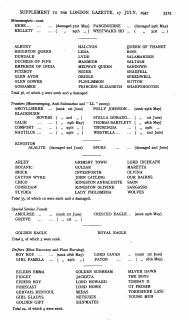
Details
SUPPLEMENT TO THE LONDON GAZETTE, 17 JULY, 1947                                 3315
Minesweepers—cont.
  HEBE                       (damaged aist May) PANGBOURNE ... (damaged agth May)
  KELLETT                    (   „ 2gth „ ) WESTWARD HO ... (      „ 3ist „ )


  ALBURY                               HALCYON                QUEEN OF THANET
  BRIGHTON QUEEN                       LEDA                   ROSS
  DUNDALK                              LYDD                   SALAMANDER
  DUCHESS OF FIFE                      MARMION                SALTASH
  EMPEROR OF INDIA                     MEDWAY QUEEN           SANDOWN
  FITZROY                              NIGER                  SNAEFELL
  GLEN AVON                            ORIOLE                 SPEEDWELL
  GLEN GOWER                           PLINLIMMON             SUTTON
  GOSSAMER                             PRINCESS ELIZABETH     SHARPSHOOTER
Total 36, of which 5 were sunk and 4 damaged.

Trawlers (Minesweeping, Anti-Submarine and " LL " sweep)
  ARGYLLSHIRE        ... (sunk ist June)      POLLY JOHNSON...    (sunk 2gth May)
  BLACKBURN
              ROVERS (          2nd „ )       STELLA DORADO...    (      ist June)
  CALIR                         29th May)     THOMAS BARTLETT     (     28th May)
  COMFORT                       29th „ )      THURINGIA     ...   (     29th „
  NAUTILUS                (     29th „ )      WESTELLA            (      2nd June)

  KINGSTON
       ALALITE            (damaged 2nd June)   SPURS              (damaged 2nd June)


  ARLEY                               GRIMSBY TOWN            LORD INCHCAPE
  BOTANIC                             GULZAR                  MARETTA
  BIOCK                               INVERFORTH              OLVINA
  CAYTON WYKE                         JOHN CATLING            OUR BAIRNS
  CHICO                               KINGSTON ANDALUSITE     SAON
  CORRIDAW                            KINGSTON OLIVINE        SARGASSO
  FLYDEA                             LADY PHILOMENA           WOLVES
Total 33, of which 10 were sunk and 2 damaged.

Special Service Vessels
  AMULREE ...                (sunk ist June)   CRESTED EAGLE... (sunk 29th May)
  GRIEVE                     ( „ ist „ )


  GOLDEN EAGLE                                  ROYAL EAGLE
Total 5, of which 3 were sunk.

Drifters (Mine Recovery and Flare Burning).
  BOY ROY                  (sunk 28th May)     LORD CAVAN      ... (sunk ist June)
  GIRL PAMELA          ... ( „ 29th „ )        PATON           ... ( „ 28th May)


  EILEEN EMMA                           GOLDEN SUNBEAM         SILVER DAWN
  FIDGET                                JACKETA                THE BOYS
  FISHER BOY                            LORD HOWARD            TORBAY II
  FORECAST                              LORD HOWE              UT PROSIM
  GERVAIS RENTOUL                       MIDAS                  YORKSHIRE LASS
  GIRL GLADYS                           NETSUKIS               YOUNG MUN
  GOLDEN GIFT                           SHIPMATES
Total 24, of which 4 were sunk,
Details
3296           SUPPLEMENT TO THE LONDON GAZETTE, 17 JULY, 1947
 to drag on painfully, and finally to lose nights.               Not only were the Dunkirk Roads
 momentum and expire through the exhaustion mined, including the Zuydecoote Pass, but also
 of Naval personnel and the 'liquidation of Route X and the area round the Kwinte Buoy.
 shipping.                                           Folkestone and Dover Harbour entrances were
     It will be seen, therefore, that • the initial also mined* Considering the number of mines
 problem called for a maximum effort over a laid, it is interesting to note that only two
 limited period regardless of the future, and British ships are known for certain to have been
 accordingly all resources in the way of small mined, the personnel vessel MONA'S QUEEN
 boats were thrown on the beaches, before ade- and the F.A.A. Yacht GRIEVE. One Hospital
 quate provision had been made for their main- Carrier was damaged at anchor off Dover when
 tenance off the coast in such matters as relief a mine was blown up by a LL. Trawler sweep-
 of the personnel and the provision of large ing close at hand. Two A/S trawlers on patrol
 beach parties.                                      to the northward of the operational area were
  • It was only due to the foresight of the blown up by what was at first thought to be a
 Admiralty in making arrangements for a con- M.T.B., but later evidence suggests they were
 tinued flow in ever increasing numbers of small victims of moored mines. The impunity with
 power boats and beach craft, which became which degaussed ships were able to operate
 available on the fifth day onwards, that the in this heavily mined area alone made the opera-
 continued evacuation from the beaches remained tion possible and one reaches the conclusion
 a reasonable proposition after the initial 'crisis that if the enemy on this occasion had had at
 had passed.                                         hand the means of laying moored contact mines
     4. A perusal of the signals that passed by aircraft, instead of magnetic mines, the re-
 between Dover and the (French coast reveals sults would have been very different.
 the many occasions on which the responsible            (b) Air Attack. On the evening of the 29th,
 officers stationed on the coast considered so the first occasion on which a massed target of
 little had been achieved from the beadhes that ships was presented in Dunkirk Harbour, the
 they advocated restriction of evacuation to enemy seized the opportunity for air attack in
 Dunkirk Harbour. Many complaints of "no ' great strength, and it was only by good fortune
 boats," " no ships," might lead a detached that the vital Dunkirk Harbour channel was not
 observer to the conclusion that the great effort blocked by sinking ships at this early date.
 that was being made was proving abortive.           From then onwards the scale and vigour of the
     At Dover, where the whole operation could be air attack increased, and during the ist June
 viewed in truer perspective, the number and all ships in Dunkirk, off the beaches, or in .the
 origin of the troops being landed in England approach channels, were subjected every two
 being always to hand, it was clear that the hours to an unprecedented scale of air attack
  evacuation from the beaches required by the by aircraft in such numbers, that the R.A.F.
  military situation, was, in fact, achieving a con- were unable to deal with the situation. The scale
  siderable success, as the following figures will of enemy air attack on June ist, and the fact
  show. Of the 248,000 troops landed in the that the Germans could by now command the
  United Kingdom, between May 28th and June newly-swept central route at its exits into the
  ist inclusive—the period during which both Dunkirk Roads with gunfire from the shore,
  Dunkirk and the beaches eastward were avail- were responsible for the suspension of daylight
  able day and night except for enemy interfer- evacuation on June 2nd.
  ence—no fewer than 100,000 were lifted from
  the beaches.                                          (c) Attack by M.T.B.s.        These caused 4
                                                     casualties, namely two destroyers and two
     5. WEATHER CONDITIONS.                          trawlers, while the north Route Y* was in use.
      The operation was favoured by extremely When the middle Route X*, some 26 miles
  good weather. It was found, however, that any further to the South Westward, was brought
  northerly wind caused a considerable surf, into use the enemy M.T.B. units failed to follow
  which greatly reduced the rate of lifting from up, though the continuous stream of unescorted
   the beaches. It must be fully realised that a traffic during the dark hours and the ships lying
   wind of any strength in the northern sector in Dunkirk Roads provided a tempting target
   between South West and North East would to any enterprising Commander.                           *
  have made beach evacuation impossible. At             •(d) Shore Artillery. At the commencement
   no time did this happen.                          of the operation, the southern Route Z* was
      6. DISPOSAL OF TROOPS AFTER REACHING found to be under gunfire from batteries near
   ENGLAND.                                          Calais, and consequently could only be used by
                                                     night. The northern Route Y was usable only
      On arrival in England the despatch of troops by night when later the batteries near Nieuport
   from the points of disembarkation proceeded brought fire to bear on the Zuydecoote Pass,
   with great smoothness under the War Office which was too narrow to permit a reasonable
   movement control organisation.                     chance of ships running the gauntlet of fire. By
      7. ENEMY EFFORTS TO FRUSTRATE OPERATION. this time, however, Route X was available, and
      Attempts by the enemy to frustrate the opera- was free of gunfire until German batteries near
   tion consisted of the following: —                 Gravelines brought its exit into the Dunkirk
                                                     Roads under gunfire.         This occurred in the
         (a) Minelaying by aircraft.                 afternoon on Saturday, ist June, and in con-
         (6) Intensive air attack.                   junction with the result of enemy air attack,
         (c) Action by Motor Torpedo Boats.           led to the suspension of daylight traffic alto-
         (d) Gunfire by coast artillery.              gether.
         (e) Submarine operations.
      (a) Minelaying by aircraft.        Minelaying      (e) Submarines. U-Boats do not appear to
    during the dark hours probably "Commenced have caused any casualties. It is unlikely that
    during the night 28th-29th and was maintained       * Admiralty footnote: For Routes X, Y and Z see
' with great intensity during the following two Diagram.
Details
3298          SUPPLEMENT TO THE LONDON GAZETTE, 17 JULY, 1947
embarkation staff or organisation a strong naval       14. CO-OPERATION OF THE FRENCH NAVY.
party was required to form up and embark the           French warships and other vessels were
troops. Later, no difficulty was experienced        employed evacuating French troops from
when troops of fighting formations were en-         Dunkirk Harbour, and on the last three nights
countered. Difficulty was experienced in con--      from the beach i£ miles eastward from Dunkirk.
trolling some French 'troops, whilst others were    Details are given in Appendix IV.
so rigidly bound by discipline and tradition that
they would not embark except by complete               15. BASE ORGANISATION.
formation under their own unit officers. In
either case the rate of embarkation was much           An operation of this magnitude involving the
slower than with British troops.                    maintenance and movements of close on 900
                                                    vessels and boats could not have been conducted
   12. INITIATIVE SHOWN BY COMMANDING               without the wholehearted and unceasing efforts
OFFICERS AND SUBORDINATE PERSONNEL.                 of the base establishments at Dover and
   A most satisfactory feature of the operation     Ramsgate, as well as those at Sheerness and
>was the high degree of initiative shown by         Harwich in the Nore Command. At all these
Commanding and Subordinate Officers of units        places officers and men, Naval and civilian,
operating off the coast, ranging from H.M.          laboured unceasingly throughout the Operation.
Destroyers to commandeered motor boats. The            In particular I wish to acknowledge the great
majority of officers and ratings in command         assistance received from the Commander-in-
were in situations requiring independent action     Chief, Nore, Admiral the Hon. Sir Reginald
in extremely difficult conditions. Often the        A. R. Plunkett-Ernle-Erle-Drax, K.C.B.,
easiest course was to be satisfied with work        D.S.O., who in many cases anticipated my re-
already achieved and to return to the United        quests for assistance through his constant watch
Kingdom with a final load of troops. The            on the progress of the Operation.
reverse action was invariably executed, namely,        The prompt and unfailing assistance afforded
continued operation off the coast as long as        by the Chatham Depot in providing personnel
there were both -troops ashore to be evacuated      for .the numerous small craft, working parties
and vessels offshore to receive them. If the        and beach parties, was a feature essential to the
craft in use was damaged or sunk the crew in-       successful outcome of the Operation.
variably seized some other boat to continue            The Naval Officer-in-Charge, Ramsgate,
their efforts.                                      Captain W. R. Phillimore, R.N., by taking
   Unaware of the military situation ashore and     over the servicing and control of the great
often forced to move westward by bombard-           majority of the small craft of the inshore
ment from German artillery or even by rifle         flotillas relieved Dover of an immense volume
fire from advancing German forces, the majority     of work which it would otherwise have been
of these boats, commanded often by stokers or       impossible to handle.
" hostility only " seamen, had only one object         It was also brought to my notice that at
an view, to lit from the beach any, and all         Harwich an exceptional Naval and Military
troops, British or Allied, within sight of the      system was in being for assisting those ships
water's edge.                                       which called there to make a quick turn round,
   On their return to the United Kingdom when       relieving the tired ships' companies of the work
asked to report their proceedings it was only       of cleaning and clearing their vessels.
in answer to direct enquiry that it would trans-       16. SERVICES OF STAFF, INCLUDING OFFICERS
pire that these young men had been subjected        TEMPORARILY APPOINTED.
in many cases, to an unparalleled bombard-             I was fortunate in having the services of
ment from the air. They appeared to consider        Roar Admiral W. F. Wake-Walker, C.B.,
that this was part of the day's work requiring      O.B.E., as Flag Officer afloat off Dunkirk, and
no comment.                                         Captain W. G. Tennant, C.B., M.V.O., as
  13. LOSSES OF TROOPS AFTER EMBARKATION.           Senior Naval Officer, Dunkirk on shore.
   It is a distressing fact -that many ships were   Admiral Wake-Walker was responsible for
sunk or damaged on the return voyage when           supervising the embarkation afloat and Captain
laden with troops. But it is fortunate that in      Tennant for organising embarkation from the
most of such cases the majority of troops were      shore, keeping touch with the French Naval
saved owing to the large volume of traffic that     Authorities and the staff of the British
was coming and going between Dunkirk and            Commander-in-Chief.
the United Kingdom. Exceptions to this were            I cannot conclude this despatch without
due to the rapidity with which certain ships        reference to the splendid work of my staff under
sank after having been bombed or torpedoed.         the guidance of my Chief Staff Officer, Captain
Such cases are as follows: —                        L. V. Morgan, C.B.E., M.V.O., D.S.C.
                                                       Augmented by additional officers, including
      WAKEFUL. Torpedoed. Ship broke in             both Army and Royal Air Force, especially
   half and only those on the upper deck were       appointed for the occasion, their task of
   saved. About 600 troops were below.              organising and operating the large and varied
      CRESTED EAGLE. Was bombed and                 collection of H.M. Ships continued without a
   then beached in a burning condition. Only        pause day and night .throughout the 10 days
   about 300 saved out of 600 on board.             that the Operation lasted, and I can never
      SKIPJACK. 250-300 troops on board,            testify adequately to the excellence of their
   most of whom, unfortunately, went down           work, upon the efficiency of which successful
   with the ship when she sank.                     results depended.
      WAVERLEY. 600 troops were on board               Finally I would like to pay tribute to the
   before ship was abandoned in sinking condi-      valuable support and assistance which I received
   tion, but only 200-300 were picked up.           throughout the whole course of the evacuation
   In all it is regretted that about 2,000 troops   from Vice Admiral Sir James Somerville,
must have been lost through these and similar       K.C.B., D.S.O., who was appointed to H.M.S.
disasters on the return voyages to England.         LYNX for special service in connection with
Details
3306            SUPPLEMENT TO THE LONDON GAZETTE, 17 JULY, 1947
Friday, ^ist May.                                        final evacuation plan during the night of
  48. The Admiralty informed the Vice Admiral            31/5-1/6. Accordingly, instructions were
that the policy of H.M. Government was that              issued for the special tows to leave Ramsgate
both British and French troops be given an               at 1300/31 for Dunkirk via Route X, and the
equal opportunity of being evacuated in British          Commander-dn-Chief, Nore and Flag Officer in
ships and boats.                                         Charge, Harwich, were requested to provide
                                                         all available M.T.B.s to escort this convoy
   49. Personnel ships had been sailed the pre-          for as much of the outward passage as possible,
vious evening and throughout the night of the            which was timed to commence from Ramsgate
30th/3ist to provide for a continuous flow into          at 1300/31. Speed of advance—5 knots. A
Dunkirk harbour.        But at 0320 the S.N.O.           party of Naval officers had been assembled at
reported that once again the majority of these           Dover to embark in these tows and had been
personnel ships had failed to enter the harbour          given detailed instructions on the plan. Two
during the dark hours. MALCOLM, however,                 M.A/S. boats and two M.T.B.s in the Dover
left Dunkirk with 1,200 troops at 0300, during           Command were ordered to accompany the boat
heavy shelling, on relief by IVANHOE.                    convoy and subsequently embark the Com-
S.N.O. Dunkirk, however, continued to call for           mander-an-Chief, B.E.F. and Staff off the
more ships. 'No more destroyers were avail-              beaches.
able and there were no means of accelerating
the arrival of the vessels despatched there.1 By           53. Shortly after sunrise an on-shore wind
0700 the Vice Admiral had no news of the fate            arose and boat work became difficult, many
of the personnel ships that had sailed the pre-          whalers capsizing and the prospects of com-
vious evening and during the night. None of              pleting the evacuation to plan began to be less
these ships had reached the U.K. to unload,              favourable. The following extract from the
and it appeared probable that these ships                report of Captain Howson, S.N.O. on the
may thave concentrated in the narrow                     beaches illustrates conditions at Bray at this
waters close to Dunkirk, inviting a repetition           time:
of the heavy air attacks with consequent                       " At 0400 there was a very considerable
damage and loss to transports which had                    number of destroyers, paddlers, trawlers,
occurred on the two previous occasions when                skoots, etc., off Bray, and embarkation was
personnel vessels, together with other ships,              proceeding satisfactorily, but a lop had
had been concentrated in large numbers in the              already started. There were about 10 motor
approaches to Dunkirk.                                     yachts which had arrived from England.
   At this time there were no less than nine               These > craft drew 6-7 feet and were
personnel vessels and three hospital carriers              unable to get close in to any of the beaches.
known to be on the round trip U.K.—Dunkirk                 During the forenoon, considerable towing
and back and one other personnel vessel had                of empty craft towards the beach was carried
been ordered to sail during the night, but her             out, and only about two boats were allowed
whereabouts was unknown. In addition, three                to get adrift and ultimately ground. With
other personnel vessels were under orders to               the falling tide, however, a number of boats
sail between 0900 and 1030. Pending the                    were seen to ground and remain ashore until
return of the ships en passage, and while the              the tide rose in the afternoon. These in-
coal-burners were being rebunkered, the further             cluded an A.L.C.* motor boat and a life-
sailing of personnel vessels was in suspense.              boat. Other power boats broke down. Never-
   Note :—Owing to the casualties to personnel vessels     theless, the embarkation, much hindered by
           at this stage, coal burning cross channel       the lop, proceeded satisfactorily. ; As further
           steamers had to be used for some of the          destroyers and sloops arrived, they were
           trips and short endurance necessitated
           coaling between trips which could not be        directed to lower their motor boats and
            done in the vicinity of Dover, thus            whalers as this had not already been done;
           preventing a quick turn round.                  these boats were quite invaluable. About
   50. During the night a considerable amount              noon, the lop began to subside and with
of enemy mdnelaying activity by air was re-                the rising tide conditions for embarkation
ported. Shelling was heavy during the evening              very greatly improved, more boats were
and night, and operations were greatly ham-                sent in and more boats floated off and matters
pered. Nevertheless, with the cessation of                 were proceeding very well, when the gun at
shelling at about 0300, very good progress was             La Panne started to shell the beaches and
made and by full dawn the beaches were very                foreshore with great accuracy. A certain
nearly clear of troops. At 0530 attacks on                 number of light craft were sunk. The A.L.C.
Dunkirk Harbour and the beach from Dunkirk                 broke down and was towed away by a
to Bray developed more strength and the 'bom-              steamer. MOSQUITO, destroyers and sloops
bardment of Dunkirk continued. Neverthe-                   proceeded westward clear of the firing."
less, the S.N.O. reported that the embarkation              54. Rear-Admiral Wake-Walker was able to
there was proceeding satisfactorily but stressed         make a survey of the general conditions of the
the need for more ships and constant fighter             beaches, and at 1130 the Vice-Admiral received
protection. At this time French troops began
to appear at Dunkirk Pier and on the'beaches,            a signal from him stating that the majority of
and were embarked with the British troops.               the pulling boats were broached to and without
                                                         crews, conditions on the beaches .being very bad
   51. At 0600 VIMY sighted submarine off the            owing to a freshening shore wind, only small
N.W. Goodwins and commenced to hunt.                     numbers being embarked. Under present condi-
   52. The arrivals at the home ports indicated          tions any large-scale embarkation from beach
that in spite of the frequent requests for more          impracticable. Motor boats could not get close
ships and more boats received from the various           in. He considered only hope of embarking any
authorities on the French coast, the rate of             number was at Dunkirk, and further stated he
evacuation was steadily increasing and would               * Admiralty footnote: A.L.C. = Assault Landing
permit, all being well, of implementing the              Craft.
Details
3308           SUPPLEMENT TO THE LONDON GAZETTE, 17 JULY, 1947
   It should be noted that in spite of (fc) the       Route X, and occurred between 1000 and 1040,
rate of embarkation had, in fact, come up to          to be again resumed at noon. After that there
expectations, and if other circumstances had          was a lull until 1550, when another attack was
permitted it would have been possible to adhere       delivered on Dunkirk Harbour and all shipping
to the original plan of lifting the final 4,000       therein for over half an hour. At 1800 the
B.E.F. off the beaches between 0130 and 0300          Vice Admiral received the following signal from
ist June.                                             Dunkirk: " Things are getting very hot for
Saturday, ist June.                                   ships; over 100 bombers on ships here since
                                                      0530, many casualties. Have directed that no
    62. Two Hospital Carriers which had sailed        ships sail during daylight. Evacuation by
 the previous evening returned shortly after          transports therefore ceases at 0300. If perimeter
 dawn.      Only one had succeeded in entering        holds will complete evacuation to-morrow,
 Dunkirk Harbour, the other had laid off four         Sunday night, including most French. General
 hours under heavy fire and returned to Dover.        concurs." The sense of this message was passed
 Four personnel vessels failed to enter Dunkirk       on to Rear Admiral, Dover, off the coast.
 during the night, but succeeded in the early
 flours of the morning.        One of these, the          65. In addition to the heavy scale of air
 PRAGUE, was bombed and severely damaged              attack during the afternoon the sea traffic was
 half-way across on the return journey, but suc-      very seriously interrupted by artillery fire
.ceeded in making the Downs with the assistance       brought to bear on Route X near No. 5 buoy.
 of tugs, where troops transferred to other ships     The fire appeared to be accurate and it is be-
 particularly A/S trawlers LADY PHILOMENA             lieved some French ships were sunk. Two
 and OLVINA. The supply of personnel vessels          French destroyers in the vicinity stopped
 was maintained throughout the day, not with-         British ships approaching from England on X
 out a series of setbacks caused by 3 ships failing   Route short of this point, and it became evident
 to sail and by 2 being turned back when on           that a very serious threat -to daylight evacuation
 passage by French Destroyers owing to heavy          was in being.. Meantime, the toll of casualties
 bombing and shelling of the approaches to            of ships during the day was mounting, particu-
 Dunkirk. Of those that operated during the           larly amongst the destroyers and shortly after
 24 hours, i was sunk, 2 damaged by bombs and         midday the Commander-in-Chief, Nore, called
 shell-fire and i by collision.                       the attention of the Admiralty to this, suggesting
                                                      the discontinuation of the use of destroyers by
   63. During the middle watch it transpired          day off the French coast. The summarisation
that no further troops were attempting to             of all these incidents led to the Admiralty
evacuate from La Panne off which were                 directing the Vice Admiral, Dover, to suspend
stationed one paddle minesweeper, a fleet             evacuation from Dunkirk at 0700, Sunday 2nd
sweeper and two destroyers, probably due to           June, and for it to be resumed the following
the heavy shelling from German guns eastward,         night or from 1730/2, depending upon the cir-
and later information was received that the           cumstances. From the above it will be seen
troops were marching from La Panne through            that there were to be no ships proceeding to
Bray towards Dunkirk. Accordingly, during             Dunkirk between 0700/2 and 1730/2. The
the night the Rear Admiral, Dover, instructed         above Admiralty directions crossed a message
all small craft to move west, with boats in tow,      from the Vice Admiral stating th'at all ships had
towards Dunkirk, and the Vice Admiral directed        been ordered to withdraw from Dunkirk before
all ships under orders for La Panne to other           daylight the following day, owing to the heavy
positions further west, concentrating the main        casualties to shipping.
effort on the beach immediately east of                   66. In spite of enemy action more than
Dunkirk.
                                                       60,000 troops were landed in the United King-
   To a request from Dunkirk for Hospital Ships,       dom during the 24 hours, thanks to the unremit-
the Vice Admiral replied at 0715 that the large        ting determination of Naval vessels who all
ship berths alongside at Dunkirk must be               executed a succession of round trips, interrupted
occupied by personnel ships and the wounded            only by necessary refuelling and who accounted
that could conveniently be embarked should go          for 70 per cent, of this total. The majority
with personnel.      This direction was in             of the surviving vessels had been operating
accordance with the Government policy pre-             ceaselessly for at least five days, and officers
viously communicated to the Vice Admiral.              and men were approaching a condition of com-
                                                       plete exhaustion.
   64. Soon after dawn enemy aircraft were
active and heavy bombing and machine gun                  67. As for personnel ships, steps were taken
attacks developed at 0500 over the whole area          to place on board each a Naval Lieutenant
from Dunkirk to La Panne. A second series of           Commander or Commander to advise the
attacks commenced at 0830 and lasted until             Master, and ten seamen to assist in handling
0900, during which time nearly every ship off          the wires in going alongside under fire. By this
the coast was subjected to intensive bombing           means it was hoped not only to ensure the
and machine gunning, formations of 30 and 40,          timely sailing of these essential ships, but also
machines being noted. During this attack               to eliminate the occasions when these vessels
BASILISK was put out of action off La Panne            had remained outside Dunkirk Harbour to
and later sank while struggling home. KEITH,           await a quiet opportunity to enter.
SALAMANDER and SKIPJACK, who were                          68. Early in the forenoon a number of Senior
moving westward along the coast as the Bray            Officers were despatched from Dover in fast
 and La Panne beaches had been emptied, were           motor boats to round up all stray motor boats
heavily bombed, the former was hit and set on          in the Downs and along the routes, and direct
fire and the latter sank. KEITH was aban-              them back in the evening to the beach stretching
 doned and finally sank. Nearly all troops on           i£ miles eastward of Dunkirk, and a second
 board KEITH and the crews of both vessels             large flight of tugs with lifeboats was prepared
 were rescued by other ships. A third attack            at Ramsgate to send over for what was hoped
 started over Dunkirk, extending well out along         to be a final effort off the beach. In addition
Source: The National Archives, Kew, ADM 116 4649. Contains public sector information licensed under the Open Government Licence v3.0.

Details
Page 4.
Operation "DYNAMO" - Recommendations of Personnel.
H.M.S. ESK. - Lieutenant-Commander Richard John Hullis Couch, R.N.
ESK made 6 trips, 3 being to Bray beach, during the
period 28th May - 3rd June, and brought to Dover about
4500 troops. On the 31st May, off Bray, she was forced,
by shell fire from shore batteries, to move westward along
the beach, ESK being holed in several places and having one
oil fuel tank pierced. She was also subjected to bombing
attacks on passage back to Dover, but avoided damage by the
use of speed and zig-zagging. On the 1st June she again
avoided damage off the entrance to Dunkirk by circling at
20 knots and when attacked later whilst taking survivors off
S.S. SCOTIA she drove off two bombers by the fire of 'B' and
'X' guns.
Recommendations.
OFFICERS:
Lieutenant-Commander Richard John Hullis Couch, R.N.
For judicious handling of his ship during air
attack and whilst rescuing about 4500 troops from
Dunkirk and the beaches.
Recommended for decoration.
Lieutenant Clifford Woodreiff Carter, R.N.
For outstanding ability, devotion to duty and
bravery in saving life when embarking troops from
S.S. SCOTIA during a bombing attack. His personal
courage on several occasions was a fine example.
Recommended for decoration.
Sub. -Lieutenant Wilfrith Francis Chamberlain Elstob. R.N.
For devotion to duty and great efficiency as
Navigating Officer in most trying circumstances and
under fire.
Recommended for mention.
RATINGS:
Acting Leading Seaman Mansell Richard Powell, P/SSX.15191.
Acting Leading Seaman Alfred Solen, P/JX.141699.
For initiative and ability as gunlayers of 'B'
and 'X' guns in driving off bombing attacks.
Recommended for mention.
Petty Officer Hyacinth Alec George Adam, 131408.
Acting Leading Seaman Gordon Simons McAully, P/J.102728.
Acting Leading Seaman John Thomas Cody, 134308.
Acting Leading Seaman Arthur Saunders, P/J.105542.
For initiative, resource and saving life when
rescuing wounded and other troops from S.S. SCOTIA
while being bombed.
Recommended for mention.

Details
Page 34.
Operation "DYNAMO" - Recommendations of Personnel.
O.M.S.
VIVACIOUS.
must Lieutenant-Commander Frank Reginald Woodbine
Parish, 27th - p.m. 29th May.
Commander Emile Frank Varlaine Dechaineux, R.A.N.
p.m. 29th and after.
VIVACIOUS made 4 trips to the beaches, remaining off
Bray for 24 hours on the 30th and 31st May and bringing hone
a total of 2381 troops. On the night of 2nd/3rd June she
crews. escorted the blockships to Dunkirk and brought back their
On the 27th May she was heavily attacked whilst on
passage by 25 aircraft, at least 100 bombs being dropped.
She avoided all these and brought down 2 bombers, a 3rd
being damaged but not seen to crash.
P.M. 29th Lieutenant Commander Parish was sent on sick
leave due to overstrain and was relieved by Commander
Dechaineux, R.A.N.
At 1800/30 a battery East of Bray, which had carried
out desultory and inaccurate fire on the anchorage all the
afternoon, commenced a controlled and accurate fire on
VIVACIOUS who was hit on the forecastle (3 killed and 12
wounded) and had many holes on the water line from shrapne..,
and Commander Dechaineux ordered a retirement of ship to
the westward out of range.
Recommendations.
OFFICERS:
Lieutenant Francis Peter Baker. R.N.
Was wounded in the leg and in spite of wounds
carried on his duties as 1st Lieutenant and after
control officer for eight hours before being attended
to.
Recommended for decoration.
Sub. -Lieutenant John Teague Gilhespy, R.N.
Carried out his duties of Gunnery Control officer
in a most efficient manner and succeeded in shooting
down three enemy planes.
Recommended for mention.
Mr. John George Revolta, Commissioned Engineer.
Throughout the whole operation kept his engine
room in an efficient state and was an example of how
an officer should behave under fire.
Recommended for mention.
RATINGS:
Petty Officer E. R. Meredith, P/J.95625.
During He acted in an outstanding under
the operations was Chief Bosun's Mate
manner and Director and was Layer. an example to all whilst severe
bombing attacks.
Recommended for decoration

Details
Page 62
Operation "DYNAMO" - Recommendations of Personnel.
H.M.S. SALAMANDER. - Lieutenant Commander Lionel James Spencer. Ede. R.
This ship did 3 trips to the beaches and
having continually been bombed ordered and machine-gunned. On one was
DO doing embarked dawn, the ship continued until 0600, and
Dunkirk at by Rear Admiral, Dover, to move occasion, westward
so attack one rating a further 450 men from Bray. During by
to attack KEITH, the ship was again subjected to
assist the was slightly wounded. Whilst proceeding one
bombing and lifted and four bombs exploded under water near a the
ship the ship bodily. Steam was lost, but was
got going again in about a quarter of an hour, when
further air attack took place. The ship proceeded back a
port as quickly as possible. Ship was again attacked, but to
she managed to reach Dover, proceeding on only one boiler.
Recommendations.
OFFICERS:
Lieutenant-Commander Lionel James Spencer Ede, R.N.
This Officer showed great zeal, initiative and
seamanship during the operations. The whole time he
was endeavouring to avoid air attacks, and, at the same
time, pick up troops from the beaches. His initiative
in disobeying the order of Rear Admiral, Dover, to
proceed from the beach towards Dunkirk at dawn, enabled
him to save a further 450 men, including 29 wounded
cases.
Having moved westward, an air attack took place
upon the SKIPJACK and the KEITH, the SKIPJACK being
sunk and the KEITH set on fire. Ship appeared to be
in danger of sinking due to a near miss, but after a
short time found she was still seaworthy and steam was
got on to the main engine.
By his great devotion to duty in face of these
air attacks, he was still able to bring his ship safely
to port.
Recommended for decoration.
Commissioned Engineer Thomas Kirby Reynolds, R.N.
Showed great initiative and skill in getting steam
up and the engines restarted after ship had been damaged
by near misses, and in addition it was due to him that
the morale of the engine room was so good after having
had three heavy attacks in four days, apart from this
attack, which was almost continuous for three hours.
By his great devotion to duty, it is felt that
the ship was got under way so quickly.
Recommended for decoration.
RATINGS:
E.R.A. C. H. Andrew, M.28768.
After the ship had been damaged, by his devotion
to duty and his initiative, he suceeded in starting up

Details
Page 78.
Operation "DYNAMO" - Recommendations of Personnel.
PORTSMOUTH INNER PATROL YACHTS.
Lieutenant Cyril Cornelius Bone, R.N.V.R, Senior Officer.
beaches from 0600/31/5 to dawn 1/6, they performed
Although the unit of nine yachts only worked off the
particularly critical valuable work off La Panne and Bray at
British time when La Panne was about to be finally a evacuated,
The period also happened to be one of intensive air
troops either embarking or withdrawing westward.
bombardment, interspersed with sporadic heavy artillery fire
on the beaches.
Particularly notable was the work of these boats
inshore, which included the embarkation of Lord Gort and
the G.H.Q. party. 3500 - 4000 troops were lifted.
Recommendations.
OFFICERS;
H.M.Y. LAHLOO:
Lieutenant John Vander Ould, R.N.V.R., Commanding Officer.
His yacht did particularly well, handling about
500 troops. Emabrked Lord Gort. Did valuable work
rounding up drifting boats for further beach work.
Recommended for mention.
H.M.Y. SERIOLA:
STEAM PICKET-BOAT:
M.Y. MASAYRU:
Sub. -Lieutenant Thomas Ellison Godman, R.N.V.R.
This Officer displayed remarkable determination,
endurance and devotion to duty. Commencing service in
SERIOLA, he skilfully worked open boats through the surf on
the beaches during31/5. The next day he was ordered to
command a naval steam picket-boat, and by his determination
and good judgment succeeded in operating this craft for
nearly 24 hours, though its coal capacity only sufficed for
6 hours. Also seized and directed the activities of a
number of abandoned boats found drifting off the coast.
Finally returned to Ramsgate and joined another vessel for
a further day's service at Dunkirk.
Specially recommended by Senior Officers for
great coolness under heavy fire in dangerous conditions.
Recommended for decoration.
RATINGS:
H.M.Y. AHOLA:
Petty Officer H. H. Holland, J.20594.
Able Seaman F. H. Finch, SSX.23237.
Volunteers for boat work under fire, when boat
crew from another unit left their boat.
Recommended for mention,
Source: The National Archives, Kew, ADM 199 2429. Contains public sector information licensed under the Open Government Licence v3.0.

Details
| CALDY (Westward Trawlers, Ltd.) | TL | 1908 | R (T98D) | 222 | MS | 27.11.39 | 22.1.40 | £55.10.0 |

Details
| owners Westward Trawlers, Ltd.) | CA | " BD | 23.11.43 | 23.11.43 £62 |
Source: The National Archives, Kew, ADM 199 788 A. Contains public sector information licensed under the Open Government Licence v3.0.

Details
249/1
From:- Lt. A.W. McMullan, R.N.R.
Date:- 5th June, 1940.
To:-
Naval Officer in Charge, Ramsgate.
30th May.
Left Ramsgate in schoot "Twente" with Sub.
Lt. Adderley, R.N.V.R. as 1st Lieut.
2230
Arrived 11/2 miles E. of Dunkirk roads.
Remained anchored off all night but due to
Jri
shortage of boats was unable to embark any
troops until 0500 on 31st May when a motor
boat and two cutters were requisitioned with
which 400 troops were embarked. These were
disembarked at Margate.
Returned to Ramsgate and anchored off the
harbour for further orders.
1st June.
Schoot "Twente" not required so joined power
boat "Hague" with Cmdr. Troop R.N., Lieut. de
Mauny R.N. and Sub. Lt. Hollingswear R.N.R.
and proceeded to the inner harbour at Dunkirk
where French soldiers were embarked and ferried
across to a waiting transport in the roads
3rd June.
0200
Were struck whilst leaving the harbour (with 39
on board) on the port side successively by a
by troops a French motor cutter and then again
French trawler.
"Westward Ho", being in the vicinity, "Hague" took off
all the as no time was allowed the by damage. "Westward
soldiers and crew and the the was
Ho" abandoned to ascertain the extent of
"Westward Ho" landed our troops and survivors of
the "Hague" at Margate.

Details
250
From:- Lt. Commdr. A.R.W. Sayle, R.N.R.
Date:- 5th June, 1940.
To:-
Naval Officer in Charge, Ramsgate.
30th May.
0930
Received instructions to take Drifter "Fair Breeze"
to beach east of Dunkirk.
1130
Proceeded on board "Fair Breeze" with Sub. Lt. Washbourn
R.N. (from Portsmouth) and Mr. Golding, Trinity House
Pilot, and proceeded for Dunkirk with two whalers in
tow, courses as requisite.
1500
After whaler struck submerged object and appeared to be
making water.
1600
Arrived off Dunkirk and proceeded to Bray Beach.
1630
Arrived off Bray Beach, commenced sounding, closed
beach and hove to in two fathoms.
1645
After whaler found to be badly holed and filling with
water, cut it adrift; sent remaining whaler ashore
and requested motor boat from "Canvey Que en" to tow
off any other boats he could find. (This boat
rendered valuable assistance).
1700
First boat with troops arrived and embarkations commenced.
1800
Filled up with troops and proceeded to westward, hailed
by Officer Commanding "Royal Eagle", lying toseaward
of "Fair Breeze", and instructed to transfer troops
from "Fair Breeze" to "Royal Eagle". Made fast
1815
Finished transferring troops from "Fair Breeze" Beach and to
alongside "Royal Eagle".
Royal Eagle"; proceeded back to Bray hove
to off Sanatorium.
1830
1900
Recommenced Intensive bombing embarking attack troops. on Sanatorium and troops on
2030
Filled Bray up Beach. with troops and proceeded for Ramsgate; courses
as requisite.
31st May.
0045
Observed Parachute enemy Flare aircraft; off N. Goodwin. tide. no casualties.
0050
0200
0400
Buoy awaiting Pier and commenced out
tallied disembarking. 293.
0500
Troops
0515
Finished

Details
472 H9P
Margete
SATURDAY, 1ST JUNE, 1940.
0005.
"QUEEN OF THANET".
850.
0130.
"KINGFISHER".
157.
0400.
"ORANJE".
100.
0500.
"GOLDEN EAGLE".
1250.
0415.
"MOTOR BOAT".
23.
0510.
"SALTASH".
400.
0600.
"WESTWARD HO".
720.
x
900
0610.
"ROYAL EAGLE".
1250.
0630.
"ROYAL SOVEREIGN".
47.
0830.
"LADY SOUTHBORO".
350.
0950.
"PRINCESS ELIZABETH".
510.
0950.
"GALLEONS REACH"
123.
*
1
Alien Postal
worker French.
J
1045.
"QUEENS CHANNEL".
52.
1145.
"WHIPPINGHAM".
2500.
1215.
"DUNDALK".
280.
"FOREMOST".
200.
1345.
1420.
"ORIEL".
470. + 1. Pathe Gazette
Man.
"AEGIR".
130.
1650.
1450.
"VINCIA".
108.
1600.
"KINGFISHER".
210. + 2 Belgian Airman,
supposed to have
escaped from Germans.
"QUEEN OF THANET".
1500.
1650.
"K.G.V."
700.
1740.
x
243
1740.
"HALCYON".
58.
"SALTASH".
350.
1830.
"WESTWARD HO".
918. + 1 Alien under arrest
2030.
2100.
"ANTJE".
150.
"RAPID I".
25.
2100.
"HOPPER 24".
580.
2215.
TOTAL.
14011.

Details
my 474
MONDAY, 3RD JUNE, 1940.
0100.
"ROYAL SOVEREIGN".
1500.
+
3 Alien Refugees.
0400.
"K.G.V."
1460.
0650.
"WESTWARD HO".
48.
0745.
"ORIEL".
750.
Total.
3758.

Details
477 501
Total.
Carried Forward. 33107.
"DUNDALL".
730.
450. 280.
"TWENTE".
350.
"ANTJE".
450.
300. 150.
"BRIGHTON QUEEN".
160.
"LADY SOUTHBORO".
350.
"GALLEONS REACH".
123.
PLIMIMMON
"PHINLIMON".
900.
"QUEEN OF THANET". 2500.
850. 1500. 150.
5000
MOTOR BOAT.
23.
"SALTASH".
750.
"WESTWARD HO".
1686.
720.
918.
48.
3372
"VINCIA".
108.
"HALCYON".
58.
"QUEENS CHANNEL".
52.
"WHIPPINGHAM".
2500.
"FOREMOST".
200.
"ORIEL".
2020.
470.
750.
750.
50.
4040
"RAPID I".
25.
"OFFENIA".
50.
"TANGELLE MARIE".
25.
"GUILLEMOT".
460.
L2 TRAWLER.
85.
AD.389 TRAWLER.
60.
46722.
TOTAL.
Source: The National Archives, Kew, ADM 199 790. Contains public sector information licensed under the Open Government Licence v3.0.

Details
12
to Dunkirk East Pier destroyers will be
sent there as well. All other craft
except Hospital Carriers to embark from
beach which is extended from one mile East
of Dunkirk to one mile East of La Panne.
Part 2 follows."
Part 2 received as follows :-
Whole length is divided into 3 equal ports
referred to as La Panne, Bray, Malo, from
East to West with a mile gap between each
port. La Panne and Bray have troop
concentration points each end and in middle;
Malo at each end. These points should be
tended by inshore craft.
Pass this message by V/S to ships not equipped
U/I, as opportunity offers. Destroyer at
Dunkirk pass to S.N.O. Dunkirk."
This was exactly what was required.
In the evening a series of fierce air attacks
were made on the Seatern Arm. These resulted in H.N.S. GREMADE
being bombed while embarking troops. It looked for the
moment as though she might sink and block the entrance to the
harbour but a trawler and drifter were sent to assist her
and managed to guide her into 8 pocket to the Westward of
the main channel. She burned fiercely for some hours and
eventually blew up with a loud explosion.
A trawler was also bombed and sank in the channel
in
about 50 yards from the East Pier about two cables/from the
Rastern Lighthouse.
The transport FENELLA was sunk while loading at
the outside extremity of the Kastern Arm. She was practically
fully loaded but the troops were transferred to another ship
with very little loss
A troop transport CRESTED KAGLE was bombed and
rendered unusable. She drifted down towards Bray where she
ran aground. A "J" Class destroyer was bombed off the
beaches but was taken in tow by another destroyer.

Details
20
24
APPRODIX I.
ACTIVITY OZ XXXX AIRCRAFT.
As the enemy aircraft secued to work in distinct
phases, I think it will be as well to devote an Appendix
to their operations.
On our arrival, they were chiefly occupied in
wreeking Duniciple and the port. It was quite out of the
question to use the harbour at all, and my first reaction
was that evacuation would have to be done from the beaches.
It soon became obvious, however, that they were not
including the pier in their attentions. At times they
were held off by a fine morning nist which sometimes
persiated until afternoon. At these times, when the wind
was favourable, a heavy pall of smoke from burning oil tanks,
to the westward, largely obscured the pier. During the
morning they made attempts to machine gun the beaches, but
were held off by anti-aircraft fire. The beaches were also
bombed but only for a brief pariod. Had they permisted,
they would have inflicted terrific losses on us, for there
were seldom less than 10,000 troops on the beaches. They
later attacked the pier, with dive banbers, ank three ships
and damaged the pier. Had they parmisted in these
successful attacks on the pier and ships alongside, the
evacuation could never have been achieved. They soon,
however, turned their attention to ships lying off the
beaches, and on one day (31st), no less than 100 bombing
attacks vora unde on ships within two miles of the pier.
Happily, at least 2h bombs were dropped on one large wreak
and many boobs on other wreaks. By this time also, Bofors
guna were being collected and this seemed to make them more
any of attacking the pier. The heavy attacks on ships at
see compelled IDD: to stop all sailings and arrivals during
daylight.
On the last day, they appeared once more to
return to the bombing of Dunkirk and its part and bastion.
Energy fighters were occasionally in evidence
excerting their bombers. At times our own fighters gave
us a great measure of relief, but the sky is a big place and
it WELLS often difficult to know if our aircraft were present
OF not. when our aircraft did arrive the French, and less
X
frequantly the British, opened fire on then.
Names already given to
special resignition Adv The first disputed
but all the Remander are mathy of mention
his particularly This have enderlosed.

Details
39
43
to Dunkirk East Pier destroyers will be
sent there as well. All other craft
EAT
except Hospital Carriers to embark from
beach which is extended from one mile East
Inemyor Dunkirk to one mile Rest of La Panne.
Part 8 follows."
Scobing
being
It
intended
Part 8 received as follows -
"Whole length is divided into 3 equal ports
referred to as La Panne, Bray, Malo, from
daly East to West with a mile gap between each
port. La Panne and Bray have troop
concentration points each end and in middle;
Malo at each end. These points should be
tended by inshore craft.
Pass this nessage by V/S to ships not equipped
I/C, as opportunity offers. or Destroyer at
Dunkirk pass to S.N.O. Dunkirk."
referred so the by a dive-bomber
This was exactly what was required.
In the evening a series of fierce air attacks
ere made on the Enstern Arm. These resulted in H.R.S. GRENADE
eing bombed while embarking troops. at It looked for the
oment as though she night sink and block the entrance to the
If
arbour but 8 trawler and drifter were sent to assist her
nd managed to guide her into a pocket to the Westward of
information as to the blooking
he main channel. She burned fiercely for some hours and
by Commader
If
ventually blew up with a loud explosion.
1a reduced the
A travler was also bombed and sank in the channel
the simimum. in
bout 50 yards from the East Pier about two cables/from the
astern Lighthouse.
The transport FENELLA was aunk while loading at
he outside extremity of the Reatern Arm. She was practically
ully loaded but the troops were transferred to another ship
1th very little loss
A troop transport CRESTED EAGLE was bombed and
endered unusable. She drifted down towards Bray where she
an aground. A "J" Class destroyer was bombed off the
eaches but was taken in tow by another destroyer.

Details
55
APPENDIX I.
ACTIVITY OF ENEMY AIRCRAFT.
As the enemy aircraft seemed to work in distinct
phases, I think it will be as well to devote an Appendix
to their operations.
On our arrival, they were chiefly occupied in
wrecking Dunkirk and the port. It was quite out of the
question to use the harbour at all, and my first reaction
was that evacuation would have to be done from the beaches.
It soon became obvious, however, that they were not
including the pier in their attentions. At times they
were held off by & fine morning mist which sometimes
persisted until afternoon. At them times, when the wind
was favourable, a heavy pall of smoke from burning oil tanks,
to the westward, largely obscured the pier. During the
morning they made attempts to machine gun the beaches, but
were held off by anti-aircraft fire. The beaches were also
bombed but only for a brief period. Had they persisted,
they would have inflicted terrific losses on us, for there
were seldom less than 10,000 troops on the beaches. They
later attacked the pier, with dive bombers, sunk three ships
and damaged the pier. Had they persisted in these
successful attacks on the pier and ships alongside, the
evacuation could never have been achieved. They soon,
however, turned their attention to ships lying off the
beaches, and on one day (31st), no less than 100 bombing
attacks were made on ships within two miles of the pier.
Happily, at least 24 bombs were dropped on one large wreck
and many bombs on other wrecks. By this time also, Bofors
guns were being collected and this seemed to make them more
any of attacking the pier. The heavy attacks on ships at
sea compelled me to stop all sailings and arrivals during
daylight.
On the last day, they appeared once more to
return to the bombing of Dunkirk and its port and bastion.
Enemy fighters were occasionally in evidence
escorting their bombers. At times our own fighters gave
us a great measure of relief, but the aky is a big place and
it was often difficult to know if our aircraft were present
or not. When our aircraft did arrive the French, and less
frequently the British, opened fire on them.

Details
160
Sheet 3.
and wounding of seven
a lull in the bombing attacks the cable was slipped, and
ratings and two officers, and two Belgian soldiers. During
the capstan being out of action, and Lthe ship got under
way, the troops by this time coming off in various boats
were picked up, and the boats abandoned as they were holed
and boats' falls shot away. As both compasses were out of
action I decided to get clear of the sandbanks before dark.
During the above attacks fire was opened on the bombers,
but one near miss aft wounded or killed the 12 pdr. gun's
crew. The majority of Lewis gun pans in ready use racks
were pierced by bomb fragments and caused several jambs.
The spare I2 pdr. gun's crew was closed up, but by this
time the bomners appeared to be concentrating on the harbour
although several high bombing attacks were nad along the
coast. On clearing the Nieuport Bank the paddle-minesweeper
Gracie Fields asked for assistance. She had suffere direct
hits and was out of control, steaming at about six knots with
her helm jambed, with 15 degrees starboard wheel on. 1
proceeded alongside and took off about eighty British
soldiers. After this, as she appeared to be & danger to
navi ation, I took her in tow leaving the ship's company
on board. Kellett passed and at ay request led ae as ay
compasses were still dead.
At 0130 Thursday 36th. May the Gracie Fields
reported that she was sinking. 1 slipped her and went
alongside, took off the ship's company, four badly wounded
soldiers, and abandoned her and broadcast her approximate
position (51 degrees 20 minutes North, 02 degrees 05 minutes
East). By this time Kellett was out of sight and visibility
was poor. At 0646 the South Goodwin Light Vessel was
sighted and 1 was led into Dover by H.M.S. "Mosquito:
1 secured alongside disembarking jetty at 1000 and landed
troops. wounde d and dead.
After disembarkation ship proceeded to Submarine
Basin and was taken in hand for temporary repairs by
Sandhurst, and remained out of action until 20.0 Saturday
Ist. June. By this time the D.O. coil was functioning but
the compasses were still out of action. After leaving
harbour 1 was ordered to roceed in company with Halcyon
and ordered her to rendezvous at North Goodwin. On arrival
at North Goodwin 1 patrolled in the vicinity, but saw no
sign of Halcyon, and I heard on return that she had not
left harbour. AS all ship ing going towards the beaches
had now ceased, 1 decided to proceed to the eastward with
& view of assisting any ships returning in difficulties.
T buoy was passed at 0532 and course altered to westward.
off. buey. Off S buoy A/V Stella Regal closed and
transferred 23 British troops whom she had picked up some
time previously. Returned to Dover by 1030 and landed
troops. At 2000 proceeded to Dunkirk in company with
Halcyon and Speedwell by West Fass, entering the break-
water at 0030 Monday June 3rd. On entering Iwas ordered
by R.A.D. to wait outside as there were no troops waiting
embarkation.

Details
209
3.
23.
A heavy gm was also sholling screemat blindly off Bray, the shots
falling outside the ships in fairly well defined areas which could be avodded.
24.
An encounter between OUR own and many aircraft took place off
Bray in which three of our own adroraft ware shot down. later air attack
developed on ships and 10 redds took place but no ships were damaged.
25.
In accordance with the plans toms of bonts should have arrived off
Duricizi about 1800. Two toms of dinghies currived at 1700 and were sent
to La Parme where I also went in order to ensure the embarkation of the C.in c.
I left behind Ideutsnant Commission in on M.S.B. to direct the
town when they arrived and to order a Large number of Hoppers and similar craft
to beach themselves on the rising tite at the Western beaches. At La Fame
I found that BEE had embarked necombing to plan, and I embarked the
rest of the H.C. from the beach 2 miles west in KEITH'S boats. During this
time KEITH and THE were bonbed and the boats were marrowly missed.
26.
I then returned to Dunicirk share the rest of the town did not
arrive till it was getting dark, making it very difficult to ensure their
finding the further beaches. It. Communitor - laft behind
in M.A.S.B.6. to direct then and I took KKITH up to La Panne to shepherd
nome of the town in that direction. By this time the wind had dropped.
27.
About Midnight ILA/S.B.6 returned to KEITH, embarked the C.-in-C.
and took him to Dover.
28.
HEITH remained off La Purmo during the might, during which there
were reports of Parachute Itines off Bray, M.T.B's were heard to the Enstrard,
probably our own, and a for shells fall among ships off La Pame. The tom
and beaches at La Panne were heavily shelled and the ambarkation moved
Westward in consequence. It was impossible to tall how the embaritation was
going in the dark as KKITH could not get close inshore, but such reports as
come in showed that it was slow and that beaches at la Panno were being
heavily shelled.
1st June
29. ships were ordered to withdraw to the Westmund at dram. At daylight the
As the energy would be in occupation of La Fame in the norming
situation WELLS an follows. The beaches at La Permo were enjity and - were
Westward. A Hinosweeper and a Paktler were eahore off Bray: a large musber
moving along all beaches to the Westmurd. Ships But of Bruy were soving
of boats were floating engiy and without cress.
boats and towed West. I also spent some the trying to a tag
30. loading Into Dunkirk and tried to get BOOD of the boats collected inluse by Notor to
During the naxt for hours I sent all abive that were not full or
assist the Minesweeper ashoro. I begt BASTLISK with no and early of troops
in Case any covering fire was needed.
were 31. made on nearly all ahive off the beaches by Dive
About 0730 large members of energy Boabers. appeared and attacks
кктчи, 32. During and a tug with survivors of KNITH and large and were the others
this period, one Destroyer off Dunicive SKINJACK was hit and BASILISK, sunk.
Bombs SKIPKACK, be dropped in threes and fives, one staff states that
bombs small, and three planes action about 20 seconds. I at this time.
appeared to attacked together; one of have my loarnt subsequantly aone
that all had small a delay creft and beaches wase machine gunned
short of assumition and I had than intended return to to transfer Dover. to
BASILISK 33. so KNITH that KNITH was could load at Dualeis and
34.
At 0745 a new adas jumed the stearing / after gear in KNITH and shortly

Details
201
216
3.
23.
A heavy gun was also shelling somewhat blindly off Bray, the shots
falling outside the ships in fairly well defined areas which could be avoided.
24.
An encounter between our own and enemy aircraft took place off
Bray in which three of our own adroraft were shot down. Later air attack
developed on ships and 10 raids took place but no ships were damaged.
25.
In accordance with the plans tows of boats should have arrived off
Dunkirk about 1800. Two tows of dinghies arrived at 1700 and were sent
to La Panne where I also went in order to ensure the embarkation of the C.in c.
I left behind Ideutenant Communder in an M.T.B. to direct the
tows when they arrived and to order a large mmber of Hoppers and similar craft
to beach themselves on the rising tide at the Western beaches. At La Parme
I found that HEBE had embarked Cy-in-C. according to plan, and I ambarked the
rest of the H.Q. from the beach 2 miles west in KEITH's boats. During this
time KEITH and HERE were bombed and the boats were narrowly missed.
26,
I then returned to Dunicirk where the rest of the town did not
arrive till it was getting dark, making it very difficult to ensure their
finding the further beaches. Lt. Commander Wynne-Bhrards was left behind
in M.A.S.B.6. to direct then and I took KETTH up to La Fame to shepherd
some of the town in that direction. By this time the wind had dropped.
27.
About Midnight M.A/S.B.6 returned to KETTH, embarked the 0.-in-C.
and took him to Dover.
28.
HEITH remained off La Parme during the night, during which there
were reports of Parachute Mines off Bray, M.T.B's were heard to the Eastward,
probably our own, and a few shells fell among ships off La Panne. The town
and beaches at La Panne were heavily shelled and the embarkation moved
Westward in consequence. It was impossible to tell how the embarkation -
going in the dark as KETTH could not get close inshore, but such reports as
came in showed that it was slow and that beaches at la Panne were being
heavily shelled.
1st June
29.
As the enemy would be in occupation of La Panne in the worning
ships were ordered to withdrew to the Westmard at dam. At daylight the
situation was as follows. The beaches at La Panne were espity and - were
moving along all beaches to the Westward. Ships Bast of Bray were moving
Westward. A Minesweeper and a Paddler were schore off Bray: a large mmber
of boats were floating expty and without crews.
30. loading into Dunkirk and tried to get some of the boats collected by
During the next few hours I sent all ships that sere not full Hotor or
boats and towed West. I also spent some time trying to induse a tug to
assist the Minesweeper ashore. I kept BASILISK with 200 and eapty of troops
in case any covering fire was needed.
were 31. made on nearly all ships off the beaches by Dive Bumbers.
About 0730 large numbers of energy Aircraft appeared and attacks
KEITH, 32. During and a tug with survivors of KNITH and were the others
this period, one Destroyer off Dunkirk SKIPJACK was hit and BASILISK, sunk.
Bombs SKIPKACK, be dropped in threes and fives, one large and that
bombs had and three delay planes action of about 20 seconds. I have learnt this time. subsequently
Small, appeared to attacked together; one of my staff states scie
that all small a craft and beaches were machine gunned at
33. BASILISK so KNITH that was KRISH could load at Dunkirk and then return
short of assunition and I had intended to to transfer Dover. to
#
At 0745 a near miss jammed the stearing goar in KNITH and shortly
/ after

Details
Page 2.
236
My boats having departed I made contact with
H.M.D. "FEASABLE" taking her in tow and proceeded to Westward in search
boat loads of troops and took then aboard, as there were no boat
of further troops. When off the harbour entrance I contacted three
crews I put them in tow astern of H.M.D. "FRASAHLE".
"BSN & LUCY" was now loaded to capacity and was
preparing to proceed homewards when I was hailed by a naval rating
alone in a waterlogged whaler. I took him aboard abandoning the
whaler. I was then hailed by a fishing smack (9) "LETITIA" of
Southend who requested a tow as he was short of fuel, I told him
0100 June 1st.
to tail on, and continued my passage, the time being approximately
The channel was negotiated without event, two destroyers
being passed bound in. At approximately 0200 we turned to the
North having rounded the Whistle bucy and, when about six miles
to the North of the channel aircraft was heard overhead, while Asha
gunfire and searchlights had been active for the last half hour.
At approximately 0330 a very heavy explosion occurred close to the
port quarter of "FEASABLE", The skipper and I were thrown across
the bridge with great violence. On looking art I saw a large
column of smoke and water close astern of "FEASABLE". Owing
to the abnormal phosphorescence of the water I judged this to be
an aerial attack on what was thought to be a largevessel, and as
"FEASABLE" was still in tow and made no signal for assistance
I continued. (I was subsequently informed by "LETTTIA" that
another smack named "ROWAN" which had attached herself to the tow
unknown to me had been sunk by this explosion).
"BBH & LUCY" was now making water at about one foot
per hour.
About 0700 I was overtaken and hailed by "VERNON"
Pinnace Va4 who requested a course for the North Goodwin
Light Vessel and then proceeded ahead or US.
At approximately 0745 we sighted North Goodwin to part
and headed for Ramagate.
When approximately 3 miles to the N.E. of Ramagate
"LETITIA" slipped her tow and under her own power began to
make off.
I hailed her and when he informed me about the
loss of "ROWAN" I ordered him to report to Naval Officer in Charge,
Ramsgate. I repeated my previous instructions which I do not think he obeyed.
He replied that he was returning whene he came.
while my to do this the tow rope was picked up by a length
"FEASABLE" intention a to two her in Iashed alongside & LUCY".
When mile to the Northward of the harbour "BSN I signalled
of attempting which apparently had been foul of our propeller fouled since
we Portsmouth. to anchor. I signalled disabled. A had
leaving sweep wire Our propeller became hopelessly Pierhead that I 80
100 were troops, both including obliged two wounded and that We remained I was at anchor until launch
by Monday came into "RENASCENT" in contacting acetylene harbour off morning and At outter. and to took the having 1000 clear at skipper the low on While made the troops Monday, tide of screw. unsuccesful this succeeded "DORIENTA". ashore. June the operation explosion 3rd, attempts in He we clearing was were reported of on to a hand towed our obtain shell to screw I in but me succeeded a by that tow that drifter he
broken his had managed engines the joints has to return been in damaged several at reduced blooked by steam speed pipes up the (the causing bilge boiler pumps flooding had with moved in ashes). the and to
engine I room, which in turn R.N. who instructed "DORIENTA" no to return was
Portsmouth reported to and crew with me as "wrecked"

Details
CONFIDENTIAL.
Dynam. 131
232
S
247
BUBJECT: PROCEEDINGS OF H.M.S. ALICE.
FROM:
THE COMMANDING OFFICER, H.M.S. ALICE.
DAGE:
7th June 1940.
TO:
THE RESIDENT NAVAL OFFICER, POOLE.
(Copy to :- The Commodore, R.N. Barracks,
Portsmouth)
Letter of Proceedings.
Submitted.
in accordance with your verbal instructions.
The following letter of proceedings of H.N.S. ALICE
2. H.M.S. ALICE sailed from Southampton for Dover at
2000 Sunday 26th Hay, loaded with stores, approximately
500 tons, and proceeded in company with H.N.S. KAAD-FALGA
and H.N.B. ABRL TASHAN. On arrival at Dover 1600, 97th
May, orders were received to proceed imadiately to La Panne
and discharge.
When four miles out from La Panne, we stopped to pick up
a sergeant pilot of a llurricane fighter who had been shot
down by the Anti-eircraft ship.
On arrival at the beach, TO found the ABRL TASMAN
close in shore unloading and the KAAP FALGAR enchored close
to. I closed the ABEL TASHAN and grounded.
Lieutenant Commander Crick had discobarked and proceeded
to local Headquarters for orders. On his return he informed
me that we were to proceed to Bray Dunes and discharge there.
This WAS not possible until 1700 when we would
float again at High Water. In consequence I decided ryself
to go ashore and go to British Headquarters for definite
instructions and to arrange hands for unloading.
whilet sahore we were subjected to various forms of
aerial attach and we had to take cover with the result that
some time had elapsed before I could be driven to Headquarters
with the KAAP-PALGA to Bray Dunes to arrive at 8100 28th May,
at Bray.
I was then given orders to proceed in company
back to La Panne and went down to the Peach to enbark in my
- the shipe to be beached and unloaded, I was then driven
Lieutenant of the ABRE TASMAN hell been wounded which necessit-
ship. Earlier in the afternoon the Ceptain and First
command a of H.N.B. ALICE, my Fist Lieutenant - and Lieutenant
ated redistribution of officers. 1 una to remain in
Beale the senior officer took command of TASMAN.
Wykeham-Martin was to command the KAAP-PALGA the ABRL Lieutenant
On 1 could just 800 moving off to the westward
arrival at the beach I found only two ships -
about the KAAP-PALGA miles away which was then the visibility onboard distance. the
There TASMAN WAS endeavouring to the
two appeared to be no signs of life refloat. After ALICE
the about ABEL twenty TASMAN which sent a waterlogged
and the ABEL minutes 1 managed to attract boat attention in for me. of

Details
Dypams 185. 265
-
281
ACCOUNT OF PROCEEDINGS OF H.M.S. DELTA ( DUTCH SKOOT)
DURING DUNKIRK EVACUATION OPERATIONS
on May 21st.
First arrival off Beach East of Dunkirk was ab ut 0130
Failed to contact troops apparently too far to Westward.
H avily shelled from shore from 0330 to 0415. No damage.
Second attempt was made between 2200, and 2300 May 30th.
About 2000 as we roached, Ship was machined gunned and hit
in stany places. Leading Hand Pogson hit on steel helmet but
unhurt.
Took aboard some 300 troops. Troops landed at Margate
stores and fuel taken aboard.
Left Margate 2130 May 31st.
Contacted Beach 0850 June1 1st. Several bombe dropped close
but no damage.
Embarkation operations prolonged owing to surf but
eventually left with about 300 troops.
Landed trooss at Ramagate. Ship hold in readiness for
another trip but was eventually told to proceed Tilbury for
paying off.
GENERAL REHARKS
Ship slow, and baily formal, engines bad.
Crow generally PAW but very keen and on the whole did
marvellous work, heavy continuously cheerful and willing.
I should like to mention Lieutenant 3. Little R.N.R.
full of initiative and invaluable when under fire and approaching
H.M.S. Beaver). This officer did not apare himself. He -
the shore. He handled the crew excellently.
9001 and handled the wheel well. He controlled
Leading Seaman Posson (Devonport). This rating wa very the
crew under fire and looked after stores atc very Little well under
working continuously to help the troops and look after
adverse orfectly circumstances. Both he and Licutenant were the
wounded, and neither spared themselves.
I thoroughly regard recommend this officer for command.
With to Lieutenant Little, should an opening occur
S7. lawrun
L.Cobr: R.N. (Ret)

Details
Page 1.
NARRATIVE.
290
SIGNALS.
Scorth Goodwin Light in company with "Dundalk", signal
to "Niger" be used to was carry given. out ferry service between Sheerness
Informed V.A.D. and R.A.D. Time of arrival La Panne 0700.
ered both whalers and motor-bost and sent them inshore.
Teach. 1 considerable surf was running. There was no one
soon as the boats arrived in they were seized by soldiers.
overleaded and capsized.
R.A.D. from "Niger"
regarding the final evacuation wa s received giving the
1. V.A. D's 0357 intend to
dezvous and time. As "Niger" then scareely any troops
fill up with troops now
to R.A.D. in "Keith" with the Idea of saving time.
and If unable to make 20
but R.A.D. instructed yachts to fill up "Niger" first.
-ndervous in time tonight
1045 "Niger" had over 200 troops on board when it was
will ask him to supply
spare ship.
Sheerness in order to save Before sailing
1. "Niger" from R.A.D.
R.A.I In consequence Lieutenant Hichens R.N.V.R.
You should leave in time
two yachts as pantoons, secured grass lines to the
to make rendezvous tonigh
Manised the boats pulley-haldy on these lines. I was
work made the most tremendous difference to the rate of
-$ whether full or not.
Spart from making it comparatively safe and avoiding the
/3. R.A.D. from "Higer"
aldiers which was extremely high in the early morning,
I have one officer who
frequently.
has volunteered to stay
at Admiralty pier.
ashore and assist on the
beach. He is confident
4 Sailed immediately.
that with a grass line
and a yacht suchored in
in 38 fathoms. "Niger" and group 3 were to westward.
close he will get all
lowered as the evacuation was timed for 0030 and it was
soldiers off quickly. I
last shore motor boats would be used.
have great confidence in
him and intend to leave
Time off with some 30 soldiers under the commend of Sub.-Lieut.him behind.
had been towed by tug Tanya. Sub.Lieut. Byggott who had
4. Nost immediate.
Shumb reported that there were 150 soldiers abreast the ship
F.0.Dover.S.N.0.Dunkirk
moved to the westward to Bray. two whalers and the motor
from V.L.D.
gred and sent in. A fairly heavy surf was still running.
tray wishes to commence
evacuation 2030. Instruct
.v.r. (Name anknown) from THE San nill. anda off from beach
A B if 100 1
motor-boat in and another a shipse boat boat and were that aground there were with about some 50 60 more sold
beaches at this time.
off returned 30 empty about this time orders and reported to that they
The They Cox'n reported later that the left. boats had got off before
were at once sent in with tow the other boats
Sand that there were no soldiers
of came alongside with
hander Brigadiers the orders Robb and that to move all the further other to
Balso eastward seen from the shore and from troops
the troops of were me. Shortly afterwards this our boats time onwards returned with
off Bray. I
larly but slowly.
large took a
numbers were seen to be floats. on the These beach and
ers transport, but towed were also sent in and
was on nearly and swam low off. water, "Niger" was about three cables from the
continously u from Nieuport throughout the night.
ried out machine-gun attacks on the ships and beaches. Several
N.O.1/c Ramage let
330 troops on board "Niger" weighed and proceeded, from Major "Sutton" General @th,5th,6th Nore, Speedy M.S.F.C.IN N.O.1/c Shee C
Salamander* troops that the troops had been ordered to
remained and a message was received proceed to
-rness from V.A.D.
All available ships
operating under V.A.Dove:
ceeded "Sutton" in company, in accordance with' shore. signal In No.45 acc-
and M.S.F.s' addressed
are required to evacuate
tonight Saturday. Ships t
from
chor 1 instructions 1 mile east from of Dunkirk, Admirel's 3.5 motor cables boat, "Sutton" proceeded
-0 sail to arrive off
beaches between Dunkirk
and a point It miles Eas
abark troops.
-t at 2200/lst June.Ship
worked a ship's from boat the borrowed beach, the from motor S.S. boat Vren was in Dover, lowered the together other whhler-s sail.Ships equipment which have are report not not D.G. to
forth
ded in the ashore morning. Lieutenant Hichens, R.P., and R.N.V.R. no other in boats charge. being Licutensnt worked. heto with comply.A be whether shown dimmed shoreward they lightis can
occeded no troops along on the the beach beach towards waiting Dunkirk. About 5 He cables endeavoured westward to gewhen in 1510/1/6. position.
chments start emberkation of French troops but had drawn considerable up on the difficulty. beach. Finally he found

Details
(5)
the 334
Buoy, the other we saw two ships ahead of us bombed, one with 8 bombs, Bank
On the return voyage, after passing Nieuport
with sixteen bombs.
but as we drew nearer it could be seen that one in
There was no indication that either had been hit,
This ship was the GRACIE FIELDS, and while she continued to
difficulties, and in reply to 8 signal we went alongside. was
steam round in a circle. we took off troops. & number
-327
to 333
(4)
exceptions to that procedure and they each rowed their boat
back to the beach single-handed.
I saw little hope of achieving with these men what their
own officers could not do, so I had the boats made fast until
a few had collected and then, manning the largest with by own
crew, sent them to POW ashore towing the others, with orders to
let go the others on reaching the shore for the troops to man
themselves and to row back the large boat with troops.
On reaching the shore. 30 many troops crowded into this
boat, and none would get out. that there seemed little likelihood
of the boat ever being able shove off the beach.
It was about an hour later when a French officer took
charge and threatened to shoot anyone who did not get out of
shore. the boat when ordered to, that the boat managed to leave the
In the meantime. troops had been coming out to us in
other boats made avaliable to them by the fact that the wind
was gradually blowing the empty boats in to the shore.
I had taken JUTLAND in to about sixty yards from the
shore where we were lying in eight feet of water.
After while an enemy air attack developed. In our
vicinity a bombs were dropped immediately in rear of the
beaches but four the attack seemed to be directed chiefly at the
westward one bomb set on fire. One plane dived to masthead height hit.
receiving lying off; in the after magazine, another ship farther
ships the next ship to the westward of us
or lower being over a nearby ship but, I think, failed to score a
about fifty JUTLAND French rifles - whom I had stationed on deck,
replied with her only and newly found armament the -
remainder of the troops being in the hold.
partly off to the gradually ceased. I estimated we that I
Partly due boat problem again. the supply of troops had some coming
to the presence of hostile aircraft and
275 to the ship board and it was at this juncture returning. decided
to make troops sure on of what we had got and set course for

Details
CONFIDENTIAL. A14/0/1352
Dynom 239. Alu/o/ 9
1352
8
TER OF PROCEEDINGS - EVACUATION.
9
stsmouth.
mmanding Officer, H.M.S. ABEL TASMAN
ommunication of 7th June 1940)
FICERS OF REQUISITIONED
OPERATION DYNAMO.
II.
over at 20.00 Sunday 26th. May
1 proceeded in Company with
Vice Admiral, Dover.
1 arrival at Dover orders there
and discharge. When 4 miles
it pilot of a Hurricane fighter
:rival at the beach 0830 May 28th.
Forwarded. The behaviour of
bading and the Kaap Falga
ALICE would appear to need some
and grounded. It. Condr. Crick
lanation.
for orders, and on his return
y Duries and discharge there.
ild float again at H.W. In
British H.Q for definite
Whilst ashore we were
and we had to take cover with
I could be driven to H.Q. at
Barracks, Portsmouth.
2.
Company with the Kaap Falga
June 1940.
COMMODORE.
the ships to be beached and
1 went down to the beach to enbark
in and 1st. Licut. of the Abel
a redistribution of Officers.
md Lieut. Beale the Senior
ADMIRAL
rival at the beach I found
see moving off to the Westward
11 JUN 1940
ility distance, There appeared
*
:he Abel Tasman was endeavouring
DOVER
to attract the attention of the
for me. Before leaving the
int of the R.A.S.C. who had
tval on board the Abel Tassan
he had refloated the Alice
è from the Alice informing him
broken down. He also informed me
E which weighed and prodeeded
him of his intentions
mo
). LaPanne Lieut Beale and myself
n and first first Lieut. were
tad arison. The adjutant of the
R.A.S.C. who was remaining ashore knew the orders that had been issued. The
possibility of towing the Alice to Bray Downs was
considered. Owing to the absence of personnel and boats and gear this project
was considered unwarrentable to delay departure. I consulted Ideut. Beale
and the Colonel R.A.S.C. unit who was Senior Officer La Panne and it was
decided that I should take over the duties of 1st. Licut. (Lieut. Beale being
single handed, and assist him in taking the Abel Sasman back to Dover, as it
was considered that I should serve no useful purpose otherwise. The situation
was reported to C. in C. Dover on arrival and he approved of my appointment
I remained second in Command. The movements of Abel Tasman have been reported
by the Commanding Officer.
Signed Slater Lieut.
KAAP FALGA and ABEL TASMAN.
Kaap Falga. ailed Sunday 26th. May 16.00 from Southampton for Dover for
orders. Monday 27th. May 16.00 arrived Dover Roads At 19.00 was ordered to
proceed to Downs for a route to La. Panne. 08.00 Tuesday 28th. Arrived at La
Panne and anchored near Abel Tasman who was beached broadside on and unloading
Ships boats. At 13.00 I went ashore with Lieut. Slater, Commanding H.M.S. Coodr Alice
ammunition. Ce started unloading our Deck Cargo and landed part of it in
to see the authorities ashore about what they wanted done. We met Lieut. and
Crick commanding H.M.S. Abel Tasman who told us he was evacuating troops the
should do the when we had discharged some of our Cargo. At 14.00 bombs three
we same 20 German bombers who dropped H.E. and Incendiary bombs
ships were attacked the ships by and troops on the beach and were not hit did by not ignite. except
machine one incendiary gunned which fell in the hold of Abel Tasman and luckily

Details
From! Resident Naval Officer, Poole.
Dynom 239. A14/0/ 9
1352
To:-' Flag Officer in Charge, Portland.
9
Copy to Staff Officer Operations, Portsmouth.
REPORTS RECEIVED FROM COMMANDING OFFICERS OF REQUISITIONED
DUTCH COASTERS, WHICH TOOK PART IN OPERATION DYNAMO.
"ALICE".
H. II. S. Alice sailed from Southampton for Dover at 20.00 Sunday 26th. May
loaded with stores approximately 300 tons and proceeded in Company with
H.M.S. Kaap Falga and H.M.S. Abel Tasman. On arrival at Dover orders there
received to proceed immediately to Le Panne and discharge. When 4 miles
from La Panne we stopped to pick up a sergeant pilot of a Hurricane fighter
who had been shot down by an A.A. Ship On arrival at the beach 0830 May 28th.
we joined the Abel Tasman close in shore unloading and the Kaap Falga
anchored close to. I closed the Abel Tasman and grounded. Lt. Condr. Crick
had disembarked and proceeded to Local H.Q. for orders, and on his return
he informed me that we were to proceed to Bray Dunes and discharge there.
This was not possible until 17.00 when we would float again at H.W. In
consequence I decided myself to go ashore to British H.Q for definite
instructions and to arrange hands for unloading. Whilst ashore we were
subjected to various forms of areial attack and we had to take cover with
the result that some time had elapsed before I could be driven to H.Q. at
Bray. I was then given orders to roceed in Company with the Haap Falga
to Bray Dunes to arrive at 21.00 28th. May, the shins to be beached and
unloaded. I was driven back to La Panne and went down to the beach to embark
on my ship. Later in the afternoon the Captain and 1st. Lieut. of the Abel
Tasman had been wounded which neccessitated a redistribution of Officers.
I was to remain in Command of H.M.S. Alice and Lieut. Beale the Senior
X
Officer took command of Abel Tasman. On arrival at the beach I found
only two ships. The Kaap Falga, I could just see moving off to the Westward
about two miles away which was then the visibility distance. There appeared
to be no signs of life aboard the Alice and the Abel Tasman was endeavouring
to refloat. After about 20 minutes I managed to attract the attention of the
Abel Tasman which sent a waterlogged boat in for me. Before leaving the
beach I explained the situation to the Adjutant of the R.A.S.C. who had
accompanied me during the afternoon. On arrival on board the Abel Tasman
Lieut. Beale informed me that in my absence he had refloated the Alice
and anchored her. He then received a message from the Alice informing him
that the engines of the Alice had completely broken down. He also informed me
that the crew etc. had gone over to Kaap Falga which weighed and prodeeded
without orders from Lieut. Beale or informing him of his intentions
The situation was then appreciated by the C.O. LaPanne Lieut Beale and myself
and beale decided that XX first Lieut. Martin and first first Lieut. were
capable of dealing with the situation which had arison. The adjutant of the
R.A.S.C. who was remaining ashore knew the orders that had been issued. The
possibility of towing the Alice to Bray Downs was
considered. Owing to the absence of personnel and boats and gear this project
was considered unwarrentable to delay departure. I consulted Lieut. Beale
and the Colonel R.A.S.C. unit who was Senior Officer La Panne and it was
decided that I should take over the duties of 1st. Lieut. (Licut. Beale being
was considered that I should serve no useful purpose otherwise. The situation
single handed, and assist him in taking the Abel Basman back to Dover, as it
was reported to C. in C. Dover on arrival and he approved of my appointment
I remained second in Command. The movements of Abel Tasman have been reported
by the Commanding Officer.
Signed H.M. Slater Lieut.
KAAP FALGA and ABEL TASMAN.
Kaap Falga. ailed Sunday 26th. May 16.00 from Southampton for Dover ordered for
orders. Monday 27th. May 16.00 arrived Dover Roads At 19.00 was at to
Downs for a route to La. Panne. 08.00 Tuesday 28th. Arrived unloading La
proceed and to anchored near Abel Tasman who was beached broadside on and of it in
Panne started unloading our Deck Cargo and landed part H.M.S.
ammunition. Ce 13. I went ashore with Lieut. Slater, Commanding met Lieut. Condr Alice
Ships boats. authorities At ashore about what they wanted done. We troops and
Crick to see the Abel Tasman who told us he was evacuating 14.00 the
commanding H.M.S. when we had discharged some of our Cargo. Incendiary At bombs three
we should do attacked the same by 20 German bombers who dropped H.E. not and hit by bombs
ships were troops on the beach and were not ignite. except
machine one incendiary gunned which the ships fell and in the hold of Abel Tasman and luckily did

Details
Dynams Alu/o/
Resident Naval Officer, Poole.
1352
Flag Officer-in-Charge, Portland.
11
copy to Staff Officer Operations, Portsmouth.
REPORTS RECEIVED FROM COMMANDING OFFICERS OF REQUISITIONED
DUTCH COASTERS, WHICH TOOK PART IN OPERATION DYNAMO.
ALICE".
H.M.S. Alice sailed from Southampton for Dover at 20.00 Sunday 26th
ay loaded with stores approximately 300 tons and proceeded in company
1th H.M.S.Kaap Falga and H.M.S. Abel Tasman. On arrival at Dover
rders there received to proceed immediately to La Panne and discharge.
hen 4 miles from La Panne we stopped to pick up a sergeant pilot of
Hurricane fighter who had been shot down by an A.A. Ship. On arrival
t the beach 0830 May 28th we joined the Abel Tasman close in shore
nloading and the Kaap Falga anchored close to. I closed the Abbl Tasman
nd grounded. Lt. Comdr. Crick had disembarked and proceeded to Local
R for orders, and on his return he informed me that we were to proceed
o Bray Dunes and discharge there. This was not possible until 17.00
hen we would float again at H.W. In consequence I decided myself to
o ashore to British H.Q. for definite instructions and to arrange
ands for unloading. Whilst ashore we were subjected to various
orms of aerial attack and we had to take cover with the result that
ome time had alapsed before I could be driven to H.Q. at Bray.
was then given orders to proceed in Company with the Kaap Falga to
ray Dunes to arrive at 2100 28th May, the ships to be beached and
nloaded. I was driven back to La Panne and went down to the beach
embark on my ship. Later in therafternoon the Captain and 1st
ieut. of the Abel Tasman which necessitated a redistribution of Officers
was to remain in Command of H.M.S. Alice and Lieut. Beale the Senior
fficer. took command of Abel Tasman. On arrival at the beach I found
nly two ships. The Kaap Falga, I could just see moving off to the
estward about two miles to the Westward about two miles away which
as then the visibility distance. There appeared to be no signs of
ife aboard the Alice and the Abel Tasman was endeavouring to refloat.
fter about 20 minutes I managed to attact the attention of the Abel
'asman which sent a waterlogged boat in for me. Before leaving the
each I explained the situation to the Adjutant of the R.A.S.C. who had
accompanied me during the afternoon. On arrival on board the Abel Tasman
ieut. Beale informed me that in my absence he had refloated the Alice
nd anchored her. He then received a message from the Alice informing
im that the engines of the Alice had completely broken down. He also
informed that the crew etc. had gone over to Kaap Falga which weighed
and proceeded without orders from Lieut. Beale or informing him of his
intentions. The situation was then appreciated by the C.O. La Panne
Lieut. Beale and myself and Beale decided that first Lieut. Martin and
'irst Lieut. were capable of dealing with the situation which had arisen.
The adjutant of the R.A.S.C. who was remaining ashore knew the orders
hat had been issued. The possibility of towing the Alice to Bray Downs
as considered. Owing to the absence of personnel and boats and gear
;his project was considered unwarrantable to delay departure. I
consulted Lieut. Beale and the Colonel R.A.S.C. unit who was Senior
ficer La Panne and it was decided that I should take over the duties
of 1st Lieut. (Lieut. Beale being single handed, and assist him in
taking EXEX the Abel Tasman back to Dover, as it was considered that I
iould serve no useful purpose otherwise. The situation was reported to
:., in C. Dover on arrival and he approved of my appointment I remained
second in command. The movements of Abel Tasman have been reported
y the Commanding Officer.
Signed H.M. Slater Lieut.
KAAP FALGA and ABEL TASMAN.
Kaap Falga sailed Sunday 26th May 1600 from Southampton for Dover for
orders. Monday 27th May 1600 arrived Dover Roads at 1900 was ordered
Co proseed to Downs for à route to La Panne. 0800 Tuesday 28th.
proadside on and unloading ammunition. We started unloading our Deck
Arrived at La Panne and anchored near Abal Tasman who was beached
/cargo

Details
CONFIDENTIAL.
Dynamo 131.
Copy BIN/O
13
1
à
13
SUBJECT: PROCEEDINGS OF H.M.S. ALICE.
FROM:
THE COMMANDING OFFICER, H.M.S. ALICE.
DAGE:
7th June 1940.
TO:
THE RESIDENT NAVAL OFFICER, POOLE.
(Copy to :- The Commodore, R.N. Barracks,
Portsmouth)
Letter of Proceedings.
Submitted.
The following letter of proceedings of H.M.S. ALICE
in accordance with your verbal instructions.
2. H.M.S. ALICE sailed from Southampton for Dover at
2000 Sunday 26th May, loaded with stores, approximately
300 tons, and proceeded in company with H.M.S. KAAP-PALGA
and H.M.S. ABEL TASMAN. On arrival at Dover 1600, 27th
May, orders were received to proceed immediately to La Panne
and discharge.
When four miles out from La Panne, we stopped to pick up
a sergeant pilot of a Hurricane fighter who had been shot
down by the Anti-aircraft ship.
On arrival at the beach, we found the ABEL TASMAN
close in shore unloading and the KAAP FALGAR anchored close
to. I closed the ABEL TASMAN and grounded.
Lieutenant Commander Crick had disemberked and
d
II.
1
à
12
1476/07.
Vice Admiral, Dover.
Forwarded.
(SD,) E. R. DRUMMOND
land.
VICE ADMIRAL.
June, 1940.
VICE
FLAG OFFICER-IN+CHARGE.
12 JUN 1940
DOVER
about the two miles away which was then the visibility distance. the ALICE
KAAP-FALGA I could just see moving off to the westward
and the ABEL TASMAN was endeavouring to refloat.
There appeared to be no signs of life onboard After
about twenty minutes I managed to attract the attention for me. of
the ABEL TASMAN which sent a waterlogged boat in

Details
CONFIDENTIAL.
Dynamo 131.
Binlo
Copy
13
13
SUBJECT: PROCEEDINGS OF H.M.S. ALICE.
FROM:
THE COMMANDING OFFICER, H.M.S. ALICE.
DAGE:
7th June 1940.
TO:
THE RESIDENT NAVAL OFFICER, POOLE.
(Copy to :- The Commodore, R.N. Barracks,
Portsmouth)
Letter of Proceedings.
Submitted.
The following letter of proceedings of H.N.S. ALICE
in accordance with your verbal instructions.
2. H.M.S. ALICE sailed from Southampton for Dover at
2000 Sunday 26th May, loaded with stores, approximately
300 tons, and proceeded in company with H.M.S. KAAP-PALGA
and H.M.S. ABEL TASMAN. On arrival at Dover 1600, 27th
May, orders were received to proceed immediately to La Panne
and discharge.
When four miles out from La Panne, we stopped to pick up
a sergeant pilot of a Hurricane fighter who had been shot
down by the Anti-aircraft ship.
On arrival at the beach, we found the ABEL TASMAN
close in shore unloading and the KAAP FALGAR anchored close
to. I closed the ABEL TASMAN and grounded.
Lieutenant Commander Crick had disembarked and proceeded
to local Headquarters for orders. On his return he informed
me that we were to proceed to Bray Dunes and discharge there.
This was not possible until 1700 when we would
float again at High Water. In consequence I decided myself
to go ashore and go to British Headquarters for definite
instructions and to arrange hands for unloading.
Whilst ashore we were subjected to various forms of
aerial attack and we had to take cover with the result that
some time had elapsed before I could be driven to Headquarters
with the KAAP-FALGA to Bray Dunes to arrive at 2100 28th May,
at Bray. I was then given orders to proceed in company
back to La Panne and went down to the Peach to embark in my
- the ships to be beached and unloaded. I was then driven
Lieutenant of the ABEL TASMAN had been wounded which necessit-
ship. Earlier in the afternoon the Captain and First
ated redistribution of officers. I was to remain in
Wykeham-Martin was to command the KAAP-FALGA and Lieutenant
command a of H.M.S. ALICE, my Fist Lieutenant - Lieutenant
Beale the senior officer tools command of the ABEL TASMAN.
On I could just see moving off to the westward
arrival at the beach I found only two ships -
about the KAAP-FALGA two miles away which was then the visibility distance. the ALICE
There appeared to be no signs of life onboard After
and the twenty minutes I managed to attract the attention in for me. of
ABEL TASMAN was endeavouring to refloat.
the about ABEL TASMAN which sent a waterlogged boat

Details
Dynamo 455.-
49°3
ACCOUNT OF PROCEEDINGS OF H.M.S. DELTA ( DUTCH SKOOT)
DURING DUNKIRK EVACUATION OPERATIONS
First arrival off Beach East of Dunkirk was about 0130
on May 21st.
Heavily shelled from shore from 0330 to 0415. No damage.
Failed to contact troops: apparently too far to Westward.
Second attempt was made between 2200. and 2300 May 30th.
Drprom
9, Clarence Lawn.
Dover.
June 9th 1940.
V.A. Dover.
Sir,
I have the honour to attach report of proceedings
of H.M.S. Delta during recent evacuation operations.
I repret delay, but since my return here on
leave I have been on the sick list, under the care
of the Port M.O.
Copy for Admiral, The Nore, enclosed.
I am,
Sir,
Yours obediently,
Smald. X. Lawrma.
VIOE AD LIRAL DOVER
hund: Cohe: R.N.
*
#

Details
Dynams
4903
ACCOUNT OF PROCEEDINGS OF H.M.S. DELTA (DUTCH SKOOT)
DURING DUNKIRK EVACUATION OPERATIONS
on May
First 21st. arrival off Beach East of Dunkirk was about 0130
Failed contact troops: apparently too far to Westward.
Heavily to shelled from shore from 0330 to 0415. No damage.
Second attempt was made between 2200, and 2300 May 30th.
About 2000 as we approached, hip was machined gunned and hit
unhurt. in many places. Leading Hand Pogson hit on steel helmet but
stores and fuel taken aboard.
Took aboard some 300 troops. Troops landed at Margate;
Left Margate 2130 May 31st.
Contacted Beach 0850 June1 1st. Several bombs dropped close
but no damage.
Embarkation operations prolonged owing to surf but
eventually left with about 300 troops.
Landed troops at Ramsgate. Ship held in readiness for
another trip but was eventually told to proceed Tilbury for
paying off.
GENERAL REMARKS
Ship slow, and badly forned, engines bad.
Crew generally raw but very keen and on the whole did
marvellous work, being continuously cheerful and willing.
I should like to mention Lieutenant E. Little R.N.R.
full of initiative and invaluable when under fire and approachiing
( H.M.S. Beaver). This officer did not spare himself. He was
the shore. He handled the crew excellently.
under fire and handled the wheel well. He controlled well under
Leading Seaman Pogson (Devonport). This rating was very the
cool perfectly and looked after stores etc very Little were
crew circumstances. Both he and Lieutenant after the
working adverse continuously to help the troops and look
wounded, and neither spared themselves.
regard to Lieutenant Little, should command. an opening occur
I thoroughly With recommend this officer for
Chr: R.N. (Rst).

Details
68
I
-
67
to the westward and anchried opposite the
French battery until daylisht. During the
might I shifted borth further to the
westward to avoid "oras" from the
Perman batteries shelling the French fort.
June 1ˢᵗ
1/6
At darr [ closed the beach
ajain where some troops were seen marching
lowards Dushisk. They should no
particular clesse Is come off and only
about 100 straggles were embarled, the
main body antioning along the beach.
At about 0800 therefore [ closed
the "Kith flying the flag of hear Admiral
wake-walhor. Captain Pin reported the
situation and was andered IS close the
beaches close castward of Danhih, and
if there were no troops there to proceed
Is England.
Shortly often this stung formating
of enemy chise bonkers appeared and Kith
was aepeatedly attached until put out
of action and chandmed ship. During
this period E remained under way
3ig zagging as apart from Keith
and Skipjack there appeared the

Details
92
(4)
91
exceptions to that procedure and they each rowed their boat
back to the beach single-handed.
I saw little hope of achieving with these men what their
own officers could not do, so I had the boats made fast until
a few had collected and then, manning the largest with my own
crew, sent them to row ashore towing the others, with orders to
let go the others on reaching the shore for the troops to man
themselves and to row back the large boat with troops.
On reaching the shore. so many troops crowded into this
boat, and none would get out, that there seemed little likelihood
of the boat ever being able shove off the beach.
It was about an hour later when a French officer took
charge and threatened to shoot anyone who did not get out of
the boat when ordered to, that the boat managed to leave the
shore.
In the meantime, troops had been coming out to us in
other boats made avaliable to them by the fact that the wind
was gradually blowing the empty boats in to the shore.
I had taken JUTLAND in to about sixty yards from the
shore where we were lying in eight feet of water.
After a while an enemy air attack developed. In our
vicinity four bombs were dropped immediately in rear of the
beaches but the attack seemed to be directed chiefly at the
ships lying off; the next ship to the westward of us
receiving one bomb in the after magazine, another ship farther
westward being set on fire. One plane dived to masthead height
or lower over a nearby ship but, I think, failed to score a hit.
JUTLAND replied with her only and newly found armament -
about fifty French rifles - whom I had stationed on deck, the
remainder of the troops being in the hold.
Partly due to the presence of hostile aircraft and
partly to the boat problem again. the supply of troops coming
off to the ship gradually ceased. I estimated We had some
275 troops on board and it was at this juncture that I decided
to make sure of what we had got and set course for returning.
pan - Hum SRd Who we dripping ashin,
and Pacific beary Kishi than with of
Vein was & : belowed. about the how
Proceded at How spend have the White heary
Heat of this party 0 anin at La Pame.
direct for the beach Were is auouns a our
hail are Guild has Ideas
Ik nituition was is him is Pat & Auch or.
Here the Guamanding Then was a Perius

Details
CONFIDENTIAL
page
98
97
ORANJE'S R.O.D./1 dated 10th June 1940 (cont)
commandeered.
It was now about an hour after high water and ORANJE proceeded/
as close inshore as possible, anchored, and then beached stern
first, drawings of the ship showing that this would not
damage the screw or rudder. A line, consisting of two 120
fathom lengths of 2" manila, was then run inshore and hauled
as tau a.s possible and ORANJE's dinghy was run along this,
as no other boats were then availabbe; the disembarkation of
provisions was then started about 5 packages at as time.
10. Two large boats were obtained about noon, and at
1700 the Royal Engineers provided 6 bridge building pontoons.
with this number of boats available It was possible to
disembark the provisions with reasonable celerity.
Intermittent Air Raids took place throughout the day, but
although a number of bom bs fell close to the ship, no damage
was done nor were there any casuals
By midnight when about 150 tons had been disembarked and were
still on the beach, it was decided between the embarkation
officer and mygelf that it would be better to stop disembark
ing provisions and embark troops, sailing as soon as the tide
rose sufficiently to float the ship.
11. Thursday May 30th. ORANJE weighed at 0415 with over
500 troops on board and proceeded for the Downs via the
Kwinte Bank and West Hinder buoys. On sporoaching the Kwinte
Bank buoy 8 wreck was observed about half 8 mile westward of
the buoy, which gave the appearance of being the bows of
destroyer protruding about 20 feet out of the water.
On arrival in The Downes ORANJE was ordered by the examination
steamer to proceed to Margate where we went alongside the pier
at 1720 and disembarked troops. 1 A.B. was discharged sick.
ORANJE completed with fuel, water, and provisions, embarked
two Lewis guns and ammunition, took two boats in tow, and
sailed for Dunkirk again at 2230. Owing to too short a tow,
ORANJE having no more hawsers on board, the boats broke
adrift in the vicinity of the Elbow buoy, and as they could
not be immediately located they were abandoned. There were
no crews on board.
12. Friday 31st Mey. ORANJE arrived off No. West
buoy, Dunkirk Channel at dawn and proceeded towards Le Panne.
There was considerable air activity along the coast but.
ORANJE was unmolested. Off Dunkirk Harbour ORANJE was closed
by a destroyer believed to be EXPRESS, and told to close
destroyer H 11 (BASILISK) and work under his orders: ORANJE
anchored off Le Panne in the same position as the previous
day. As ORANJE had no boats, embarkation was very slow until
BASILISK
pan - slum Skud Who are aripping ashin,
and Pacitic benif Kishi than with A
Vein are & 1 belowed about the has
Proceded at the spend has White & they
skoot of this party 0 amin it the ha Pance.
hail, are Guild was Ideas
straight for the beach were is awouns an
Il within was is line is Ret 9 Auch n.
Here the Ipen was a

Details
Dynamic 376
8/4/0/139
126
J .6633,
c/o Messrs. J.S. White & Co.
Cowes, Isle of White,
20th June, 1940.
Sir,
I have the honour to submit the following report of
proceedings during operation "DYNAMO" in accordance with P. G. 0.
1700/6/6/40.
In accordance with orders from Commander-in-Chief,
Portsmouth, I assumed command of His Majesty's Ship "SURSUM_
CORDA", (Ex Dutch Skoot) at Poole, P.M. Friday 24th May, 1940,
sailing for Portsmouth at 1600, arriving at 2130.
"SURSUM-CORDA" remained in company with other Skoots
under the ordera of Lieutenant Commander Stuart in H.M.S
"FREDANJA" until P.M. 28th May, 1940, when ship was sailed for
Dunkirk from Dover at 1400 by order of Vice Admiral Dover, for
islbe
the evacuation of troops via North Goodwin and Middle Kirke.
On arrival off beaches at Dunkirk at approximately
2230, decided to enter harbour straight away having sighted
large number of soldiers on mole, but apparently no other ships
in the harbour, though a transport and other skoots were lying
off, and two ships just leaving. The western side of the harbour
was ablaze.
Having evacuated British troops, approximate number
three hundred and seventy, ship sailed for Dover at 0330; &
hospital ship and six or seven other skoots having entered and
secured to the mole were also embarking troops by this time.
Ship arrived off Dover 1130/29, no incidents of
30/5?
importance occurring on passage.
"SURSUM-CORDA" remained at Dover, storing and provision-
ing until orders were received to sail again for Dunkirk at 2100.
Short routevia Calais was taken; ship proceeding
independently as visibility was decreasing and all skoots were
not ready.
On arrival off Western beaches of Dunkirk, a wreck
was sighted approximately half a mile to West of Harbour
31/5
entrance in the approach channel, and cries of & man in the
water were heard, a boat was lowered, but the rescue work was
Priso)
left finally to a Sloop's whaler the Sloop itself being on her
return passage to England. "SURSUM-CORDA" proceeded and arrived
off beaches Eastern side of Dunkirk at 0430/30.
Many men were sighted waiting on the beach approximately
two or three miles east of the mole, and on closing H.M.S. "FITZROY"
lying approximately three quarters of a mile off the beach, was
asked to assist in ferrying troops from small craft to ITZROY"
and "VANQUISHER", three to four cables to Westward.
For approximately half an hour my Ship remained stopped
three cables from the beach embarking as many troops as possible.
This process I considered far tooslow as the number of
small boats employed in that area amounted only to four or five
and these appeared to be in danger of being swamped by excessive
loads, so decided to close the beach while the tide was flooding
and endeavour to embark troops over my bows.

Details
2.
271
During the the afternoon of the lst.June four coal 260 barges
were brought down river by a tug and secured alongside.They were
later towed to RAMSGATE by H.M.Tug "SPRITE".
On lst.June "QUEEN OF THANET" came alongside for fuel
and water at 0820 and "WESTWARD HO" at 0845. Lieutenant SARGENT and
temporary crew of HORST returned to the ship at 0900 and the original
grew of HORST were discharged to shore. "WESTWARD HO" cast off at 1040
and "QUEEN OF THANET" at 1100. As GUILLEMOT'S oil fuel was running low
an oil fuel lighter was asked for from SHEERNESS. "GOLDEN EAGLE" came
alongside for oil fuel and water at 1145 and cast off at 1420. During
the afternoon 40 rounds of 4inch H.E. ammunition were supplied to
H.M.S. "KINGFISHER".
On 2nd.June oil lighter PHERO secured at 0805 and
GUILLEMOT oiled from her. She remained alongside all day and supplied
oil fuel to various ships. H.M.S. "KINGFISHER" oiled from PHERO at
1215 and cast off at 1530, when "QUEEN OF THANET" came alongside for
fuel and water. At 1600 H.M.S.ORIOLE, a coal burning paddle steamer,
came alongside for water and requested the loan of some stokers to
assist in trimming her bunkers. Six stokers from GUILLEMOT volunteered
but it was decided that only two could be spared, and lots were drawn
and stokers S. HIORNS and C.SAWYER were sent. At 1700 "DUCHESS OF FIFE"
secured alongside "QUEEN OF THANET" and at 2020 "ORIOLE", "DUCHESS OF
FIFE", and "QUEEN OF THANET" cast off and proceeded. At 2135 oiler
PHERO cast off and anchored astern.
On 3rd.June orders were received to proceed to DUNKIRK
in company with KINGFISHER escorting LADY OF MAN and AUTO CARRIER
across, then to embark troops from DUNKIRK Pier and return to MARGATE.
At 1630 beef and bread for 250 men were embarked. Lieutenant
R.C. NORWOOD R.N. and Sub Lieutenant T. BONHAM R.N. came on board
at 1800. These Officers had obtained permission of N.O.I.C. MARGATE
to accompany us as they had both had previous experience of DUNKIRK
and its approaches. They both proved of great assistance, Sub Lieutenant
BONHAM'S acurate navigation being particularly valuable.

Details
264
276
have off a the few boats. At this time I got a signal
I at this part of doing the essential work and that there were
I was beaches were to proceed to Dunkirk but that as
many men and coast to be evacuated I decided to
ignore the signal, proceed with the evacuation. There were at
and/cross arrived. The embarkation arrangements were
first no other channel transports boa on the beach but later a paddle minesweeper
most inadequate the other only about 3 power boats of doubtful efficiency were
present and boats consisted of a few service boats mercantile
between the loto It was only due to the magnificent work of the
boats and Royal Engineers Ferry Boats do with very few seamen ratings
Army units at this part of the beach who were admirably led by their
Officers. that embarkation was able to proceed at any sort of
speed, although the work of the naval officers 10 were present in
few power boats available was beyond praise. These appeared to be
no centralised control either of boats or beach. During the
afternoon and evening there was a certain amount of enemy air
activity but enemy planes always moved away when A/A fire was brought
to bear on them, and there were frequent visitations by British
Fighters which appeared to have an excellent deterrant effect. No
bombs were dropped in my vicinity.
At about 2000 a short but heavy artillery fire was brought to
bear on the part of the beach near to Dunkirk and many men started
to swim out to the ships or come out in very inadequate boats.
I weighed anchor in the "Royal Eagle" - as the tide was approaching
high tide and proceeded as close in shore as possible to pick up these
men. At about 2200 when no further men were coming to the ship
and "Royal Eagle" was packed to nearly full capacity - 1.e. every
covered in part of ship full and men also on the upper deck forward
and aft, I decided to weigh and proceed to Sheerness rather than
Margate on account of the ships requirements in oil and water which
at Margate would have taken too long to complete. I consider now
that on this day I committed a serious error of judgement as in
view of the poor embarkation facilities I should have ordered "Royal
Eagle" to ground herself in shore at low water and fill up my boats
running between the ship and shore on a line and then have floated
off and proceeded as the tide rose, or alternatively I might have
grounded /Royal Eagle" to form a pier to facilitate embarkation
by other ships when they arrived. I consider now on looking back
that the provision of some sort of pier should have been a matter
of primary importance.
In view of the shelling of the beaches from the Westward I
decided to proceed back by route "y" particularly as this was the
only route known by experience. Shortly after leaving a report was
received of M.T.B.'s off Bray but I then considered that it was too
late to turn back. After passing Middelkerke Buoy the ship was
attacked by an aircraft firing machine gun but I gave orders that
no firing was to take place so that thereshould be less chance of
giving away 10 ships position to M.T.B. The ship was not hito
During the night I passed three small dark vessels which I believed
were French Torpedo Boats. I did not challenge but kept guns trained
on them. About 0230 on 31st May there were signs of firing about
10 miles astern and about five minutes later a tremendous column of
flame rose from the water. I consider now that I was to blame in
using route "Y" and that I unduly hazarded the ship by so doing.
On arrival at Sheerness at 0600 I found that in response to my
request possible arrangement had been made for the reception the
of the every and the cleaningofuelling and provisioning of
hours ships working under conditions of high tension and
ship. The troops company had had practically no sleep for about 48
been discomfort was very much appreciated. I cannot speak
extreme and had been and the fact that such excellent arrangements had
ships highly company. of the On both nights the whole of the ships accomodation
too made by Shearness spirit and sense of duty shown by the officers and

Details
REPORT OF 'BOUNTY' (Contd).
I should Officer like to draw T. Jones special attention to the magnificent work 295
of, Petty throughout operations.
2
The following officers, Lieut.D.A.Dawson, Sub.Lieuts. Godman
and Potter-Irwin accompanied me and reported to Ramsgate,
volunteering ships and services on the following day if required.
Our names were accordingly entered on the Volunteer's List.
June 2. Having reported to Ramsgate, we were informed
that only fast and shallow draft vessels were required. During
course of day, found M.T.B.101. lying idle and requested use
of same, but were informed that the vessel was R.A.F. property
and we were unable to obtain permission to use her.
Received instructions to stand by and later to return
to own Base.
Throughout twenty seven hours spent at Dunkirk and
adjacent beaches, were under continuous bombardment from the
air and shelling from the land.
280
REPORT OF INNER PATROL YACHT "THELE".
C.O., H.M.Glassborow, Lt., R.N.V.R.
May 29. 1800. Left Hamble.
May 30. 0600. Arrived Dover; berthed in Submarine Basin 1100.
Received orders to sail in company for Dunkirk area.
2130. Left Dover in company.
May 31. 0600. Arrived off Bray. Proceeded to La Panne under
orders from "ANKH" to take soldiers off beach.
0630. Arrived off La Panne, took soldiers from surf
boats and transferred them to destroyers. Later
ordered by Capt. of destroyer to place ourselves at
disposal of paddle steamer anchored off beach. Did
this, collected her boats, took them in to beach
and brought soldiers to her.
The Commodore in "BOUNTY" suggested we used our
launch and with assistance of soldiers on board, we
tried to get the launch in the water but smashed it
in the process. Later called up by destroyer "KEITH"
and ordered to anchor astern of her. After about half
an hour there was an air raid and "KEITH" weighed and left
ordering me to remain where I was as despatch boat.
As bombs were falling all around, weighed anchor but
remained i n position. The Commodore arrived in a small
boat, transferred to us and took over the ship.
Sailed round La Panne and Bray, boarding ships and
1300. Went alongside sloop "HEBE" and took her Captain While
transmitting Commodore's orders.
on alongside her, she was attacked by aircraft
board. Put Commodore on board paddle steamer.
we and were she wieghed and left with Commodore aboard. me Heavy
air all ships to move half a mile
attack at La Panne; Capt. of "HEBE" Westward. ordered
Followed her off Bray, just as she was attacked lie off
to signal "HEBE" to try and put her Capt. aboard. by Arrived
alongside ordered by her Capt. to him her to
bombers, so was in action, but close enough for him on
while she was her if necessary. Later, put proceed
pass orders and to received orders from him Was to given to
board "HEBE" off G.H.Q. personnel.
La Panne and take Orders to hand and to Lord lay Gort. off pier. Proceeded
Night to La Operation Panne escorted ashore by "HEBE" with Gutsell, C.P.O. and hand and
1630. Sent dinghy with orders to contact G.H.Q. took on
G. over Duncan, Night A.B., Operation Orders. While waiting
soldiers.

Details
REPORT OF 'BOUNTY' (Contd).
F
I should Officer like to draw T. Jones special attention to the magnificent work 295
of Petty throughout operations.
2
The following officers, Lieut.D.A.Dawson, Sub.Lieuts. Godman
and Potter-Irwin accompanied me and reported to Ramsgate,
volunteering ships and services on the following day if required.
Our names were accordingly entered on the Volunteer's List.
June 2. Having reported to O.Ramsgate, we were informed
that only fast and shallow draft vessels were required. During
course of day, found M.T.B.101. lying idle and requested use
of same, but were informed that the vessel was R.A.F. property
and we were unable to obtain permission to use her.
Received instructions to stand by and later to return
to own Base.
Throughout twenty seven hours spent at Dunkirk and
adjacent beaches, were under continuous bombardment from the
sir and shelling from the land.
280
REPORT OF INNER PATROL YACHT "THELE".
C.O., H.M.Glassborow, Lt., R.N.V.R.
May 29. 1800. Left Hamble.
May 30. 0600. Arrived Dover; berthed in Submarine Basin 1100.
Received orders to sail in company for Dunkirk area.
2130. Left Dover in company.
May 31. 0600. Arrived off Bray. Proceeded to La Panne under
orders from "ANKH" to take soldiers off beach.
0630. Arrived off La Panne, took soldiers from surf
boats and transferred them to destroyers. Later
ordered by Capt. of destroyer to place ourselves at
disposal of paddle steamer anchored off beach. Did
this, collected her boats, took them in to beach
and brought soldiers to her.
The Commodore in "BOUNTY" suggested we used our
launch and with assistance of soldiers on board, we
tried to get the launch in the water but smashed it
in the process. Later called up by destroyer "KEITH"
and ordered to anchor astern of her. After about half
an hour there was an air raid and "KEITH" weighed and left
ordering me to remain where I was as despatch boat.
As bombs were falling all around, weighed anchor but
remained i n position. The Commodore arrived in a small
boat, transferred to us and took over the ship.
Sailed round La Panne and Bray, boarding ships and
1300. Went alongside sloop "HEBE" and took her Captain While
transmitting Commodore's orders.
on alongside her, she was attacked by aircraft
board. Put Commodore on board paddle steamer.
we and were she wieghed and left with Commodore aboard. me Heavy
air ships to move half a mile
attack at La Panne; Capt. of "HEBE" Westward. ordered
Followed her off Bray, just as she was attacked lie off
to signal "HEBE" all to try and put her Capt. aboard. by Arrived
alongside ordered by her Capt. to him her to
while she if necessary. Later, put proceed
bombers, so was was in action, but close enough for him on
pass orders "HEBE" and to her received orders from him Was to given to
board La Panne and take Orders off G.H.Q. to hand personnel. to Lord Gort. off pier. Proceeded
Night to La Operation Panne escorted ashore by "HEBE" with and lay Gutsell, G.H.Q. C.P.O. and hand and
1630. Sent dinghy with orders to contact took on
G. over Duncan, Night A.B., Operation Orders. While waiting
soldiers.

Details
340
318
Page 2,
one was destroyed by a shell.
power boat to containing control officers who ordered
While embarking the troops I was hailed by a
boats return to the beach closer to the harbour. my
troops, to tow these boats to the position indicated.. At
instructed & motor boat which came alongside me, also with I
this stage contact with "DORIENTA" was broken and I
presumed that she had proceeded as previously directed.
My boats having departed I made contact with
H.M.D. "FEASABLE" taking her in tow and proceeded to
Westward in search of further troops. When off the
harbour entrance I contacted three boat loads of troops
and took them aboard, as there were no boats crews I put
them in tow astern of H.M.D. "FEASABLE".
"BEN & LUCY" was now loaded to capacity and was
preparing to proceed homewards when I was hailed by a
naval rating alone in a waterlogged whaler, I took him
aboard abandoning the whaler, I was then hailed by a
fishing smack (?) "LETITIA" of Southend who requested a
tow as he was short of fuel, I told him to tail on, and
continued my passage, the time being approximately 0100
June 1st.
The channel was negotiated without event, two
destroyers being passed bound in. At approximately 0200
we turned to the North having rounded the Whistle bucy and,
when about six miles to the North of the channel aircraft
was heard overhead, while A.A. gunfire and searchlights had
been active for the last half hour. At approximately 0330
& very heavy explosion occured close to the port quarter
of "FEASABLE". The skipper and I were thrown across the
bridge with great violence. On looking aft I saw a large
column of smoke and water close astern of "FEASABLE".
Owing to the abnormal phosphorescence of the water I judged
this to be an aerial attack on what was thought to be a
large vessel, and as "FEASABLE" was still in tow and made
no signal for assistance I continued. (I was subsequently
informed by "LETITIA" that another smack named "ROWAN" which
had attached herself to the tow unknown to me had been sunk
by this explosion.)
at
"BEN & LUCY" was now making water & about one
foot per hour.
About 0700 I was overtaken and hailed by "VERNON"
Pinnace V.4. who requested & course for the North Goodwin
Light Vessel and then proceeded ahead of us.
At approximately 0745 we sighted North Goodwin to
port and headed for Ramsgate.
When approximately 3 miles to the N.E. of Ramsgate
"LETITIA" slipped her tow and under her own power began to
make off. I hailed her and when he informed me about the
loss of the "ROWAN" I ordered him to report to Naval Officer
whence he came. I repeated my previous instructions which
in Charge, Ramsgate. He replied that he was returned
I do not think he obeyed.
When a mile to the Northward of the harbour I
signalled

Details
Dynams 121.
367
I
St. Malo Les Bains. June 2nd - 3rd.
- 345
on the 2nd. from operations were to be for fast craft only,
I reached The Ramsgate with Commander Troup about 4 p.m.
but hearing a Colonel, who had just come ashore, that
2/6
he thought there were some British troops and others near
St. Malo who had not been able to get into Dunkirk, I got
permission from V.A. Dover to go there with a group of
Schuits, motor boats and life boats. Commander Troup was
to take the fast boats into the Avant Port and Commendant
Anduse - Faru arranged for the French motor fishing boats
to go *mto St. Malo and ferry troops to a French ship and
a paddle steamer. The larger ships, however did not sail,
and the fishing boats went to Avant Port instead of St.
Malo. 3 Schuits and 12 motor boats were available. They
sailed between 1800 and 1900. I was expecting a M.A.S.B
from Harwich and waited as long as I could for her, as I
thought her armament might be useful during our withdrawal.
As she did not come I went in the 12 know motor boat "White
Wings", Sub Lieut. Mullins. We left about 2045 and owing
2/6
to a head sea and some trauble with the starboard engine,
did not overtake the slow convoy.
2.
I found the three Schuits in the appointed place
between E.12 buoy and the shore and went in to close the
motor boats. They had already been in and found the beach
deserted. After giving one boat which had broken down to
a Schuit to tow, I ordered them all to return to Ramsgate
and went back to the beach to make sure no one was left
behind.
6
3.
The battery of four/inch guns near Nieuport,
which had been shelling a point somewhere near La Panne,
where I supposed some Allied troops to be holding out,
and had been dropping an occasional shell in our neigh-
bourhood, now started to register on the Eastern Mole.
They got the range with about four rounds, and then landed a
salvo on the mole itself, these direct hits wore just short
of me! Though evidently fired at entreme range, the salvo
fell well together. Another round struck and sank a
transport which was entering. It was now time to leave,
but as it got lighter we made out S ship's lifeboat
pulling off with very tired men in her. This was a party
from the Schuit "Hilda", in charge of a volunteer from
one of the yachting associations. I Ashou hope it will be
possible to get his name. He had been and along the beach
to make sure therewas no one there.
4.
There were hundreds of troops lined up on the
Mole, but it was clearly impossible for us to do anything
but report. We also discovered a motor boat ashore (The
"Singapore") at the foot of the mole. The lifeboat went
ashore and our volunteer waded along the beach to help her
off. The boats's crew decided to wait till the tide lifted
them, keeping under cover so that aircraft should think
the boat deserted. As my boat drew too much to get any-
where near her, I decided to withdraw. The "Singapore" got
away and returned to Ramagate in company with the motor
boat "Kitcat", which had been into Dunkirk.
who 4. were pulling for England in a small fishing boat. I
Off Dunkirk we picked up 6 French soldiers
saw in the distance another of my boats towing a life boat
full of troops, but I do not know her name. 8 German bombers
flew out of the smoke cloud, but turned off to the westward,
ignoring us. Many British aircraft were seen on the return
voyage.

Details
Dynam 195. 369
Car. HR Troup's report
347
I left Ramsgate on the night 2nd - 3rd June in
War Ministry fast motor boat "Haig" with three other fast
W.M.M.B's. I took with me the French Naval Attache Captain
de Revoir who came over to see how the embarkation was going
on on the pier. I gave instructions to the Offi ers in
charge of boats to act independently and ferry troops to
ships taking a final boat load back to Ramsgate.
I entered Dunkirk harbour and proceeded alongside
the centre pier and with great fifficulty persuaded 40
French soldiers to come aboard. These I took to a big
ship outside and returned for more. After loading 39
I again proceeded out and just in the entrance was
rammed by a French tu on the prto beam; as the hole
was a good foot above the water line I went on. I had
not gone more than 200 yards when another French tug
altered course and rammed me in the forecastle, cutting
halfway through the upper deck and right up to the keel.
I managed to get clear quickly and took the boat alongside
the "Westward ho" and got the soldiers out, one of whom
got his shoulder smashed in the collision. A destroyer
coming across the bow of the "Westward ho" caused her
to go astern and the wash from her paddle filled the boat
up with water and washed her away from the ship. Asx soon
as the ship stopped I again got alongside and as it was now
three oclock and the Captain had been ordered to clear out
everyone else having gone, I decided to abandon the boat
and get on board the ship with my crew and return to
Margate. On the way over Captain de Revoir told me there
was some difficulty on the pier and suggested he should go
there the following night and help. I therefore arranged
to take him.
On night on 3rd- 4th I left gsate in the
W.M.M.B. "Swallow" at 2000, but I left without Captain
de Revoir who missed the boat, arriving at Dunkirk at
2230 going straight alongside the centre pier where I
landed and sent the boat off ferrying, with orders to
come back at 0330 for me.
I found I could be useful as was suggested by
Captain de Revoir in making ships fast, finding out the
number of men they could take and then getting the French
Officers to help me embark the troops quickly, So I
decided to make myself Piermaster and everything else
combined. The French soldiers were very loath to be
separated from each other, their companies or their
Officers but by promising them they would only be
separated for two hours and would meet again in England
The French Officer Captain le Comte leChartier de Sedouy
they moved quicker. I embarked at least 10,000 troops.
on the staff of General Lucas of the 32nd Division was
and a staff off with me not later than 0330, I had some
very helpful and I arranged with him to take the general
somewhat I instructed the Officer in the boat if order
qualms about the boat returning for me as her engines were he
was in groggy doubt to close one of the other boats and
him to any in by 0300 at the latest. It so happened
that he come broke down altogether and told no one and it was
into harbour about 0305 just at the time I was beginning
Just by luck that the motor boat which took me off came
to wonder.
I would like to put on record the wonderful
discipline of the French troops when the last ship left
about 0300.

Details
Dyuams 143
372
H.M.D. "RENASCENT"
6th June, 1940.
349
Sirs,
action in getting troops off in the Evacuation of Dunkirk.
I have the honour to put before you a report of our
We sailed on orders on Thursday evening May 30th at
8.45 p.m. and proceeded to Ramsgate. Arrived at Ramsgate in
the early morning 5.0 a.m. and received orders to go to Dunkirk
and take off soldiers.
We arrived at Dunkirk and hailed a destroyer, asking
him where they were getting the troops from. He asked us what
water we were drawing and I replied about 11 feet. He then told
us to proceed 8 miles to the Eastward and get troops off the beach.
We proceeded on our way and as soon as we got there, hailed
some small boats and told them to bring us some men.
We were waiting for them when we had an air raid.
There were about 80 planes over and they were dropping bombs
for about three quarters of an hour. We then had orders from
a destroyer to go back to the Westward. We then went to the
Westward as ordered, with wave after wave of enemy aircraft
continually coming over and trying to get some of us. During all
this they started shelling from ashore.
While on our way back, we were hailed by an Eagle
paddle steamer and told to put our troops on board him. When we
did that, we were told to take the Commodore from him to another
paddle boat - about a mile back to the East - which we did. We
then came to the West again and it was a rising tide, so I ran
my ship up on the beach and started to get troops in the boat
by any means I could. We had one hundred and eighty when we
were floating again, so I came away with them - leaving at
approximately 8. 30.
We were subjected to one more air raid while coming
out. It lasted for about twenty minutes. We arrived in
Ramsgate 8 A.M. Saturday 1st June with first load, put them
ashore and laid off at anchor.
Set sail for Dunkirk 5.40 Saturday p.m. Nothing to
report until we got into Dunkirk Roads. We were following a
large steam yacht when there was a terrible explosion and the
yacht disappeared - he had been mined. The time Was 11 Della and
I ordered full speed and the boat's crew to stand by. The
visibility was very poor and the smoke from ashore was hanging
on the water, but we got as near as we could.
I could hear men shouting in the water, 30 70 put the
boat away and picked up four survivors. I waited for a bit to
see if we could get any more of them, but we could not.
I then proceeded on my way and went into Dunkirk would harbour
where took on board eighty British. The French men
not we I started back for Ramsgate at 2 a.m. them Sunday ashore June
2nd. come, arrived so in Ramsgate about 7 a.m. I put to return
and went We off and laid at anchor until we had orders
back to Sheerness.
I have the honour to be, Sir,
Your obedient servant,
(Signed) R.E. HANNAPORD
Skipper R.N.R.

Details
- 2 -
I
376
-
aircraft attacked which for the quickly rest of made off and we were not again directly
353
us by our
extremely phosphorescent water. and I believe the aircraft detected
the night. The sea surface was
At 2256 a M.T.B. proceeding very fast struck us
glancing blow on the Starboard quarter. This craft did not a stop
or answer any signals but appeared to carry a green light
shining skywards. He was quickly lost in the darkness - marks
and splinters left behind showed that he was painted a dark
grey.
At Dunkirk itself the offing was lit by the burning
oil tanks making ship very conspicuous and as the beaches were
at this time obliterated by heavy smoke from these fires, I
anchored to the Westward at 0110 1st June and waited daybreak.
0350 weighed anchor and entered Dunkirk harbour. At CLUIO, in
company with H.M.S. "Locust". 0500 berthed alongside and
commenced embarking troops - severe air raids in progress all
the time. Two raiders shot down by A.A. fire.
0620 let go and cleared harbour having embarked about
70 soldiers, mostly E. Yorks Regiment. 0750 attacked by enemy
bomber, opened fire and hit him with bursts from Lewis gun. No
received great assistance in this attack from the troops who
mounted their Bren guns on deck. Observed one aircraft shot down
by gunfire from H.M. Ships.
We were now compelled to go slow as our main engine
circulating pumpawas damaged and engines getting extremely
overheated.
1000 took in tow for Ramsgate a disabled motor launch.
1300 entered Ramsgate harbour and disembarked troops. 1315
left Ramsgate for Sheerness going dead slow owing to condition
of engines. 1547 passed W/T signal to C. in C. for H.N.S.
"Ivanhoe" (in tow). 1916 entered Sheerness hargour and secured
to buoy.
During the whole of the operation, I cannot speak too
highly of the conduct of the ship's company. Without exception
they were calm and cool carrying out their duties with ourge
and zeal under most trying conditions.
I wish to specially mention Sub Lieut J.G. Llewellyn
R.N.V.R. for his devotion to duty and coolness; Coxswain F.
Thompson R.N.P.S. for his leadership of the crew; Ordinary
Signalman J.L. Wells R.N.V.R. for quick and efficient and signalling;
R. Matthews R.N.P.S. Lewis Gunner for well controlled
accurate fire with most economical use of amminition. Also,
Engineman Macallister, R.N.P.S. for keeping the engines running and controlling
D. Seaman R.N.P.S. (Helmsman) and H. Topte,
leaks.
I have the 'honour to be, Sir,
Your obedient servant,
(Signed) J.S. ROE
Lieutenant R.N.V.R.
4th June, 1940.

Details
Dyrrang Diginal sent
D.Afs.W. --401
H.M.S. "CAPE ARGONA" howler.
379
5th June. 1940.
Report of Operations on Q.Z.X. 60 Patrol.
?9th.1530.
Cast off with from Parkeston Quay and proceeded to sea in
company St. Achilleus and Sphene.
2350.
between Arrived on Patrol ground and commenced patrolling
T.Buoy, West Hinder Buoy and Kwint Buoy.
30th.
0025.
Whilst steaming line ahead speed 8 knots "St.Achilleus"
leading "Sphene" centre and "Cape Argona" in the rear
observed track of torpedo approaching from Port side
and going between "St. Achilleus" and "Sphene".
"Sphene" altered course to Port and brought Lewis Guns
into action. All ships separated and rang Full Speed.
Still no sign of M.T.B. or Submarine.
0040.
Torpedo track passed ahead of "Cape Argona" from Port.
Altered course hard Port but still no sign of enemy
craft.
0125.
Observed smoke screen close to our Starboard Bow,
altered to Port brought smoke screen astern, distinctly
heard powerful motor engines behind screen and surmised
enemy M.T.B. was approaching through it so dropped
D/C. M.T.B. Engines had ceased after D/C explosion,
no vessel visible. Proceeded zig-zagging on course
for T Buoy and observed black shape of M.T.B. crossing
rapidly across our bow from Starboard to Port, when
she appeared on our Port Bow opened fire with all
Lewis Guns, couldn't get Pom Pom to bear as she was
too close. Firing was returned but no damage done.
M.T.B's engines were heard to miss-fire, stop, then
'on' again. We hung around, no further sign of
enemy craft, so carried on to Westward of Patrol.
0430.
Joined company with "St. Achilleus" and "Sphene" again.
The whole patrol ground was littered with wreckage and
either whole or partly destroyed boats, no sign of
survivors or dead.
Carried on Patrol, no contacts made, plenty of air
activity both German and British planes passing contin-
uously overhead, no attacks made.
y 31st.
Received instructions from F.O.I.C. Dover to patrol
under further notice near South Falls Bucy. "Sphene"
dropped out of group and joined with "Arotic Pioneer".
0615.
nothing to report during day, but towards midnight,
Instructions received to carry on original patrol,
there seemed to be great activity.
de
ne 1st.0040.
Investigated "St. Achilleus" so carried on with be going
contact, found to be non submarine, patrol, lost
track of increased, explosions seemed to all on
activity M.T.B. tracks were observed between over S the
place, had very could make nothing definite of that
all around us, anxious time. Zig-zagged all
and T buoys, around us, thought I observed this pinned searchlights us in
being played & T. Buoys, would from enemy
was happening across QZX60 at S Buoy not cross searchlight
area track. between Several S. star shells were dropped

Details
SECRET
- 3 -
1
Binlo/2 408
and get 21. around provisions. At 1130/3 the wheelhouse. June, The opportunity 1940, Dure we were was ordered taken to alongside fit sandbags to water 38671
only of motor and 22 remain boats Commander were alongside motor secured Le for Measurer astern. about came an At hour onboard to 1700 either the four tugs at side tugs 1600 large of weighed and draft high four water. and we large on could top
broceeded. Two British boats were slipped at 1830 and came on under
evening. At position two German floating mines were sighted.
their own power. "W" fighter patrols were observed during the
They were destroyed by minesweepers.
boat (Santday)
parted, as its engines were broken down. It was, unfortunately, a
23. At 2130 one motor was abandoned after the tow ropes had 3/6
boat only three days old.
24 By 2330 we were approaching the breakwater when a small
boat filled with French soldiers hailed us. These soldiers were
embarked. They told us that the Germans were in the town, but that
the French held the coast for about one and a half miles to the westward
of the breakwater. The tug was stopped to the eastward of the
breakwater and we remained in this position until 0200/4 June, 1940,
when we went inside the harbour to try and pick up more soldiers from
the pier. H.M.S. Malcolm hailed and asked us to hold her stem up
to the jetty. This we did. Between 0200 and 0230 there was
periodic shelling outside the breakwater.
25. At 0230 the tugs had, been ordered to leave and we proceeded
with our one remaining motor steaming under its own power. One
aircraft was engaged with Lewis guns at 0310, it did not retaliate.
The motor boat was taken in tow about half an hour later. The tug
was anchored in Ramsgate at 0730 after an extraordinarily peaceful
passage home.
26. Lieutenant Fletcher and myself together with nine naval
ratings left the tug A.M. on 5th June, 1940. Lewis guns and two
Able Seamen were left onboard until the tug arrived back at Gravesend.
27. Both the naval ratings, the civilian tug's crew, and the
volunteers behaved splendidly.
I have the honour to be,
Commanding Officer,
Sir,
H.M.S.Pelican.
Your obedient Servant,
JEL hartin
LIEUTENANT, R.N.
II.
No. 195D.
VICE ADMIRAL
JUN 1940
VICE ABMIRAL,
*
DOVER
(Copy to :- Commander-in-Chief, The Nore).
no
Submitted in accordance with Nore General Order 448/40.
LIEUTENANT Jenhnaitin FOR
PELICAN.,
COMMANDER (on leavel
1940.

Details
CONFIDENTIAL.
394
The Formideble
D 12/6/40.
Graft
H.M.S.J "Formidable",
030/48/40.
Comherston
C/o GIP.O.)
Noh Dunknik
Sir,
Le mesures
I have the honour to submit the following report of
certain minor duties carried out during the evacuation of the
June 3rd./4th. 1940.
British Expeditionary Force from Dunkirk on June 1st./2nd. and
I arrived at Ramsgate about noon on the 1st. June with orders
to organise a convoy of motor and pulling boats, to be towed over
to Dunkirk that night by tugs, the convoy to sail about 1400. Not
all the pulling boats then at Ramsgate were suitable for work on
the beaches, being too large and heavy, nor were all the motor boats
in running order. At about 1530, the tug "SUN" arrived from Tilbury
with some 20 more pulling boats in tow. I took this tug under my
orders, and sailed about 1730 with one motor boat and five of the
most suitable pulling boats in tow.
2.
I took with me Lieutenants J.V. WILKINSON and R.E.J LLOYD (R.N.)
who had had previous experience on the beaches. The Tug "TANGA"
under Lieutenant Commander SHERWOOD, R.N.JRJ sailed about the same
time with two pulling boats. I had had some difficulty in obtaining
another tug, and the master of the tug "RACIA" was quite evidently
most unwilling to sail, and this vessel was left behing. The tug
"SUN IV" under the command of Commander TYLER, R.N.: sailed earlier
independently with either one or two boats.
3. On the way to Dunkirk, three of the pulling boats were swamped
probably through towing too fast, as I was in a hurry to get over to
Dunkirk - and had to be abandoned. I arrived at Dunkirk at about
2330, after an otherwise uneventful passage; the tug "TANGA" with her
boats arrived a little earlier. Both tugs anchored at a point about
1/2 % mile East of the Eastern Mole at Dunkirk, and sent in the
boats; the tug "SUN IV" was, I believe, a little further to the East.
4.
The boats from my tug "SUN" proceeded to take off troops from the
East mole at a point where the beach and mole joined; on the first
trip they brought about 45 British troops to the tug. While these
were being embarked, I received orders from an officer ina fast
motor boat (possibly Commander MAVND) to proceed alongside the mole
and embark troops, so I told my boats, before they went in again,
to carry on taking troops off to the other ships and that I would
return to the position I was then in to meet them again. I then
proceeded alongside the mole and embarked about 50 French soldiers,
subsequently embarking another 28 Frenchmen and 4 English naval
ratings from a broken down motor boat. I then returned to the origin-
al anchorage, and waited for the boats for about an hour. During
this time there was a slight amount of remonstrance from the French
troops on board who were anxious to get away. The boats returned
about 0300 with another 50 British troops (having done one or two
trips in the meantime to other ships.)
5.
During the night Dunkirk was being shelled from the West by what
seemed to be a heavy battery, and from the East by lighter guns. The
lighter shells appeared to be directed at the mole, and towards
0300 the shelling was coming nearer and nearer down the mole, and a
fire was started either on the mole or just to the Westward. At
about 0300 there was an outburst of rifle fire apparently just on
the mole where the boats had been embarking troops, and Lieutenant

Details
2. 419
boats alongside neighbourhood mole of on the last trip. One or two shells the
WILKINSON informed the me that shells had burst very close to 395
mis-directed. in the the tugs, but I think these were probably burst
I had decided and round to leave at 0300 2nd. June in order to be clear of the
time before 0300, I heard a good deal of shouting from the direct-
been shelling channel from the shore on the day before. A short
channel the No.7 W buoy before daylight, since the enemy had
ion of the harbour entrance; the tug TANGA left about 0245 and I
understand from later conversation with other officers that all
ships were ordered to clear off then. I left at about 0315 having
secured the boats, and having then some 175 English and French troops
on board, besides 28 naval officers and ratings and the tug's crew.
The Tug was very full.
(a) The return passage was uneventful; I posted an English soldier
with a Bren gun, as anti-aircraft armament, the tug having no
protection otherwise. One pulling boat was swamped on the return
passage.
(b) I understand that some orders were issued for this operation,
but these did not reach me before sailing. Fortunately the tugs un-
der my orders went to the right place in the event.
On arrival at Ramsgate about 0815 (2nd. June), the troops were dis-
embarked, and I went ashore for further orders. Finding that no
decision had yet been made, I made contact with various officers
who had been working on the beaches on the night of 1st./2nd. June,
and prepared a short appreciation which I was about to telephone to
Captain DENNY at Dover, when orders were received thatbeach parties
were not required that Sunday night. This tallied with the informat-
ion that I had been able to glean, so I decided not to telephone
to Captain DENNY.
The following is a summary of the information gleaned from various
officers named as to events on the nights of 1st./2nd. June.
(a) Lieut. Commander Miller. DSOJ R.N.ARA
Had been working on the beaches about 1 mile East of Dunkirk,
just to the Westward of a wrecked French destroyer. Left at about
1900 on Saturday 1st. June. At this time, the 2nd. line of defence
was about 1 mile further to the East of this position and the 1st.
line of defence 1 mile still further to the East i.e. about 3 miles
East of Dunkirk. Troops would not come off from this position at
this time.
(b) Lieut. Commander Sherwood. R.N.IRJ
In tug TANGA. Left at about 0245 (2nd. June), at this time
sniping was going on on the Eastern mole, and also on the beaches to
the Eastward of the barges by the wrecked French destroyer 1 mile
East of Dunkirk. TANGA'S motor boat was left stranded on the beach
at about 0215.
(c) Commander Le Mesurier. Lieutenants Wilkinson and Lloyd.
Soldiers at the sea end of the East mole, and some further up.
Proceedings reported above. At 0315 there were still a few
Lieutenant LLOYD said that there appeared to be a few people on
the beach up to 1 mile East of Dunkirk at 0230.
(a) Lieutenant Walker R.N.V.R.)
float This LADY MASSEY (?). He had been working from two barges by the
Officer was in charge of the London Fire Brigade fire
wrecked Frency destroyer 1 mile East of Dunkirk and had done good

Details
REPORT
539
522
ON THE OPPERATIONS OF THE MOTOR LAUNCHES "YSER" AND
"MALBOROUGH DURING THE EVAQUATION OF THE BRITISH &
509
7
FRENCH FORCES.
Yug Vincia
The Hopper no.95, which I had been ordered to take
h
round to Ramsgate, anchored early last Wednesday evening,
and Commander Duffet gave me the Belgian ferry boat "Yser".
We started in 8 convoy of eighteen other small
motor craft at about 0100 on Thursday. Shortly after daylight
512
the escorting drifter had to turn back with two of the small
512
boats, and with our much greater speed we soon left the
remainder of the launches well astern.
VI940
Owing to the fact that the "Yser" was not fitted
with a compass we deviated from our course, making a landfall
8 few miles to the westward of the town. We arrived off the
beaches at about 0900, and ran aground in our attempts to
approach close enough to the sands for the men to wade out to
us. There was no anchor in the boat, but we salvaged two of
the plowshare type from other abandoned boats, and laid them
out at low tide in order to kedge her off.
During the afternoon and dog-watches we were able to
be of some use by acting as a liason link between the boats
and the officers of the embarking troops. The Frenchmen were
very reluctant to wade in deeper than their waists, and
Petty Officer Clarke (Chatham Division) spent approximately
five hours, with water up to his neck, helping the soldiers
ief
into the small boats.
agret
I should like to take this oppotunity to recommend
Petty Officer Clarke for his cheerfulness, vigour, and valuable
advice offered on this occasion and later in the WD boat
"Malborough". I understand that Captain Lord Louis Mount-
batten mentioned Petty Officer Clarke in his despatches
following the torpedoing and bombing of HMS "Kelly".
Our efforts to refloat the "yser" were without
success, and having waited for high tide we took passage home
G. Gabbett- Mulhallen.
Sub.Lieutenant Royal Navy.
The Captain's Secretary.
H.M.S. FERVENT.
RAMSGATE.

Details
Statement from S.Y. Vincea: (Re, Dankish
522
C. B.O.
Sir,
6x Imday the 31" M May. in the Jug. Vincia
left Ramagah in taw of three skiffs for Durkich at
2.45pm.
at 4pm see were off the Sandettee Bany, other
549
Report by Lieut. V.A. de Mauny, R.N. (contd).
- 519
centre jetty and embarked French troops (approx
50 in number). Discharged troops to steamer
lying outside and returned for further load.
Were informed that there were 700 troops aboard &
steamer aground off Nouveau Avant Port so
proceeded alongside and took off 39 French troops.
As it was approaching daylight Cormdr. Troop
decided to return to base with load.
0200
Off entrance of harbour we were struck on portside
by two French motor vessels in rapid succession
and holed on port side amidships and portside
for'd. Forepeak rapidly filled with water so
we proceeded alongside paddle sweeper "Westward
Ho" which was on point of leaving.
As "Westward HO" already had her engines moving
and wash from her paddles was causing "Haig" to
fill rapidly, speedy abandonment was necessary
and all hands and troops boarded "Weatward Ho"
by port paddle-box door.
3rd June.
0700 Landed Margate.
ben June.
1530 Having been asked by Commander Hammond, D.S.O.,
D.S.C., R.N. to come as his navigating officer,
boarded schoot "Pascholl" (Lt. Wise R.N.V.R.)
and proceeded (Cmmdr. Hammond in command) with
"Lena", "Hondsrug" and another in company with
orders toreach Dunkirk No. 12 W buoy at 2300.
Courses and speed as requisite for Dunkirk.
2300
On arrival at Dunkirk entered harbour and
endeavoured to find Jetty in Nouveau Avant Port.
This was not practicable owing to insufficient
water so proceeded alongside centre jetty (East
side) and embarked 255 French troops. During
embarkation enemy action was conspicuous by its
absence and all was quiet.
th June.
0200
Left Jetty in order to allow other vessels to come
alongside and set course and speed as requisite
for Ramsgate. Left by X route and arrived off
N. Goodwin L/V at 0630. Owing to insufficient
water in Ramsgate and inability to anchor,
Channel and up Ramsgate Channel, arriving in time
proceeded to Downs by Gull Stream and Downs
to enter harbour at 0815. Discharged troops.

Details
616
LOG of the m.v.s "SÉINE" Official No. 160693 of Roohester.
580
in
to
Crow :-
Mate Master - C.V. Cogger.
- H.L. Stafford.
Engineer Is, Godden.
Deck Hands J. Lawson and J. Kirby.
May 22nd 1940
Sailed from Rochester at 7. 0 for S.R.D. Jetty,
Tednesday
Deptford, for stores for North France; arrived
alongside 2.0 p.m. and waited to load.
May 23rd 1940 Lying alongside S.R.D. Jetty waiting to load.
Thursday
May 24th 1940
Triday
Lying at Buoys off S.R.D. Jetty waiting to load.
May 25th 1940
Murday
Lying at Buoys off S.R.D. Jetty waiting to load.
May 26th 1940
Sunday
Lying at Buoys waiting to load.
Orders cancelled and instructed to proceed to
Tilbury Basin.
May 27th 1940
Monday
Arrived at Tilbury Basin and took on board 200
lifebelts; instructed to get a month's stores on
board and stand by.
May 28th 1940
Tuesday
Received orders at 3. 0 p.m. to go alongside Tilbury
landing stage to be demagnetised; 11. 0 p.m. ordered
to get vessel Into position; 12 midnight commenced
Degaussing wired.
May 29th 1940
Wednesday
Finished Degaussing wired 6. 0 a.m. commenced loading
3,500 petrol cans of drinking water. Finished loading
10,a.m. and proceeded to Shell Nex Thames Haven and
bunkered 694 gallons of Fuel and 80 gallons of paraffin.
Left at 1. 0 p.m. and arrived in Sheerness Dookyard
about 3. 0 p.m. having been delayed some time outside of
Ccr.
Sheerness by patrol. Arrived at Sheerness and took on
FILLEUL
board one Officer and four Naval Ratings; had compass
adjusted; loaded another 1700 petrol cane water 6. 0
ex M.T. "Hurricane" and proceeded to La Panne at p.m.
arrived in the Gore Channel and anohored at dark.
May 30th 1940
Mursday
Belgium about 3. 0 p.m.; bombarded by shore batteries;
Weighed anchor in Gore Channel 4. 0 a.m. off Nieupost,
arrived at Bray, France and asked French Soldiers to
did not require water and jumped on board, letting take boats their
take water ashore for their comrades. They said they
boats drift away. I asked some of them to understand back
to little later we were informed that B.S.F. were further
shore for the others but they did not me.
A down Coast, we proceeded about three miles if fresh and arrived water was off
La Panue, enquired of British Officers took on board as
needed, they replied in the nagative, and
many Soldiers as we could take, French British, Q and
Just westward of Nieuport, bombarded again by
proceeded back to Ramsgate, leaving about 7. shore p.m.
batteries about 16 shells being fired at us, every one
midded. In crossing North Sea this night, one gunned, bomb
dropped 1 observed no British were Aeroplanes taken aboard. during
near us and on two occasions machine
no this casualties day. On this voyage 352 men
Source: The National Archives, Kew, ADM 199 792. Contains public sector information licensed under the Open Government Licence v3.0.

Details
CONFIDENTIAL 114
Report on Operation "DYNAMO".
8
Page 3. 11?
7. ENEMY EFFORTS TO FRUSTRATE OPERATION.
consisted
Attempts of the following:- by the enemy to frustrate the operation
(a) Minelaying by aircraft.
(b) Intensive air attack.
(c) Action by Motor Torpedo Boats.
(a) Gunfiro by coast artillery.
(e) Submarine operations.
(a) Minelaying hours by aircraft. Minelaying during the
and was probably commenced during the night 28th-29th, dark
following two nights. Not only were the Dunkirk the Roads
maintained with great intensity during
mined, including the Zuydecoote Pass, but also Route
x and the area round the Kwinte buoy. Folkestone
Dover Harbour entrances were also mined. Considering and
the number of mines laid, it is interesting to note
that only two British ships are known for certain to
have been mined, the personnel vessel MONA's QUEEN
and the F.A.A. Yacht GRIEVE. 1 Hospital Carrier was
damaged at anchor off Dover when a mine was blown up
by a LL. trawler sweeping close at hand. Two A/S
trawlers on patrol to the northward of the operational
area were blown up by what was at first thought to be
a M.T.B., but later evidence suggests they were
victims of moored mines. The impunity with which
degaussed ships were able to operate in this heavily
mined area alone made the operation possible and one
reaches the conclusion that if the enemy on this
occasion had had at hand the means of laying moored
contact mines by aircraft, instead of magnetic mines,
the results would have been very different.
(b) Air Attack. On the evening of the 29th, the first
occasion on which a massed target of ships was
presented in Dunkirk Harbour, the enemy seized the
opportunity for air attack in great strength, and it
was only by good fortune that the vital Dunkirk
Harbour channel was not blocked by sinking ships at
this early date. From then onwards the scale and
vigour of the air attack increased, and during the
1st June all ships in Dunkirk, off the beaches, or in
the approach channels, were subjected every two hours
to an unprecedented scale of air attack by aircraft
in such numbers, that the R.A.F. were unable to deal
with the situation. In this connection experience
appears to indicate that in simil ar circumstances
fighters must be present in such numbers that they
can simultaneously attack both enemy fighting and
bombing formations. Otherwise the enemy bombers
remain undisturbed to continue their bombing attacks.
The scale of enemy air attack on the 31st and
1st was primarily responsible for the suspension of
daylight evacuation from the 2nd June.
(c) Attack by M.T.B.s. These caused 4 casualties, namely, Route
two and two trawlers, while the north 26 miles
Y further was destroyers in use. the When south the westward, middle Route was brought X, some into though use
the to M.T.B. units failed to follow up, the the
continuous stream and the ships lying in Dunkirk Roads Commander. provi-
enemy of unescorted traffic during
ded dark a hours tempting target to any enterprising (a)/

Details
CONFIDENTIAL
118
Report on Oneration "DYNAMO".
Page 7.
116
CONFIDENTIAL
115
Report on Operation "DYNAMO".
Page 6.
re
117
fighting formations were encountered. French troops handl ist
were either demoralised and had to be controlled by force or n
by the use of fire-arms, or were so rigidly bound by disciplin
and tradition that they would not embark except by complete
formation under their own unit officers. In either case, the
rate of embarkation was much slower than with British troops.
12.
INITIATIVE SHOWN BY COMMANDING OFFICERS AND
last
SUBORDINATE PERSONNEL.
A most satisfactory feature of the operation was
the high degree of initiative shown by Commanding and
Subordinate Officers of units operating off the coast,
ranging from H.M. Destroyers to comandeered motor boats. The
majority of officers and ratings in command were in situations
requiring independent action in extrenely difficult
S
conditions. Often the easiest course was to be satisfied
with work already achieved' and to return to the United
Kingdom with a final load of troops. The reverse action
was invariably executed, namely, continued operation off the 1
coast as long as there were both troops ashore to be
n.
evacuated and vessels off shore to receive them. If the
craft in use was damaged or sunk the crew invariably seized
some other boat to continue their efforts.
gh
Unaware of the military situation ashore and ofter
forced to move westward by bombardment from German artillery
or even by rifle fire from advancing German forces, the
majority of these boats, commanded often by stokers or
ure
hostility only seamen, had only one object in view, to lif
from the beach any, and all troops, British or Allied, with
sight of the water's edge.
e
On their return to the United Kingdom when asked
report their proceedings it was only in answer to direct
enquiry that it would transpire that these young men had
subjected, in many cases, to an unparalleled bombardment
an
the air. They appeared to consider that this was part of
day's work requiring no comment.
ork
13.
LOSSES OF TROOPS AFTER EMBARKATION.
It is a distressing fact that many ships were
or damaged on the return voyage when laden with troops.
is fortunate that in most of such cases the majority of
troops were saved owing to the large volume of traffic t)
was coming and going between Dunkirk and the United King
Exceptions to this were due to the rapidity with which ce
cer
ships sank after having been bombed or torpedoed, Such cases"
are as follows:-
loat
WAKEFUL torpedoed. Ship broke in half and only those on hore,
the upper deck were saved. About 600 troops were belostaff
CRESTED EAGLE. Was bombed and then beached in a burning ven
condition. Only about 300 saved out of 600 on board
ence to
SKIPJACK. 250 - 300 troops on board, most of whom,
Chi
unfor tunately, went down with the ship when sh sank. aff,
Bombed

Details
131
1?9
CONFIDENTIAL.
Page 9, 130
Operation "DYNAMO" - Narrative of Events.
128
7/5
Wednesday, 29th May (continued).
route provided the passage between Calais Bell Buoy and
Dunkirk be made in darkness.
Route X passed some 26 miles to the South-westward of the
extreme N.E. point of the Northern Route Y, the locality in
which enemy M.T.B. attack threatened, and was shielded by the
French minefields in the Ruytingen and Dyck channels. It
appears that the enemy M.T.B. command failed to appreciate the
withdrawal of traffic to the S.W. and did not follow up.
In the evening it was reported that there was no congestion
anywhere on the coast, except at La Panne. The force at La
Panne was accordingly reinforced as ships became available.
30. An additional beach party of 7 officers and a number
of ratings under Captain J. Howson was sailed in SABRE at
1600 for Dunkirk, and Captain E. Bush, who had already visited
Dunkirk and was aware of the general conditions, was sent to
HEBE as S.N.O. afloat off the beaches. An M.T.B. was placed at
the disposal of the S.N.O. on the coast.
31. At about 1600 a heavy air attack commenced on the
East Mole Pier, Dunkirk harbour, mainly by dive bombing,
which lasted continuously for more than 2 hours. At the same
time, other air attacks took place on ships lying off Bray.
Attacks were renewed from time to time up till after 2000,
not only on Dunkirk, but on ships off Bray, in the Zuydecoote
Pass and those in the Southern end of x Route. These attacks
were to have a disastrous result on the evacuation arrangements
at Dunkirk. There were present alongside the inner side of
the Eastern Arm 2 destroyers GRENADE and JAGUAR, 3 Trawlers
ahead of the GRENADE and JAGUAR, 3 more trawlers ahead of them
with the CANTERBURY in the next berth, and a French destroyer
ahead of the CANTERBURY. Outside the harbour on the outside of
the Eastern Arm the Transport FENELLA was berthed opposite the
GRENADE and JAGUAR and the CRESTED EAGLE opposite the 6 trawlers.
In addition, the MALCOLM and VERITY were also in the harbour
but further inside. This presented a very good target and the
ships were soon hit and embarkation of troops ceased for the
time being. CANTERBURY, accompanied by JAGUAR, succeeded in
leaving harbour, but both were hit by bombs and damaged. Both
succeeded in reaching Dover, though JAGUAR had to be towed
part of the way and was subjected to many attacks on passage.
CANTERBURY reached harbour at 2115 and disembarked 1950 troops
but was sufficiently damaged to prevent her being used again
in these operations. To return to Dunkirk - FENELLA was lying
alongside on the outside of the pier, and was hit and sunk.
GRENADE and one of the trawlers on the East side were hit and
the trawler sank in the fairway. GRENADE sinking and on fire
had to be abandoned and appeared to be about to sink in the
fairway. A trawler was detailed to tow her clear. VERITY,
who witnessed this occurrence was continuously straddled by
bombs for 35 minutes. Passage all along the pier having
ceased, she cast off, and skirting the burning GRENADE and
trawler, proceeded out of harbour, grounding slightly on a
sunk drifter in the entrance. At about 1800 KING ORRY arrived
to find the harbour occupied only by burning and sinking ships, was
with no sign of any one on the pier nor any boat moving in thantly
harbour
uld
little
36

Details
139
CONFIDENTIAL.
Page 18.
137
Operation "DYNAMO". Narrative of Events.
31/5
Friday, 31st May (Continued).
Goodwins and commenced to hunt.
55. The arrivals at the home ports indicated that in
spite of the frequent requests for more ships and more boats
received from the various authorities on the French coast, the
rate of evacuation was steadily increasing and would permit,
all being well, of implementing the final evacuation plan
during the night 31/5 - 1/6, Accordingly, instructions were
issued for the special tows to leave Ramsgate at 1300/31 for
Dunkirk via Route X, and Commander-in-Chief, Nore, and Flag
Officer-in-Charge, Harwich, were requested to provide all
available M.T.B.'s to escort this convoy for as much of the
outward passage as possible, which was timed to commence from
Ramsgate at 1300/31. Speed of advance - 5 knots. A party
of Naval officers had been assembled at Dover to embark in
these tows and had been given detailed instructions on the
plan. Two M.A./S boats and 2 M.T.B,'s in the Dover Command
were ordered to accompany the boat convoy and subsequently
embark the Commander-in-Chief, B.E.F. and Staff off the
beaches.
31MAY
56. Shortly after sunrise an on-shore wind arose and
boat work became difficult, many whalers capsizing, and the
prospects of completing the evacuation to plan began to be
less favourable. The following extract from the report of
Captain Howson, S.N.O., on the beaches illustrates conditions
at Bray at this time:
"At 0400 there was a very considerable number of
destroyers, paddlers, trawlers, skoots, etc, off Bray,
and embarkation was proceeding satisfactorily, but a lop
had already started. There were about 10 motor yachts
which had arrived from England, These craft drew 6-7
feet and were unable to get close in to any of the
beaches. During the forenoon, considerable towing of
empty craft towards the beach was carried out, and only
about 2 boats were allowed to get adrift and ultimately
ground. With the falling tide, however, a number of
boats were seen to ground and romain ashore until the
tide rose in the afternoon. These included an A.L.C.,
New
motor boat and a lifeboat. Other power boats broke
down. Nevertheless, the embarkation, much hindered by
the lop, proceeded satisfactorily. As further destroy-
ers and sloops arrived, they were directed to lower their
motor boats and whalers as this had not already been done,
these boats were quite invaluable. About noon, the lop
began to subside and with the rising tide conditions for
embarkation very greatly improved, more boats were sent
in and more boats floated off and matters were proceeding
very well, when the gun at La Panne started to shell the
beaches and foreshore with great accuracy. A certain
number of light craft were sunk. The A.L.C. broke down
and was towed away by a steamer, MOSQUITO, destroyers
and sloops proceeded westward clear of the firing.
57/

Details
140
2g
CONFIDENTIAL
Page 19. - 138
Operation "DYNAMO" - Narrative of Events.
31/5
Friday, 31st May (continued).
57. Rear Admiral Wake-Walker was able to make a survey
of the general conditions of the beaches, and at 1130 the Vice
Admiral received a signal from him stating that the majority
of the pulling boats were broached to and without crews,
conditions on the beaches being very bad owing to a freshening
shore wind, only small numbers being embarked. Under present
conditions any large scale embarkation from beach impractic-
able. Motor boats could not get close in. He considered
only hope of embarking any number was at Dunkirk, and further
stated he would attempt to beach ship to form a lee to try to
improve conditions.
Simultaneously with this bad news the Vice Admiral
received a signal from S.N.O. Dunkirk to the effect that
Dunkirk was being continuously and heavily bombarded and that
the enemy artillery were gradually finding the range of the
loading berth. He stated he wished only to enter ships which
were necessary for the flow of troops.
This latter signal fortified the Vice Admiral in
his decision to suspend the sailing of personnel vessel to
Dunkirk until the accumulation of those en route had been
evened out.
3, MAY
58. One group of minesweepers who, up to this time had
been working continuous round trips between Sheerness and
La Panne, were diverted to round trips between Dunkirk beach
and Margate to compensate for the gradual drift of troops
Westward along the Coast, and to compensate for the reduced
flow of troops off Dunkirk pier consequent on the artillery
bombardment. At the same time, by using Margate the duration
of the round trip was reduced. The Rear Admiral, Dover, from
off the coast was instructed to run a paddle minesweeper bows
ashore on rising tide to be used as a bridge, deeper draught
ships coming to her stern, if conditions were suitable.
It was not thought, however, that this would be an effective
measure of bridging the gap between water-line and off shore
ships, as the length of a paddle minesweeper was so small
compared with the length of the shallow water to be traversed.
59. During the forenoon beaches at La Panne were
subjected to heavy artillery fire. Action was taken with the
R.A.F. Commands to locate batteries shelling the beaches and
Dunkirk pier and include air bombardment of these positions
in the R.A.F. protective measures undertaken during the
operation.
60. During the afternoon additional beach parties were
sent out, and barges with provisions, ammunition and water
arrived at the beaches during the day and were grounded Two fur-
ther drifters were despatched with petrol, diesel oil and
Aubricants to the beach area to refuel the inshore craft.
61. Arrangements were made to be ready to embark Lord
Gort and Staff from La Panne 1800 or later, by M.T.B. After
1700 weather conditions off the beaches improved, particularly
as the tide rose and it appeared once more possible to take
effective

Details
141
CONFIDENTIAL.
Page
20.
139
Operation "DYNAMO" - Narrative of Events.
31/5
Friday, 31st May (continued).
effective quantities direct from the beaches, and to use the
special tows, ships lifeboats, power lifeboats and tugs, which
were on passage from Ramsgate, and which had been ear-marked
for lifting the final covering force.
In the afternoon, however, it was learned that the
Military plan had been changed, and that it was no longer
possible for the original covering position, as planned, to be
held by 4,000 troops who were then to withdraw to the beaches
for embarkation by boat. Instead, it was learned that the
Eastern-most Division was to be withdrawn Westward from the
La Panne area, and that the special flight of boats was to be
used to lift this force from the beaches. At the same time,
the troops in the Bray and Malo sectors were being thinned out
by movements Westward towards Dunkirk itself. This change of
plan involved concentrating the special tows and the mine-
sweepers - to which they were to transfer the troops - into
the stretch opposite the beach between Bray and one mile East
of La Panne, and also advancing the commencement of the
operation by one hour. The risk of this change of plan was
obvious as the boat tows were not in communication with the
Vice Admiral, and reliance had to be placed on the Minesweepers
to inform and see that the escorting M.A.S.B. would shepherd
the tows to the new positions. The minesweepers had anchored
so as to serve as guiding marks, as had been explained to the
Naval Officers in each tow.
Apart from the special tow, a very large number of
small power boats despatched, in most cases direct, from the
South East Ports, Newhaven to Sheerness, were arriving off the
beaches, and compensated in a large measure for the heavy
losses that had occurred amongst the original towing boats,
whalers, cutters, lifeboats and ships' boats, which had
31MM
occurred on the beaches during the preceding 3 days.
On the La Panne beaches after 1600 very good progress
was made. The piers of pontoons built by the Military the
previous day were extremely useful, and were largely respons-
ible for the rapid evacuation of troops. All the troops
that could be found were embarked by midnight and ferried off
to the ships. The local Beach-master (Captain R. Pim, R.N.V.R)
searched the adjacent beaches for stragglers at midnight, and
was informed by a Staff Officer that no more troops would
embark from the La Panne beaches, but would march to Dunkirk,
as it was anticipated that these beaches would be shelled and
probably be in German hands the following day. This, as it
turned out, was a correct forecast. The Beach-master
estimates that 5,000 men were lifted from the La Panne beaches
during the evening and up to midnight.
62. At 1920 all ships in the fleets were informed by
the Vice Admiral that the final evacuation of the B.E.F. was
expedted on the night lst/2nd June, and that the evacuation
of the French from Dunkirk and Malo beach would continue from
1st June by both British and French ships.
63/

Details
144 33
CONFIDENTIAL.
Page 23
142
Operation "DYNAMO" - Narrative of Events,
1/6
Saturday, 1st June, (continued)
machines being noted. During this attack BASILISK was put out
of action off La Panne and later sank while struggling home.
KEITH, SALAMANDER and SKIPJACK, who were moving westward along
the coast as the Bray and La Panne beaches had been emptied,
were heavily bombed, t. e former was hit and set on fire and
the latter sank. KEITH was abandoned and finally sank.
Nearly all troops on board KEITH and the crews of both vessels
were rescued by other ships. A third attack started over
Dunkirk, extending well out along Route X, and occurred between
1000 and 1040, to be again resumed at noon. After that there
was a lull until 1550, when another attack was delivered on
Dunkirk Harbour and all shipping therein for over half an hour.
At 1800 the Vice Admiral received the following signal from
Dunkirk: "Things are getting very hot for ships; over 100
bombers on ships here since 0530, many casualties. Have
directed that no ships sail during daylight. Evacuation by
transports therefore ceases at 0300. If perimeter holds will
complete evacuation tomorrow, Sunday night, including most
French. General concurs." The sense of this message was
passed on to Rear Admiral, Dover, off the coast.
69. In addition to the heavy scale of air attack during
the afternoon the sea traffic was very seriously interrupted by
artillery fire brought to bear on X Route near No.5 buoy. The
fire appeared to be accurate and it is believed some French
ships were sunk. 2 French Destroyers in the vicinity stopped
British ships approaching from England on X Route short of this
point, and it became evident that a very serious threat to
daylight evacuation was in being. Meantime, the toll of
casualties of ships during the day was mounting particularly
amongst the destroyers and shortly after midday the Commander-
in-Chief, Nore, called the attention of the Admiralty to this,
suggesting the discontinuation of the use of destroyers by day
off the French Coast. The summarisation of all these incidents
led to the Admiralty directing the Vice Admiral, Dover, to
suspend evacuation from Dunkirk at 0700, Sunday 2nd June, and
for it to be resumed the following night or from 1730/2,
depending upon the circumstances. From the above it will be
seen that there were to be no ships proceeding to Dunkirk
between 0700/2 and 1730/2. The above Admiralty directions
crossed a message from the Vice Admiral stating that all ships
had been ordered to withdraw from Dunkirk before daylight the
following day, owing to the heavy casualties to shipping.
70. In spite of enemy action more than 60,000 troops
were landed in the United Kingdom during the 24 hours, thanks
to the unremitting determination of Naval vessels who all
executed a succession of round trips, interrupted only by
necessary refuelling. The majority of the surviving vessels
had been operating ceaselessly for at least 5 days, and officers
and men were approaching a condition of complete exhaustion.
the
71./
each
of
the
on

Details
149
147
14536
CONFIDENTIAL.
Page 26
Operation "DYNAMO" - arrative of Events,
1/6
Saturday 1st June (continued).
Personnel vessel PRAGUE attacked by enemy aircraft
when on return from Dunkirk in position 2 miles 315° from V.
Buoy loaded with troops. She was eventually taken in tow and
beached in the Downs opposite Sandown Castle.
Destroyer HAVANT attacked by enemy aircraft off
Dunkirk, hit by bombs and sank.
Personnel vessel SCOTIA attacked by aircraft on way
back from Dunkirk loaded with troops, Ship sank but crew and
troops mostly picked up, the majority being taken by the ESK.
Gunboat MOSQUITO attacked by enemy aircraft at about
1200 and sunk.
Trawler WESTWARD HO. Slight damage by near misses
from aircraft.
Destroyer WORCESTER at 1630 - 1700 damaged by enemy
bombing attack on leaving Dunkirk. Proceeded to Dover under
own steam.
Corvette KINGFISHER damaged by enemy bombing attack
and rendered unseaworthy in rough weather.
Minesweeper SANDOWN damaged by shell fire in boiler
room.
Destroyer IVANHOE damaged by aircraft bombing attack.
Taken in tow and proceeded to Sheerness.
Destroyer VIVACIOUS damaged by aircraft bombing attack
returned to Dover under own steam.
Bearing
Personnel vessel MONA'S ISLE. On way to Dunkirk
straddled by enemy shore batteries at No.5 Buoy and subsequent-
ly attacked by dive bombers - all near misses. Ship proceeded
to Dunkirk - embarked troops. Advised by Senior Naval Officer,
Dunkirk, to wait until high water as ship was fully loaded and
returned at 0400, arriving Dover on June 2nd at 0150. Ship
was found to be making water in No.2 stokehold and steam pipes
to be leaking.
F.A.A. Training Yacht GRIVE after leaving Dunkirk,
was blown up by a mine.
Minesweeper SKIPJACK was off La Panne engaged in
embarking troops. Continuous air attacks were made on the ship
from 0530. No fighters were seen except for about 5 minutes.
250 - 300 troops had been embarked by 0845 when ship was hit
several times. Orders were given to abandon ship and within
about 2 minutes she turned turtle. Most of the troops were
lost, having been put below. Those in the water were machine-
gunned.
Destroyer BASILISK was embarking troops off La Panne
and

Details
CONFIDENTIAL.
153
Page 32.
Operation "DYNAMO" - Narrative of Events.
151
4/6
Tuesday, 4th June (continued).
have an air reconnaissance over the Channel.
It was reported that a Transport was lying on its
side between Dunkirk and Gravelines and also a barge east of
the Goodwins with survivors on board.
C. in C. Nore, despatched 2 M.T.B.'s to find the
Transport with no avail. On the 5th the R.A.F. speedboat
$
did a sweep south of a line Goodwin/Boulogne and recovered 33
French troops and two naval ratings. In addition French
troops were picked up by patrols and brought in to Dover,
Margate and Ramsgate. Troops also arrived in French and
Belgian Trawlers totalling in all some additional 1,100.
Air reconnaissance was also carried out on the
morning of the 5th but nothing was reported.
REMARKS ON THE INSHORE FLOTILLAS
and
NAVAL SHORE PARTIES.
98. About 400 small craft, ranging from Dutch skoots
to 30 ft. Motor boats, set out at various times to the
Flanders Coast. In addition scores of pulling boats,
merchant ship life-boats, Naval cutters and whalers, were
sent off in tow. Only a proportion - particularly of the
pulling boats - succeeded in reaching the coast and taking
active part in the evacuation. Fewer still were able to
remain off the coast for more than one period. Nevertheless,
these small craft, in conjunction with the pulling and power
boats of H. M. ships off the coast, were responsible for
lifting more than 100, Allied troops direct off a stretch
of open beach in shoal waters between 1600/27/5 and 0400/2/6.
Further, a large number of the power boats operated within
Dunkirk harbour on the last three nights, working principally
in the inner harbour, which was continually under artillery
fire, ferrying a further large uncounted number out to the
comparative safety of ships lying off.
99. Throughout the period all these craft of the
inshore flotillas were subjected at one time or another to
intense attack from the air, both by bombing and machine gun,
and a large proportion also to sporadic bombardment by German
artillery. Under this fire no case occurred of boats ceasing
work as long as troops were in sight on shore, and movements
of boats westward away from the fire zone only occurred as
dictated by the military situation ashore.
100. The initial despatch of requisitioned and volunteer
small craft was controlled from -
1
Naval Control Service, London,
Westminster Pier,
Ramsgate,
Gravesend,
Dover,
Southend,
Newhaven,
Sheerness,
Portsmouth,
preliminary/

Details
APPENDIX I.
160
to
Operation "DYNAMO"
Narrative of Events.
162
-
LIST OF H.M. SHIPS, PERSONNEL SHIPS AND HOSPITAL CARRIERS
TAKING. PART.
A.A. CRUISER:
CALCUTTA
DESTROYERS:
ANTHONY
HARVESTER
MALCOLM
VIVACIOUS
BASILISK
HAVANT
MONTROSE
WAKEFUL
BLYSKAWICA
ICARUS
SABRE
WHITEHALL
CODRINGTON
IMPULSIVE
SALADIN
WHITSHED
ESK
INTREPID
SCIMITAR
WINCHELSEA
EXPRESS
IVANHOE
SHIKARI
WINDSOR
GALLANT
JAGUAR
VENOMOUS
WOLFHOUND
GRAFTON
JAVELIN
VANQUISHER
WOLSEY
GRENADE
KEITH
VERITY
WORCESTER
GREYHOUND
MACKAY
VIMY
(40)
SLOOPS:
BIDEFORD
GUNBOATS:
LOCUST
MOSQUITO
UNESWEEPERS:
ALBURY
HEBE
QUEEN OF THANET
BRIGHTON QUEEN
HALCYON
ROSS
BRIGHTON BELLE
KELLETT
SALAMANDER
DEVONIA
LEDA
SALTASH
DUNDALK
LYDD
SKIPJACK
DUCHESS OF FIFE
MARMION
SANDOWN
EMPEROR OF INDIA
MEDWAY QUEEN
SNAEFELL
EL
FITZROY
NIGER
SPEEDWELL
GLENAVON
ORIOLE
SUTTON
GLENGO
PANGBOURNE
SHARPSHOOTER
GOSSAMER
PLYNLIMMON
WAVERLEY
GRACIE FIELDS
PRINCESS ELIZABETH WESTWARD HO
A/S VESSELS:
ARLEY
COMFORT
MARETTA
BOTANIC
CONIDAW
NAUTILUS
BROCK
FYLDEA
POLLY JOHNSON
CALVI
GULZAR
SANGASSO
CHICO
JOHN CATLING
STARLIGHT RAYS
re
SPECIAL SERVICE CRESTED EAGLE
GOLDEN EAGLE
ROYAL EAGLE
ESSELS:
"LL" TRAWLERS: INVERFORTH LORD INCHCAPE OUR BAIRNS THOMAS BARTLETT
it
A/S TRAWLERS:
ARGYLLSHIRE
KINGSTON ANDALUSITE STELLA DORADO
ore
BLACKBURN ROVERS
KINGSTON OLIVINE
THURINGIA
CAYTON WYKE
LADY PHILOMENA
WESTELLA
an
GRIMSBY TOWN
SAON
WOLVES
ue
KINGSTON ALALITE
SPURS
OLVINA
all
INE RECOVERY
FIDGET
JACKETA
SILVER DAWN
RIFTERS:
FISHER BOY
LORD CAVAN

Details
| 31/5 WESTWARD Ho |

Details
| WORCESTER 800 | MANXMAN 951 | WESTWARD Ho 752 | AEGIR 350 |

Details
APPENDIX
to
1st June
Page 7
Operation "DYNAMO" Narrative of Events.
DESTROYERS
PERSONNEL SHIPS
MINESWEEPERS
PADDLE MINESWEEPERS
SKOOTS
FRENCH DESTROYERS
VANQUISHER (I)
640
ST. HELIER
659
GOSSAMER
845
QUEEN OF THANET 850
DEMOK
114
FLORE
351
HAVANT
882
LADY OF MANN
870
NIGER
310
SANDOWN
800
ORANJE
100
BOUCLIER
300
WHITEHALL (I)
871
MAID OF ORLEANS 1856
FITZROY
67
ORIOLE
470
HEBE
365
SCIMITAR (I)
584
TYNWALD
2000
LYDD
252
PRINCESS ELIZABETH 510
AEGIR
130
WOLSEY
533
ROYAL SOVEREIGN
47
LEDA
650
MEDWAY QUEEN
700
ANTJE
150
MALCOLM
1200
KING GEORGE V
700
DUCHESS OF
WESTWARD HO
918
PACIFICO
414
WORCESTER (I)
661
BEN-MY-CHREE
2080
FIFE
535
WIPPINGHAM
2500
AMAZONE
111
WINDSOR
493
ST. HELIER
1250
HALCYON
243
QUEEN OF THANET 1500
HILDA
530
VIVACIOUS
427
ROUEN
800
SALAMANDER
479
WESTWARD Ho
900
RIKA
200
Total 58,4
VANQUISHER (II)
1200
COTE D'ARGENT 1000
SPEEDWELL
972
FRISO
648
HARVESTER
576
SALTASH
400
ICARUS
1114
QUEEN OF THE
ROSS
260
CODRINGTON
746
CHANNEL
52
DUNDALK
280
SABRE
451
HALCYON
508
SHIKARI
623
SALTASH
400
DRIFTERS
MISCELLANEOUS
453
HOSPITAL SHIPS
FOREIGN VESSELS
WINCHELSEA
1150
SUTTON
SCIMITAR (II)
376
KELLETT
40
Miscellaneous 1110
FOREMOST
200
ESK (I)
979
WESTWARD Ho
900
ST. ANDREW 130
INCENIEUR CACHIN
1
GOLDEN GIFT
123
VINCIA
108
PATRIE
WHITEHALL
(II)
34
157
GRIEVE (F.A.A.
GASTON RIVER
120
WORCESTER
(II)
900
OCEAN BREEZE
TRAWLERS
Trg. vessel)
374
MISCELLANEOUS (Cont.)
MONIQUE CAMILLE
302
JACKETA
564.
MOSQUITO (Gunboat) 610
REINE DE FLOTS
62
LORD INCHCAPE 240
LOCUST
"
620
LADY
ANDRE LOUIS
317
17.97
SATURN
307
NEPHRITE
500
SOUTHBORO
350
CHALUTIER
100
D. TRAWLER
100
ESKBURNE
27
RAPID
25
CHASSEUR MARIE
117
GRIEVE (Yacht)
411
MAYSPEAR
15
NORMANVILLE
500
647
UNNAMED M.B.
23
TENIAS
100
ONDERS ONS
95
II's CHANNEL
108
GALLEON
FRANSAH
500
KINGFISHER (A/S Exp.
REACH
123
Ship) (I)
180
HOPPER 24
580
KINGFISHER
-do-
(II)210
LLANTHONY
90
IOLANTHE
35
(ex serv.vessel)
10593
173171
THREE KINGS
59
GOLDEN EAGLE
KINGSGATE
910
(sp.serv.) 1250
CHRISTOBEL II
33
ROYAL EAGLE
10503
OLIVIA
103
(AA Ships)1250
ATHOLA
6
ROEBUCK (Coastal steamer)408
Lifeboat
35
MINWOOD
=
51
509
MONA'S ISLE
(A.B.V.)
1500
FL
TB
S
3
e
S
d
it

Details
| WINDSOR 1022 | ST. HELIER 500 | NIGER 430 | WESTWARD HO 48 |

Details
223
221
OPERATION "DYNAMO" - PRELIMINARY REPORT OF PROCEEDINGS FOR
Page 4.
PERIOD 30TH MAY - 1ST JUNE, 1940.
(Commandi ng Officer, H.M.S. "Keith's" No.4/32 of 15th June '40
41. During the hours between 2200 and midnight, several
enemy aircraft passed overhead and, as reported later, dropped
magnetic mines to the West of La Panne and off Braye.
La Panne anchorage was under shell fire from Nieuport of La
Caxide and this became more accurate as time passed.
"Vivacious" vas hit twice and proceeded to the Westward.
42. At 0030/1 June, "Kei th" weighed anchor and proceeded 1/6
at slow speed towards Braye, which the enemy artillery were
now reaching. At 0206, the ship was off Braye.
43. At 0510 ten enemy fighters fired on the shore
beaches and on "Keith" and other ships with bursts of machine
gun fire, which was inaccurate.
44. At 0520 shells from shore batteries again fell close
to the ship off Braye.
June
45. At 0555 onemy bomber aircraft were engaged with 4.7"
X
barrage and pom pom fire. Only two rounds of H.A. ammunition
now remained and about 100 rounds of pom pom.
46. At 0630 "Keith" was standing off between Braye and
La Panne superintending the departure of ships with men
collected from the beaches during the night.
47. At 0737, a very large number of enemy dive bombing,
heavy bombing and fighter aircraft were sighted approaching.
"Keith", circling rapidly round a wreck, was attacked by
Junker 87 dive bombers which carried out extremely vertical
dives and released five bombs each. The ship however was not
hit but a near miss, probably of a delayed action bomb,
jammed the steering gear.
The enemy were engaged with pom pom and lewis guns.
The ship manoeuvred by engines until shortly afterwards she
was under control in hand steering aft.
"Keith" continued to circle at speed as enemy aircraf
were continually in sight.
1/6, 0805
NOTE: Times from now forward cannot be vouched for.
48. At about 0805, further numerous dive bombing attacks
took place on "Keith", a salvo of which straddled the ship.
One bomb set No.2 boiler room on fire and caused severe
flooding there. Lieutenant (E) Kenward, Royal Navy, and the
boiler room's crew perished in this fire. The ship began to
list heavily to port until eventually her upper deck was touch:
ing the water.
The torpedoes were fired with no range on and depth
charges were set to safe and thrown or fired overboard due to
the danger from further aircraft attacks. The ship now had
no steam and had anchored.
49. An M.T.B. came alongside and took off Rear Admiral
Dover and his Staff.
undamaged
50. The Port whaler, the only/boat remaining, was lowered
and all carley floats secured to it. A considerable quantity
of timber was collected and thrown overboard.

Details
SECRET
bomber Admiral 9. wished At sighted 0655 to the survey shipp the proceeded situation to La
31/5
3" H.A. was and pom-pom. at 0723 and "Keith" opened there.
and there 10. the at shore. 0742. At 0726 At The the this Admiral ship was communicated off La Panne with an
the beaches and in time intermittent she
of and about 150 yards long was also
lorries the dunes could be seen.
11.
At 0808 Rear Admiral Dover disembarke
M.T.B. and went ashore to converse with the Chi
Officer to Lord Gort. The Admiral returned on
about 0910.
12.
At 0930 No.4 yacht came alongside with
Admiral Stephenson, Ret'd, Naval Officer in
embarkation at La Panne, to speak to the Admiral
slipped again at 0934.
13.
At 1113 anchor was weighed and the ship
to Braye where the Admiral spoke to various ship
etc. At 1134 "Keith" proceeded to Dunkirk, mars
boats and tows of boats and ordering them to the
beaches.
shore 14. signal station. Enemy artillery were firing
"Keith" was off Dunkirk at 1154 and sports
merchant ship "Clan MacAlister", abandoned off Brand
eventually hit her in the poop and a small fire
This vessel had been on fire for several days.
15.
At 1255 "Keith" returned to Braye where
arrived at 1331.
continued eastwards, art op
with 16. pom-poms At 1400 at 1414 the on ship an enemy aircraft, and
La Panne at 1424.
17. "Keith" opened fire at 1433 astern on an of enemy the
with 1443 4.7" from barrage. a high level A bomber. bomb dropped Patrol was continu
the westward.
Whilst off Braye at 1513 enemy aircraft OV
18. engaged by H.A. guns and
M.T.B. were 19. when At the 1540 ship Rear was Admiral off La Dover Rosendal, to onbard
evacuation "Keith" staffs was on the attacked beaches, at 1703 returning the 3"
due bombing pom-poms. and 20. to two action aircraft other Two by enemy of our which the aircraft fighter were enemy engaged were aircraft. were circling seen shot by Napidly. quar
and sustained 21. the aircraft At by 1716 "Keith", was a bomb engaged which dropped was by H.A.armament the without Six ene
22.

Details
SECRET
PAGE 3. 225
H.M.S. "KEITH" - FINAL REPORT OF PROCEEDINGS 30th MAY - 227
1st JUNE, 1940, WITH HER EVENTUAL DESTRUCTION.
(Captain Berthon's No.31 of 1st July to Vice-Admiral,1 Dover)
22.
Six enemy Messerschmidt aircraft were observed at
1730 attacking three British Hudson reconnaissance aircraft.
The attack dispersed after "Keith" opened fire with 3" H.A.
gun.
23.
At 1815 "Keith" arrived off La Panne to find that
the anchorage was under shell fire from a gun or guns situated
near Nieuport. The location of the battery could not be
established but an enemy observation balloon observed to the
eastward was immediately hauled down by the enemy on the
approach of our fighter aircraft.
24. "Keith" resumed course to the westward at 1835 until
at 1845, when between La Panne and Braye, signalling was
observed from the beach informing us that the Army G.H.Q.Staff
was there awaiting embarkation. The motor boat and starboard
whaler were lowered and proceeded inshore.
25. At 1908 the first boat load of the staff was onboard.
Lord Gort, the Commander-in-Chief, went to H.M.S. "Hebe" in a
yacht. Our boats returned inshore for other officers.
26. At 1910 about 80 enemy bombing aircraft were sighted
coming over and "Keith" circled in the constricted space at
high speed, engaging the enemy with 3" H.A. The enemy
however carried on to Dunkirk.
31/5
27.
A large number of enemy aircraft again appeared
overhead at 1927 on their way back to enemy territory. At
31/5
1937 an enemy high level bomber attacked "Keith", dropping
four bombs without result. This aircraft was engaged by
3" H.A. and pom-pom, the ship again circling.
28. "Keith's" boats returned from the beach at 1942
with their second load of staff officers and were sent back
for the remaining men.
29. At 2005 a further large number of enemy bombing
aircraft were sighted overhead and the ship engaged them
with the H.A. armament. On this occasion a few bombs were
dropped near the ship and one aircraft attacked the boats
inshore narrowly missing them.
30. At 2016 the boats returned to the ship with the
last load of the Army staff and were hoisted. "Keith" then
proceeded towards Dunkirk. The dunes and beaches near La
Panne were at this time under steady shell fire.
31. "Keith" was off Dunkirk at 2120 passing orders to
boats, tugs and yachts as to their duties. At 2125 she
continued to the eastwards and at 2140 was off Braye where
she remained for some time marshalling boats and small craft.
32. At 2310 "Keith" proceeded to La Panne where she
anchored at 0015 after lying off for a short period. Between
2200 and midnight several enemy aircraft passed overhead and,
as was reported later dropped magnetic mines to the west of
La Panne and off Braye.
reduced 33. to 2 rounds of 3" H.A. ammunition and 150 rounds of
After the air attacks of the day the ship was now
X
pom-pom per gun. This shortage was represented to the
Admiral in view of the certainty of further attacks on the
following day.
...34.
La Panne anchorage

Details
SECRET
34.
La
Panne
anchorage
was
Nieuport passed or La until Caxide the and town this and became under more shell fire
under time continuous shell and machine beach at
withdrawn from this gun
hit and proceeded to the westward.
troops were area. "Vivacious
proceeded now reaching. Braye, which the anch
35. At at 0030 slow speed on 1st towards June "Keith" weighed
at artillery 0206. were The ship arrived of
36. As dawn broke ships embarking men from
weighed anchor, the beach being clear to the eastwa th
before returning to England.
the ships proceeded towards Dunkirk to fill up with
37. At 0510 ten enemy fighters attacked the
"Keith" and other ships with bursts of machine gun
which were inaccurate but might have caused serious
to bridge personnel if pressed home.
38. Shells, apparently fired from shore batter
the eastward, again fell close to the ship at 0520
off Braye.
4.7" 39. barrage and pom-pom fire. This barrage was eff
At 0555 enemy bomber aircraft were engaged
and split the formation. A fuze setting of 18=4000
considered to be the shortest practical setting
than firing this be used the aircraft are above the
was at formations of aircraft. If a shorter elevation setti
the guns before they get into range.
0630 "Keith" was standing off between ships with
and collected La from the beaches during the night.
40. Panne From superintending the departure of
At 0737 a very large number dive
heavy 41. bomber and fighter round aircraft were vertical
"Keith" bombers circling which rapidly carried out extremely a no doubt that at the
releasing dive five as bombs 80° and each. that the There bombs is good are released as no with mass tar
was 900 is as feet. offered steep The and each flying pilot was delivered extremely was attack
able skill ammunition and dash. was The exhausted, enemy
normal. attack. effect effective gunners gun 42. until in All keeping The addition 3" 3" H.A.gun ammunition the to attackers the proved hit ship's was in this attack a beating but lineaused there
action several jamb 43. of bombs the steering very "Keith" eteering.gearterwards.com near across was misses the not after and one part of of these, the Fore as enemy was manoeuvrentro for
hand ship engines continued steering aft to by circle at high vouched
were in
(NOTE: continually Times from sight. now forward cannot .44. be At about

Details
Hall 3.
SECRET
276
was to remain 273
at Dover, return to Sherrness or zeturn to Braye.
I was then ordered to return to Braye. I completed with
oil fuel and arrived there about 1600/31. Considerably 31/5
more difficulty was experienced in getting the troops
of as the tide was how and my first line ashere was
94
ant by an R.N.L.L. lifeboar which steamed across it and
got is round its seven. While both my boats were away
from the ship a Small wherkoat containing only army
personnel, and, which was very over waded, sank
about hay a cable from the ship. Ir was while form
to the reseue of these that the lifebrat, although thouldat
went across pass I then fave permission for wen
not on A.A. funs to so our the side. about 12 including
E.R.A.)s, stohers and dignature followed the lead given
them by Sub hientenant 9.8. think R.N.R. who was the
pist. five of the soldiess Sank like stones bus The
emainder were rescued. One body was recovered and
artificial respiration applied but imfortunately this was
under ceess ful. One of my whalers for swamped and
had to be abandoned in the surf. about 200 troops
were for onkoard by whaler and army pontoon and
another time was hearly secured to the pier of Corries,
when the enemy started shelling, apparently ranging
is
at me, and observing from a balloon. after a shell
had carried away the main aerials and landed
alongside, wounding a Lot of soldiess on deek, I con-
sidered it predent to have purther to the westward.
Immediately on getting under way a large quantity
of Doniers came over and commeneed high bombing
[OVER

Details
4
296
VA, A destroyer Dover, having reported that Dunkerque was
293
0830 I asked me if ships should be sent there. usable,
0830
signalled from HEBE that destroyers could At into
Dunkerque in succession and that troops were waiting come close
to the pier. Loading off beaches was proceeding slowly:
conditions were not bad, but the slight swell running in
was enough to render boats liable to broach to. At La
Panne and Braye, lorries were being driven into the sea to
form a sort of breakwater.
Noon
About midday there was an air attack on ships and on La
Panne. Later, when it had cleared a bit overhead, there
was an attack on Dunkerque. Several French destroyers
came in by Y channel and were fired on from the north of
La Panne; some guns tried to shell beach between Braye
and La Panne, but the steep dunes protected it.
On returning to La Panne met Stevenson who had transferred
to a motor launch and was doing excellent work. He saw
(9)
Lord Gort who was anxious to see me. As conditions were
getting worse and I did not want to get stranded, decided
to go to Dunkerque and drive to La Panne from there.
HEBE could not be detained any longer, so sent her back to
Dover with troops and wounded and told Bush to explain the
boat situation and point out vital necessity for sending
out boats and crews.
1530
Transferred my staff to WINDSOR and went into Dunkerque in
MTB 102, sent at my request. Badly wanted some means of
getting about quickly and a fast boat of light draught
would have been invaluable: when I did get one its endur-
ance was so low that it had to return almost at once to
Dover.
On getting to Dunkerque found Tennant was with Gort and
that to drive there would take up more time than I cared
to be away: decided to land from a boat after all.
The MTB had not enough fuel to reach La Panne and return
to Døver, SO boarded GOSSAMER and took her to La Panne
1730
where I transferred to WORCESTER at about 1730.
La Panne was in telephonic communication with England;
also received W/T messages from Dover. One (1749) said
ships were urgently wanted off La Panne: actually, at
1900, there were 4 destroyers and 1 minesweeper there and
situation was constantly changing.
G.H.Q. was in touch with Admiralty and VA, Dover, and gave
views and criticisisms of what was happening. This
probably accounts for signal from 1st SL on this day asking
if boats were distributed along beaches to best advantage.
Actually, only boats that could get inshore, except distri- pontoons
bution depended on position of ships they belonged but
and a few local craft, were the whalers, and their to.
(10)
badly So hampered by lack of quick transport: once ships had
far as possible kept ships off all beaches, was
boats away a re-distribution was impracticable.
1900
beaches; with ammunition. Told her to beach cleared at as La
Small and about this time the TINY puffer herself
their numbers of aircraft attacked La Panne and arrived, ships off
loaded tide being then high; did so and was of was
Panne, tide fell, though think that a good deal cargo
finally on beach in slight swell (thied attempt visual to see Gort),
dumped in the sea.
2000
Landed Flag-Lieut. and a few signalmen to and open General
went with them to GHQ - last villa but one on
communication taking with GHQ. Met by Tennant south edge Lees;
of La Panne. situation. Seemed obvious to me back that more the
(11)
Discussed felt they had successfully fallen it now or
soldiers intact inn face of great odds and that was not making up
to less the Navy to get them off, but that Navy were
Stressed of large scale embarkation from beaches; off said from
any real difficulty, effort to do slowness so. and dependence on fine
weather that bulk of any troops should move westward and come This
Dunkerque.

Details
6
Destroyers, arriving, minesweepers and all manner of 298 205
were at one but there were often periods and when Dunkerque
continuously, loading and leaving the beaches craft were
Bombing of place or another and embarkation had no shi wait. ps
the ships and beaches had so far been to -
sound day of had been overcast and visibility was not spasmodic good;
freedom from air attack.
fighters overhead seemed to account for our
0400 31st May. Report received at 0400 of aircraft dropping mines 1 mile
north of La Panne: planes frequently passed close over-
head during dark hours.
Dawn
Light N. W. wind sprang up right on the beaches: many boats
seen capsized, broached to or high and diry, including at
least one of the local boats which carried a lot of men
and could get close inshore. Not a cheering sight.
Sky cleared and visibility improved; absence of haze all
day.
0730
Made contact with KEITH. EXPRESS now fully loaded and
left for Dover as soon as I had transferred to KEITH, in
which ship I now hoisted my flag - prior to this I had
used a Red Ensign (no flag being available before) to
indicate which ship I was in.
While I was in KEITH she did not embark any troops - same
as for HEBE.
1035
To VA, Dover:- "Majority of boats broached to and have no
crews. Conditions on beach very bad due to freshening
onshore wind. Only small numbers being embarked even in
daylight. Under present conditions any large scale
embarkation from beach is quite impracticable; motor boats
cannot get close in. Only hope of embarking any number
is at Dunkerque. Will attempt to beach ship to form a
lee to try to improve conditions."
Reply:- Urging importance of using beaches as long as
(15) 1105 To possible. VA, Dover:- "Dunkerque our only real hope. Can guns
shelling pier from westward be bombed and silenced?"
Successful use of Dunkerque depended on being able to put
ships alongside Eastern breakwater: my constant fear that
this might be so accurately shelled as to render it unten-
able. Signalled to shore urging movement towards Dunker-
que: troops seen moving slowly westward.
Beach events clearly visible from seaward. Bodies
of
men
marched along - some in good order, others in groups and
knots. Ond battalion in perfect order seen marching down
through a winding road from dunes to shore - told later it
was the Welsh Guards, but not certain if this was correct.
Embarkation going on all the time, with ships leaving as
Commencing of day before and continuing on form day, a the
soon as filled; largest numbers came from Dunkerque. this
Army barricade and breakwater. At Braye the lorries R.E. planked that
had been driving lorries down to beach to had
and made a handrail on these so
a gangway boats could go alongside. As line breakwater ran straight out
motor to sea and wind was directly on shore, gave
very forenoon sent Stevenson over to some paddle a break- mine-
little shelter - still it helped.
During off Braye to get one beached to act as at
sweepers Done; next day she was high and dry ship was daylight. long
Don't enough to cover distance tide ran out, so
water. know to what extent she was used: no could only be
HEBE of returned with Bush, bringing plan for embarkation
value for part of the tide.
1000
that night. numbers Was of boats as follows:- were now being sent over in to tow be of
Large etc. Due to start arriving at 1500; were scheme
tugs, for use of rear guard for whom embarkation were being
(16)
kept planned. To take the troops, 11 sloops in company,
was and were to rendezvous and proceed Given berths
collected being timed for 0130 on 1st June. each of the
arrival in which to anchor in 3 batches, 1 batch off
embarkation beaches.
An

Details
7
299
206
were An impracticable not feature of this plan was that craft
inshore asking too much to think that when our crying need It was for
to be used except for the rear guard. small
boats, any such could be held idle while was
men were on beaches with ships waiting to take them so many off.
Actual development of this plan was very different.
(19)
HEBE sent up to La Panne, to be there at 1800 to receive
Gort whom Stevenson was to bring off.
Beaches shelled during the day, but in most cases shells
landed on dunes which had a fairly steep scarp and protect-
ed the beach. Shelling was principally to westward of
Braye; at one time a French battery 2 or 3 miles out of
Dunkerque on top of dunes, but close to sea, received a
lot of attention.
1330
As I was returning to eastward HEBE signalled she had been
shelled off La Panne at 1200 and had had to move westward
a couple of miles.
1430
Went up in KEITH off La Panne to see if battery could be
shelled, but had to withdraw - not essential to be so far
to the eastward and battery was not visible. Its fore
was directed by an observation balloon over Nieuport;
aircraft came out to shoot it down, but without result;
it was re-hoisted as soon as they left. Shell bursts
appeared to be 6 or 8-inch, in salvoes of four.
(17)
Owing to the shelling of anchorage at La Panne urged Gort
to embark as soon as possible, but he would not leave
before the time arranged.
Soon after, I moved down to Dunkerque so as to be on spot
when boats arrived. En route a terrific air battle over-
head - 3 Spitfires shot down, 2 in the sea; onepilot
killed, the other not found.
While waiting off Dunkerque signal from VA, Dover, to say
Army wanted to start embarkation at 2000 instead of 0100.
Replied: Boats had not arrived and sloops would not be
there then, but would do my best. (This had an unfortu-
nate effect: as sloops could not be there in time I had
to keep destroyers, etc., off the beaches which would
otherwise have been sent to Dunkerque during the night.
Result = though many were embarked from beaches, very few
ships went into Dunkerque where men were waiting, and full
use of it was not made.)
Always impossible for me to do more than deal with the
situation of the moment. Did not know what ships were
coming or when - except for the pre-arranged plan of the
sloops; nor could Dover give me much information.
The stream of ships was constant, but irregular; not pos-
sible to see any way ahead. My policy was to keep only
enough ships off the beaches and send all others into
Dunkerque, but situation changed continually. I wanted
(18)
to be in several places at once.
The first of the boat tows did not arrive until 1700 - a
tug with what looked like 6 dinghies in tow: she was
Could not wait off Dunkerque as I wanted to get up to La
preceded by some motor yachts which came in company.
Panne for Gort, so left Wynne-Edwards in a motor yacht to
direct the tows as they arrived, and to order a large
number of hoppers and other craft that were lying off the
westwen beaches to beach themselves on the rising tide so
that men could embark.
Gort's embarkation produced some odd incidents.
Dover had sent over 4 MTBs and MA/SBs to get him: the
reached me. During the afternoon 2 MTBs came to me and
signal informing me of this, like many others, never
said they were to embark a party from a point 2 miles west
of La Panne. Could not understand this; thought they
must have been sent to fetch off some of Naval landing the H.
party, but realise now the party concerned was
Staff. While approaching La Panne, shortly before 1800, HEBE
1800
signalled to me "General on beach abreast you, and saw a
group at water's edge with 2 cars and some KEITH'S gnalmen.

Details
8
300
KEITH'S I learnt boats he sent in, but Gort was not in 207 and
No one his staff: heavy air attack trips necessary time.
to bring off was in HEBE already. Three first boat
(21)
ships and was hit, though narrow escapes. Many during this on
increase beaches; HEBE shot down a Heinkel. attacks
(19)
of shell fire off Braye, where CLAN Great
was and a valuable decoy: she was hit and bombed MACALLISTER several times
blindly into this area, as shells fell near CLAN MACALLIS-
started burning again. Enemy guns seemed to be firing
TER but not among ships loading which were some inshore
of her. Later, these ships did come under fire, way and
VIVACIOUS was hit twice and had 11 casualties - 2-300
troops on board. Ordered her to go into Dunkerque and
fill up there.
Lees was Senior Staff Officer of H. Q. Staff, and I thought
it would be a good education for him to see something of
what the naval problem was, so I kept him on the bridge
with me. As Gort was in HEBE I felt he was safe, and as
HEBE was doing good work embarking troops I did not send
her back to Dover with him at once. Therein, perhaps, I
was wrong, as I had not realized the anxiety of Government
to have him safe and sound at home, but felt he would
1st
sooner the ship helped to bring off more men than he should
land a few hours earlier in England.
During the day made signal to all ships with instructions
for supporting fire against enemy tanks and lorries on the
beach. Critical place likely to be at La Panne after the
line was evacuated; intended to be there myself in KEITH
at daybreak next morning. Also kept BASILISK free of
(22) troops for same purpose.
1700
Weather improved gradually. Signal = "Weather off beaches
now good: many more boats should come into use again as
tide rises. General movement of troops westward towards
Dunkerque. No petrol supply yet and many boats getting
short off La Panne and Braye. Movement from Dunkerque
continues. Great air activity. "
1815
Drifters with petrol arrived.
After embarking H. Q. Staff I returned to Dunkerque and
found Wynne-Edwards had been doing good work. Saw for the
first time that strange procession of craft of all kinds
that has become famous - small motor yachts, motor launches
drifters, Dutch schuyts, Thames barges, fishing boats,
pleasure steamers, tugs towing dinghies, lifeboats and all
manner of pulling boats.
(20)
As tows of boats appeared they were told to which beach be
they should go; particularly anxious there should
sufficient at La Panne which was farthest off. Directed 10
miles up the coast; and as light was beginning the remaining to fail,
several tows to go on to La Panne, telling them it was
Motor I left and Wynne-Edwards went on up to in La a MA/SB Panne myself. to direct Off Panne Braye were I saw
tows I had feared - that tows ordered to La
stopping what at Braye: got there just in farther time to on. warn
CODRINGTON (off Braye) to send them
out to Lees how easy it was to talk about ten-mile distribu-
Pointed boats and craft at certain places along different a
ting of coast, but that it was a very craft which thing
stretch it done in practice, in the dark, by to help
to get not been there before and with no lights the first place them. they
had inevitable tendency was to stop assembled. at
The where other craft were
In the (on a his return to me at about off was La Panne.
came to end pretty fair distribution was 2230) made, and able Wynne- to
Edwards report that it was there this were evening a number that of I boats saw 2 would transports be bombed. go into
Dunkerque and out was just as it was getting from dark, that direction.
I think very nervous that they and shortly
They moved heard very heavy bombing aircraft attacking off
Actually, afterwards bombing was from our NOW own dark and I remained
batteries La Panne in down company the coast. with HEBE and several other Stayed ships.

Details
9
may 301 208
by Stayed moving off La Panne during the night, as could do much
Shelling was continuous and by the sound anywhere. some were
about after dark. No lights not
falling among the ships at the anchorage. News shells
(21)
no boats; ship message = boats found no one on beach.
conflicting: shore message = thousands of men waiting, very but
Probable truth was - Germans had range of lorry breakwater
and beaches near it and they shelled them heavily. Boats
went in there and found no one, as troops had moved farther
west clear of shell fire. Don't know what really took
place. Off shore one felt helpless, etc.
Aircraft passed close overhead flying down the anchorages
and fairway; MALCOLM off Braye reported a number of para-
chute mines dropped to westward of there, and suggested
ships should leave by Zuidcoote Pass in the morning as
passage to west was so heavily mined. Noise of MTB engines
often heard to seaward and eastward: ? our own patrol.
2300
Received urgent signal from Admiralty asking where Gort was
and why I had detailed the MTBs sent for him to other work.
Gort had just left HEBE in a motor launch: after long
search for him in the dark, at last found him, transferred
1st (24) June. As a result of the bombing the day before, asked for
him to the MA/SB and sent him off to Dover with Lees.
fighter protection at dawn.
0215
Heard that troops were moving westward and decided that
embarkation at La Panne was no longer possible. MALCOLM
and HARVESTER ordered from La Panne to Dunkerque. Also
told ships to keep close to fairway buoys to avoid mines
in the channel.
0235 (22) To Admiralty and VA, Dover:- "Yesterday ships off Braye
under fire. Today's shorter front will bring dangerous
area westward. Consider beach work too costly and evac-
uation must be confined to Dunkerque. Small craft will be
moved westward at dawn.
VA, Dover, reply = "While leaving this to your discretion,
essential that beaches be used until found impossible.
0330
Growing light. BASILISK with me - kept empty for support- La
fire against tanks or lorries along beach. Up by and
ing beach was deserted except for lorry breakwater - boats
Panne scattered cars. Sea also seemed deserbed small to the
westward. some of the boats adrift. Off Braye Ships were
had One or two motor launches about: there them was to a
vanished, a few empty ones drifting on tide told
collect and a paddle minesweeper ashore. and men were
minesweeper still loading off Braye and to the westward,
moving down westward off Braye along and the hailed beaches. a tug which and was try on to its tow way
Moved some soldiers on board to go in was
back with minesweeper. Master paid no attention; him and sent an only
(86)
off the get away. Trained a gun on board
anxious to to take charge, put the soldiers on
RNVR Sub-Lt. which was nearby, and go off to help the minesweeper with
SABRE, was that tugs had been told to regarded go over them-
Real trouble boats in tow and load up, and never they informed of this
pulling transports only. I was tugs.
selves as them as tugs and for use as by
All the night, but the degaussing possible. and
and regarded this time I was moving in waters mined proved effieient aircraft
(27)
during to edge of fairway when of the
I kept low clouds. Most ships were though full.
0400 (23)
Misty with that were not I sent into Dunkerque, and some for of the
Those were still many men on beaches, of small craft
there small gone back boats to for were England. the still night there, Did and not were majority then going realise back June. as they intended. Troops had had been
Reported are evacuating gradually directing to Dunkerque all boats as and eastern small beaches craft
sent over "Situation report at 0600, 1st
to
0625
are untenable. and loading Am all ships at Dunkerque. and fighter More attacks ships
vicinity required. Heavy bombing on Dunkerque About
(28)
on ships."

Details
12
beaches During the than night found there were more ships 301
304'
the could be loaded: there was lying off the
diverting ships from beaches as necessary. Beaches and were
pier, so I Kept on the move between harbout plenty of room outside at
very Pier heavilCy shelled, but still a lot of men got off.
(32)
where was outlined against glow of fires still burning some-
to the westward of Dunkerque: steady stream of men
passing along it. Numerous small craft passing up to the
inner basins. French TBs loading at West Quay.
Shelling seemed to be concentrated on beach and to eastward
of pier; shells falling inside harbour, and about midni
a side. trawler was sunk. Also casualties in a destroyer along-
2nd June. Went up to shore end of pier to embark the base party:
0200
violent outburst of shelling. No signs of party, so
Wynne-Edwards went to look for them. A number of French
troops had cut into the flow of British troops by a con-
verging route: result was that about 5,000 British were
held up and did not get off that night. Instead, a lot of
French troops got away from the East Pier in addition to
0245
those from the West Quay. Base party came down at 0245
and embarked.
Dawn
As morning was clear I decided to get ships away at 0300
instead of at 0330 as originally planned. Men were still
coming down to pier, but it was no use risking ships being
sunk alongside and blocking the pier and harbour.
(Word picture of scene - darkness out to seaward, glare of
(33)
fires inshore, etc. Not very much noise.)
Returned to Dover to discuss next night's operation.
Still 5,000 of B.E.F. to come and an unknown number of
(34)
French (30-40,000 ?). Plan was to use Dunkerque only,
except for some French local craft which would embark from
Dawn
beach immediately east of Dunkerque. Embarkation was to
start at 2100 and go on till 0300, when blockships were to
enter the harbour. Programme was worked out for ships to
come in at half-hourly intervals to different berths, so
that 3 or 4 ships should be alongside East Pier continuous-
ly. Denny thought this was impossible and liable to
result in confusion, but a scheme was got out which provi-
ded carrying capacity of 37,000 men besides those that
would go off in small craft. I also got 2 fast boats told
off to act as runners for me (? from VERNON)
Besides the large ships, there were tugs, schuyts, drifters
and all manner of small craft going over as well - some to
lie off and be loaded by smaller boats, and others to go
Large number of wounded in Dunkerque: orders had been
right up harbour past the large ship berths.
embarking given wounded would have taken up too much
that fit men were to be got away in preference, valuable as
time. Decided to try to get some of the wounded the Germans away in
time in Hospital ships, in the hope that bombed
day would respect them: 2 were sent over, but one she was had to
sunk, the other was so badly damaged that had to be
return. and Wounded, except for walking cases,
left over again in MA/SB 10, with Somerville and and Goodenough 3
behind.
On Belgian soldiers who were about half-way across a pull-
Went the way over had a mild bombing attack picked in up
ing boat. outside the harbour met one of the two the fast other motor
Just Both had been machine-gunned and had to boat be
boats. and left (not seen again): this one
disabled as she had only one engine left in working his order. staff.
(35)
returned at Dunkerque. Picked up Alexander General and
2030
Transferred Arrived them to a destroyer, and in her bullet
was later killed by a machine gun last from of his a
Mansergh when close to Dover. Tennant and the the British
plane party left in a MTB as soon as the last of
troops had gone.
The

Details
13
305 302
The difficult west-going tide, with a fresh easterly
tide turned at about 2300. Used the MA/SB to push one
to get ships alongside the East Pier wind, until made the it
destroyer in and tried to get other small craft to do
likewise. By this time the French had come to life and
many of their small craft filled the narrow harbour.
The MA/SB's clutch out of action - could not go astern.
2200
4 destroyers had been got away by 2200, and the last of
the B.E.F. was clear soon after.
Then a long pause. The French should have followed our
men on the East Pier, but they ddd not appear. Could see
crowds of soldiers on West Quay, but as there seemed a
scarcity of French ships I sent 2 personnel ships there.
One was ROYAL SOVEREIGN, which was handled magnificently -
went alongside bows out. Other was ROUEN (French cross-
Channel steamer): in getting away she got broadside on to
the wind and grounded just to the westward of the quay.
Sent a tug to assist her, but she drew too much water to
get near: also a lifeboat to get men away. Think men were
got away; ship floated off with next tide in daylight and
then returned in safety.
3rd June. A most disheartening night. Flow of French troops to the
(36)
East Pier stopped for some hours. One report = they were
held up to make a counter-attack. When they did come it
was almost impossible to get them to the ships at the end
of the pier: they all wanted to get into the first they
came to, and pier was so narrow that they then blocked the
way to any ships beyond. One ship lay for 3½ hours at
the end berth waiting for men. Finally, began to trickle
down, but was then obvious that many of ships waiting out-
side could not be used and I had to send back empty 2
personnel ships, 3 destroyers and several Fleet sweepers.
Dawn
French coming down faster, and as time of leaving got
closer tried to make them double down the pier. Even then
they were quite hopeless. Saw men who were on the way to
the end ship turn and run back up the pier, because they
saw another ship coming alongside farther in.
0300
Again I ordered ships to leave at 0300, and waited to see
the last go and to hail the 2 blockships as they passed up
harbour shortly after, accompanied by MTBs which were to
take off the crews.
One blockship was sunk as arranged across the channel, but
the other shifted as she was blown up and lay up and down
the channel, leaving a clear passage. Either this night
or the next one blockship was blown up on a magnetic mine
After seeing the blockships pass up harbour, the MA/SB took
just outside the harbour.
us back to Dover in time to get 2 hours' rest before
breakfast. Last night's results were very disappointing and only
24,000 men were embarked. Many more could have been taken
but for the long pause in the flow of troops to East Pier.
After the Naval ratings had left at 2300 there was some
difficulty in getting ships berthed, as the French did
nothing to replace our men although the Port was the H.Q.
of a Naval Command and there were always plenty of French
marines in evidence.
Was informed at Dover that there was to be another embarka-
tion that night, but that this really would be the end.
Each night had been thought to be the last, and then each
(37)
day the ships had been asked for one more effort. By the this
time many of the Commanding Officers and men were at
limit of their endurance, and the VA did not feel he could
order ships to go over. Signal asking what ships 6 were
ready and able to go. Finally, 10 transports, 2 yachts, destroyers
8 1 gunboat, 10 drifters, 5 schuyts and 1 tug were collected. boats
minesweepers, 4 paddle sweepers, 2 corvettes,
Besides these, a large number of small craft and as
before.
For

Details
320
323
" 15 -
at 1105 to say:-
31/5
" Dunkirk our only real hope. Can guns cholling pier from Westward be
FRID
bombed and silenced. 17
The successful use of Dunkirk depended on our being able to put ships
alongside the Eastern breakwater and it was my constant fear that this might
be so accurately shelled as to render it untenable.
I also signalled to the shore urging movement towards Dunkirk and 00 a
result troops could be seen moving slowly westward,
From seaward, everything that happened on the beach could be clearly
seen. Bodies of men marched along - some in good order, others in groups
and knots. At one time a battalion in perfect order marched down through
a winding road from the dunes to the shore and I was told later that it was
the Welsh Guards, but I am not certain that this was no.
It must not be thought that embarkation from the beaches coased - all
the time slowly men came off and ships filled and left, but the largest
numbers came from Dunkirk itself.
Commencing the day before and continuing on this Friday the army had
been driving lorries down the beach to form a sort of barricade and break-
water. At Brayo the R.E. had planked a. gangway and made D. handrail on these
lorries so that motor boats could go alongside. Unfortunately the line ran
straight out to sea and as the wind was directly on shore the broakwater
gave very little shelter - still it did help.
During the forenoon I made contact again with Commodore Stevenson
who by now had completely lost his voice. I sent him over to some paddle
minesweepers which were off Erayo to got one beached to not 20 a broakwater.
This he eventually did and the next day she was high and day at daylight.
I do not know to what extent she was of use - the trouble boing that no
ship was long enough to cover the distance the tide ran out, and so could
only be of value for part of the tide.
The "HEBE" returned at 1000 with Captain Hush and the plan for the
embarkation that might. Briefly the plan W&B this:-
Large numbers of boats were now being sent over in tow of tugo end oll
manner of vessels. They vero due to stert arriving at 1500 and these boats

Details
324
321
- 16 -
31/5
were to be kept for the use of the rearguard for whom the ombaitation
scheme was planned.
To take the troops II sloops were being collected and WO1'0 to rendesvous
and proceed in company, their arrival boing timed for 0130 on the lot. They
were given berths in which to anchor in three batches, one batch off each of
the embarkation beaches.
A. feature of this plan which I folt to be impracticable was that the r
small craft were not to be used except for the resrguard, It was asking too
much to think that when our crying need WSS for inshore boats any such could
possibly be held idle while so many men were on the beaches with chips ready
waiting to bring them off.
The actual dovelopment of this plan WOB very different and the results
will be told later,
After discussion with Captain Bush I sent "HEBE" up to In Panne with
orders to be there at 1800 to receive Lord Gort whom Stevenson was to bring
off. I intended to be there myself but was concerned to have 2. second string
in case of mischance,
There was some shelling of the beaches during the day, but in most cases
the shells landod on the dunes which had a fairly steep scarp and protocted
the beach. This shelling was principally to the westward. of Braye one at ene
time a French battery 2 or 3 miles out of Dunkirk on the top of the dunce
but close to the sea received a lot of attention.
About 1330 as I was returning to the eastward "HEES" signalled that she
had been shelled off La Panne at 1200 and had had to move westward & couple
of miles. Later at 1430 I went up in "КЕТТИ" 02% In Panne to see 15 the
battery could be shelled. As soon as we got there shells began to fall and
got gradually closer until I judged 10 wisest to move out of range. It WAS
not essential be be so far east and there was nothing to be soon of the
battery, The fire W8.8 being directed by 211 observation balloon away over
by Nicupert which was plainly visible. I asked for It to be shote down,
atroreft came over apparently for the purpose and at times ** was hauled
down but always reappeared. The sholl bursts wore Entrly heavy and opported
to be 6 02' 8-inch and they fell In salvoss of four.

Details
327
321
- 19 -
31/5
and bombed several times and started burning again. I got the impression
that these guns were firing blindly into this area, as sholls foll near the
Olan Macallistor" and over her but not among the ships loading which were
some way inshore of her. Later, however, these chips did COMO under fire,
and "VIVACIOUS" reported she had been hit twice and had eleven casualties,
and two or three hundrod troops on board, I ordered her to 80 into Dunkirk
and fill up there.
General Lees 172.S the Senior Officer of the H.Q. Staff and I thought it
2
would be a good education for him to see something of what the naval problem
was, so I kept him on the bridge with ICC. As Lord Gort was in the "EdEE"
I felt that he WGB safe, and as the "HEBE" was doing good work caberking
troops I did not send her back to Dover with him at once. Thorein perhaps
I was wrong, as I had not realized the anxiety of the Government to have
him safe and sound at home but had felt he would soonor the ship helped to
bring off more men rather than that he should land a few hours carlier in
England.
During the day I made a signal to all ships with instructions for
supporting fire against enemy tanks and lorries on the boach. The critical
place was likely to be at La Panne after the line was evacuated, and I intended
to be there myself in "KETTH" at deybreak the noxt morning. I also kopt
"BASTLISK" free of troops for the same purpose.
The weather improved gradually and at 1700 I was able to signal:-
" Weather off beaches now good. Many more boats should come into use again
Q.B tido rises. General movement of troops westward towards Dunkirk. No
petrol supply yet and many basts are getting short off La Panno and Braye,
Movement from Dunkirk continuos. Great air activity."
Actually drifters with petrol arrived not long after at 1815.
31/5
After embarking the Headquarters Staff I returned to Dunkirk to DOG
how the boat situation was getting on. There I found Wynne-Invardo who had
been doing good work, and I saw for the first time that strange procession
of craft of all kinds that has become Pamous - tuge towing dinghise, life-
boats and all manner of pulling boats - small motor yachts, motor Isunchos,
drifters, Dutch scoots, Thames barges, fishing boats, pleasure ateamoro,

Details
329
325
- 21 -
31/5
thousands of men were waiting but no boats, messages from ships that thoir
beats found no one on the beach. The truth of 1t was, I think, that the
Germans had the range of the lorry breakwator and the beaches nost 1t and
they shelled them heavily. Boats went in there and found no one on the
troops had moved further west clear of the shell firo. I do not know to
this day what really took place there. Off shore one felt helpless, the
ships and the boats were there and the troops ashoro and one could do no more.
Aircraft passed close overhead flying down the anchorages and fairway,
and "MALCOLM" off Braye reported that a number of parachuto mines had been
dropped to westward of there and suggested that ships ought to loavo by the
uidcoote
Zudcote
Ruy pass in the morning, as the pasuage to the West WEB no heavily mined.
The noise of M.T.B. engines could often be hobrd to deaward and castward
and added to my anxiety, though I thought they might possibly be our own
patrol. About 2300 I received an urgent signal from Admiralty asking where
Lord Gort was and why I had detailed the M.T.B.'s sent for him to other work.
As the M.A.S.B. had just returned with Wynne-Edwards, I sent it off at once
to "HEBE" to collect Lord Gort. To my horror it came back almost at otice to
say that Lord Gort had just left "HEBE" in a motor launch. It was very dork
and "НЫВЕ" could not; be seen though we knew where she was and I wellted anxiously
for the boat to arrive. Presently out of the dark a boat appeared and como
alongside, still not the right one and I had a bad moment thinking of the
possibilities of the boat getting lost. However, to my relief, after what
appeared about half an hour, the right boat, in charge OF Stevenson once moro,
found US at last. Apologizing to Lord Gort for keoping him walting 30 long,
I transferred him to the M.A.S.B. and sent him off to Dovor with Ceneral Iecs.
My experience of the bombing the day before led 100 to request fighter
June,
protection at dawn though I had no doubt that this was alroady hoing arrenged.
At 0215 I heard that troops were moving Westward and case to the conclusion
that embarkation at La Panne was no longer possible. "MARCOLN" and "HARVISING"
which were off Lo Panne were ordered into Dunkirk in consoquence.
I also made D. signal telling ships to keep close to the buoyo
as I hoped that they would thus avoid any minos which had boon Groy od in the
channel. At 0235 I made the following signal to V.A. Dover and

Details
330
227
- 22 -
1/6
" Yesterday ships off Braye were under firo. To-day's shorter front will
bring dangorous area Westward. For this reason and mining consider any boach
work too costly and evacuation must be confined to Dunkirk. Small craft will
be moved Westward at dawn." To this V.A. Dover replied "While loaving this
to your discretion it is essential that beaches should be used until found
impossible."
My signal above was made before it was light but I had alroady protty
clear indications that La Panne was untenable and as it grow light about 0330
I anxiously looked ashore. The "BASILISK" was with me as I had kept her empty
so as to be ready for any supporting firo against tonks or lorries along the
beach. Up by La Panne the beach WRB deserted but for the lorry brankwater and
scattored cars. The sea also seemed deserted unfortunatoly the small boats
had vanished, a few ompty ones were drifting on the tide to the Westward. One
or two motor lounches were about and I told them to collect some of the boats
adrift. Down off Braye there was a minesweeper ashore and clso a paddle mine-
sweeper. Ships were still loading off Braye and to the Westward and men were
moving Westward along the beaches.
I moved down off Braye and hailed 2. tug which WES on its way back with some
soldiers on board and told her to go in and try to ton off the minommoner.
The Captain paid no attention and obviously WO.B only concorned to get every.
I finally trained 2. gun on him and told an R.N.V.R. Sub-Identionent who was on
board to take charge, put the soldiers on board the "SABRE" who WEB nearby and
go off to the help of the minesveopor. It VALO not nice to have to threaten
these men who were really volunteors, but It had to be done. I could not wink
ships and mon for the sake of 110 volunteer's feelings
to have any effect. The real trouble on this and snother occasion Labor WAS
that the tugs were told to go over with pulling boats in tow and load my and
they regarded themselves as transports only. I was never informed of this or
their orders and regarded them as tugs and for use as tugs.
All this time I had to move in waters which atrongt had been minding
during the night, but I put my faith in the degaussing and also koot to the
edge of the fairway when possible, and my faith van justified.

Details
340
227
as 32 -
outlined against the glow of fires that were still burning somewhere to the
1/6
Westward in Dunkirk, and the steady streem of men passing along it and the
shapes of ships alongside vore silhouetted against the glare. Invide the
harbour there were numerous small craft passing up to the inner basins and
navigation was always exciting. French M.T.B's came in and loaded alongside
the West quay where from the boat, the MASSCS of French troops in orderly ranks
with their characteristic holmets showed up against the fires beyond. There
was the noise of continuous shelling which securd to be concentrated on the
beach and to Eastward of the pier, but inside the harbour the crack of
bursting sholls sounded very close and I often looked round in the expectation
of splashes nearby but saw none. Shells were however falling inside the harbour
and about midnight I saw two masts sticking out of the water with the masthood
light still burning on ONC. It was a trawler which had just been sunh. There
were casualties also in a destroyer alongsido.
2/6
At 0200 as arranged we went up to the shore and of the pior to embark the
base party. As we got alongside there was a violont outburst of shelling,
which seemed to be very close to us, but the pier gave one = feoling of pro-
tection, There were no signs of the party so Wynne-Edwards wont along to the
dug-out and headquarters 200 yards away. I vaited on the parapet for his
return and watched the solid line of men making their way along the roadway
to the pier. By this time they were Frenchmen who load out into the flow of
British troops by a converging route. As a result 5,000 British were held up
or did not get off that night " instead a lot of French troops got away from
the East pier in addition to those from the West quay.
Wynne-Edwards camo back soon to say the party were on thoir vey and et
about 0245 we loft thoo acida dothe party on board.
By this time ins.get 11ght, and as the morning VOD very
clear I decided and 100.00 nses 33 6000 0300 instead of 0330 80 had uniginelly
been inking 01400 Todo pior, but it was no uso munistres so
the rights LITE eau dol ПОРВ goods vecê the pier and herbour, aven
TOYETS OQTIVE 1100 allo one 124 stature SSW99 PAI 1200. $0000 at one of classing
GOODLI ear US 50) domnt PARODAD
AND the state 01 200
Cloustion and his

Details
343
340
- 35 -
2/6
boat wore not soon egain und X had to nend the survivor book on 10 hed only
one engine and was too badly damaged to be of use.
We got over about 2030 and went in and picked up Gonoral Aloxander and
his staff. I transferred them to a destroyer shortly after, and in her
General Mansergh was later killed by a machino-sun bullet from 0. pl: no then
close to Dover. Tennant and the last of his party loft in on M.T.B. as soon
as the last of the British troops had gono.
The outer part of the East Fier was not built solid but was of concrete
piles through which the Westgoing tide set. This, coupled with a fresh
Eastorly wind, made it very difficult for ships to got alongside until the tido
turned about 2300. We used the M.A.S.B. to push one destroyer in and tried to
get other small craft to do likewise. By this time the French had come to life
and a large number of their small craft of overy sort, size and description filled
the narrow harbour. To make matters môre complicated the M.A.S.B.'s clutch
went wrong and she could not go astern. Turning in that harbour became most
dangerous in consequence as hoats of all sorts boro down on us from both directions.
By 2200, however, in spite of the tide and wind, 1/- destroyers hed got any and the
last of the B.E.F. was clear soon after.
Then there was a long pause. The French should have followed OU2* men on
the East Pier but they did not appear. I could see crowds of beholmetted
figures at the West quay and there seemed a scareity of French ships, 30 I sent
two personnel ships in there, One was the "ROYAL SOVERSION" who vas handled
magnificently, turning and going alongaide bown out. Another was the "ROUEN,"
Q. French cross-channel steamer. I don't know what happened to her but in gotting
away she got broadside on to the wind and grounded just to the Westward of the
quay; there she lay showing up clearly against on oil fuel five bohind hor.
The tide was falling and I had visions of her still there in daylight - Sull of
men and a sitting target for bombers. I went outside the herbour and cont in
a tug to try and help her but the tug drew too much water and could not got
near. I also sent a lifeboat to her to try and get the mon away. The men, I
think, were got away, but she remained there until she florted off with the
next tide in daylight and then returned in safety.

Details
CASE 3711
31-1
35
28
28a
91Gon
91-7
H.M. SHIPS LOST DURING EVACUATION OF TROOPS FROM
11-2
DUNKIRK (Operation "DYNAMO")
Index(31)
WHS
& as below
28
Vice Admiral A. Bedford appointed to conduct informal enquiries
28a
into losses, to learn lessons for general application and to
ascertain the behaviour of material etc.
Reports.
List of ships and officers concerned.
X
Special remarks re:-
91Gen
Design Generally
91-7
Watertight Doors.
9147
Steering Gear. Wire Hauser connection of "Crested Eagle"
continued to function after heavy explosions, whereas
usual chain and rod connection would probably have
been fractured.
Protection of Steering Gear. Stores in after storing C
compartment should be as stowed as not to interfere
with steering gear if displaced by explosion etc.
(Also see D.710/41)
31-5
Scuttles for Escape of Personnel. More and larger scuttles
necessary. Aluminium scuttle frames too weak to
withstand heavy shocks.
Deck Protection. Experiments with Bitumastic and other
materials. Excellent resistance of decks of "Westward Ho"
to machine gún bullets.
X
11-2
Older Destroyers
"Whip" af ship excessive, following blow from explosion or near
miss. Reference to investigations into possible modification
of structures to avoid buckling etc.
11,11-2
Armament of Smaller War Vessels, including Minesweepers.
597a 59-42
2,31-5
Firefighting Equipment in H.M. Ships
X
5-3,19-2
Destruction of C.B's in Emergency. Particular reference to smaller
vessels operating in shallow waters.
Various incendiary etc. proposals.
Skipper MacLean of H.M. S. Nautilus praised by Vice Admiral
Bedford for special action taken to destroy confidential
publications.
11-2
Destroyers lost at Dunkirk.
11
Minor War Vessels lost at Dunkirk.
59 7.00
Behaviour of material. Special reports by Vice Admiral Bedford,
91Gen
x
with remarks by Controller's Departments etc.
9
Motor Boat, property of Lt. Tattersall, lost with H.M. Waverley,
Reference to claim for compensation
1940

Details
losure
II with Vice dated Admiral 7th Bedford's October, Letter 1940. No.S.2.G.AB/40
116
7
Base Maintenance Engineer Officer, Leith.
12th June, 1940.
The Naval Officer-in-Charge,
11938
Leith & Granton.
lett
1940
Decks of "Westward Ho".
The decks of this vessel have been treated with a Bitumastic
position about 2" thick and I have noted that during the recent
rations at Dunkirk, machine gun bullets have penetrated all steel and
dwork wherever exposed, while at the same time bullets which have
contact with the deck have merely penetrated this Bitumastic composition come
in no case have they gone through. This would appear to be an
teresting fact worthy of further consideration, observing that the
ight of the Bitumastic composition is considerably less than steel
otection and it would appear to have had a similar effect to bullet
sisting steel.
I have had no opportunity of conferring with the Officers of
stward Ho but a coxswain informs me that the whole ship's company are of
inion that the treatment of these decks have saved innumerable lives.
(Signed) T. Arnold.
Engineer Commander.
st July, 1940.
"Westward HO" - Treatment of Decks.
Further to my suggestion of 12/6/40, I have now had an opportunity
of conferring with ship's officers.
The general opinion would appear to be that everyone was far too
busy to note at the precise time of machine gunning the exact effect of
bullets, but it was noted that no bullets penetrated the decks, yet they did
penetrate ship's side and upperworks causing wounds to ratings after
penetration.
(Signed) T. Arnold.
Engineer Commander.
Wt. 48364/D6546 1,000,000 6/40 S.P. & as Ltd. $1-8446
C.E. 7831/1922.
Sta.47/33.

Details
CONFIDENTIAL
Report on Operation "DYNAMO"
Page 3.
7. ENEMY EFFORTS TO FRUSTRATE OPERATION.
Attempts by the enemy to frustrate the operation
consisted of the following:-
(a) Minelaying by aircraft.
(b) Intensive air attack.
(c) Action by Motor Torpedo Boats.
(a) Gunfire by coast artillery.
(e) Submarine operations.
(a) Minelaying by aircraft. Minelaying during the dark
hours probably commenced during the night 28th-29th,
and was maintained with great intensity during the
following two nights. Not only were the Dunkirk Roads
mined, including the Zuydecoote Pass, but also Route
X and the area round the Kwinte buoy. Folkestone and
Dover Harbour entrances were also mined. Considering
the number of mines laid, it is interesting to note
that only two British ships are known for certain to
have been mined, the personnel vessel MONA's QUEEN
and the F.A.A. Yacht GRIEVE. 1 Hospital Carrier was
damaged at anchor off Dover when a mine was blown up
by a LL. trawler sweeping close at hand. Two A/S
trawlers on patrol to the northward of the operational
area were blown up by what was at first thought to be
a M.T.B., but later evidence suggests they were
victims of moored mines. The impunity with which
degaussed ships were able to operate in this heavily
mined area alone made the operation possible and one
reaches the conclusion that if the enemy on this
occasion had had at hand the means of laying moored
contact mines by aircraft, instead of magnetic mines,
the results would have been very different.
(b) Air Attack. On the evening of the 29th, the first
occasion on which a massed target of ships was
presented in Dunkirk Harbour, the enemy seized the
opportunity for air attack in great strength, and it
was only by good fortune that the vital Dunkirk
Harbour channel was not blocked by sinking ships at
this early date. From then onwards the scale and
vigour of the air attack increased, and during the
1st June all ships in Dunkirk, off the beaches, or in
the approach channels, were subjected every two hours
to an unprecedented scale of air attack by aircraft
in such numbers, that the R.A.F. were unable to deal
with the situation. In this connection experience
appears to indicate that in similar circumstances
fighters must be present in such numbers that they
can simultaneously attack both enemy fighting and
bombing forma ons. Otherwise the enemy bombers
remain undisturbed to continue their bombing attacks.
The scale of enemy air attack on the 31st and
1st was primarily responsible for the suspension of
daylight evacuation from the 2nd June.
(c) Attack by M.T.B.s. These caused 4 casualties, namely,
two dostroyers and two trawlers, while the north Route
Y was in use, When the middle Route x, some 26 miles
further to the south westward, was brought into use
the enemy M.T.B. units failed to follow up, though the
continuous stream of unescorted traffic during the
dark hours and the ships lying in Dunkirk Roads provi-
ded a tempting target to any enterprising Commander.
(a)/

Details
CONFIDENTIAL
Report on Operati on "DYNAMO".
Page 6.
fighting formations were encountered. French troops handled
were either demoralised and had to be controlled by force or
by the use of fire-arms, or were so rigidly bound by discipline
and tradition that they would not embark except by complete
formation under their own unit officers. In either case, the
rate of embarkation was much slower than with British troops.
12. INITIATIVE SHOWN BY COMMANDING OFFICERS AND
SUBORDINATE PERSONNEL.
A most satisfactory feature of the operation was
the high degree of initiative shown by Commanding and
Subordinate Officers of units operating off the coast,
ranging from H.M. Destroyers to comandeered motor boats. The
majority of officers and ratings in command were in situations
requiring independent action in extrenely difficult
conditions. Often the easiest course was to be satisfied
with work already achieved and to return to the United
Kingdom with a final load of troops. The reverse action
was invariably executed, namely, continued operation off the
coast as long as there were both troops ashore to be
evacuated and vessels off shore to receive them. If the
craft in use was damaged or sunk the crew invariably seized
some other boat to continue their efforts.
Unaware of the military situation ashore and often
forced to move westward by bombardment from German artillery
or even by rifle fire from advancing German forces, the
majority of these boats, commanded often by stokers or
hostility only seamen, had only one object in view, to lift
from the beach any, and all troops, British or Allied, within
sight of the water's edge.
On their return to the United Kingdom when asked to
report their proceedings it was only in answer to direct
enquiry that it would transpire that these young men had been
subjected, in many cases, to an unparalleled bombardment from
the air. They appeared to consider that this was part of the
day's work requiring no comment.
13. LOSSES OF TROOPS AFTER EMBARKATION.
It is a distressing fact that many ships were sunk
or damaged on the return voyage when laden with troops. It
is fortunate that in most of such cases the majority of such
troops were saved owing to the large volume of traffic that
was coming and going between Dunkirk and the United Kingdom.
Exceptions to this were due to the rapidity with which certain
ships sank after having been bombed or torpedoed. Such cases
are as follows:-
WAKEFUL torpedoed. Ship broke in half and only those on
the upper deck were saved. About 600 troops were below.
CRESTED EAGLE. Was bombed and then beached in a burning
condition. Only about 300 saved out of 600 on board.
SKIPJACK. 250 - 300 troops on board, most of whom,
unfortunately, went down with the ship when she sank.
WAVERLEY/

Details
CONFIDENTIAL.
Page 9.
Operation "DYNAMO" - Narrative of Events.
Wednesday, 29th May (continued).
route provided the passage between Calais Bell Buoy and
Dunkirk be made in darkness.
Route X passed some 26 miles to the South-westward of the
extreme N.E. point of the Northern Route Y, the locality in
which enemy M.T.B. attack threatened, and was shielded by the
French minefields in the Ruytingen and Dyck channels. It
appears that the enemy M.T.B. command failed to appreciate the
withdrawal of traffic to the S.W. and did not follow up.
In the evening it was reported that there was no congestion
anywhere on the coast, except at La Panne. The force at La
Panne was accordingly reinforced as ships became available.
30. An additional beach party of 7 officers and a number
of ratings under Captain J. Howson was sailed in SABRE at
1600 for Dunkirk, and Captain E. Bush, who had already visited
Dunkirk and was aware of the general conditions, was sent to
HEBE as S.N.O. afloat off the beaches. An M.T.B. was placed at
the disposal of the S.N.O. on the coast.
31. At about 1600 a heavy air attack commenced on the
East Mole Pier, Dunkirk harbour, mainly by dive bombing,
which lasted continuously for more than 2 hours. At the same
time, other air attacks took place on ships lying off Bray,
Attacks were renewed from time to time up till after 2000,
nt only on Dunkirk, but on ships off Bray, in the Zuydecoote
Pass and those in the Southern end or X Route. These attacks
vere to have a disastrous result on the evacuation arrangements
at Dunkirk. There were present alongside the inner side of
the Eastern Arm 2 destroyers GRENADE and JAGUAR, 3 Trawlers
head of the GRENADE and JAGUAR, 3 more trawlers ahead of them
vith the CANTERBURY in the next berth, and a French destroyer
head of the CANTERBURY. Outside the harbour on the outside of
;he Eastern Arm the Transport FENELLA was berthed opposite the
RENADE and JAGUAR and the CRESTED EAGLE opposite the 6 trawlers.
in addition, the MALCOLM and VERITY were also in the harbour
ut further inside. This presented a very good target and the
hips were soon hit and embarkation of troops ceased for the
ime being. CANTERBURY, accompanied by JAGUAR, succeeded in
eaving harbour, but both were hit by bombs and damaged. Both
succeeded in reaching Dover, though JAGUAR had to be towed
art of the way and was subjected to many attacks on passage.
ANTERBURY reached harbour at 2115 and disembarked 1950 troops
ut was sufficiently damaged to prevent her being used again
n these operations. To return to Dunkirk - FENELLA was lying
longside on the outside of the pier, and was hit and sunk.
RENADE and one of the trawlers on the East side were hit and
he trawler sank in the fairway. GRENADE sinking and on fire
ad to be abandoned and appeared to be about to sink in the
airway. A trawler was detailed to tow her clear. VERITY,
no witnessed this occurrence was continuously straddled by
ombs for 35 minutes. Passage all along the pier having
eased, she cast off, and skirting the burning GRENADE and
rawler, proceeded out of harbour, grounding slightly on a
ink drifter in the entrance. At about 1800 KING ORRY arrived
o find the harbour occupied only by burning and sinking ships,
th no sign of any one on the pier nor any boat moving in the
harbour/

Details
CONFIDENTIAL.
Page 18.
Operation "DYNAMO". Narrative of Events.
Friday, 31st May (Continued).
Goodwins and commenced to hunt.
55. The arrivals at the home ports indicated that in
spite of the frequent requests for more ships and more boats
received from the various authorities on the French coast, the
rate of evacuation was steadily increasing and would permit,
all being well, of implementing the final evacuation plan
during the night 31/5 - 1/6. Accordingly, instructions were
issued for the special tows to leave Ramsgate at 1300/31 for
Dunkirk via Route X, and Commander-in-Chief, Nore, and Flag
Officer-in-Charge, Harwich, were requested to provide all
available M.T.B.'s to escort this convoy for as much of the
outward passage as possible, which was timed to commence from
Ramsgate at 1300/31. Speed of advance - 5 knots. A party
of Naval officers had been assembled at Dover to embark in
these tows and had been given detailed instructions on the
plan. Two M.A./S boats and 2 M.T.B.'s in the Dover Command
were ordered to accompany the boat convoy and subsequently
embark the Commander-in-Chief, B.E.F. and Staff off the
beaches.
56. Shortly after sunrise an on-shore wind arose and
boat work became difficult, many whalers capsizing, and the
prospects of completing the evacuation to plan began to be
less favourable. The following extract from the report of
Captain Howson, S.N.O., on the beaches illustrates conditions
at Bray at this time:
"At 0400 there was a very considerable number of
destroyers, paddlers, trawlers, skoots, etc, off Bray,
and embarkation was proceeding satisfactorily, but a lop
had already started. There were about 10 motor yachts
which had arrived from England. These craft drew 6-7
feet and were unable to get close in to any of the
beaches. During the forenoon, considerable towing of
empty craft towards the beach was carried out, and only
about 2 boats were allowed to get adrift and ultimately
ground. With the falling tide, however, a number of
boats were seen to ground and remain ashore until the
tide rose in the afternoon. These included an A.L.C.,
motor boat and a lifeboat. Other power boats broke
down. Nevertheless, the embarkation, much hindered by
the lop, proceeded satisfactorily. As further destroy-
ers and sloops arrived, they were directed to lower their
motor boats and whalers as this had not already been done,
began to subside and with the rising tide conditions for
these boats were quite invaluable. About noon, the lop
embarkation very greatly improved, more boats were sent
in and more boats floated off and matters were proceeding
very well, when the gun at La Panne started to shell the
beaches and fore hore with great accuracy. A certain
number of light craft were sunk. The A.L.C. broke down
and was towed away by a steamer. MOSQUITO, destroyers
and sloops proceeded westward clear of the firing.
57/

Details
CONFIDENTIAL.
Page 19.
Operation "DYNAMO" - Narrative of Events.
Friday, 31st May (continued).
57. Rear Admiral Wake-Walker was able to make a survey
of the general conditions of the beaches, and at 1130 the Vice
Admiral received a signal from him stating that the majority
of the pulling boats were broached to and without crews,
conditions on the beaches being very bad owing to a freshening
shore wind, only small numbers being embarked. Under present
conditions any large scale embarkation from beach impractic-
able. Motor boats could not get close in. He considered
only hope of embarking any number was at Dunkirk, and further
stated he would attempt to beach ship to form a lee to try to
improve conditions.
Simultaneously with this bad news the Vice Admiral
received a signal from S.N.O. Dunkirk to the effect that
Dunkirk was being continuously and heavily bombarded and that
the enemy artillery were gradually finding the range of the
loading berth. He stated he wished only to enter ships which
were necessary for the flow of troops.
This latter signal fortified the Vice Admiral in
his decision to suspend the sailing of personnel vessel to
Dunkirk until the accumulation of those en route had been
evened out.
58. One group of minesweepers who, up to this time had
been working continuous round trips between Sheerness and
La Panne, were diverted to round trips between Dunkirk beach
and Margate to compensate for the gradual drift of troops
Westward along the Coast, and to compensate for the reduced
flow of troops off Dunkirk pier consequent on the artillery
bombardment. At the same time, by using Margate the duration
of the round trip was reduced. The Rear Admiral, Dover, from
off the coast was instructed to run a paddle minesweeper bows
ashore on rising tide to be used as a bridge, deeper draught
ships coming to her stern, if conditions were suitable.
It was not thought, however, that this would be an effective
measure of bridging the gap between water-line and off shore
ships, as the length of a paddle minesweeper was so small
compared with the length of the shallow water to be traversed.
59. During the forenoon beaches at La Panne were
subjected to heavy artillery fire. Action was taken with the
R.A.F. Commands to locate batteries shelling the beaches and
Dunkirk in the pier and include air bombardment of these positions
operation. R.A.F. protective measures undertaken during the
sent out, and barges with provisions, ammunition and water
60. During the afternoon additional beach parties were
ther arrived at the beaches during the day and were Two fur-
drifters were despatched with petrol, diesel grounded oil and
uubricants to the beach area to refuel the inshore craft.
Gort 1700 and Staff from La Panne 1800 or later, by M.T.B. After Lord
61. Arrangements were made to be ready to embark
as the weather conditions off the beaches improved, particularly
tide rose and it appeared once more possible to take
effective/

Details
Page 20.
CONFIDENTIAL.
Operation "DYNAMO" - Narrative of Events.
Friday, 31st May (continued).
effective quantities direct from the beaches, and to use the
special tows, ships lifeboats, power lifeboats and ear-marked tugs, which
were on passage from Ramsgate, and which had been
for lifting the final covering force.
In the afternoon, however, it was learned that the
Military plan had been changed, and that it was no longer
possible for the original covering position, as planned, to be
held by 4,000 troops who were then to withdraw to the beaches
for embarkation by boat. Instead, it was learned that the
Eastern-most Division was to be withdrawn Westward from the
La Panne area, and that the special flight of boats was to be
used to lift this force from the beaches. At the same time,
the troops in the Bray and Malo sectors were boing thinned out
by movements Westward towards Dunkirk itself. This change of
plan involved concentrating the special tows and the mine-
sweepers - to which they were to transfer the troops - into
the stretch opposite the beach between Bray and one mile East
of La Panne, and also advancing the commencement of the
operation by one hour. The risk of this change of plan was
obvious as the boat tows were not in communication with the
Vice Admiral, and reliance had to be placed on the Minesweepers
to inform and see that the escorting M.A.S.B.'s would shepherd
the tows to the new positions. The minesweepers had anchored
so as to serve as guiding marks, as had been explained to the
Naval Officers in each tow.
Apart from the special tow, a very large number of
small power boats despatched, in most cases direct, from the
South East Ports, Newhaven to Sheerness, were arriving off the
beaches, and compensated in a large measure for the heavy
losses that had occurred amongst the original towing boats,
whalers, outters, lifeboats and ships' boats, which had
occurred on the beaches during the preceding 3 days.
On the La Panne beaches after 1600 very good progress
was made. The piers of pontoons built by the Military the
previous day were extremely useful, and were largely respons-
ible for the rapid evacuation of troops. All the troops
that could be found were embarked by midnight and ferried off
to the ships. The local Beach-master (Captain R. Pim, R.N.V.R.)
searched the adjacent beaches for stragglers at midnight, and
was informed by a Starf Officer that no more troops would
embark from the La Panne beaches, but would march to Dunkirk,
as it was anticipated that these beaches would be shelled and
probably be in German hands the following day. This, as it
turned out, was a correct forecast. The Beach-master
estimates that 5,000 men were lifted from the La Panne beaches
during the evening and up to midnight.
62. At 1920 all ships in the fleets were informed by
the Vice Admiral that the final evacuation of the B.E.F. was
expedted on the night lst/2nd June, and that the evacuation
of the French from Dunkirk and Malo beach would continue from
1st June by both British and French ships.
63/

Details
CONFIDENTIAL.
Page 23
Operation "DYNAMO" - Narrative of Events.
Saturday, 1st June, (continued)
machines being noted. During this attack BASILISK was put out
of action off La Panne and later sank while struggling home.
KEITH, SALAMANDER and SKIPJACK, who were moving westward along
the coast as the Bray and La Panne beaches had been emptied,
were heavily bombed, the former was hit and set on fire and
the latter sank. KEITH was abandoned and finally sank.
Nearly all troops on board KEITH and the crews of both vessels
were rescued by other ships. A third attack started over
Dunkirk, extending well out along Route X, and occurred between
1000 and 1040, to be again resumed at noon. After that there
was a lull until 1550, when another attack was delivered on
Dunkirk Harbour and all shipping therein for over half an hour.
At 1800 the Vice Admiral received the following signal from
Dunkirk: "Things are getting very hot for ships; over 100
bombers on ships here since 0530, many casualties. Have
directed that no ships sail during daylight. Evacuation by
transports therefore ceases at 0300. If perimeter holds will
complete evacuation tomorrow, Sunday night, including most
French. General concurs." The sense of this message was
passed on to Rear Admiral, Dover, off the coast,
69. In addition to the heavy scale of air attack during
the afternoon the sea traffic was very seriously interrupted by
artillery fire brought to bear on X Route near No.5 buoy. The
fire appeared to be accurate and it is believed some French
ships were sunk. 2 French Destroyers in the vicinity stopped
British ships approaching from England on X Route short of this
point, and it became evident that a very serious threat to
daylight evacuation was in being. Meantime, the toll of
casualties of ships during the day was mounting particularly
amongst the destroyers and shortly after midday the Commander-
in-Chief, Nore, called the attention of the Admiralty to this,
suggesting the discontinuation of the use of destroyers by day
off the French Coast. The summarisation of all these incidents
led to the Admiralty directing the Vice Admiral, Dover, to
suspend evacuation from Dunkirk at 0700, Sunday 2nd June, and
for it to be resumed the following night or from 1730/2,
depending upon the circumstances. From the above it will be
seen that there were to be no ships proceeding to Dunkirk
between 0700/2 and 1730/2. The above Admiralty directions
crossed a message from the Vice Admiral stating that all ships
had been ordered to withdraw from Dunkirk before daylight the
following day, owing to the heavy casualties to shipping.
70. In spite of enemy action more than 60,000 troops
were landed in the United Kingdom during the 24 hours, thanks
to the unremitting determination of Naval vessels who all
executed a succession of round trips, interrupted only by
necessary refuelling. The majority of the surviving vessels
had been operating ceaselessly for at least 5 days, and officers
and men were approaching a condition of complete exhaustion.
71./

Details
CONFIDENTIAL.
Page 26
Operation "DYNAMO" - Narrative of Events.
Saturday 1st June (continued).
Personnel vessel PRAGUE attacked by enemy aircraft
when on return from Dunkirk in position 2 miles 315° from V.
Buoy loaded with troops. She was eventually taken in tow and
beached in the Downs opposite Sandown Castle.
Destroyer HAVANT attacked by enemy aircraft off
Dunkirk, hit by bombs and sank.
Personnel vessel SCOTIA attacked by aircraft on way
back from Dunkirk loaded with troops. Ship sank but crew and
troops mostly picked up, the majority being taken by the ESK.
Gunboat MOSQUITO attacked by enemy aircraft at about
1200 and sunk.
Trawler WESTWARD HO. Slight damage by near misses
from aircraft.
Destroyer WORCESTER at 1630 - 1700 damaged by enemy
bombing attack on leaving Dunkirk. Proceeded to Dover under
own steam.
Corvette KINGFISHER damaged by enemy bombing attack
and rendered unseaworthy in rough weather.
Minesweeper SANDOWN damaged by shell fire in boiler
room.
Destroyer IVANHOE damaged by aircraft bombing attack.
Taken in tow and proceeded to Sheerness.
Destroyer VIVACIOUS damaged by aircraft bombing attack
returned to Dover under own steam.
Personnel vessel MONA'S ISLE. On way to Dunkirk
straddled by enemy shore batteries at No.5 Buoy and subsequent-
ly attacked by dive bombers - all near misses, Ship proceeded
to Dunkirk - embarked troops. Advised by Senior Naval Officer,
Dunkirk, to wait until high water as ship was fully loaded and
returned at 0400, arriving Dover on June 2nd at 0150. Ship
was found to be making water in No.2 stokehold and steam pipes
to be leaking.
F.A.A. Training Yacht GRIVE after leaving Dunkirk,
was blown up by a mine.
Minesweeper SKIPJACK was off La Panne engaged in
embarking troops. Continuous air attacks were made on the ship
from 0530. No fighters were seen except for about 5 minutes.
250 - 300 troops had been embarked by 0845 when ship was hit
several times. Orders were given to abandon ship and within
about 2 minutes she turned turtle. Most of the troops were
lost, having been put below. Those in the water were machine-
gunned.
Destroyer BASILISK was embarking troops off La Panne
and/
daylight/

Details
CONFIDENTIAL.
Page 32.
Operation "DYNAMO" - Narrative of Events.
Tuesday, 4th June (continued).
have an air reconnaissance over the Channel.
It was reported that a Transport was lying on its
side between Dunkirk and Gravelines and also a barge east of
the Goodwins with survivors on board.
C. in C. Nore, despatched 2 M.T.B.'s to find the
Transport with no avail. On the 5th the R.A.F. speedboat
did a sweep south of a line Goodwin/Boulogne and recovered 33
French troops and two naval ratings. In addition French
troops were picked up by patrols and brought in to Dover,
Margate and Ramsgate. Troops also arrived in French and
ots
Belgian Trawlers totalling in all some additional 1,100.
Air reconnaissance was also carried out on the
it
morning of the 5th but nothing was reported.
at
:
1g
n
ts
REMARKS ON THE INSHORE FLOTILLAS
NAVAL SHORE PARTIES.
ers,
98. About 400 small craft, ranging from Dutch skoots of
to 30 ft. Motor boats, set out at various times to the
Flanders Coast. In addition scores of pulling boats,
merchant ship life-boats, Naval cutters and whalers, were
sent off in tow. Only a proportion - particularly of the ed
pulling boats - succeeded in reaching the coast and taking
active part in the evacuation. Fewer still were able to the
remain off the coast for more than one period. Nevertheless
these small craft, in conjunction with the pulling and power for
boats of H. M. ships off the coast, were responsible for
ps
lifting more than 100,000 Allied troops direct off a stretch
of open beach in shoal waters between 1600/27/5 and 0400/2/6.
Further, a large number of the power boats operated within
Dunkirk harbour on the last three nights, working principally
in the inner harbour, which was continually under artillery
fire, ferrying a further large uncounted number out to the 168
comparative safety of ships lying off.
off
99. Throughout the period all these craft of the
inshore flotillas were subjected at one time or another to
intense attack from the air, both by bombing and machine gun,
and a large proportion also to sporadic bombardment by German
artillery. Under this fire no case occurred of boats ceasing
work as long as troops were in sight on shore, and movements
of boats westward away from the fire zone only occurred as
dictated by the military situation ashore.
100. The initial despatch of requisitioned and volunteer
small craft was controlled from -
Naval Control Service, London,
S
Westminster Pier,
Ramsgate,
Gravesend,
Dover,
Southend,
Newhaven,
¡aval
Sheerness,
Portsmouth,
preliminary/

Details
APPENDIX I.
to
Operation "DYNAMO"
-
Narrative of Events.
LIST OF H.M. SHIPS, PERSONNEL SHIPS AND HOSPITAL CARRIERS
TAKING. PART.
RUISER:
CALCUTTA
YERS:
ANTHONY
HARVESTER
MALCOLM
VIVACIOUS
BASILISK
HAVANT
MONTROSE
WAKEFUL
BLYSKAWICA
ICARUS
SABRE
WHITEHALL
CODRINGTON
IMPULSIVE
SALADIN
WHITSHED
ESK
INTREPID
SCIMITAR
WINCHELSEA
EXPRESS
IVANHOE
SHIKARI
WINDSOR
GALLANT
JAGUAR
VENOMOUS
WOLFHOUND
GRAFTON
JAVELIN
VANQUISHER
WOLSEY
GRENADE
KEITH
VERITY
WORCESTER
GREYHOUND
MACKAY
VILY
BIDEFORD
TS:
LOCUST
MOSQUITO
EEPERS:
ALBURY
HEBE
QUEEN OF THANET
BRIGHTON QUEEN
HALCYON
ROSS
BRIGHTON BELLE
KELLETT
SALAMANDER
EL
DEVONIA
LEDA
SALTASH
DUNDALK
LYDD
SKIPJACK
DUCHESS OF FIFE
MARMION
SANDOWN
EMPEROR OF INDIA
MEDWAY QUEEN
SNAEFELL
FITZROY
NIGER
SPEEDWELL
GLENAVON
ORIOLE
SUTTON
GLENGOWER
PANGBOURNE
SHARPSHOOTER
GOSSAMER
PLYNLIMMON
WAVERLEY
GRACIE FIELDS
PRINCESS ELIZABETH
WESTWARD HO
ESSELS:
ARLEY
COMFORT
MARETTA
BOTANIC
CONIDAW
NAUTILUS
BROCK
FYLDEA
POLLY JOHNSON
CALVI
GULZAR
SARGASSO
CHICO
JOHN CATLING
STARLIGHT RAYS
AL SERVICE CRESTED EAGLE
GOLDEN EAGLE
LS:
ROYAL EAGLE
TRAWLERS: INVERFORTH LORD INCHCAPE OUR BAIRNS THOMAS BARTLETT
RAWLERS:
ARGYLLSHIRE
KINGSTON ANDALUSITE STELLA DORADO
BLACKBURN ROVERS
KINGSTON OLIVINE
THURINGIA
CAYTON WYKE
LADY PHILOMENA
WISTELLA
GRIMSBY TOWN
SAON
WOLVES
KINGSTON ALALITE
SPURS
OLVINA
RECOVERY
FIDGET
JACKETA
ERS:
SILVER DAWN
FISHER BOY
LORD CAVAN

Details
| 31/5 WESTWARD Ho |

Details
| WORCESTER 800 | MANXMAN 951 | WESTWARD Ho 752 | AEGIR 350 |

Details
| WESTWARD HO | 900 |

Details
| WINDSOR 1022 | ST. HELIER 500 | NIGER 430 | WESTWARD HO 48 | 75 |

Details
(1952) Wt. 20006/971* 100
CW. 24984/40
51.
(Revised-June, 1933.)
740
FROM WHOM
DATE
5.6.40.
MARKINGS TO BOARD,
ENCLOSURE Mo.
to DOVER LETTER OF 18 July 1961
no signals from the fighters and the guns' crews had no information
th
regarding recognition signals.
Up till 2000 Thursday, it is estimated that 17,000 men were
embarked from La Panne.
On Thursday evening a method of identifying the beaches was
established - two lights being shown at La Panne and one at Bray Dune
and communicated to the Admiralty, Dover. The Admiralty were also
asked to send more ships.
On Friday embarkation at La Panne was slowed up as shelling
caused some ships to move westward to Bray Dune. The rest camp in the
rear of La Panne beach and a small arms ammunition hut were hit during
bombing attacks which continued throughout Friday and ships also
suffered shell fire.
Early Friday afternoon the 12th Lancers, who had been
marshalling the beaches for 24 hours were relieved and marched to
Dunkirk.
On Friday evening German Gunners found the range of the beach
and were aided by two observation balloons which we did not manage to
destroy. Lord Gort and his staff were embarked in a whaler from
La Panne and taken to a patrol vessel. Lieut. Cmdr. McCullough
ordered me to embark in H.M. Yacht PHELE and I went with the remainder
of the Commander-in-Chief's staff. About 2000 the enemy sent over a
large number of planes accompanied by fighters, but the intensive
bombing appeared to have little effect, though it provided ten minutes
of extreme discomfort. Throughout the night H.M.Y.PHELE continued
to assist with evacuation. Shelling at La Panne was intensified, the
pier being the objective.
At 0200 Saturday La Panne was abandoned as a place of
embarkation and H.M.Y. PHELE sailed to Bray Dune and thence to Dover
where we arrived without further incident at 10.30 Saturday.
Except during the first day of evacuation, the bearing of the
B.E.F. at La Panne was magnificent.
I was not given orders to remain ashore, but as at La Panne
there was no liaison between Army and Navy I realised I could do a
much more useful job by remaining there.
I have the honour to be, Sir,
ER.
Your obedient Servant,
(signed) EDMUND C. CRESSWELL.
Sub Lieutenant Royal Navy
24th June, 1940.
Royal Naval Hospital,
Haslar.
To
The Commending orficer,
Sta. 47/88.
U. 10. 7881/1922.
21500 Wt. 12/11/0514 430,000 8/39-McO & Co Ltd-T. 3255

Details
Page 2.
HICH TOOK PART IN OPERATION "DYNAMO" - 26TH MAY - 4TH JUNE, 1940.
WHICH TOOK PART IN OPERATION "DYNAMO" - 26TH MAY - 4TH JUNE, 1940
PART I - BRITISH SHIPS.
CRUISER.
TTTA
ROYERS.
ONY
INTREPID
VENOMOUS
LISK
IVANHOE
VERITY
INGTON
JAGUAR
VIMY
JAVELIN
VIVACIOUS
ESS
KEITH
WAKEFUL
ANT
MACKAY
WHITEHALL
TON
MALCOIM
WHITSHED
ADE
MONTROSE
WINCHELSEA
HOUND
SABRE
WINDSOR
ESTER
SALADIN
WOLFHOUND
NT
SCIMITAR
WOLSEY
US
SHIKARI
WORCESTER
LSIVE
VANQUISHER
P.
EFORD
VETTES.
LLEMOT
MALLARD
SHELDRAKE
GFISHER
SHEARWATER
WIDGEON
BOATS.
UST
#
MOSQUITO
ESWEEPERS.
ROSS
URY
HEBE
SALAMANDER
GHTON BELLE
KELLETT
SALTASH
GHTON QUEEN
LEDA
SANDOWN
ONIA
LYDD
SHARPSHOOTER
HESS OF FIFE
MARMION
MEDWAY QUEEN
SKIPJACK
DALK
SNAEFELL
PEROR OF INDIA
NIGER
SPEEDWELL
CZROY
ORIOLE
SUTTON
ENAVON
PANGBOURNE
WAVERLEY
ENGOWER
PLINLIMMON
WESTWARD HO
SSAMER
PORTSDOWN
CIE FIELDS
PRINCESS ELIZABETH
WHIPPINGHAM
LCYON
QUEEN OF THANET
(Continued)
Sunk.

Details
Page 4.
Operation "DYNAMO" - Recommendations of Personnel.
M.S. ESK - Lieutenant-Commander Richard John Hullis Couch, R.N.
period ESK 28th made May 6 On trips, - 3rd June, 3 being and to brought Bray beach, to during the
4500 shell troops. fire the 31st she Dover about
by use the oil attacks beach, fuel of speed on tank passage and being being back to She Dover, was also but move places subjected avoided westward and damage was to having forced, bombing along one the
avoided damage off zig-zagging. the On the 1st June she by
20 knots and when entrance to Dunkirk by again
SCOTIA she drove attacked later whilst taking circling at
S.S. 'X' guns. off two bombers by the fire survivors of 'B' off and
Recommendations.
OFFICERS:
X
Lieutenant-Commander Richard John Hullis Couch, R.N.
D.S.C.
For judicious handling of his ship during air
attack and whilst rescuing about 4500 troops from
Dunkirk and the beaches.
Recommended for decoration.
Lieutenant Clifford Woodreiff Carter, R.N.
For outstanding ability, devotion to duty and
D.S.C.
bravery in saving life when embarking troops from
S.S. SCOTIA during a bombing attack. His personal
courage on several occasions was a fine example.
Recommended for decoration.
Sub. -Lieutenant Wilfrith Francis Chamberlain Elstob. R.N.
For devotion to duty and great efficiency as
Navigating Officer in most trying circumstances and
M
under fire.
Recommended for mention.
RATINGS:
Acting Leading Seaman Mansell Richard Powell, P/SSX.15191.
Acting Leading Seaman Alfred Solen, P/JX. 141699.
For initiative and ability as gunlayers of "B'
and 'X' guns in driving off bombing attacks.
Recommended for mention.
Petty Officer Alec George Adam, P/JX. 131408.
Acting Leading Hyacinth Seaman Gordon Simons McAully, P/J. 134308. 102728.
Acting Leading Arthur Saunders, P/J.
Acting Leading Seaman John Thomas Cody, 105542.
Seaman resource and saving life SCOTIA when
rescuing For wounded initiative, and other troops from 8.8.
while being bombed.
Recommended for mention.

Details
Operation "DYNAMO" - Recommendations of Personnel.
Page 34.
VIVACIOUS.
-
Lieutenant-Commander Parish, 27th - p.m. Frank 29th Reginald May. Woodbine
Commander Emile p.m. Frank 29th Varlaine,Dechaineux, R.A.N.
Bray a total VIVACIOUS for of 24 2381 hours made troops. on 4 the trips 30th On to the the and night beaches, 31st May remaining and bringing off home
crews. escorted the blockships to Dunkirk and brought of 2nd/3rd back June their she
passage avoided all aircraft, these at least 100 bombs being whilst on
On by the 25 27th May she was heavily attacked
She damaged but not and brought down 2 bombers, dropped. a 3rd
being seen to crash.
leave and was relieved by Commander on
P.M. due 29th to overstrain Lieutenant Commander Parish was sent sick
Dechaineux, R.A.N.
out afternoon, desultory commenced inaccurate fire on the anchorage carried all the
At 1800/30 and a battery East of Bray, which had
VIVACIOUS who was hit on the forecastle (3 killed and on
a controlled and accurate fire
wounded) and Commander and had many holes on the water line from shrapnel, 12
the westward out of range.
Dechaineux ordered a retirement of ship to
? Mention Parish.
Recommendations.
OFFICERS:
Lieutenant Francis Peter Baker, R.N.
Was wounded in the leg and in spite of wounds
carried on his duties as 1st Lieutenant and after
control to. officer for eight hours before being attended
D.S.C.
Recommended for decoration.
Sub. -Lieutenant John Teague Gilhespy, R.N.
ing
ered
Carried out his duties of Gunnery Control officer
ors
in a most efficient manner and succeeded in shooting
down three enemy planes.
IS
10m
Recommended for mention.
Mr. John George Revolta, Commissioned Engineer.
Throughout the whole operation kept his engine
room in an efficient state and was an example of how
an officer should behave under fire.
Recommended for mention.
RATINGS:
Petty Officer E. R. Meredith, P/J.95625.
and He acted in an outstanding
During the operations was Chief Bosun's Mate
manner Director and was Layer. an example to all whilst under severe
bombing attacks.
D.S.M
Recommended for decoration

Details
Operation "DYNAMO" Recommendations of Personnel.
Page 62
SALAMANDER. - Lieutenant Commander Lionel James Spencer, Ede,
continually ordered tripato the be besches On was
This ship bombed did 3 and and
having been at dawn, Dover, to one occasion,
to Dunkirk embarked a the further ship continued until 0600, move westward
so doing rating 450 men from Bray. and by
attack assist one the KEITH, was the slightly wounded. Whilst During proceeding one
to attack and four ship was again subjected to
bombing ship and lifted the ship bombs bodily. exploded Steam under was water near a the
got going again attack in about a quarter of an hour, lost, when but
was
f
I
port as to reach possible. Ship was again attacked, but to
further quickly air as took place. The ship proceeded back a
she managed Dover, proceeding on only one boiler.
Recommendations.
FICERS:
ive
Lieutenant-Commander Lionel James Spencer Ede, R.N.
This Officer showed great zeal, initiative and
seamanship during the operations. The whole time he
was endeavouring to avoid air attacks, and, at the same
time, pick up troops from the beaches. His initiative II,
in disobeying the order of Rear Admiral, Dover, to
proceed from the beach towards Dunkirk at dawn, enabled
t
him to save a further 450 men, including 29 wounded
cases.
Having moved westward, an air attack took place
upon the SKIPJACK and the KEITH, the SKIPJACK being
sunk and the KEITH set on fire. Ship appeared to be
in danger of sinking due to a near miss, but after a
short time found she was still seaworthy and steam was
d.
got on to the main engine.
By his great devotion to duty in face of these
air attacks, he was still able to bring his ship safely
ring
to port.
tere
D.S.O D.S.C
vors
Recommended for decoration.
as
Commissioned Engineer Thomas Kirby Reynolds. R.N.
hom
al
Showed great initiative and skill in getting steam
up and the engines restarted after ship had been damaged
by near misses, and in addition it was due to him that
the morale of the engine room was so good after having
had three heavy attacks in four days, apart from this
attack, which was almost continuous for three hours.
By his great devotion to duty, it is felt that
the ship was got under way so quickly.
DSC
D.S.C
Recommended for decoration.
RATINGS:
E.R.A. C. H. Andrew, M.28768.
DSM
DSM
to duty After and the his ship initiative, he suceeded in up
had been damaged, by his starting devotion

Details
Page 78.
Operation "DYNAMO" cets Recommendations of Personnel.
PORTSMOUTH INNER PATROL YACHTS.
Lieutenant Cyril Cornelius Bone, R.N.V.R. Senior Officer
beaches 0600/31/5 to dawn 1/6, they performed
Although from the unit of nine yachts only worked off the
particularly time valuable work off La Panne and Bray at
The period also happened to be one of intensive air
British embarking or withdrawing westward.
critical troops when either La Panne was about to be finally a evacuated,
bombardment, on the beaches. interspersed with sporadic heavy artillery fire arge
2
Particularly notable was the work of these boats
inshore, which included the embarkation of Lord Gort and
the G.H.Q. party. 3500 - 4000 troops were lifted.
Recommendations.
FFICERS;
KY. LAHLOO:
gine-
Lieutenant John Vander Ould, R.N.V.R., Commanding Officer.
C with
suaded
esh
His yacht did particularly well, handling about
1
500 troops. Emabrked Lord Gort. Did valuable work
erful
rounding up drifting boats for further beach work.
id him
Recommended for mention.
H.M.Y. SERIOLA:
STEAM PICKET-BOAT:
V.Y. MASAYRU:
Sub. -Lieutenant Thomas Ellison Godman. R.N.V.R.
May
D.S
C,
This Officer displayed remarkable determination,
ily
endurance and devotion to duty. Commencing service in
SERIOLA, he skilfully worked open boats through the surf on
S.
te
the beaches during31/5. The next day he was ordered to
o the
vor
command a naval steam picket-boat, and by his determination
to
and good judgment succeeded in operating this craft for
vas
nearly 24 hours, though its coal capacity only sufficed for
whon
6 hours. Also seized and directed the activities of a
number of abandoned boats found drifting off the coast.
Finally returned to Ramsgate and joined another vessel for
a further day's service at Dunkirk.
great coolness under heavy fire in dangerous conditions.
Specially recommended by Senior Officers for
Recommended for decoration.
sank,
nto
RATINGS:
H.M.Y. AHOLA:
Petty Officer H. H. Holland, J.20594.
Able Seaman F. H. Finch, SSX.23237.
Volunteers for boat work under fire, when boat
crew from another unit left their boat.
Recommended for mention.
a in

Details
Page 4.
Operation "DYNAMO" - Recommendations of Personnel.
S. ESK. - Lieutenant-Commander Richard John Hullis Couch. R.N.
ESK made 6 trips, 3 being to Bray beach, during the
period 28th May - 3rd June, and brought to Dover about
4500 troops. On the 31st May, off Bray, she was forced,
by shell fire from shore batteries, to move westward along
the beach, ESK being holed in several places and having one
oil fuel tank pierced. She was also subjected to bombing
attacks on passage back to Dover, but avoided damage by the
use of speed and zig-zagging. On the 1st June she again
avoided damage off the entrance to Dunkirk by circling at
20 knots and when attacked later whilst taking survivors off
S.S. SCOTIA she drove off two bombers by the fire of 'B' and
'X' guns.
Recommendations.
FFICERS:
Lieutenant-Commander Richard John Hullis Couch, R.N.
For judicious handling of his ship during air
DSC
attack and whilst rescuing about 4500 troops from
Dunkirk and the beaches.
Recommended for decoration.
Lieutenant Clifford Woodreiff Carter, R.N.
For outstanding ability, devotion to duty and
bravery in saving life when embarking troops from
S.S. SCOTIA during a bombing attack. His personal
courage on several occasions was a fine example.
Recommended for decoration.
Sub. -Lieutenant Wilfrith Francis Chamberlain Elstob. R.N.
For devotion to duty and great efficiency as
Navigating Officer in most trying circumstances and
under fire.
Recommended for mention.
RATINGS:
Acting Leading Seaman Mansell Richard Powell, P/SSX.15191.
Acting Leading Seaman Alfred Solen, P/JX. 141699.
For initiative and ability as gunlayers of 'B'
and 'X' guns in driving off bombing attacks.
Recommended for mention.
Petty Officer Hyacinth Alec George Adam, 131408.
Acting Leading Seaman Gordon Simons McAully, P/J.102728.
Acting Leading Seaman John Thomas Cody, 134308.
Acting Leading Seaman Arthur Saunders, P/J. 105542.
For initiative, resource and saving life when
rescuing wounded and other troops from S.S. SCOTIA
while being bombed.
Recommended for mention.

Details
Page 34.
Operation "DYNAMO" - Recommendations of Personnel.
M.M.S. VIVACIOUS. - Lieutenant-Commander Frank Reginald Woodbine
Parish. 27th p.m. 29th May.
Commander Emile Frank Varlaine Dechaineux, R.A.N.
p.m. 29th and after.
VIVACIOUS made 4 trips to the beaches, remaining off
Bray for 24 hours on the 30th and 31st May and bringing home
a total of 2381 troops. On the night of 2nd/3rd June she
escorted the blockships to Dunkirk and brought back their
crews.
On the 27th May she was heavily attacked whilst on
passage by 25 aircraft, at least 100 bombs being dropped.
She avoided all these and brought down 2 bombers, a 3rd
being damaged but not seen to crash.
P.M. 29th Lieutenant Commander Parish was sent on sick
leave due to overstrain and was relieved by Commander
Dechaineux, R.A.N.
At 1800/30 a battery East of Bray, which had carried
out desultory and inaccurate fire on the anchorage all the
afternoon, commenced a controlled and accurate fire on
VIVACIOUS who was hit on the forecastle (3 killed and 12
wounded) and had many holes on the water line from shrapnel,
and Commander Dechaineux ordered a retirement of ship to
the westward out of range.
Recommendations.
OFFICERS:
Lieutenant Francis Peter Baker. R.N.
Was wounded in the leg and in spite of wounds
carried on his duties as 1st Lieutenant and after
control officer for eight hours before being attended
to.
DSC
Recommended for decoration.
Sub. -Lieutenant John Teague Gilhespy, R.N.
Carried out his duties of Gunnery Control officer
in a most efficient manner and succeeded in shooting
M
down three enemy planes.
Recommended for mention.
Mr. John George Revolta, Commissioned Engineer.
Throughout the whole operation kept his engine
M
room in an efficient state and was an example of how
an officer should behave under fire.
Recommended for mention.
RATINGS:
Petty Officer E. R. Meredith, P/J.95625.
During the operations was Chief Bosun's Mate
and Director Layer. He acted in an outstanding
manner and was an example to all whilst under severe
DSM
bombing attacks.
Recommended for decoration

Details
Page 62
Operation "DYNAMO" - Recommendations of Personnel.
M.S. SALAMANDER. - Lieutenant Commander Lionel James Spencer. Ede.
This ship did 3 trips to the beaches and was
continually bombed and machine-gunned. On one occasion,
having been ordered by Rear Admiral, Dover, to move westward
to Dunkirk at dawn, the ship continued until 0600, and by
so doing embarked a further 450 men from Bray. During one
attack one rating was slightly wounded. Whilst proceeding
to assist the KEITH, the ship was again subjected to a
bombing attack and four bombs exploded under water near the
ship and lifted the ship bodily. Steam was lost, but was
got going again in about a quarter of an hour, when a
further air attack took place. The ship proceeded back to
port as quickly as possible. Ship was again attacked, but
she managed to reach Dover, proceeding on only one boiler.
Recommendations.
)FFICERS:
Lieutenant-Commander Lionel James Spencer Ede, R.N.
This Officer showed great zeal, initiative and
seamanship during the operations. The whole time he
was endeavouring to avoid air attacks, and, at the same
time, pick up troops from the beaches. His initiative
in disobeying the order of Rear Admiral, Dover, to
proceed from the beach towards Dunkirk at dawn, enabled
him to save a further 450 men, including 29 wounded
cases.
Having moved westward, an air attack took place
upon the SKIPJACK and the KEITH, the SKIPJACK being
sunk and the KEITH set on fire. Ship appeared to be
in danger of sinking due to a near miss, but after a
short time found she was still seaworthy and steam was
got on to the main engine.
By his great devotion to duty in face of these
air attacks, he was still able to bring his ship safely
to port.
Recommended for decoration.
Commissioned Engineer Thomas Kirby Reynolds, R.N.
Showed great initiative and skill in getting steam
up and the engines restarted after ship had been damaged
by near misses, and in addition it was due to him that
the morale of the engine room was so good after having
had three heavy attacks in four days, apart from this
attack, which was almost continuous for three hours.
By his great devotion to duty, it is felt that
the ship was got under way so quickly.
Recommended for decoration.
RATINGS:
E.R.A. C. H. Andrew, M. 28768.
After the ship had been damaged, by his devotion
to duty and his initiative, he suceeded in starting up

Details
Page 78.
Operation "DYNAMO" - Recommendations of Personnel.
PORTSMOUTH INNER PATROL YACHTS.
Lieutenant Cyril Cornelius Bone, R.N.V.R, Senior Officer.
Although the unit of nine yachts only worked off the
beaches from 0600/31/5 to dawn 1/6, they performed
particularly valuable work off La Panne and Bray at a
critical time when La Panne was about to be finally evacuated,
British troops either embarking or withdrawing westward.
The period also happened to be one of intensive air
bombardment, interspersed with sporadic heavy artillery fire
on the beaches.
Particularly notable was the work of these boats
inshore, which included the embarkation of Lord Gort and
the G.H.Q. party. 3500 - 4000 troops were lifted,
Recommendations.
OFFICERS;
H.M.Y. LAHLOO:
Lieutenant John Vander Ould, R.N.V.R., Commanding Officer.
His yacht did particularly well, handling about
500 troops. Emabrked Lord Gort. Did valuable work
rounding up drifting boats for further beach work.
M
Recommended for mention.
H.M.Y. SERIOLA:
STEAM PICKET-BOAT:
M.Y. MASAYRU:
Sub. -Lieutenant Thomas Ellison Godman. R.N.V.R.
This Officer displayed remarkable determination,
endurance and devotion to duty. Commencing service in
SERIOLA, he skilfully worked open boats through the surf on
the beaches during31/5. The next day he was ordered to
command a naval steam picket-boat, and by his determination
and good judgment succeeded in operating this craft for
nearly 24 hours, though its coal capacity only sufficed for
6 hours. Also seized and directed the activities of a
number of abandoned boats found drifting off the coast.
Finally returned to Ramsgate and joined another vessel for
a further day's service at Dunkirk.
Specially recommended by Senior Officers for
great coolness under heavy fire in dangerous conditions.
DSC
Recommended for decoration.
RATINGS:
H.M.Y. AHOLA:
Petty Officer H. H. Holland, J.20594.
Able Seaman F. H. Finch, SSX. 23237.
Volunteers for boat work under fire, when boat
crew from another unit left their boat.
M
Recommended for mention.
Source: The National Archives, Kew, ADM 199 795. Contains public sector information licensed under the Open Government Licence v3.0.

Details
CONFIDENTIAL.
MESSAGE 0746/3rd June
OUT.
To. V.A. Dover, 438.
Date 3.6.40
Repeated C. in C. Nore. 922.
20
C. in C. Portsmouth. 245,
F.O. 1/c London.
Commodore 1/c Sheerness. 618.
F.O.1/c Portland. 567.
N.O.i/c Ramegate.
N.O.1/c Newhaven.
War Office.
P/L BY T/P
From Admiralty.
IMPORTANT.
Reference Admiralty mesuage 2321/1,
instructions regarding disposal of tugs and lighters
should be amended as follows so far as craft named
are concerned:-
(1) Following London tugs which were requisitioned
specially for Operation should be returned to
CHALLENGE, CONTEST, PERSIA, RACIA, CERVIA, TANGA
Gravesend - -
HIBERNIA, CRESTED COCK, OCEAN COCK, WATERCOCK,
They should be utilised as fully as possible
SUN, SUN X, SUN XI, SUN XII, BETTY.
for towage of craft or boats to be returned to
the Thames or elsewhere en route.
(ii) Under-mentioned tugs which are under orders of
D. of S.T. should proceed as follows:-
(a) EMPIRE HENCHMAN to Portsmonth with barges
SNOWDON and SALADIN for N.S.O. These carges were
left at Ramsgate by tug TANGA on 29th May.
pair of barges from those mentioned in (v) Below
(b) FOREMOST 37 to Weymouth with any convenient
sufficiently seaworthy, for towage as in (1)
(c) FAIRPLAY I to Gravesend being used, if
above. (d) GONDIA to Fishguard with barges SARK and
SHETLAND. These barges ware left at Dover on
20th May by FOREMOST 87.
(iii) Tugs SUN VII and FOREMOST 23 should return to
station at Southend and Newhaven respectively
taking any convenient tow.
(iv) If any of the tuge named above are required to
assist in other more urgent towages arrangementa
should be made by you direct with D. of S.T.
Crews of EMPIRE HENCHMAN, GONDIA and FOREMOST 87
may be given at your discretion up to 24 hours
standeasy before proceeding Westward.
(v) The barges JAPAN, KENYA, EGYPT, APRICA, LONDON
and SCOTLAND which arrived Dover from Tilbury
on 2nd June should not repetition not be
returned/....

Details
- 4 -
10.
Reference S.S.B.A. No. 547 (14) A/P vessel MARI
From THE The &
1940. (s.s.B.A. No. 529) was also lost and paid off as from 11th
(M. 012935/40).
Date
26t
The
To
11.
Reference S.S.B.A. No. 531 (15) and 538 (5) the
vessel referred to as MARIANNE should be MARAIME, which was
Former:- H
sent to Harwich as tender to Destroyer Flotillas.
(M. 012427/40).
12.
THALIA (late PROTECTOR) has been transferred to
Trinity House for duty as Pilot Cutter.
commission
(s.v.p. 290/40).
2.
Operation
13.
With reference to S.S.B.A. No. 521 (1) the Flag of
for operat
R.A.C. 15th C.S. was hoisted in H.M.S. NAIAD on the 18th July
until rece
1940.
(M. 08490/40).
3.
and paid 0
14.
M/S SPRINGDALE (S.S.B.A. No. 524 (4) will operate
part of the Sheerness minesweeping force until required to CEL
TWENT
out magnetic trials at Chatham. (M. 0837/40).
HONSD
JUTLA
15.
With reference to S.S.B.A. No. 537 (2) WESTWARD was
CARIB
returned to owners on 16th July 1940.
(M. 012427/40).
4.
Portsmouth
Circulation as for Special Secret Branch Acquaint No. 539,
5.
Poole, and
to forward
known) of:
VT
RUJA,
6.
RION, JAVA
Enclosures
1. Stateme
2. Portsmo
OI 16th
placed onboard
R.N. BARRACKS,
19th July 1940.

Details
VESSEL
OWNER
REMARKS
TAMARA
J. Taylor & Bates
Prepared did not go
IV
.8.71
.80.1
XI
you
of
X
UBIQUE II
D.
Neville
Returned unsuitable
out of
to
UNIQUE Jacohurchille
Returned to owners 19.6.
a
USANCO Halls
Re-allocated to A.P.S.
of
.C.D
DES
VALERIE Fuller
A.P.S.
VANGUARD
Smith Bros.
T.98. Returned to owners
VANITEE TORID! Wetherell
T.98 No information of return
from Dunkirk.
VERA
ToMrs. C.M. Smith
Returned to owner.
YAR
VICTORIA
Smith
Bros
Returned to owners.
s
VIEWFINDER
-TOLITA. London
T.98. No trace of return from
Dunkirk.
VIKING
P.H. Tranter
T.98. Returned to owner.
20
Damaged.
VISCOUNT
J. Mears
Being returned to owners 11.6.40.
VEDETTES
F. Lycett
-allocated
to
A.P.S
VENTURE
N.O.I.C. Shereham No report received from List of
Missing Vessels.
VOLANTE R.110
R.J. Solly
Returned to owner.
VIKING III
J.S. Houlton
Reported
lost.
VENUS (WY.67)
Cole
Prepared but did not go to
Dunkirk
VOLO
G. Denny
Returned to owner.
wepiche Marocaine
VICTORY
Bolitho
Stood by - did not go.
WANDA
E.A.L. Midgely
A.P.S.
WARRIOR
G.H. Warrell
Abandoned off Dunkirk.
Presumed lost.
WARRIOR
W. Douglas
A.P.S.DWOH
WAVE QUEEN
G.H: Kent
T.98. No report received from
List of Missing Vessels.
WAIKAKEI II
Lieut. Leyland
Re-allocated to A.P.S.
WESTERLEY
R.A.B. Christie
No report received from List
of Missing Vessels.
WESTWARD
F.H. Porter
Re-allocated to A.P.S.
WEYMOUTH QUEEN
Cosens & Co.
Released 3.6.40.
WHITE BEAR
.AB
The Hon. Clive Pearson Survived.
WHITE SPRAY
Mrs. Helyar
Did not leave.
WHITE WATER
W.H. Richards
T.98. Returned to owner.
WHITEWING
F.J. Cook
A.P.S.
WILLIE & ALICE
W.G.B. Crouch
No trace of return from Dunkirk.
Returned used by N.O.I.C.
Ramagate, given back to owner.
WINDSONG
O.L. Dalton
A.P.S.
NEW WINDSOR CASTLE
c/o Toughs
Returned to owners.
WINGS OF THE
MORNING
Lord Dunboyne
A.P.S.
WINMABET
J. Gummerson
Returned to owner.
WINSTON
A.J. Fuller
To V.A. Dover.
Now returned
to owners.
WOLSEY
A. Malcolm
Returned to owner.
WOODLAND LILY
Messrs. Jacobs
Returned - unsuitable.

Details
249
From:- Lt. A.W. McMullan, R.N.R.
Date:- 5th June, 1940.
To:-
Naval Officer in Charge, Ramsgate.
30th May.
Left Ramsgate in schoot "Twente" with Sub.
Lt. Adderley, R.N.V.R. as 1st Lieut.
2230
Arrived 1/2 miles E. of Dunkirk roads.
Remained anchored off all night but due to
shortage of boats was unable to embark any
troops until 0500 on 31st May when a motor
boat and two cutters were requisitioned with
which 400 troops were embarked. These were
disembarked at Margate.
Returned to Ramsgate and anchored off the
harbour for further orders.
1st June.
Schoot "Twente" not required so joined power
boat "Hague" with Cmdr. Troop R.N., Lieut. de
Mauny R.N. and Sub. Lt. Hollingswear R.N.R.
and where French soldiers were embarked and ferried
proceeded to the inner harbour at Dunkirk
across to & waiting transport in the roads
3rd June.
0200
Were struck whilst leaving the harbour (with 39
by a French motor cutter and then again by
troops on board) on the port side successively &
French trawler.
"Westward Ho", being in the vicinity, took off
Ho" to ascertain the extent of the damage.
all abandoned as no time was allowed by the "Westward
the soldiers and crew and the "Hague" was
"Westward Ho" landed our troops and survivors of
the "Hague" at Margate.

Details
349
323
to Dunkirk East Pier destroyers will be
sent there as well. All other craft
except Hospital Carriers to embark from
beach which is extended from one mile East
of Dunkirk to one mile East of La Panne.
Part 2 follows,
Part 2 received as follows :-
"Whole length is divided into 3 equal ports
referred to as La Panne, Bray, Malo, from
East to West with a mile gap between each
port. La Panne and Bray have troop
concentration points each end and in middle;
Malo at each end. These points should be
tended by inshore craft.
Pass this message by V/S to ships not equipped
W/T, as opportunity offers. Destroyer at
Dunkirk pass to S.N.O. Dunkirk."
This was exactly what was required.
In the evening a series of fierce air attacks
were made on the Eastern Arm. These resulted in H.M.S. GRENADE 7
being bombed while embarking troops. It looked for the
moment as though she might sink and block the entrance to the
harbour but 8 trawler and drifter were sent to assist her
and managed to guide her into 8 pocket to the Westward of
the main channel. She burned fiercely for some hours and
eventually blew up with a loud explosion.
A trawler was also bombed and sank in the in channel
about 50 yards from the East pier about two cables/from the
Eastern Lighthouse.
The transport FENELLA was sunk while loading at
the outside extremity of the Eastern Arm. She was practically
fully loaded but the troops were transferred to mother ship
with very little loss
A troop transport CRESTED BAOLS was bombed and
rendered unusable. She drifted down towards Bray where she
ran aground. A "J" Class destroyer was bombed off the
beaches but was taken in tow by another destroyer.

Details
375
349
3.
23.
A heavy gun was also shelling somewhat blindly off Bray, the shots
falling outside the ships in fairly well defined areas which could be avoided.
An encounter between our own and enemy aircraft took place off
Bray 24. in which three of our own aircraft were shot down. Later air attack
developed on ships and 10 raids took place but no ships were damaged.
In accordance with the plans tows of boats should have arrived off
Dunkirk 25. about 1800. Two tows of dinghies arrived at 1700 and were sent
to La Panne where I also went in order to ensure the embarkation of the C.in C.
I left behind Lieutenant Commander Wynne-Biwards in an M.T.B. to direct the
tows when they arrived and to order a large mmber of Hoppers and similar craft
to beach themselves on the rising tide at the Western beaches. At La Panne
I found that HOLD had embarked Cy-in-C. according to plan, and I embarked the
rest of the H.Q. from the beach 2 miles west in KEITH's boats. During this
time KEITH and HERE were bombed and the boats were narrowly missed.
26. arrive till it was getting dark, making it very difficult to ensure their
I then returned to Dunicirk where the rest of the tows did not
in M.A.S.B.6. to direct them and I took KEITH up to La Panne to shepherd
finding the further beaches. Lt. Commander Tyme-Shrania was left behind
(e
some of the tows in that direction. By this time the wind had drogged.
27.
About Midnight M.A/S.B.6 returned to KETTH, embarked the C.-in-C.
and took him to Dover.
28. KEITH of Parachute Mines off Bray, M.S.B's were heard to the The Eastward, town
remained off La Panne during the night, during which there
were reports and a few shells fell among ships off embarkation La Parme. moved
probably our at cm, La Panne were heavily shelled and the embarkation
Westward in the consequence. dark as KETTH could not get close inshore, Panne but beding
and beaches It was impossible to tell how the such reports vas as
going came in in showed that it was slow and that beaches at La were
heavily shelled.
lat June
would be in occupation of La Pame in daylight the norming the
29. As the enemy to withdraw to the Westward at dam. were engity At and nen
ships were ordered The beaches at La Pame noving were
Westward. moving along A all Minesweeper beaches to and a Paddler were ashore off Bray) a mmber
situation was as follows. the Westward. Ships East of Bray were large
of boats were floating empty and without crews.
the next few hours I sent all ships that collected vere not by full Motor or
30. During Dunkirk and tried to some of the Soats to induce a tug to
boats assist and the towed Minesweeper West. ashore. I I kept BASTLISK with no and troops
loading into also spent some time trying enpty of
in case any covering fire was needed.
large numbers of enemy Airwaft Drive Bonbers. appeared and attacks
were 31. made on About nearly 0730 all ships off the beaches by
During this period, one Destroyer of KETTH off Dunkirk and SECTRACE was hit were and eastlisk, sunk.
32. KEITH, appeared SKIPRACK, to and be dropped a tug with in threes survivors together; and fives, one of one my large staff states and the that others some
Bombs small, and three planes attacked of about 20 seconds. I have learnt this time. subsequently
bombs that all had small a delay craft action and beaches were machine gunned at
short of ammunition and I had intended to to transfer Dover. to
33. BASTLISK so KRITH that KRITH was could load at Dunkirk and then return
At 0745 a near miss jammed the stearing gear in KRITH and shortly
34.
/ after

Details
391
ht Can gw McClelland
365
SECRET
CHRONOLIGICAL SUMMARY OF THE EVACUATION OF
LA PANNE, 31st MAY - 1st JUNE, 1940.
my 31st May,
I. Fridan
P.M.
On Saturday afternoon, on By return from a visit to
Bray Dunes, I was instructed by Captain Tennant, R.N., to
arrange for the evacuation of the Army Cormander-in-Chief
and staff, and to take over his duties as S.N.O., La Panne,
and to join General Montgomery, lInd Corps.
2.
At that time, an enemy 18 or 25 pounder battery near
Nieuport had been ranged by kite balloons on the beach and
embarking ships, which had withdrayn. I accordingly
arranged with the remaining unwanted beach officer,
Lieutenant Greatwood, R.N., and the 12th Lancers, to complete
the building of a second pier of motor transport, on "A" beach,
and for the repair of the eight pulling boats and pontoons
still serviceable. Parties were also organised to provide all
the buckets and to collect all the cars and boats that could
be found. Damaged boats were made watertight as far as
naval Lieutenants, who had been wounded in the hand, to embark
possible with discarded clothing. I also ordered one of the
in a small notor cruiser to run a ferry service off to ships.
3.
The intention at this time was to recomence the embarkation
quantities of the essential boats and power boats had
from the enemy's battery would be less effective. Further been
of troops at 2030 with two ships, when it was hoped that the fire
promised and the local situation appeared promising even had if
arrived difficult. at La Panne were ordered on to Bray, to reduce the numbers
To make it easier, certain army units which
waiting to be embarked.
31 4.
Admiral, 2 miles westward of La Panne at about battery near
At Dover for the evacuation of the Army Commander-in-Chief, 1800, which I
about 1630, arrangements were made direct with Vice
considered from a point would be out of gun range of the enemy
Nieuport.
31 5.
At 1800, in the with cars,
the had his been staff delayed in by
and at change I joined General
staff officer returned to say that the
6.
the the ships for boats by
at the there. rendeavous, I therefore nor could
the and asked flag signal, of
but, went before with him these to could be sent, being "Keith", informed flying of the the situation,
R.A. Dover, arrived, and At the on same time another Commander-in- staff officer
sent boats the party inshore. with the information La Panne. that The the other of the
wounded Chief, joined had naval embarked Lieutenants nearer also to embarked under my orders in this
boat.
During the embarkation, of a bomber few bomba squadrons were dropped attacked near motor La Panne. the ies
7.
The boats, transport, enemy and battery and a large some also number damage opened was fire done, on which the two was, piers however of repaired.

Details
393
SECRE
111
17.
As it was desired to leave a few men behind to embark
at La Panne, and as I had already lost touch with General
Montgomery, commanding llnd Corps, who had left earlier,
I apologised to General Johnston for the non-arrival of
the boats, and informed him that I would go down to
the piers and assist in the embarkation of those who were
not to march.
18.
It being dead low water, it was now about half a mile
2130
to the end of the piers, which were now high and dry, and
whilst walking there, I was twice knocked down by H.E. bursts,
one splinter smashing the box signalling lantern I was
carrying and another slightly injuring my left ankle.
Several houses on the front were now blazing fiercely.
19.
When I reached the embarkation point, I was informed
that there had been no boats in for over half an hour, and
the naval beach party had apparently left. This was
probably in accordance with my orders that they were to go
off in the last boat.
20.
There being neither ships nor boats now at the beaches,
I ordered a general retirement westward of all the groups on
the beach, without waiting for further orders, with the
object of getting them inside the defended perimeter outside these
Bray orders were being carried out, I rounded up all the stragglers
Dunes, which had been arranged for 0400. Whilst
I could find and sent them off after the other bodies of men
with officers.
21.
After this was done, I set out to Bray Dunes, and walking
0700
along the edge of the water to avoid the shelling,
collected & few other men of all units.
22.
About out three ships at anchor and soon after met to attract a small
two or more miles down the beach towards Bray,
I made who informed me that they had endeavoured There being
attention by parties ahead whom I could see authorities by should had
party, firing shots without success. flashes
no boats, that all troops were being withdrawn to close enough Panne,
further large and being anxious that the naval from La
be informed best to swim off, and managed get line brought
I to thought "Gossamer" it to be picked up by a lifebelt on a
to me by one of the ship's company.
informed the captain of the change inform of R.A. plan Dover, and
23.
I then beaches, and asked him to being sent where
by the cypher, state of to the avoid the possibility of boats
they were not required.
to walk numbness, because I of
24.
my should to state left be THE that more I of a hindrance than a help as its if I felt I returned that I ashore. regret

Details
395
2.
369
into two parties, one to work from Le Panne to Bray and
one from Bray to Dunkirk. Commander Gorton proceeded
along the beach with his party to work East of Bray and
later I with Commander Otway-Ruthven and two other officers
also proceeded along the beach to Bray. There were vast
numbers of troops on the beaches round Malo le Baine.
Enemy aircraft were heard overhead and they and the guns
west of Dunkirk were bombing and shelling Malo and Dunkirk
Fort. The night was very dark, the tide was low and
as we proceeded to Bray we met many large bodies of troops
making their way westward including a certain number of
French, who asked if they could be sent off.
I informed these that French ships might be expected
in due course.
Half way to Bray were sighted some ships at
anchor off the beach but heard nothing in reply to our hail.
Later we passed the CRESTED EAGLE high and dry and still
burning. A little further another ship was sighted to
seaward and a boat just observed. On hailing her, she
also,
proved to be from MEDWAY QUESN lying off. Later & second
boat and a power boat also came in. Te sent off 700 to
750 troops in these boats to MEDWAY QUEEN. As we approached
Bray in the lightening dawn, a number of destroyers, sloops
and scoots were seen to be lying off and embarkation was
proceeding in such boats as were available. Several boats
were aground, others were hold, and some had no cars.
At about 0500 (?) I reached Bray and made contact
If
had cleared for England and there were no further ships
with Headquarters. By about 0600 all destroyers, sloops, etc.,
available. At Bray I also met some Naval Officers who and had
apparently been working on the beaches for some time had
some Naval Lieutenants and Naval ratings who
apparently later arrived from EXCELLENT and VERNON. The lamps. latter
were leaving Dover I had understood that there be
few in number and a a certain amount of signal would
with 24 Aldis lamps, but these I never saw, and so was
Before Signal Ratings along the beaches adequately their supplied need
certainly felt. In any case, communication along if not
many with so many troops on the shore, with passing also
miles of flat beaches was very difficult and I
sorely ships anchored off beaches. Similarly between La Panne was
impossible felt the need of communication there
ship communication or until Thursday afternoon Dunkirk.
and no Bray and never any between Bray and
About 0800 I proceeded on a motor bicyle in to at La
very with whom I discussed the position. La Panne and some were
Panne fatigued where and ineffective condition. There to
I met Commander Dover who I felt He was took me
see Q.M.G. French troops between Bray and British ships, but
very many had been allowed to embark in had been
before I move westward to Malo. Off Le embarkation were
of these took steps to stop this, the French Panne there
ordered three to destroyers and sloops, and Not
appeared were to in evidence on the beaches, but to Bray an
two or be proceeding satisfactoriny. possibly many British they
were inshore the sky was then overcast and a the
troops among the dunes. On the return Scotch mist
hour later which was a Godsend, for throughout British forenoon
vast masses were proceeding along the beaches, and aircraft
prevailed of French troops quite apart from had
attacked, troops the carnage would have been dreadful.
No/

Details
396
3.
370
/th.38/5
No further ships arrived during the forenoon off Bray or
La Panne and a great opportunity was missed for embarking
troops undisturbed. During the forenoon the Sappers in
conjunction with the First Division, built a long pier of
lorries off Bray into the sea, with plank decking. This
was an excellent piece of work and proved invaluable later
as a pedestrian pier, but it was insufficiently stable for
such craft as paddle steamers to go alongside. Nor
was it desirable for smaller pier craft to go alongside
in safety especially in a lop. It was, nevertheless,
later invaluable for embarking troops into small boats.
During the forenoon I proceeded to Dunkirk and
met S.N.O. He informed me that embarkation had proceeded
very satisfactorily during the night and estimated that
12,000 to 13,000 troops had been embarked. I told him
that I estimated 6,000 to 7,000 troops had embarked during
the night from the beaches, and I stressed the urgency
for more ships to arrive and more and more boats, but few
if any ships arrived during the forenoon.
On my way to Dunkirk, I found the water Lighter
CLAUDE high and dry, but ample supplies of water, and
on my return to Bray arranged with the Military Authorities
for lorries and/gune to collect and déstribute this sorely
needed requirement.
Acting on S.N.O's instructions, I sent officers
on board the CRESTED EAGLE to destroy any secret equipment
still in her, but fire had already done all that was
necessary. In the afternoon (Thursday) one or two scoots
and 2 or 3 motor yachts and paddlers arrived and anchored
to the westward of Bray, where no doubt they first observed
large bodies of troops waiting embarkation. None,
unfortunately, proceeded East of the Bray Pier where the
First Division had waited many hours patiently and most
orderly. Eventually some of the First Division proceeded
to Dunkirk where they hoped embarkation facilities were
better. One or two destroyers or sloops passed en route
from the westward, to La Panne, and I tried without success
with at very ineffective improvised lamp to tell them to
anchor off the Pier. Eventually I managed to get at signal
to Rear-Admiral Wake-Walker in a passing ship asking him
to arrange for this. I sent an officer with a representative
of the First Division staff to Dunkirk to represent the
urgent need for destroyers to anchor off Bray. (Not until
two days later did I learn that all the destroyers, etc.,
had been given specific instructions as to which beaches they
were to anchor off). Later a certain number of destroyers
sloops and scoots had anchored off Bray and the embarkation
proceeded satisfactorily. Unfortunately however, owing to
at lack of Naval Officers, time after time did one see the a
projected procession of boats going off loaders with troops,
only to be cast adrift empty floating to seaward.
About 1700(?) I paid a further visit to G.H.Q.
to calar up a point about the allocation of troops to the
several beaches, and returned to Bray.
About 2000 I decided that I must go and interview
Admiral Wake-Walker who I believed to be embarked in at ship off
Bray. Before leaving I gave instructions that in the falling
tide/

Details
5.
411
managed to guide her into a pocket to the westward of the main chan-
nel. She burned fiercely for some hours and eventually blew up
with a loud explosion.
A Traw ler was also bombed and sank in the channel about 100
yards from the east pier, about three cables in from the East light
house.
The transport FENELLA was sunk while loading at the ouside
extremity of the Eastern Arm. She was practically fully loaded, but
the troops were transferred to another ship with very little loss.
The troop transport CRESTED EAGLE was bonbed and rendered
impotent. She drifted down towards Bray ,where she ran aground.
A "J" Class destroyer was bombed off the beaches and was taken
in tow by another destroyer.
Earlier in the day the transport PRINX MONA'S JISSI had
been mined and had sunk about 2 miles Bast of Dunkirk.
The enemy air attacks and bombardment had been particularly
ferocious today, but despite the losses we had sustained the
rate of embarkation of troops had been extremely good.
It was decided by the S.N.O. that on the following day only
one ship at a time should enter Dunkirk and noor alongside the
arm, as four or five ships being alongside at one time offered
too large and tempting target for the Heinkels.
We had hoped that ships would enter by night, but nothing
did so - a matter of some disappointment to us.
We got a hospital ship in after dark today. She was ordered
to Monitor Wharf - & considerable risk, as the wharf was being
unceasingly shelled. I supervised the transport of some 270
walking wounded, and a full load of stretcher cases. Unfortunately set
which had taken place an hour or so before had ship
a an tanker air raid opposite Monitor Wharf on fire and the hospital back
illuminated. This brought the bombers
was and thus two attacks brightly were made on her from the air i the bombs hit the
wharf ship got safely away.
A but number the of Naval Officers arrived this evening to reinforce
the beach
The only parties, vessels to arrive this tonight were two drifters

Details
4122
6.
and a trawler which were loaded with 500 troops and sailed for
home.
I afterwards visited the burning wreck of H.M.S. "GRENADE"
in the Drifter "LORD CAVAN" in which the S.N.O. was flying his
broad pendant. The vessels was a white hot mass and there could
have been no doubt that the confidential matter had been destroved
Thursday 30th May.
No ships had entered the Port of Dunkirk last night.
The Transport "KING ORRY" which had endeavoured to enter the
port yesterday evening despite signals made to her to keep out,
was attacked by bombers when she was attempting to turn in the
Western basin, and was damaged by & near miss. Although her en-
gines remained undamaged, her steering gear was put out of action
and in her attempt to get alongside the 3 stern Mole ,she ranned
and made a breach in the mole itself, thus rendering 8 great length
of the mole inaccessible to troops Ships had accordingly carried to be
berthed to the landward side of this gap, The KING ORRY herself
but
was making water, and it was decided, although she had managed to
get alongside, that it would be undesirable to embark troops in
her. She was, however, advised to sail, making use of her engines
to clear the harbour and to navigate to England. I SAW her sail
at about 2.30 a.m. and she managed to clear the mouth of the
harbour. She was making water, and sunk about 4 cables outside the
harbour entrance. Her crew or the majority of then were resoued.
We were in urgent need of ships but none came, and at
10000 signal was received from PRINCESS MAUD to sar that she
& fired at by shore butteries 5 ailes to the westward of
had been that in consequence of this she had turned back German to
Dunkirkand Dover. This was proved to be erroneous, as there were no
batteries in this position.
advised ще that he was proceeding to G.H.V. of to
The S.N.O. and instructed ne to carry out the duties decision S.N.O.
Dunkirk, see Lord in Gort, his absence. It will be remembered that the
She we hit 3 times bad 3 Kollow
wounded,

Details
472 496
Margote
SATURDAY, 1ST JUNE, 1940.
0005.
"QUEEN OF THANET".
850.
0130.
"KINGFISHER".
157.
0400.
"ORANJE".
100.
0500.
"GOLDEN EAGLE".
1250.
0415.
"MOTOR BOAT".
23.
0510.
"SALTASH".
400.
"WESTWARD HO".
720.
0600.
"ROYAL EAGLE".
1250.
0610.
"ROYAL SOVEREIGN".
47.
0630.
0830.
"LADY SOUTHBORO".
350.
0950.
"PRINCESS ELIZABETH".
510.
0950.
"GALLEONS REACH"
123.
.
1 Alien Postal
worker French.
1045.
"QUEENS CHANNEL".
52.
"WHIPPINGHAM".
2500.
1145.
280.
1215.
"DUNDALK".
200.
1345.
"FORENOST".
1420.
"ORTEL".
470. * 1 Pathe Man. Gazette
130.
1650.
"AEGIR".
108.
1450.
"VINCIA".
210. + 2 Belgian Airman,
1600.
"KINGFISHER".
supposed to have
escaped from Germans.
1650.
"QUEEN OF THANST".
1500.
700.
1740.
"K.G.V."
58.
"HALCYON".
1740.
350.
"SALTASH".
1830.
918. + 1 Alien under arrest
"WESTWARD HO".
2030.
150.
2100.
"ANTJE".
25.
"RAPID I".
2100.
580.
"HOPPER 24".
2215.
-
14011.
TOTAL.

Details
- 474g
MONDAY, 3RD JUNE, 1940.
0100.
"ROYAL SOVEREIGN".
1500.
+
3 Alien Refugees.
0400.
"K.G.V."
1460.
0650.
"WESTWARD HO".
48.
0745.
"ORIEL".
750.
-
Total.
3758.

Details
Total.
Carried Forward. 33107.
"DUNDALL".
730.
450. 280.
"TWENTE".
350.
"ANTJE".
450.
300. 150.
"BRIGHTON QUEEN".
160.
"LADY SOUTHBORO". 350.
"GALLEONS REACH".
123.
permimmere
"PHINLIMON".
900.
"QUEEN OF THANET". 2500.
850. 1500. 150.
MOTOR BOAT.
23.
"SALTASH".
750.
"WESTWARD HO".
1686.
720. 918.
48.
"VINCIA".
108.
"HALCYON".
58.
"QUEENS CHANNEL".
52.
2500.
"FOREMOST".
200.
470.
750.
750.
50.
"ORIEL".
2020.
"RAPID I".
25.
"OFFENIA".
50.
"TANGELLE MARIE".
25.
"GUILLEMOT".
460.
L2 TRAWLER.
85.
AD.389 TRAWLER.
60.
46722.
TOTAL.

Details
512
488
APPENDIX "A" PART II
smit
stuoz ns
A.L.C.8.
A.L.C. 8 was the last A.L.O. to de hoisted out of
the Clan Macalister. She proceeded inshore bringing
British troops to the Clan Macalister and continued working
from the Old Dunkirk and of the beach until about 1900
39th. May. when trouble experienced with the stern gland
which became overheated. She therefore embarked some
soldiers from A.L.C. 15 which appeared to So overorawled,
and made for Cover,arriving there at Claims on Thursday, May
30th.
Repairs to engines were affected and the returned
to Dunkirk, reaching her destination at darm on Priday 31st.
A.L.C. 8 continued bringing off troops, chiefly in towed
boats. About 1100 Friday May 31st. the rubber mounting
blocks of the engines appeared to be carrying away, however
the coxswain carried on working until be vas finally
forced to stop the port engine
The starboard engine was also giving trouble, 30 after
assisting to demolish A.L.C. 15 he ran one more trip with
soldiers, putting them aboard & drifter which then towed
them into Dunkirk harbour.
This drifter, still towing them, left Dunkirk for
Dover during Friday afternoon, Shortly after leaving, the
wash of a vessel, passing at speed, parted the tow.
As A.L.C. 8 was drifting out of the abannel, the Skipper
of the drifter was unwilling to follow her to retake har in
so an attempt was made to sigk her by gunfire from 8 the
drifter's tow, 3 pdr. gun. This attempt failed, and A.L.C.
was left drifting some one to two miles to the Westward of
Dunkirk. Her grow returned to the base at Hayling Island onboard
A.L.C's 3 and 17.
Source: The National Archives, Kew, ADM 199 xxx. Contains public sector information licensed under the Open Government Licence v3.0.

Details
Dynama.228 Biulo/ 12n8
H.M.S. "Queen of Thanet"
9th. June, 1940. - 32 2d
DUNKIRK OPERSTIONS.
I have the honour to report that I arrived at Harwich, 1410
30th. My, 1940, H.M. Ships "Westward Ho", "Plinlimmon", "Devonia"
"Brighton Queen" in company.
At Harwich I ordered each ship to act independantly and the
orts will have been sent in separately. I left Harwich at 2045
irsday, I then proceeded to embark troops from the shore using from
30th. May and anchored off Le Panne at 0405 on Friday, our own 31st
mts, were then ordered to Dunkirk. I berhed at Eastern Jetty 1750.
about 170 troops were embarked. Owing to heavy fire the at
USO bre where we I embarljed a further 900 troops and left Dunkirk at
tsi to Dunkirk I took the Dungeness Lifeboat in tow and proceeded to
reate, in for Dunkirk at 1117 and at 1210 was ordered to stand by to
arriving at C005, Saturday, 1st. June. I left Margate the
I.E.R. troopship "Prague" which had been bombed on her way
ver and took off all the remaining troops, approximately 1640.
with troops. I closed the troopship which was steaming 1,600 at 8
ots proceeded to Margate, arriving alongside the Pier at
a left Margate again for Dunkirk and on arrival was ordered anchor
ain CK at 2007 and proceeded to Dunkirk, arriving at 2330. for
1850 to I Margate, arriving 0643, Sunday, 2nd. June. I weighed I was
ain ordered and arrived at 0540 on Monday, 3rd. June, I 0045 weighed on and
back to Margate, no troops being available
oceeded June, where I embarked approximately 300 troops, after At
barkation, to Dunkisk at 2000, arriving at East Jetty at
nday 4th. ordered to return to Margate, arriving at 0506. to the 0515
weighed mined French ship off the North Foreland. H.M. Sloops,
ich I was anchor (without disembarking troops) and proceeded On arrival
sistance found that of any a survivors had been picked up by one of
returned to Margate Roads and anchored at 0822, finally
sembarking troops at 1408.
I submit the following names of Officers and men who were
tstanding for their courage and devotion to duty:-
John William Holgate, Lieutenant R.N.V.R.
Horace Goldsmith, C.P.O. Pension No. 13112. (late C/J.27799
Rumsan, Lieutemant, R.N.R. (T.124).
G. J.A.G. White, A.B. R.F.R. No.B.25866 (late C/SSX13308)
A.N. Williamson, Signalman R.N.V.R. 011.No.LD/X.4036
W.T. Hughes, Officers Steward, C/LX23530.
Will. Mitchell, Fireman, T.124.
Geo. Lane, Fireman, T.124.
I have the honour to be,
Sir,
Your obedient servant.
S.P. HERIVEL. ODE
0. Vice Admiral B.H. Ramsey
Lieutenant Commander (Act. R.N.V.R. Commander)
lag Officer Commanding
Senior Officer
7th. Minesweeping Flotilla.
over.
VICE ADMIRAL
DOVER

Details
94
-2-
30
hished ammunition. Left Dover again at 0618 with Capt.Bush
ard and arrived at La Panne at 1035-31 Troops were embarked
3 forenoon and afternoon from ships and other boats. During
operations ship's motor boat broke down, capsized and was lost,
he whaler was sunk in collision. No casualties were sustained.
3 this period H.M. ships at anchor at La Panne and Braye were
cted to bombardment from shore guns in the neighbourhood of
ort and inland. Constant manoeving was necessary to avoid this
fire.
11. At 1700 approximately an intense air raid started and "HEBE"
ttacked by four dive bombers, and twelve heavy bombs were The dropped
ree of them, all of which fell very close to the ship.
h plane machinggunned the ship. Apart from all lights being
rarily extinguished, the seizing of one boiler-room an engine
he collapse of boiler brick work, only superficial damage was
d, such as the breaking of crockeryåtrivials. It is remarkable
einkel Bomber was shot down in flames by the .5 machine gun.
greater damage was not sustained as the ship was very badly shaken.
12. At 1800 131 a signal was received from shore saying that
would embark from La Panne. I proceeded there, and then miles received
her Westward instead. Arrangements were made for boats to go
: instructions that G.H.Q. would embark from a point two to
1e and Lord Gort and his A.D.C. arrived on board at 18.30/31 "KETTH".
remainder place of G.H.Q. are all believed to have embarked in
a Lord started. It was noticed that the shelling was directed at
Gort was embarking, another air raid and considerable
ling where G.H.Q. would have originally embarked. Approximately dropped on
y air During these attacks I proceeded at "KRITH" high
beach, craft took part in the raid and many bombs were speed,
e and ships. frequently and kept as far away from and G.H.Q. as possible, were
ring course that the enemy had information that Lord continue Gort embarkation
eving card her. At 2000 I returned to La Panne to
roops. This continued till 0300/1
13. Lord Gort transferred to "KEITH" at 0015./1 0015.
ected to a very to this bombardment Capt. Bush gave embark in ships troops
14. From heavy bombardment, and by 0300 order for town
2300 onwards the beach and town at La much Panne of were the
on fire. Due to the Westward or Dunquerque to to assist in
e possible. and it was found that all small therefore were fully
a Panne to move At 035011 proceeded towards Braye boats
rkation there to ships already there, and I number proceeded was
pied in transport I filled up to 420 troops. A ger and fuel, and
unquerque where as the ship was short of ammunimition embarkation operations,
consequently very opened on enemy aircraft of all
taken on board 'tender'. During all types. Proceeded
0420 was to frequently Dover via X channel, arriving there at
15. Having to boiler brickwork and fan engine. collapsed due
taken in oil and ammunition "HEBE" remained During alongside the
lowing 24 hours sent to Sandhurst for treatment. for Portsmouth at
make good defects one officer and 28 members of the I crew reported this
shock t to Vice and Admiral were Dover who ordered me to sail
0 on June 3rd and give leave.
16. Lithough the consuct of the officers and Ade on individual
ad very little sleep and ship's were continually company has at
n ion beyond Further report will Inflamph cases.
DOVER
R
LIEVTRIANT-COMMANDER
Commanday office. Ams Hstr.

Details
16157
CONFIDENTIAL.
H.M.S. "Formidable",
12/6/40.
C/o G.P.O.
030/48/40.
Sir,
I have the honour to submit the following report of
certain minor duties carried out during the evacuation of the
British Expeditionary Force from Dunkirk on June 1st./2nd. and
June 3rd./4th. 1940.
I arrived at Ramsgate about noon on the 1st. June with orders
to organise a convoy of motor and pulling boats, to be towed over
to Dunkirk that night by tugs, the convoy to sail about 1400. Not
all the pulling boats then at Ramsgate were suitable for work on
the beaches, being too large and heavy, nor were all the motor boats
in running order. At about 1530, the tug "SUII" arrived from Tilbury
with some 20 more pulling boats in tow. I took this tug under my
orders, and sailed about 1750 with one motor boat and five of the
most suitable pulling boats in tow.
I took with ne Lieutenants J.V. WILKINSON and R.E. LLOYD (R.N.)
who had had previous experience on the beaches. The Tug "TANGA"
under Lieutenant Commander SHERWOOD, R.N.R. sailed about the same
time with two pulling boats. I had had some difficulty in obtaining
another tug, and the master of the tug "RACIA" was quite evidently
most unwilling to sail, and this vessel was left behing. The tug
"SUN IV" under the command of Commander TYLER, R.N. sailed earlier
independently with either one or two boats.
On the way to Dunkirk, three of the pulling boats were swamped -
Dunkirk and had to be abandoned. I arrived at Dunkirk at about
probably through towing too fast, as I was in a burry to get over to
boats arrived a little earlier. Both tugs anchored at a point about
2330, after - an otherwise uneventful passage; the tug "TANGA" with her
boats; the tug "SUN IV" was, I believe, a little further to the East.
1 - of mile East of the Eastern Mole at Dunkirk, and sent in the
The boats from my tug "SUN" proceeded to take off troops from the
East mole at a point where the beach and mole joined; on the first
motor being beat (possibly Commander MAVID) to proceed alongaide the mole
were embarked, I received orders from an officer ina fast
trip they brought about 45 British troops to the tug. While these
to embark on taking troops off to the other ships and that I would
and troops, so I told my boats, before they went in again,
return carry the position I was then in to meet them again. I then
proceeded to alongside the mole and embarked about 50 French soldiers,
this anchorage, was a slight amount of The French
ratings al from a and waited for the boats remonstrance for about an hour. from the During
subsequently broken down motor boat. I origin-
embarking another 28 Frenchmen then and returned 4 English to naval the
troops about on with another 50 British troops or two
time board there who were anxious to get away. (having done boats one returned
trips in 0300 the meantime to other ships.)
During the night heavy battery, and from at the the mole, and towards guns. The
Dunkirk was being shelled East from by the lighter West by what
0300 lighter shells was coming nearer and just nearer to the Westward, mole, At and a
seemed to be a appeared to be directed down the
about fire was started was an outburst of troops, apparently and just on
the shelling either on the mole or rifle fire
the mole 0300 where there the boats had been embarking Lieutenant

Details
162A
2.158
WILKINSON informed me that shells had burst very close to the
boats alongside the mole on the last trip. One or two shells burst
in the neighbourhood of the tugs, but I think these were probably
mis-directed.
I had decided to leave at 0300 2nd, June in order to be clear of the
channel and round No.7 I bucy before daylight, since the enemy had
been shelling the channel from the shore on the day before. A short
time before 0300, I heard a good deal of shouting from the direct-
ion of the harbour entrance; the tug TANGA left about 0245 and I
understand from later conversation with other officers that all
ships were ordered to clear off then. I left at about 0315 having
secured the boats, and having then some 175 English and French troops
on board, besides 28 naval officers and ratings and the tug's crew.
The Tug was very full.
(a) The return passage was uneventful; I posted an English soldier
with a Bren gun, as anti-aircraft armanent, the tug having no
protection otherwise. One pulling boat was swamped on the return
passage. (b) I understand that some orders were issued for this operation,
but these did not reach me before sailing. Fortunately the tugs un-
der my orders went to the right place in the event.
On arrival at Ramsgate about 0815 (2nd. June), the troops were dis-
decision had yet been made, I made contact with various officers
embarked, and I went ashore for further orders. Finding that no
who had been working on the beaches on the night of 1st./2nd. June,
and prepared a short appreciation which I was about to telephone to
were not required that Sunday night. This tallied with the informat-
Captain DENNY at Dover, when orders were received thatbeach parties
ion that I had been able to glean, SO I decided not to telephone
to Captain DENNY.
officers named as to events on the nights of 1st./2nd. June.
The following is a summary of the information gleaned from various
(a) Lieut. Commander Miller. D.S.O. R.N.R.
Just to the Westward of a wrecked French destroyer. Left at
Had been working on the beaches about 1 mile East of Dunkirk, about
line about I 1 mile still further to the East 1.0. about 3 miles at
was on mile further to the East of this position and 1st.
1900 Saturday 1st. June. At this time, the 2nd. line of the defence
East of of defence Dunkirk. Troops would not come off from this position
this time.
(b) Lieut. Commander Sherwood, R.N.R.
sniping was going the barges by the wrecked stranded on the beach
In tug on on the Eastern mole, and French destroyer beaches 1 mile to
TANGA. Left at about 0245 (and. June), also at on this the time
the East Eastward of Dunkirk. of TANGA'S motor boat was left
at about 0215.
(c) Commander Le Mesurier, Lieutenants Wilkinson and Lloyd.
OT above. the Eist At 0315 mole, there and were some still further a few up.
Meatenant LLOYD said that there appeared 0230. to be a few people on
the beach up to 1 mile East of Dunkirk at
(d) Lieutenant Walker R.N.V.R.
float This Officer (?). He had been working from barges by the
was in charge of the London Fire two Brigade fire -
wrecked LADY French MASSEY destroyer 1 mile East of Dunkirk and had done good

Details
Dynami - 302
308
J .6633,
c/o Messrs. J.S.White & Co.
This
Cowes, Isle of White,
carried In 20th June, 1940.
larger in
Sir,
I have the honour to submit the following report of
proceedings 1700/6/6/40. during operation "DYNAMO" in accordance with P. G. 0.
in
Portsmouth, I assumed command of His Hajesty Ship "SURSMM"
In accordance with orders from Commander-in-Chief,
CORDA", (Ex Dutch Skoot) at Poole, P.M. Friday 24th May, 1940,
sailing for Portsmouth at 1600 arriving at 2130.
"SURSUM_CORDA" remained in company with other Skoots
under the ordera of Lieutenant Commander Stuart in H.M.S
"FREDANJA" until 28th May, 1940, when ship was sailed for
Dunkirk from Dover at 1400 by order of Vice Admiral Dover, for
the evacuation of troops via North Goodwin and Middle Kirke.
On arrival off beaches at Dunkirk at approximately
2230, decided to enter harbour straight away having sighted
large number of soldiers on mole, but apparently no other ships
in the harbour, though & transport and other skoots were lying
off, and twosships just leaving. The western side of the harbour
was ablaze.
Having avacuated British troops, approximate number
three hundred and seventy, ship sailed for Dover at 0330; &
hospital ship and six or seven other skoots having entered and
secured to the mole were also embarking troops by this time.
Ship arrived off Dover 1130/29, no incidents of
importance
occurring
on
passage.
"SURSUM_CORDA" remained at Dover, storing for Dunkirk and provision-
ing until orders were received to sail again at 2100.
Short routevia Calais was taken; and ship all proceeding skoots
independently as visibility was decreasing were
not ready.
arrival off Weatern beaches Neat of Dunkirk, of Harbour a wreck
was On approximately half a mile aries to of a man in
water were heard, Sloop's & whaler she Sloop being on her
entrance in the boat was lowered, but itself was
sighted approach channel, and the rescue work the
off return beaches passage Eastern to side of Dunkirk at 0430/30.
left finally to a England. "SURSUM_CORDA" proceeded and arrived
were sighted waiting on closing the beach H.M.S. approximately "FITEROY"
two or three miles three quarters of a small craft to "g ITEROY"
Many men east of the mole, and mile on off the beach, was
lying approximately ferrying troops from to Westward.
and asked "VANQUISHER", to assist in three to four cables
For half an hour as many my Ship troops remained as possible. stopped
three cables from far to slow as the number of
small boats This employed process in be that in danger area amounted of being only swamped to four by excessive or five
and these appeared to to close the beach while bows. the tide was flooding
and loads, endeavour so decided to embark troops over my
Source: The National Archives, Kew, ADM 234 360. Contains public sector information licensed under the Open Government Licence v3.0.

Details
RESTRICTED
CHAPTER I
PRELIMINARY EVENTS
10TH-18TH MAY 1940 (See Plan 1)
10TH MAY
Germany Invades Holland and Belgium
On the 10th May, following the invasion of Holland and Belgium, the Franco-
British forces under General Georges, commanding the French Front of the
North East, crossed the Belgian frontier and began their advance to the River
Dyle,¹ according to plan.
11TH MAY
Allies reach River Dyle
During the afternoon and evening of the 11th May the leading infantry
brigades reached the Dyle.
The news from the Belgian Army, of which King Leopold had assumed
command on the outbreak of war, was not good. At Maastricht the Belgians
had been unable to demolish important bridges over the Albert Canal and the
river Meuse, and the enemy had begun to move across them; whilst the
Belgian anti-tank obstacle eastward had been reconnoitred by the French
Cavalry Corps and found to be not only badly sited but unfinished.²
12TH MAY
German thrust on French 9th Army Front
The Allied advance to the Dyle was successfully completed by the 12th May.
The B.E.F. was in position between Wavre and Louvain, with the French 7th
Army (General Giraud) on its left and the French 1st Army (General Blanchard)
on its right. On the right of the French 1st Army was the French 9th Army
(General Corap) of the French Southern Command. Disquieting news was,
however, received from the south, where a German thrust with at least two
armoured divisions¹ was reported as developing on the front of the French
9th Army.
This thrust eventually proved to be the beginning of the German break-
through and their sweep westward, which cut off the Allied northern forces
from the main French forces in the south, led to the capture of Boulogne and
Calais, and culminated in the evacuation of Dunkirk.
General Billotte was in command of the French First Group of Armies,
which included the French 1st Army (with the French Cavalry Corps), and
the French 7th Army. Between these two armies lay the Belgian Army
(under the independent command of their King), and the B.E.F., which,
though under the command of General Georges, was not under that of General
Billotte. On this day, however, it was agreed to co-ordinate the action of the
British, French and Belgian forces, and General Billotte was appointed to
perform this task.³
I Lord Gort's Second Despatch, para. 18.
2 Lord Gort's Second Despatch, para. 19.
3 Lord Gort's Second Despatch para. 22.
1

Details
PRELIMINARY EVENTS
CHAP. I
17TH MAY
French 9th Army front broken
By the early morning of the 17th May, the situation on the French 9th Army's
front had become grave. The French line was broken, and enemy armoured
and mobile forces had crossed the river Oise. East of St. Quentin, there was
a gap of at least 20 miles in which there appeared to be no organised resistance.¹
The enemy break-through was now offering an imminent threat to the British
rear G.H.Q. at Arras, to the communications over the Somme at Amiens and
Abbeville, and to the base areas. To meet this, every available man and
weapon were collected. A mobile bath unit, for example, took part in the
defence of St. Pol; General Construction Companies of the Royal Engineers,
and many units of the Royal Army Service Corps, set to work to place their
localities in a state of defence, and manned them until overwhelmed, relieved
or ordered to withdraw.
These numerous delaying actions, though small in themselves, all contributed
to gain the time required for the withdrawal of the main forces.2 A force was
also organised to guard against a more immediate threat to the B.E.F.'s right
flank; and, as a further precaution against the risk of being out-flanked on
the right, the withdrawal to the Dendre and thence to the Escaut was continued
without pause.³
18TH MAY
Allied rail communications severed
By the merning of the 18th May the Belgians had effected a junction with the
B.E.F. left flank at Alost, on the Dendre. From the B.E.F.'s right flank the
French line ran through Mons and Maubeuge.
During the day, the enemy, pounding westward, had penetrated as far as
Amiens in sufficient strength to sever rail communications with the Allies'
bases.
On the night of the 18th-19th May, the 1st, 2nd and 3rd Corps of the B.E.F.
completed their withdrawal to the line of the Escaut without interference, and
prepared to defend the line of that river. (The French 1st Army completed its
withdrawal by the following day and was in touch with the right of the British
1st Corps).
Meanwhile, inundations were being carried out southward by the French;
unfortunately however, without regard to the front of the B.E.F.,4 where it was
soon found that the level of water in the Escaut was becoming so low that the
river was fast ceasing to form a serious obstacle.
After a conference that night with General Billotte, Lord Gort formed the
opinion that there was an imminent danger of the forces in the north-eastern
area - that is the French forces next to the sea, the Belgian Army, the B.E.F.
and the bulk of the French 1st Army on its right - being irretrievably cut off
from the main French forces in the south.⁴ The event three days later showed
this opinion to have been fully justified.
I Lord Gort's Second Despatch, para. 24.
2 Lord Gort's Second Despatch, para. 25.
3 Lord Gort's Second Despatch, para. 26.
4 Lord Gort's Second Despatch, para. 30.
3

Details
THE EVACUATION FROM DUNKIRK
CHAP. II
refugees who got on board. The numbers evacuated by the destroyers con-
cerned were approximately :-
Keith
180
Vimy
...
...
150
Whitshed
...
...
580
Vimiera
...
...
Wild Swan
1955 403 (in two trips)
...
...
Windsor
...
600
Venomous
...
500
Total
...
4368
The Venetia, damaged, did not get alongside a quay. During the night
22 23rd May, before the evacuation under fire, the Verity took off two General
Officers and some 150 troops.
In addition to the Venetia, the Wild Swan, Whitshed, Keith and Venomous
all received damage during the evacuation. The Keith lost Captain D. (19) and
7 ratings killed, and had 28 wounded; the Vimy had one officer killed and her
Commanding Officer, Lieut.-Comdr. C. G. W. Donald R.N. was seriously
wounded and died subsequently ; the Whitshed lost one officer killed and had
12 ratings wounded; the Venetia had 20 ratings killed or missing and 11
wounded; the Commanding Officer of the Verity, Lt. Cdr. A. R. M. Black R.N.
was wounded and subsequently died.
23RD 24TH MAY
The "Weygand" Plan
In the midst of this changing panorama of events, on the 23rd May, General
Weygand became Commander-in-Chief in all theatres of war". He had,
however, previously formulated the ' Weygand plan". This plan contem-
plated a counter-offensive on a large scale¹ and, briefly, it consisted of 3
operations:- :-
(a) An attack south-westward from the north, by the French 1st Army
and the B.E.F., with the Belgian Cavalry Corps supporting the
British right.
(b) An attack northward from the line of the Somme, which line the newly
formed Third French Army Group was reported to be organising.
(c) Operations on the line of the Somme west of Amiens, by a new Cavalry
Corps which was assembling south of the river near Neufchatel.
On the 23rd May Lord Gort received a telegram from the British Prime Minister
to extract:- the French Prime Minister, M. Reynaud, of which the following is an
"Strong Salvation enemy armoured forces have cut Armies.
gand's plan. of these I Armies can only be obtained communications by immediate of execution Northern of Wey-
north Not could feeling sure that the situation armies in the
to General be accurately appreciated developing for the Lord Allied Gort telegraphed
I Sir John Dill asking him to except fly over on the that spot, day.
Lord Gort's Second Despatch, para. 38
10

Details
CHAPTER III
OPERATION "DYNAMO" IS COMMENCED,
SUNDAY, 26TH MAY, 1940
Allied decision to withdraw
In the morning of Sunday, 26th May, Lord Gort was able to visit General
ing collapse of the Belgian Army and felt that the time for the proposed com-
Blanchard at his H.Q. The French general shared his view as to the impend-
bined French and British counter-attack southwards was past. It was agreed
to withdraw the Allied main bodies behind the line of the Lys, subject to there
being no further deterioration in the Belgian situation, and with this decision
there vanished the last opportunity for a sortie.
from what might be described as a normal situation with Allied troops on the
The disposition of the B.E.F. was beginning to take its final shape. Starting
right and left, there had developed an ever-lenghtening defensive right flank.
This had then become a semi-circular line with both flanks resting on the sea,
manned by British, French and Belgians. Finally it had assumed the form of a
corridor, with its southern end blocked by the French 1st Army, and each side
manned, for the greater part of its length, by British troops; next to the sea
were flank.¹ French troops on the west, and French and Belgian troops on the eastern
The Franco-British forces were now holding a front of 128 miles, of which
97 miles were beld by British troops, though some of its sectors were held jointly
with the French. The immediate problem was to shorten this front, and Lord
Gort issued orders, in accordance with the agreement reached with General
Blanchard that morning, for withdrawals north-westward to take place in
successive stages, on the three coming nights.¹ These withdrawals would
have the effect of shortening the Franco-British front by 58 miles, but there
would still remain the possible necessity of having to occupy the 25 miles front from
Ypres to the sea, at present the responsibility of the Belgian Army.
H.M. Government authorises withdrawal to the coast
So far Lord Gort had not discussed with General Blanchard further with-
drawal of to the sea, and although he (Lord Gort) had foreseen a the possibility
been being forced to make this move, up to now he instructions had
events given authorising me to undertake such an operation".² says, no The of
to his was, however, increasing rapidly, for at 1030 on 26th returning tempo
which H.Q., Lord Gort received a telegram from the Secretary May, of State on for War
said, inter alia,
from Somme be cannot be made information in sufficient goes
to show
French offensive
may Gravelines to fight your way back to west where strength all only course open east to you of
small boats will be used for embarkation. beaches and ports and
timation and R.A.F. would give full Navy will provide fleet of ships first in-
agreed with replied that seriously considered.
Lord Gort to Lord Gort that evacuation must support. be 2" This was the
Belgian front the withdrawal north-westward had been
I Lord was concluded, He added "I that must the not news conceal from from the
2 Ibid, Gort's para 44. Second Despatch, para. 43.
14

Details
CHAP. VI
THE EVACUATION FROM DUNKIRK
straddled by bombs for and 35 minutes), the seeing burning that Grenade traffic all along the east
proceeded out of harbour, out of a into drifter in the Calvi,
had ceased, cast off, skirting grounding slightly on sunk and the sunken pier
The troops now of began the Piermaster climbing Cdr. J. one C. Clouston, ship
restored the instructions order.
having arrangements of his in the clear of the fairway,', R.N.,
At 1815 made the Grenade was abandoned with the Piermaster and her Captain, to tow her Cdr. R. C. Boyle,
embarked with some ship's company Crested Eagle.
Polly Johnson sunk
to the five remaining her Oropesa and the John Cattling was instructed on
The burning wreck of the Grenade trawlers. did, The in fact, commence to drift down
attempt vivors to pull clear, out of the remaining harbour 4 trawlers, with troops and to
on board, proceeded towards the beaches. A sur-
later, of the near Nieuport caused Bank buoy, miss the in Polly Johnson, leaking badly as a result little
engine, was abandoned; Arley embarked her crew and troops and sank
damage by a the near the first air attack, and with damaged
her by gunfire.
Grenade blown up
She burned fiercely for some hours and then blew up.
The Grenade was guided into a pocket to the westward of the main channel.
Crested Eagle blazing, is beached
swung clear of the east pier and proceeded on an easterly course. Shortly
Meanwhile, when the Verity left the harbour at 1755, the Crested Eagle
afterwards, she however, she was hit by 4 bombs and caught fire; out of control,
about she might transfer her troops; but the Crested Eagle could not stop. At
that continued under way. The Verity instructed the Crested Eagle to stop so
in Eagle ran aground west of Bray beach. The 200 survivors, who could be seen
1830, blazing fiercely fore and aft (she was a wooden ship) the Crested
to the the water, were heavily machine-gunned from the air, and the ships that came
rescue were bombed. Some of the survivors, several with severe burns,
Captain and other survivors of the Grenade, by the minesweeper Albury.
were picked up by the minesweepers Hebe and Lydd; others, including the
Among those picked up by the Sabre was the Second Engineer of the Crested
Eagle and a stoker from the Grenade.
Normania sunk
gunboat Ross took Mosquito, but then began to sink. The Mosquito and the minesweeper by
by a bomb off 11 W buoy. She was towed clear of Dunkirk channel was the
In the course of this third air attack the personnel vessel Normania hit
sank off off the crew and the few troops that on board. The Normania
11 W buoy at about 0245 the following were day.
Saladin and attacks The 2000. fourth off severely Ships Bray air attack, returning beach damaged, which to was England Lorina widespread, sunk were bombed. took place There between were about continuous 1830
was so company there were attacked; the destroyers attacked Sabre, 10 times,
Saladin in and its vicinity; the Verity and
severely damaged in the engine room by Saladin, a near miss that she had to
44

Details
THE EVACUATION FROM DUNKIRK
CHAP. VII
heavy craft, nor even by small craft similar in a pier lop, was it was invaluable
ing troops into small boats. A was completed and commenced in use on the morning of later for embark-
the 30th May at La Panne, and by the the same day the the same same d the morning day the morning day
(See p. 47).
2 or 3 motor yachts and paddlers to
Bray; none proceeded east of the Bray pier, where the
Captain Howson goes on to say that arrived in the and afternoon anchored one Fortwo skoots and the weskoots and
waited many hours patiently. One tried or two without destroyers or sloops passed from had
the westward to La Panne, and he he success with a lamp to
Admiral Wake-Walker asking him to arrange for this. Captain Howson also
them to anchor off the pier. Eventually managed to get a signal to Rear- tell
sent an officer to Dunkirk to represent learned the urgent need for destroyers off Bray.
It was not until 2 days later that he that all the destroyers, etc., had
been given specific instructions as to which beach they were to anchor off.
Later a certain number of destroyers, sloops and skoots anchored off Bray and
the embarkation proceeded satisfactorily. Unfortunately, time after time,
owing to a lack of naval ratings, he saw a procession of boats going off loaded
with troops, only to be cast adrift and left floating empty out to seaward¹.
Later that evening Captain Howson got in touch with Rear-Admiral Wake-
Walker, then in the Worcester, and obtained permission to embark the following
day in a motor boat off the beaches SO as to prevent a recurrence of this waste
of beaching craft².
In spite of the difficulties and shortcomings emphasised in the above reports
great progress was being made. In fact, beach evacuation reached its peak
on this day; 29,500 troops were lifted from the beaches (as against 24,300
from the harbour) ; and some 50 ships, including destroyers, minesweepers,
skoots, trawlers, drifters, personnel and special service vessels, were engaged
continuously in the arduous work.
The armada grows, but service of ships to Dunkirk is slowed up
Meanwhile the build-up of ships continued, and some 31 additional craft
reached of Dunkirk and the beaches this day. They included two minesweepers
of the 8th M.S.F.³, the Fleet Air Arm training vessel Grive, 4 yachts and a drifter
the Dover M/S Command4, the corvette Kingfisher, (with the ex-Belgian
canal the boat Sambre in tow), the Yarmouth Examination Service yacht Laroc,
and M/V Scottish Co-operator, the S/M tender Dwarf, the drifters Fair Breeze
minesweeper barge Skipjack), the motor coasters Seine and Sheila, (in the coasting
Ocean Breeze, the ex-Belgian canal boats Ambleve and Escaut tow of the
the Viking, the ex-Dutch eel-boat Johanna (in tow Lady of the skoot Jutland),
water, and (R.N.L.I.) lifeboat Prudential (towing barges 7 Sark and with fresh
Ramsgate sailing barge Beatrice Maud, and the dumb Shetland. hopper The
the oyster dredging smacks Seasalter and Vanguard, the steam W.24,
borough, the punt Carama), and the Margate wherries loaded Lord South-
wherries. were The manned by their own crews, but (R.N.L.I.) naval lifeboat manned the
appeared on the scene. and picked up 244 troops. Another A/S patrol, to
Bray beach in error trawler Olvina, which should have been on ratings went
I At long last a dozen of the long awaited important motor contingent boats
R.O.III, p.396.
2 R.O.III, p.397.
4 3 The The Glen Avon and Glen Gower.
and 5 The the danlaying danlaying Constant yachts drifter Gulzar and Sargasso, the echo and Conidaw
Triton, Silver Pauleter Adventuress, and sounding Ma Black Joie. yachts Arrow, Chico Sunshine, Reda,
60

Details
THE EVACUATION FROM DUNKIRK
CHAP. VIII
several wrecks close inshore. vessels one to and
boats, motor launches and yachts About aground mile and, out in most cases, abandoned, most cases, abandoned,
numerous boats were destroyers running and between other the shore waiting and these ships. the but scarcely
quiet any except for occasional shelling and intermittent
between 0800 and 1315 Lt. Col. Hutchins about 250 ferried about 450
pulsive off Malo, and thereafter, about 1800 troops to the off Bray.
the
The Swallow sailed for Ramsgate at with 30 troops on board.
beaches were very bad owing to a freshening in on-shore wind; that the majority small
of pulling boats were no crews that
At 1035 Rear-Admiral broached-to Wake-Walker and informed had V.A. Dover that the majority that the majority that the majon smity
numbers were being embarked even daylight; that motor boats could
get close in, and that under present conditions any large scale embarkation not
a ship to form a lee and SO improve conditions¹.
of embarking any number was at Dunkirk, that he would attempt to beach
from the beaches was quite impracticable. but He considered that the only hope
Sailing of personnel vessels suspended
Simultaneously with this bad news came a signal from S.N.O., Dunkirk, to
the effect that Dunkirk was being continuously and heavily bombarded; that
the enemy artillery were gradually finding the range of the loading berths
and that only ships necessary for the flow of troops should enter². This signal
personnel vessels to Dunkirk until the number of those en route had been
confirmed the V.A. Dover in a decision he had made to suspend the sailing of
reduced. There were at this time no less than 9 personnel vessels and 3 hospital
carriers known to be on the round trip U.K.-Dunkirk and back, and one other
personnel vessel had been ordered to sail during the night but her whereabouts
was unknown. In addition, 3 other personnel vessels were under orders to
sail between 0900 and 1030.
Military plan changed
B.E.F. beach on the 30th May, was to lift the B.E.F. rearguard of 4,000, R.N.
The plan, arranged between V.A. Dover and representatives of the C.-in-C.,
been parties, on the night of 31st May/Ist June; and naval plus had
been made³. The minesweepers had received their orders4 arrangements instructions had
all available X; and C.-in-C. Nore, and F.O.I.C. Harwich, were to
Route issued for the special tows to leave Ramsgate at 1300/31 for Dunkirk via
as possible. M.T.B.'s to escort this convoy for as much of requested the outward provide
at Dover Speed of advance 6 knots⁵. A party of Naval officers assembled passage
At 1000 to embark in these tows were given detailed instructions
evacuation. the Hebe arrived off La Panne beach carrying the plans on the for plan. this
Military In the afternoon of the 31st May, however, Dover
covering plan had been changed, as it was was informed that the
withdrawn embarkation. Instead, the finally to withdraw to
the beaches position for to be held by 4,000 troops no who longer were possible for the original
was to be westward from the La Panne easternmost Division was to boats be
I used to lift this force from the beaches. area, and At the the special same time flight the of troops
Appendix Q.6.
2 Appendix Q.7.
5 Appendix Q.1.
4 3 Appendices Q.1, G.29.
Appendix G.29.
70

Details
FRIDAY, 31ST MAY
CHAP. VIII
in the Bray and Malo sectors were being thinned out by movements westward
towards Dunkirk iteslf. This change of plan involved concentrating the special
tows and the minesweepers to which they were to transfer the troops, into the
stretch opposite the beach between Zuydcoote Sanatorium and one mile east
of La Panne¹, and also advancing the commencement of the operation by one
hour².
A risk was involved in this change of plan as the boat tows were not in com-
munication with the Vice-Admiral, and it would therefore be necessary for
minesweepers to see that the escorting M.A./S.B.'s shepherded the tows to the
new positions It had been explained to the Naval officers in each tow that
the minesweepers would be anchored so as to serve as guiding marks³.
" It was always impossible for me to do more than deal with the situation of
the moment", says Rear-Admiral Wake-Walker. "I did not know what ships
were coming or when-except for the pre-arranged plan of the sloops. Nor
was it possible for Dover to give me much information. Ships got back there,
unloaded, and were off again, the stream was constant but irregular and it was
not possible to see any way ahead. My policy was always to keep only sufficient
ships off the beaches and send all the others into Dunkirk, but the situation
changed continually."4
Small craft arrive in hundreds
It was in such circumstances that, at about 1900, Rear-Admiral Wake-
Walker had proceeded to Dunkirk in the Keith to see how the boat situation
was getting on. There he saw for the first time that strange procession of
craft of all kinds the story of which was to become famous-tugs, towing
dinghies, life-boats and all manner of pulling boats5-small motor yachts,
motor launches, drifters, Dutch skoots, Thames barges, fishing boats, pleasure
steamers⁶. This was indeed the first time that the small craft had come over
in hundreds⁷. Since noon Lt. Cdr. C. J. Wynne-Edwards, R.N. (of R.-A.
Dunkirk's staff), embarked in M.T.B.68, had been directing the tows to the
various beaches.
I See Appendix Q.18, observing that D.R. p.20, para. 61 says the beach between Bray
and 1 mile east of La Panne."
2 Appendix Q.19.
3 D.R. p.20, para. 61.
4 M.017978/41, p.17.
5 The following 14 tugs (their tows are shown in brackets) reached Dunkirk that evening:
The Racia (12 life-boats), Sun VIII (12 life-boats), Sun XV (6 life-boats), Vincia (3 life-
boats), Sun IV (9 boats), Tanga (6 boats), Ocean Cock (6 M/B's), Sun VII (seaplane tenders
243, 254, 276, 291 and A.M.C.3), Foremost 87 (two sailing barges), Fairplay I (sailing barge
Barbara Jean), Empire Henchman (sailing barge Aidie), Crested Cock (a lighter), Sun XI (a
lighter), and the Sun XII (sailing barges Tollesbury and Ethel Everard).
In the early hours of 1st June 4 other tugs arrived. The St. Fagan (auxiliary barges
Pudge and Lady Rosebery, and the sailing barge Doris), St. Abbs (auxiliary barge Thyra
and sailing barges H.A.C. and Duchess), Cervia (sailing barge Royalty), and the Persia
(sailing barge Glenway and Lark).
6 M.017978/41, p.19.
7 New arrivals off Dunkirk and the beaches on 31st May included the following The
yachts Amulree, Aronia, Glagla, Caleta, Christobel II and Llanthony, the nine yachts of the
Portsmouth Inner Patrol, viz the Ahola, Ankh, Bounty, Caryandra, Eilla II, Lahloo,
Noneta, Seriola and Thele and from the R.N. Air Station, Ford, the yacht Andora.
The drifters Ben and Lucy (towing 4 boats), Dorienta (towing boats), Monarda, Renas-
cent and the 13 drifters of the Yarmouth Base, viz Alcmaria, Feasible, Genius, Gula,
Jeannie MacIntosh, John and Norah, Lord Barham, Lord Hood, Overfalls, Reed, Rewga,
Swift Wing and Taransay. The drifters Fair Breeze and Ocean Breeze were again over,
the former towing a motor life-boat and 3 life-boats.
The steam hopper barges Foremost 102 (towing the Excellent's 35 ft. fast motor boat and
71

Details
FRIDAY, 31ST MAY
CHAP. VIII
At least fourteen other motor boats¹ were lost by misadventure, e.g. engine
failure, grounding, swamping, damaging rudders and/or propellers on floating
or submerged wreckage, or breaking adrift and being lost when on tow. The
seaplane tender No. 291 managed to get back to England in spite of the damage
she had sustained, but was unable to take any further part in "Dynamo".
Conflicting news of La Panne
Meanwhile, as the tows of boats (which Rear-Admiral Wake-Walker now
saw for the first time at 1900 on the 31st May), arrived off Dunkirk they were
directed to the beaches by Lt. Cdr. Wynne-Edwards, first from M.T.B.68 and
later at about 2100, from M.A/S.B. 6. It was found, however, that in the
growing darkness, and with no lights to help them, there was a tendency for
the boats to stop at the first place they came to where other craft were assembled.
At about 1930 the Codrington, then off, Bray, was warned by Rear-Admiral
Wake-Walker to send on the boats detailed for La Panne, but the bulk of them
did not get further than Bray.
The night was dark, and Rear-Admiral Wake-Walker stayed off La Panne,
"wondering how things were going. Everything was black, ships and boats
and shore showed no lights", although arrangements had been made for a light
to be shown to seaward to guide boats inshore. Shelling was continuous and
seemed to be falling among the ships at the anchorage. News was conflicting;
a message from the shore said that thousands of men were waiting but there
were no boats, while messages came from ships that their boats could find no
one on the beach. the ships and the boats were there, and the troops
ashore, and one could do no more.
I do not know to this day", says Rear-
Admiral Wake-Walker, what really took place there".
La Panne beach 31st May/1st June
It is not easy to discover what happened at La Panne, but the following
account, based on a report by Lt. Cdr. J. W. McClelland, R.N., who with a
party of signalmen reached La Panne in the minesweeper Gossamer at 1930 on
the 30th May, gives the main course of events. He was S.N.O., La Panne, for
the seven hours prior to its abandonment as a place of embarkation at about
0200 on the 1st June.
About 1600 on May 31st Captain Tennant, who had been visiting Lord Gort
at La Panne, decided to return to Dunkirk, but he first instructed Lt. Cdr.
McClelland to arrange for the evacuation of Lord Gort and his staff, to carry
out the duties of S.N.O., La Panne³, and to join Major General B. L. Mont-
gomery, then in command of 2nd Corps.
At that time, says Lt. Cdr. McClelland, an enemy battery near Nieuport,
assisted by 2 kite balloons, had found the range of the beach and the off lying-
ships, which had accordingly withdrawn to the westward. Rear-Admiral Wake-
Walker asked for the balloons to be shot down, and aircraft came over for that
purpose; at times the balloons were hauled down-but they always re-ap-
peared.
I A.L.C.8, A.L.C.15, Enterprise, Excellent's 35 ft. M|B, Excellent's A/A M|B, Golden
Spray II, Princess Lily, St. Patrick, and the Seaplane tender 243 and A.M.C.3; the Sea
Falcon, Sunshine, Triton and the Two Rivers.
2 M.017978/41, p.21.
3 Lt. Cdr. McClelland speaks of the final evacuation of A, B and C beaches La Panne,
but this is evidently an error as the beaches were lettered from West to East (See Plan 3)
and must therefore have been M, N and O Beaches.
M.017978/41, p.16.
75

Details
CHAP. VIII
THE EVACUATION FROM DUNKIRK
that could be found, the intention at Panne 1600-being boats
the past 24 hours². Parties were organised the time-about collect all the oars and for
wood R.N.¹ and the 12th Lancers to marshalling the beaches
Work was commenced on a second who lorry had pier been at La Panne by Lieut. Great-
the embarkation of troops from La would at 2030 be with two ships, to recommence
hoped the fire of the Nieuport battery less effective3.
westward of La Panne, which considered would be out
Dover for the embarkation of Lt. Cdr. McClelland at about 1800 from a point 2 miles V.A.
At about 1630, arrangements Lord were Gort made from La Panne direct with
range of the Nieuport battery. In the event, however, Lord Gort embarked of
in the Hebe's whaler nearer to La Panne.
were already filled put off. No additional boats arrived, however, and the
At 2030 two ships arrived off La Panne⁴, and the beaching craft there which
rate fell to about 150 an hour. With about 7,000 men awaiting embarkation
of embarkation was no more than 300 an hour ; indeed, as darkness set in, rate the
before 0400 the next morning (when the beach would be exposed to gunfire,
and might even be in the hands of the enemy) a rate of at least 1,000 an hour
was the necessary. for Urgent representations were made to V.A., Dover, and to ships
however, in response to this signal that at 2223 the Keith asked V.A., Dover, to
to urgently and that they lacked ships and boats⁵. It was probably,
informed clear Rear-Admiral Wake-Walker that La Panne had reported 6,000 troops
in vicinity more boats, but none came, although at 2130 V.A., Dover,
tell S.N.O., Dunkirk, that troops must be moved down to Bray, as tows of boats
got Panne. intercepted at Bray in the dark, with a resulting shortage of boats at La
During darkness hostile low-flying aircraft were patrolling continually over-
head and bombing promptly all lights shown, which no doubt explains why
lights. Rear-Admiral Wake-Walker in the Keith did not see the pre-arranged shore
By 2200 the situation at La Panne had become serious; only about 600
troops had been embarked and the few boats available, which had to be handled
and pulled in the darkness by troops inexperienced in this work, had dwindled
to three. At this time, as the telephone to Dover was still working, Lt. Cdr.
McClelland destroyed the W/T set.
At about 2300 the situation was becoming critical, as troops for whom there
were no boats were piling up on the beach, and the military withdrawal which
would full leave La Panne in no-man's-land by 0400 the following morning was in
on the crowded beach, causing casualties with almost every shell.
swing. To make matters worse the Nieuport battery opened a slow fire
D.G. Johnson, V.C., D.S.O., M.C., Commanding the 4th Division, who in turn
Lt. Cdr. McClelland discussed the situation with the G.O.C., Major-General
conferred the with the Duty Captain at Dover, and it was finally decided to march
being reached after Lt. Cdr. McClelland had made reconnaissance
6,000 men remaining at La Panne to Dunkirk, via Bray-Dunes, the decision
right had along the beaches, without finding any more ships a personal or boats, and after he
not arrives. informed the G.O.C. in reply to a direct question that he thought they would
List. I Lt. Cdr. McClelland's report. The name Greatwood is not in the May 1940 Navy
2 3 S/Lt. E. C. Croswell R.N. (C.W.23187/40).
Appendix Q.16.
4 Probably the Worcester and Hebe.
5 Appendix H.16.
76

Details
FRIDAY, 31ST MAY
CHAP. VIII
Thereupon, at about 0050 on the 1st June Lt. Cdr. McClelland informed
Dover that he was closing down the telephone line as the headquarters were now
being abandoned.
While this decision was being arrived at further batteries had come into
action on the town of La Panne, and by 0100 the rate of fire on the beach was
increased. Lt. Cdr. McClelland says that he had by that time lost touch with
Major-General Montgomery, who had left earlier and subsequently embarked
in the Codrington at Dunkirk at 0525 on the 1st June.
By 0130 it was low water, and about half a mile walk to the end of the piers
which were now high and dry. While walking there with the intention of
assisting in the embarkation of the few men who had not been ordered to march
to Dunkirk, Lt. Cdr. McClelland was twice knocked down by shell bursts a
splinter smashed the box signalling lantern he was carrying, and another
slightly injured his ankle. Several houses on the front were now blazing
fiercely.
On reaching the embarkation point Lt. Cdr. McClelland was told that no
boats had been in for over half an hour, and that the naval beach party had
left-apparently in accordance with his orders that they were to leave in the
last boat.¹ As will be seen later, the beach parties at Bray also embarked early
on the 31st May.
There being neither ships nor boats now at the beaches, Lt. Cdr. McClelland
ordered a general retirement westward of all the groups on the beaches with
the object of getting them inside the defended perimeter outside Bray-Dunes
before 0400.
At 0200, two or three miles down the beach towards Bray, three ships2 at
anchor and some troops had been trying unsuccessfully to attract their attention
by firing their rifles. Further on, as other large groups were waiting for boats,
Lt. Cdr. McClelland decided to swim off and report on the situation. He
managed to get close enough to the Gossamer, which was anchored 4 cables
from the shore, to pick up a lifebelt on a line brought to him by one of the ship's
company.
He was just able to gasp out his message to the Captain of the Gossamer
before collapsing, but he had told of the 4th Division's change of plan and of
the state of the beaches and had asked that Rear-Admiral Wake-Walker and
Vice-Admiral Dover be informed. The former was evidently informed at
0215³, and at 0235, the Gossamer signalled V.A. Dover that 6,000 British were
marching from La Panne through Bray on Dunkirk⁴.
Being very exhausted and no longer able to walk because of the pain from
the wound in his ankle, Lt. Cdr. McClelland remained in the Gossamer.⁵
Sub.-Lieut. E. C. Croswell's report on La Panne confirms that of Lt. Cdr.
McClelland. He says On Friday [31st May] embarkation at La Panne was
slowed up as shelling caused some ships to move westward to Bray-Dunes.
The rest camp in the rear of La Panne beach and a small arms ammunition hut
were hit during bombing attacks which continued throughout Friday, and ships
also suffered shell fire
On Friday evening German gunners found the range
of the beach and were aided by 2 observation balloons which we did not manage
I Lt. Cdr. McClelland's report (R.O.III, p.392).
2 The Codrington, Ivanhoe and Gossamer.
3 M.017978/41, p.21.
4
Appendix H.20.
5
Lt. Cdr. McClelland received a mention in despatches.
77

Details
CHAPTER IX
SATURDAY, 1ST JUNE
GERMANS RENEW THEIR HEAVY AIR EFFORT
E-Boat activity : sinking of the Stella Dorado and Argyllshire
During the night of 31st May-1st June there was a recrudescence of enemy
E-boat activity. After the torpedoing of the destroyers Grafton and Wakeful
off Nieuport in the early hours of the 29th May M.T.B. patrols had been estab-
lished during the dark hours to prevent enemy E-boats from using the inshore
channels.
It was, however, in the less confined waters along Route Y that the enemy
obtained their successes, despite intensive air and surface patrols. Route Y
was patrolled that night by 2 corvettes and 6 trawlers, while Coastal Command
provided 6 aircraft with bombs and parachute flares; and owing to magnetic
mines ships evacuating troops were given permission in the early hours of 1st
June to use that route as well as Route X.
At 0230 on the 1st June the A/S trawler Stella Dorado, which 24 hours earlier
had picked up 55 survivors from the Siroco, torpedoed by an E-boat near
T buoy, was herself torpedoed in the same position and sunk whilst on patrol.
About a quarter of an hour later the A/S trawler Argyllshire, on patrol in
company with the Lord Melchett and Stella Rigel about 2 miles east of S buoy,
commenced an attack on what appeared to be a submarine. Within 5 minutes
she was struck by a torpedo fired by an E-Boat and sank immediately. Five
survivors, including her Captain, Sub-Lieutenant J. S. Weddle, R.N.R., S.O.
11th A/S Striking Force, were picked up by the trawler Malabar.
At the time there were many trawlers and other small craft in the neighbour-
hood, and one of the two E-Boats responsible for these sinkings was reported
to have been disguised as a sailing boat.
Final evacuation postponed
Already on the afternoon of the 31st May ships in Dunkirk road had come
under fire from guns on shore at Mardyck, and early on 1st June it became
evident that Major General Alexander's force could not be evacuated com-
pletely on the night of 1st/2nd June. At 0800, therefore, he agreed on a modi-
fied plan with Admiral Abrial and General Fagalde which involved holding his
present line till midnight 1st/2nd June, so as to cover Dunkirk and to enable
the French to evacuate as many of their troops as possible. Subsequently
Major General Alexander was to withdraw to a bridgehead round Dunkirk with
all available A/A and anti-tank guns and such troops as had not yet embarked.
Embarkations over Bray beaches
It was not only in Dunkirk roads that the ships had been under fire on the
previous day; off Bray they had the same experience. Troops were moving
westward, and embarkation at La Panne was no longer possible. It was clear
to Rear-Admiral Wake-Walker that beach work at Bray would be costly, and
he so informed Vice-Admiral, Dover (0235/1), who concurred, whilst pointing
out the necessity of using the beaches up to the last possible moment.
85

Details
CHAP. IX
THE EVACUATION FROM DUNKIRK
east of Dunkirk. deserted. The too, empty, small seen that the beach to the
enemy tanks or As the light grew, at 0330, it was position against
The Rear-Admiral, lorries in along the Keith, the beach, with the was Basilisk for supporting fire
and going instructions Panne back was westward, to to England move though westward as intended. sea to were was Dunkirk However, moving whilst ships westward those were boats which a still had loading off Bray vanished were by under La
to the men anchored the
had been hit by shell fire. she grounded aft and continued at daylight, and at about
her motor boat and two She closed the shore ship as the Panne, using
The minesweeper Speedwell whalers was to ferry troops a little to the west of La
shortly after low water, fire by aircraft of the thus to embark 0500,
and the ship, until minesweeper took off 100 her off. She sailed at boats,
under machine-gun the enemy Albury towed troops on shore, the troops
for Dunkirk. On the way she troops from the Ivanhoe 0730
made repeatedly damaged up her by but a number bomb unsuccessfully as of the troops Speedwell bombed. to 972 was and steaming The left minesweeper for past Dover her. at 0950 Salamander At Dunkirk after which being was she
anchored a mile east of Bray Dunes, similarly engaged in embarking troops was
with her boats, and she sailed for Dunkirk astern of the Keith and Skipjack
soon after 0600. At Dunkirk she came in for two air attacks in one of which,
at about 0820, she was damaged by a near miss, but she reached Dover on one
boiler at 1530 and disembarked 479 troops. It was her last trip. A mile east
of Bray, too, the minesweeper Sutton embarked 453 troops from the beaches
before sailing at 0600 for Dover. She was bombed and machine-gunned, but
the only man hit was one wounded soldier. The minesweeper Dundalk was
anchored nearer to La Panne, also embarking troops. Having no motor boat,
the Speedwell and Salamander both lent a hand to tow her whalers. From
0500 onwards she was subjected to air attacks at regular intervals, and about
0800 she decided to proceed to Margate," where she arrived at 1215 with
280 troops. Still further east, the minesweeper Halcyon was anchored off La
Panne embarking troops swimming off to the ship, paddling in rubber boats,
and in her whalers, during which she had one officer (Lieut. N. Thurston, R.N.)
mortally wounded and suffered some casualties amongst the crew from machine
gunning by enemy aircraft.
Off Bray, the destroyer Sabre was embarking 451 troops and the minesweeper
Niger 310, pressing into service carley floats and lifebelts with which men swam
from the beach. Daylight showed a minesweeper and a paddle minesweeper
ashore, and the Rear-Admiral hailed a tug which was on its way homeward
with soldiers on board, and told him to go in and try to tow off the minesweepers.
However, the tugs had been sent over from England with pulling boats in tow
and told to load up, and they regarded themselves as transports only, whereas
Rear-Admiral Wake-Walker, who knew nothing of these instructions, naturally
regarded them as tugs. It was not until a gun was trained on the tug and an
R.N.V.R. Sub.-Lieutenant put on board to take charge, that the master's
anxiety to get away was overcome.
A welcome addition to the evacuation craft consisted of the first of a dozen
Belgian fishing boats which now appeared on the scene from seaward down
the Zyuidcoote Pass.¹
Early liftings from Dunkirk
At 0241 Rear-Admiral Wake-Walker had given orders for all small craft to
I Probably the 10 Belgian trawlers from Brixham, referred to in Section 176.
86

Details
SATURDAY, 1ST JUNE
CHAP. IX
move westward with boats in tow in the direction of Dunkirk, towards which
the troops were now marching from La Panne.
The first loaded ship to leave Dunkirk seems to have been the Whippingham,
in time of peace an Isle of Wight paddle ferry boat belonging to the Southern
Railway. She had been embarking troops alongside the mole since 2200 on
the previous day, and when she cast off at 0130 on 1st with 2,700 troops on
board she was overladen and her sponsons were only about a foot above water.
Disaster nearly overwhelmed her at the start, when she was straddled by shell
fire and the troops rushed over to the port side, causing the ship to list 20°.
Fortunately, the sea was calm. The chief mechanician (Ch. Mech. 2nd C1.
F. A. Ford) checked the rush, moved the troops back to starboard, and thereby
probably saved the ship.
Another early sailer was the personnel vessel Lady of Mann, who proceeded
at 0430 for Dover, with 1500 casualties. The hospital carriers St. Andrew and
St. Julien disembarked in England this day 130 and 287 wounded, respectively,
after which no more hospital ships brought wounded from Dunkirk. Space
alongside the large-ship berths was too valuable to be occupied by hospital
ships, and walking wounded went with the troops, whilst those that could not
walk had to be left behind.
The personnel ship Maid of Orleans berthed at the East Mole at about 0330
and for 6 hours, most of the time under air attack, she acted as a floating
stage for the embarkation of troops on board the destroyers Icarus, Vanquisher
and Windsor, whose upper decks were far below the top of the mole. The
pier was crowded and as many troops as possible were embarked over mess
tables rigged across the "B" gun decks of inside ships to the outside vessel.
The Vanquisher was the first of the three to leave, at 0630 with 1200 troops.
An hour later the Icarus and Windsor sailed in company, with 1,114 and 493
troops respectively. Finally, at about 0900 the Maid of Orleans herself pro-
ceeded, during an air attack, with 1,856 troops, which, like the destroyers, she
disembarked at Dover. In six trips, once being diverted without completing
the trip and once returning on account of collision, the Maid of Orleans had
transported in all 5,461 men; but this was her last crossing, for when leaving
Dover again for Dunkirk at 2030 that day she was rammed amidships by the
destroyer Worcester returning from Dunkirk with manoeuvrability impaired
through damage to propellers and rudder, caused by air attack at 1630 in
which she had 6 men killed and 40 wounded, and shot down two enemy air-
craft. No lives were lost in the collision, but the Maid of Orleans was too
badly damaged to continue her voyage. For the Worcester, too, this was
the final crossing she had evacuated 4,545 troops in 6 trips.
Other destroyers were embarking troops at the same time alongside Dunkirk
pier. The Vivacious, after being dive-bombed whilst waiting to enter harbour,
went alongside at 0630, embarked 475 troops in a quarter of an hour, and
sailed again for Dover at 0645. The Winchelsea was bombed at 0745 and again
at 0830, but was not damaged, and she sailed at 0830 with 1150 troops on
board.
Despite vicious air attacks, the embarkation of troops continued. The
gunboat Locust, after embarking troops for four hours from Malo beach in her
whalers, having no power boat, moved to Dunkirk at 0415 and took on board
a further 500 at the east pier under air attack before sailing for Dover at 0610.
The corvette Kingfisher left the east pier at 1130 with 210 troops and some
wounded, embarked under almost continuous high level bombing.
There were times, however, during the day when the harbour was deserted.
87

Details
SATURDAY, 1ST JUNE
CHAP. IX
The second series of attacks, which began at about 0906 and caused the loss
of the Havant, coincided with the arrival of the third main R.A.F. patrol of the
day. Coastal Command patrols were also over the ships, and at about 1015
one drove off a He. 111 which was about to attack two destroyers.
The third, a particularly heavy and prolonged enemy air attack, took place
from about 1009 to 1120, at which latter time a patrol of 28 Hurricanes appeared
and within ten minutes was engaged with an enemy force of 50 or 60 M. 109s
and 110s. The presence of enemy bombers was also reported, but they were
not engaged. They were responsible for sinking the French destroyer
Foudroyant, the minesweeper Brighton Queen, personnel vessel Scotia, and
damaging a second personnel vessel the Prague. A fourth air attack developed,
at about 1230, during the Hurricanes' patrol. In this raid the corvette King-
fisher received damage from a near miss which rendered her unseaworthy in
heavy weather, and the gunboat Mosquito was sunk.
There was a lull after this and the next air attacks fortunately occurred at
a time when the fifth R.A.F. patrol was operating, at 1500 and 1530, and a
Coastal Command patrol was also on the spot; and no ship was damaged.
Renewed attacks occurred at 1600-1630 in the very short interval before the
sixth R.A.F. patrol came up, and it was in this raid that the paddle minesweeper
Westward-Ho, sailing from Dunkirk with 900 French troops, and the destroyer
Worcester were damaged, over 100 bombs being dropped near the latter ship
When this was over, visibility had so far declined that at 1750 the paddle
minesweeper Princess Elizabeth, trying to approach Bray beach, ran into
fog and was compelled to return to Dover. The seventh R.A.F. patrol was
troubled by poor visibility, and the eighth and last encountered no enemy
at all. No bombing attacks were reported after 1840.
Five destroyers, a gunboat, two minesweepers, two personnel vessels, and
two tugs were sunk or put out of action by the German bombers on this 1st
June.
The weight of the enemy attacks may be gauged from the fact that over
1000 German bombing sorties were reported over the Dunkirk area during the
day. Forty-three enemy aircraft were destroyed.
The first heavy air attack, 0730. Keith, Skipjack and St. Abbs sunk
The Keith and Salamander moved westward from the deserted eastern
beaches. At 0737, off Bray, a large number of enemy bombers accompanied
by fighters was seen approaching, and a dive-bombing attack was made on the
Keith. The latter's manoeuvrability was restricted by shoals, magnetic mines
and wrecks, but she was not hit. But a delay action bomb from a dive bomber
exploded just astern of the ship and caused the steering wheel on the bridge
to jam. Tiller flat steering was connected up and the ship was conned by
telephone from the bridge. By this time all the Keith's 3-inch ammunition
had been expended, and the only defence which the ship could put up was the
passive one of continuing to turn in small circles at high speed in the restricted
waters.
At about 0800 numerous dive-bombing attacks took place, and the Keith was
hit or near missed on the starboard side. A large hole was blown in the side at
the forward end of the starboard engine room below the water line, and the bulk-
head between the engine room and the after boiler room was ruptured, flooding
both spaces and killing Lieut. (E) W. H. Kenward, R.N. and several men. The
boiler room shortly afterwards caught fire, possibly as the result of a further
89

Details
SATURDAY, 1ST JUNE
CHAP. IX
SUNK BY E-BOAT TORPEDOES.
Trawlers Argyllshire, Stella Dorado.
SUNK BY MINES.
Trawler St. Achilleus, small craft Renown.
SUNK BY GUNFIRE.
Drifter Lord Cavan.
SUNK BY COLLISION OR OTHER MISADVENTURE.
Drifters Eileen Emma, Fair Breeze, Gervais Rentoul.
Yachts Amulree, Pellag II.
Barges Aidie, Barbara Jean, Duchess, Ethel Everard, Lark, Royalty.
Small craft, number unknown.
DAMAGED BY AIR ATTACK.
Destroyers Ivanhoe, Worcester.
Minesweepers Ross, Salamander, Westward-Ho.
Corvette Kingfisher.
Personnel vessel Prague.
DAMAGED BY MINE.
Hospital carrier St. David.
DAMAGED BY GUNFIRE.
One trawler, name uncertain.
DAMAGED BY COLLISION OR GROUNDING
Destroyer Vimy.
Personnel vessel Maid of Orleans.
The evacuation figures for the day
Little ships added their quotas to those of the big ships, though not without
casualties they suffered heavy losses from collision or other misadventure,
although in the circumstances it was not always possible to obtain details
(See App. B.I.)
On this day there were lifted from the beaches and from Dunkirk harbour :
by motor boats and the like 2334 persons, by hopper barges 1470, by tugs 736,
by yachts 1,831, by skoots 3,170, of which almost all were from the beaches,
by special service vessels 1,250, by drifters 2,968, and by trawlers 1,876 prac-
tically all of whom were lifted from Dunkirk harbour. French ships lifted
3,967, Belgian trawlers 402, and a Dutch yacht 114; all troops evacuated by
foreign ships were embarked in Dunkirk harbour, none coming from the beaches.
Though losses of ships had been highest this day the total of troops lifted was
the second highest of the operation, no less than 64,429 being landed in England.
Of these, 47,081 had been embarked in Dunkirk harbour and 17,348 from the
beaches.
95

Details
THE NIGHT 2ND-3RD JUNE
CHAP. XI
Teteghem, the event this was postponed 2000 and when it took place some
on a front of two miles. The until French intended to counter-attack at
There was no movement in the port. Later Admiral
was in the hands of the enemy, but they had not
advanced beyond. Further attacks were expected by the French this day,
when the situation regarding munitions might become critical.
Sailing of the night flight from England
The movement from England towards Dunkirk commenced at 1700. The
armada consisted of 13 personnel vessels, 2 large store carriers, 11 destroyers,
5 paddle minesweepers, 9 fleet sweepers, 1 special service vessel, 9 drifters,
6 skoots, 2 armed yachts, 1 gunboat, a large number of tugs, lifeboats, etc.,
formed either in organised tows or proceeding individually. For various
reasons, however, not all of these ships evacuated troops.¹
The composition of the French contingent was not known at Dover. Actually,
3 French torpedo boats, two minesweeping trawlers, two patrol vessels, and
17 trawlers and motor fishing vessels landed troops in England on the 3rd June.
One Belgian patrol boat and 16 or 17 trawlers brought troops.
B.E.F. evacuated, 2330/2
The first destroyers to reach Dunkirk were the Sabre and Shikari, which
sailed together from Dover at 1845. As the latter ship rounded No. 6 W buoy
enemy shore batteries opened fire, but caused no damage. Berthing was
carried out by an officer with a loud speaker at the pier head. Both destroyers
sailed again at 2200, the Sabre with 500 and the Shikari with 700 troops. The
Venomous, which arrived at 2150, had difficulty in going alongside the East Pier.
This was not a solid jetty, but was built of concrete piles through which the
west-going tide set. This, coupled with a fresh easterly wind, made it very
I The following ships (other than those on patrol which picked up survivors and landed
them) landed troops in England on 3rd June, (numbers in brackets) :-
BRITISH Destroyers - Codrington (44), Esk (500), Sabre (500), Shikari (700), Vanquisher (37),
Venomous (1500), Whitshed (82), Winchelsea (152), Windsor (1022) ;
Gunboat Locust (800)
Minesweepers - Albury (200), Duchess of Fife (300), Dundalk (399), Gossamer (490),
Halcyon (416), Kellett (364), Marmion (198), Medway Queen (481), Niger (430),
Oriole (750), Pangbourne (47), Speedwell (300), Westward-Ho (48) ;
Special Service Ship Golden Eagle (1);
Drifters - Forecast (108), Golden Sunbeam (163), Lord Howard (100), Midas (43),
Netsukis (119), Starlight Rays (319), Ut Prosim (49), Yorkshire Lass (103)
Trawler Cayton Wyke (300) ;
Skoot Doggersbank (50) ;
Yacht Sargasso (252) ;
Personnel ships - Côte d'Argent (955), King George V (1460), Newhaven (396),
Lady of Mann (18), Rouen (1286), Royal Sovereign (1500), St. Helier (2000),
Tynwald (1200) H.M.S. Nelson's M.B. (27)
Tugs - St. Olaves (200), Sun X (211), Sun XI (188), War Dept. M.Ls. (69)
Sailing barge Glenway (213)
R.N.L.I. Lifeboats Cecil & Lilian Philpot (51), Michael Stephens (52) :
3 motor boats and launches (300).
FRENCH Torpedo boats - Bouclier (340), La Flore (410) ;
Destroyer Léopard (19) ;
S/M Chaser 6 (50, apparently disembarked at Havre) ;
M/S trawlers - Ste. Bernadette de Lourdes (79), Ste. Denise Louise (78) ;
Patrol vessels - Lucien Gougy (78), Reine des Flots (500) ;
17 trawlers and M.F.V's. (1663).
BELGIAN Patrol boat A.5 (229) ;
17 trawlers (1583).
107

Details
THE EVACUATION FROM DUNKIRK
CHAP. XI
difficult for ships to get alongside until the tide turned, about 2300. Rear-
Admiral Wake-Walker, who was afloat in M.A/S.B. 10 used the latter to
harbour was now filled with numbers of small French craft of every sort, size
the Venomous in and tried to get other small craft to do likewise. The narrow push
and description. At this moment a defect Venomous developed in the M.A /S.B's clutch,
apparently her from going as the astern result and of down pushing made on turning her the from a most both alongside, directions. hazardous which adventure prevented with
boats of all sorts bearing The
was away again in half an hour, with 1,500
Alexander and his staff who had been taken on
Admiral Wake-Walker and transferred to the
had difficulty in getting alongside but managed to clear the harbour with 1,022
troops, one minute before the next destroyer was due to enter. The stream of
British troops was evidently diminishing in volume now, for the Winchelsea,
which arrived at the pier at 2300, embarked only 152. The gunboat Locust,
however, which sailed two minutes later, carried 800 troops, a proportion of
whom were French.
Eight drifters disembarked 1,004 men in England, the Starlight Rays bringing
319 of these. The yacht Sargasso brought 252. Only two personnel vessels
lifted British troops from the East Pier; the King George V embarked 1,460
in 27 minutes and sailed at 2225 and the St. Helier embarked 2,000 and sailed
at 2330 for England.
This completed the evacuation of the British rearguard.
At 2330 Captain Tennant made the welcome signal "B.E.F. evacuated."
He embarked in M.T.B. 102, together with the demolition party and left for
Dover.
A pause in the embarkation
After the last of the B.E.F. were clear there was a long pause. French
troops should have followed the British rearguard on the East Pier, but they
did not appear. The West Quay, however, was crowded with French in their
distinctive helmets, though there seemed a scarcity of ships on that side of the
harbour. The personnel ship Royal Sovereign, which had been joined that
afternoon by Commander L.P. Skipwith as adviser to the Master, Captain T.
Aldis, went alongside the West Quay at 2130, handled magnificently, turning
and going alongside bows out", as Rear-Admiral Wake-Walker reported. She
embarked 1,500 French troops and sailed at 2205 for Margate. The Rear-
Admiral also sent the personnel ship Rouen, a French cross-channel steamer,
to the West Quay. In getting away she got broadside on to the wind and
grounded just to the westward of the quay, where she lay, on a falling tide,
showing up clearly against an oil fuel fire behind her. A tug was sent to help
her but drew too much water and could not get near. However, the ship
remained unhit throughout the shelling, and she floated off with the next tide
in daylight and reached England safely with 1,286 men.
Rear-Admiral Wake-Walker was unable to discover the reason for the
cessation of the flow of French troops to the East Pier; it was apparently caused
make a counter-attack, for the counter-attack which was to have been made
by the necessity either of repelling a German attack or holding them up to
at 1500 to restore the line east of Bergues was postponed until 2000. With
destroyers waiting to be filled the situation was most exasperating. Five
destroyers had to be sent back to England for lack of to fill them. The
she Vanquisher was ordered to return to Dover to 0230, taking troops only 37 troops which
embarked from a small boat while lying off the harbour. The Codrington
108

Details
THE FINAL NIGHT, 3RD-4TH JUNE
CHAP. XII
on motor boats, sailed the Thark with the motor boats,
the 3rd the tugs Sun from IV, Tanga, Ramsgate Sun to XV, Dunkirk. and Racia, Two towing of between them
were on account of water trouble petrol; the Diana Mary was
14 abandoned on the way across: in the while foul propeller and rudder,
mouth, to piled up 28 Dunkirk troops), on some with and submerged engine the barge masonry of the (though Admiral in Dunkirk she Superintendent, eventually harbour and returned Ports- was
abandoned. After waiting off Dunkirk since 2300 on the 3rd, the four tugs
ordered at about 0200 on the 4th to go alongside the (East) Pier and
embark were as many troops as possible, and by the time they were ordered to
out they had collected 203 between them. Of the 14 motor boats which
started clear from Ramsgate with the tugs only 5 or 6 found their way back ; all
the remainder were abandoned for one reason or another.
Embarkations at the West Pier (see Plan 4)
Owing to confusion of nomenclature it is impossible in every case to specify
definitely at which of the west piers or jetties the ships (other than destroyers
and personnel vessels which berthed at the east pier) embarked their troops.
In the western part of the port, reading from west to east, were (1) the West
Pier (termed western jetty in the Sailing Directions), (2) the West Quay or
Guiding Jetty, and (3) the Inner Western Pier (the inner or old western jetty
of the Sailing Directions). Of the other three skoots that came over with the
Lena, the Bornrif stated that she embarked 96 troops at the West Mole"
between 2230 on the 3rd and 0100 on the 4th, and the Hondsrug 308 at the
"West Pier' between 2245 and 0000; while the Pascholl, which had been
commanded by four different captains in 8 days, does not specify from which
part of the port she lifted the 255 troops with which she sailed at 0030. Another
skoot, the Rina, which had spent 24 hours at Dunkirk, sailed about this time
with 300 troops.
The corvette Guillemot, which had come over with the Kingfisher, went to
the Western mole" and secured ahead of the minesweeper Speedwell at 2355,
leaving again at 0154 with French troops embarked to capacity" (460).
This was her first and only trip, her previous service having been as base ship
at Margate. The Speedwell which had berthed nearly an hour earlier than the
Guillemot, took off 396 French troops, and the Halcyon, which had sailed from
Dover in her company, 501.
The minesweeper Kellett grounded forward against the western breakwater
on a falling tide when she attempted to go alongside at 0100. It was an
anxious moment, for almost simultaneously there same a report that 6 enemy
T.B.Ds. were proceeding south-westward from off Ostend ; but the motor
lifeboat Greater London towed the Kellett's stern away from the wall and enabled
her to back away. She embarked a few troops from motor boats and sailed
for Margate at 0220 by orders of Rear-Admiral Wake-Walker, for the West
Pier was occupied and it would be some time before she could be loaded, and
the Rear-Admiral feared that so slow a ship might not be able to reach England
while our fighter patrols were operating. Two of the personnel ships were sent
by Rear-Admiral Wake-Walker to the West Pier instead of to the East Pier,
since the former was continuously crowded with French troops, whereas at
the East Pier there were gaps in the flow of men. One of the two, the Royal
Sovereign, embarked 1,350 men and sailed overladen half an hour after
she should have been clear.
Among the many ships and craft of which few or no details are recorded
117

Details
| Westward Ho (Ty. Lieut. A. L. Braithwaite, R.N.V.R.) | 7th | 1,686 |

Details
| Westward-Ho (1/6) |

Details
SIGNALS
APPENDIX H
20. Gossamer to VICE-ADMIRAL, from DOVER La
6,000 British marching Panne through Bray on Dunkirk.
0235/1
21. Gossamer to VICE-ADMIRAL, DOVER west
We must have more boats of La Panne.
0243/1
22. VICE-ADMIRAL, DOVER to Gossamer
It is now impracticable to send more boats. You must do your utmost with 0334/1 yours.
23. Niger to VICE-ADMIRAL, DOVER, REAR-ADMIRAL, DOVER
Situation on beaches is critical. Third Division marching to Dunkirk. More
boats urgently required.
0345/1
24. Gossamer to VICE-ADMIRAL, DOVER
Thousands more (?moving) from La Panne westward. No boats.
0358/1
25. GENERAL WHITAKER to GENERAL DILL, WAR OFFICE
Absolutely essential provide many more small boats with motor boats to tow if
grave losses are to be avoided and remainder B.E.F. cleared. Matter utmost
urgency.
0430/1
26. REAR-ADMIRAL, DOVER to VICE-ADMIRAL, DOVER
All craft used for towing boats have returned in the night. They must be sent
back.
0611/1
27. Niger to VICE-ADMIRAL, DOVER
Number of towing and small boats are returning empty. Warn following ships
to stop them.
2150/1
20. VICE-ADMIRAL, DOVER to FORCE K AND MINESWEEPERS (R) Admiralty
Reported that number of towing and small boats are returning empty. Essential
to arrest this. Keep good lookout and force them back.
2201/1
20. VICE-ADMIRAL, DOVER to ADMIRALTY
Owing to severe conditions and enormous wastage on Dunkirk coast, small boat
flotillas, vital for beach work, can no longer be relied upon even in fair weather.
Information just received that at least two such flotillas have turned back tonight
Saturday.
2328/1
30. VICE-ADMIRAL, DOVER to FORCE K AND MINESWEEPERS (R) Admiralty
False information and orders to return are being given to our inshore units by 5th
Column scoots or other vessels. Endeavour to keep our small vessels to their duty
on the coast.
2335/1
Sunday, 2nd June
31. ADMIRALTY (D.N.I.) to VICE-ADMIRAL, DOVER
Your 2335/1 : Please supply any information regarding the ships suspected of
5th Column activities.
1834/2
Monday, 3rd June
32. VICE-ADMIRAL, DOVER to ADMIRALTY
Your 1834/2. Following is information to date :
On the morning of the 1st June it was reported that a number of small craft had
left Dunkirk beaches. An M.T.B. was sent out to round them up and send them
back. A signal was intercepted from Leda en route to Dunkirk saying that she had
met boats returning, and she was ordered to send them back.
171

Details
THE EVACUATION FROM DUNKIRK
APPENDIX Q
6. REAR-ADMIRAL, DOVER to VICE-ADMIRAL, DOVER (R) Admiralty
very bad owing to freshening on-shore conditions Only small numbers are being are
Majority of boats are broached to and wind. have no crews. Conditions on beach
barked even in daylight. Under present any large scale embarkation
to form a lee to try to improve
only hope of embarking any number conditions. at Will attempt to beach ship
from beach is quite impracticable. Motor is Dunkirk. boats cannot get close Consider
1035/31
7. S.N.O. DUNKIRK to VICE-ADMIRAL, DOVER
Your 0855. We have been continuously and heavily bombarded and they
which are necessary for the flow of troops.
gradually finding the range of our loading berth. I would rather only enter ships are
1044/31
8. REAR-ADMIRAL, DOVER to VICE-ADMIRAL, DOVER
Dunkirk our only real hope. Can guns shelling pier from westward be bombed
and silenced.
1105/31
9. VICE-ADMIRAL, DOVER to Saltash, Queen of Thanet, Westward Ho, Devonia, Plinlimmon,
Sheerness. Brighton Queen, Niger, Dundalk, Fitzroy, Speedwell, N.O.I.C. Margate, C.S.
Ships carrying out Sheerness-La Panne ferry are now to run to Dunkerque
beach and Margate instead. This service is to be maintained as long as possible
while conforming to my 0400/31 [i.e. Appendix Q.1.].
1114/31
SIGNALS RE EVACUATION ON 31ST MAY AND NIGHT OF 31st MAY-1sr JUNE
10. ADMIRALTY to REAR-ADMIRAL, DOVER (R) V.A. Dover, S.N.O. Dunkirk
A paddle minesweeper suggests that much time could be saved if she puts her
bows ashore on rising tide and she is then used as a bridge for deeper draught ships
coming to her stern.
1134/31
11. VICE-ADMIRAL, DOVER to REAR-ADMIRAL, DOVER
Admiralty's 1134:
Act on this if you judge conditions suitable.¹
1151/31
12. VICE-ADMIRAL, DOVER to REAR-ADMIRAL, DOVER (R) S.N.O. Dunkirk
Officers and men of beach parties have returned to Dover under intructions
from Dunkirk. All repeat all beach parties must be retained to the last.
1229/31
13. VICE-ADMIRAL, DOVER to Worcester
Land them as allocated and then continue evacuation from La Panne.
Embark beach parties and proceed when ready by Route X with all despatch.
1308/31
14. VICE-ADMIRAL, DOVER to REAR-ADMIRAL, DOVER
Fresh beach parties are being sent in Worcester and have been allocated to beaches.
1405/31
I Note : The minesweeper Devonia was beached at about. 1600.
180

Details
SIGNALS
APPENDIX Q
15. VICE-ADMIRAL, DOVER to DESTROYERS (R) R.A. Dover
When there is room in Dunkirk harbour destroyers are to enter there in preference
to beaches. R.A. Dover pass to S.N.O. Dunkirk.
1910/31
16. VICE-ADMIRAL, DOVER to REAR-ADMIRAL, DOVER (R) S.N.O. Dunkirk
Army wish to recommence evacuation at 2030. Instruct boats and ships to close
beaches at this time.
1640/31
17. REAR-ADMIRAL, DOVER to VICE-ADMIRAL, DOVER
Weather off beaches now good. Many more boats should come into use again as
tide rises. General movement of troops to westward towards Dunkirk. No petrol
supply yet and many motor boats are getting short off La Panne and Bray. Move-
ment from Dunkirk continues. Great air activity.
1707/31
Note: Actually, drifters with petrol arrived at 1815/31.
18. VICE-ADMIRAL, DOVER to Gossamer, Halcyon, Niger, Lydd
My 0400/31 [i.e. Appendix Q.1]. Cancel words " final' and " covering
Cancel positions off beaches. Embarkation will take place from beach between long.
02° 29'E., and long. 02° 36' E.¹ Ships are to be evenly spread along this beach
in order of Groups from east to west, Two, One, Three. First flight will leave beach
at 0030 repetition 0030. Lydd take place of Saltash. Senior officers of Groups pass
to remaining ships and acknowledge.
1904/31
I Note : Between Zuydcoote Sanatorium and 1 mile east of La Panne.
[See also next signal].
19. VICE-ADMIRAL, DOVER to SHIPS & AUTHORITIES NORE & DOVER COMMANDS
Military now desire that tonight's special evacuation should take place from beaches
covered by 1 and 2 [?Groups] starting at 0030/1. Groups should be closed up to
conform to this. Embark naval personnel from beaches 1 and 2 if practicable.
Embarkation of French will continue tomorrow Saturday from the harbour and from
Malo beach by British and French Ships. The final evacuation of the B.E.F. is
is expected on the night 1st/2nd June. R.A. Dover acknowledge.
1920/31
20. D.19 [Keith] to VICE-ADMIRAL, DOVER
V.A. Dover, Captain Tennant, from R.A. Dover. Impossible to embark except
Dunkirk and beaches immediately east.
1929/31
21. S.N.O. DUNKIRK to VICE-ADMIRAL, DOVER
No ships for the French and us. Please despatch.
2235/31
22. GENERAL LLOYD to DIRECTOR OF MILITARY OPERATIONS
Following is new plan :
General Alexander has been placed in command of final phase of evacuation.
Composition of force not known. Tonight, the special transport force designed for
lifting last flight of 4,000 is being concentrated on 2 eastern beaches. Tomorrow
efforts are to be concentrated on French evacuation. It is impossible now to say
how long this will take, but Alexander Force remains till last. V.A. Dover will
provide maximum capacity for Alexander on beach just east of Dunkirk on night
1st/2nd June, or later if necessary details being arranged between Admiral Wake-
Walker and Alexander. Naval Liaison Officer is being provided at Alexander's H.Q.
2309/31
181

Details
APPENDIX R
THE EVACUATION FROM DUNKIRK
APPENDIX R
SIGNALS RE EVACUATION ON 1st JUNE
AND NIGHT OF 1st-2nd JUNE
Saturday, 1st June
1. REAR-ADMIRAL, DOVER to VICE-ADMIRAL, DOVER
Dunkirk road.
Parachute mines are being dropped all over west of Bray. Request sweep of
0047/1
2. REAR-ADMIRAL, DOVER to VICE-ADMIRAL, DOVER (R) Admiralty
dangerous area westward. reason, and mining, consider any beach work
Yesterday ships off Bray For were this under fire. Today's shorter front will bring
too costly and evacuation must be confined to Dunkirk. Small craft will be moved
westward at dawn.
0235/1
3. VICE-ADMIRAL, Sharpshooter DOVER to REAR-ADMIRAL, DOVER (R) Halcyon, Skipjack, Speedwell,
Troops from La Panne now marching towards Dunkirk. Act accordingly.
0306/1
4. VICE-ADMIRAL, DOVER to REAR-ADMIRAL, DOVER
We must take full advantage of low visibility to use beaches. Keep me informed
on this point.
0630/1
5. VICE-ADMIRAL, Dunkirk DOVER to GENERAL ALEXANDER, DUNKIRK (R) R.A. Dover, S.N.O.
On the likely assumption that complete evacuation will be ordered tonight the
problem beach. of transport makes it essential to use both sides of harbour, pier and eastern
I am planning on these lines and for evacuation to start at 2200/1.
0951/1 (as amended by 1044/1)
6. VICE-ADMIRAL, DOVER to DESTROYERS
All destroyers are to return to harbour forthwith.
1345/1
7. VICE-ADMIRAL, DOVER to C.-IN-C. NORE, N.O.I.C. HARWICH, COMMODORE in CHARGE,
SHEERNESS, N.O.I.C. RAMSGATE, 1st, 4th, 5th, 6th M/S Flotillas
All available ships operating under V.A. Dover of the minesweeping flotillas
addressed, are required to assist in evacuation tonight Saturday.
Ships to sail to arrive off the beach between Dunkirk and a point 11 miles east, at
2200/1. Ships which have not D.G. equipment are not to sail. Ships report forth-
with whether they can comply.
1510/1
8. VICE-ADMIRAL, DOVER to GENERAL ALEXANDER, S.N.O. DUNKIRK. C.-IN-C. NORTHERN
NAVAL FORCES (R) Admiralty
Evacuation will take place tonight Saturday from
(A) Beach betwween Dunkirk and 11 miles to the eastward, between 2100/1 and
0300/2, for 9,000 men.
(B) East Pier, between 2100/1 and 0330/2, for 7,000 men.
(C) East side inside harbour, between 2200/1 and 0300/2, for 1,000 men.
182

Details
INDEX
I, 72n. small craft, 61.
29n, 53 (rams and sinks Queen of England).
Tilly Tolly, 71n.
Torbay 23n.
53, 60n, 74, 75n.
Tugs, Troup, use as transports, 41.
Triton, Cdr. H. R., 21, 118, 86. 128.
Twente, 20n, 24, 29n,
Two Rivers, 75n.
Tynwald, 29n, 54n, 64n, 107n, 109, 112n, 114n, 118 (record lift).
U-boats, see Submarines.
Ut Prosim, 23n, 63, 107n.
V.A. Dover, see Ramsay, Vice-Admiral B. H.
Vanguard, 60.
Vanquisher, 37-8, 54n, 55, 61, 62 (make two trips on 30th May), 87, 107n, 108 (sent back
empty), 112n, 114n, 118.
Vavasour, Lt. G. W., 79-81.
Vega, 34, 42, 69.
Venetia, at Boulogne, 9-10.
Venomous, at Boulogne, 9-10; in Dynamo, 61, 101, 107-8, 114n, 118.
Vénus, sunk, 93.
Verity, at Calais, 10; in Dynamo, 13, 19, 28n, 32, 43-4, 49, 51 (reports on Dunkirk),
54n, 55.
Victor-Erna, 73n.
Viewfinder, sunk by Belgian troops, 53.
Viking, 60.
Vimiera, at Boulogne, 9-10.
Vimy, at Boulogne, 8-9; in Dynamo, 20, 23, 27-8, 62 (makes two trips on 30th May), 64n,
69 (hunts S/M.), 74 (rams and sinks Amulree), 95.
Vivacious, 23, 27-8, 45, 61 (calls for more ships and boats), 74 ( -boats), 83 (damaged),
Vincia, 71n, 90.
87, 111-2 (in Operation CK), 127.
V.T.B.25, 116 (evacuates Admiral Abrial), 120 (towed to Dover).
Vulture, 72n.
W.24, 60.
W.26, 72n.
Wakeful, 20n, 23, 24n, 27, 32, 36 (sunk), 37, 85.
Wake-Walker, Rear-Adm. W.F. (R.A. Dover) Apptd. S.N.O. Afloat, 49, 50 ; takes over
duties, 58; tranships four times in 24 hours, 59; general policy, 71; urges M.B's. to
be sent back, 74; investigates position E. of Dunkirk, 85-6; transfers to M.T.B.102,
90 clears Dunkirk of ships, 103; activities night 2/3 June, 108; on the final night,
115; effect of his arrival, 126.
Walker I, 32n.
Walker II, 32n, 114n.
Wardrop, Lt. Cdr. R. G., R.N.R., 49.
Warren, Lt. Cdr. G. H., 88.
Water supply, shortage at Dunkirk and beaches, 26, 31, 62.
Wave Queen, 72n.
Waverley, 28n, 42 (sunk), 47n.
Weather, affects boat work, 36, 48.
Weddle, S/Lt. J. S., R.N.R., 85.
Wells, Lt. J. G., 79-82.
Welman, Lt. Cdr. A. E. P., 8, 9.
Westcove, 111-2, 120.
Westella, 34n, 38 (sinking of), 69 (hunts S/M.), 110 (sunk).
Westerley, 72n.
Westward-Ho, 89 (damaged), 107n.
Weygand, General, 5, 10 (Plan), 11, 27, 96.
Whalley, Lt. 49.
Whippingham, overloaded, 87.
Whitehall, 55, 83 (damaged), 84 (shoots down bomber), 91.
White Heather, 72n.
Whitfield, Col., 22.
207
Source: The National Archives, Kew, CAB 103 191. Contains public sector information licensed under the Open Government Licence v3.0.

Details
She
UNCH
OF SHIPPING,
.8.
E.C.
"
VESSEL
$411
OWNER
TAMARA
king
Cayto
J. Taylor & Bates
REMARKS
REMARKS
UBIQUE II
Prepared did not go SEL
OWNER
UNIQUE
USANCO
D. Neville
Returned - unsuitable
of
ing
Ham
J. Churchills.
Returned
Messrs. Hill
ORA
Mr. Chapman
CC
VALERIE
ORCHID
tion
VANGUARD
VANITEE
A.S. Fuller
to A.P.S. $ LADY
London & Rochester
Returned to owner.
Smith Bros.
Returned to Owners.
Co.
VERA
R.D. Wetherell
A.P.S.
CALL ? 4B
Trading Co.
T.98.
N.J. Pitman
Prepared but did not go. go.
VICTORIA
VIEWFINDER
Mrs. C.M. Smith
T.98. Returned to Owner)E NIFRED COME
R.B. Chillcott
Stood by - did not
FRev
Smith Bros.
HORIZON
E. Stephens
Did not go.
VIKING
L.A. London
Cosens & Co.
YMOUTH BELLE
auring
VISCOUNT
P.H. Tranter
T.98.
VEDETTES
Did not go
VENTURE
J. Mears
T.98. retum
Re
F. Lycett
Returned to owner, AME
c/o Wilsons
Returned to owners.
Captain Manley
6
VIKING III
VOLANTE R.110
c/o N.O.I.C. Shereham
to
YOLA
VENUS (WY.67)
R.J.
who
VOLO
VICTORY
G. Denny
Reported lost.
to owner.
WANDA
Bolitho
Dunkirk. Prepared but did not go to
WARRIOR
Stood Returned to
WARRIOR
G.H. Warrell
E.A.L. Midgely
by - did owner. not go.
WAVE QUEEN
A.P.S.
WESTERLEY
WAIKAKEI II
G.H.Kent
A.P.S.
Presumed Abandoned lost. off Dunkirk.
WESTWARD
Lieut. Leyland
WHITE BEAR
WEYMOUTH QUEEN
R.A.B. Christie
T.98. No received f
WHITE WATER WATER
P.H. Porter.Co. P.H. Porter.
Vessels.
1
Cosensorter
of from List
I
I
Mrs. Helyarive Pearson Survived. 3.6.40. A.P.S.
I
WILLIE & ALICE
Dusch
R
T.98. t leave.
R
WINDSONG
Crouch
c/o Toughs
Noturned
A.P.S. Returned to owner.
R
S.
CASTLE
G.L. Dalton
S
Remsgate, of return from .
Dutch
WINMABET
T.
Dutch
WINSTON
TWENTE
Lord Dunboyne
Returned to owners.
back to Owner.
Dutch
WOLSEY
VREDE
Fuller
A.P.S.
WOODLAND LILY
Dutch
WEGA
A. Malcolm
Messrs. Jacobs
Returned Returned - to owner.
Dutch
ZEOS
returned
unsuitable.
Source: The National Archives, Kew, MT 40 36. Contains public sector information licensed under the Open Government Licence v3.0.

Details
| M.B. MAID MARION' | T.M.5231 | 15-6-40 | -do- | ||
| "WESTWARD Ho" | T.M.5234 |

Details
Date 7.6.40.
To: COMMODORE. SHEERNESS 642,
epeated: C IN C NORE 48,
P.O.LONDON.
LT.COMDR.DUSTING.SHEERNESS.
P/L BY T/F.
From: ADMIRALTY
The following requisitioned Motor Boats released from
Dynamo end now at Sheerness are required at Toughs Bros.Yard
Teddington for overhaul. Those Motor Boats not mentioned
should remain at Sheerness pending further instructions.
Tug will call Sheerness at low water to embark Lt.Comdr.Dusting
who is to see that Motor Boats in following list are sent to
Toughs. Vessels capable of steaming should accompany tug under
own power.
VIDETTE, MEANDER, SP INDRIFTER, SEASWALLOW, MOUSMN, WESTWARD,
SUNDOWNER, WAIRAKEI II, BARBARA, ELIZABE TH GREEN, QUICKSILVER,
DURCONIA, PANDORA, GAY CRUSADER, RAPID, DOLPHIN, athena,
RYEGATE II, LURLINE, BLUEBIRD, A 41.,BONNY HEATHER, NANETTE II,
SINGAPORE, SHOLT, LADY KAYE, NAUTILUS, ALONA, DIANTHUS, LATONA,
MARSAYRU, HAIAD ERRANT, DAB II, HILFRANOR, LIFEBOAT 626, REDA,
USANCO, MOTOYA, MOIENA, SURREY, Lieut. Commander Dusting should
report at Admiralty after boats have reached Teddington.
= 1725/7
for D.S.V.P.
D.of D.S.V.P.
T.S.D.(Capt.01iver)
M.O.S.I.(3)
S.C.W..
D.O.S.T.
D.P.S.(2)
Mr.D.H.Edwerds.
D.M.S.
Mr.J.D.Walker,
D.D.T.M.
Mr.A.L.Moore,
D.N.C.
Mr.Du Boisson,
Sub War Reg.Bath.
S.T.N.2.
D.N.C.Bath.
S.T.N.4 A
S.T.N.6 B
Capt.Rashleigh
Extra.

Details
rata
MINISTRY OF SHIPPING.
CONFIDENTIAL
MESSAGE.
0748/3rd June
OUT
COSPIDENTIAL
286
To V.A.Dover, 488
& 4 OF THEM STATE 1
DATE 5.6.40
Repeated 0. in C. Nore. 982
Rejoy 0. in O. Portsmouth 245.
P.O. 1/c London.
0
Commodore 1/c Sheerness 618.
SENT
Cortland 567.
616
N.O. 1/c Ramagate.
COME
N.O. 1/c Newhaven
War Office.
P.O.
2/0
(282)
Y.O.
i/c
2/6 By T/2
From Admiralty.
RES
&
IMPORTANT. 1/0 Crimsby.
1/6 Yarmouth.
Reference Admiralty message 2321/1.
instructions regarding disposal of tuge and lighters
should be amended as follows 80 far as craft named
are concernedi-co
(1) Following London tugs which were requisitioned
specially for Operation should be returned to
Gravesend -
GHALLENGE, CONTEST, PERSIA, RACIA, CERVIA, TANGA,
HIBERNIA, CRESTED COOK, OCEAN COCK, WATERCOOK,
GUN, SUN X, SUN XI, SUN XII, BETTY.
They should be utilised as fully as possible for
towage of craft or boats to be returned to the
Thames or elsewhere en route.
off
(11) Under-mentioned tugs which are under orders of
be Date of B, 7. should proceed as follows:-
(a) EMPIRE HENGHMAN to Portsmouth with barges
(84324C) Wt 84295/31 200 Pads 11/39 H,J,R&L,Ld Gp 684
SNOUDON and SALADIN for N.S.O. These barges were
left at Ramsgate by tug TANOA on 29th May.
(b) FOREMOST 87 to Weymouth with any convenient
pair of barges from those mentioned in (v) below.
(c) PAIRPLAY I to Gravesend being used, if sufficiently
seaworthy, for towage as in (1) above.
(d) GONDIA to Fishguard with barges BARK and SHETLAND.
These barges were left at Dover on 20th Bay by
FOREMOST 87.
OD.
(8)
(111) Tugs SUN VII and FOREMOST 22 should return to station
at Southend and Newhaven respectively taking any
convenient tow.
(iv)
If any of the tugs named above are required to
assist in other more urgent towages arrangements
should be made by you direct with D. of S.T.
Crews of EMPIRE HENOHMAN, GONDIA and FOREMOST 87
may be given at your discretion up to 94 hours
standessy before proceeding Westward.
(v)
The barges JAPAN, KENYA, EGYPT, AFRICA, LONDON
and SCOTLAND which arrived Dover from Tilbury
on 2nd June should not repetition not be returned
to Themes but will be allocated, if still seaworthy
to West Coast. FOREMOST 87 should take one pair to
Teymouth. Instructions for disposal of this pair
and of remainder will follow later.
0748/3
For D. of S.T.
V.O.N.S.
N.(2)
Sir J.Foley
A.O.N.S.(H)
S.T.N.4.
D. of (3)
D. of S.T.
A.C.N.S.(T)
C.C.R.T.
S.T.N.6A.
Mr.Justice
0.0.(8)
D. of S.T.
S.T.N.63:
W.P.L.
Mr.D.H.Ndwards
Dps. (4)
Mr.F.V.Cross
Nr.Bellamy
Capt.Fisher
Extra

Details
LIST OF SHIPS WHICH TOOK PART IN OPERATION "DYNAMO" - 26TH MAY - 4TH JUNE, 1940
PART I - BRITISH SHIPS.
A.A. CRUISER.
CALCUTTA
DESTROYERS.
ANTHONY
INTREPID
VENOMOUS
BASILISK
IVANHOE
VERITY
CODRINGTON
JAGUAR
VIMY
ESK
JAVELIN
VIVACIOUS
EXPRESS
KEITH
WAKEFUL
GALLANT
MACKAY
WHITEHALL
GRAFTON
MALCOLM
WHITSHED
GRENADE
MONTROSE
WINCHELSEA
GREYHOUND
SABRE
WINDSOR
HARVESTER
SALADIN
WOLFHOUND
HAVANT
SCIMITAR
WOLSEY
ICARUS
SHIKARI
WORCESTER
IMPULSIVE
VANQUISHER
SLOOP.
BIDEFORD
CORVETTES.
GUILLEMOT
MALLARD
SHELDRAKE
KINGFISHER
SHEARWATER
WIDGEON
GUNBOATS.
LOCUST
MOSQUITO
MINESWEEPERS.
ALBURY
HEBE
ROSS
BRIGHTON BELLE
KELLETT
SALAMANDER
BRIGHTON QUEEN
LEDA
SALTASH
DEVONIA
LYDD
SANDOWN
DUCHESS OF FIFE
MARMION
SHARPSHOOTER
DUNDALK
MEDWAY QUEEN
SKIPJACK
EMPEROR OF INDIA
NIGER
SNAEFELL
FITZROY
ORIOLE
SPEEDWELL
GLENAVON
PANGBOURNE
SUTTON
GLENGOWER
PLINLIMMON
WAVERLEY
GOSSAMER
PORTSDOWN
WESTWARD HO
GRACIE FIELDS
PRINCESS ELIZABETH
WHIPPINGHAM
HALCYON
QUEEN OF THANET
Sunk.
(Continued)
Source: The National Archives, Kew, MT 40 36 Pt 2. Contains public sector information licensed under the Open Government Licence v3.0.

Details
| S.S. "MELISKERK" | M.11842,40 | 2 M.B. | 1.M.B 1 Boat | Ex "AGAMEMNON"(D.S.T.O) " "WESTWARD" (D.S.T.O) | Diff.between 1 M.B. & 1 Lifeboat | £250. 0.0. |

Details
| MAID MARION | M.B. | A.S.Belsher | T.M.5231/40 | 8 | - | 1 | 5 | - |

Details
| "WESTWARD HO" | M.B. | Capt.W.Ahern | TM.5234/40 | 3. 16. - |

Details
| Ex. "START POINT Ex. "WESTWARD" | 1 1 | Harland & Wolff Ltd " " | TM.5834/40 11 " | 42. -. 8 |
Source: The National Archives, Kew, MT 40 66. Contains public sector information licensed under the Open Government Licence v3.0.

Details
ST OF SHIPS WHICH TOOK PART IN OPERATION "DYNAMO" - 26TH MAY - 4TH JUNE, 1940
PART I - BRITISH SHIPS.
A.A. CRUISER.
CALCUTTA
DESTROYERS.
ANTHONY
INTREPID
VENOMOUS
BASILISK
IVANHOE
VERITY
CODRINGTON
JAGUAR
VIMY
ESK
JAVELIN
VIVACIOUS
EXPRESS
KEITH
WAKEFUL
GALLANT
MACKAY
WHITEHALL
GRAFTON
MALCOLM
WHITSHED
GRENADE
MONTROSE
WINCHELSEA
GREYHOUND
SABRE
WINDSOR
HARVESTER
SALADIN
WOLFHOUND
HAVANT
SCIMITAR
WOLSEY
ICARUS
SHIKARI
WORCESTER
IMPULSIVE
VANQUISHER
SLOOP.
BIDEFORD
CORVETTES.
GUILLEMOT
MALLARD
SHELDRAKE
KINGFISHER
SHEARWATER
WIDGEON
GUNBOATS.
LOCUST
f
MOSQUITO
MINESWEEPERS.
ALBURY
HEBE
BRIGHTON BELLE
ROSS
KELLETT
BRIGHTON QUEEN
SALAMANDER
LEDA
DEVONIA
SALTASH
LYDD
DUCHESS OF FIFE
SANDOWN
MARMION
DUNDALK
SHARPSHOOTER
MEDWAY QUENEN
EMPEROR OF INDIA
SKIPJACK
NIGER
FITZROY
SNAEFELL
ORIOLE
GLENAVON
SPEEDWELL
PANGBOURNE
GLENGOWER
SUTTON
PLINLIMMON
GOSSAMER
WAVERLEY
PORTSDOWN
GRACIE FIELDS
WESTWARD Ho
HALCYON
PRINCESS ELIZABETH
WHIPPINGHAM
QUENN OF THANET
Sunk.
Conti

Details
- 3 -
37
code is Doe to
The tide was low, and falling, and we had to wait our turn in the offing.
The channel was narrow and shallow. My ship was very slow to respond to the
helm in such shallow water. The current was fairly strong and sweeping us
or
STORE BALL CBP & STATE STATES ROZ
in a westerly direction. I was greatly concerned as to whether there was
sufficient water alongside the Breakwater for the "LOCHGARRY" as we were
drawing 16 ft. of water by the stern, and if there was a possibility of
JBP
sticking in the entrance to the Breakwater, for if the vessel grounded in that
particular part not only would I have to wait till she floated again, but the
entire traffic to the Breakwater, in and out, would be suspended. This would
be disastrous when every moment counted a day. There were much larger vessels
than the "LOCHGARRY" at the Breakwater, but they were shallow drafts. But
the "KILLARNEY" was in and out, and there was not much difference between our
drafts. A shallow draft vessel which was in the offing with us quickly
OF
manoeuvred and nipped into the "KILLARNEY'S" berth which should have been ours
1991
by turn. The next available berth I could see was well up the Breakwater
e.b.e.
where the water was even more shallow, so we slipped into it without any
mishap and immediately commenced embarking troops on three gangways which were
used
rigged up temporarily fore and aft.
know
There we met two very brave and cheerful men - the Commander and the
Lieutenant Commander, who were carrying on their work and directing operations
as if no danger existed. There was no bustle or commotion, but everything
was orderly and well regulated. The Jerry shells were dropping in the
Harbour about 50 yards from the bow of the "LOCHGARRY" at 11.25 a.m. when we
were fixed in our berth, but they did not appear to explode, and all of them
could be heard coming, screaming through the air, through the smoke and haze,
and dropping in the very centre of the harbour. They had the range perfectly.
Well, it was all right so long as they did not alter it a degree the one way
or the other. There was nothing but thick black smoke and fire everywhere
round the harbour, and parts of several sunken vessels were projecting in the
inner harbour at low water.
A destroyer came alongside of us and loaded his complement over our
vessel. While this was taking place we had our first sample of an air raid,
as the pall of haze to the westward had now cleared up and the sun was breaking
through the clouds, and the day generally was brightening up and getting warm.
The Jerry planes we saw as mere specks in the sky, working sunwards to get in
a straight line between us and the sun, then swinging round and,
"Ere he pounces in the ring,
Selects the object of his spring".
When they started on the dive, down sun, you could hear the death zoom
getting clearer and clearer, down and down they came, the A.A. guns on the
destroyers going like electric sewing machines. In a fraction of a second,
about the time the bombs were due to arrive, there was a mighty roar and a
blast of hot air which nearly carried us off our feet. The destroyer had
fired one of his heavy guns which burst a shell in front of the enemy and
shattered him and his bombs to matchwood. I don't think that pilot had time
to jump in his parachute at least I did not see him!
The next wave came along shortly after, and the tactics on both sides
were somewhat similar to the first. Then the embarking went on as before.
I had hoped to count the exact number that came on board, and told the Mate
to place a man at each gangway to count. The man who was placed at the
forward gangway had a yarn with every one that came on and soon forgot the
count. The man at No. 2. gangway, which was constructed of oars across the
lifeboat, told me when I asked him for the count, that it took him all his
time to keep the men from falling in the water, far less count them. The
man at No. 3. gangway did not know he was supposed to count until nearly
half the troops were on board; and then what about the ones that were passing
through to the destroyer? It was hopeless! However, the estimated number
on board the "LOCHGARRY" was about 2,500, and we cast off the Breakwater at
2.00 p.m.

Details
ONA area
2.
"QUAM " .T.M.H
Sunday, June 2nd. 5.0 p.m.
20
Tuesday June 4th.
11.0 p.m.
Repairs completed. Shifted bunker, etc.
0.33 a.m. outway
at transports any moment. Ordered During off to the anchor, night with it was orders noticed to be that dat that y
the bow,
were returning empty siv beege
0.45 a.m. A Fren
edd Monday, June 3rd. 11.0 110 2911m W IIB
a.m. wode to Juods
and almost capsi
VXSO Received at cose
which is
enclosed. a message from V.A. Dover, a copy as of
0.55 a.m. proce
end of
3.0 p.m.
DS. [I
some wa
and to arrive Received at midnight orders to via proceed the medium to Dunkirk route at 8 p.m.
line of
8.0 TE.O JB
of the crew.
p.m. We hove bewede neewted 8BW
encountered up and proceeded. A slight HEALTH
1.40 a.m. The
"W" buoy in the vicinity of "V" buoy, fog was
presented was made, where the spectacle of clearing before
blocked along. at 2
including itself, the oil the entire western portion Dunkirk of ablaze
3 to 4 miles drifting to the westward slowly westwards, was a German battery
black smoke refinery, was ablaze, with dense the clouds town, of
1.50 a.m. We
ST9W
told
channel in the were also firing star shells mottlaog mi
They firing to atathe inferno.
being other steam
that to area, presumably vicinity for of our No.6 buoy in order over to light the swept up
2.5a.m.
be able to shell us. benefit, or at leaststoefind
just vacat
us
Teritons moot entgne However, .Jsod
2.10 a.m.
subjected to shell No. fire. buoy was Isreves rounded :ebia without BISODISTE our being
block shi
wrecks we
(490 feet Then wide); the ticklish portion of the entered
which in
the vicinity; these, it was coupled known that several channel wrecks was
of the cross outward channel overtaken steamers, destroyers with allithe homeward were traffic in
4.11
hazardous passed over task. a This traffic, was accomplished made safe and navigation small craft, a somewhat plus we
Goodwin
of to water, engines wreck, were but didn't feel safely, although
5.5a
steamer. stopped. The wreck anything, looked being like a high paddle
procee be the
beqade our appointed arrived time, off Dunkirk esw IT
bete 198297 11.57 p.m. We of
redew
6.50
all for a berth. The narrow We entered breakwater, very close to
night
the harbour here and there in and out.
varying types of ships fairway bound was crammed to and capacity, looked with
shells bursting, and the occasional The only glare light was that of
Wrecks dotted
I
of
shouted
the
fires.
alongside of hour". ("how long through would he the megaphone to the nearest steamer
the an engineers, This with 15 minutes be"?) must They answered "a quarter
wrecks, etc. Shells have a nightmare for
Jasethis OWJ aircraft and West by
time, and were to constantly keep of traffic,
C
gated bebmow brus
no
VISTORMS of befille
08.1
O.T.9
3.

Details
YAWHAR
2.
"QUAM " .T.M.H
Sunday, June 2nd. 5.0 p.m. 20
11.0 p.m.
Repairs completed. .M.S Shifted ship to bunker, etc.
at transports any moment. Ordered During off to the anchor, night with it was orders noticed to be ready
of were returning siv that
Monday, June 3rd. 110 2911m beege IIB
11.0 a.m. to W Juods
enclosed. a message from V.A. Dover, aentievent a copy as of
Received at GOSE
which is
3.0 p.m.
DS. [I
and to arrive Received at orders to proceed to Dunkirk at
midnight via the medium route. 8 p.m.
8.0 p.m. TE.O Js
We hove up and bewede asw
3 black including presented "W" encountered to buoy 4 smoke miles was the itself, drifting in to made, oil the the refinery, the where vicinity westward slowly entire the proceeded. westwards, was of was western spectacle "V" ablaze, buoy, portion A a of with slight German clearing Dunkirk dense of fog battery the ablaze before clouds was
town, of
They firing to at the inferno.
to that channel area, in presumably the vicinity were also for of firing our No.6 buoy star in shells order over to light the swept up
hazardous the of the (490 subjected cross outward be vicinity; feet able channel task. wide); Then to However, overtaken to shell these, shell the steamers, it ticklish fire. No.6 coupled was us. traffic, buoy known destroyers portion with was made that benefit, rounded all safe several of and the the ;eble or small without homeward channel at wrecks DISODISTE least craft, our traffic were was to being plus entered find in us
to steamer. water, passed engines over a wreck, were This stopped. but was didn't accomplished The feel wreck anything, safely, looked navigation being like although a a high somewhat paddle we
11.57 p.m.
for our appointed berth. We arrived time. off We entered Dunkirk breakwater, esw IT very close to
all varying a types The of narrow fairway the was Pierheads, crammed and looked
this wrecks, the of alongside shells the an engineers, time, harbour hour". etc. bursting, I ("how and shouted here aircraft Shells with This long and and having 15 through would were the there. ships minutes occasional to he bound the constantly be"?) The must megaphone in only have glare and They light keep been out. to of answered the clear the was a to nightmare Wrecks nearest fires. that capacity, of "a traffic, of quarter dotted by steamer for with
and brts West
no
Km.q
DE.D
O.T.9

Details
58 M.V. "SCOTTISH CO-OPERATOR". EVACUATION OF B.E.F. FROM DUNKIRK. 165 Regarding the part taken by the above vessel in the evacuation of Dunkirk, there is very little to tell. When these operations were begun we were loading ammunition in Newhaven, Sussex and this was completed on the evening of Tuesday 28th May. Orders were then received that this ship was required for other duties and the cargo just loaded was to be discharged. Work to this end was begun on the morning of Wednesday 29th May and completed the same day, after which we shifted and bunkered to full capacity. On Thursday 30th May at 5 a.m., we sailed from Newhaven with instructions to proceed to Dover for orders. On arrival at Dover, about noon, I spoke to Examination Vessel and was informed that we were going to Dunkirk to embark troops and that we were to anchor and await further orders. At about 5 p.m. we were ordered into South Downs where we were to close the Examination Vessel which would provide us with sailing orders and routing instructions. On receiving these routing instructions I asked the Examination Officer where the troops were to be embarked, and whether I had to enter the port of Dunkirk and I was told that I would receive further instructions from British Naval Craft when I arrived off Dunkirk. At about 8 p.m. we sailed from the Downs and at about 11 p.m. arrived off Dunkirk Piers where several vessels were patrolling but none of these was able to give me any information as they all appeared to be in the same position as ourselves. One of them informed me, however, that there were sunken craft in the entrance and therefore it would not be safe to attempt entering during the hours of darkness so I decided to keep on the move, at slow speed, until daylight. There were several enemy aircraft over during the night which were engaged by our own or Allied Fighters, and driven off. By 5.30 a.m. on Friday 31st, it was daylight and I decided to proceed into harbour and we moored alongside break- water at 6.30 a.m. The Germans, who were about five miles to the westward of Dunkirk, had the range of the breakwater and were keeping it under almost continuous shell fire, but fortunately neither the ship nor any member of the crew was hit, although overhead. shells were falling all around and occasional shrapnel bursting The embarkation began immediately on arrival and after we had embarked 50 stretcher cases, 150 walking wounded and about 350 able men, we were about to sail when just then an hospital ship came alongside and it was decided to transfer all stretcher cases and walking wounded from our ship to the Hospital ship. This was completed in about forty minutes and I then had to wait and fill up again with able men. At 10.30 a.m. we sailed with 550 men on board, including seven stretcher cases. I had orders to discharge these men at Ramsgate but on arrival there I found there was not sufficient water at the pier for my ship and I had to go to Margate where we arrived at 4 p.m. After discharging troops we were about to leave again for Dunkirk but discovered that our degaussing cable was cut and owing to this I was ordered to anchor and await orders, which I did. After the evacuation was completed I was sent to Sheerness to have degaussing wire repaired, after which I was ordered back to Newhaven where we arrived on Saturday 8th June, 1940. (Signed) T. S. ROBERTSON, Master. o0o

Details
TTOA TO THE 222 -2- a Naval Officer came off with orders for Captain Cassidie and my- self from the Admiralty. I was to proceed at once as near Dun- OF kirk as possible, there discharge the A.L.C., and their crews, and then it was suggested that I might make a rendezvous with Captain CANADA Cassidie where the boats, if damaged, could come and be repaired. These were verbal orders. I was given a route through the Downs to Dunkirk also the position of some dangrous wrecks. I did not like proceeding in the dark through the Downs among those wrecks and so many ships at anchor without lights, and I told Captain Cassidie that I should have had a pilot. The Naval Officer had departed by this time. I laid down on the Chart all the route and the wrecks and I told Captain Cassidie again that I did not like the job in the dark. He then said "If you don't like to go, Captain, give me a course to steer and put the boats in the water and I'll take them across". I felt that was a challenge to our ability, so started to heave up right away and was underweigh by l.a.m. on the 29th. I picked our way through the Downs, narrowly missing one of the wrecks to the westward of the Goodwin Sands. At 3.30 a.m. we heard an S.O.S. -"Unknown steamer tor- pedoed at Kaempfe Bouy" and, as our route was to pass south of that buoy, I wanted to avoid the area and asked permission from a Patrol Vessel to steer direct for Dunkirk across a "Forbidden to Anchor" area, but he said "No". I spoke to Captain Cassidie and he/ All the Engineers dia excellent work at and we understand the 4th Engineer (A.M. Rivett) manned a Bren Gun, by permission of the Chief Engineer, with effect on enemy planes. The Chief Steward E.u.Onions, 2nd Steward J.F.Brown and Purser D.D. McMahon we understand aid heroic work in tending to the woundea, there being no Doctor on board. ALL the medical Supplies and other consumable stores of our Catering Department were used to give Medical Comfort to the rescued.

Details
16 Extract Jun adminity weekly atelligue Refund No.15 (Lint Ime, 1940). body on on T.09474. 16 DUNKIRK BEACHES. 243 The following narrative, based on noted made at the time, has been contributed by an officer attached to R.A., Dover, during the evacuation of the B.E.F. from Dunkirk. Wednesday, May 29. With R.A., Dover, and his staff I embarked in H.M.S. "ESK", and at 2000 sailed for Dunkirk beaches. Halfway across the Channel and it got dusk, huge fires showed the position of Dunkirk and vividly lit up the eastern sky. A pall of black smoke hung over the coast. At first it seemed that the whole town must be burning, but as we approached I found that the fires were confined to an area close westward of the town and harbour where the oil refineries and storages were situated. We steamed slowly up the narrow coastal channel and past Dunkirk to the ten miles of beaches from which the troops were being embarked. We had on board with us the naval beach parties who were to be landed to superintend the boat embarka- tion between Dunkirk at the western end and La Panne at the eastern. The beach parties were put ashore in three sections at different points in the ships' boats. The night was overcast and very dark, and it was not possible to see how much activity there was inshore. Boats were few, and not many ships were lying off the beaches. Thursday, May 30. At 0200 we transferred to H.M.S. "HEBE" of Bray, and pro- ceeded eastward along the coast to La Panne. Dawn found us still there, and it brought with it one of the most astounding and pathetic sights I have ever seen. Almost the whole ten miles of beach was black from sand-dunes to waterline with tens of thousands of men. In places they stood up to their knees and waists in water waiting for their turn to get into the pitiably few boats. It seemed impossible that we should ever get more than a fraction of all these men away. The immediate and urgent need was for more boats - both small pulling boats for inshore work, and power boats to tow them seawards to the ships. These we asked for, and as the day progressed many more arrived. The weather to-day was most favourable, with low cloud and poor visibility, little wind and a calm sea. Even so, there was considerable surf on the beaches and inshore boat work was not easy. The day was spent in getting into touch with the situation ashore through S.N.O., Dunkirk, and the G.O., C. in C., and in directing ships and boats as they arrived to where they were most needed. It had been intended to keep "HEBE" free of troops for R.A., Dover, but ships were too few and she filled up in Dunkirk early in the day. After despatching her to Dover R.A. transferred his flag to various destroyers as they waited to fill up off the beaches. One of the great difficulties was getting empty boats back inshore. They had no boat keepers, and naturally a man, having once got off to a ship, was not keen to return inshore again. Some of the soldiers, however, did fine work in this wayy, and went back many times. During the whole of this day I saw no bomb drop on the beaches, nor any enemy aircraft flying low to machine gun. There were various ships attached by aircraft, but I do not think any was hit. Air superiority was well maintained during the - 1

Details
early at beachearricades always we Bray appeared part to know of to the when have as of day, far tanks, this no out.townrds.evening fighter patrevening there the enemy were seemed times when sh tide which and it was came La plank Panne. pier of venthes, footway Wi as lorries, the handrail so water etc., R.E. mark were did westward. As the afternoon wore a the abandoned the enemy's hit and saw "VI bu and "CLAN the to - get or outer twor-boats that men alongside. At could out walk ong out the to brunt boats many the late ships boats his on grass staff in embarked a get to of the evening a number of wind powe cl in most like closely to thele THE in these or three - would states In bar this have of the evening. the C. tide England MA/SB. Friday, to 1,200 May men. 31. was in the region of 5-6 time hours to water load - line power that 18, for except 1,000 from the Saturday June 1 under very was as There with During the bet encourage high the enough boats and sea dry the broached for twelve to at northerly high water work breeze most and a heavy and the La Dunkirk. were good general that west towards there the direction of numbers of enem in holding Dunkink therolding Dunkirk as it the tonly real hoperds the the hours. We all that and were Many left of be by The off from not them. The more rate than and getting the a fraction a beaches was & The beaches was & beache armies evacuation on Dunkirk, so from slow to of and close in was possible lay to At TOTAL offing, on Ke <<<<<<<<<<<<<<<<<<<<<<<<< THE when patrols little there trouble were sky entirely was during clear, adequate the but earlier despite part this of the the enemy aircraft could part staff much of his transferred own were way again and to many some bombs gaps until were during the which late the day. afternoon Our and fighter evening, gave 87's though was skipjack Keith All an It close of The this bad weather and other H.M.S. days in "KEITH" small off craft dropped. Bray. up and He At enemy spent 0645, had a R.A. large things and attack on on hit the on most the beaches of the almost small craft and onshore near wind, coupled with down the stranding coast. these time after At the 0805 second a further or third The strong ship salvo imme was diatelya moving at boiler a hi fre qu off day, the and it became tovident that toyal evident that there been was slowed the no hope greater down the of the part work of THE sar Bray. shelled About We from proceeded noon the "HEBE" eastwards at La and Panne were reported originally that they planned. were bringing side, then. M.T.B. noon trouble. to try An to locate up the to shore La Panne in forced "KEITH" to withdraw towards being eastward spotting work. of La enemy Panne A observation and may have balloon battery been was which up was a early few causing in the the after- <<<<<<<<<<<<<<<<<<<<<<<<< <<<<<<<<<<<<<<<<<<<<<<<<< with w s 1430 down off by aircraft La Panne but signal 1t was was still made there asking able for to this do some miles useful to the <<<<<<<<<<<<<<<<<<<<<<<<< 10-15 attack number and at of the same time we a came tremendous under fire aerial from in a the hidden evering. shore to be At shot about executed. frequent escorting STATE THE on broke while overhead. they engaged Our a the fighters battle in which battery, large type the most her the hit went off <<<<<<<<<<<<<<<<<<<<<<<<< the to from atta B "KEITH" was bombed ships at 1500, and beaches without through. were success. mostly The ill and -3- - 2 -

Details
early part of we the appeared to day, but towards beaches always Barricades to know when have of tanks, this no fighter was the patrols, case. evening and there the enemy were seemed times when the 4 westward. a at Bray and and La out plank Panne. as far as At lorries, the Bray low the water etc., R.E. mark S were did thrown the causing the brunt wre the tide which it came that boat top approach in connection, most of high water. a was like closcly to thew the to isloping, - in get or these twotor-boats beach operations. or end. three men At alongside. of a distinct - would states The In this have to of man ri Friday, to the 1,200 beaches men. was in the region of 5-6 time hours to load - power the that testroyer that destroyer boats to 1,000 from the bar May 31. as the thenelding Dunkirk therolding Dunkirk encourage high the enough it boats and There sea dry the broached was inshore for a twelve fresh the to to to only at make northerly move hours. high real boat westwards water work We breeze did about most and all this 0830, difficult. that morning, and was were possible and Many left a of heavy be The off from not them. The more rate than of and a flow fraction getting at the as of beaches many the men evacuation was off so from slow by to the end, hope of a complete close in on Dunkirk, lay to when patrols little there wers tirely trouble sky was during clear, the but earlier despite part this of the enemy aircraft armies could part staff much transferred his again and to many adequate some bombs gaps until were during the which late the the day. afternoon Our and fighter evening, gave of The bad other H.M.S. days in "KEITH" small off craft dropped. Bray. He At enemy spent 0645, had a R.A. things and off the on most the day, beaches of the weather small craft and onshore near wind, coupled up and with down the the stranding coast. large noon Bray. trouble. shelled the About to An noon to locate the La La and Panne Panne had were been reported forced in originally was to that slowed the withdraw no they down were the work eastward of enemy "KEITH" early in towards being after- executed. number frequent. escorting and fighters spotting at off the aircraft La were work. <<<<<<<<<<<<<<<<<<<<<<<<< aircraft same Panne La Panne time but A we it bombed was was ships made at 1500, and beaches broke able in was which for the to up they engaged the were was this evering. do a few some causing mostly to miles be useful the a battery, At shot the large to about the without ill success. - 2 - ate the ny observ Panne and
Source: The National Archives, Kew, Unclassified 1. Contains public sector information licensed under the Open Government Licence v3.0.

Details
CONFIDENTIAL dispanizes A14/0/1352 Dynam 239. Alu/o/ 9 1352 8 TER OF PROCEEDINGS - EVACUATION. 9 stsmouth. mmanding Officer, H.M.S. ABEL TASMAN ommunication of 7th June 1940) FICERS OF REQUISITIONED DPERATION DYNAMO. II. over at 20.00 Sunday 26th. May 1 proceeded in Company with Vice Admiral, Dover. 1 arrival at Dover orders there and discharge. When 4 miles it pilot of a Hurricane fighter Forwarded. The behaviour of :rival at the beach 0830 May 28th. bading and the Kaap Falga ALICE would appear to need some and grounded. It. Condr. Crick lanation. for orders, and on his return y Duries and discharge there. ild float again at H.W. In British H.Q for definite Whilst ashore we were and we had to take cover with I could be driven to H.Q. at Barracks, Portsmouth. 2, Company with the Kaap Falga June 1940. COMMODORE. the ships to be beached and 1 went down to the beach to enbark in and 1st. Licut. of the Abel a redistribution of Officers. md Lieut. Beale the Senior ADMIRAL vival at the beach I found see moving off to the Westward 11 JUN 1940 ility distance, There appeared * the Abel Tasman was endeavouring DOVER to attract the attention of the for me. Before leaving the int of the R.A.S.C. who had tval on board the Abel Tasman he had refloated the Alice ) from the Alice informing him broken down. He also informed me A which weighed and proceeded him of his intentions ). LaPanne Lieut Beale and myself in and first first Lieut. were tad arison. The adjutant of the R.A.S.C. who was remaining ashore knew the orders that had been issued. The possibility of towing the Alice to Bray Downs was considered. Owing to the absence of personnel and boats and gear this project was considered unwarrentable to delay departure. I consulted Lieut. Beale and the Colonel R.A.S.C. unit who was Senior Officer La Panne and it was decided that I should take over the duties of 1st. Licut. (Lieut. Beale being single handed, and assist him in taking the Abel Basman back to Dover, as it was considered that I should serve no useful purpose otherwise. The situation was reported to C. in C. Dover on arrival and he approved of my appointment I remained second in Command. The movements of Abel Tasman have been reported by the Commanding Officer. Signed H.M.Slater Lieut. KAAP FALGA and ABEL TASMAN. Kaap Falga. ailed Sunday 26th. May 16.00 from Southampton for Dover for orders. Monday 27th. May 16.00 arrived Dover Roads At 19.00 was ordered to proceed to Downs for a route to La. Panne. 08.00 Tuesday 28th. Arrived at La Panne and anchored near Abel Tasman who was beached broadside on and unloading ammunition. Ce started unloading our Deck Cargo and landed part of it in Ships boats. At 13.00 I went ashore with Lieut. Slater, Commanding H.M.S. Alice to see the authorities ashore about what they wanted done. We met Lieut. Coodr and Crick commending H.M.S. Abel Tasman who told us he was evacuating troops the we should do the same when we had discharged some of our Cargo. At 14.00 bombs three ships were the ships and troops on the beach and were not hit by not ignite. except attacked by 20 German bombers who dropped H.E. and Incendiary bombs machine one incendiary gunned which fell in the hold of Abel Tasman and luckily did

Details
From! Resident Naval Officer, Poole. Dynam 239. A14/0/ 9 1352 To:-' Flag Officer in Charge, Portland, 9 Copy to Staff Officer Operations, Portsmouth. REPORTS RECEIVED FROM COMMANDING OFFICERS OF REQUISITIONED DUTCH COASTERS, WHICH TOOK PART IN OPERATION DYNAMO. "ALICE". H. 11. S. Alice sailed from Southampton for Dover at 20.00 Sunday 26th. May loaded with stores approximately 300 tons and proceeded in Company with H.M.S. Kaap Falga and H.M.S. Abel Tasman. On arrival at Dover orders there received to proceed immediately to La Panne and discharge. When 4 miles from La Panne we stopped to pick up a sergeant pilot of a Hurricane fighter who had been shot down by an A.A. Ship On arrival at the beach 0830 May 28th. we joined the Abel Tasman close in shore unloading and the Kaap Falga anchored close to. I closed the Abel Tasman and grounded. Lt. Condr. Crick had disembarked and proceeded to Local H.Q. for orders, and on his return he informed me that we were to proceed to Bray Dunes and discharge there. This was not possible until 17.00 when we would float again at H.W. In consequence I decided myself to go ashore to British H.Q for definite instructions and to arrange hands for unloading. Whilst ashore we were subjected to various forms of areial attack and we had to take cover with the result that some time had elapsed before I could be driven to H.Q. at Bray. I was then given orders to roceed in Company with the laap Falga to Bray Dunes to arrive at 21.00 28th. May, the shins to be beached and unloaded. I was driven back to La Panne and went down to the beach to enbark on my ship. Later in the afternoon the Captain and 1st. Lieut. of the Abel Tasman had been wounded which neccessitated a redistribution of Officers. I was to remain in Command of H.M.S. Alice and Lieut. Beale the Senior X Officer took command of Abel Tasman. On arrival at the beach I found only two ships. The Kaap Falga, I could just see moving off to the Westward about two miles away which was then the visibility distance. There appeared to be no signs of life aboard the Alice and the Abel Tasman was endeavouring to refloat. After about 20 minutes I managed to attract the attention of the Abel Tasman which sent a waterlogged boat in for me. Before leaving the beach I explained the situation to the Adjutant of the R.A.S.C. who had accompanied me during the afternoon. On arrival on board the Abel Tasman Lieut. Beale informed me that in my absence he had refloated the Alice and anchored her. He then received a message from the Alice informing him that the engines of the Alice had completely broken down. He also informed me that the crew etc. had gone over to Kaap Falga which weighed and prodeeded without orders from Lieut. Beale or informing him of his intentions The situation was then appreciated by the C.O. LaPanne Lieut Beale and myself and beale decided that XX first Lieut. Martin and first first Lieut. were capable of dealing with the situation which had arison. The adjutant of The the R.A.S.C. who was remaining ashore knew the orders that had been issued. possibility of towing the Alice to Bray Downs was considered. Owing to the absence of personnel and boats and gear this Beale project considered unwarrentable to delay departure. I consulted Lieut. was and the Colonel R.A.S.C. unit who was Senior Officer La Panne and it was decided that I should take over the duties of 1st. Lieut. (Lieut. Beale being it was to C. in C. Dover on arrival and he approved of my appointment single considered that I should serve no useful purpose otherwise. The handed, and assist him in taking the Abel Basman back to Dover, situation as was I remained reported second in Command. The movements of Abel Tasman have been reported by the Commanding Officer. Signed H.M. Slater Lieut. KAAP FALGA and ailed ABEL Sunday TASMAN. 26th. May 16.00 from Southampton for Dover ordered for Kaap Falga. 27th. May 16.00 arrived Dover Roads At 19.00 was Arrived at to orders. Monday route to La. Panne. 08.00 Tuesday 28th. and unloading La proceed to Downs for near a Abel Tasman who was beached broadside on of it in Panne and anchored started unloading our Deck Cargo and landed part H.M.S. ammunition. Ce ashore with Lieut. Slater, Commanding Lieut. Condr Alice Ships boats. At 13.00 ashore I went about what they wanted done. We met troops and to Crick see commanding the authorities H.M.S. when Abel we Tasman had discharged who told us some he of was our evacuating Cargo. and Incendiary At 14.00 bombs the three we should were do attacked the same by 20 German bombers the who beach dropped and were H.E. not hit by bombs except machine one ships incendiary gunned which the ships fell and in troops the hold on of Abel Tasman and luckily did not ignite.

Details
A14/0/ r. Resident Naval Officer, Poole. 1352 Flag Officer-in-Charge, Portland. 11 copy to Staff Officer Operations, Portsmouth. REPORTS RECEIVED FROM COMMANDING OFFICERS OF REQUISITIONED DUTCH COASTERS, WHICH TOOK PART IN OPERATION DYNAMO. ALICE". H.M.S. Alice sailed from Southampton for Dover at 20.00 Sunday 26th ay loaded with stores approximately 300 tons and proceeded in company 1th H.M.S.Kaap Falga and H.M.S. Abel Tasman. On arrival at Dover rders there received to proceed immediately to La Panne and discharge. hen 4 miles from La Panne we stopped to pick up a sergeant pilot of Hurricane fighter who had been shot down by an A.A. Ship. On arrival t the beach 0830 May 28th we joined the Abel Tasman close in shore nloading and the Kaap Falga anchored close to. I closed the Abal Tasman nd grounded. Lt. Comdr. Crick had disembarked and proceeded to Local R for orders, and on his return he informed me that we were to proceed o Bray Dunes and discharge there. This was not possible until 17.00 hen we would float again at H.W. In consequence I decided myself to o ashore to British H.Q. for definite instructions and to arrange ands for unloading. Whilst ashore we were subjected to various orms of aerial attack and we had to take cover with the result that ome time had alapsed before I could be driven to H.Q. at Bray. was then given orders to proceed in Company wi th the Kaap Falga to ray Dunes to arrive at 2100 28th May, the ships to be beached and nloaded. I was driven back to La Panne and went down to the beach membark on my ship. Later in therafternoon the Captain and 1st ieut. of the Abel Tasman which necessitated a redistribution of Officers was to remain in Command of H.M.S. Alice and Lieut. Beale the Senior fficer took command of Abel Tasman. On arrival at the beach I found nly two ships. The Kaap Falga, I could just see moving off to the estward about two miles to the Westward about two miles away which as then the visibility distance. There appeared to be no signs of ife aboard the Alice and the Abel Tasman was endeavouring to refloat. fter about 20 minutes I managed to attact the attention of the Abel 'asman which sent a waterlogged boat in for me. Before leaving the each I explained the situation to the Adjutant of the R.A.S.C. who had accompanied me during the afternoon. On arrival on board the Abel Tasman ieut. Beale informed me that in my absence he had refloated the Alice nd anchored her. He then received a message from the Alice informing im that the engines of the Alice had completely broken down. He also nformed that the crew etc. had gone over to Kaap Falga which weighed and proceeded without orders from Lieut. Beale or informing him of his intentions. The situation was then appreciated by the C.O. La Panne Lieut. Beale and myself and Beale decided that first Lieut. Martin and 'irst Lieut. were capable of dealing with the situation which had arisen. The adjutant of the R.A.S.C. who was remaining ashore knew the orders .hat had been issued. The possibility of towing the Alice to Bray Downs as. considered. Owing to the absence of personnel and boats and gear his project was considered unwarrantable to delay departure. I consulted Lieut. Beale and the Colonel R.A.S.C. unit who was Senior fficer La Panne and it was decided that I should take over the duties f 1st Lieut. (Lieut. Beale being single handed, and assist him in taking ever the Abel Tasman back to Dover, as it was considered that I lould serve no useful purpose otherwise. The situation was reported to :., in C. Dover on arrival and he approved of my appointment I remained econd in command. The movements of Abel Tasman have been reported y the Commanding Officer. Signed H.M. Slater Lieut. AAP FALGA and ABEL TASMAN. Kaap Falga sailed Sunday 26th May 1600 from Southampton for Dover for orders. Monday 27th May 1600 arrived Dover Roads at 1900 was ordered o proseed to Downs for a route to La Panne. 0800 Tuesday 28th Arrived at La Panne and anchored near Abal Tasman who was beached proadside on and unloading ammunition. We started unloading our Deok /cargo

Details
CONFIDENTIAL. Dynamo 131. B14/0 Copy 1159 13 13 SUBJECT: PROCEEDINGS OF H.M.S. ALICE. FROM: THE COMMANDING OFFICER, H.M.S. ALICE. DAGE: 7th June 1940. TO: THE RESIDENT NAVAL OFFICER, POOLE. (Copy to :- The Commodore, R.N. Barracks, Portsmouth) Letter of Proceedings. Submitted. The following letter of proceedings of H.N.S. ALICE in accordance with your verbal instructions. 2. H.M.S. ALICE sailed from Southampton for Dover at 2000 Sunday 26th May, loaded with stores, approximately 300 tons, and proceeded in company with H.M.S. KAAP-PALGA and H.M.S. ABEL TASMAN. On arrival at Dover 1600, 27th May, orders were received to proceed immediately to La Panne and discharge. When four miles out from La Panne, we stopped to pick up a sergeant pilot of a Hurricane fighter who had been shot down by the Anti-aircraft ship. On arrival at the beach, we found the ABRL TASMAN close in shore unloading and the KAAP FALGAR anchored close to. I closed the ABEL TASMAN and grounded. Lieutenant Commander Crick had disemberked d II. 1 & 12 1476/07. Vice Admiral, Dover. Forwarded. (SD,) E. R. DRUMMOND land. VICE ADMIRAL. June, 1940. VICE FLAG OFFICER-IN+CHARGE. 12 JUN 1940 DOVER the KAAP-FALGA I could just see moving off to the westward about two miles away which was then the visibility distance. There appeared to be no signs of life onboard After the ALICE about twenty minutes I managed to attract the attention of and the ABEL TASMAN was endeavouring to refloat. the ABEL TASMAN which sent a waterlogged boat in for me.

Details
CONFIDENTIAL. Dynam. 131. B14/0 Copy 13 1 13 SUBJECT: PROCEEDINGS OF H.M.S. ALICE. FROM: THE COMMANDING OFFICER, H.M.S. ALICE. DAGE: 7th June 1940. TO: THE RESIDENT NAVAL OFFICER, POOLE. (Copy to :- The Commodore, R.N. Barracks, Portsmouth) Letter of Proceedings. Submitted. The following letter of proceedings of H.M.S. ALICE in accordance with your verbal instructions. 2. H.M.S. ALICE sailed from Southampton for Dover at 2000 Sunday 26th May, loaded with stores, approximately 300 tons, and proceeded in company with H.M.S. KAAP-PALGA and H.M.S. ABEL TASMAN. On arrival at Dover 1600, 27th May, orders were received to proceed immediately to La Panne and discharge. When four miles out from La Panne, we stopped to pick up a sergeant pilot of a Hurricane fighter who had been shot down by the Anti-aircraft ship. On arrival at the beach, we found the ABEL TASMAN close in shore unloading and the KAAP FALGAR anchored close to. I closed the ABEL TASMAN and grounded. Lieutenant Commander Crick had disembarked and proceeded to local Headquarters for orders. On his return he informed me that we were to proceed to Bray Dunes and discharge there. This was not possible until 1700 when we would float again at High Water. In consequence I decided myself to go ashore and go to British Headquarters for definite instructions and to arrange hands for unloading. Whilst ashore we were subjected to various forms of aerial attack and we had to take cover with the result that some time had elapsed before I could be driven to Headquarters at Bray. I was then given orders to proceed in company with the KAAP-FALGA to Bray Dunes to arrive at 2100 28th May, - the ships to be beached and unloaded I was then driven back to La Panne and went down to the Peach to embark in my ship. Earlier in the afternoon the Captain and First Lieutenant of the ABEL TASMAN had been wounded which necessit- ated a redistribution of officers. I was to remain in command of H.M.S. ALICE, my Fist Lieutenant - Lieutenant Wykeham-Martin was to command the KAAP-FALGA and Lieutenant Beale the senior officer tools command of the ABEL TASMAN. On arrival at the beach I found only two ships - the KAAP-FALGA I could just see moving off to the westward about two miles away which was then the visibility distance. There appeared to be no signs of life onboard After the ALICE about twenty minutes I managed to attract the attention of and the ABEL TASMAN was endeavouring to refloat. the ABEL TASMAN which sent a waterlogged boat in for me.

Details
Dynamo 435.00 49° ACCOUNT OF PROCEEDINGS OF H.M.S. DELTA ( DUTCH SKOOT) DURING DUNKIRK EVACUATION OPERATIONS First arrival off Beach East of Dunkirk was about 0130 on May 21st. Heavily shelled from shore from 0330 to 0415. No damage. Failed to contact troops: apparently too far to Westward. Second attempt was made between 2200. and 2300 May 30th. Drprom 155. 189 9, Clarence Lawn. Dover. June 9th 1940. V.A. Dover. Sir, I have the honour to attach report of proceedings of H.M.S. Delta during recent evacuation operations. I report delay, but since my return here on leave I have been on the sick list, under the care of the Port M.O. Copy for Admiral, The Nore, enclosed. I am, Sir, Yours obediently, VICEADIRAL 1940 Sould. X. Lawrence. OF hunt: Coh: R.N. * * DOVER

Details
Dynamo 453. 4903 ACCOUNT OF PROCEEDINGS OF H.M.S. DELTA ( DUTCH SKOOT) DURING DUNKIRK EVACUATION OPERATIONS on May 21st. First arrival off Beach East of Dunkirk was about 0130 Heavily shelled from shore from 0330 to 0415. No damage. Failed to contact troops: apparently too far to Westward. Second attempt was made between 2200, and 2300 May 30th. About 2000 as we approached, hip was machined gunned and hit in many places. Leading Hand Pogson hit on steel helmet but unhurt. Took aboard some 300 troops. Troops landed at Margate; stores and fuel taken aboard. Left Margate 2130 May 31st. Contacted Beach 0850 June1 1st. Several bombs dropped close but no damage. Embarkation operations prolonged owing to surf but eventually left with about 300 troops. Landed troops at Ramsgate. Ship held in readiness for another trip but was eventually told to proceed Tilbury for paying off. GENERAL REMARKS Ship slow, and badly forned, engines bad. Crew generally raw but very keen and on the whole did marvellous work, being continuously cheerful and willing. I should like to mention Lieutenant E. Little R.N.R. ( H.M.S. Beaver). This officer did not spare himself. He was full of initiative and invaluable when under fire and approachiing the shore. He handled the crew excellently. Leading Seaman Pogson (Devonport). This rating was very cool under fire and handled the wheel well. He controlled the crew perfectly and looked after stores etc very well under adverse circumstances. Both he and Lieutenant Little were working continuously to help the troops and look after the wounded, and neither spared themselves. With regard to Lieutenant Little, should an opening occur I thoroughly recommend this officer for command. R.N. (Rst).

Details
68 I - 67 to the westward and anchried opposite the French battery until daylisht. During the might I shifted borth further to the westward to avoid "oras" from the Perman batteries shelling the French fort. June 1ˢᵗ 1/6 At darr [ closed the beach ajain where some troops were seen marching lowards Dushisk. They should no particular clesse Is come off and only about 100 straggles were embarled, the main body antioning along the beach. At about 0800 therefore [ closed the "Kith flying the flag of hear Admiral wake-walhor. Captain Pin reported the situation and was andered IS close the beaches close castward of Danhih, and if there were no troops there to proceed Is England. Shortly often this stung formating of enemy chise bonkers appeared and Kith was aepeatedly attached until put out of action and chandmed ship. During this period E remained under way 3ig zagging as apart from Keith and Skipjack there appeared the

Details
92 (4) 91 exceptions to that procedure and they each rowed their boat back to the beach single-handed. I saw little hope of achieving with these men what their own officers could not do, so I had the boats made fast until a few had collected and then, manning the largest with my own crew, sent them to row ashore towing the others, with orders to let go the others on reaching the shore for the troops to man themselves and to row back the large boat with troops. On reaching the shore. so many troops crowded into this boat, and none would get out, that there seemed little likelihood of the boat ever being able shove off the beach. It was about an hour later when a French officer took charge and threatened to shoot anyone who did not get out of the boat when ordered to, that the boat managed to leave the shore. In the meantime, troops had been coming out to us in other boats made avaliable to them by the fact that the wind was gradually blowing the empty boats in to the shore. I had taken JUTLAND in to about sixty yards from the shore where we were lying in eight feet of water. After a while an enemy air attack developed. In our vicinity four bombs were dropped immediately in rear of the beaches but the attack seemed to be directed chiefly at the ships lying off; the next ship to the westward of us receiving one bomb in the after magazine, another ship farther westward being set on fire. One plane dived to masthead height or lower over a nearby ship but, I think, failed to score & hit. JUTLAND replied with her only and newly found armament - about fifty French rifles - whom I had stationed on deck, the remainder of the troops being in the hold. Partly due to the presence of hostile aircraft and partly to the boat problem again. the supply of troops coming off to the ship gradually ceased. I estimated We had some 275 troops on board and it was at this juncture that I decided to make sure of what we had got and set course for returning. pan - slown SRd Who we dripping ashin, and Pacific beary fashi than with of View was a : belowed about the how stert of this party 0 amin at La Pause. Proceded at How spend have the White heary direct for the beach Were as auouns & an hail are Guild has Ideas Ik nituition are is him is Rrt & auch or. Here Me Then was a ferius

Details
CONFIDENTIAL page 98 97 ORANJE'S R.O.D./1 dated 10th June 1940 (cont) commandeered. It was now about an hour after high water and ORANJE proceeded/ as close inshore as possible, anchored, and then beached stern first, drawings of the ship showing that this would not damage the screw or rudder. A line, consisting of two 120 fathom lengths of 2" manila, was then run inshore and hauled as tau a.s possible and ORANJE's dinghy was run along this, as no other boats were then availabbe; the disembarkation of provisions was then started about 5 packages at as time. 10. Two large boats were obtained about noon, and at 1700 the Royal Engineers provided 6 bridge building pontoons. with this number of boats available It was possible to disembark the provisions with reasonable celerity. Intermittent Air Raids took place throughout the day, but although a number of bom bs fell close to the ship, no damage was done nor were there any casuals By midnight when about 150 tons had been disembarked and were still on the beach, it was decided between the embarkation officer and mygelf that it would be better to stop disembark ing provisions and embark troops, sailing as soon as the tide rose sufficiently to float the ship. 11. Thursday May 30th. ORANJE weighed at 0415 with over 500 troops on board and proceeded for the Downs via the Kwinte Bank and West Hinder buoys. On sporoaching the Kwinte Bank buoy 8 wreck was observed about half 8 mile westward of the buoy, which gave the appearance of being the bows of destroyer protruding about 20 feet out of the water. On arrival in The Downes ORANJE was ordered by the examination steamer to proceed to Margate where we went alongside the pier at 1720 and disembarked troops. 1 A.B. was discharged sick. ORANJE completed with fuel, water, and provisions, embarked two Lewis guns and ammunition, took two boats in tow, and sailed for Dunkirk again at 2230. Owing to too short a tow, ORANJE having no more hawsers on board, the boats broke adrift in the vicinity of the Elbow buoy, and as they could not be immediately located they were abandoned. There were no crews on board. 12. Friday 31st Mey. ORANJE arrived off No. West buoy, Dunkirk Channel at dawn and proceeded towards Le Panne. There was considerable air activity along the coast but. ORANJE was unmolested. Off Dunkirk Harbour ORANJE was closed by a destroyer believed to be EXPRESS, and told to close destroyer H 11 (BASILISK) and work under his orders: ORANJE anchored off Le Panne in the same position as the previous day. As ORANJE had no boats, embarkation was very slow until BASILISK pan - slum Skud Who are aripping ashin, and Pacitic benif Kishi than with A Vein are & 1 belowed about the has Proceded at the spend has White & they skoot of this party 0 amin it the ha Pance. hail, are Guild was Ideas straight for the beach were is awouns an Il within was is line is Ret 9 Auch n. Here the Ipen was a

Details
Dynamic 376 8/4/0/139 126 J .6633, c/o Messrs. J.S. White & Co. Cowes, Isle of White, 20th June, 1940. Sir, I have the honour to submit the following report of proceedings during operation "DYNAMO" in accordance with P. G. 0. 1700/6/6/40. In accordance with orders from Commander-in-Chief, Portsmouth, I assumed command of His Majesty's Ship "SURSUM_ CORDA", (Ex Dutch Skoot) at Poole, P.M. Friday 24th May, 1940, sailing for Portsmouth at 1600, arriving at 2130. "SURSUM-CORDA" remained in company with other Skoots under the ordera of Lieutenant Commander Stuart in H.M.S "FREDANJA" until P.M. 28th May, 1940, when ship was sailed for Dunkirk from Dover at 1400 by order of Vice Admiral Dover, for islbe the evacuation of troops via North Goodwin and Middle Kirke. On arrival off beaches at Dunkirk at approximately 2230, decided to enter harbour straight away having sighted large number of soldiers on mole, but apparently no other ships in the harbour, though a transport and other skoots were lying off, and two ships just leaving. The western side of the harbour was ablaze. Having evacuated British troops, approximate number three hundred and seventy, ship sailed for Dover at 0330; & hospital ship and six or seven other skoots having entered and secured to the mole were also embarking troops by this time. Ship arrived off Dover 1130/29, no incidents of 30/5? importance occurring on passage. "SURSUM-CORDA" remained at Dover, storing and provision- ing until orders were received to sail again for Dunkirk at 2100. Short routevia Calais was taken; ship proceeding independently as visibility was decreasing and all skoots were not ready. On arrival off Western beaches of Dunkirk, a wreck was sighted approximately half a mile to West of Harbour 31/5 entrance in the approach channel, and cries of & man in the water were heard, a boat was lowered, but the rescue work was Priso) left finally to a Sloop's whaler the Sloop itself being on her return passage to England. "SURSUM-CORDA" proceeded and arrived off beaches Eastern side of Dunkirk at 0430/30. Many men were sighted waiting on the beach approximately two or three miles east of the mole, and on closing H.M.S. "FITZROY" lying approximately three quarters of a mile off the beach, was asked to assist in ferrying troops from small craft to ITZROY" and "VANQUISHER", three to four cables to Westward. For approximately half an hour my Ship remained stopped three cables from the beach embarking as many troops as possible. This process I considered far tooslow as the number of small boats employed in that area amounted only to four or five and these appeared to be in danger of being swamped by excessive loads, so decided to close the beach while the tide was flooding and endeavour to embark troops over my bows.

Details
2. 271 During the the afternoon of the 1st.June four coal 260 barges were brought down river by a tug and secured alongside.The were later towed to RAMSGATE by H.M.Tug "SPRITE". On lst. June "QUEEN OF THANET" came alongside for fuel and water at 0820 and "WESTWARD HO" at 0845. Lieutenant SARGENT and temporary crew of HORST returned to the ship at 0900 and the original grew of HORST were discharged to shore. "WESTWARD HO" cast off at 1040 and "QUEEN OF THANET" at 1100. As GUILLEMOT'S oil fuel was running low an oil fuel lighter was asked for from SHEERNESS. "GOLDEN EAGLE" came alongside for oil fuel and water at 1145 and cast off at 1420. During X the afternoon 40 rounds of 4inch H.E. ammunition were supplied to H.M. S. "KINGFISHER". On 2nd. June oil lighter PHERO secured at 0805 and GUILLEMOT oiled from her. She remained alongside all day and supplied oil fuel to various ships. H.M.S. "KINGFISHER" oiled from PHERO at 1215 and cast off at 1530, when "QUEEN OF THANET" came alongside for fuel and water. At 1600 H.M.S. ORIOLE, a coal burning paddle steamer, came alongside for water and requested the loan of some stokers to assist in trimming her bunkers. Six stokers from GUILLEMOT volunteered but it was decided that only two could be spared, and lots were drawn and stokers S. HIORNS and C.SAWYER were sent. At 1700 "DUCHESS OF FIFE" secured alongside "QUEEN OF THANET" and at 2020 "ORIOLE", "DUCHESS OF FIFE", and "QUEEN OF THANET" cast off and proceeded. At 2135 oiler PHERO cast off and anchored astern. On 3rd. June orders were received to proceed to DUNKIRK in company with KINGFISHER escorting LADY OF MAN and AUTO CARRIER across, then to embark troops from DUNKIRK Pier and return to MARGATE. At 1630 beef and bread for 250 men were embarked. Lieutenant R.C. NORWOOD R.N. and Sub Lieutenant W.G.H.T. BONHAM R.N. came on board at 1800. These Officers had obtained permission of N.O.I.C. MARGATE to accompany us as they had both had previous experience of DUNKIRK and its approaches. They both proved of great assistance, Sub Lieutenant BONHAM'S acurate navigation being particularly valuable.

Details
-3- 264 276 have off a the few boats. At this time I got a signal I at this part of doing essential work and that there were I was beaches were to proceed to Dunkirk but that as many men signal, and the coast to be evacuated I decided to ignore the other transports proceed with the evacuation. There were at most inadequate and the other only about 3 power boats of doubtful efficiency were and/cross arrived. The embarkation arrangements were first no channel boa on the beach but later a paddle minesweeper boats and Royal Engineers Ferry Boats do with very few seamen ratings present boats consisted of a few service boats mercantile between the loto It was only due to the magnificent work of the Army units at this part of the beach who were admirably led by their Officers. that embarkation was able to proceed at any sort of speed, although the work of the naval officers 10 were present in few power boats available was beyond praise. There appeared to be no centralised control either of boats or beach. During the afternoon and evening there was a certain amount of enemy air activity but enemy planes always moved away when A/A fire was brought to bear on them, and there were frequent visitations by British Fighters which appeared to have an excellent deterrant effect. No bombs were dropped in my vicinity. At about 2000 a short but heavy artillery fire was brought to bear on the part of the beach near to Dunkirk and many men started to swim out to the ships or come out in very inadequate boats. I weighed anchor in the "Royal Eagle" - as the tide was approaching high tide and proceeded as close in shore as possible to pick up these men. At about 2200 when no further men were coming to the ship and "Royal Eagle" was packed to nearly full capacity - i.e. every covered in part of ship full and men also on the upper deck forward and aft, I decided to weigh and proceed to Sheerness rather than Margate on account of the ships requirements in oil and water which at Margate would have taken too long to complete. I consider now that on this day I committed a serious error or judgement as in view of the poor embarkation facilities I should have ordered "Royal Eagle" to ground herself in shore at low water and fill up my boats running between the ship and shore on a line and then have floated off and proceeded as the tide rose, or alternatively I might have grounded /Royal Eagle" to form a pier to facilitate embarkation by other ships when they arrived. I consider now on looking back that the provision of some sort of pier should have been a matter of primary importance. In view of the shelling of the beaches from the Westward I decided to proceed back by route "y" particularly as this was the only route known by experience. Shortly after leaving a report was received of M.T.B.'s off Bray but I then considered that it was too late to turn back. After passing Middelkerke Buoy the ship was attacked by an aircraft firing machine gun but I gave orders that no firing was to take place so that thereshould be less chance of giving away to ships position to M.T.B. The ship was not hito During the night I passed three small dark vessels which I believed were French Torpedo Boats. I did not challenge but kept guns trained on them. About 0230 on 31st May there were signs of firing about 10 miles astern and about five minutes later a tremendous column of flame rose from the water. I consider now that I was to blame in using route "Y" and that I unduly hazarded the ship by 80 doing. On arrival at Sheerness at 0600 I found that in response to my request every possible arrangement had been made for the reception of the troops and the cleaningofuelling, and provisioning of the ship. The ships company had had practically no sleep for about 48 hours and had been working under conditions of high tension and extreme discomfort and the fact that such excellent arrangements had been made by Sheprness was very much appreciated. I cannot speak too highly of the spirit and sense of duty shown by the officers and ships company. On both nights the whole of the ships ...commodation

Details
REPORT OF 'BOUNTY' (Contd). F of, Petty Officer T.Jones throughout operations. I should like to draw special attention to the magnificent work 295 2 The following officers, Lieut. Dawson, Sub.Lieuts. Godman and Potter-Irwin accompanied me and reported to Ramsgate, volunteering ships and services on the following day if required. Our names were accordingly entered on the Volunteer's List. June 2. Having reported to Ramsgate, we were informed that only fast and shallow draft vessels were required. During course of day, found M.T.B.101. lying idle and requested use of same, but were informed that the vessel was R.A.F. property and we were unable to obtain permission to use her. Received instructions to stand by and later to return to own Base. Throughout twenty seven hours spent at Dunkirk and adjacent beaches, were under continuous bombardment from the air and shelling from the land. - 280 REPORT OF INNER PATROL YACHT "THELE". C.O., H.M.Glassborow, Lt., R.N.V.R. May 29. 1800. Left Hamble. May 30. 0600. Arrived Dover; berthed in Submarine Basin 1100. Received orders to sail in company for Dunkirk area. 2130. Left Dover in company. May 31. 0600. Arrived off Bray. Proceeded to La Panne under orders from "ANKH" to take soldiers off beach. 0630. Arrived off La Panne, took soldiers from surf boats and transferred them to destroyers. Later ordered by Capt. of destroyer to place ourselves at disposal of paddle steamer anchored off beach. Did this, collected her boats, took them in to beach and brought soldiers to her. The Commodore in "BOUNTY" suggested we used our launch and with assistance of soldiers on board, we tried to get the launch in the water but smashed it in the process. Later called up by destroyer "KEITH" and ordered to anchor astern of her. After about half an hour there was an air raid and "KEITH" weighed and left ordering me to remain where I was as despatch boat. As bombs were falling all around, weighed anchor but remained i n position. The Commodore arrived in a small boat, transferred to us and took over the ship. Sailed round La Panne and Bray, boarding ships and transmitting Commodore's orders. 1300. Went alongside sloop "HEBE" and took her Captain on board. Put Commodore on board paddle steamer. While we were alongside her, she was attacked by aircraft and she wieghed and left with Commodore aboard. Heavy air attack at La Panne; Capt. of "HEBE" ordered me to signal all ships to move half a mile Westward. Followed "HEBE" to try and put her Capt. aboard. Arrived alongside her off Bray, just as she was attacked by bombers, so was ordered by her Capt. to lie off her while she was in action, but close enough for him to pass orders to her if necessary. Later, put him on board "HEBE" and received orders from him to proceed to La Panne and take off G.H.Q. personnel. Was given Night Operation Orders to hand to Lord Gort. Proceeded to La Panne escorted by "HEBE" and lay off pier. 1630. Sent dinghy ashore with A.H.H. Gutsell, C.P.O. and G. Duncan, A.B., with orders to contact G.H.Q. and hand over Night Operation Orders. While waiting took on soldiers.

Details
REPORT OF 'BOUNTY' (Contd). I should Officer like to T.Jones draw special attention to the magnificent work 295 of Petty throughout operations. 2 The following officers, Lieut.D.A.Dawson, Sub.Lieuts. Godman and Potter-Irwin accompanied me and reported to Ramsgate, volunteering ships and services on the following day if required. Our names were accordingly entered on the Volunteer's List. June 2. Having reported to Ramsgate, we were informed that only fast and shallow draft vessels were required. During course of day, found M.T.B.101. lying idle and requested use of same, but were informed that the vessel was R.A.F. property and we were unable to obtain permission to use her. Received instructions to stand by and later to return to own Base. Throughout twenty seven hours spent at Dunkirk and adjacent beaches, were under continuous bombardment from the sir and shelling from the land. 280 REPORT OF INNER PATROL YACHT "THELE". C.O., H.M.Glassborow, Lt., R.N.V.R. May 29. 1800. Left Hamble. May 30. 0600. Arrived Dover; berthed in Submarine Basin 1100. Received orders to sail in company for Dunkirk area. 2130. Left Dover in company. May 31. 0600. Arrived off Bray. Proceeded to La Panne under orders from "ANKH" to take soldiers off beach. 0630. Arrived off La Panne, took soldiers from surf boats and transferred them to destroyers. Later ordered by Capt. of destroyer to place ourselves at disposal of paddle steamer anchored off beach. Did this, collected her boats, took them in to beach and brought soldiers to her. The Commodore in "BOUNTY" suggested we used our launch and with assistance of soldiers on board, we tried to get the launch in the water but smashed it in the process. Later called up by destroyer "KEITH" and ordered to anchor astern of her. After about half an hour there was an air raid and "KEITH" weighed and left ordering me to remain where I was as despatch boat. As bombs were falling all around, weighed anchor but remained i n position. The Commodore arrived in a small boat, transferred to us and took over the ship. Sailed round La Panne and Bray, boarding ships and transmitting Commodore's orders. 1300. Went alongside sloop "HEBE" and took her Captain on board. Put Commodore on board paddle steamer. While we were alongside her, she was attacked by aircraft and she wieghed and left with Commodore aboard. Heavy air attack at La Panne; Capt. of "HEBE" ordered me to signal all ships to move half a mile Westward. Followed "HEBE" to try and put her Capt. aboard. Arrived alongside her off Bray, just as she was attacked by bombers, so was ordered by her Capt. to lie off her while she was in action, but close enough for him to pass orders to her if necessary. Later, put him on board "HEBE" and received orders from him to proceed to La Panne and take off G.H.Q. personnel. Was given Night Operation Orders to hand to Lord Gort. Proceeded to La Panne escorted by "HEBE" and lay off pier. 1630. Sent dinghy ashore with A.H. Gutsell, C.P.O. and G. Duncan, A.B., with orders to contact G.H.Q. and hand over Night Operation Orders. While waiting took on soldiers.

Details
340 318 Page 2, one was destroyed by a shell. power boats boat to return containing control officers who ordered by While embarking the troops I was hailed a instructed to the beach closer to the harbour. my troops, this these boats to the position indicated.. with At to tow & motor boat which came alongside me, also I stage contact with "DORIENTA" was broken and I presumed that she had proceeded as previously directed. My boats having departed I made contact with H.M.D. "FEASABLE" taking her in tow and proceeded to Westward in search of further troops. When off the harbour entrance I contacted three boat loads of troops and took them aboard, as there were no boats crews I put them in tow astern of H.M.D. "FEASABLE". "BEN & LUCY" was now loaded to capacity and was preparing to proceed homewards when I was hailed by a naval rating alone in a waterlogged whaler, I took him aboard abandoning the whaler, I was then hailed by a fishing smack (?) "LETITIA" of Southend who requested a tow as he was short of fuel, I told him to tail on, and June 1st. continued my passage, the time being approximately 0100 The channel was negotiated without event, two destroyers being passed bound in. At approximately 0200 we turned to the North having rounded the Whistle bucy and, when about six miles to the North of the channel aircraft was heard overhead, while A.A. gunfire and searchlights had been active for the last half hour. At approximately 0330 8. very heavy explosion occured close to the port quarter of "FEASABLE". The skipper and I were thrown across the bridge with great violence. On looking aft I saw a large column of smoke and water close astern of "FEASABLE". Owing to the abnormal phosphorescence of the water I judged this to be an aerial attack on what was thought to be a large vessel, and as "FEASABLE" was still in tow and made no signal for assistance I continued. (I was subsequently informed by "LETITIA" that another smack named "ROWAN" which had attached herself to the tow unknown to me had been sunk by this explosion.) at "BEN & LUCY" was now making water & about one foot per hour. About 0700 I was overtaken and hailed by "VERNON" Pinnace V.4. who requested & course for the North Goodwin Light Vessel and then proceeded ahead of us. At approximately 0745 we sighted North Goodwin to port and headed for Ramsgate. When approximately 3 miles to the N.E. of Ramsgate "LETITIA" slipped her tow and under her own power began to make off. I hailed her and when he informed me about the loss of the "ROWAN" I ordered him to report to Naval Officer in Charge, Ramsgate. He replied that he was returned whence he came. I repeated my previous instructions which I do not think he obeyed. When a mile to the Northward of the harbour I signalled

Details
Dynams 121. 367 St. Malo Les Bains. June 2nd - 3rd. - 345 I reached Ramsgate with Commander Troup about 4 p.m. on the 2nd. The operations were to be for fast craft only, but hearing from a Colonel, who had just come ashore, that 2/6 he thought there were some British troops and others near St. Malo who had not been able to get into Dunkirk, I got permission from V.A. Dover to go there with a group of Schuits, motor boats and life boats. Commander Troup was to take the fast boats into the Avant Port and Commandant Anduse - Faru arranged for the French motor fishing boats to go *mto St. Malo and ferry troops to a French ship and a paddle steamer. The larger ships, however did not sail, and the fishing boats went to Avant Port instead of St. Malo. 3 Schuits and 12 motor boats were available. They sailed between 1800 and 1900. I was expecting a M.A.S.B from Harwich and waited as long as I could for her, as I thought her armament might be useful during our withdrawal. As she did not come I went in the 12 know motor boat "White Wings", Sub Lieut. Mullins. We left about 2045 and owing 2/6 to a head sea and some trauble with the starboard engine, did not overtake the slow convoy. 2. I found the three Schuits in the appointed place between E.12 buoy and the shore and went in to close the motor boats. They had already been in and found the beach deserted. After giving one boat which had broken down to a Schuit to tow, I ordered them all to return to Ramsgate and went back to the beach to make sure no one was left behind. 6 3. The battery of four/inch guns near Nieuport, which had been shelling a point somewhere near La Panne, where I supposed some Allied troops to be holding out, and had been dropping an occasional shell in our neigh- bourhood, now started to register on the Eastern Mole. They got the range with about four rounds, and then landed a salvo, on the mole itself, these direct hits wore just short of me. Though evidently fired at entreme range, the salvo fell well together. Another round struck and sank a transport which was entering. It was now time to leave, but as it got lighter we made out S ship's lifeboat pulling off with very tired men in her. This was a party from the Schuit "Hilda", in charge of a volunteer from one of the yachting associations. I Ashou hope it will be possible to get his name. He had been and along the beach to make sure therewas no one there. 4. There were hundreds of troops lined up on the Mole, but it was clearly impossible for us to do anything but report. We also discovered a motor boat ashore (The "Singapore") at the foot of the mole. The lifeboat went ashore and our volunteer waded along the beach to help her off. The boats's crew decided to wait till the tide lifted them, keeping under cover so that aircraft should think the boat deserted. As my boat drew too much to get any- where near her, I decided to withdraw. The "Singapore" got away and returned to Ramsgate in company with the motor boat "Kitcat", which had been into Dunkirk. who 4. were pulling for England in a small fishing boat. I Off Dunkirk we picked up 6 French soldiers saw in the distance another of my boats towing a life boat full of troops, but I do not know her name. 8 German bombers flew out of the smoke cloud, but turned off to the westward, ignoring us. Many British aircraft were seen on the return voyage.

Details
Dynam 195. 369 HR Car. Troup's report 347 I left Ramsgate on the night 2nd - 3rd June in War Ministry fast motor boat "Haig" with three other fast W.M.M.B's. I took with me the French Naval Attache Captain de Revoir who came over to see how the embarkation was going on on the pier. I gave instructions to the Officers in charge of boats to act independently and ferry troops to ships taking a final boat load back to Ramsgate. I entered Dunkirk harbour and proceeded alongside the centre pier and with great difficulty persuaded 40 French soldiers to come aboard. These I took to 8 big ship outside and returned for more. After loading 39 I again proceeded out and just in the entrance was rammed by a French tug on the prto beam; as the hole was a good foot above the water line I went on. I had not gone more than 200 yards when another French tug altered course and rammed me in the forecastle, cutting halfway through the upper deck and right up to the keel. I managed to get clear quickly and took the boat alongside the "Westward ho" and got the soldiers out, one of whom got his shoulder smashed in the collision. A destroyer coming across the bow of the "Westward ho" caused her to go astern and the wash from her paddle filled the boat up with water and washed her away from the ship. Asx soon as the ship stopped I again got alongside and as it was now three oclock and the Captain had been ordered to clear out everyone else having gone, I decided to abandon the boat and get on board the ship with my crew and return to Margate. On the way over Captain de Revoir told me there was some difficulty on the pier and suggested he should go there the following night and help. I therefore arranged to take him. On night on 3rd- 4th I left Rangsate in the W.M.M.B. "Swallow" at 2000, but I left without Captain de Revoir who missed the boat, arriving at Dunkirk at 2230 going straight alongside the centre pier where I landed and sent the boat off ferrying, with orders to come back at 0330 for me. I found I could be usef as was suggested by Captain de Revoir in making ships fast, finding out the number of men they could take and then getting the French Officers to help me embark the troops quickly, So I decided to make myself Piermaster and everything else combined. The French soldiers were very loath to be separated from each other, their companies or their Officers but by promising them they would only be separated for two hours and would meet again in England they moved quicker. I embarked at least 10,000 troops. The French ficer Captain le Comte leChartier de Sedouy on the staff of General Lucas of the 32nd Division was very helpful and I arranged with him to take the general and a staff off with me not later than 0330, I had some qualms about the boat returning for me as her engines were somewhat groggy I instructed the Officer in the boat if he was in any doubt to close one of the other boats and order him to come in by 0300 at the latest. It so happened that he broke down altogether and told no one and it was into harbour about 0305 just at the time I was beginning Just by luck that the motor boat which took me off came to wonder. I would like to put on record the wonderful discipline of the French troops when the last ship left about 0300.

Details
Dynams 143 372 H.M.D. "RENASCENT" 349 6th June, 1940. Sirs, I have the honour to put before you a report of our action in getting troops off in the Evacuation of Dunkirk. We sailed on orders on Thursday evening May 30th at 8.45 p.m. and proceeded to Ramsgate. Arrived at Ramsgate in the early morning 5.0 a.m. and received orders to go to Dunkirk and take off soldiers. We arrived at Dunkirk and hailed a destroyer, asking him where they were getting the troops from. He asked us what water we were drawing and I replied about 11 feet. He then told us to proceed 8 miles to the Eastward and get troops off the beach. We proceeded on our way and as soon as we got there, hailed some small boats and told them to bring us some men. We were waiting for them when we had an air raid. There were about 80 planes over and they were dropping bombs for about three quarters of an hour. We then had orders from a destroyer to go back to the Westward. We then went to the Westward as ordered, with wave after wave of enemy aircraft continually coming over and trying to get some of us. During all this they started shelling from ashore. While on our way back, we were hailed by an Eagle paddle steamer and told to put our troops on board him. When we did that, we were told to take the Commodore from him to snother paddle boat - about a mile back to the East - which we did. We then came to the West again and it was a rising tide, so I ran my ship up on the beach and started to get troops in the boat by any means I could. We had one hundred and eighty when we were floating again, so I came away with them - leaving at approximately 8. 30. We were subjected to one more air raid while coming out. It lasted for about twenty minutes. We arrived in Ramsgate 8 A.M. Saturday 1st June with first load, put them ashore and laid off at anchor. Set sail for Dunkirk 5.40 Saturday palla Nothing to yacht disappeared - he had been mined. The time WAS The Dalla and large steam yacht when there was a terrible explosion 11 and the report until we got into Dunkirk Roads. We were following a visibility was very poor and the smoke from ashore was hanging I ordered full speed and the boat's crew to stand by. on the water, but we got as near as we could. hear men shouting in the water, 30 70 put bit to the boat I and could picked up four survivors. I waited could for not. a see if away we could get any more of them, but we I then board eighty British. The French Sunday proceeded on my way and went into men Dunkirk would harbour where we took on started back for Ramsgate at 2 a.m. them ashore June not come, so I in Ramsgate about 7 a.m. I put to return 2nd. and went We arrived off and laid at anchor until we had orders back to Sheerness. I have the honour to be, Sir, Your obedient servant, (Signed) R.E. HANNAPORD Skipper R.N.R.

Details
- 2 - I 376 A 353 aircraft which for the quickly made off and we were not again directly attacked rest of the night. The sea surface was extremely phosphorescent and I believe the aircraft detected us by our water. At 2256 a M.T.B. proceeding very fast struck us a glancing blow on the Starboard quarter. This craft did not stop or answer any signals but appeared to carry a green light shining skywards. He was quickly lost in the darkness - marks and splinters left behind showed that he was painted a dark grey. At Dunkirk itself the offing was lit by the burning oil tanks making ship very conspicuous and as the beaches were at this time obliterated by heavy smoke from these fires, I anchored to the Westward at 0110 1st June and waited daybreak. 0350 weighed anchor and entered Dunkirk harbour. At OLUIO, in company with H.M.S. "Locust". 0500 berthed alongside and commenced embarking troops - severe air raids in progress all the time. Two raiders shot down by A.A. fire. 0620 let go and cleared harbour having embarked about 70 soldiers, mostly E. Yorks Regiment. 0750 attacked by enemy bomber, opened fire and hit him with bursts from Lewis gun. No received great assistance in this attack from the troops who mounted their Bren guns on deck. Observed one aircraft shot down by gunfire from H.M. Ships. We were now compelled to go slow as our main engine circulating pump was damaged and engines getting extremely overheated. 1000 took in tow for Ramsgate a disabled motor launch. 1300 entered Ramsgate harbour and disembarked troops. 1315 left Ramsgate for Sheerness going dead slow owing to condition of engines. 1547 passed W/T signal to C. in C. for H.N.S. "Ivanhoe" (in tow). 1916 entered Sheerness hargour and secured to buoy. During the whole of the operation, I cannot speak too highly of the conduct of the ship's company. Without exception they were calm and cool carrying out their duties with ourge and zeal under most trying conditions. I wish to specially mention Sub Lieut J.G. Llewellyn R.N.V.R. for his devotion to duty and coolness; Coxswain F. R. Matthews R.N.P.S. Lewis Gunner for well controlled Signalman J.L. Wells R.N.V.R. for quick and efficient and signalling; Thompson R.N.P.S. for his leadership of the crew; Ordinary accurate fire with most economical use of unminition. Also, Engineman Macallister, R.N.P.S. for keeping the engines running and controlling D. Seaman R.N.P.S. (Helmsman) and H. Topte, leaks. I have the 'honour to be, Sir, Your obedient servant, (Signed) J.S. ROE Lieutenant R.N.V.R. 4th June, 1940.

Details
Dyrrang Diginal sent A/s.W. --401 H.M.S. "CAPE ARGONA" howler. 379 5th June. 1940. Report of Operations on Q.Z.X. 60 Patrol. 29th.1530. Cast off with from Parkeston Quay and proceeded to sea in company St. Achilleus and Sphene. 2350. Arrived between on Patrol ground and commenced patrolling Buoy, West Hinder Buoy and Kwint Buoy. 30th.0025. Whilst steaming line ahead speed 8 knots Achilleus" leading "Sphene" centre and "Cape Argona" in the rear observed track of torpedo approaching from Port side and going between "St. Achilleus" and "Sphene". "Sphene" altered course to Port and brought Lewis Guns into action. All ships separated and rang Full Speed. Still no sign of M.T.B. or Submarine. 0040. Torpedo track passed ahead of "Cape Argona" from Port. Altered craft. course hard Port but still no sign of enemy 0125. Observed smoke screen close to our Starboard Bow, altered to Port brought smoke screen astern, distinctly heard powerful motor engines behind screen and surmised enemy M.T.B. was approaching through it so dropped D/C. M.T.B. Engines had ceased after D/C explosion, no vessel visible. Proceeded zig-zagging on course for T Buoy and observed black shape of M.T.B. crossing rapidly across our bow from Starboard to Port, when she appeared on our Port Bow opened fire with all Lewis Guns, couldn't get Pom Pom to bear as she was too close. Firing was returned but no damage done. M.T.B's engines were heard to miss-fire, stop, then 'on' again. We hung around, no further sign of enemy craft, so carried on to Westward of Patrol. 0430. Joined company with "St. Achilleus" and "Sphene" again. The whole patrol ground was littered with wreckage and either whole or partly destroyed boats, no sign of survivors or dead. Carried on Patrol, no contacts made, plenty of air activity both German and British planes passing contin- uously overhead, no attacks made. y 31st. Received instructions from F.O.I.C. Dover to patrol under further notice near South Falls Bucy. "Sphene" dropped out of group and joined with "Arotic Pioneer". 0615. Instructions received to carry on original patrol, nothing to report during day, but towards midnight, there seemed to be great activity. ne 1st.0040. Investigated of "St. Achilleus" so carried on with be patrol, contact, found to be non submarine, lost track increased, explosions seemed to all going on activity M.T.B. tracks were observed between over S the place, had very could make nothing definite of that all around us, anxious time. Zig-zagged all was happening across QZX60 at S Buoy not cross searchlight and T buoys, around us, thought I observed this pinned searchlights us in being played S. & T. Buoys, would from enemy area track. between Several star shells were dropped

Details
SECRET - 3 - 1 Binlo/2 408 38671 of and and get 21. around provisions. the wheelhouse. for opportunity about Dure to was the taken tugs to large fit draft sandbags water we on could top At 1130/3 June, The 1940, we were ordered alongside to only remain alongside an hour either side of high water. broceeded. Two motor boats were slipped at 1830 and came on under motor boats were At 1700 four tugs weighed and 22 Commander secured Le Measurer astern. came onboard at 1600 and four large their own power. British fighter patrols were observed during the evening. At position "W" two German floating mines were sighted. They were destroyed by minesweepers. boat Santasy) parted, as its engines were broken down. It was, unfortunately, a 23. At 2130 one motor was abandoned after the tow ropes had 3/6 boat only three days old. 24 By 2330 we were approaching the breakwater when a small boat filled with French soldiers hailed us. These soldiers were embarked. They told us that the Germans were in the town, but that the French held the coast for about one and a half miles to the westward of the breakwater. The tug was stopped to the eastward of the breakwater and we remained in this position until 0200/4 June, 1940, when we went inside the harbour to try and pick up more soldiers from the pier. H.M.S. Malcolm hailed and asked us to hold her stem up to the jetty. This we did. Between 0200 and 0230 there was periodic shelling outside the breakwater. 25. At 0230 the tugs had, been ordered to leave and we proceeded with our one remaining motor steaming under its own power. One aircraft was engaged with Lewis guns at 0310, it did not retaliate. The motor boat was taken in tow about half an hour later. The tug was anchored in Ramsgate at 0730 after an extraordharily peaceful passage home. 26. Lieutenant Fletcher and myself together with nine naval ratings left the tug A.M. on 5th June, 1940. Lewis guns and two Able Seamen were left onboard until the tug arrived back at Gravesend. 27. Both the naval ratings, the civilian tug's crew, and the volunteers behaved splendidly. I have the honour to be, Commanding Officer, Sir, H.M.S.Pelican. Your obedient Servant, JEL hartin LIEUTENANT, R.N. II. No. 195D. VICE ADMIRAL 20 JUN 1940 * DOVERADMERAL, VICE * DOVER (Copy to :- Commander-in-Chief, The Nore). no Submitted in accordance with Nore General Order 448/40. PELICAN. LIEUTENANT Jenhnaitin FOR 18th June, 1940. COMMANDER (on leavel

Details
CONFIDENTIAL. 394 The Formideble D 12/6/40. Graft H.M.S. "Formidable", 030/48/40. comherston C/o GJP.O.) Noh Dunknik Sir, Le mesures I have the honour to submit the following report of certain minor duties carried out during the evacuation of the June 3rd./4th. 1940. British Expeditionary Force from Dunkirk on June 1st./2nd. and to organise a convoy of motor and pulling boats, to be towed over I arrived at Ramsgate about noon on the 1st. June with orders to Dunkirk that night by tugs, the convoy to sail about 1400. Not all the pulling boats then at Ramsgate were suitable for work on the beaches, being too large and heavy, nor were all the motor boats in running order. At about 1530, the tug "SUN" arrived from Tilbury with some 20 more pulling boats in tow. I took this tug under my orders, and sailed about 1730 with one motor boat and five of the most suitable pulling boats in tow. 2. I took with me Lieutenants J.VI WILKINSON and R.E.J LLOYD (R.N.) who had had previous experience on the beaches. The Tug "TANGA" under Lieutenant Commander SHERWOOD, R.N.JRJ sailed about the same time with two pulling boats. I had had some difficulty in obtaining another tug, and the master of the tug "RACIA" was quite evidently most unwilling to sail, and this vessel was left behing. The tug "SUN IV" under the command of Commander TYLER, R.N. sailed earlier independently with either one or two boats. 3. On the way to Dunkirk, three of the pulling boats were swamped - probably through towing too fast, as I was in a hurry to get over to Dunkirk - and had to be abandoned. I arrived at Dunkirk at about 2330, after an otherwise uneventful passage; the tug "TANGA" with her boats arrived a little earlier. Both tugs anchored at a point about } % mile East of the Eastern Mole at Dunkirk, and sent in the boats; the tug "SUN IV" was, I believe, a little further to the East. 4. The boats from my tug "SUN" proceeded to take off troops from the East mole at a point where the beach and mole joined; on the first trip they brought about 45 British troops to the tug. While these were being embarked, I received orders from an officer ina fast motor boat (possibly Commander MAVND) to proceed alongside the mole and embark troops, so I told my boats, before they went in again, to carry on taking troops off to the other ships and that I would return to the position I was then in to meet them again. I then proceeded alongside the mole and embarked about 50 French soldiers, subsequently embarking another 28 Frenchmen and 4 English naval ratings from a broken down motor boat. I then returned to the origin- al anchorage, and waited for the boats for about an hour. During this time there was a slight amount of remonstrance from the French troops on board who were anxious to get away. The boats returned about 0300 with another 50 British troops (having done one or two trips in the meantime to other ships.) 5. During the night Dunkirk was being shelled from the West by what seemed to be a heavy battery, and from the East by lighter guns. The lighter shells appeared to be directed at the mole, and towards 0300 the shelling was coming nearer and nearer down the mole, and a fire was started either on the mole or just to the Westward. At about 0300 there was an outburst of rifle fire apparently just on the mole where the boats had been embarking troops, and Lieutenant

Details
2. 419 boats alongside neighbourhood mole on the last trip. One or two shells the burst WILKINSON informed the me that shells had burst very close to 395 mis-directed. in the of the tugs, but I think these were probably I had decided and round to leave at 0300 2nd. June in order to be clear of the time before 0300, I heard a good deal of shouting from the direct- been shelling the channel from the shore on the day before. A short channel No.7 W buoy before daylight, since the enemy had ion of the harbour entrance; the tug TANGA left about 0245 and I understand from later conversation with other officers that all ships were ordered to clear off then. I left at about 0315 having secured the boats, and having then some 175 English and French troops on board, besides 28 naval officers and ratings and the tug's crew. The Tug was very full. (a) The return passage was uneventful; I posted an English soldier with a Bren gun, as anti-aircraft armament, the tug having no protection otherwise. One pulling boat was swamped on the return passage. (b) I understand that some orders were issued for this operation, but these did not reach me before sailing. Fortunately the tugs un- der my orders went to the right place in the event. On arrival at Ramsgate about 0815 (2nd. June), the troops were dis- embarked, and I went ashore for further orders. Finding that no decision had yet been made, I made contact with various officers who had been working on the beaches on the night of 1st./2nd. June, and prepared a short appreciation which I was about to telephone to Captain DENNY at Dover, when orders were received thatbeach parties were not required that Sunday night. This tallied with the informat- ion that I had been able to glean, so I decided not to telephone to Captain DENNY. The following is a summary of the information gleaned from various officers named as to events on the nights of 1st./2nd. June. (a) Lieut. Commander Miller. DSOJ R.N./R.J Had been working on the beaches about 1 mile East of Dunkirk, just to the Westward of a wrecked French destroyer. Left at about 1900 on Saturday 1st. June. At this time, the 2nd. line of defence was about 1 mile further to the East of this position and the 1st. line of defence 1 mile still further to the East i.e. about 3 miles East of Dunkirk. Troops would not come off from this position at this time. (b) Lieut. Commander Sherwood. R.N.IRJ In tug TANGA. Left at about 0245 (2nd. June), at this time sniping was going on on the Eastern mole, and also on the beaches to the Eastward of the barges by the wrecked French destroyer 1 mile East of Dunkirk. TANGA's motor boat was left stranded on the beach at about 0215. (c) Commander Le Mesurier. Lieutenants Wilkinson and Lloyd. Proceedings reported above. At 0315 there were still a few Soldiers at the sea end of the East mole, and some further up. Lieutenant LLOYD said that there appeared to be a few people on the beach up to 1 mile East of Dunkirk at 0230. (a) Lieutenant Walker R.N.V.R.) This Officer was in charge of the London Fire Brigade fire float LADY MASSEY (?). He had been working from two barges by the wrecked Frency destroyer 1 mile East of Dunkirk and had done good

Details
REPORT 539 522 ON THE OPPERATIONS OF THE MOTOR LAUNCHES "YSER" AND "MALBOROUGH DURING THE EVAQUATION OF THE BRITISH & 509 FRENCH FORCES. Yug Vincia The Hopper no.95, which I had been ordered to take round to Ramsgate, anchored early last Wednesday evening, and Commander Duffet gave me the Belgian ferry boat "Yser". We started in a convoy of eighteen other small motor craft at about 0100 on Thursday. Shortly after daylight the escorting drifter had to turn back with two of the small 512 boats, and with our much greater speed we soon left the remainder of the launches well astern. VI940 Owing to the fact that the "Yser" was not fitted with a compass we deviated from our course, making & landfall 8 few miles to the westward of the town. We arrived off the beaches at about 0900, and ran aground in our attempts to approach close enough to the sands for the men to wade out to us. There was no anchor in the boat, but we salvaged two of the plowshare type from other abandoned boats, and laid them out at low tide in order to kedge her off. During the afternoon and dog-watches we were able to be of some use by acting as a liason link between the boats and the officers of the embarking troops. The Frenchmen were very reluctant to wade in deeper than their waists, and Petty Officer Clarke (Chatham Division) spent approximately five hours, with water up to his neck, helping the soldiers ief into the small boats. agret I should like to take this oppotunity to recommend Petty Officer Clarke for his cheerfulness, vigour, and valuable advice offered on this occasion and later in the WD boat "Malborough". I understand that Captain Lord Louis Mount- batten mentioned Petty Officer Glarke in his despatches following the torpedoing and bombing of HMS "Kelly". Our efforts to refloat the "yser" were without success, and having waited for high tide we took passage home A. Gabbett- Mulhallen. Sub.Lieutenant Royal Navy. The Captain's Secretary. H.M.S. FERVENT. RAMSGATE.

Details
522 C.B.O. Sir, 6x Imday the 31" M May, are the S.Jug. Vincia left Ramagah in tan of three skiffs for Dunkish at 2.45pm. as 4pm see were off the Sandetter Bany, old Report by Lieut. V.A. de Mauny, R.N. (contd). 5+9 - 519 centre jetty and embarked French troops (approx 50 in number). Discharged troops to steamer lying outside and returned for further load. Were informed that there were 700 troops aboard & steamer aground off Nouveau Avant Port so proceeded alongside and took off 39 French troops. As it was approaching daylight Cormdr. Troop decided to return to base with load. 0200 Off entrance of harbour we were struck on portside by two French motor vessels in rapid succession and holed on port side amidships and portside for'd. Forepeak rapidly filled with water so we proceeded alongside paddle sweeper "Westward Ho" which was on point of leaving. As "Westward HO" already had her engines moving and wash from her paddles was causing "Haig" to fill rapidly, speedy abandonment was necessary and all hands and troops boarded "Weatward Ho" by port paddle-box door. 3rd June. 0700 Landed Margate. ben June. 1530 Having been asked by Commander Hammond, D.S.O., D.S.C., R.N. to come as his navigating officer, boarded schoot "Pascholl" (Lt. Wise R.N.V.R.) and proceeded (Cmmdr. Hammond in command) with "Lena", "Hondsrug" and another in company with orders toreach Dunkirk No. 12 W buoy at 2300. Courses and speed as requisite for Dunkirk. 2300 On arrival at Dunkirk entered harbour and endeavoured to find Jetty in Nouveau Avant Port. This was not practicable owing to insufficient water so proceeded alongside centre jetty (East side) and embarked 255 French troops. During embarkation enemy action was conspicuous by its absence and all was quiet. th June. 0200 Left Jetty in order to allow other vessels to come alongside and set course and speed as requisite for Ramsgate. Left by X route and arrived off N. Goodwin L/V at 0630. Owing to insufficient water in Ramsgate and inability to anchor, proceeded to Downs by Gull Stream and Downs Channel and up Ramsgate Channel, arriving in time to enter harbour at 0815. Discharged troops.

Details
616 LOG of the m.v.s "SÉINE" Official No.160693 of Roohester. 580 in to Crow :- Master - C.V. Cogger, Mate - H.L. Stafford. Engineer L., Godden. Deck Hands J. Lawson and J. Kirby. May 22nd 1940 Sailed from Rochester at 7. 0 a.m. for S.R.D. Jetty, Tednesday Deptford, for stores for North France; arrived alongside 2.0 and waited to load. May Thursday 23rd 1940 Lying alongside S.R.D. Jetty waiting to load. May 24th 1940 Triday Lying at Buoys off S.R.D. Jetty waiting to load. May 25th 1940 Sturday Lying at Buoys off S.R.D. Jetty waiting to load. May 26th 1940 Sunday Lying at Buoys waiting to load. Orders cancelled and instructed to proceed to Tilbury Basin. May 27th 1940 - Monday Arrived at Tilbury Basin and took on board 200 lifebelts; instructed to get a month's stores on board and stand by. May 28th 1940 Tuesday Received orders at 3. 0 p.m. to go alongside Tilbury landing stage to be demagnetised; 11. 0 p.m. ordered to get vessel into position; 12 midnight commenced Degaussing wired. May 29th 1940 Wednesday Finished Degaussing wired 6. 0 a.m. commenced loading 3,500 petrol cans of drinking water. Finished loading 10,a.m. and proceeded to Shell Mex Thames Haven and bunkered 694 gallons of Fuel and 80 gallons of paraffin. Left at 1. 0 p.m. and arrived in Sheerness Dookyard about 3. 0 p.m. having been delayed some time outside of ccr. Sheerness by patrol. Arrived at Sheerness and took on FILLEUL board one Officer and four Naval Ratings; had compass adjusted; loaded another 1700 petrol cane water ex M.T. "Hurricane" and proceeded to La Panne at 6. 0 p.m. arrived in the Gore Channel and anohored at dark. May 30th 1940 Aursday Weighed anchor in Gore Channel 4. 0 a.m. off Nieuport, Belgium about 3. 0 p.m.; bombarded by shore batteries; arrived at Bray, France and asked French Soldiers to take water ashore for their comrades. They said they did not require water and jumped on board, letting their boats drift away. I asked some of them to take boats back to shore for the others but they did not understand me. A little later we were informed that B.S.F. were further down Coast, we proceeded about three miles and arrived off La Panue, enquired of British Officers if fresh water was needed, they replied in the nagative, took on board as many Soldiers 88 we could take, French and British, and Just westward of Nieuport, bombarded again by shore proceeded back to Ramsgate, leaving about 7. Q p.m. batteries about 16 shells being fired at us, every one midded. In crossing North Sea this night, one bomb near us and on two occasions machine gunned, dropped 1 observed no British Aeroplanes taken aboard. during no this casualties day. On this voyage 352 men were
Operation Dynamo Map — Movement Logs
Movements recorded for Maid Marion during the evacuation period, as plotted on the Operation Dynamo map.
No reviewed movement log is currently published for this vessel.
Log in to suggest an evidence-backed edit or a new movement log.