Also known as
No aliases recorded.
Evening
User Contributed Collection
Documents and descriptions supplied by archive contributors. All submissions are reviewed in accordance with our Terms and Conditions.
No user-contributed documents have been approved for this vessel yet. Use the forms below to contribute images or documents relating to this vessel.

Help complete the archive
Do you have a photo of this vessel you can share?
Contribute photographs of Evening to the archive for editorial review. Submissions remain private and will only be published following approval by an administrator.
How your photograph will be credited
Exterior · 1940 · Copyright © Example Contributor
Source: Copyright ownership confirmed at submission by Example Contributor.
This example uses the photograph group, year and copyright-holder name supplied in the form. Your own details will replace the example above when an approved image is published.
Already have an account? Log in before uploading to link new photographs immediately.

Help complete the archive
Contribute a document
Share documents or images relating to Evening for editorial review. Upload up to 12 PDF, JPG, PNG or WebP files per submission, with a maximum size of 20 MB each. Your submission remains private and will only be published following approval by an administrator.
How your document will be credited
Example Document Title · Contributed by Example Contributor
Source: Archive reference supplied by Example Contributor.
This example uses the document title, contributor name and source or archive reference supplied in the form. Your own details will replace the example above when an approved document is published.
ORDE Registry
0 records0 potential matching records have currently been identified.
Further indexing may identify vessel particulars, reported movements, participation assessments, named personnel and source references. The absence of a current match does not establish that no relevant source exists.
We are compiling and checking transcriptions, metadata, vessel-name matches, source references and reuse permissions before publishing further detail. This work helps prevent incomplete OCR, historic spelling variations or unverified associations from being presented as established fact.
Account registrations and access to these developing records are temporarily unavailable. Existing account holders may log in, and everyone can join the newsletter for publication updates.
Small Craft Service List
0 records0 potential matching records have currently been identified.
Further indexing may identify service-list entries, vessel metadata, source-page references and protected full-size document images. The absence of a current match does not establish that no relevant source exists.
We are compiling and checking transcriptions, metadata, vessel-name matches, source references and reuse permissions before publishing further detail. This work helps prevent incomplete OCR, historic spelling variations or unverified associations from being presented as established fact.
Account registrations and access to these developing records are temporarily unavailable. Existing account holders may log in, and everyone can join the newsletter for publication updates.
No Small Craft records.
Red List (1939–40) — OCR
20 records20 potential matching records have been identified.
These records may contain OCR text matches, source files, page references and digitised page imagery. A match does not by itself prove that the vessel participated in Operation Dynamo.
“Potential match” means a candidate returned by one or more indexing rules; it is not necessarily an exact identity match. Depending on the source, matching may use a normalised vessel name, a partial text or OCR hit, an alias, or related metadata. Roman-numeral suffixes such as I, II, III, IV and V may be absent, misread or separated from the base name, so records for similarly named vessels can be grouped incorrectly. Multi-word names can also produce candidates where only one significant word matches. Confirm the full name, numeral, vessel type, dimensions, builder, ownership, dates and source context before treating two records as the same vessel.
We are compiling and checking transcriptions, metadata, vessel-name matches, source references and reuse permissions before publishing further detail. This work helps prevent incomplete OCR, historic spelling variations or unverified associations from being presented as established fact.
Account registrations and access to these developing records are temporarily unavailable. Existing account holders may log in, and everyone can join the newsletter for publication updates.
Ship Details
These details have been aggregated from multiple sources and may include contemporary records, later recollections, claims or assertions for which no corroborating evidence has been identified. Inclusion does not establish that any account or assertion is accurate. The information may be incomplete, out of date, disputed or incorrect and should be checked against the underlying source records and independent evidence before being relied upon.
- Ship type: Barge
Lloyd’s Yacht Register (1939)
Source: Lloyd’s Register Foundation, Heritage & Education Centre, Lloyd’s Register of Yachts 1939, digitised via Internet Archive. Licensed under CC BY-NC-SA 4.0. Images have been converted, resized and watermarked for web display; machine-generated table OCR has been added.
No Lloyd’s records.
Document Collections — Tagged Pages
379 pagesImaged document collections containing pages whose OCR text or table data has been tagged with the name Evening. Open a collection to view the page images and transcriptions.
Contains public sector information licensed under the Open Government Licence v3.0.
Details
in
ALBATROSS
M/B (Owner
?
H.W. Copeland).
THE
20th May
1200
Left
Did not return from Operation Dyanmo.
the
5th
2130
Arrived off Bray bench- Sent boats
inshore to embark troops. Tide low,
and 0 smill but troublesome surf.
Authority - TO.9144
Troops in good spirite though short
of rations.
TO.9436
Landed dry provisions in the skiff.
2330
A bomb dropped about 1 mile to seasord
of the Albery.
29th May
0230
Proceeded to Margate.
1340
Arrived Margate, Disemburked 162
troops.
Sailed for the beaches,
1930
Arrived off Malo. Considerable bombing
in progress.
Proceeded towards 8 grounded and
burning paddle-steamer [the Created
Eagle which was full of troops and
survivore and in a bad way. All
boats and Carley floats were sent away
and many survivors picked up. Bonba
dropped continually around the
Albury and the P/S during this
operation.
Signalled for fighter assistance,
which arrived later in the evening.
57 cot cases were brought off, mostly
suffering from severe burns. The C.O.
and other survivors from the dr.
Gronade were also embarked.
Having embarked all known survivors, the
Albury proceeded to Bray and embarked
troops from several boats. A
Captain Churchill, from the H.O. Staff
came off and said that he had to get
over to England to see his uncle, the
Prime Minister, by 0600.
Proceeded to Margate,
30th May
0550
Arrived Margate. Disembarked AS
and survivors and Captain Churchill,
Bailed to Shoerness for coal and
comunition.
That usy
USDO
Left Sheerness for the beaches.
OTTO
Arrived off Malo benon. Considerable
surf. Embarkation greatly nosleted
by a large power boat.
1230
Bailed for Margate.
1700
Arrived Margate, Disembarked 130 troops
18000s
Sailed from Margate under the orders
of the 8,0,, 5th M.S.F.
2200
The 51h M.S.F. rendezvoused at W buoy.
2345
Anothered off T.S. Funne, Spasmodic
bombardment by shore gune.
2310 riotilla VISA ordered to carry on
ambarkation, using shiph' boats.
AUGUSTER
now en there were practically
construons bombing attreke, mostly
W DAVA nombers.
to the M/D Speedwell
903 aground and towed her off.
18
Details
ALBURY (N.41)
5th M.S.F.
Cdr. C.H.Corbet-Singleton
R.N.
28th May
1200
Left Harwich in company with the 5th
M.S.F.
2130
Arrived off Bray beach. Sent boats
inshore to embark troops. Tide low,
and a small but troublesome surf.
Troops in good spirits though short
of rations.
Landed dry provisions in the skiff.
2330
A bomb dropped about 1 mile to seaward
of the Albury.
29th May
0230
Proceeded to Margate.
1340
Arrived Margate. Disembarked 161
troops.
-
Sailed for the beaches.
1930
Arrived off Malo. Considerable bombing
in progress.
Proceeded towards a grounded and
burning paddle-steamer [the Crested
Eagle] which was full of troops and
survivors and in a bad way. All
boats and Carley floats were sent away
and many survivors picked up. Bombs
dropped continually around the
Albury and the P/S during this
operation.
Signalled for fighter assistance,
which arrived later in the evening.
57 cot cases were brought off, mostly
suffering from severe burns. The C.O.
and other survivors from the dr.
Grenade were also embarked.
Having embarked all known survivors, the
Albury proceeded to Bray and embarked
troops from several boats. A
Captain Churchill, from the H.Q. Staff
came off and said that he had to get
over to England to see his uncle, the
Prime Minister, by 0600.
-0020
Proceeded to Margate.
30th May
0530
Arrived Margate. Disembarked 445 troops
and survivors and Captain Churchill.
Sailed to Sheerness for coal and
ammunition.
31st May
0300
Left Sheerness for the beaches.
0930
Arrived off Malo beach. Considerable
surf. Embarkation greatly assisted
by a large power boat.
1230
Sailed for Margate.
1700
Arrived Margate. Disembarked 130 troops.
1800ca
Sailed from Margate under the orders
of the S.O., 5th M.S.F.
2200
The 5th M.S.F. rendezvoused at W buoy.
2345
Anchored off La Panne. Spasmodic
bombardment by shore guns.
lst June
0230ca
The flotilla was ordered to carry on
embarkation, using ships' boats.
0400ca
From now on there were practically
continuous bombing attacks, mostly
by dive bombers.
0500ca
Passed a wire to the M/S Speedwell
which was aground and towed her off.
19
Details
A.L.C.3
Landing Craft
29th May
1200ca
Off Dunkirk, was hoisted out from the
S.S. Clan Macalister.
-
Ferried troops from Dunkirk beach "until
the vening".
2000ca
No vessels being left in the vicinity,
proceeded with about 20 troops on
board.
Shortly after passing Dunkirk, joined
company with A.L.C.'s 8 and 15.
30th May
0400ca
Arrived Dover. Disembarked 20 troops.
Evening
Left Dover, A.L.C's 8 and 15 in company.
31st May
0400ca
Arrived Dunkirk.
Ferried troops all day and during the
evening.
2230ca
Both engines broke down.
-
Taken in tow by a small merchant vessel.
1st June
0500ca
Arrived Ramsgate in tow.
Engines repaired. Proceeded.
1130
Arrived Dover.
3rd June
1300
Arrived Hayling Island in company with
A.L.C.17.
Total 20
Authority - R.O.III, p.510.
Details
A.L.C.15
Landing Craft
S/Lt. G.B. Eyre,
E.N.V.R.
29th May
0930ca
Off Dunkirk, the second A.L.C. to be
hoisted out of the S.O. Clan Macalis-
ter. Proceeded inshore after some
delay in starting the engines.
Ferried troops, making 15 trips, 1.e.
about 750 troops.
2000ca
Left for Dover with troops on board.
Shortly after passing Dunkirk, met
A.L.C's 3 and 8 and proceeded in
company.
30th May
0400ca
Arrived Dover. Disembarked 25
troops. (1)
Evening
Left Dover, A.L.C's 3 and 8 in company.
31st May
0400ca
Off Dunkirk. Engine trouble, but
A.L.C.15 ferried troops and towed
boats.
-
Damaged propellers on a submerged lorry.
A.L.C.15 out of control, drifted
ashore, beam on.
The crew launched a stranded small
boat and made their way to a drifter.
-
A.L.C.B landed A.L.C. 15's engineer.
He evidently considered it impossible
to salve A.L.C.15, and set her on fire.
When the fire reached the petrol
tanks she blew up.
Total 25. (1)
Authority - R.O.III, p.513.
The
(1) S/Lt. Hardstaff
of on a of the
of his legs
the a 0.8 a
in of B. but they
(1) Estimated.
28
Details
CLAUDE
Water boat
Weater
25th May
yook
no
Left Sheerness, without a crew in
tow of the tug Fairplay I.
[Left of Dayse for Du Was sunk while at Dunkirk.
1040/25). Dunkirk about 0020/25 Bover
and explosives. left Reached Dunkirk the evening
D
191
Details
CLEWBAY
M/V (John Kelly Ltd.)
D.B. Ivor, Master.
Took no part in operation Dynamo.
[Left of explosives. Dover for Dunkirk on 24th May with
and left Reached Dunkirk the a cargo
1040/25]. Dunkirk about 0020/25. Reached same Dover evening
19)
Details
FORTY TWO
M/B (Owner,
N. West)
Lieut. R. Nimmo, R.N.R.
30th May
1400
Left Sheerness with a convoy of nine
craft for Ramsgate. In company the
M/B White Heather also with nine
craft.
1630ca
The White Heather broke down and was
under tow. The Forty Two proceeded
with 18 craft.
2400ca
Arrived off Ramsgate.
31st May
0200
Left Ramsgate escorted by a trawler
towing those craft which were unable
to proceed under their own power.
0400ca
Trawler having trouble with her tow
ropes, and requested the Forty Two to
carry on alone. The Forty Two
proceeded unescorted, in company with
0900ca
14 craft, and arrived off Dunkirk
beach.
Throughout the day, British and French
troops ferried to off-lying ships.
p.m. (late) Engine trouble. Left for Ramsgate.
1st June
a.m.
Ramsgate, where engines repaired.
(early)
(Even-
Sailed for Dunkirk.
ing)
2nd June?
a.m.?
Arrived off Dunkirk. Ferried troops
to ships.
Rudder lost. Transferred troops to a
tug. Rigged a "jury rudder"
(consisting of a ladder, a rail
stauchion and a locker door).
Carried on ferrying troops.
p.m.?
The tug having been filled, proceeded
in tow thereof.
-
When 15 miles off Ramsgate, tow parted.
Completed remainder of voyage under
own power.
3rd June?
(Morn-
Ramsgate, where repairs carried out.
ing)
(Even-
Sailed for Dunkirk, a W.D/M.L. in
ing)
company.
(Evening
Off Dunkirk.
Ferried troops to ships.
late)
4th June?
0200
Proceeded.
Arrived Ramsgate.
-
4th June
2000
Lieut. Nimmo left the ship and
navigated the M/B Mermaiden to
5th June
1700
Weymouth.
Nil
Authority - - R.O.II, pp. 394, 582.
336
Details
| Report No.1. | Report No.2. | |
| 6 27th May 1830 Left Flestwood, 30th May | 27th May 28th May 29th May 30th May | DATE 1851 tue new is de Mdm have America 0840 Mall* |
Details
GAVA
Fleetwood trawler
Lieut. F.J. Jordan, R.N.R.
Skipper Day, P.N.R.
The Gava was the leader of the six Fleetwood trawlers. Lieut. Jordan
sent in 2 reports as follows:-
Report No.1 to the Captain M/S, Harwich dated 7th June 1940.
Report No.2 to the Port Fishery Captain, Fleetwood, dated 29th October 1940.
This report is accompanied by a copy of the Gava's log for 31st May - 2nd
June, "the principal days of my [Lt. Jordan's operation with the flotilla".
Both these reports refer to the operations of the Fleetwood trawler
flotilla as a unit.
The following account embodies the information contained in both
reports.
Report No.1.
Report No.2.
D
27th May 1830 Left
27th May
Gava left Fleetwood for Dover
Fleetwood.
in command of the trs.
Edwina, Evelyn Rose, Velia,
Jacinta and Dhoon.
28th May 0840 Arrived Portland.
29th May a.m. Flotilla in action against
enemy air attack on troop-
ships. No orders.
30th May
30th May
Flotilla ordered to cover
beaches and tow small craft.
All ships in action against
aircraft attack on trans-
ports.
Arrived Dover
p.m. Gava and Evelyn Rose ordered
in the
into harbour( (1) to assist
evening.
transporting troops to
Channel ports and to Channel
steamers outside the harbour
During these operations the
jetty was shelled, and
several vessels were damaged
and two sunk. (2) These
operations continued through-
out the night.
31st May 0740 Left Dover.
31st May "a.m. Flotilla returning to
0910 Entered
Ramsgate with troops;(3)
Ramsgate
attacked on passage by
harbour.
aircraft; all trawlers in
(1) Presumably Dunkirk harbour.
(2) The only vessel damaged by gunfire on 30th May was the P/V Princess
Maud which was shelled 3 miles west of Gravelines.
No vessel was sunk by gunfire on 30th May. The A.B/V. King Orry
sank outside the harbour on 30th May. as the result of a bomb hit
(3) Although not conclusive evidence, it must that be stated the Fleetwood that there is no
received on 29th May.
indication trawlers disembarked any troops on 30th
in Ramsgate or Dover reports May.
358
Contains public sector information licensed under the Open Government Licence v3.0.
Details
2
HARVESTER (continued)
31st May
1530
Sailed from Dunkirk.
(contd.)
2010
Arrived Dover. Disembarked 808 troops.
2315
Sailed for La Panne.
1st June
0218
Ordered to Dunkirk instead of La Panne(1)
0310
Visibility poor; lay to.
0556
Shot down a French army plane piloted
by a German.
0610
Off Dunkirk a Ju.88 dropped 4 bombs
abeam 100 yards near dr. Winchelsea.
Barrage fire burst near. Plane
eventually seen to crash.
0615
Secured alongside seaward side of east
pier and embarked troops.
0618
Fired at bombers.
0620
Received signal "Good work from flank
marking - R.A. Dover".
0715
Sailed from Dunkirk.
0743
Four dive bombers attacked. One salvo
fell near Icarus. One dive bomber
Alla and
hit and crashed in flames.
0748
Sighted a plane being attacked by
the Harriestor
Spitfires. The dr. Codrington
opened fire and then Harvester.
Plane burst into flames and fell into
the sea. Codrington signalled
that the plane had been identified
as a Blenheim.
Lt. Cdr. Thornton observes "it seems
wrong that a bomber should need to
approach destroyers especially after
a dive bombing attack."
[It was later reported that an Army
officer in Codrington had seen the
Swastika marking on the plane as it
sank].
0940
Arrived Dover. Disembarked 576
troops.
Total 3191
Authority - R.O.I. p.44.
C.W. 23187/40.
The following awards were made:
D.S.C.
S/Lieut. E.C. Croswell, R.N.
Mention in Despatches
Lieut. Cdr. M. Thornton, R.N.
Gunner (T), W.G.A. Robinson R.N.
(1) S/Lt. Croswell reports: that on the evening of 31st May,
the Germans, assisted by 2 observation balloons, found
the range of La Panne beach. Lord Gort and his staff
were embarked in a whaler from La Panne and taken to
a patrol vessel [the M/Y Lahloo]: S/Lt. Croswell also
reports that at 0200 1st June, La Panne was abandoned as
a place of embarkation.
Details
I
HOWSON. Captain J.M., R.N. (continued)
30th May
Panne appeared to be invaluable". Captain
(contd.)
Howson returned to Bray from La Panne, and then
went to Dunkirk to meet the S.N.O. [En route,
he noticed the water boat Claude high and dry,
3 miles west of Bray; on his return to Bray
later, he informed the military authorities
of this, because water was then a most urgent
need for the troops.]
S.N.O. Dunkirk told Capt. Howson that about
12/13 thousand had been evacuated from Dunkirk
the previous night. Capt. Howson, for his part,
estimated that about 6/7 thousand had been
embarked from the beaches - and stressed that
ships and boats were urgently wanted, especially
small power boats.
Great numbers of British troops were now at,
and just east of Dunkirk, and many French
troops were at and near Malo.
During this day the R.E's assisted by 1st
Division, constructed a long pier of lorries
and planks off Bray; it was invaluable, later,
for small craft to lie alongside, except in
a lop, when they were liable to hole themselves.
It was, however, insufficiently stable for
larger ships to secure to.
Apart from a skoot or two, no ships had arrived
off the beaches during the forenoon, but some
paddlers and a yacht or two anchored west of
Bray in the afternoon. Later, 2 or 3 destroyers
and sloops passed eastward to La Panne; because
the 1st Division had been waiting in vainfor
ships and boats, Capt. Howson tried to signal
these passing ships to anchor east of the
lorry pier, but the improvised signalling
apparatus was ineffective. [Capt. Howson here
states that he did not learn till some days
later that all ships from Dover had been given
specific instructions as to their destination].
Later in the evening, Capt. Howson passed a
message to R.A. Dover asking for a ship to be
anchored east of the pier. Meanwhile, many of
the lst Division troops had set off for Dunkirk.
Whilst watching the embarkation at Bray, it was
noticed that, time after time, boats which had
taken troops to ships were subsequently cast
adrift without boat keepers. It was therefore
evident that power boats were required to
organise the collection, and towage back to the
beaches, of these drifting craft. Capt.
Howson decided to go to La Panne that night
and obtain R.A. Dover's approval for this to be
done.
During the night it was learnt that the enemy
were closing in and that the final evacuation
would probably take place the following day -
or night at latest.
Capt. Howson left Bray for La Panne at about
2000, and an hour later embarked in R.A.
Dover's "flagship", at that time the dr.
Worcester.
R.A. Dover [who had been visiting Lord Gort
at La Panne] returned to the Worcester at 2200
and approved Capt. Howson's proposal that - in
spite of him being N.O.I.C. beaches - he should
go afloat the next day and direct the small
boat traffic off the beaches.
45
Details
M/B 275
R.N. Air Station,
Ford
C.P.O. Leighton.
A.B. L.F. Strand.
sto. A. Benham.
[The following report 1s by A.B. Strand and
Sto. Benham.
29th May
p.m.
Left Littlehampton and arrived Newhaven
the same evening.
30th May
a.m.
Left Newhaven for Ramagate.
p.m.
Arrived Ramsgate.
31st May
0430
Ordered to sail for Dunkirk.
0730
Developed leak and returned to Ramsgate.
1st June
0430
Sailed for Dunkirk, having embarked 2
volunteer Sub-Lieutenants R.N.V.R.
and an extra able seaman.
-
When near Dunkirk, struck a submerged
object. No damage.
-
Just off shore at Dunkirk, all small
boats suddenly turned about and
left, as if ordered to do so.
Decided to do likewise, and on
turning, saw "two large ships"
packed with troops steaming away from
Dunkirk.
-
Suddenly a crowd of German bombers
came out of the clouds. Direct hits
were made on both the big ships which
sank within about 20 minutes.
[probably the P/V Scotia and the
P.M/S Brighton Queen].
-
All small boats went to the rescue.
M/B 275 picked up 10 survivors. A
destroyer which was being bombed,
kept the raiders off.
-
After about 3/4 hour, sighted 3 trawlers,
two on the starboard hand, one on the
port. [They were the Cape Argona
the Arctic Pioneer and the Sphene
One of them, the Cape Argona made
a signal in morse. A.B. Strand
shouted to C.P.O. Leighton to stop
engines, and he asked for a torch
to signal back with; but either he
"was not heard or was disregarded".
A shot was fired across M/B 275's
bows, but she still steamed fast
towards the trawlers.
1315ca
All three trawlers opened a heavy
fire at about 1,000 yards. A hit
wrecked the wheelhouse.
All hands except the R.N.V.R.
officers and A.B. Strand jumped over
the side. A.B. Strand seized the
wheel, and then waved an ensign;
the trawlers ceased fire.
One of the trawlers [the Cape
Argona] sent a boat to pick up the
in the water, and got the M/B 275
men alongside. Both officers, C.P.O.
wounded; one of the crew of
Leighton and several survivors the were
sunk transport was killed.
261
Contains public sector information licensed under the Open Government Licence v3.0.
Details
SCIMITAR (continued)
1300ca
31st (contd.) May
(contd).
Vivacious and Shikari. Intermittent
evening, in company with the drs.
shelling and bombing. Having no
ship's boats, and no other boats
Embarkation appeared difficult on
coming near, unable to embark troops.
1700ca
account of choppy water.
One aircraft shot down - believed by
2030ca
the Scimitar's "A" gun.
The weather improved. Embarked troops,
principallyfrom the sk. Hilda.
2300ca
Sailed knots. with about 500 troops, at 8
-
A slight collision with an unknown
trawler. (1)
1st June
0600ca
Arrived Dover. Disembarked 584
troops. (2)
1000
Sailed for Dunkirk.
-
When near the N. Goodwin L.V., ordered
to return. Having sighted the P/V
Prague in difficulties, went to her
assistance. Went alongside her, and
while under way, took off 500 troops.
Escorted the Prague through the
Downs.
1530
Arrived Dover. Disembarked 376
troops. (2)
2nd June
To dockyard for repairs.
Total 2711
Authority - R.O.I., p.132.
The following awards were made:
D.S.C.
Midshipman M.J. Ball, R.N.R.
D.S.M.
A.B. G. Pasmore.
Sto. F.A. Tyler.
Mention in Despatches.
Lieut. R.D. Franks, O.B.E., R.N.
(1) The two F/B drifters Gervais Rentoul and Eileen Emma
returned to Dover on 1st June damaged and unseaworthy
after being involved in collisions.
(2) D.R.
102
Details
SERIOLA
Portsmouth Yacht Inner Patrol Lieut. D.A. Dawson,
-
29th May
S/Lt. T.E. Godman, R.N.V.R. was
R.N.V.R,
1800
The sailed divisions of the Inner patrol
transferred 2 to the Seriola.
The from Hamble in
2nd Division comprised company. the
Noneta. yeachts Seriola, Eilla II, Ahola 4 and
ep
the [The 1st
5 yachts Ankh
Bounty, Caryanda, Lahloo and Thele]
30th May
0930
2200
The flotilla arrived at Dover.
The flotilla sailed from Dover for Bray.
31st May
0500
The Seriola, leading her division,
arrived off Bray. The yachts then
acted independently.
Seriola ferried troops from the beach
de
1000ca
to off-lying destroyers.
Ordered by a destroyer to proceed to
La Panne and ferry troops from the
beach.
1500
Signalled by the dr. Keith to collect
2 whalers for operations off La
Panne during the evening.
1530
The Noneta having had 1 killed and
another badly wounded, asked for
the services of S/Lt. T.E. Godman.
He was transferred.
1630
Collected 2 whalers and proceeded to
La Panne.
1800
Ordered to close the Bounty which was
flying the flag of Cdre. G.O.
Stephenson. The commodore asked
for a special effort to be made that
night.
Continued ferrying troops from La
Panne™ throughout the night.
1st June
0700
Signalled by a destroyer to collect all
boats in the channel between La Panne
and Dunkirk, tow them to Dunkirk,
and then let them drift ashore.
0830
Embarked several boat loads of troops
and ferried them to a destroyer off
Dunkirk; her Captain asked the
Seriola to tow the Bounty to
Ramsgate as her port engine was
broken down.
0845
Closed the Bounty and embarked her C.O.
[Lt. Lundy] and Cdre. Stephenson.
Took the Bounty in tow and on the
Commodore's orders set course for
Ramsgate; the Lahloo (q.v.) was in
company. Slight damage from
aircraft machine gunning.
1430
Arrived Ramsgate. (1) Cdre. Stephenson
and Lt. Lundy disembarked.
Nil
(1) Ramsgate the "Lalm" [i.e. Lahloo],
"Servion" report [i.e. states Seriola] that and Bounty together disembarked
11 B.E.F. The Lahloo herself states that she disembarked
15.
122
Details
SUNSHINE (R.13)
M/B (A.J.Berrion)
-
30th May
Went over to Dunkirk beaches, where she
was used to assist the Ramsgate
life boat Prudential. She was in
company with 7 other boats, all of
which carried out ferrying duties,
that night.
-
31st May
By this time only the Sunshine and 2
other boats remained to assist the
Prudential, the others having been
damaged or stranded.
-
Sunshine was badly damaged too, and
the 2 other boats were scarcely sea-
worthy.
-
By the evening, while on tow to the
Prudential, the Sunshine broke away
and had to be abahdoned.
Nil
[Report by the Coxewain of Prudential]
Authority - - TO.9144/41.
195
Details
TWO RIVERS
M/B (C.C.B. Weymouth)
P/O G.B. Thomas, R.N.R.
Coxswain.
a.m.
30th May
Sailed for Sheerness.
p.m.
Left Sheerness for Dunkirk.
31st May
a.m.
Arrived Dunkirk. Ferried troops to
the dr. Winchelsea all day and until
late evening. (1) The engines had
broken down, but the Two Rivers was
towed to and from the beach by a
motor launch.
2000ca
By this time Two Rivers was leaking and
the engine was still out of action.
The crew of Two Rivers was taken on
board the Winchelsea which proceeded
to Dover.
The Two Rivers was abandoned.
Nil
Authority - TO.9144.
TO.9436.
R.O.II, p.586.
(1) Winchelsea arrived at Bray beach about 1000. She shifted
to Dunkirk at 1830.
250
Source: The National Archives, Kew, RED LIST INDEX 1939 40. Contains public sector information licensed under the Open Government Licence v3.0.

Details
| Ben Earn XD - | f.o. Sunderland. |
| Caswell X - | f.o. Milford. |
| King Emperor X | f.o. Sunderland. |
| [62] Marconi x D - | f.o. Newport. |
| Mewslade X D - | f.o. Sunderland. |
| [62] Osako XD - | Lowestoft. |

Details
| [44] Taransay (Captain M/S) D | Yarmouth. Repairs and de- gaussing Date uncertain. | |
| [44] Waltona. (Fast Motor Boat). | Tyne. | |
| [44] Charles Boyes XD | Yarmouth. | |
| [44] Pelton XD - | Yarmouth. | |
| [14] Tamora x D - | Lowestoft. uncertain. | Repairs. Date |
| [44] Lord Inchcape X/L D | Yarmouth. | |
| [44] Yezo x/s D - | Swansea. uncertain. Liverpool. | Repairs. Date Allocated to |
| [2] Rifness X/L - | Yarmouth. | |
| M/S | Drifters. | |
| [44] Alcmaria x/M D | Gt. Yarmouth. Repairs. Date uncertain. | |
| [44] Boy Philip M/S D [44] Feasible X/M D | Yarmouth. | |
| [44] Genius x/M D - | Yarmouth. Repairs. Date uncertain. | |
| [44] John and Norah X/M D [44] Justifier M/S - | Yarmouth. Repairs. Date uncertain. | |
| [44] Lord Barham X/M D | Yarmouth. Repairs. Date uncertain. | |
| [44] Lord Hood x/M D | Yarmouth. Degaussing. Date uncertain. | |
| [44] Reed X/M D- - | Yarmouth. Refit. Date uncertain. | |
| [44] Rose Hilda X/M - | Generator repairs. Date un- certain. | |
| [44] Silver Crest M/S D | ||
| [44] Swift Wing X/M - | Yarmouth. Repairs. Date uncertain. | |
| E.S. Yacht. | ||
| [45] Alicia - - | Yarmouth. Repairs. Date uncertain. |

Details
| Evening Primrose | 14A |

Details
40
Page
Page
41
5
G.
Page
Ethel Taylor
Page
5
9
Gadfly
22
Guillemot
Page
Doon
3
Ethfra
35
Gael
31
Page
17
Gula
J.
Galvani
15
Kunishi
Doonie Braes
4
Etruscan
14
Gulfoss
Jacketa
23
17
30
11
Kurd
Dorada II
11
Eunice Euclase and Nellie
23
Garola
Gulzar
Jacinta
16
35
11
5
Kuroki
Dorando-Pietri
S
Jack Eve
37
14
Garry
20
Gunner
26
14
Dorienta
37
Europa
5
Gava
Gwenllian
Jade
Dorileen
2
Evadne
Gelert
5
35
32
5
Gwmaho
James Barrie
28
8
4
37
Dorinda
Evelyn Rose
14
Geneva
James Lay
15
Dorothy
15
Evening Primrose
5
General Botha
17
Jano
L.
11
Dorothy Lambert
29
Everton
Genius
36A
Jason
Lacenia
5
31
26
Dragonet
H.
13
Evesham
8
Geordie
15
Jasper
13
Lady Beryl
21
Drangey
35
Exyahne
23
Halcyon
10
Jeanie Deans
19
Lady Blanche
5
Drummer Boy
22
7
E.&T.S.
George and Albert
12
Halcyone
11
Jeannie Howie
Lady Brassey
11
Duchess of Down
12
27
Ex Fortis
George Cousins
Halo
13
27
28
Jeannie Leask
8
Lady Elsa
25
Duchess of Fife
36A
10
Explorer
George Robb
21
Hanyards
3
Jeannie Mackay
Lady Enid
9
22
Duchess of Rothesay
2
Georgette
Harbinger
14
6
Jeannie McIntosh
17
14
Lady Hogarth
Duenna
Gervais Rentoul
Harlech Castle
5
27
Jennet
18
Lady Lilian
31
Dulcibelle
10
16
Gilt Edge
Harmattan
28
Jenny Irvin
Lady Madeline
31
8
16
Dundalk
Girl Christian
Harpada
2
Jessie Tait
Lady Philomena
10
27
27
Dundarg
F.
22
Harrier
10
Jester
Lady Shahrazad
19
Girl Ellen
19
36A
11
23
Harry Melling
Jewel
Lady Shirley
17
Dungeness
Fair Breeze
27
Dunnet
2
7
Fairway
17
Girl Gladys
10
Harvest Gleaner
21
Jocelyn
Laguna Belle
23
22
Dunraven Castle
27
Fair Weather
28
Girl Helen
Lahloo
8
23
Harvest Hope
28
John Alfred
14
Dusky Queen
11
29
Girl Mary
Larch
12A
Fairy Knowe
22
Harvest Reaper
7
John and Norah
15
Falconet
Girl Pamela
Laroc
8
11
10
Hatano
2
John Cattling
11
Lass o'Doune
3
Faraday
17
Girl Pat
12
Haussa
14
John Fitzgerald
37
E.
Laurel
16
Favour
27
Girl Winifred
23
Hav
35
John Stephen
36
Lavatera
27
Eager
29
Fawn
28
Gladys
29
Hawthorn
24
T. Hendry
12
Lavinia L
12
Eaglet II
5
Fazenta
35
Glala
12
Hawthorn Bank
18
Joseph Button
3
Laws
23
Earl Essex
2
Feaco
35A
Gleam On
29
Hazard
29
Jubilee
22
Learig
30
Earl Kitchener
13
Feasible
15
Gleaner
June Rose
31
Hazel
25
23
Leda
10
Easter Rose
27
23
Gleaners
Heather Sprig
27
Juniper
25
Felicity
22
Leeds United
4
Ebor Jewel
17
Fenella
36A
Hebe
29
Justifier
15
Glen Avon
23
Leeward
28
Ebor Wyke
29
Fentonian
12A
Hekla
17
Glen Gower
23
Leicester City
26
Eccleshill
29
Helen
5
Fernmoor
Glen Heather
3
Lephreto
3
29
Ecila
2
Helen West
28
Glen Kidston
Leprechaun
8
Eden
2
Ferry Belle
8
17
Helier II
36B
K.
Le Tiger
25
29
Ferry Prince
8
Glen Strathallan
19
Edith M. Purdy
Fertile Vale
Heliopolis
34
Kalan
19
Letna
8
22
E. D. Walmsley
5
Glen Usk
23
Helvellyn
19
Kathleen
3
Leyland
32
Edwardian
Fervent
11
12A
Glitter II
12
Helvetia
17
Kellet
10
Libra
35
Edwina
Fidget
11
5
Gloamin
7
Hendon
20
Kelpy
12
Libyan
35
Egeria
Fidra
36
22
Gloria
29
Henriette
23
Kelt
32
Lichen
12A
Eileen Emma
10
Filey Bay
16
Glow
22
Hertfordshire
9
Kennet
20
Liddoch
3
Eilla II
8
Fintray
5
Go Ahead
12A
Hickory
24
Kennet (Tender)
12
Liffey
20
Elbury
Fir
24
19
21
Kennymore
7
Lilac
24
16
Goatfell
Hildena
Eldorado
23
Firefly
21
Golden Eagle
12A
Hinba
29
Keverne
12
Lily Oak
28
Elena
35
Fisher Boy
11
Golden Effort
19
Hiniesta
3
Kiddaw
12
Lincoln City
26
Elgin
16
Fisher Lad
28
Golden Emblem
22
Holdfast
11
Kiloran
3
Lincolnshire
19
Elizabeth Angela
11
Fitzroy
16
10
Holly
24
Kindred Star
9
Lizzie Birrel
24
Golden Gift
22
14
Llanthony
S
Elk
2
Flanders
23
Golden Harvest
8
Hollydale
King Emperor
Ellesmere
18
13
King Orry
11
Loch Aline
18
25
Fleming
Golden Lily
27
Hopeful
Elm
28
25
27
8
Kingscourt
16
Loch Alsh
16
Flora
Golden News
Horizon
Elmenzala
5
17
Loch Buie
23
35
Floreat II
22
Golden Sunbeam
10
Hornbeam
Kings Grey
Elna
9
28
Hosanna
11
Floreat III
King Sol
25
Loch Eribol
16
Eloquent
22
Loch Hope
17
Golden Thyme
19
Florence Brierley
37
Golden View
14
Hoverfly
20
Kingston Agate
8
Else Rykens
Huddersfield Town
4
Kingston Alalite
10
Lochinvar
20
28
Flush
Elsie Carn
20
Goodwill
22
30
Kingston Amber
8
Loch Inver
17
35
Elsie and Nellie
Flying Admiral
5
Goodwin
11
Hugh Walpole
Kingston Andalusite
10
Loch Laggan
12
10
12
El Tovar
Flying Breeze
4
Gorse
28
Hussar
Kingston Beryl
30
Loch Leven
16
37
22
Fontenoy
10
S
Loch Long
Embrace
15
Gossamer
Kingston Cairngorm
27
Foray
16
8
Loch Melfort
32
Emilia Primeiro
27
Goth
Force
I.
Kingston Ceylonite
37
14
Gowan
22
Kingston Chrysoberyl
8
Loch Monteith
25
Emilion
16
Forecast
12
Emperor of India
19
Idyll
32
Loch Oskaig
25
10
10
Gowan Craig
S
Kingston Chrysolite
Empress
Forerunner
Ijiun
33
Loch Rannock
5
12A
10
Kingston Coral
Loch Shin
29
9
Gracie Fields
29
Empyrean
Fort Robert
15
Imelda
Kingston Crystal
33
Englishman
8
35
Grampion
25
33
Loch Tulla
28
Fort Ryan
29
Grateful
28
Imperialist
19
36
Kingston Cyanite
Forte
10
Lois
11
Enterprising
Ephretah
Fortitude
2
Gregory
17
Inchgower
20
26
Kingston Galena
30
London Pride
13
25
Indian Star
Epine
28
Fort Rose
19
Greenfly
28
Kingston Jacinth
Loon
29
10
2
Indian Summer
Equerry
29
Forward
35A
Green Howard
27
Kingston Olivine
Lord Ashfield
26
30
Erimo
22
Foss
9
Green Pastures
29
Industry
29
Kingston Onyx
30
Lord Austin
19
3
29
4
Internos
28
Kingston Peridot
Lord Barham
15
Erith
Fox
Greetings
30
Erna
16
Foyle
30
11
Invercairn
Grey Mist
11
Kingston Sapphire
30
Lord Beaconsfield
17
10
Inverforth
37
12
Kingston Topaz
Lord Cavan
11
Eroican
Franc Tireur
20
30
Grimsby Town
Escalonia
35A
Friesland
17
Grosmont Castle
27
Inverugie
15
Kingston Turquoise
3
Lord Collingwood
11
Esmeralda
28
28
Irvana
Freyer
18
Kirkella
35
17
Lord Essenden
19
Grouville
Esperanza
9
Frons Olivae
36A
Guava
5
Isle of May
28
Kopanes
Essex Maid
4
Fumarole
22
Guide On
23
Istria
24
Fyldea
28
Guiding Light
28
11
Guelder Rose
23

Details
| Ben Earn x D - | f.o. Sunderland. |
| Caswell X - | f.o. Milford. |
| King Emperor X | f.o. Sunderland. |
| [62] Marconi x D - | Lowestoft. |
| Mewslade x D | f.o. Sunderland. |
| [62] Osako X D I | Lowestoft. |
| [2] Mare X/M - | |
| [2] Rig X/M - | |
| [2] Sarah Hyde X/M D | |
| [2] Strive X/M D | |
| [2] Three Kings X/M D | Harwich. |
| [62] Uberty X/M | |
| [62] Harvest Gleaner | |
| X/M D [2] Nairn Side X/M - |

Details
| Paddle 12th | Minesweepers. Minesweeping Flotilla. | |
| [2] C Queen Empress x (S.O.) | ||
| [2] C Oriole x D | June and | |
| [2] P Duchess of Fife XD | Arrived Harwich 26 | |
| [2] C Marmion x D - | Harwich. May, | |
| Lorna Doone | f.o. Plymouth. | |
| M/S | Trawlers. | |
| Group 4. | ||
| [2] Corena X D | ||
| [2] Berberis x/s D | ||
| [2] Stella Leonis x D | Harwich. | |
| [2] Fleming X D | ||
| Group 5. | ||
| [2] Stella Rigel X | ||
| [2] Waveflower X - - | Harwich. | |
| [2] Lord Melchett x D | Left Harwich 18 May. | |
| [2] William Wesney X | Ipswich. | |
| Group 6. | ||
| [2] River Clyde x D | Arrived Lowestoft 22 May. | |
| Group 55. | ||
| [15] E.D. Walmsley X D | ||
| [15] Richard Croft X/SD | Harwich. | |
| [15] Thomas Leeds X/SD | ||
| Group 56. | ||
| [24] Stour X - | Barry. Repairs. Completes | |
| [24] Tranio X | 10 June. | |
| [24] Joseph Button x/s | Harwich. | |
| D [15] Red Gauntlet x/s D | ||
| M/S Trawlers | (Ungrouped). | |
| [2] Clythness X/LL D | Dover. | |
| [2] Cordela X/LL D | ||
| [2] Earl Kitchener | Harwich. | |
| X/LL D [2] Lord Grey X/LL D | Dover. | |
| M/S | Tugs. | |
| [2] Scythe D 35 kw. | for | |
| [2] Slogan S D 35 kw. | Barrow. (To be f.o. towing Mark III skid.) | |
| [2] Souvenir D 35 kw. | ||
| Magnetic | Ships. | |
| [2] P Borde | Portsmouth. Completes | |
| Springdale | Tyne. Repairs. |

Details
40
Page
Page
Dorothy Lambert
15
Esmeralda
41
25
29
Craig Alvah
Dragonet
Esperanza
26
13
Drangey
Essex Maid
9A
Page
Page
22
14A
Craig-Bo Craig Island
Drummer
Ethel Taylor
Forfeit
Page
26
Golden Lily
26
36
Herdis
Drummer Boy
35
Ethfra
24
Forte
2
17
Golden News
8
Hero
Craigmiller
28
Duchess of Down
7
Ethiopian
Fortitude
36
23
19
Golden Sunbeam
10
Heron
Fort Robert
17
Craig Roy
26
Duchess of Fife
13
Etruria
9A
35
Golden Thyme
28
Hertfordshire
22
Etruscan
29
Fort Rose
9A
Cramond Craik Island
Duchess of Rothesay
15
14B
Golden View
14
Hickory
24
22
2
Duenna
Euclase
7
Fort Ryan
29
Goodwill
22
Hilda Cooper
14
Cranefly
28
25
35
Fortuna
23
Goodwin
17
Dulcibelle
Europa Eunice and Nellie
Hildegarde
36B
Crannock
17
14a
Forward
9A
Gorecht
9
Hildena
21
Dundalk
16
Creagh Mhor
26
14a
Foss
29
Gorse
28
Hinba
Dundarg
27
8
Evadne
14B
Crest
14A
Fox
30
Gossamer
16
Hiniesta
3
Crestflower
Dunedin
14
12A
Eveline
Foyle
20
Goth
Crevice
Dungeness
14B
18
Evelyn Rose
5
16
Holdfast
11
Franc Tireur
36A
14
Gowan
22
Holland
8
Cuirass
28
Dunluce Castle
28
Evening Primrose
Freres Coquelin
35B
Gowan Craig
19
14
Holly
15
Cumulus
12
Dunnet
2
Everton
Friesland
35
14A
G. R. Purdy
24
Hollydale
22
Curlew
15
Dunraven Castle
27
Evesham
Freyer
21
Grampion
15
Hondsrug
9
17
Curtana
5
Dusky Queen
11
Ewald
Friarage
24
Grateful
28
14B
Hopeful
18
Cutty Sark
Exchequer
Frons Olivae
22
Great Admiral
5
Horizon
28
8
6
Cypress
Fumarole
28
Gregory
26
Hornbeam
5
6
Exyáhne
36A
Cysne II
E. & T.S.
Fyldea
10
Greenfly
13
Hortensia
35
E.
14
Green Howard
19
Hosanna
11
Ex Fortis
22
Green Pastures
29
Hoverfly
21
Eager
14A
Explorer
12
G.
Greetings
4
Huddersfield Town
4
D.
Eaglet II
5
21
Gadfly
22
Grey Mist
11
Hugh Walpole
30
Dahinda II
2
Earl Essex
14
Gael
17
Grimsby Town
10
Hurrying Angel
9
13
Daisy Bank
25
Earl Kitchener
14
Galatea
5
Grosmont Castle
27
Hussar
Dale Castle
19
Easter Rose
27
F.
Galvani
14B
Grouville
28
Hval V
35
Dalmatia
8
Ebor Abbey
26
Fairhaven
Garola
35
Guava
5
Damito
9A
Ebor Jewel
17
Fairway
36B
Garry
20
Guide On
14A
Dane
22
Ebor Wyke
29
Fair Weather
14
Gaston Riviere
35B
Guiding Light
28
I.
14
Guelder Rose
23
Idyll
12
Dane Hill
23
Eccleshill
29
28
Gava
Fairy Knowe
Daneman
8,25
Ecila
14A
Gelert
9
Guillemot
31
Ijiun
8
3
Falconet
Daniel Clowden
29
Eden
11
Genberdina Johanna
6
Gula
14B
Imelda
29
2
Fano
12
24
Geneva
17
Gulfoss
15
Imperia
17A
Danube III
Edith M. Purdy
29
Faraday
14B
Genius
15
Gulzar
11
Imperialist
25
Danube IV
12
Edward Walmsley
13
Favour
Inchgower
27
Geordie
23
Gunner
25
2
Danube V
12
Edwardian
12A
Fawn
George and Albert
12
Gustave Dennis
35B
Indian Star
2
D'Arcy Cooper
28
14
Edwina
14
Fazenta
George Bligh
37
Gwenllian
35
Indian Summer
28
Darnaway
35
25
E. & F.
5
Feaco
George Cousins
26
Gwmaho
4
Industry
26
Darnett Ness
8
3
Egeria
17
Fear Not
George D. Irvine
14
Interloper
9A
Darogah
30
Internos
14A
12A
Eileen Duncan
Darthema
35
Feasible
15
George Adgell
11
8
Eileen Emma
10
Fedalmo
George Robb
15
Invercairn
28
Darwin
12
35
Eilla II
9
23
Georgette
3
H.
Invercauld
35
David Ogilvie
23
Felicity
Gervais Rentoul
10
Haarlem
36c
Inverforth
3
Davey
Elbury
16
Fenella
36A
28
Eldorado
Gilder
17A
Halcyon
13
Inverugie
12
Dayspring
25
Fentonian
12A
28
Iona
7
26
Dee
E. Lauland
Gillian
24
Halo
17
Fernmoor
29
20
Gilt Edge
8
Hanyards
3
Irvana
15
Defiance
Electra II
5
Ferry Belle
9
Girard
37
Harbinger
6
Isle of May
18
2
De la Pole
Elena
35
Ferryman
17
Girl Christian
22
Harlech Castle
27
Istria
28
14B
Delphinus
Elgin
Deodar
35
16
Elisabeth Therese
Ferry Prince
9
Girl Ellen
23
Harmattan
28
35B
Fertile Vale
22
Girl Gladys
10
Harrier
13
Deo-Na-Mara
22
Elizabeth Angela
11
11
Girl Helen
23
Harry Melling
23
J.
17
Fervent
Deo Volante
Elizabeth Green
12A
11
Girl Mary
22
Harvest Gleaner
14
Jacketa
11
28
Dervish Derby County
Elk
Fidget
22
Girl Pat
12
Harvest Hope
28
Jacinta
14
4
2
Fidra
Ellesmere
16
Girl Winifred
23
Harvest Reaper
7
Jack Eve
14A
9A
Filey Bay
19
Jacqueline Clasine
36A
Desiree
17
Elm
21
Gladys
29
Hatano
Destinn
35
Elna
25
Fintray
24
Glala
12
Hatuse
35
Jade
32
Devon City
5
Eloquent
9A
Fir
Gleam On
26
Hav
35
James Barrie
37
12A
Devon County
20
19
Firefly
Gleaner
31
Hawthorn
24
James Lay
15
Else Rykens
11
Dewey Rose
12A
Elsie Carn
28
Fisher Boy
28
Gleaners
22
Hawthorn Bank
18
Janetha IV
12
Dhoon
27
35
Fisher Lad
Glen Avon
23
Haybourne Wyke
3
[ano
11
Elsie and Nellie
16
Diana
Glen Gower
23
Hazard
29
[ason
31
14
El Tovar
12
Fitzroy
21
22
Glen Heather
3
Hazel
25
Jasper
13
Dirkje
9
Embrace
Flanders
14
Glen Kidston
17
Heather Belle
30
Jean Edmunds
35
Discovery II
6
Emilion Emerald Wings
27
Flandre
13
Doctor Lee
Glen Strathallan
19
Heather Sprig
27
Jeanie Deans
19
30
8
Fleming
17
Glen Usk
23
Hebe
29
Jeannie Howie
27
Doggers Dolores Bank
29
Empress Emperor of India
11
Flixton
27
Glitter II
12
Hekla
14
Jeannie Leask
8
9
36
Flora
22
Gloamin
7
Helen
5
Jeannie Mackay
22
Donna Doon Nook
12A
En Avant
9A
Floreat II
22
Gloria
29
Helen West
28
Jeannie McIntosh
14A
23
Doonie Braes
Englishman
6
Floreat III
18
35A
Helier II
36c
Jennet
18
Glow
5
Doorie Brae
Enterprising
19
Florence Brferley
4
35A
Heliopolis
18
Jennifer
17
Go Ahead
Dorade II
17
Ephretah
20
Florio
20
19
Helvellyn
19
Jenny Irvine
17
Goatfell
Dorando-Pietri
36A
Epine
28
14A
Golden Eagle
12A
Helvetia
14B
Jenny Irwin
35A
Flush
4
Flying Admiral
19
Hendon
20
Jessie Tait
27
Dorienta
11
Equerry
15
Golden Effort
Dorileen
22
Henriette
23
Jester
19
Erimo
22
Flying Breeze
7
Golden Emblem
8
Golden Gift
Henriette (Fr.)
35B
Jewel
7
Dorinda
Erin
37
3
Flying Wing
15
10
Erith
Golden Harvest
8
Hercules
36A
Jocelyn
21
Dorothy Dorothy (B.D.V.)
36c
27
Fontenoy
H 2
2
Erna
12
16
Foray
12A
28
Eroican
18,37
10
(C38488)
Force
Escalonia
17
Forecast
12A
28
Forerunner

Details
| Evening Primrose | 14 |

Details
| 2 Dhoon - | |
| 2 Evelyn Rose - | Harwich. |
| [9] Jacinta - - | Ramsgate. |
| [2] Velia - - | Damaged. Sheerness. |
| [2] Edwina D - - | 27 July. Repairs. |
| [2] Gava - - | |
| [2] Cape Finisterre D | |
| [2] St. Nectan - | Harwich. |
| [2] Lady Shirley - | |
| [2] Loch Inver D - | |
| [2] Hekla | London |
| [2] Kings Grey D - | |
| [2] Franc Tireur D | |
| [2] Fairway D - | Harwich. |
| [2] Stella Carina - | |
| Motor Boats | |
| Barbara - | |
| Beau Saada - | |
| Bonny Heather | |
| Cairngorn - | |
| Hillfranor - | |
| Karren II - | Harwich. |
| Matoya - - | |
| Naiad Errant | |
| Orellana - | |
| Reda - | |
| Schedar - | |
| Boom | Defence Vessels. |
| [64] Tunisian D | |
| [64] Alida | Felixstowe. |
| Boom Defence | Gate Trawlers. |
| [64] Ben Tarbert | |
| [64] George D. Irvin | Felixstowe. |
| Harbour Defence | Patrol Craft. |
| [2] Aldic - | |
| [2] Alisdair | Harwich. |
| [2] Titan A | |
| Rescue | Tugs. |
| [2] Caroline Moller D At | sea. |
| S/S Muria D | |
| [2] St. | Harwich. |
| Motor Boats. | |
| Aloha. | Nanetta II. |
| Aquabelle. | Nautilus. |
| Betty. | Newella. |
| Blue Bird. | Ona II. |
| Cora Ann. | Pauletta. |
| Coretta. | Prunella. |
| Dab II. | Sea Roamer. |
| Dolphin. | Sea Swallow. |
| Ellaline. | Sholt. |
| Gay Venture. | Sun Downer. |
| Giroflee. | Tarifa. |
| Kongoni. | Triton. |
| Latona. | Westwood. |
| Lurline. | White Fox. |
| Marsayru. | Windsong. |
| Minotaur, | Wings of the Morning. |
| Moiena. |

Details
| [44] Haussa (Captain M/S). | f.o. Colchester. |
| [3] Sunflower IV (Fast Motor Boat). | Lowestoft. |
| Ben Bhrachie D - | Lowestoft. |
| Ben Earn X- - | f.o. Sunderland. |
| [44] Ben Glas L/L - | f.o. Lowestoft. |
| [44] Ben Roy X D - | P Lowestoft. |
| Caswell x - - | f.o. Milford. |
| [44] Euclase x - - | f.o. Penarth. |
| [44] Force x D - - | Lowestoft. |
| King Emperor X - | f.o. Sunderland. |
| [44] Lowther X D - | Lowestoft. |
| Marconi X - - | f.o. Newport. |
| Mewslade X- - | f.o. Sunderland. |
| [44] Northward Ho. | f.o. Lowestoft. |
| L/L [44] Osako X - - | f.o. Avonmouth. |
| Controller D - | |
| Nordhav I - | |
| Niblick - - | Lowestoft. |
| Sheraton - - | |
| [44] Everton - - | Lowestoft. |
| [44] Moray - - | |
| [44] Strath Rannoch - | |
| [44] Evesham - - | |
| [44] River Spey - | Lowestoft. |
| [44] Robert Hastie - | |
| [44] Strathgarry - | |
| Strath Maree - | |
| [44] Semnos - - | On passage to Lowestoft. |
| [44] Jennifer - - | |
| [44] Fort Rose - - | |
| [44] Philippe - - | Lowestoft. |
| Brackenheath - | |
| Saronta - | |
| Simpson - - | |
| Staunton - | Requisitioned at Grimsby. |
| Vindelicia - | |
| Mitres - - | |
| Drummer - |

Details
| Evening Primrose | 14A |

Details
| 5 | Evening Primrose | 14A | Garola | 35 | Gulzar | 11 26 | 28 | Kingston Turquoise Kirkella | 30 3 |

Details
| [2] Evening Primrose |

Details
| [2] Dhoon | - - | 12-pdrs. |
| [2] Evelyn | Rose - | Harwich. |
| [9] Jacinta | - - | Ramsgate. |
| [2] Velia | - - | Sheerness. Damaged |
| [2] Edwina D | - - | |
| [2] Gava | - - | |
| [2] Cape Finisterre | D | |
| [2] St. Nectan | - - | Harwich. |
| [2] Lady Shirley | - | |
| [2] Loch Inver | D - | |
| [2] Hekla | - - | London. |
| [2] Kings Grey | D - | |
| [2] Franc Tireur | D - | |
| 2 Fairway D | - - | Harwich. |
| 2 Stella Carina | - | |
| Motor Boats | ||
| Barbara | - - | |
| Beau Saada | - | |
| Bonny Heather | - | |
| Cairngorn | - - | |
| Hillfranor - | - | |
| Karren II - | - | Harwich. |
| Matoya - | - | |
| Naiad Errant | - | |
| Orellana - | - | |
| Reda - | - | |
| Schedar - | - | |
| Boom | Defence Vessels. | |
| [64] Tunisian D- | - | |
| [64] Alida - | - | Felixstowe. |
| Boom | Defence | Gate Trawlers. |
| [64] Ben Tarbert | - | |
| [64] George D. | Irvin- | Felixstowe. |
| Harbour | Defence | Patrol Craft. |
| [2] Aldic I | - | |
| [2] Alisdair - | I | Harwich. |
| [2] Titan A 1 | I | |
| Rescue | Tugs. | |
| [2] Caroline Moller | D | Portsmouth. |
| S/S Muria D | - | |
| [2] St. Olaves | Harwich. | |
| Motor Boats. | ||
| Aloha. | Moiena. | |
| Aquabelle. | Nanetta II. | |
| Begonia. | Nautilus. | |
| Betty. | Newella. | |
| Cora Ann. | Ona II. | |
| Coretta. | Pauletta. | |
| Dab II. | Prunella. | |
| Dolphin. | Sea Roamer. | |
| Ellaline. | Sea Swallow. | |
| Fly Away. | Smolt. | |
| Gay Venture. | Sun Downer. | |
| Giroflee D | Tarifa. | |
| Kongoni. | Triton. | |
| Latona. | Westwood. | |
| Lurline. | White Fox. | |
| Marsayru. | Windsong. | |
| Minotaur. | Wings of the Morning. |

Details
| Evening Primrose | 14A |

Details
| Evening Primrose | 14A |

Details
| [2] Evening Primrose |

Details
| Page | |
| 23 | |
| David Ogilvie | 28 |
| Davey | 27 |
| Dayspring | 20 |
| Dee | 2 |
| Defiance Pola Pa pola pal | 14B |
| 35 | |
| Delphinus | 17 |
| 28 | |
| 4 | |
| 17 | |
| Dervish | 5 |
| Destinn | 20 |
| Devon City County | 12A |
| Devon Rose | 27 |
| Dewey | 14 |
| Dhoon | 9 |
| Diana II | 30 |
| Discovery | 29 |
| Doctor Lee Bank | 9 |
| Doggers | 12A |
| Dolores Nook | 23 |
| Donna | 5 |
| Doon Doonie Braes | 17 |
| Doorie Brae | 36A |
| Dorade II | 4 |
| Dorando-Pietri | 11 |
| Dorienta | 8 |
| Dorileen | 37 |
| Dorinda | 2 |
| Dorothy | 28 |
| Dorothy Lambert | 15 |
| Dragonet | 29 |
| Drangey | 13 |
| Drummer | 14A |
| Drummer Boy | 35 |
| Duchess of Down | 7 |
| Duchess of Fife | 13 |
| Duchess of Rothesay | 10 |
| Duenna | 2 |
| Dulcibelle | 5 |
| Dundalk | 16 |
| Dundarg | 27 |
| Dunedin | 36A |
| Dungeness | 14B |
| Dunluce Castle | 28 |
| Dunnet | 2 |
| Dunraven Castle | 27 |
| Dusky Queen | 11 |

Details
| [2] | Evening Primrose |

Details
39
Page
Page
Page
40
Bervie Braes
2
Caleta
12
Coila
19
Dane Hill
Page
32
Caliban
12
Coldsnap
28
Daneman
23
Beryl
Eden
Page
30
Calliope
23
Colette
12
Beryl II
Daniel Clowden
8,25
Page
4
Calverton
16
Collena
37
29
27
Calvinia
12
Edward. Palmsley
2
Fawn
Beth
Collingwood
Danube III
29
12
Fazenta
28
21
Betsy Slater
Danube IV
13
Feaco
35
2
Cambridgeshire
3
Colne
20
Bilsdean
Danube V
12
10
Compina
Comely Bank
Edwina
12A
35A
4
12
Fear Not
Birch
Comet
D'Arcy Cooper
12
E. & F.
14
Feasible
30
Bishopsgate
20
Cape Argona
16
2
Cape Baracouta
Comitatus
Darnaway
14
Egeria
5
15
Fedalmo
Black Arrow
2
27
21
Commander Holbrook
Darnett Ness
26
11
Eileen Duncan
17
12
Felicity
Cape Comorin
25
Darogah
3
35
23
Blackfly
16
Fenella
Blackthorn
22
Cape Finisterre
14
Commander Horton
Eileen Emma
4
Darthema
12A
Eilla II
10
36A
Fentonian
20
4
Commiles
12A
Blackwater
Cape Mariato
3
Darwin
8
Elbury
9
Fernmoor
15
15
Commander Evans
29
Cape Melville
14B
David Ogilvie
35
Eldorado
16
Blighty
Ferry Belle
9
18
Cape Nyemetski
29
Commander Nasmith
Bluebell
11
Davey
23
E. Lauland
23
Ferryman
17
8
Commodator
28
17
Bluebird
20
Cape Palliser
21
Dayspring
Electra II
Ferry Prince
9
29
Cape Portland
25
Boom Carriers
Computator
9A
Dee
27
Elena
5
Fertile Vale
22
B. 0. Davies
Cape Spartel
8
Concertator
20
Elgin
35
24
8
Defiance
Fervent
11
Cape Trafalgar
19
Concordia
29
2
Borde
De la Pole
Elizabeth Angela
16
9
Fidget
11
9A
Cape Warwick
25
Conidaw
14B
Boscawen
Elizabeth Green
11
Fidra
10
Delphinus
22
12A
35
Conqueror
35
Filey Bay
Botanic
10
Capricornus
9A
Deo-Na-Mara
Elk
16
Bountiful
29
4
17
2
Capstone
Conquistador
Ellesmere
Fintray
21
12A
Deo Volante
9
Carbineer II
Consbro
28
9A
7
37
Elm
Fir
24
Bounty
Derby County
Consolation
4
25
Elna
Firefly
12A
Bouvet I
35
Cardiff Castle
15
8
Dervish
17
9A
Cardy
9A
Constant Friend
Eloquent
Fisher Boy
11
Bouvet II
35
12
Desiree
19
35
Fisher Lad
Bouvet III
35
Carency
5
12
Else Rykens
28
Constant Hope
Destinn
28
5
Consul
Elsie Carn
Fitzroy
16
Bouvet IV
35
Caribia
9
9A
Devon City
35
Flanders
20
21
29
Contender
Elsie and Nellie
Carina
19
15
Devon County
12
Flandre
12A
14
Bownet
El Tovar
Boy Alex
15
Controller
22
24
Carisbrook
14B
Dewey Rose
Fleming
13
27
Embrace
27
Flixton
17
Boy Allen
12A
Caroline
7
Convallaria
27
Dhoon
14
Emerald Wings
8
Flora
27
Boy Andrew
21
Caroline Moller
14
Conway Castle
29
Diana
9
Emilion
11
Floreat II
22
Boy John
26
Caryanda
9
Copious
28
Discovery II
30
Emperor of India
5610
Floreat III
22
Boyne
20
Carraig
18
Coral
32
Doctor Lee
29
Empress
9A
Florence Brierley
18
Boy Pat
13
Carry On
12
Coral Bank
18
Doggers Bank
9
Endeavour
17
Florio
4
Boy Philip
15
Castle Bay
35A
Corbrae
12A
Dolores
12A
Englishman
19
Flush
20
Boy Scout
12
Caswell
14A
Corcyra
5
Donna Nook
23
Enterprising
20
Flying Admiral
14A
Boyne Water
2
Caterina
12
Cordela
14
Doon
5
Epine
15
Flying Breeze
4
Boy's Own
17
Catherine
23
Cordelia II
18
Doonie Braes
17
Equerry
22
Flying Wing
7
Doorie Brae
36A
Erimo
3
Fontenoy
15
Brabant
21
Caulonia
3
Corena
13
Bracendale
26
Cayrian
35
Corfield
Dorade II
4
Erin
36c
Foray
27
12A
Bracon Heath
12A
Cayton Wyke
10
Cornelian
5
Dorando-Pietri
11
Erith
16
Force
12A
15
12
Dorienta
8
Erna
18,37
Forecast
10
Bracon Moor
Cecil Margetts
Cornelis
36A
Coronatia
12
Dorileen
37
Eroican
17
Forerunner
12A
Braemar
28
Cedar
8
28
Forfeit
27
Dorinda
2
Escalonia
Bramble
29
Cedric
36B
Coronet
9A
12
Esmeralda
9A
Forte
2
Branch
28
Ceresio
26
Cortina
35
Dorothy (B.D.V.)
28
Esperanza
4
Fortitude
19
Brecon Castle
2
Cervantes
12A
Coruscation
21
Dorothy
20
Ceto
2
Cotsmuir
Dorothy Lambert
15
Essex Maid
24
Fort Robert
35
Breda
15
Dragonet
29
Ethel Taylor
23
Fort Rose
14B
Brenda
Ceylonite
9
9A
Fort Ryan
29
21
36
Count
Drangey
13
Ethfra
Brigand
Chalcedony
18
Drummer
Ethiopian
29
Fortuna
23
29
22
Countess Betty
14A
7
Forward
9A
Brimness
21
Charde
8
Courtier
3
Drummer Boy
35
Etruria
35
Foss
29
Brine
29
Charles Doran
15
Coventry City
25
7
Etruscan
Duchess of Down
14A
Fox
30
Brinmaric
9A
Cherwell
8
Craig
22
13
Euclase
Duchess of Fife
14A
Foyle
20
British
16
Chestnut
10
Craig Alvah
26
10
Eunice and Nellie
Duchess of Rothesay
14A
Franc Tireur
14
British Guiana
7
Chico
11
Craig-Bo
26
2
Europa
Duenna
5
Friesland
35
British Honduras
7
Chiltern
2
22
21
Evadne
Craig Island
Dulcibelle
14
Freyer
21
Britomart
29
Chimaera
Craigmiller
36
16
Evelyn Rose
3
Dundalk
Broadland
28
27
Evening Primrose
14A
Friarage
24
23
Chorley
Frons Olivae
22
37
Craig Roy
17
Brock
Dundarg
10
Christine
36A
Craik
27
14
Everton
14B
Fumarole
28
Dunedin
Brontes
28
Christiana T. Purdy
29
Cramond Island
22
14B
Evesham
36A
Fyldea
10
B.T.B.
Dungeness
35A
28
Ewald
Chrysea
36B
22
36A
Cranefly
Dunluce Castle
Buckingham
2
Exchequer
12
Chrystobel II
28
14
12
Crannock
Dunnet
Bunting
Citron
17
27
Exyáhne
22
14
12
Dunraven Castle
E.&T.S.
G.
Burke
Creagh Mhor
10
City of Rochester
8
11
12
12A
Crestflower
Dusky Queen
Ex Fortis
22
21
Gadfly
Burlington
29
Clan McKay
37
17
21
Cuirass
Explorer
Gael
Burnbanks
Clarinet
12
5
12A
37
Curlew
Galatea
Burnhaven
14B
18
Claverhouse
21
Curtana
15
Galvani
Bush
35
5
Clavis
23
Cutty Sark
5
E.
14A
Garola
F.
20
Bushwood
3
Clevella
16
Cypress
8
Eager
5
36B
Garry
14
Buttermere
25
Clifton
Buzzard
23
6
Eaglet II
14
Fairhaven
14
Gava
Cysne II
9
12
Clio
Earl Essex
14
Fairway
28
Gelert
6
17
Bystander
11
Clorinde
Earl Kitchener
27
Fair Weather
14A
Geneva
12
15
Clotilde
D.
Easter Rose
Fairy Knowe
11
Genius
15
27
23
C.
Cloud
2
Ebor Abbey
17
Falconet
24
Geordie
12
Cachelot
28
Dahinda II
George and Albert
12
Cacorina
Cloughton Wyke
2
Daisy Bank
26
Ebor Jewel
29
Fano
14B
37
5
Cloverdale
14A
Dale Castle
19
29
Faraday
27
George Bligh
Cadella
Ebor Wyke
17A
Clythness
11
Dalmatia
Eccleshill
2
Favour
H
8
Cadorna
35
Cobbers
14A
Damito
9A
Caldy
Ecila
35
Cochrane II
20
Dane
22
(C38488)
Details
SUPPLEMENT TO THE LONDON GAZETTE, 17 OCTOBER, 1941

and troop carrying companies were allotted to                OPERATIONS—FIRST PHASE
Corps in such a way as to complete the move                          (ioth-i6th MAY)
in 90 hours.                                          Belgium calls on Allies for assistance: advance
    At the same time 44th Division was to march         to the River Dyle by British and French
to an area north-west of Audenarde, with a              Armies: the Belgian anti-tank obstacle is
view to organising the defence of the Escaut in        found to be sited further forward than had
this area.                                              been expected. The enemy penetrates the front
    Movement in the first phase was to be con-          of French gth Army and crosses the Meuse.
tinuous by day and night. The French had                Action by Royal Air Force. General Billotte
decided to restrict the movements of their main         appointed to co-ordinate action of British,
bodies to the hours of darkness, but I judged           French and Belgians. The Dutch lay down
the time factor to be of paramount importance                arms.
and accepted the risk that our air support might      loth May—The enemy invades Holland and
be insufficient to prevent enemy interference              Belgium.
with the move. Events proved that the risk
was justifiable.                                         18. The tension which had been increasing
                                                      during April had lessened somewhat during the
    In the second period, to be completed by the      early days of May; during this period I had
end of the sixth day, 48th Division (Major-           received reports of enemy activity from several
General A. F. A. N. Thorne) and 4th Division          sources of varying degrees of reliability, culmin-
 (Major-General D. G. Johnson, V.C.) were to          ating in a report from the Hague, but it was not
move by march route and motor transport into          until the night of 9th-ioth May that information
 ist and 2nd Corps reserve respectively, while        was received of exceptional activity on the
 ist Army Tank Brigade consisting of two              frontiers of Luxembourg, Belgium and Holland.
battalions was to move chiefly by rail into           The weather was set fair, and with the exception
 ist Corps area.                                      of some heavy thunderstorms which had no
    The third period was to be completed by the       effect on operations, remained so to the end of
tenth day, and included the movement of soth          the month. At about 4.30 a.m. on loth May,
Division to 2nd Corps reserve, while 4th Division     enemy aircraft appeared over my headquarters
moved into the line on the right of 3rd Division.     at Arras and bombs were dropped on aero-
    The fourth period included the forward            dromes hi the neighbourhood and on a number
movement of 3rd Corps. 5th Division (Major-           of towns including Doullens and Abbeville.
General H. E. Franklyn) was to move to                At 5.30 a.m., a message was received from my
positions in G.H.Q. reserve, along the river          mission with General Georges ordering " Alertes
Dendre, north and south of Grammont; 42nd             i, 2 and 3," namely, instant readiness to move
and 44th Divisions to the line of the river           into Belgium. I at once sought, and obtained,
Escaut around Tournai and to the south of             the release of the 5th Division from War Office
Audenarde respectively, to organise bridgehead        reserve, and henceforward it was employed
positions pending orders for a further advance.       under my orders. At about 6.15 a.m. I received
                                                      instructions to put Plan D into effect.
    Detailed instructions had also been issued           It was ascertained that I2th Royal Lancers
 for the preparation of defences on the three         could be ready to cross the frontier at i p.m.,
 river lines of the Dyle, Dendre and Escaut, as       and accordingly I laid down this time as zero
 also for the necessary demolitions and inunda-       hour.
 tions. Special arrangements had been made
 for the control of traffic, including refugees for      At i p.m. I opened my command post at
 whom routes had been allotted; definite bodies       Wahagnies, midway between Douai and Lille.
 of troops were detailed for these tasks.                ist and 2nd Corps experienced some delay
                                                      in moving, due largely to the fact that owing
                                                      to the short notice received, preliminary moves
The Belgian Anti-Tank obstacle                        of transport had not taken place; apart from
    17. Late in April and early in May, I received    this, moves on this day proceeded according to
reports regarding the siting of the Belgian           plan; very little interference was experienced
anti-tank obstacle; it appeared that, without         either from enemy aircrait or refugees and
informing either the French High Command or            i2th Lancers reached the Dyle unopposed at
myself, they had sited the obstacle much               10.30 p.m.
further to the east than had originally been             The French armies on our light and left were
planned, namely on the line Namur-Perwez-             reported as advancing on time.
Louvain: furthermore the obstacle was not                The Belgian population received the allied
as yet by any means completed. The matter             armies in the most cordial manner, and in
was discussed with General Georges.                   particular the leading troops were loudly cheered.
    On the British front, the river Dyle was so
far superior as an anti-tank obstacle to any           Operations between nth and i$th May.
artificial work further east which the Belgians           19. On nth May, enemy air action increased
might be preparing that I had no hesitation in         somewhat, but did not interfere with the forward
urging adherence to the existing plan for the          movement of troops, and during the afternoon
defence of the Dyle position.                          and evening, the leading infantry brigades
    On the front of the French ist Army the            reached the Dyle, refugee traffic being
 situation was different: the absence of a natural     handled successfully. The original arrange-
 obstacle forced them to rely on.that prepared         ments, of which the Belgian Government were
 by the Belgians. To clear the matter up,              aware, included the use by the B.E.F. of roads
information was demanded as to the true site          'passing through the northern and southern
 of the artificial obstacle. These negotiations        outskirts of Brussels, but not through the
 were begun through our Military Attache1 on           centre of the city. A series of requests was
 8th May, but they were not destined to be             however received to discontinue the use of these
 concluded.                                             roads on the ground that Brussels had been
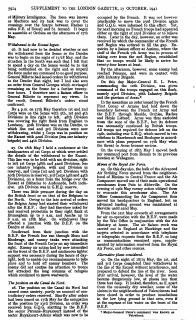
Details
59^4          SUPPLEMENT TO THE LONDON GAZETTE, 17 OCTOBER, 1941
of Military Intelligence. The force was known         occupied by the French. It was not however
as Macforce and its task was to cover the            practicable to move the 23rd Division again
crossings over the Scarpe between Raches (3          and G.Q.G. were informed to this effect. Yet,
miles N.E. of Douai) and St. Amand. It began         by next morning no French troops had appeared
to assemble at Orchies on the afternoon of i7th      either on the right of 23rd Division or to relieve
May.                                                 them. Later in the day, however, an order was
                                                     received by which the commander of the French
Withdrawal to the Escaut begun.                      2nd Region was ordered to fill the gap. En-
   26. It had now to be decided whether or not       quiries by a liaison officer at Amiens, where the
the withdrawal from the Senne to the Dendre          staff of the French 7th Army was in process of
was to begin on the night of 17/18 May, and the      taking over from the 2nd Region, established
situation in the South was such that I felt that     that no troops would be likely to arrive for
to spend a day on the Senne would be to risk         twenty-four hours at least.
being outflanked on the right and so imperil            By the afternoon, however, some enemy had
the force under my command to no good purpose.       reached Pe"ronne, and were in contact with
General Billotte had issued orders for withdrawal    36th Infantry Brigade.
to the Dendre that night, but I had also seen           On this day Major-General R. L. Petre,
an order from General Georges which envisaged        commanding the I2th Division, was given
remaining on the Senne for a further twenty-         command of the troops engaged on this flank,
four hours. I therefore sent a liaison officer to    namely 23rd Division, 36th Infantry Brigade
General Billotte to represent my views. In           and the garrison of Arras.*
the result, General Billotte's orders stood             In the meantime an order issued by the French
confirmed.                                           First Group of Armies had laid down the
   By 4 p.m. on i7th May therefore ist and 2nd       boundary between the French ist Army and
Corps were on the Senne with 5th, ist and 4th        the B.E.F. through Maulde, Orchies, Raches
Divisions in line right to left. 48th Division       and He*nin Li6tard. Arras was thus excluded
was covering the right flank from Enghien to         from the zone of the B.E.F., but its defence
Lembecq. 5oth Division was on the Dendre, to         was necessarily continued by British troops.
which line 2nd and 3rd Divisions were now            All troops not required for defence left on the
withdrawing,, whilst 3 Corps was in position on      igth, including rear G.H.Q. which moved in two
the Escaut with 42nd Division (less one infantry     echelons to Hazebrouck and Boulogne in accord-
brigade) and 44th Division.                          ance with plans prepared on i7th May when
                                                     the threat to Arras became serious.
   27. On i8th May I held a conference at the
headquarters of ist Corps at which were settled         On the evening of i8th May I moved back
the details of the withdrawal to the Escaut.         my command post from Renaix to its previous
This line was to be held with six divisions, right   location at Wahagnies.
to left ist Corps (48th and 42nd Divisions, less     Moves of the Royal Air Force.
one infantry brigade, with 2nd Division in              29. On this day also, the bulk of the Advanced
reserve), 2nd Corps (ist and 3rd Divisions with      Air Striking Force moved from the neighbour-
50th Division in reserve), 3rd Corps (4th and 44th   hood of Rheims to Central France and the Air
Divisions), on a front from the bridge over the      Component moved one of their main operational
Escaut at Binaries to Audenarde, both inclu-         aerodromes from Poix to Abbeville. On the
sive. 5th Division was in G.H.Q. reserve.            evening of I9th May enemy action obliged them
   There was little pressure during the day on       to evacuate this aerodrome also. The Ah*
the British front or on that of the Belgians to      Officer Commanding the Air Component then
the North. Owing to the late arrival of orders       moved his headquarters to England, but an
the Belgian Army had started their withdrawal        advanced landing ground was maintained at
after the B.E.F.; they had therefore asked for       Merville until 22nd May.
and received protection to their right flank at         From the 2 ist May onwards all arrangements
Brusseghem up to 7 a.m. and Assche up to             for air co-operation with the B.E.F. were made
8 a.m. on i8th May. On withdrawal they               by the War Office in conjunction with the Air
effected a junction with the B.E.F. on the           Ministry at home. The air liaison work was
Dendre at Alost.                                     carried out in England at Hawkinge and the
   Southward from their junction with the            targets selected in accordance with telephone
B.E.F. the French line ran through Mons and          or telegraphic requests from the B.E.F. so long
Maubeuge, and enemy tanks were attacking             as communications remained open, supple-
the front of the French Corps on my immediate        mented by information received from the Royal
right. Enemy air action had by now intensified       Air Force, and other sources.
on the front of the B.E.F. and continuous fighter
support was necessary during the hours of day-       Alternative plans considered.
light, both to enable our reconnaissances to take       30. On the night of 18/19 May, the ist, 2nd
place and to hold off enemy bombers. The             and 3rd Corps completed then: withdrawal to
enemy did not confine bis attention to troops        the line of the Escaut without interference, and
but attacked the long columns of refugees            prepared to defend the line of the river. Soon
which continued to move westwards.                   after arrival, however, the level of the water
                                                     became dangerously low, at places less than
The position on the Canal du Nord.                   three feet deep. It looked, therefore, as if, apart
   28. The position on the Canal du Nord had         from the unusually dry weather, some of the
caused some anxiety, partly on account of con-       sluices in the neighbourhood of Valenciennes had
tradictory orders received. Shortly after orders     been closed in order to produce inundations
had been issued on I7th May for the occupation       in the low lying ground in that area, even if
of the position by 23rd Division, an order was       at the expense of the water on the front of the
received from G.Q.G. allotting to the B.E.F.         B.E.F.
the sector Pe'ronne-Ruyalcourt instead of the          * Major-General Petre's command was known as
sector Ruyalcourt-Arleux which was now to be                            Petreforce.
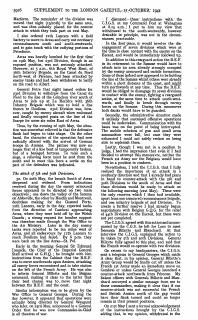
Details
•5916        -SUPPLEMENT TO THE. LONDON GAZETTE, -17 -OCTOBER:
 Macforce. The remainder of the division was           - I .discussed,--these- instructions- with,'.the
 moved that night (i9/20th) to the same area,        .C.I.G.S. at- my Command Post at Wahagnies
 and was thus suitably placed for the counter         at 8.15 a.m.; I put to him my view that
 attack in which they took part on 2ist May.          withdrawal to "the south-westwards, however
    I also ordered I2th Lancers with a field          desirable in principle, was not. in the circum-
 battery to move to Arras and carry'out necessary     stances practicable. ;
 reconnaissances south and south-westwards,          . In the first place, it would involve the dis-
 and to gain touch with the outlying portions of      engagement of seven divisions which were at
 Petreforce.                                          the time in close contact with the enemy on the
   Arras was heavily bombed for the first time'       Escaut, and would be immediately followed up.
 on igth May, but 23rd Division, though in an            In addition to this-rearguard action the B.E.F.
exposed position, was not seriously attacked.         in its retirement to the Somme would have to
 However, at 5 a.m., 6th Royal West Kent, of          attack into 'an area already strongly occupied
 36th Infantry Brigade, on the Canal du Nord          by the enemy armoured and mobile formations.
north-west of Peronne, had been attacked by           Some of these indeed now appeared to be holding
enemy tanks and had been withdrawn to Sailly        •the line of the Somme whilst others were already
on the road to Albert.                              -within a short distance of the coast, and might
                                                      turn northwards at any time. Thus the B.E.F.
   General Petre that night issued orders for         would be obliged to disengage its seven divisions
23rd Division to withdraw from the Canal du           in contact with the enemy, fighting a rearguard
Nord to the line of the Grinchon river south of     'action, at the same tune to attack south-west-
Arras to join up at La Herliere with 36th             wards, and finally to break through enemy
Infantry Brigade which was to hold a line             forces on the Somme. During this manoeuvre
thence to Doullens. 23rd Division was, how-          both flanks would have to be guarded.
ever, caught by enemy aircraft when embussed
and finally occupied posts on the line of the            Secondly, the administrative situation made
Scarpe for some six miles East of Arras.             it unlikely that sustained offensive operations
                                                     could be undertaken. Communication with the
   Thus, by the evening of igth May, the situa-      bases was on the point of being interrupted.
tion was somewhat relieved in that the defensive     The mobile echelons of gun and small arms
flank had begun to take shape. On the other          ammunition were full, but once they were
hand, the character of the operation had now         exhausted I could not safely reckon on being
radically altered with the arrival of German         able to replenish them.
troops in Amiens. The picture was now no                 Lastly, though I was not in a position to
longer that of a line bent or temporarily broken,    judge, I had the impression that even if I had
but of a besieged fortress. To raise such a          decided to attempt this manoeuvre, neither the
siege, a relieving force must be sent from the       French ist Army nor the Belgians would have
south and to meet this force a sortie on the         been in a position to conform.
part of the defenders was indicated.
                                                         Nevertheless, I told the C.I.G.S. that I fully
                                                     realised the importance of an attack in a
  The attack of $th and 50$ Divisions.               southerly direction and that I already had plans
    32. On 2oth May, the breach South of Arras       in hand to counter-attack with the 5th and
 deepened and widened. From indications              5oth Divisions to the south of Arras and that
 received during the day the enemy armoured          these divisions would be ready to attack on
 forces appeared to be directed on two main          the following morning (2ist May). These were
 objectives; one down the valley of the Somme       the only reserves which I then had available,
 on Abbeville, the other by Hesdin and Montreuil,   apart from one armoured reconnaissance brigade,
 doubtless making for the Channel Ports.            and one infantry brigade of 2nd Division. To
 I2th Lancers, early in the day, reported tanks     create a further reserve I had already begun
"from the direction of Cambrai approaching          negotiations with Belgian G.Q.G. for the relief
 Arras, where they were held off by the Welsh       of 44th Division on the Escaut, but these were
 Guards; a strong request for bomber support        not yet completed.
 was therefore made through the War Office to           The C.I.G.S. agreed with this action and accom-
 the Air Ministry. Later in the day enemy           panied by the C.G.S. he left for Lens to meet
 tanks were reported to be ten miles west of        Generals Billotte and Blanchard. At that
 Arras, and all endeavours by I2th Lancers to       interview the C.I.G.S. explained the action to
 reach Doullens had failed. By 6 p.m. they          be taken by 5th and 5oth Divisions. General
 were back on the line Arras—St. Pol.               Billotte fully agreed to this plan, and said that
    Early in the morning General Sir Edmund         the French would co-operate with two divisions.
 Ironside, the Chief of the Imperial General            On return to my headquarters, the C.I.G.S.
 Staff arrived at G.H.Q.; he brought with him       sent a telegram to General Georges which made
instructions from the Cabinet that the B.E.F.       it clear that, in his opinion, General Billotte's
was to move southwards upon Amiens, attacking       Army Group would be finally cut off unless the
 all enemy forces encountered and to take station   French ist Army made an immediate move on
 on the left of the French Army. He was also        Gambrai or unless General Georges launched a
to inform General Billotte and the Belgian          counter-attack northwards from Peronne. My
 command, making it clear to the latter that        liaison officers with Generals Billotte and Blan-
their best chance was to. move that night           chard conveyed a similar message from me to
between the B.E.F. and the coast.                   those commanders, making it clear that if our
    Similar information was to be given by the      counter-attack was not successful the French
 War Office to General Georges. During the          and British Armies north of the gap would
 day however, it appeared that operations were      have their flank turned and could no longer
actually being directed by General Weygand          remain in their present positions.
who later, on 23rd May, announced in a General          On 2ist May I sent a formal acknowledgement
Order that he was now Commander-in-Chief            of the instructions brought by the C.I.G.S.
in all theatres of war.                             adding that, in my opinion, withdrawal to the
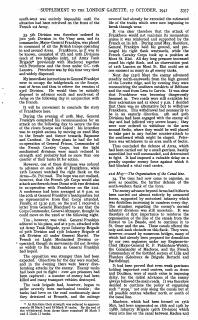
Details
-SUPPLEMENT TO THE LONDON~GAZETTE; 17 OCTOBER, 1941

south-west was' entirely impossible until the              •covered" had -already far e'xceeded the estimated
situation had been retrieved on the front of the            life of the tracks which were now beginning to
French ist Army.                                            break through wear.
                                                               It v/as clear therefore that the attack of
   33. 5th Division was therefore "ordered .to              Frankforce would not maintain its momentum
join 5oth Division in the Vimy area, and its               .unless it was reinforced and supported by the
commander, Major-General Franklyn, was placed               French on its left. • During 22nd May, therefore,
in command of all the British troops operating              .General Franklyn held his ground, and pro-
in and around Arras. Frankforce, as it was to               longed his right flank westwards, while the
be known, consisted of 5th and 5oth .Divisions             -French Cavalry Corps took up a position at
(each of two brigades only), ist Army Tank                 •Mont St. Eloi. All day long pressure increased
Brigade* (previously with Macforce) together                round his right flank, and an observation post
with Petref orce. and the force under O.C. i2th             of i2th Lancers on Mont St. Eloi could see at
Lancers. Petreforce was by this time very tired             one moment as many as 48 enemy tanks.
and widely dispersed.                                      • Next day (23rd May) the enemy advanced
   My immediate instructions to General Franklyri           steadily north-eastwards from the high ground
were to. occupy the bridgeheads on the Scarpe,              of the Lorette ridge, and by evening they were
east of Arras and thus to relieve the remains of            reconnoitring the' southern outskirts of Bethune
23rd Division. He would then be suitably                    and the road from Lens to Carvin. It was clear
disposed to advance south and south-east of                 that Frankforce was becoming dangerously
Arras on the following day in conjunction with              hemmed in. Two roads were still available for
the French.                '                                their extrication and at about 7 p.m. I decided
   It will be convenient to conclude the story              that .there was no alternative but to withdraw
of Frankforce here.                                         Frankforce. This withdrawal had necessarily to
                                                            be in an easterly direction. 5th and 5oth
   During the evening of 20th May, General                 Divisions had been engaged with the enemy all
Franklyn completed his reconnaissances for an               day and had inflicted very severe losses ; they
attack on the following day to secure the line              were now ordered to withdraw to the area
of the rivers Scarpe and Cojeul: his intention              around Seclin, where they would be well placed
was to exploit success by moving on 22nd May                to take part in any further counter-attack to
to the Sensee and thence towards Bapaume                    the southward which might be staged. Petre-
and Cambrai. In these plans he had the full                 force was withdrawn to an area north of Seclin.
co-operation of General Prioux, Commander of
the French Cavalry Corps, but the light                        Thus concluded the defence of Arras, which
mechanised divisions were much" reduced in                  had been carried out by a small garrison, hastily
strength and probably had no more than one                  assembled but well commanded, and determined
quarter of their tanks fit for action.                      to fight. It had imposed a valuable delay on a
                                                            greatly superior enemy force against which it
   However, one of these divisions was ordered              had blocked a vital road centre.
to advance on each side of Frankfbrce, while
12th Lancers watched the right flank on the                2ist May — The Organisation of the Canal line.
Arras—St. Pol road. The hope was not realised,
however, that the French 5th Corps would also                 34. The time had now come to organise, as
attack southwards from Douai with two divisions            soon as possible, the further defence of the
in co-operation with Frankforce on the 2ist.               south-western flank of the force.
A conference had been arranged at 6 p.m. on                " The enemy advance beyond Arras had hitherto
the 20th at General Franklyn's headquarters but            been carried out almost entirely by armoured
no representative from that Corps attended.                forces, supported by motorised infantry which
Finally, at 12.30 p.m. on the 2ist I received a            was doubtless increasing in numbers every day.
letter from General Blanchard to say that the              The situation regarding the enemy's normal
Corps Commander, General Altmeyer, thought'he              infantry divisions was still uncertain. It was
could move on the 22nd or the following night.             therefore of first importance to reinforce the
   Tim;, however, was vital. General Franklyn              organisation of the line of the canals from the
adhered to his plans, and at 2 p.m. attacked with          Escaut to La Bassee, and to continue it to
ist Army Tank Brigade, I5ist Infantr,y Brigade             St. Omer and the sea. These canals offered the
of 5oth Division and I3th Infantry Brigade of              only anti-tank obstacle on this flank. They were,
5th Division all under General Martel. The                 however, crossed by numerous bridges, many of
French ist Light Mechanised Division co-                   which had already been prepared for demolition
operated, though its movements did not develop             by our own engineers under my Engineer-in-
so widely to the flanks as General Franklyn                Chief (Major-General R. P. Pakenham- Walsh),
had hoped.                                                 the Commander of Macforce, and the French
                                                           Commanders' of the fortified sectors of Lille and
   The opposition was stronger than had been               Flanders (Qene'raux de Brigade Bertschi and
expected. Objectives for the day were reached,             Barthdiemy).
and in the evening there were heavy dive-                     It had been proved that even weak garrisons
bombing attacks by the enemy. Enemy tanks                  holding important road centres, such as Arras
had been put to flight: over 400 prisoners had             and Doullens, were of much value in imposing
been captured: a number of enemy had been                  delay, for the initial advances of the enemy
killed and many transport vehicles destroyed.              always followed the main roads. It was therefore
   The tank brigade had, however, begun to                 decided to continue the policy of organising
suffer severely from mechanical trouble ; the              such " stops," not only along the canals but at
tanks had been on the road continuously since              all possible centres whether north or south of
 they detrained -at Brussels, and the mileage              the canal line.
                                                              Macforce, which had been formed on
   * At this time their strength was reduced to approxi-   May, had been augmented on i8th and igth by
mately 65 Mark I and 18 Mark II tanks. By the end of
the withdrawal from Arras there remained 26 Mark I          I38th Infantry Brigade (46th Division) which
and 2 luark II tanks.                                      went into line on the canal between Raches and
Details
SUPPLEMENT to THE LONDON GAZETTE, 17 OCTOBER, 1941                                        5919
   On return from the meeting, orders were issued           evacuation was carrie.d out under the orders of
 to implement these decisions, and that evening            the War Office, being completed on the night
 I moved my command post to the Chateau de                 of 23/24th May.
 Premesques, midway between Armenti&res and
 Lille.                                                     The Administrative Situation.
                                                               37. During the whole of this period I had
 The final severance of the L. of C. and the invest-        been kept in the closest touch with the adminis-
     ment of Boulogne.                                      trative situation by the Quarter-Master-General
      36. During the gist May the enemy penetra-            (Lieutenant-General W. G. Lindsell). Up to
   tion into the rearward areas increased and com-          i6th May the administrative arrangements
  munication across the Somme was finally                  which formed part of Plan D had worked well,
   severed. Since the I7th May the Commander                and although enemy air action steadily intensified
   of the Lines of Communication Area (Major-               during the period, there was no serious inter-
   General P. de Fonblanque) had been taking               ference with the maintenance of the force.
   energetic steps for its defence, in so far as it was        On i7th May, however, the Quarter-Master-
  possible with the few and scattered troops                General decided, in view of the situation south
   available.                                              of Arras, to discontinue the use of the railway
      These consisted, apart from Armoured                 from the regulating station at Abancourt via
  Division and 5ist Division now returning                 Amiens and Arras, and to switch all traffic via
  from the Saar, of those portions of I2th and             Eu and Abbeville to Bethune. He also ordered
  46th Divisions (some nine battalions in all)             forward every available trainload of ammunition
   which could not be despatched forward, three            to the Hazebrouck area.
  unbrigaded infantry battalions and the contents              On igth May, directly after the C.G.S. had
  of the reinforcement depdts, together with               spoken to the War Office as to the possibility
  troops of the Auxiliary Military Pioneer Corps           of enforced withdrawal, the Q.M.G. telephoned
   and of the administrative services.                     to the War Office to discuss the opening of new
      On '23rd May, however, the War Office                bases. On the same day, one of his staff officers
  appointed Lieutenant-General- Sir Henry                 .left for London to arrange an emergency ship-
  Karslake to command the defences on the Lines            ment programme for supplies and stores to
  of Communication and I was not concerned in              the ports of Boulogne, Calais and Dunkirk. It
  the operations which ensued. Nevertheless,               was to prove none too soon, for the railway
  I did not immediately abandon hope of the                at Abbeville was cut on 2ist May. A new plan
  Armoured Division breaking through, and I                had to be put into operation at once for the
  urged the War Office to use their best endeavours.       maintenance of the fcfrce north of the Somme,
  to this end and to prevent its being used piece-         estimated at 250,000 men and requiring a daily
  meal in local operations at the request of the           lift of ammunition, supplies and petrol, of some
  French Command.                                          2,000 tons.
      At about 3.30 p.m. on the 2ist May, I received          The petrol situation, fortunately, gave no cause
  information that an enemy column of all arms             for concern since, although the dumps forward
  was approaching Boulogne. The rear element               of the Somme had been destroyed on evacuation,
  of G.H.Q., consisting largely of the Adjutant-           together with a large civil storage plant near
  General's Branch and of headquarters of                  Douai, there still remained a large army bulk
  Services, which had been sent to that town on            filling station near Lille.
  I7th and i8th May, had been moved to Wimereux               The supply situation was however, bad, and
  on 20th May as a result of enemy bombing.                on 2ist May, Corps had only three days
  * All possible steps had been taken to put               R.A.S.C. supplies in the forward area. Matters
  Boulogne in a state of defence with the troops           might, at any time, have become serious had it
  available, consisting of labour units and the            not been for the success of the measures taken
  personnel of rest camps. On igth May, an                 between 23rd and 26th May, to organise the
  endeavour was made to bring up troops from               supplies in Lille belonging to the Expeditionary
  beyond the Somme, to hold the line of the Canche;        Force Institutes and to civilian firms.
  but the time for this was past and the troops               The decision to maintain the force through
  could not get beyond Abbeville. The hospitals            the northern ports was finally taken on 2ist
  in the Etaples area were now evacuated, and on           May and the headquarters of a Base Sub-Area
  2ist May a party of Engineers, supervised by             established at Dunkirk, together with a section
  my Director of Works, Brigadier W. Cave-                 of Q.M.G's staff, in close touch with the British
  Browne, demolished most of the bridges over              and French Naval authorities.
  the Canche.                                                 Rail communication in the area was by now
      As soon as the news of this new threat was           precarious, and plans were worked out on the
  received, the War Office was asked for bomber            basis of establishing dumps, one in each Corps
. support, which was at once forthcoming. Enemy            area, which could be wholly maintained by
  tanks were located and bombed at Hesdin and             road. The position was, by this time, greatly
  Fruges, but no good targets were obtained on            complicated by the numbers of improvised
  the coast road. The War Office was also asked           forces which the quickly changing situation
  to send a detachment of Royal Marines for the           had made necessary: most of these, like the
  defence of Boulogne but had already done                three divisions for pioneer duties, had no proper
  so. Early on the 22nd May, 2oth Guards                  administrative echelons. Some were within
 Brigade (Brigadier W. A. F.' L. Fox-Pitt) of             reach of Corps, but others were not and these
 two battalions with an anti-tank battery                 had to be dependent on fortuitous sources of
.landed, thus establishing the defence of the             supply, or else live for a time on the country.
 town and enabling those troops who were not                  The situation had" grown even worse by
  required for the defence to be evacuated in             22nd May, when the ports at both Boulogne
 good order.                                              and Calais were out of action, and the greater
     By the evening of 22nd May, the enemy                part of the Railhead Mechanical Transport
 armoured forces were within nine miles of Calais.        Companies had been captured. Furthermore
                                           if-g   final   a^ reconnaissance of Ostend had shewn that the
Details
SUPPLEMENT TO THE LONDON GAZETTE, 17 OCTOBER, 1941                                   5921
as it turned out, fatally injured in a motor             These moves left only four divisions on the
accident returning from the conference which he      frontier defences and made'it possible to with-
and I had attended at Ypres on the night of          draw the headquarters and Corps troops of
2ist May. General Blanchard succeeded him in         3rd Corps for employment on the Canal line
command of the French First Group of Armies,         where they were badly needed. This was done
and presumably succeeded to the function of          at 4 p.m. on 23rd May, leaving ist Corps with
co-ordination although this was never officially     42nd and ist Divisions and 2nd Corps with
confirmed.                                           3rd and 4th Divisions.
                                                         2nd, 44th and 48th Divisions tcame under
out                                                  3rd Corps and that night made a' march west-
of three different nations, and that I personally    wards. I had decided to employ 2nd and 44th
could not undertake any measure of co-ordina-        Divisions on the Canal line facing west, but their
tion in the forthcoming operations as I was          move required a farther twenty-four hours to
already actively engaged on my Eastern and           complete.
Southern fronts and also threatened on my                Meanwhile the canal defences required stiffen-
Lines of Communication.                              ing as much as possible. And accordingly,
   Nevertheless, I saw General Blanchard and         Polforce temporarily assumed control of the
proposed to him that to implement our part of        whole front between St. Omer and Raches,
the Weygand plan, we should stage an attack          and two regiments of 2nd Armoured Recon-
southwards with two British divisions, one           naissance Brigade were placed under its com-
French division and the French Cavalry Corps.        mand. Polforce also undertook the responsi-
So far as we were concerned the attack could         bility for demolitions as far north as Watten
not take place till the 26th at the earliest owing   including no less than 43 bridges.
to the.reliefs which were in progress, and the           The sector eastward from Raches was now
need to assemble 5th and 5oth Divisions. I           handed over to the French, the British
also asked General Blanchard to enquire from         demolition parties being left on the bridges at
G.Q.G. how such an operation could be syn-           the disposal of French 3rd Corps.
chronised with the attack from the line of the           Macforce, now comprising four field batteries,
Somme which was said to be in process of             half an anti-tank battery and one battalion,
preparation. These negotiations, as will be seen,    withdrew from the line Carvin-Raches on
were later continued by Sir Ronald Adam on           23rd May and was moved to a rendezvous in
my behalf. I emphasised, both to the Secretary       the. eastern end of the Forest of Nieppe where
of State and'to General Blanchard, that the          it was joined by Headquarters and one. regiment
principal effort must come from the south, and       of ist Armoured Reconnaissance Brigade.
that the operation of the northern forces could      i39th Infantry Brigade (46th Division) continued
be nothing more than a sortie.                       to hold the sector from Carvin to Raches until
   I never received any information from any         26th May.
source as to the exact location of our own or           .The situation on the canal line deteriorated
enemy forces on the far side of the gap; nor         during 23rd May and the enemy established
did I receive any details or timings of any          bridgeheads at Aire, at St. Omer (which seems
proposed attack from that direction.                 to have changed1hands twice during the day)
                                                     and near Watten. His tanks were reported as
 zyrd May—Further development of the Canal line.     harbouring in the forest of Clairmarais, and
    39. On 23rd May the organisation- was con-       during the day his armoured fighting vehicles
 tinued of " stops " behind the Canal line.          came within three miles of Hazebrouck. ,By
    At Hazebrouck, where the organisation of         the evening, however, these movements nad
 defences had been begun on 2 ist May by the         been checked and steps taken to keep. the
 staff of the Major-General R.A. at G.H.Q.           enemy out of the Forest of Nieppe.
 the garrison was now about 300 strong and             . The enemy had also been active that day on
 included eighteen French light tanks and some       the canal line at Be'thune, where they had been
 Belgian machine gunners.                            driven off and had then moved towards Carvin.
    Cassel was occupied by i3/i8th Hussars, less     Here the defenders had been reinforced by
 one squadron, and on the same afternoon (23rd)      further artillery under C. R. A. 2nd Division
 Brigadier Usher's force took over the defence of     (Brigadier. C. B. Findlay), and the crossings
 Bergues.                                            were firmly held.
    On the night of 22/23rd May the withdrawal-          On 23rd May Calais was finally isolated. Its
 to the frontier defences had been carried out.      garrison; had been reinforced under the orders
 The French had taken over the sector northwards     of the War Office, by 3oth Infantry Brigade
 from Maulde and the right boundary of the           (Brigadier C. Nicholson) and 3rd battalion
.B.E.F. was now Bourghelles-Seclin both inclu-       Royal Tank Regiment—a cruiser tank regiment.
 sive to the French.. This change of boundary did    I had intended to move the latter within the
 not however affect the dispositions which the       canal line, but it was already too late-. After
 B.E.F. had taken on the Canal line by which         two attempts they were driven back into Calais,
 the rear of the French positions was protected.     with the. exception of three tanks which
    On the left of the B.E.F. the Belgians, who      eventually reached Dunkirk by way of Grave-
 had previously agreed to relieve the 44th           lines. The remainder of the gallant defence
 Division after withdrawal to the Lys on the         of Calais was conducted under the orders of the
 night of 23rd/24th May, ordered one of their        War Office. It-was finally concluded on the
 divisions to occupy the sector Halluin-Courtrai     night of 26/27th May.
 on the night of 22nd/23rd May. 44th Division            Information received at this time indicated
 was concentrated in G.H:Q. reserve on the           that two enemy armoured divisions were
 morning of 23rd May.                                converging on Calais and two more,- supported
    On the right, 2nd and 48th Divisions passed      by a motorised. S. S. (Schutz-Staffel) division,
 through the French on the night of 22nd/23rd        on St. Omer. A fifth armoured division appeared
 Mav and also concentrated in G H.O reserve.         to he mnvincr rm
Details
SUPPLEMENT TO THE LONDON GAZETTE, 17 OCTOBER, 1941                                    5923
   The remaining infantry brigade of 48th             Cavalry Corps for this attack. Therefore, even
Division (i43rd) was later placed under 2nd           if no British divisions could be made available,
Corps, and a pioneer battalion sent to begin          the possibility of carrying out the operation
preparations for the defence of Ypres in case         would not be entirely precluded. I did realise
Belgian measures for the purpose should prove         however that the French Were unlikely to take
inadequate.                                           the offensive unless British support was forth-
   The Belgians had at this time one division         coming.
in reserve between Menin and Ypres, and this             Even so, however, the situation on my northern
was ordered to counter-attack at 2 p.m. "How-         flank was deteriorating so rapidly that I was
ever it is doubtful whether it was found possible     convinced that there was no alternative but to
ever to launch this counter-attack. Orders were       occupy, as quickly as troops could be made
also issued for the Belgian ist Corps to come         available, the line of the Ypres-Comines canal
into line on the right of their 4th Corps between     and the positions covering Ypres. I therefore
Ghelewe and Ledeghem; this move was carried           issued orders to 5oth Division to join 2nd
out on the 26th May.                                  Corps at once, and shortly afterwards I ordered
   Sir John Dill (who had now become C.I.G.S.)        5th Division to follow. 2nd Corps placed
and whom I had asked to visit me, 'arrived on         5th Division on its left flank northwards
the morning of 25th May, and I explained the          from Halluin along the Ypres-Comines canal
position to him. He then telegraphed to the           with 5oth Division on its left around Ypres. At
Prime Minister and to the Secretary of State,         this time also, the greater part of the medium
that there could be no disguising the seriousness     and lieavy artillery of ist and 2nd Corps was
of the situation. He added that in his opinion        grouped under 2nd Corps, and the successful
the proposed counter-attack to the south could        defence of the positions on the Ypres-Comines
not be an important affair in view of the enemy       canal and around Ypres, which was maintained
attacks which had penetrated the Belgian              during the next three days; was greatly assisted
defences.                                             by these artillery units, which remained in
   General Blanchard arrived during Sir John          action till they had fired all their ammunition.
Dill's visit and took part in our discussions.            The Commander of 3rd Corps, who was no
   During the day the Belgians continued to           longer required to take part in the attack
withdraw in a north-westerly direction under           southwards, was now ordered to take over the
enemy pressure. Reports also indicated that a          command of the front from St. Omer to Raches
fresh enemy attack would take place next day           from Major-General Eastwood, whom he relieved
on the northern end of the Lys position.               on 26th May. .
                                                          I immediately communicated my decision to
                                                       the headquarters of the French First Group of
       OPERATIONS—THIRD PHASE                          Armies, but I was unable to get-into personal
                                                       touch with General Blanchard that evening as
                 26th-3ist MAY                         he was visiting the Belgian G.Q.G. at Bruges.
The decision taken, in agreement with the French,      However, I went to see General Blanchard at
  to withdraw behind the Lys. H.M. Covernment          his headquarters at Attiches early next morning
  authorises withdrawal to the coast. The Dunkirk      (26th May), at a moment when the enemy was
  perimeter organised by Sir Ronald Adam.              attacking at Carvin and had penetrated the
   The Belgians ask for an armistice. General          front of a North African Division near Bois
  Blanchard at first determines to remain in           d'Epinoy. I found that General Blanchard also
  position but later French yd and Cavalry Corps       feared the collapse of the Belgian Army and felt
  withdraw to Dunkirk. Occupation of perimeter         that the time for a counter attack southwards
  completed. Problems of embarkation of British        was past. Indeed he had already decided that
  and French troops. Withdrawal of 2nd and             the situation on both flanks made it necessary
  yd Corps. G.H.Q. closes and C.-in-C. embarks         to withdraw.
  for England.                                            After an hour's discussion, we arrived at a
                                                       joint plan for the withdrawal of the main bodies
The decision to Withdraw.                              behind the line of the Lys. These arrangements
  43. By 6 p.m. that night (25th May) I was            were subject to there being no further deteriora-
convinced that the steps I had taken to secure         tion in the Belgian situation.
my left flank would prove insufficient to meet            With this decision, there vanished the last
the growing danger in the north.                       opportunity for a sortie. The layout of the
  The pattern of the enemy pincer attack was           B.E.F. was now beginning to take its final
becoming clearer. One movement from the                shape. Starting from what could be described
south-west on Dunkirk had already developed            as a normal situation with Allied troops on
and was being held; the counterpart was now            the right and left, there had developed an
developing on the Belgian front.                       ever lengthening defensive right flank. This
   The gap between the British left and the            had then become a semi-circular line, with
Belgian right, which had been threatening the          both flanks resting on the sea, manned by
whole day, might at any time become impossible         British, French ' and Belgians. Later the
to close : were this to happen, my last hope of        position became, a corridor in shape. The
reaching the coast would be gone. At this              southern end of this corridor was blocked by
tune, it will be recalled, I had no reserves beyond    the French ist Army; and each side was
a single cavalry regiment, and the two divisions       manned, for the greater part of its length, by
(5th and 5oth) already earmarked for the attack        British troops. Next to the sea were French
southwards.                                            troops on the west, and French and Belgian
   The French ist Army, which was not                  troops on the eastern flank.
affected in the same way as the B.E.F.^                   The immediate problem was to shorten this
by the situation which was developing on               perimeter. British and French forces were
the Belgian front, had, it will be remembered,         together holding a front of 128 miles of which
agreed to provide three divisions and the               97 miles were held by British troops, though
Details
SUPPLEMENT TO THE LONDON GAZETTE, 17 OCTOBER, 1941                                  5925
  makes it impossible to extend our boundaries,       was likely to prove an exacting one: work
  which were notified yesterday, further to the       had to begin at once, and my own headquarters
  right.                                              were fully occupied with the withdrawal of the
      We must therefore, with regret, say that        forward troops.
  we have no longer any forces available to               I therefore appointed Lieut-General Sir Ronald
  fill the gap in the direction of Ypres.              Adam to undertake this duty, and sent with
     As regards the withdrawal to the Yser the.        him my Quarter-Master-General and other
  idea must be ruled out since it would destroy        staff officers from G.H.Q. He was to take
  our fighting units more quickly than the             command of the troops already in the area,
  battle now in progress, and this without loss        make arrangements for the troops of ist, 2nd
  to the enemy."                                       and 3rd Corps who would be withdrawing into
   On receipt of this information, on the morning      the bridgehead and arrange for the embarkation.
of 26th May, I asked the Secretary oi State to         He was to act in conformity with the orders of
bring strong pressure on the Belgian Govern-           General Fagalde, provided that these did not
ment to withdraw their Army westwards and              imperil the safety and welfare of British troops-
to maintain touch with the B.E.F. I also                  Sir Ronald Adam accordingly handed over
communicated in the same sense to Sir Roger            command of the 3rd Corps to Major-General
Keyes, but his reply never reached my                  S. R. Wason (till then Major-General R.A. at
Headquarters.                                          G.H.Q.), and took up his duties on the morning
                                                       of 27th May.
26th May—The Southern and Western fronts.
                                                          At 7 a.m. that morning he attended a con-
   46. On the remainder of the front 26th May          ference at Cassel as my representative. At
was marked by heavy air action everywhere.             this conference there were present Admiral
The enemy attack on the French North African           Abrial and General Fagalde from Dunkirk,
division at Carvin which was in progress when          General Blanchard, General Prioux, now in
I visited General Blanchard at Attiches, was           command of the French ist Army, and General
driven back by the • prompt action of two              Koeltz who was representing General Weygand
battalions of 5oth Division which were deployed
behind the French troops. 2nd and 44th                    Sir Ronald Adam and General Fagalde
Divisions reacted against the enemy and both           arrived early, and before the conference began
succeeded in advancing some distance west-             they had the opportunity to -reach general
wards from Merville and Hazebrouck respec-            'agreement on the organisation of the bridgehead
tively towards the Canal.                              position.
   Further north, the French had completed the            The perimeter was to extend from Gravelines
relief of all our troops on the river Aa from          south-eastwards to the Canal de la Colme,
St. Momelin northwards But had themselves              along the canal to Bergues and thence by Furnes
begun in places to withdraw towards the.               and Nieuport to the Belgian coast. In fact,
Mardyck Canal. It therefore became the more            the French were by now evacuating Gravelines
necessary to strengthen further the defences           and the western part of the perimeter, and in
of Bergues, and this was carried out under the         process of going back to the line of the Mardyck
orders of 48th Division.                               Canal from the sea to Spyker, on the Canal
                                                       de la Colme. The French were to be responsible
 Plans for final withdrawal.                           for the defence of the western half of the peri-
    47. On this evening (26th May), I put in hand      meter as far as Bergues inclusive, and the
 my plans for a final withdrawal. I was uncertain      British for the eastern half. By this time, the
 how far I should be successful in withdrawing         position of the Belgian Army was so obscure
 the whole of the B.E.F. within the bridgehead         that the possibility of its being included in
 at Dunkirk, nor could I judge how much fighting       the bridgehead was not taken into account,
my troops would have to undertake during the           though the perimeter could of course have been
withdrawal.                                            extended eastwards to include them if necessary.
    I had, therefore, asked the War Office whether        Sir Ronald Adam then explained to General
 it would be possible to send out an infantry          Fagalde his plan for Corps boundaries, assembly
 brigade of the ist Canadian Division so as to         areas and the layout of beaches. He specially
 provide a nucleus of fresh and well trained           stressed the importance of avoiding traffic
 troops on the bridgehead position. ~ This request   .congestion in the perimeter and said that he
 was at once agreed to, and orders were given          had decided to allow no British transport
 to despatch the Brigade to Dunkirk on the             north of the canals except such as was strictly
 night 26th/27th May. These orders were,               necessary for tactical, supply or medical pur-
 however, cancelled on 28th May.                       poses. He urged General Fagalde to issue
                                                       similar orders to the French troops under his
    The contraction of the B.E.F. area and the         command. He also suggested that the French
 shortening of its Lines of Communication was          troops entering the bridgehead position should
 now making it possible to dispense with a             all be located in the'western part of the peri-
 number of the rearward units. I had already           meter. However, it appeared that these orders
 issued orders for the embarkation of a number of      did not reach all the French troops, who brought
 key personnel who could be spared so as to ease       a quantity of transport into the sector.
 the supply situation which was becoming acute;
 I now ordered the withdrawal of all units which          These matters were later reviewed at the full
'were not required to continuejihe battle. This        conference, but the principal business was the
 policy involved leaving most of the fighting          issue by General Koeltz of an order of the day
 troops until the last, but if full use was to be      by General Weygand.
 made of the shipping available, and congestion           This enjoined a resolute attitude on the part
 avoided on the beaches, no other course was            of every leader, and the counter-offensive
 possible.                                             wherever possible. General Koeltz then pro-
    The task of organising a bridgehead at Dun-         ceeded to urge Generals Blanchard and Fagalde
 kirk, and of arranging the details of embarkation      to attempt the recapture of Calais and, though
Details
SUPPLEMENT TO THE LONDON GAZETTE, 17 OCTOBER, 1941                                    5927
beaches were organised at La Panne, Bray Dunes          While at the Bastion, General Koeltz asked
and Malo-les-Bains, one being allotted to each       me, shortly after n p.m. whether I had yet
Corps ; and military beach parties were impro-       heard that H.M. the King of the Belgians had
vised on each Corps beach. They carried on           asked for an armistice from midnight that
without naval assistance for two days, but were      night. This was. the first intimation I had
hampered by a.shortage of small boats and by a       received of this intention, although I had
lack of experience in their use. The troops were     already formed the opinion that the Belgian
unable to handle boats on a falling tide, and        Army was now iqcapable of offering serious
during daylight on the 27th, when only one           or prolonged resistance to the enemy. I now
destroyer and two whalers were available for         found myself suddenly faced with an open gap
work on the beaches, not more than two hundred       of 20 mile's between Ypres and the sea through
men were embarked.                                   which enemy armoured forces might reach the
    Dunkirk, which for some days had been            •beaches.
heavily bombed, received a particularly severe          Owing to the congestion on the roads, I did
 attack on 27th May; lorry columns had been          not get back to my headquarters at Houtkerque
 set on fire in the town and a pall of black smoke   until about 4.30 a.m. on 28th May. There I
from the burning oil tanks .hung continuously         found that a telegram had been received from
 over the town and docks, impeding the air            the War Office at 1.30 a.m. saying that H.M.
 defence.                                             the King of the Belgians was capitulating at
    Though the outer mole could still be used         midnight.
 the inner harbour was now blocked except to
 small ships.                                         Withdrawal- to' the Sea.
    Dunkirk was therefore cleared of all troops          52. .Next morning (28th May), General
 and they were sent to the dunes east of the          Blanchard arrived at my headquarters at
 town to await embarkation. The port itself           Houtkerque at about n a.m., and I read him
 was kept under the control of G.H.Q. and            .the telegram which I had received the previous
 manned by naval ratings. At one time it              day from the Secretary of State. It was then
 seemed likely to go out of use at any moment,        clear to me that whereas we had both received
 but troops were in fact embarked there till the      similar instructions from our own Government
 end, in numbers which far exceeded expecta-          for the establishment of a bridgehead he had,
 tions.                                               as yet, received no instructions to correspond
    Supplies, water and ammunition were des-          with those I had received to evacuate my troops.
 patched from England to the beaches, and             General Blanchard therefore could not see his
  on 28th May the first convoy arrived. Unfortu-      way to contemplate evacuation.
 nately a high proportion of these stores were            I then expressed the opinion that now the
  destroyed on the way over or sunk when.             Belgian Army had ceased to exist, the only
  anchored off the shore. Nevertheless consider-      alternatives could be evacuation or surrender.
  able quantities were landed at Coxyde and La        The enemy threat to the North-Eastern flank
  Panne and served to create a badly needed           appeared certain to develop during the next
  reserve.                                            forty-eight hours. The long South-Western flank
• During 27th May, the move of 5th and 5oth           was being subjected to constant and increasing
  Divisions was completed and the left flank thus     pressure, especially at Cassel and Wormhoudt,
  extended as far as Ypres. On the front from         and the arrival of the enemy heavy columns
  Bergues to Hazebrouck enemy pressure steadily       could not be long delayed. These considerations
  increased.                                          could not be lightly dismissed. While this dis-
     On the same afternoon, G.H.Q. moved from         cussion was taking place, a liaison officer arrived
  Premesques to Houtkerque (six miles W.N.W.          from General Prioux, now in command of the
  of Poperinghe). Communications were difficult       French ist Army, to say that the latter did not
  throughout. the day since Corps headquarters        consider his troops were fit to make any further
  were all on the move, and it had not yet been       move and that he therefore intended to remain
  possible to re-establish line communications        in the area between Bethune and Lille, protected
  which hitherto had run through Lille.               by the quadrangle of canals.
                                                          I then begged General Blanchard, for the sake
                                                      of France, the French Army and the Allied
 The Belgian Armistice.                               Cause to order General Prioux back. Surely,
    51. During 27th May, I received a further          I said, his troops were not all so tired as to be
 telegram from the Secretary of State which           incapable of moving. The French Government
 read " . . . want to make it quite clear that        would be able to provide ships at least for some
 sole task now-is to evacuate to England maxi-         of his troops, and the chance of saving a part of
 mum of your force possible ". It was therefore        his trained soldiers was preferable to the cer-
 very necessary to discuss further plans with          tainty of losing them all. I could not move
 General Blanchard, for no policy had yet been         him. Finally he asked me formally whether it
 laid down by G.Q.G. or any other French higher        was my intention to withdraw that night to the
 authority for a withdrawal northward of the Lys.      line Cassel-Poperinghe-Ypres.
 I had no idea what plans either he or Admiral            I replied in the affirmative and informed him
 Abrial had in mind.                                   that I now had formal orders from His Majesty's
    In the evening, I left my headquarters at          Government to withdraw the B.E.F. and that
  Houtkerque with the C.G.S. and the French            if I was to have any hope of carrying them out
 liaison officer from .General Blanchard's head-       I must .continue niy move that night. General
  quarters to try and 'get into touch with General     Blanchard's parting was not unfriendly, and
  Blanchard. I failed to find him at La Panne,         when he left I issued my orders for withdrawal
  so I went on to Bastion No. 32 at Dunkirk to         to provide for that change of mind on the part
  visit Admiral Abrial, only to find- that both he     of the French High Command for which I so
  and General Fagalde were equally unaware of          sincerely hoped and which in fact took place
 his whereabouts.                                      later.
Details
SUPPLEMENT TO THE LONDON GAZETTE, 17 OCTOBER, 1941                                     5929
   I communicated the gist of this report to the          The arrival of these troops, though welcome
 C.I.G.S. and I asked that H.M. Government             from-so many points of view, raised the question
 should consider the policy to be followed in the      of embarkation in an acute form. Admiral Abrial
 event of a crisis arising, as well it might.          had apparently received no orders from his
   In reply, I received two telegrams which            Government that the whole of the British troops
.read:—                                                were to be embarked, and he professed great
      ". . . . H.M. Government fully approve           surprise when he heard of my intentions. He
   ypur withdrawal to extricate your force in          had, it seems, imagined that only rearward
   order embark maximum number possible of             elements were to be withdrawn, and that British
   British Expeditionary Force. . . . If you           troops would stay and defend the perimeter to
   are cut from all communication from us and          the last, side by side with the French. I there-
   all evacuation from Dunkirk and beaches had,        fore sent Sir Ronald Adam to see the Admiral.
   in your judgment, been finally prevented            He explained the orders to extricate my Force
   after every attempt to re-open it had failed        which I had received from His Majesty's Govern-
   you would become sole -judge of when it was         ment and which had been confirmed the day
   impossible to inflict further damage to enemy."     before.
    I also received a gracious telegram of en-            Meanwhile, the French troops were expecting,
 couragement and good wishes from His Majesty,         to embark along .with their British comrades,
 the King, which I communicated to all ranks.          notwithstanding that no French ships had so far
    General Weygand telegraphed on this day            been provided: the beaches were becoming
 appealing personally to me to ensure that the         crtiwded with French soldiers, aiid difficulties
 British Army took a vigorous part in any counter-     might have occurred at any time. I urged the
 attacks necessary; the situation, he added,           War Office to obtain a decision as to the French
 made it essential to hit hard. When he sent           policy for embarkation and asked that the French
 this message, he could have had no accurate           should take their full share in providing naval
 information of the real position or of the powers     faculties. However, to permit embarkation of
 of counter-attack remaining to either the French      the French troops to begin at once, I decided to
 or the British. General Koeltz had not, as yet,       allot two British ships to the French that night,
 had time to return to G.Q.G. with a first-hand        and also to give up the beach at Malo-les-Bains
 report on the situation, and in any case the          for their sole use.
 time for such action in the northern theatre
 was long past.
                                                        Medical arrangements.
   French troops arrive : Problems of embarkation.         56. Hospital ships worked continuously till
                                                        3ist May though "continuous bombing made
      55. By 2gth May, the naval arrangements           their berthing difficult and they frequently had
 .were beginning to bear -fruit: however, during       'to put to sea before they were fully loaded.
   the day, the enemy began to shell Dunkirk from       Walking wounded were taken on board personnel
   the' south-west, and the port and the beaches        ships from Dunkirk or the beaches, but to prevent
   were constantly bombed.                              delay in embarking fit men, orders were issued
      Owing to a misunderstanding, the personnel        that the most serious cases should only be
   of certain anti-aircraft units had been embarked     embarked on hospital ships. Casualty Clearing
  instead of being retained for the defence of          Stations had been established at Dunkirk and at
   the port-of Dunkirk. Therefore, I -was the           the beach at La Panne. Some of the wounded
   more dependent on the action of fighter aircraft,    were, however, too ill to move. They had been
   and I made this clear to the War Office. I           collected into two Casualty Clearing Stations,
  realised how heavy was the demand to be made          one at Crombeke and one at Rosendael, where
   on the Royal Air Force for the remainder of the      they were to be cared for till the enemy should
   operation, and how impossible it would be to         arrive.
  expect that they could succeed completely in
  preventing air action on the beaches. Yet they
  did succeed in intercepting a large part of the      The Evacuation of yd and 2nd Corps.
  enemy attacks, and those which'arrived, though          57. The 3rd Corps Sector included the canal
   at times serious, were never able to impede         from Dunkirk to Bergues, with the town of
  our embarkation for long.                            Bergues, and a little more than two miles of
      French troops were now arriving in the peri-     front west of the town. By the evening of .29th,
  meter in large numbers, and, unfortunately,          3rd Corps had withdrawn 44th and 2nd Divisions
  brought with them much transport. The conges-        from their positions and Corps headquarters
  tion created within the perimeter was well-nigh      were now embarked. 44th and 48th Divisions
  unbearable and for two days the main road'           were ordered to be transferred to ist Corps, and
' between La Panne and Dunkirk became totally          2nd, 23rd .and 46th Divisions to proceed to
  blocked with vehicles three deep. The French         Dunkirk for embarkation, ist Corps was also
  were in process of withdrawing all their troops      ordered to embark what remained of 42nd
  behind the defences on the Belgian frontier, and     Division, except for I26th Infantry Brigade.
  for the next two days' their dispositions were       Subsequently a change was made, 44th Division
  superimposed on those of the British troops in       being embarked and 46th Division remaining
  that part of the perimeter between the frontier      with ist Corps.
  and Bergues. The French military forces,
  within the perimeter or now approaching it,             During the 2Qth and 30th May, 5th and 5oth
  consisted of two weak divisions of the i6th          Divisions came into the 2nd Corps, area: the
  Corps (6oth and 68th), General Barthele'my's         former, sadly reduced in numbers, was with-
  regional troops, General de la Laurencie's           drawn from the line, while the latter occupied a
  3rd Corps of two divisions (i2th and 32nd), and      sector between the Belgian frontier and the right
  the Cavalry Corps, together with some artillery.     of the 3rd Division.
Details
5912          SUPPLEMENT TO THE LONDON GAZETTE, 17 OCTOBER, 1941

   I visited H.M. the King of the Belgians and          By the night of i5th May the movements
   General Van Overstraeten and reached agree-        envisaged in Plan D were all running ahead of
  ment that the Belgian ist Corps should be           schedule. 4th Division was moving into Corps
   withdrawn from the area of 2nd Corps and that      reserve behind 3rd Division; 5th Division was
  the left boundary of the B.E.F. should be           moving on to the Senne in place of 5oth Division
  adjusted so as to allow the Belgians the use of     as originally planned, and the latter was now
  the road Vilvorde-Alost for this purpose. I         moving to G.H.Q. reserve along the River
  also stressed the importance of having fresh        Dendre.
  Belgian troops established early in position
  north of Louvain to continue the British line
  covering Brussels.
     Further serious news came from the south                OPERATIONS—SECOND PHASE
  where the enemy had crossed the Meuse between                         (i7th-26th MAY)
  Sedan and Me"zieres, and further north he was
  reported to be surrounding the fortress of St.       Withdrawal to the Escaut decided on; the threat
  Heribert (4 miles S.S.W. of Namur).                    to Arras and to the right flank; formation of
     The French Cavalry Corps on my right had            Macforce and deployment of 2yd Division on
  on the previous day received orders to retire          the Canal du Nord. The enemy reaches the
  to the Perwez position whence they subsequently        Somme and cuts communications with the Base ;
  withdrew, according to plan, to the main position      Calais and Boulogne invested: the admini-
  running through Gembloux.                              strative position. The organisation of the Canal
                                                         line. Alternative lines discussed with French
     At the request of Air Marshal Barratt I             and Belgians, resulting in further withdrawal
  placed at his disposal for use on the French          from the Escaut to the Frontier defences and
 front three squadrons of fighters which I had          fresh plans for attacks southwards in conjunction
 only recently received in response to an urgent         with French main forces. $th and $oth Divisions
  appeal to the Secretary of State for War.             counter-attack on 21st May. A further attack
     23. On 15th May the Dutch Army laid down           in conjunction with French planned for
 its arms; the immediate effect of this on the           26th May: this plan is abandoned owing to
 operations of the B.E.F. was small, for the            penetration of Belgian line on the Lys.
 British forces operating in Holland had at no
 time been under my command. I anticipated,             The beginning of the withdrawal (ifith-T.'jth May)
 however, that this would come as a shock to              24. By i6th May, it became clear that a
 the Belgian Army.                                     prolonged defence of the Dyle position was
     The French 7th Army withdrew' its advanced        impracticable. The French ist Army on my
 formations to the neighbourhood of Antwerp            right were unlikely to make good the ground
 and on this day ordered divisions to move across      lost' on the previous day, notwithstanding the
 my rear to fill the gap created further south.        support I had given them in the air and on the
 This move, however, did not take place till           ground, and a further withdrawal seemed likely
 some three days later when it was accomplished,       to be forced on them by events in the south.
 thanks to efficient traffic control, with little         On the other hand there had been no serious
 delay to our own movements.                           attack on the Belgian positions on my left;
    On this day (i5th May) I established a             nevertheless, any withdrawal from our present
 command post at Lennick St. Quentin, 6 miles          positions would of necessity involve a withdrawal
 west of Brussels. On the British front, the day       by the Belgian Army in the course of which
 passed quietly on the whole, ist Corps was not        Brussels, and probably Antwerp also, would be
 attacked in strength ; 3rd Division of 2nd Corps     abandoned to the enemy.
 was attacked north-west of Louvain and its              Very early on i6th May therefore, I sent a
 forward positions were penetrated, but a counter-    representative to General Billotte who was
 attack successfully restored the original line.      co-ordinating the movements of the British,
 There was considerable enemy bombing of              French and Belgian Forces; I asked that, if
 rearward areas during the day, and the movement      he intended to withdraw, he should let me know
 of refugees became increasingly difficult to         the policy and the timings at once, especially
 control. This was, in part, due to the bombing       as the first bound back to the Senne canals
 of Tournai and other towns on the routes and         involved a march of some fifteen to twenty
to the French decision to close the frontier to       miles.
pedestrian and horsed traffic. Despite my                At about 10 a.m. I received from him orders
requests, made as early as loth May, the Belgian      for a withdrawal to the Escaut, and for the
authorities had done nothing to restrict the use      occupation of the positions along that fiver
of private motor cars or the sale of petrol.          originally planned. The operation was to begin
    During the day I received a request that I        that night (16/17 May), one day being spent on
should take over part of the front held by the        the Senne and one day on the Dendre positions ;
French division on my right. To meet this             thus the Escaut would be reached on the night
request I placed under the orders of this division    of 18/19 May, though the French orders did
a brigade of 48th Division ; this step proved         not rule out the possibility of staying for longer
necessary since at about 6 p.m. the enemy had         than one day on each bound.
penetrated the French front, thus threatening            That evening, I held a co-ordinating con-
the right of 2nd Division. By this tune, how-         ference at ist Corps Headquarters as a result
ever, 48th Division, less one brigade, was in         of which I ordered 5th Division, which was on
position in ist Corps reserve behind 2nd              the way to join 2nd Corps, to the line of the Senne
Division, and I agreed with the commander of          in ist Corps reserve. Two brigades of 46th
ist Corps that the withdrawal of his right            Division* which had been moved up from the
should take place to the River Lasne to join          Lines of Communication for the protection of
up with the French left. This movement was
carried out on the night of the 15/16 May,              * One of the three divisions sent to France for
closely followed by the enemy.                        pioneer duties.
Details
5922          SUPPLEMENT TO THE LONDON GAZETTE, 17 OCTOBER, 1941

2qkh May. Preparations for counter attack and            the Admiral du Nord, Admiral Abrial, whose
    strengthening of canal defences.                     command included Boulogne, Calais and
    40. During 24th May, I had simultaneously            Dunkirk. Under his authority the command
to prepare for a counter-attack southwards on            of military forces in these areas was assumed on
the 26th and also to press forward with the              24th May by General de Corps d'Arme'e Fagalde,
strengthening of the canal line.                         commanding the French i6th Corps which up
    To make the detailed arrangements for the            to now had been fighting on the left of the
counter-attack I appointed the Commander of              Belgian Army.
the 3rd Corps, Lieutenant-General Sir Ronald                The French defences of Dunkirk were based
Adam, who, on my behalf, continued negotia-              on the peace time organisation of the Secteur
tions with General Blanchard, and with the               Fortifie des Flandres, and extended only as
Commander of the French 5th Corps, General               far as the Belgian frontier. They comprised
Altmeyer.                                                an inner and an, outer sector, the inner on the
    The final plan was for a counter attack with         line of the old Mardyck Canal to Spyker, thence
three French and two British divisions under             by Bergues to the frontier and so to the sea;
the command of General Altmeyer. As a                    the outer on the line of the river Aa to St. Omer
first stage, on the evening of 26th May, bridge-         thence by Cassel and Steenvoorde to the
heads were to be established south, of the               frontier. General Fagalde had at his disposal
Scarpe, and the main attack was to start the             certain regional troops in numbers equivalent
following morning, with the objective Plouvain—          to a weak division, who were located in the
Marquion—Cambrai. Sir Ronald Adam with                   outer sector from Grayelines to the Forest of
three divisions (two British and one French)             Clairmarais and whose dispositions had been
was to advance east of the Canal du Nord, and            roughly co-ordinated with those of Brigadier
General Altmeyer with two French divisions               Usher. About this time the 68th French
to the west of the Canal du Nord, his right being        Division arrived at Dunkirk from Belgium and
covered by the French Cavalry Corps. This                took over the inner sector.
attack was never carried out for reasons which              On the 24th and 25th May the British posts
will presently appear.*                                  on the river Aa were taken over by the French,
    On the same day, I issued orders to dissolve         who also began to operate the inundations,
the various improvised forces on the Canal               which formed part of the defence scheme of
line, and their units were absorbed by the               Dunkirk and extended each side of Bergues and
 formations in the areas of which they now were..         as far as the Belgian frontier north of the
 I appointed Major-General Eastwoodj to take             Bergues—Furnes canal.
 command of the defences on the Canal line,               2$th May—Attacks on the Canal Line and on
and he assumed command early on 25th May.                        the Belgian Army.
    The position on the Canal line was consider-              42. On 25th May, enemy activity intensified.
 ably strengthened -during 24th May. 44th                  Two enemy Corps were reported to be attacking
 Division began to move into the line between             the French in the area Denain—Bouchain ; the
the forest of Clairmarais and Aire, with 2nd               enemy was also across the canal at St. Venant,
 Division on its left between Aire and La Bassee,          and was developing the bridgeheads between
 and 4&th Division (lately Polforce) from La              that place and Aire and also at St. Omer, whilst
 Bassee to Raches. It was not till the evening             further north the situation on the river Aa was
 however that 2nd and 44th Divisions gained                still obscure.
 contact with the enemy and for most of the day               At about 7 a.m. on 25th May, news was
 the defence of the sector still remained under            received that in the late evening of 24th May
 the Commanders of Macforce and Perforce.                  the enemy had attacked the Belgian 4th Corps
    Fighting of a somewhat confused character              on the Lys with a force reported to be of four
 went on for most of the day in and south of               divisions, supported by tanks. The attack
 the Forest of Nieppe, and the enemy also began            penetrated to a 'depth of i| miles on a front of
 heavy bombing and shelling of Cassel. The                 13 miles between Menin and Desselghem.
 remainder of Macforce, which included field                  It was fast becoming a matter of vital
 and anti-tank artillery, was therefore sent               importance to keep open our line of communica-
 to reinforce the i3/i8th Hussars.                         tion to the coast through a corridor which was
     48th Division (with under its command part            hourly narrowing. It was no longer possible
 of 23rd Division in the area Gravelines—St.               to count on using the main road Estaires—
 Omer) was ordered to send one "infantry brigade         • Cassel—Dunkirk, while the news which had
 to Dunkirk and one to Cassel and Hazebrouck.              just been received made it certain that before
  I45th Infantry Brigade completed its relief              long, the whole area east of the Yser canal
 of the improvised garrisons of the two latter             would be in the hands of the enemy, since there      <•
 places on 25th May, but General Thome found               was, in fact, no satisfactory defensive position
 that the French had already made complete                 between the Lys and the Yser canal. There
 dispositions for Dunkirk, and had informed                seemed, therefore, to be a serious risk of the
 the British Base Commandant. He therefore                 Belgian right becoming separated from the
 decided to send I44th Infantry Brigade to                 British left at Menin, and of the Belgian Army
 Bergues and Wormhoudt. He established his                  being forced to fall back in a northerly, rather
  H.Q. at Bergues, which he- rightly regarded as           than in a westerly direction. I considered it
 the vital point of defence.                               vitally urgent to prolong the British front
The French reinforce Dunkirk.                              without delay northwards to Ypres, along
                                                           the old Ypres—Comines canal, now practically
  41. The local defences of Dunkirk, in                    dry, and round Ypres itself to the line of the
accordance with French practice, were under                Yser canal.
   * See pars.. 43.                                           As an immediate step, I2th Lancers were
   f Major-General T. R. Eastwood had recently             sent off early on 25th to .watch the left flank of
arrived in France to take command of a division, and,      2nd Corps on the Lys, and gain touch with the
pending a vacancy, was attached to the Staff of G.H.Q.     right flank of the Belgians.
Details
5924         SUPPLEMENT TO .THE LONDON GAZETTE, 17 OCTOBER, 1941
    some sectors were held jointly with the French.      I replied that a plan for withdrawal north-
    The virtual closing of Dunkirk as a port of        westward had been agreed with the French
    entry was making the supply situation ever         tha't morning; I added that the news from the
    more difficult, and the ammunition situation       Belgian front was disquieting,' and concluded
    permitted only of very restricted expenditure.     by saying:—
                                                             . . . " I must not conceal from you that
  The Plan for Withdrawal.                               a great part of the B.E.F. and its equipment
                                                         will'inevitably be lost even in best circum-
.   44. Later, on 26th May, I discussed the plan         stances."
 for withdrawal with the Corps Commanders, and
 issued orders for the operation in accordance            Later in the day, I had a further teiegram
 with the agreement reached with General               from the War Office which read as follows :—
 Blanchard that morning. The plan, as agreed                 " . . . Prime Minister had conversation
 with the French First Group of Armies, envisaged         M. Reynaud this afternoon. Latter fully
 the reservation of certain roads for the exclusive       explained to him the situation and resources
 use of the B.E.F. In fact, however, French               French Army. It is clear that it will not be
 troops and transport continued to use them, and          possible for French to deliver attack on the
 this added very considerably to the difficulties         south in sufficient strength to enable them to
 of the withdrawal of British troops. The roads           effect junction with Northern Armies. In
 were few and for the most part narrow, and for           these circumstances no course open to you
 the next three days they were badly congested            but to fall back upon coast. . . . M. Reynaud
 with marching troops and horsed transport of             communicating General Weygand and latter
 French formations, and with refugees.                    will no doubt issue orders in this sense
    On the night 26th/27th May, ist and 2nd               forthwith. You are now authorised to
 Corps, leaving rearguards in the frontier defences,      operate towards coast forthwith in con-
 were to swing back to the old divisional reserve         junction with French and Belgian Armies."
 position with their right at Fort Samghin
 (5 miles south-east of Lille), while the French        The Situation, of the Belgian Army.
prolonged this line from Thumeries to the canal
at Pont-a-Vendin, linking up there with 2nd                45. The situation on the Belgian front was
Division. The following night (27th/a8th May),          causing me ever increasing anxiety. At the
main bodies were to withdraw behind the Lys,            conference at Ypres on the evening of 2ist May,
leaving rearguards on the Deule canal up to its         His Majesty the King of the Belgians had agreed
junction with the Lys at Deulemont: these               that, if forced to abandon the positions on the
rearguards were to stay there until the next night      Lys, he would withdraw to the Yser, maintaining
 (28th/29th May). The immediate effect of              touch with the left of the B.E.F. Now, however,
these dispositions would be to shorten the total        signs were not wanting that the Belgian Army
perimeter by some 58 miles, but on the other            were being forced to withdraw northwards and
hand I had to face the possibility of having to         away from the Yser canal. If so, the task of
occupy the front from Ypres to the sea, some            defending the whole line as far as the sea
25 miles long, which was still the responsibility       appeared likely to fall on ourselves and the
of the Belgian Army.                                    French, as actually did happen.
                                                           Admiral of the Fleet Sir Roger Keyes, who
    There remained the question of the future.          had been carrying out liaison duties with
I had not so far discussed with General                 H.M. the King of the Belgians since the opera-
Blanchard a further withdrawal to the sea.             tions began, came to G.H.Q. on the morning of
However, the possibility could not have been           26th May, and I e'xpressed to him my earnest
absent from his mind; nor was it absent from           hope that the Belgian Army would fall back
mine, for, although up to now no instructions          towards the Yser. Sir Roger Keyes took this
had been given authorising me to undertake             message back to the Belgian G.Q.G. at Bruges,
such an operation, I had, as I have said, foreseen     where he saw His Maj esty. Later he telegraphed
the possibility of such a move being forced            to me sajdng that the Belgians would do their
upon us.                                               best, but that His Majesty considered that the
   I returned from the conference at General           only method of avoiding immediate and com-
Blanchard's headquarters at about 10.30 a.m.           plete disaster was a strong and immediate
on 26th May to find a telegram from the                counter offensive between the Lys and the
Secretary of State which read:—                        Escaut. Such an operation was, however, quite
      . . . " I have had information all of            out of the question since, now that 5th and
   which goes to show that French offensive            5oth Divisions had been committed, my reserves
   from Somme cannot be made in sufficient             were again reduced to one weak cavalry
   strength to hold any prospect of functioning        regiment.
   with your Allies in the North. Should this             The indication that the Belgian Army would
   prove to be the case you will be faced with a       withdraw northwards and not to the Yser, was
   situation in which the safety of the B.E.F.         confirmed in a note, a copy of which I received,
   will predominate. In such conditions only           sent on 26th May by General Michiels, the
   course open to you may be to fight your way         Chief of the Staff of the Belgian Army, to
   back to West where all beaches and ports            General Neissens, head of the Belgian Mission
   east of Gravelines will be used for embarka-        with G.K.Q.
   tion. Navy will provide fleet of ships and             This note contained the following passage :—
   small boats and R.A.F. would give full support.           . . . ft To-day, 26th May the Belgian Army
   As withdrawal may have to begin very early             is being attacked with extreme violence on
   preliminary plans should be urgently prepared.         the front Menin-Nevele,* and since the
   . . . Prime Minister is seeing M. Reynaud           0 battle is now spreading to the whole of the
   to-morrow afternoon when whole situation               area of Eecloo, the lack of Belgian reserves
   will be clarified including attitude of French
   to the possible move. . . . "                       • * Eight miles west pf Ghent.
Details
5930          SUPPLEMENT TO THE LONDON GAZETTE, 17 OCTOBER, 1941
   On the evening of 2gth May, therefore, the            -I judged that it would be imprudent to con-
organisation of the perimeter was complete, and        tinue to maintain our position on the perimeter
Sir Ronald Adam's task was successfully                outside the permanent defences of Dunkirk
accomplished. He himself embarked that night.          for more than twenty-four hours longer, and I
   By 3oth May, there remained in the area, at         therefore decided to continue the evacuation
an estimate, 80,000 British troops for evacuation      by withdrawing 2nd Corps on the night of
and I had now to complete the plans for the            3ist May/ist June.
final withdrawal of the Force. I had received a           Orders were accordingly issued for 2nd Corps
telegram from the Secretary of State, which            to withdraw 3rd, 4th and 5th Divisions to the
read as follows :—                                     beaches and Dunkirk. 5oth Division was to fall
      " Continue to defend present perimeter to        back to the French defences on the Belgian
   the utmost in order to cover maximum                frontier, and come under command of ist Corps,
   evacuation now proceeding well. . . . If we         together with the British Base staff at
   can still communicate with you we shall send        Dunkirk. These moves began to take place on
   you an order to return to England with such         the morning of 3 ist May; by this time there
   officers as you may choose at the moment            had been a general thinning out of the whole
   when we deem your command so reduceduthat           force, and I felt that, however the situation
   it can be handed to a Corps Commander.              might develop, valuable cadres had been with-
   You should now nominate this commander.             drawn which would enable the fighting units of
   If communications are broken you are to hand        the B.E.F. to be quickly reformed at home.
   over and return as specified when your effective
   fighting force does not exceed equivalent of
   three divisions. This is in accordance with           58. The remains of the B.E.F., on being with-
   correct military procedure and no personal          drawn inside the area of the French defences, now
   discretion is left to you in the matter. . . .      came under the orders of Admiral Abrial, and
   The Corps Commander chosen by you should            the time had therefore arrived for me to hand
   be ordered to carry on defence and evacuation       over my command, in accordance with the
   with French whether from Dunkirk or                 instructions I had received, and to embark for
   beaches. . . ."                                     England. I invited Generals Blanchard and
   The problem was to thin out the troops, while       de la Laurencie to j oin me on the j ourney. To my
maintaining a proper defence of the perimeter,         regret they were both unable to do so, though
yet at the same time not to retain a larger            1 was able to arrange for some of the staff of
number of men than could be embarked in                General de la Laurencie's 3rd Corps to sail with
one lift.                                              that of G.H.Q.
   I had received orders from home that French            I had selected Major-General Hon. H. R. L. G.
and British troops were to embark in equal             Alexander to remain in France in command of
proportions. Thus it looked at one time as if          ist Corps, now numbering less than 20,000 men
the British would have to continue holding a           in all. On the afternoon of 3ist May I gave him
perimeter, either the existing one or something        his instructions, which were based on those I had
smaller, at least another four or five days, to        myself received from H.M. Government. He
enable all the troops to embark. Yet the enemy         was to operate under the orders of Admiral
pressure was increasing and there was no depth         Abrial, and to assist the French in the defence
in our position. A line on the dunes could only        of Dunkirk. At the same time he was to occupy
be held during the hours of darkness to cover          himself with arrangements for the evacuation of
the final phase of the withdrawal.                     his command, and I stressed the importance of
   I discussed the situation with the Commanders       the French sharing equally in the facilities which
of ist and 2nd Corps on 3oth May. Embarkation          were provided for evacuation.
had gone well that day, especially from Dunkirk,
but enemy pressure had increased at Furnes and           I agreed with Major-General Alexander on
Bergues and it was plain that the eastern end          the night 2nd/3rd June as a provisional date for
of the perimeter could not be held much longer.        evacuating his force.
The enemy had begun to shell the beach at                  That evening, therefore, at 6 p.m., my head-
La Panne. I was still concerned lest the arrange-       quarters closed, and after handing over command
ments for embarking the French should for any           to Major-General Alexander,* I embarked in
reason prove inadequate. I therefore motored            H.M.S. Hebe, and sailed for England about
to Dunkirk to inform Admiral Abrial of my               2 a.m. on ist June. At this time the withdrawal
views and to assure myself that the arrangements        of 2nd Corps was proceeding according to plan,
for embarking British and French troops in              but under increasing enemy pressure by land
equal proportions were working smoothly.                and air; the troops were moving to their places
    The Admiral assured me of his agreement            "on the beaches steadily and in good order. The
about the evacuation of the sector, and we then         plans made by the Admiralty to provide small
 discussed the problem of embarkation.                  craft were by now in full operation; embarka-
    I had already agreed with General de la             tion was proceeding far more smoothly than it
 Laurencie to evacuate 5,000 picked men from his        had yet done, and was favoured by a calm sea
 3rd Corps, which had fought alongside us and           that night.
 of the fighting value-of which I had a high             In all, 211,532 fit men and 13,053 casualties
 opinion. However, the Admiral told me that            were embarked at Dunkirk and the beaches, in
 he had had orders from General Weygand that           addition to 112,546 allied troops, f
 the personnel of the Cavalry Corps were to be
 embarked in priority to others. The matter
 was settled in a most friendly atmosphere and           * An account of events after Major-General Alexander
 I satisfied myself, so far as it was possible, that   assumed command is given in Appendix I.
 no trouble was likely to arise in practice over         f These figures have been obtained from the-War
                                                       Office.
 the sharing of the berths at the Dunkirk mole.
Details
SUPPLEMENT TO THE LONDON GAZETTE, 17 JULY, 1947                                            3303
GRAFTON she was in danger of being tor-               the French minefields hi the Ruytingen and
pedoed. At that moment, 0250, GRAFTON                 Dyck channels.       It appears that the enemy
was torpedoed, COMFORT was lifted in the              M.T.B. command failed to appreciate the with-
air, and Captain of WAKEFUL washed over-              drawal of traffic to the S.W. and did not follow
board. COMFORT was going full speed and as            up.
she came round in a circle "LYDD and                    In the evening it was reported that there was
GRAFTON opened fire on her, evidently think-          no congestion anywhere on the coast, except at
ing she was an enemy ship. It is believed that        La Panne. The force at La Panne was accord-
COMFORT crew, except one, and WAKEFUL                 ingly reinforced as ships became available.
survivors, except four, were killed.        LYDD
then bore down on COMFORT, rammed and                    29. An additional beach party of seven
sank her.                                             officers and a number of ratings under
   Previously GRAFTON, who was proceeding             Captain J. Howson was sailed in SABRE at
to Dover with troops, had observed a ship tor-        1600 for Dunkirk, and Captain E. Bush, who
pedoed, and lowered her boats to pick up sur-         had already visited Dunkirk and was aware of
vivors, subsequently ascertained by signal to         the general conditions, was sent to HEBE as
LYDD to be WAKEFUL. A small darkened                  S.N.O. afloat off the beaches. An M.T.B. was
vessel, thought to be a drifter, was signalled and    placed at the disposal of the S.N.O. on the
told to pick up survivors. Within a few seconds       coast.
of this, GRAFTON was torpedoed. The bridge               30. At about 1600 a heavy air attack com-
was also hit, either by a shell or grenade, and       menced on the East Mole Pier, Dunkirk har-
the Captain killed instantly. LYDD then tried         bour, mainly by dive bombing, which lasted
to come alongside but after hitting starboard         continuously for more than two hours. At
side sheered off, and appeared to ram a vessel        the same time, other air attacks took place on
on port quarter. This was COMFORT.                    ships lying off Bray. Attacks were renewed
GRAFTON opened fire under .the impression             from time to time up till after 2000, not only
LYDD had rammed the M.T.B. Target was                 on Dunkirk, but on ships off Bray, in the
then shifted to another vessel further away on        Zuydecoote Pass and those in the Southern end
port quarter, and vessel was observed to blow         of X Route. These attacks were to have a
up with a bright flash. This may well have            disastrous result on the evacuation arrange-
been the enemy M.T.B.                                 ments at Dunkirk. There were present along-
                                                      side the inner side of the Eastern Arm two
   28. During     the     forenoon     JAGUAR,        destroyers GRENADE and JAGUAR, three
GALLANT and GRENADE were dispatched                   trawlers ahead of the GRENADE and
via the new Middle Route X to test the opposi-        JAGUAR, three more trawlers ahead of them
tion by shore batteries prior to introducing this     with CANTERBURY in the next berth, and
route as an alternative to the long Northern          a French destroyer ahead of the CANTER-
route. GRENADE arrived Dunkirk, reported              BURY. Outside the harbour on the outside
no fire from shore batteries, but that she had        of the Eastern Arm the Transport FENELLA
experienced heavy bombing. These three des-           was berthed opposite the GRENADE and
troyers were attacked by dive bombers when            JAGUAR and the CRESTED EAGLE opposite
approaching Dunkirk at about noon, and                the six trawlers. In addition, the MALCOLM
GALLANT was damaged. At least six attacks             and VERITY were also in the harbour but fur-
were carried out, one enemy aircraft was              ther inside. This presented a very good target
brought down by gunfire and others by fighters.       and the ships were soon hit and embarkation
An hour .-later MALCOLM reported Dunkirk              of troops ceased for the time being. CANTER-
heavily bombed with a large number of air-            BURY, accompanied by JAGUAR, succeeded
craft and during the afternoon this bombing           in leaving harbour, but both were hit by bombs
extended up the coast to ships off Bray. During       and damaged. Both succeeded in reaching
the afternoon the Middle Route X was brought          Dover, though JAGUAR had to be towed part
into use for destroyers, but small ships were still   of the way and was subjected to many attacks
routed round the Northern route to Zuydecoote         on passage. CANTERBURY reached harbour
Pass. LOCUST and MOSQUITO joined Dover                at 2115 and disembarked 1,950 troops but was
Command and were dispatched to work on the            sufficiently damaged to prevent her being used
beaches during the afternoon. Shortly after           again in these operations. To return to Dun-
noon enemy shore batteries near Nieuport began        kirk, FENELLA was lying alongside on the
to bring Zuydecoote Pass under spasmodic gun-         outside of the pier,n and was hit and sunk.
fire and the state was being reached whereby           GRENADE and one of the trawlers on the
the new Middle Route would become the only            East side were hit and the trawler sank in the
practicable daylight approach to Dunkirk and          fairway. GRENADE sinking and on fire had to
the beaches. At noon, CALCUTTA, who was               be abandoned and appeared to be about to
able to get across to La Panne beach to receive        sink in the fairway. A trawler was detailed to
troops by small boats, embarked 1,200 troops          tow her clear. VERITY, who witnessed this
from the minesweepers and then sailed for Sheer-      occurrence • was continuously straddled by
ness, the minesweepers remaining to load up           bombs for 35 minutes. Passage all along the
again. At 1606, the New Route X having been            pier having ceased, she cast off, and skirting
fully swept, all ships were ordered by the Vice        the burning GRENADE and trawler, proceeded
Admiral to use Route X, exercising navigational        out of harbour, grounding: slightly on a sunk
 caution, and those from Dover were instructed         drifter in the entrance. At about 1800 KING
 to proceed by Route Z, the South route, pro-          ORRY arrived to find the harbour occupied
vided the passage between Calais Bell Buoy             only by burning and sinking ships, with no
 and Dunkirk be made in darkness.                      sign of any one on the pier nor any boat moving
   Route X passed some 26 miles to the South-          in the harbour. She was immediately subjected
 Westward of the extreme N.E. point of the             to heavy bombing attacks, having previously
 Northern Route Y, the locality in which enemy         had her steering gear put out of action by^ a
 M.T.B. attack threatened, and was shielded by         dive bombing attack when about half mile
Details
SUPPLEMENT TO THE LONDON GAZETTE, 17 JULY, 1947                                                3307
would attempt to beach ship to form a lee to          the beach between Bray and one mile East of
try to improve conditions.                            La Panne and also advancing the commence-
   Simultaneously with this bad news the Vice-        ment of the operation by one hour. The risk
Admiral received a signal from S.N.O. Dunkirk         of this change of plan was obvious as the boat
to the effect that Dunkirk was being continu-         tows were not in communication with the Vice
ously and heavily bombarded and that the              Admiral, and reliance had to be placed on the
enemy artillery were gradually finding the range      Minesweepers to inform and see that the escort-
of the loading berth. He stated he wished only        ing M.A.S.B.s would shepherd the tows to the
to enter ships which were necessary for the flow      new positions. The minesweepers had anchored
of troops.                                            so as to serve as guiding marks, as had been
   This latter signal fortified the Vice-Admiral in   explained to the Naval Officers in each tow.
his decision to suspend the sailing of personnel         Apart from the special tow, a very large
vessels to Dunkirk until the accumulation of          number of small power boats despatched, in
those en route had been evened out.                   most cases direct, from the South East ports,
  55. One group of minesweepers who, up to this       Newhaven to Sheerness, were arriving off the
time had been working continuous round trips          beaches, and compensated in a large measure
between Sheerness and La Panne, were diverted         for the heavy losses that had occurred amongst
to round trips /between Dunkirk; beach and            the original towing boats, whalers, cutters, life-
Margate to compensate for the gradual drift of        boats and ships' boats, which had occured on
troops westward along the Coast, and to com-          the beaches during the preceding three days.
pensate for the reduced flow of troops off               On the La Panne beaches after 1600 very
Dunkirk Pier consequent on the artillery bom-         good progress was made. The piers of pontoons
bardment.       At the same time, by using            built by the Military the previous day were
Margate the duration of the round trip was            extremely useful, and were largely responsible
reduced. The Rear-Admiral, Dover, from off            for the rapid evacuation of troops.      All the
the coast was instructed to run a paddle mine-        troops that could be found were embarked by
sweeper bows ashore on rising tide to be used as      midnight and ferried off to the ships.       The
a bridge, deeper draught ships coming to her          local Beachmaster (Captain R. Pirn, R.N.V.R.)
stern, if conditions were suitable. It was not        searched the adjacent beaches for stragglers at
thought, however, that this would be an effec-        midnight, and was informed by a Staff Officer
tive measure of bridging the gap between water-       that no more troops would embark from the La
line and off shore ships, as "the length of a         Panne -beaches, but would march to Dunkirk,
paddle minesweeper was so small compared              as it was anticipated that these beaches would
with -the length of the shallow water to be           be shelled and probably be in German hands
traversed.                                            the following day. This, as it turned out, was
                                                      a correct forecast. The Beachmaster estimates
   56. During the forenoon beaches at La              that 5,000 men were lifted from the La Panne
Panne were subjected to heavy artillery fire.         beaches during the evening and up to midnight.
Action was taken with -the R.A.F. Commands to
locate batteries shelling the beaches and Dun-           59. At 1920 all ships in the fleets were in-
kirk pier and include air bombardment of these        formed by the Vice Admiral that the final
positions in the R.A.F. protective measures           evacuation of the B.E.F. was expected on the
undertaken during the operation.                      night ist/2nd June, and that the evacuation of
                                                      the French from Dunkirk and Malo beach
   57. During the afternoon additional beach          would continue from ist June by both British
parties were sent out, and barges with provi-         and French ships.
sions, ammunition and water arrived at the
beaches during the day, and were grounded.               60. General Lloyd informed the D.M.O. of
Two further drifters were despatched with             the new plan, stating that General Alexander
petrol, diesel oil and lubricants "to the beach       had been placed in command of the final phase
area to refuel the inshore craft.                     of the evacuation. Composition of force not
                                                      known. Further, that it was impossible now
   58. Arrangements were made to be ready to          to say how long the French evacuation would
embark Lord Gort and Staff from La Panne              take but that the Alexander force would remain
1800 or later, by M.T.B. After 1700 weather           till the last.    No firm information could be
conditions off the beaches improved, particu-         obtained from the French as regards: —
larly as the tide rose and it appeared once more             (i) The number of French troops to be
possible to take effective quantities direct from        evacuated.
the beaches, and to use the special tows, ships             (ii) The nature and extent of French sea-
lifeboats, power lifeboats and tugs, which were          borne transport.
on passage from Ramsgate and which had been                 (iii) The French military plan for the
earmarked for lifting the final covering force.           defence of the perimeter and the final with-
   In the afternoon, 'however, it was learned that       drawal of French troops.
the Military plan had been changed, and that it
was no longer possible for the original covering         61. General Remarks: The main features of
position, as planned, to >be held by 4,000 troops     the day were: —
who were then to withdraw to the beaches for                (a) The increased enemy artillety activity
embarkation by boat. Instead, it was learned              on Dunkirk and La Panne beach, and on the
that the Eastern-most Division was to be with-            approach channels.
drawn Westward from the La Panne area, and                  (b) The set-back to evacuation from the
that the special flight of boats was to be used          beaches that occurred during the choppy
to lift this force from the beaches. At the same         weather of the forenoon, followed by an
time, the troops in the Bray and Malo sectors             excellent recovery in the afternoon and even-
were being thinned out by movements West-                 ing when large numbers were lifted from the
ward towards Dunkirk itself. This change of               beaches.
plan involved concentrating the special tows                 (c) The change in the military plan as re-
and the minesweepers—to which they were                   gards the locality and time of lifting the final
to transfer the troops—into the stretch opposite          contingents of the B.E.F.
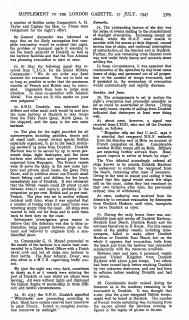
Details
SUPPLEMENT TO THE LONDON GAZETTE, 17 JULY, 1947                                             3309
a number of flotillas under Commodore A. H.         Remarks.
Taylor and Captain the Hon. G. Frazer were             75. The outstanding feature of the day was
reorganised for the night's effort.                 the series of events leading to the abandonment
  69. General Alexander was informed at             of daylight evacuation. Increasing enemy air
0951 that on the likely assumption that com-        attack, which the R.A.F. were unable to
plete evacuation would be ordered that night,       smother with the means at their disposal, caused
the problem of transport made it essential to       serious loss of ships, and continual interruption
use the beach adjacent to Dunkirk as well as        of embarkation on the beaches and in Dunkirk.
the harbour facilities and that the Vice Admiral    'Further, the sole remaining cross channel route
was planning evacuation to start at 2200.           was now -under fairly .heavy and accurate shore
                                                    artillery fire.
   70. At 1841 the following signal was re-             In these circumstances, it was apparent that
ceived from C.I.G.S. for the Senior Military        continuation of the operation by day must cause
Commander: " We do not order any fixed               losses of ships and personnel out of all propor-
moment for evacuation. You are to hold on           tion to the number of troops evacuated, and
as long as possible in order that the maximum       if (persisted in, the -momentum of evacuation
number of French and British may be evacu-          would automatically and rapidly decrease.
ated.     Impossible from here to judge local
situation. In close co-operation with Admiral       Sunday, 2nd June.
Abrial. You must act in this matter on your            76. The arrangements to set in motion' the
own judgment."                                      night's evacuation had proceeded smoothly as
   71. S.N.O. Dunkirk, was informed that            fax as could be ascertained at Dover. During
drifters and other small craft would be sent into   the early hours, reports of sailings from Dunkirk
the inner harbour at Dunkirk to take troops         indicated that destroyers at least were doing
from the Felix Faure Quay, North Quay, in           well.
the shipyard, and the quay in the new outer            At about 0200, however, a signal was
harbour.                                            received from LYDD, who was off the Dunkirk
                                                    beach, as follows:
   72. The plan for the night provided for all            " Brigadier tells me that C.-in-C. says it
minesweepers including paddlers, skoots and            is essential that rearguard 'B.E.F. embarks
all small craft, except certain special flotillas      from the beaches east of Mole on account of
especially organised, to go to the beach stretch-      French congestion on Mole.          Considerable
ing eastward i£ miles from Dunkirk. Dunkirk            number British troops still on iMo'le. Military
Harbour was to be served by up to seven per-           are expecting further arrivals there. Rear-
sonnel ships, eight destroyers, and the inner          guard expects to arrive at beach by 0230."
harbour nine drifters and special power boats          The Vice Admiral accordingly ordered all
organised from Ramsgate. The French vessels         ships known to be outside Dunkirk Harbour
were to' serve the Quay in the new outer har-       to endeavour to embark the rearguard from
bour and private small boats, the Quay Felix        the beach, remaining after 0300 if necessary.
Faure, and in addition about 100 French small
beach fishing craft and drifters for the beach      Owing to the time in transit and coding it was
immediately east of Dunkirk. It was estimated       feared that this signal would reach few ships
that the British vessels could lift about 17,000    still on the coast, unless they had remained on
between 2100/1 and 0300/2, probably in the          their own initiative after 0300, the previously
proportion 50 per cent. British and 50 per cent.    ordered time of withdrawal.
French. The plan was set in motion without             At 0200, authority was received from the
incident until 2200, when it was reported that      Admiralty to continue evacuation by destroyers
a number of towing craft and small boats were       from Dunkirk Harbour until 0700, transports
returning empty from the coast. All ships were      to leave Dunkirk at 0300.
warned to look out for these and to send them
back to their duty on the coast.                       77. During the early hours there was con-
   Subsequent investigation gives reason to         siderable haze and smoke off Dunkirk Harbour,
believe that this defection was due to false in-    Dunkirk East Beach, Dunkirk Roads and the
formation being passed between ships on the         entrance therefrom to X Route. For this reason
coast and believed to originate from a non-         some of the smaller vessels, including mine-
identified skoot.                                   sweepers, failed to make either Dunkirk
                                                    Harbour or Dunkirk East Beach, ibut on the
   73. Commander G. O. Maund proceeded to           whole it appears that evacuation, both from
the mouth of the harbour in a motor boat com-       the beach and from the harbour had proceeded
manded by a Dutch Naval Officer with a Dutch        satisfactorily with the resources available.
naval crew and led all ships into harbour to           Between 0200 and 0900, 6 personnel vessels
their berths. The Rear Admiral, Dover, was          reached United Kingdom from Dunkirk
also afloat in a M.T.B. supervising traffic con-    Harbour with about 5,500 troops. Two others
trol.                                               had been turned back before reaching Dunkirk
   'By 2300 the night was -very dark, sometimes     by two unknown destroyers, and one had been
as many as 6 or 7 vessels were entering the         in collision before reaching Dunkirk and had
port of Dunkirk at once whilst yet others were      to return.
leaving*. All were without lights and displayed
the highest degree of seamanship in these diffi-    78. Considerable doubt existed during the
cult and fateful circumstances.                  forenoon as to the numbers remaining to be
                                                 evacuated in Dunkirk. It was thought that
   74. At 2315 the S.N.O. Dunkirk signalled 2,000, plus the 4,000 rearguard British troops,
" Withdrawal now proceeding according to might well be found in Dunkirk. The number
plan. 'Shall have certain reserves here tomorrow of French troops remaining was increasing from
to assist French. Intend to complete evacua- the 25,000 quoted the previous evening to
tion tomorrow by midnight."                      figures in the region of 50,000 to 60,000.
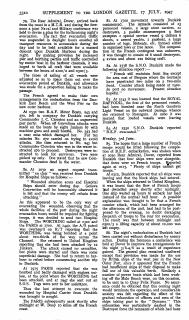
Details
33io          SUPPLEMENT TO THE LONDON GAZETTE, 17 JULY, 1947
   79. The Rear Admiral, Dover, arrived back           81. At 1700 movement towards Dunkirk
from the coast in a M.T.B. and during the fore-     commenced. The Annada consisted of 13
noon a joint Naval and Military conference was      personnel vessels, 2 large store carriers, n
held to devise a plan for the forthcoming night's   destroyers, 5 paddle minesweepers 9 fleet
evacuation. The fact that evacuation traffic        sweepers I special service vessel 9 drifters 6
was suspended in daylight hours ena/b'led all       skoots, 2 armed yachts, I guniboat, a large
transport resources to accumulate during the        number of tugs, lifeboats, etc. formed either
day and to be held available for a massed           in organised tows or free lance. The composi-
 descent upon Dunkirk Harbour during the            tion of the French contingent was unknown,
night.    By making provision for increased         it was thought to consist of 6 small destroyers,
pier and -berthing parties and traffic controlled   4 avisos and about 120 fishing craft.
'by motor boat in the harbour channels, it was
hoped to berth all craft that were available           82. At 1538 the S.N.O. Dunkirk made the
between the hours of 2100/2 and 0300/3.             following situation report: —
   The times of sailing of all vessels were               " French still maintain front line except
adjusted so as to space them out over the              for area east of Bergues where the Germans
evacuation period at Dunkirk, and allowance            have penetrated two miles on a two-mile
was made for a proportion failing to make the          front. Counter attack ibeing made at 1500.
passage.                                              In port no movement.        Present situation
                                                      hopeful."
   The French agreed to make their own
arrangements for embarkation from the Dun-            83. At 2145 it was learned that the ROYAL
kirk East Beach and the West Pier on the            DAFFODIL, the first of the personnel vessels,
new outer harbour.                                  had been bombed near the North Goodwin
   At 1530 two R.A.F. Motor Boats, 243 and          Light Vessel on the outward passage whence
270, left in company for Dunkirk carrying           she returned to Ramsgate. At 2200 it was
Commander J. C. Clouston and an augmented           learned that loaded vessels were leaving
pier party. When off Gravelines attacks were        Dunkirk.
made on the boats by eight Junkers 87 with             84. At 2330 S.N.O. Dunkirk "reported
machine guns and small 'bomibs. No. 243 had         " B.E.F. evacuated."
a near miss which damaged her.          For ten
minutes No. 270 carried on trying to avoid          Monday, yd June.
attacks. She then returned to No. 243 but              85. The hopes that a large number of French
Commander Clouston who was in the water in-         troops would 'be lifted following the comple-
structed 270 to proceed. Destroyers were in-        tion of B.E.F. embarkation, was shaken when
structed to look for survivors. Two were            at 0030 Rear Admiral, Dover, reported from
picked up only. One stated that he saw Com-         Dunkirk that four ships were now alongside,
mander Clouston dead in the water.                  that there were no French troops. Reported
                                                    again at 0115, " Plenty of ships cannot get
   ,'8o. At 1030 an urgent request trans-           troops."
mitted " en clair " was received from Dunkirk          At 0312, Dunkirk reported that all ships were
for Hospital Ships as follows:—                     leaving and that the block ships had entered.
       " Wounded situation acute and Hospital          When the ships returned to United Kingdom,
   Ships should enter during day. Geneva            it was learnt that the flow of French troops
    Convention will be honourably observed it       hiad dwindled away shortly after midnight.
    is felt and that the enemy will refrain from    One ship waited z\ hours to embark her load
    attacking."                                     instead of the normal half hour. A possible
As this appeared to be the only way of              explanation was thought to be that a French
evacuating the wounded, observing that the          counter attack, which had been arranged for
whole facilities of the port during the night       the afternoon of the 2nd, had had to be post-
evacuation hours would 'be required for fighting    poned to the evening, no doubt deranging
troops, it was decided to send two Hospital         despatch of troops to the rear for evacuation.
Ships. The WORTHING sailed at 1300 and              The result was that between midnight and
the PARIS at 1700. At 1440, the A/S patrol          °3oo/3 a lifting capacity of about 10,000 was
was overheard on R/T reporting that the             left empty.
WORTHING was 'being bombed at a point                  86. The night's embarkation at Dunkirk had
about two-thirds of the way across the              been carried out without 'disturbance by enemy
Channel.       She returned to United Kingdom       action. During the forenoon a conference was
reporting that she had been attacked by 12          held at Dover to improve the arrangements for
Junkers.       The attack caused no casualties,     the night 3/6-4/6 as a result of experience
but plates were started and there was some          gained. The general plan remained unaltered
superficial damage. She had to return to har-       except that provision was made for the use
bour to refuel before commencing another trip       by British ships of the west pier an the New
to Dunkirk.                                         Outer Port, since it appeared that the French
   At 1915 PARIS reported that she was              had insufficient ships at their disposal to make
bom'bed and badly damaged with engines use-         full use of this valuable 'berth. Similarly a
less, at the point where the WORTHING had           number of power boats which had been work-
been attacked, and at 1947 she sent out an          ing off the Malo Beach were, on this occasion,
S.O.S. Tugs were sent to her assistance.            to be sent in to Quay Felix Faure. No assur-
                                                    ance could be obtained that this coming night
   Thus the last attempt to evacuate the            would terminate the operation and considerable
wounded by Hospital Carrier from Dunkirk            anxiety was felt regarding the effect of the
was brought to nought.                              gradual exhaustion of officers and men of the
   The PARIS subsequently sank shortly after        ships taking part in the " Dynamo." This
midnight at W. Buoy 10 miles off the French         exhaustion was particularly marked in the
coast.                                              Destroyer force the remnants of which had been
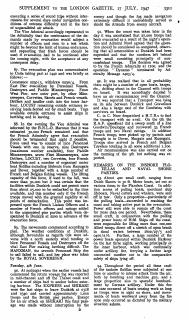
Details
SUPPLEMENT TO THE LONDON GAZETTE, 17 JULY, 1947                                          33"
executing a series of round trips without inter-   enemy and though the fog made navigation
mission tor several days under navigation con-     extremely difficult it undoubtedly served to
ditions of extreme difficulty and in the face      shield the Armada from enemy aircraft.
of unparalleled air attack.
   The Vice Admiral accordingly represented to        91. When the count was taken later in the
the Admiralty that the continuance of the de-      day it was ascertained that 27,000 troops had
mands made by evacuation would subject a           been evacuated as a result of the night's opera-
number of officers and men to a test which,        tion and Admiral Nord agreed that the opera-
might be .beyond the limit of human endurance,     tion should be considered as completed, observ-
and requesting that fresh forces should be         ing that all ammunition at Dunkirk had been
used if evacuation had to be continued after       expended and that the numbers left behind
the coming night, with the acceptance of any       were small consisting principally of non-
consequent delay.                                  combatant troops. This decision was agreed
                                                   to by the French Admiralty at uoo, and the
   87. The evacuation plan was communicated        operation " Dynamo " terminated by Ad-
to Units taking part at 1440 and was briefly as    miralty Message 1423/4.
follows: —
Commence 2230/3, withdraw 0230/4. From                92. It was realised that in all probability
East Pder evacuation by Personnel Vessels,         there might be a number of open boats, barges,
Destroyers and Paddle Minesweepers. From           etc., drifting a'bout in the Channel with troops
West Pier, new outer port, by other Milne-         on board.       It was accordingly decided to
sweepers, Corvettes, Skoots and French vessels.    have an air reconnaissance over the Channel.
Drifters and smaller craft into the inner har-        It was reported that a Transport was lying
bour, LOCUST remaining outside entrance re-        on its side between Dunkirk and Gravelines
ceiving loads ferried out 'by small boats. Tugs    and also a barge east of the Goodwins with
available outside entrance to assist ships in      survivors on board.
berthing and in leaving.                              C. in C. Nore despatched 2 M.T.B.s to find
                                                   the transport with no avail. On the 5th the
   88. In the evening the Vice Admiral was         R.A.F. speedboat did a sweep south of a line
informed by the B.N.L.O. Marceau that it was       Goodwin/Boulogne and recovered 33 French
estimated 30,000 French remained and that          troops and two Naval ratings.       In addition
the French Admiralty agree that evacuation         French troops were picked up by patrols and
should be terminated that night if possible.       brought in to Dover, Margate and Ramsgate.
Force -used was to consist of nine Personnel       Troops also arrived in French and Belgian
Vessels with one in reserve, nine Destroyers       Trawlers totalling in ail some additional 1,100.
(maximum, number available), four Paddle              Air reconnaissance was also carried out on
Minesweepers, seven Fleet Minesweepers, nine       the morning of the 5th but nothing was re-
Drifters, LOCUST, two Corvettes, four French.      ported.
Destroyers and a -number of organised motor
boat flotillas including lifeboats from Ramsgate   REMARKS ON THE INSHORE FLO-
and Dover, together with a large number of              TILLAS       AND       NAVAL        SHORE
French and Belgian fishing vessels. The lifting         PARTIES,
capacity of this force, if used to the full, was      93. About 400 small craft, ranging from
more than 30,000 but it was certain that the       Dutch Skoots to 30 ft. Motor boats, set out at
facilities within Dunkirk could not .permit more   various times to the Flanders Coast. In addi-
than a'bout 25,000 to be embarked in the time      tion scores of pulling boats, merchant ship
available, and this number only if the French      lifeboats, Naval cutters and whalers, were sent
troops moved with the greatest rapidity at all     off in tow. Only a proportion—particularly of
points of embarkation. This point was im-          the pulling boats—succeeded in reaching the
pressed upon the French Liaison Officers and a     coast and taking active part in the evacuation.
number of French officers and ratings added        Fewer still were able to remain off the coast
to the augmented pier parties which were de-       for more than one period. Nevertheless, these
spatched to Dunkirk at 2200 in advance of the      small craft, in conjunction with the pulling
evacuation force.                                  and power boats of HjM. Ships off the coast,
                                                   were responsible for lifting more than 100,000
   89. The movements commenced according to        Allied troops direct off a stretch of open beach
plan. The weather conditions at Dunkirk,           in shoal waters between 1600/27/5 ano^
although favourable as regards tide were ad-       0400/2/6.     Further, a large number of the
verse with a north easterly wind tending to        •power boats operated within Dunkirk Harfbour
blow Personnel Vessels and Destroyers off the      on the last three nights, working principally in
vital East Pier making berthing difficult. The     the inner harbour, which was continually
MANXMAN, the seventh Personnel Ship due            under artillery fire, ferrying a further large
to sail failed to sail, and her place was taken    uncounted number out to the comparative
by the ROYAL SOVEREIGN.                            safety of ships lying off.
Tuesday, qkh June.                                    94. Throughout the period all these craft
   90. At midnight when the earlier vessels had    of the inshore flotillas were subjected at one
commenced the return voyage fog was reported       time or another to intense attack from the air,
in mid-channel and off the Thanet coast and        both by bombing and machine gun, and a
a number of ships had to anchor before enter-      large proportion also to sporadic bombard-
ing harbour. The EXPRESS and SHIKARI               ment by German artillery. Under this fire
were the last ships to leave Dunkirk at 0318       no case occurred of boats ceasing work as long
and 0340 and carried approximately 1,000           as troops w'ere in sight on shore, and move-
troops and the British pier parties. Except        ments of boats westward away from the fire
for an air attack on SHIKARI this final pass-      zone only occurred as dictated by the military
age was made without interruption by the           situation ashore.
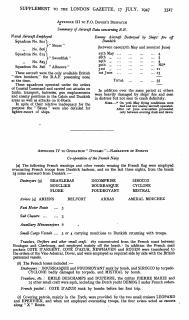
Details
SUPPLEMENT TO THE LONDON GAZETTE, 17 JULY, 1947                                             3317

                            APPENDIX III TO P.O. DOVER'S DESPATCH
                            Summary of Aircraft Data concerning R.N.
Naval Aircraft Employed                              Enemy Aircraft       Destroyed by Ships' fire off
  Squadron No. 801")                                    Dunkirk
                      Y' Skuas"                       (between O3oo/27th May and 20oo/ist June)
             No. 8o6J
  Squadron No. 815 "|                                  27th May                              4
                      Y" Swordfish "                   28th „                                3
             No. 825J                                  2Qth „                                4
                                                       30th „                                Nil*
  Squadron No. 826 " Albacore "                        3ist „                               ii
   These aircraft were the only available British      ist June                             13
" dive bombers," the R.A.F. possessing none
at the time.                                                      TOTAL                     35
   These squadrons operated under the orders
of Coastal Command and carried out attacks on           In addition over the same period 21 others
tanks, transport, batteries, gun emplacements        were heavily damaged by ships' fire and seen
and enemy positions in the Calais and Dunkirk        in distress but not seen to crash definitely.
areas as well as attacks on E-Boats.
   In spite of their relative inadequacy for the          Notes.—* On 3oth May flying conditions were
                                                                   bad and few enemy aircraft operated.
purpose the " Skuas " were also detailed for                     After ist June evacuation proceeded
fighter-escort of ships.                                           only between evening dusk and dawn.


                APPENDIX IV TO OPERATION " DYNAMO "—NARRATIVE OF EVENTS
                                   Co-operation of the French Navy
  (a) The following French warships and other vessels wearing the French flag were employed
evacuating French troops from Dunkirk harbour, and on the last three nights, from the beach
i£ miles eastward from Dunkirk :—
     Destroyers (9)     BRANLEBAS                   INCOMPRISE                SIROCCO
                        BOUCLIER                    BOURRASQUE                CYCLONE
                        FLORE                       FOUDROYANT                MISTRAL

     Avisos (4) AMIENS             BELFORT              ARRAS               AMIRAL MOUCHEZ

     Fast Motor Boats     ... 3

     Sub Chasers               3

     Auxiliary Minesweepers 6            „

     Small Cargo Vessels ...   3 or 4 carrying munitions to Dunkirk returning with troops.

       Trawlers, Drifters and other small craft. 167 concentrated from the French coast between
 Boulogne and Cherbourg, and employed mainly off the beach. - In addition the French mail
 packets COTE D'ARGENT, COTE D'AZUR, NEWHAVEN and ROUEN were transferred to
 the orders of the Vice-Admiral, Dover, and were employed as required side by side with the British
 personnel vessels.
    (b) The French losses included :—
       Destroyers : BOURRASQUE and FOUDROYANT sunk by bomb, and SIROCCO by torpedo.
            CYCLONE badly damaged by torpedo, and MISTRAL by bomb.
     Trawlers, etc. : EMILE DESCHAMPS and DUPERRE, the drifter PIERRE MARIE and
         15 other small craft were sunk, including the Dutch yacht DEMOG I under French orders.
     French packet: COTE D'AZUR sunk by bombs before her first trip.

    (c) Covering patrols, mainly in the Dyck, were provided by the two small cruisers LEOPARD
 and EPERVIER, and when not employed evacuating troops, the four avisos acted as escorts
 along " X " Route.
Details
3296           SUPPLEMENT TO THE LONDON GAZETTE, 17 JULY, 1947
 to drag on painfully, and finally to lose nights.               Not only were the Dunkirk Roads
 momentum and expire through the exhaustion mined, including the Zuydecoote Pass, but also
 of Naval personnel and the 'liquidation of Route X and the area round the Kwinte Buoy.
 shipping.                                           Folkestone and Dover Harbour entrances were
     It will be seen, therefore, that • the initial also mined* Considering the number of mines
 problem called for a maximum effort over a laid, it is interesting to note that only two
 limited period regardless of the future, and British ships are known for certain to have been
 accordingly all resources in the way of small mined, the personnel vessel MONA'S QUEEN
 boats were thrown on the beaches, before ade- and the F.A.A. Yacht GRIEVE. One Hospital
 quate provision had been made for their main- Carrier was damaged at anchor off Dover when
 tenance off the coast in such matters as relief a mine was blown up by a LL. Trawler sweep-
 of the personnel and the provision of large ing close at hand. Two A/S trawlers on patrol
 beach parties.                                      to the northward of the operational area were
  • It was only due to the foresight of the blown up by what was at first thought to be a
 Admiralty in making arrangements for a con- M.T.B., but later evidence suggests they were
 tinued flow in ever increasing numbers of small victims of moored mines. The impunity with
 power boats and beach craft, which became which degaussed ships were able to operate
 available on the fifth day onwards, that the in this heavily mined area alone made the opera-
 continued evacuation from the beaches remained tion possible and one reaches the conclusion
 a reasonable proposition after the initial 'crisis that if the enemy on this occasion had had at
 had passed.                                         hand the means of laying moored contact mines
     4. A perusal of the signals that passed by aircraft, instead of magnetic mines, the re-
 between Dover and the (French coast reveals sults would have been very different.
 the many occasions on which the responsible            (b) Air Attack. On the evening of the 29th,
 officers stationed on the coast considered so the first occasion on which a massed target of
 little had been achieved from the beadhes that ships was presented in Dunkirk Harbour, the
 they advocated restriction of evacuation to enemy seized the opportunity for air attack in
 Dunkirk Harbour. Many complaints of "no ' great strength, and it was only by good fortune
 boats," " no ships," might lead a detached that the vital Dunkirk Harbour channel was not
 observer to the conclusion that the great effort blocked by sinking ships at this early date.
 that was being made was proving abortive.           From then onwards the scale and vigour of the
     At Dover, where the whole operation could be air attack increased, and during the ist June
 viewed in truer perspective, the number and all ships in Dunkirk, off the beaches, or in .the
 origin of the troops being landed in England approach channels, were subjected every two
 being always to hand, it was clear that the hours to an unprecedented scale of air attack
  evacuation from the beaches required by the by aircraft in such numbers, that the R.A.F.
  military situation, was, in fact, achieving a con- were unable to deal with the situation. The scale
  siderable success, as the following figures will of enemy air attack on June ist, and the fact
  show. Of the 248,000 troops landed in the that the Germans could by now command the
  United Kingdom, between May 28th and June newly-swept central route at its exits into the
  ist inclusive—the period during which both Dunkirk Roads with gunfire from the shore,
  Dunkirk and the beaches eastward were avail- were responsible for the suspension of daylight
  able day and night except for enemy interfer- evacuation on June 2nd.
  ence—no fewer than 100,000 were lifted from
  the beaches.                                          (c) Attack by M.T.B.s.        These caused 4
                                                     casualties, namely two destroyers and two
     5. WEATHER CONDITIONS.                          trawlers, while the north Route Y* was in use.
      The operation was favoured by extremely When the middle Route X*, some 26 miles
  good weather. It was found, however, that any further to the South Westward, was brought
  northerly wind caused a considerable surf, into use the enemy M.T.B. units failed to follow
  which greatly reduced the rate of lifting from up, though the continuous stream of unescorted
   the beaches. It must be fully realised that a traffic during the dark hours and the ships lying
   wind of any strength in the northern sector in Dunkirk Roads provided a tempting target
   between South West and North East would to any enterprising Commander.                           *
  have made beach evacuation impossible. At             •(d) Shore Artillery. At the commencement
   no time did this happen.                          of the operation, the southern Route Z* was
      6. DISPOSAL OF TROOPS AFTER REACHING found to be under gunfire from batteries near
   ENGLAND.                                          Calais, and consequently could only be used by
                                                     night. The northern Route Y was usable only
      On arrival in England the despatch of troops by night when later the batteries near Nieuport
   from the points of disembarkation proceeded brought fire to bear on the Zuydecoote Pass,
   with great smoothness under the War Office which was too narrow to permit a reasonable
   movement control organisation.                     chance of ships running the gauntlet of fire. By
      7. ENEMY EFFORTS TO FRUSTRATE OPERATION. this time, however, Route X was available, and
      Attempts by the enemy to frustrate the opera- was free of gunfire until German batteries near
   tion consisted of the following: —                 Gravelines brought its exit into the Dunkirk
                                                     Roads under gunfire.         This occurred in the
         (a) Minelaying by aircraft.                 afternoon on Saturday, ist June, and in con-
         (6) Intensive air attack.                   junction with the result of enemy air attack,
         (c) Action by Motor Torpedo Boats.           led to the suspension of daylight traffic alto-
         (d) Gunfire by coast artillery.              gether.
         (e) Submarine operations.
      (a) Minelaying by aircraft.        Minelaying      (e) Submarines. U-Boats do not appear to
    during the dark hours probably "Commenced have caused any casualties. It is unlikely that
    during the night 28th-29th and was maintained       * Admiralty footnote: For Routes X, Y and Z see
' with great intensity during the following two Diagram.
Details
3300           SUPPLEMENT TO THE LONDON GAZETTE, 17 JULY, 1947
for inshore work off the beaches. Very few the S.N.O., on arrival, decided that conditions
of such inshore craft could be available during at Dunkirk made this impossible.
the day and the main effort was concentrated on        8. At 2025 -the Vice Admiral, Dover, re-
maintaining the flow of Personnel Vessels to ceived a Most Immediate message from the
Dunkirk at the rate of 2 every 3^ hours. After S.N.O., Dunkirk, who had just reached his
a good start during the night 26th/27th the station, as follows: '' Port consistently 'bombed
effect of enemy action against these transports all day, and on fire. Embarkation possible only
was felt. Between sailings timed 0300/27 and from beaches East of harbour A.B.C.D. Send
 1500/27, no less than 5 transports were shelled all ships and passenger ships there to anchor.
 and returned to United Kingdom without Am ordering WOLFHOUND to load there and
 making the trip. In addition MONA ISLE was sail.             T.O.O.* 2005/27."           Meanwhile Vice
 damaged by shell fire and QUEEN OF THE Admiral, Dover, had asked the Commander-
 CHANNEL was bombed and sank during the in-Chief, Nore, to send every available shallow
 early hours of the 28th. As a result the Vice- draught power 'boat, capable of ferrying from
 Admiral, Dover, reported to the Admiralty that beaches to ships lying off the beaches Eastward
 the normal channel, Dover to Dunkirk, was of Dunkirk, stocked with fuel and provisions
 impracticable in daylight owing to fire from for two days; this move 'being made with a
 shore batteries extending from Les Hemmes to view to saving time by cutting out the passage
 Gravelines. Zuydecoote Pass had to be used to, and subsequent reorganisation, at Rams-
 instead and consequently the distance run for gate, prior to proceeding to the French Coast.
 the round trip increased from 80 miles to 172 It should be noted at this time (2000^/27) there
 resulting in a general slowing up of traffic. This were no pulling boats, cutters or whalers
 route had to be used before it could be swept. immediately available for attendance on
 Work was also commenced to sweep a channel Power Boats. A further signal: " Please send
 from the North Goodwin to the Ruytingen Pass every available craft to beaches East of Dun-
 and thence into the Dunkirk Roads, thus kirk immediately.                       Evacuation tomorrow
 shortening the round trip from 172 miles to 108. night is problematical. T.O.O. 1958/27 "
     4. The S.N.O. Dunkirk, with naval beach was received from S.N.O. Dunkirk.
 and pier party of 12 officers and 160 ratings,         Later that evening a report was received
 plus communication staff, left Dover in WOLF- from 2 Military Officers from G.H.Q.
 HOUND at 1345, and were attacked by dive which suggested that the situation of the
 bombers at half-hour intervals between 1600 and B.E.F. was precarious and it was possible that
 1800, on the voyage to Dunkirk.                    the enemy might succeed in cutting off this
     5. During the day preparations were force from Dunkirk. This report appeared to
 advanced for embarkation from beaches in the confirm the results of air reconnaissance, which
 La Panne-Dunkirk area, as such matters as indicated that German armoured units were
 crews, fuel and general organisation were taken operating to the south of Dunkirk.                  Since it
 in hand. Five Personnel Vessels routed to start appeared that evacuation might well be strictly
 in daylight completed the round trip during the limited, both in regard to numbers and time
,?7th and lifted a total of 3,952. In addition 17 available for the operation, it was decided to
^drifters of the Dover Command sailed from concentrate every effort in sending over as
 Dover for the Malo Beach, and during the night many craft as possible to the beaches without
 lifted 2,000 troops from the beach by ships' delay. Had the situation appeared to be less
  dinghies.     During the day destroyer patrols critical, an organised flow of large and small
  had been established to the Northward to cover craft working in reliefs would have been
  the passage of merchant ships between Dunkirk arranged.
  and the Downs, and the Admiralty asked                9. On receipt of these signals from S.N.O.
  Western Approaches to reinforce the Dover Dunkirk, all available forces were diverted to
  destroyers.                                        the beaches, the Personnel Ships to the beach,
     6. Commander-in-Chief, Nore, sailed 6 small    code    letters A.B.C. and D., the destroyers on
  skoots for the South Downs to co-operate in        patrol   'being diverted to La Panne. Destroyers
  Dunkirk, and sailed 4 skoots loaded with Army      that   were  working off Dunkirk were ordered to
  stores direct to Dunkirk.       In the evening to lay off Personnel
                                                     divert   the
                                                                     the
                                                                                Ships going into Dunkirk
                                                                          beaches   and the smaller craft
  Naval Officer-in-Charge, Ramsgate, was asked such as drifters and motor              boats were ordered
  to take over the fuelling and despatching of all to foe used for ferrying troops         from the beach
  small power boats with the attendant pulling to the larger ships. Two important                  strings of
  boats forming the inshore flotilla. Some un-
                                                     boats    being    towed  by  a  tug
  necessary delays occurred at this stage as the night through the tows 'being run down   were   lost  in the
  majority of Naval Authorities were directing                                                            and
  the small craft for Dunkirk to be routed to         cut  in  half,  the  boats being   scattered.
  Dover, although the Vice Admiral, Dover, had          10. As a result of the above action there
   asked for the Downs to be their destination. were assembling off the beaches 2 transports,
   Once despatched 'by the Authorities no com- 9 destroyers, 4 minesweepers, CALCUTTA,
  munication with these vessels was possible until 17 drifters and a few skoots, and all the
   they arrived at their destination, and so the ships were ordered to use their own .boats for
   requirements of assembling these craft at the ferrying as none of the inshore flotilla had
   Downs or Ramsgate were in many cases delayed arrived.             From signals received it appeared
   by as much as 24 hours or more since during that the situation was desperate, that little
  the night misfortune befell many tows that could be lifted direct from the Port of Dunkirk
   came adrif- ^.ue to moderate weather or colli- and that -the maximum effort must be made
   sions and tne business of rounding them up from the beaches. Commander-in-Chief, Nore,
   could not be effected until daylight.              at this stage provided additional reinforcements
                                                      of minesweepers and paddlers. During the
      7. The Vice Admiral had intended to main-
   «.«m a destroyer at Dunkirk as a W/T link, but       * Admiralty footnote: T.O.O. = Time of origin.
Details
3302          SUPPLEMENT TO THE LONDON GAZETTE, 17 JULY, 1947
uncertain, 2 power boats, at least 2 skoots,        every prospect of the weather improving and
CALCUTTA,          GALLANT,         WAKEFUL,        the surf reducing as the tide rose. Nevertheless,
VERITY, and GRAFTON, using what survived            an increased number of H.M. Ships was'
 of their own whalers and motor boats. This         ordered to Dunkirk to augment the personnel
force was reinforced by 2 minesweepers at           vessels, though it was feared that an accumula-
 2115. Later reports of concentrations of troops    tion of ships alongside the East Pier at Dunkirk
 on the beaches were received, particularly at      by day might well invite intensive air attacks.
 La Panne and Bray. Craft approaching the               Subsequently, 'this fear was fully to be
 coast were directed accordingly. Naval Officer-    justified.
•in-Charge, Ramsgate, was requested to main-            24. Meantime, considerable anxiety was felt
 tain a continuous evacuation service by skoots     as to the fate of the personnel vessels which had
 between Margate and Ramsgate and the beach,        been despatched in a steady stream to Dunkirk
 and take over responsibility for servicing those   commencing the previous evening. The first of
 vessels. Meantime CALCUTTA, who was off            these was due back at Dover about 0300, but
 La Panne, reported that conditions for embarka-    by 0900 nothing had been sighted or reported.
 tion there were very bad owing to heavy surf,      But at 0700, S.N.O. Dunkirk had reported that
 but that they might improve with the rising        the embarkation there was going on at the rate
 tide.                                              of 2,000 an hour, so it was presumed that the
    Shortly after midnight CALCUTTA was in-         transports had failed to enter the harbour during
 formed that the Third Corps of the B.E.F. and      darkness, had waited outside, and had com-
 the Commander-in-Chief were all now at La          menced to enter in succession at dawn. The
 Panne. She was directed to make every              necessity for continuous fighter protection in
 endeavour to concentrate all destroyers and        view of the exposure of these unarmed ships
 light craft at that end of the beach with the      while at Dunkirk and during the daylight pas-
 object of embarking that force as soon as          sage through coastal waters, was obvious. Con-
 possible.                                          stant touch was maintained with the R.A.F.
    19. As regards enemy activity, this day the     Commands to obtain continuous fighter protec-
 Germans contented themselves with bombing          tion during the hours when the Vice-Admiral,
 the town and port of Dunkirk, but on a small       Dover, estimated the largest concentration of
 scale compared with that to be experienced         vessels would be present, it being realised that
 later, probably because of increasing R.A.F.        the R.A.F. resources were not sufficient to pro-
 air cover and also due to the fact that a heavy    vide continuous air cover, and to dispense with
 pall of smoke from the burning town covered        •full cover at less important periods.
 the operation most of the day.                         25. At 0930 the belated return of the per-
                                                    sonnel vessels from Dunkirk commenced, and
Wednesday 2gih May.                                 proceeded steadily through the day. In addi-
   20. The Northern Route Y having been             tion to the personnel vessels using Dunkirk the
swept, it was arranged to sail personnel ships      Admiralty were informed of the -necessity for
to Dunkirk at daylight and to continue to sail      X-lighters and other self-propelled lighters to
throughout the day; this route would take ships     increase the facilities for beach evacuation. A
clear of the artillery fire on shore. Personnel     Medical Party was shipped in VERITY for use
ships accordingly started at 0230.                   on the beaches, and a Naval Medical Party was
                                                     sent to Dunkirk.
   21. Much consideration had been given to
the practicability of building piers on the             26. The considerable alarm as to the imme-
beaches using lines of barges. Reports from          diate safety of the B.E.F. felt during the even-
ships that worked off the beaches showed,           ing and early night of the 28th, which caused
however, that owing to the very gradual shoal-      all available resources to be immediately
ing of the water at all states of the tide such a   concentrated on the French Coast, eased during
barge pier to be effective, would have to be of     the 29th. But emergency measures taken late
very great length, beyond the resources avail-      on the 28th had an adverse effect on the orderly
able.                                               organisation for evacuation so (necessary if effec-
                                                     tive measures were to be devised and put in
   22. Information was received that the per-       force.
sonnel vessels with their Mercantile Marine
crews were having 'difficulty in making the             27. Meantime, in the early hours of the 29th,
entrance to Dunkirk Harbour in the face of 'the     an unfortunate disaster occurred involving the
navigational difficulties caused by a heavy         loss of H.M. Destroyers WAKEFUL and
smoke pall over the entrance and in face of          GRAFTON, and the danlayej COMFORT.
bombing and shelling encountered en route and       WAKEFUL, after embarking troops at Bray,
whilst alongside. Nevertheless it subsequently      sailed for Dover at 2300/28 by the Zuydecoote
transpired that at Dunkirk there had been a         Pass and North Channel. Approaching the
good number of ships throughout the night, at        Kwinte Whistle Buoy the speed of the ships
times exceeding the influx of troops.               was 20 knots, and a zigzag of 40 degrees every
                                                    four minutes was started. At 0045 two torpedo
   23. S.N.O. Dunkirk, and other Senior             tracks were observed, one torpedo missed, the
Officers on the Coast reported during the early      other hit amidships. WAKEFUL broke in half
hours that surf on the beaches was retarding         and. the two portions sank in 15 seconds, each
boat work. S.N.O. Dunkirk, at 0709, asked           remaining standing with the midship end on
for all ships to go to Dunkirk. The Vice-           the bottom. All the troops on board went down
Admiral could not accept this as it was essential    with the ship; certain of the crew floated clear.
to maintain lifts off the beaches as well as from    After about half-an-hour motor drifters
Dunkirk Harbour, both from the aspect of the         NAUTILUS and COMFORT arrived and
military situation and from the fact that Dun-       started to pick up survivors, later joined by
kirk was limited by a bottleneck, formed by the      GOSSAMER. Captain of WAKEFUL was in
narrrw gangway along the East Pier to the            the COMFORT. GRAFTON and LYDD were
poinf= ?f embarkation. Furthermore, there was        close and Captain of WAKEFUL warned
Details
3306            SUPPLEMENT TO THE LONDON GAZETTE, 17 JULY, 1947
Friday, ^ist May.                                        final evacuation plan during the night of
  48. The Admiralty informed the Vice Admiral            31/5-1/6. Accordingly, instructions were
that the policy of H.M. Government was that              issued for the special tows to leave Ramsgate
both British and French troops be given an               at 1300/31 for Dunkirk via Route X, and the
equal opportunity of being evacuated in British          Commander-dn-Chief, Nore and Flag Officer in
ships and boats.                                         Charge, Harwich, were requested to provide
                                                         all available M.T.B.s to escort this convoy
   49. Personnel ships had been sailed the pre-          for as much of the outward passage as possible,
vious evening and throughout the night of the            which was timed to commence from Ramsgate
30th/3ist to provide for a continuous flow into          at 1300/31. Speed of advance—5 knots. A
Dunkirk harbour.        But at 0320 the S.N.O.           party of Naval officers had been assembled at
reported that once again the majority of these           Dover to embark in these tows and had been
personnel ships had failed to enter the harbour          given detailed instructions on the plan. Two
during the dark hours. MALCOLM, however,                 M.A/S. boats and two M.T.B.s in the Dover
left Dunkirk with 1,200 troops at 0300, during           Command were ordered to accompany the boat
heavy shelling, on relief by IVANHOE.                    convoy and subsequently embark the Com-
S.N.O. Dunkirk, however, continued to call for           mander-an-Chief, B.E.F. and Staff off the
more ships. 'No more destroyers were avail-              beaches.
able and there were no means of accelerating
the arrival of the vessels despatched there.1 By           53. Shortly after sunrise an on-shore wind
0700 the Vice Admiral had no news of the fate            arose and boat work became difficult, many
of the personnel ships that had sailed the pre-          whalers capsizing and the prospects of com-
vious evening and during the night. None of              pleting the evacuation to plan began to be less
these ships had reached the U.K. to unload,              favourable. The following extract from the
and it appeared probable that these ships                report of Captain Howson, S.N.O. on the
may thave concentrated in the narrow                     beaches illustrates conditions at Bray at this
waters close to Dunkirk, inviting a repetition           time:
of the heavy air attacks with consequent                       " At 0400 there was a very considerable
damage and loss to transports which had                    number of destroyers, paddlers, trawlers,
occurred on the two previous occasions when                skoots, etc., off Bray, and embarkation was
personnel vessels, together with other ships,              proceeding satisfactorily, but a lop had
had been concentrated in large numbers in the              already started. There were about 10 motor
approaches to Dunkirk.                                     yachts which had arrived from England.
   At this time there were no less than nine               These > craft drew 6-7 feet and were
personnel vessels and three hospital carriers              unable to get close in to any of the beaches.
known to be on the round trip U.K.—Dunkirk                 During the forenoon, considerable towing
and back and one other personnel vessel had                of empty craft towards the beach was carried
been ordered to sail during the night, but her             out, and only about two boats were allowed
whereabouts was unknown. In addition, three                to get adrift and ultimately ground. With
other personnel vessels were under orders to               the falling tide, however, a number of boats
sail between 0900 and 1030. Pending the                    were seen to ground and remain ashore until
return of the ships en passage, and while the              the tide rose in the afternoon. These in-
coal-burners were being rebunkered, the further             cluded an A.L.C.* motor boat and a life-
sailing of personnel vessels was in suspense.              boat. Other power boats broke down. Never-
   Note :—Owing to the casualties to personnel vessels     theless, the embarkation, much hindered by
           at this stage, coal burning cross channel       the lop, proceeded satisfactorily. ; As further
           steamers had to be used for some of the          destroyers and sloops arrived, they were
           trips and short endurance necessitated
           coaling between trips which could not be        directed to lower their motor boats and
            done in the vicinity of Dover, thus            whalers as this had not already been done;
           preventing a quick turn round.                  these boats were quite invaluable. About
   50. During the night a considerable amount              noon, the lop began to subside and with
of enemy mdnelaying activity by air was re-                the rising tide conditions for embarkation
ported. Shelling was heavy during the evening              very greatly improved, more boats were
and night, and operations were greatly ham-                sent in and more boats floated off and matters
pered. Nevertheless, with the cessation of                 were proceeding very well, when the gun at
shelling at about 0300, very good progress was             La Panne started to shell the beaches and
made and by full dawn the beaches were very                foreshore with great accuracy. A certain
nearly clear of troops. At 0530 attacks on                 number of light craft were sunk. The A.L.C.
Dunkirk Harbour and the beach from Dunkirk                 broke down and was towed away by a
to Bray developed more strength and the 'bom-              steamer. MOSQUITO, destroyers and sloops
bardment of Dunkirk continued. Neverthe-                   proceeded westward clear of the firing."
less, the S.N.O. reported that the embarkation              54. Rear-Admiral Wake-Walker was able to
there was proceeding satisfactorily but stressed         make a survey of the general conditions of the
the need for more ships and constant fighter             beaches, and at 1130 the Vice-Admiral received
protection. At this time French troops began
to appear at Dunkirk Pier and on the'beaches,            a signal from him stating that the majority of
and were embarked with the British troops.               the pulling boats were broached to and without
                                                         crews, conditions on the beaches .being very bad
   51. At 0600 VIMY sighted submarine off the            owing to a freshening shore wind, only small
N.W. Goodwins and commenced to hunt.                     numbers being embarked. Under present condi-
   52. The arrivals at the home ports indicated          tions any large-scale embarkation from beach
that in spite of the frequent requests for more          impracticable. Motor boats could not get close
ships and more boats received from the various           in. He considered only hope of embarking any
authorities on the French coast, the rate of             number was at Dunkirk, and further stated he
evacuation was steadily increasing and would               * Admiralty footnote: A.L.C. = Assault Landing
permit, all being well, of implementing the              Craft.
Details
3308           SUPPLEMENT TO THE LONDON GAZETTE, 17 JULY, 1947
   It should be noted that in spite of (fc) the       Route X, and occurred between 1000 and 1040,
rate of embarkation had, in fact, come up to          to be again resumed at noon. After that there
expectations, and if other circumstances had          was a lull until 1550, when another attack was
permitted it would have been possible to adhere       delivered on Dunkirk Harbour and all shipping
to the original plan of lifting the final 4,000       therein for over half an hour. At 1800 the
B.E.F. off the beaches between 0130 and 0300          Vice Admiral received the following signal from
ist June.                                             Dunkirk: " Things are getting very hot for
Saturday, ist June.                                   ships; over 100 bombers on ships here since
                                                      0530, many casualties. Have directed that no
    62. Two Hospital Carriers which had sailed        ships sail during daylight. Evacuation by
 the previous evening returned shortly after          transports therefore ceases at 0300. If perimeter
 dawn.      Only one had succeeded in entering        holds will complete evacuation to-morrow,
 Dunkirk Harbour, the other had laid off four         Sunday night, including most French. General
 hours under heavy fire and returned to Dover.        concurs." The sense of this message was passed
 Four personnel vessels failed to enter Dunkirk       on to Rear Admiral, Dover, off the coast.
 during the night, but succeeded in the early
 flours of the morning.        One of these, the          65. In addition to the heavy scale of air
 PRAGUE, was bombed and severely damaged              attack during the afternoon the sea traffic was
 half-way across on the return journey, but suc-      very seriously interrupted by artillery fire
.ceeded in making the Downs with the assistance       brought to bear on Route X near No. 5 buoy.
 of tugs, where troops transferred to other ships     The fire appeared to be accurate and it is be-
 particularly A/S trawlers LADY PHILOMENA             lieved some French ships were sunk. Two
 and OLVINA. The supply of personnel vessels          French destroyers in the vicinity stopped
 was maintained throughout the day, not with-         British ships approaching from England on X
 out a series of setbacks caused by 3 ships failing   Route short of this point, and it became evident
 to sail and by 2 being turned back when on           that a very serious threat -to daylight evacuation
 passage by French Destroyers owing to heavy          was in being.. Meantime, the toll of casualties
 bombing and shelling of the approaches to            of ships during the day was mounting, particu-
 Dunkirk. Of those that operated during the           larly amongst the destroyers and shortly after
 24 hours, i was sunk, 2 damaged by bombs and         midday the Commander-in-Chief, Nore, called
 shell-fire and i by collision.                       the attention of the Admiralty to this, suggesting
                                                      the discontinuation of the use of destroyers by
   63. During the middle watch it transpired          day off the French coast. The summarisation
that no further troops were attempting to             of all these incidents led to the Admiralty
evacuate from La Panne off which were                 directing the Vice Admiral, Dover, to suspend
stationed one paddle minesweeper, a fleet             evacuation from Dunkirk at 0700, Sunday 2nd
sweeper and two destroyers, probably due to           June, and for it to be resumed the following
the heavy shelling from German guns eastward,         night or from 1730/2, depending upon the cir-
and later information was received that the           cumstances. From the above it will be seen
troops were marching from La Panne through            that there were to be no ships proceeding to
Bray towards Dunkirk. Accordingly, during             Dunkirk between 0700/2 and 1730/2. The
the night the Rear Admiral, Dover, instructed         above Admiralty directions crossed a message
all small craft to move west, with boats in tow,      from the Vice Admiral stating th'at all ships had
towards Dunkirk, and the Vice Admiral directed        been ordered to withdraw from Dunkirk before
all ships under orders for La Panne to other           daylight the following day, owing to the heavy
positions further west, concentrating the main        casualties to shipping.
effort on the beach immediately east of                   66. In spite of enemy action more than
Dunkirk.
                                                       60,000 troops were landed in the United King-
   To a request from Dunkirk for Hospital Ships,       dom during the 24 hours, thanks to the unremit-
the Vice Admiral replied at 0715 that the large        ting determination of Naval vessels who all
ship berths alongside at Dunkirk must be               executed a succession of round trips, interrupted
occupied by personnel ships and the wounded            only by necessary refuelling and who accounted
that could conveniently be embarked should go          for 70 per cent, of this total. The majority
with personnel.      This direction was in             of the surviving vessels had been operating
accordance with the Government policy pre-             ceaselessly for at least five days, and officers
viously communicated to the Vice Admiral.              and men were approaching a condition of com-
                                                       plete exhaustion.
   64. Soon after dawn enemy aircraft were
active and heavy bombing and machine gun                  67. As for personnel ships, steps were taken
attacks developed at 0500 over the whole area          to place on board each a Naval Lieutenant
from Dunkirk to La Panne. A second series of           Commander or Commander to advise the
attacks commenced at 0830 and lasted until             Master, and ten seamen to assist in handling
0900, during which time nearly every ship off          the wires in going alongside under fire. By this
the coast was subjected to intensive bombing           means it was hoped not only to ensure the
and machine gunning, formations of 30 and 40,          timely sailing of these essential ships, but also
machines being noted. During this attack               to eliminate the occasions when these vessels
BASILISK was put out of action off La Panne            had remained outside Dunkirk Harbour to
and later sank while struggling home. KEITH,           await a quiet opportunity to enter.
SALAMANDER and SKIPJACK, who were                          68. Early in the forenoon a number of Senior
moving westward along the coast as the Bray            Officers were despatched from Dover in fast
 and La Panne beaches had been emptied, were           motor boats to round up all stray motor boats
heavily bombed, the former was hit and set on          in the Downs and along the routes, and direct
fire and the latter sank. KEITH was aban-              them back in the evening to the beach stretching
 doned and finally sank. Nearly all troops on           i£ miles eastward of Dunkirk, and a second
 board KEITH and the crews of both vessels             large flight of tugs with lifeboats was prepared
 were rescued by other ships. A third attack            at Ramsgate to send over for what was hoped
 started over Dunkirk, extending well out along         to be a final effort off the beach. In addition
Source: The National Archives, Kew, ADM 116 4649. Contains public sector information licensed under the Open Government Licence v3.0.

Details
Page 6.
OPERATION "DYNAMO" - RECOMMENDATIONS OF PERSONNEL.
H.M.S. "PANGBOURNE" - Acting Commander Francis Douglas-Watson, R.N.
The ship left Harwich, and arrived at Dunkirk on the
evening of 28th May; she returned t 0 Margate and disembarked
400 troops. On her second trip to Dunkirk she rescued the
crew of the "CLAN MACALISTER". She was subjected to air
attacks from 1645 to 1715 and from 1000 to 1900 (29th May);
the latter was particularly severe and caused some 24
casualties, including Belgian soldiers. On her way back
she towed the badly damaged "GRACIE FIELDS", rescuing the
latter's crew when she sank.
After undergoing temporary repairs to D.G. wiring and
for splinter damage, "PANGBOURNE" completed one more round
trip to Dunkirk and also brought in a number of soldiers
transferred to her by 8. trawler.
In all she completed 3 round trips, bringing back 920
men.
RECOMMENDATIONS.
OFFICERS:
Acting Commander Francis Douglas-Watson. R.N.
Commander Douglas-Watson displayed courage, resource
and professional skill of a high order in dangerous and most
DSO
difficult conditions. The steadiness of the ship's company
in the face of severe air attack and casualties was an
eloquent tribute to his leadership and example.
Recommended for Decoration.
RATINGS:
Leading Stoker Ronald Kenneth Robb, O.N. D/KX18359.
C.G.M
Remained on the forecastle during the first bombing
attack in charge of the capstan. When this was put out of
DSM
action and he was badly wounded in both arms, he stood by
in an exposed position ready to slip the cable. Afterwards
he continued to assist the repair parties although one arm
was out of action.
Recommended for Decoration.
Leading Seaman Alfred Reid, O.N. D/J13129.
As coxswain of the motor boat, Reid was of great
assistance to the officer in charge of the boats on the beach.
He carried out all orders in prompt and seamanlike manner
as well as acting on his own initiative when towing the
various boat loads back to the ship.
Recommended for Mention.

Details
Page 70
Operation "DYNAMO" - Recommendations of Personnel.
H.M.S. BIDEFORD - Lieutenant Commander John Hugh Lewes, R.N.
being bombed and machine-gunned on the way across. While May,
This vessel proceeded to Bray beach on the 29th
bombing attack took place. The ship was struck on the
off the beach embarking troops in the evening, the third
blown away, No.2 gun put out of action and the 0.5 machir
quarter deck, about 40 feet of stern being completely
gun platforms wrecked, in addition to much other damage.
In spite of the damage done, of the fact that the ship
was grounded aft and of the casualties suffered (3 office
and 13 men killed, 1 officer and 18 men wounded), BIDEFOR
continued to embark troops during the night, and when
eventually towed off and home, carried 400 troops to
England on the 31st May.
Recommendations.
OFFICERS,
Lieutenant Commander John Hugh Lewes, R.N.
In spite of the severe damage to his ship by
bombs and the fact that his ship was aground, he
continued to rescue troops from Bray beach, and
eventually carried 400 to England.
Recommended for mention.
Surgeon Lieutenant John Jordan. M.B.. B.Ch., R.N.
Displayed zeal and unswerving devotion to duty
throughout the period 29th-31st May, when he was an
outstanding example to all. His sick berth
attendant seriously wounded, he dealt with some 50
casualties, many horribly mutilated or dangerously
wounded, and performed several major operations,
having organised his limited resources to their
utmost. Throughout the period tended his patients
continuously and at all times displayed great
ability, patience and understanding. No effort was
too much for him - no call was left unanswered.
He was completely selfless and upheld the traditions
of the Royal Navy and of his profession in a most
worthy manner.
Recommended for decoration.
RATINGS.
Private George William Crowther, 6th Field Ambulance
B. Company, No. 7354480.
This man had been embarked from Bray beach. After
the ship was struck by bombs he immediately volunteer
to assist the Surgeon. An hour later, when the troop
board had been transferred to another ship,
Crowther on said he would remain in BIDEFORD and continu was
his work there, knowing full well that BIDEFORD time
very it was considered highly improbable that the to
severely damaged and aground; and at that ship
would reach England, but he gave up his chance
Carried get away out his voluntary duties for all but 48 hours
in order to tend his wounded comrades.
continuously in a most efficient manner.

Details
Page 74
Operation "DYNAMO" - Recommendations of Personnel.
H.M.S. LOCUST - Lieutenant Ackroyd Norman Palliser Costobadie R.N.
not evacuating troops but in bombarding
This only ship played a prominent part in Operation DYNAMO,
batteries, hour and in taking BIDEFORD in tow to Dover, shore
MOSQUITO to ensure the destruction of all secret wreck books
ship. carried out demolition work in the saving of
passage, Also and is probably responsible for a that 30
had already taken the correct steps to safeguard secret
and other gear, it not then being known that MOSQUITO
matter. The ship had only been in commission for a
fortnight prior to joining this operation.
Recommendations.
OFFICERS.
Lieutenant Ackroyd Norman Palliser Costobadie, R.N.
Displayed good judgment and initiative throughout
the operation, frequently under fire from shore
artillery and under air bombardment, particularly
when he found himself the Senior Officer afloat off
La Panne beach on the evening of the 29th, and his
personal efforts in organising the various inshore
boats and the troops ashore resulted in more than
1,000 troops being lifted from the beach to his ship
and other offshore craft, there being no Army
officers present in charge of these troops.
Recommended for decoration.
Lieutenant Arundell Holdsworth, R.N.
Did excellent work on board and on shore, where
on the last night of beach evacuation he hunted up
several small parties of troops hidden amongst the
sand dunes, thereby ensuring their safety, He also
took charge of the successful demolition work in
MOSQUITO, a job of great difficulty owing to the
movement of the wreck in the swell. At all times
he displayed exceptional initiative.
Recommended for mention.
RATINGS.
Signalman E. E. Roden, C/D.360.
Signalman H. O. Carter, C/SSX.17317.
Accompanied the officers when they landed. Behaved
with great courage and resource and were personally
instrumental in organising the soldiers and handling
the boats, and in detailing the military for embark-
ation. Their initiative and bearing set a fine example
to the soldiers, who certainly would have failed to
launch the boats without their leadership.
Recommended for mention.

Details
Operation "DYNAMO" - Recommendations of Personnel.
Page 101.
RATING:
Engineer C. Coggins.
yacht being running fouled the whole time, in spite of motor
This civilian kept the engines of this
required. frequently and the continuous propeller
boats to He also put the engines of several running other
assisted rights when they broke down. He
the Skipper throughout the operations. ably
Recommended for mention.
30 ft. Motor Yacht MAID ERRANT. - Able Seaman S. Palmer, D/JX.
148052.
Recommendations.
Able Seaman S. Palmer. 148052.
Sailed from Sheerness on Friday, 31st May, in
convoy for Dunkirk. En route rescued survivors
of a French destroyer, then prodeeded to the beaches.
There he was swamped by French soldiers swarming
over his boat, which drifted ashore. Later the
boat refloated and he took one V.C.O. and 8 British
soldiers; he had no crew except one Stoker, who had
great difficulty with the engine. Off Dunkirk, on
the way home, the engine broke down, so he broke up
the yacht's wood fittings and made the 8 soldiers
paddle the boat. Later, the engine restarted after
on 18 hour voyage. Next day, without orders, he
sailed with a crew of one other Able Seaman, but was
turned back as his craft was too slow to take part
in the night evacuation ordered for that evening.
Able Seaman Palmer states that he passed for
Leading Seaman in May, 1927. He states he
possesses the L. S. & G. C. Medal.
Recommended for immediate advancement.
Drifter OCEAN BREEZE, War Department Launch HAIG and Skoot
PASCHOLL.
(Lieutenant Victor Alexander Christian Henry George de Mauny,
R.N.Retired.
Recommendations,
Lieutenant Victor Alexander C.H.G. de Mauny. R.N.
Between noon on the 30th May and 0815 4th June
was continuously engaged under way on evacuation
duties without any intermission. Commanded in
succession OCEAN BREEZE, HAIG and then as Navigator
of a group of skoots in PASCHOLL. Brought back more
than 300 troops from Dunkirk beach in surf
conditions on two separate occasions. Was notably

Details
REPORT OF OPERATIONS.
Trawler II "GAVA", Flag
No. Fleetwood also Fishing Ship, Section,
"EDWINA", "VELIA", "EVELYN ROSE", "DHOON", "JACINTA".
day, 27th May, 1940.
30 p.m.
Left Fleetwood.
iday, 31st May.
Having a.m. received arrived at Dover the previous evening, at 7.40
orders to proceed to Ramsgate.
Lge
.10 a.m.
Entered Ramsgate Harbour and embarked stores for troop
but
3.30 p.m.
Left Harbour and anchored off Harbour.
Saturday, 1st June, 1940.
at
,
7.25. a.m.
Ordered to proceed to Dunkirk and pick up and transpor
ly. army troops that were contacted. Proceeded immediate
ores
ish
9.00 a.m.
is;
Received signal from Naval launch - "Am broken down".
Took same alongside, "GAVA's" engineer effecting
in
repairs.
come
antil
9.30 a.m.
Dropped launch astern in tow.
9.41 a.m.
Ten Heinkels opened attack on vessel. Bren gun,
We
rifles and 12 pdr. in action. Two bombs dropped
thre
25 yards ahead, and one bomb fell close on starboard
en
,
quarter. Two 'planes' engines set on fire, one
falling in sea. Trawler machine gunned.
9.58. a.m.
Order cease fire.
11.00 a.m.
Attack by two 'planes, one bomb dropped. Vessel in
en
action.
11.08 a.m.
re
Cease fire ordered.
orty
11.25 a.m.
111
Moored alongside Train Ferry Lock, Dunkirk, and
commenced embarking French Tank Corps Troops.
11.40 a.m.
Swarms planes attacked harbour, especially
directed transport "LADY diving over transport, machine Two
of enemy OF MAN" alongside Mole.> 12 pdr.
and on planes and rifles defending trawler. trawler
direct hits made planes on falling over Mole, trawler. plane
Bren gun planes diving past another on
coming "LADY OF down MAN", out of control close to
11.49 a.m.
4
11.57 a.n.
Order cease fire.
raid, five planes concentrating action. their
on
Another attack on air "GAVA", all guns in
21.01 p.m.
direct Heinkel two 500 hit lb. shot with bombs down 12 dropping when pdr. power after close diving fourth to stern. on shot trawler, (H.E.) by

Details
landed them Lovely at Painsgate on Mai 31ˢᵗ imme-
smight I took another 100 English Loldiers on board, I
diately If Lailed back to Dunkenque and managed
to take another 110 English foldiers on board which
I lauded Lovely eat Romsgate on June 14.
the evening. In spite of the fierce bardments which
On your 2nd y returned back to Dinkergue during
we had to fustain during the whole night, y was
able to take once more 98 bughish Loldiers mboard
and handed them at Paintgate.
On June 3rd If returned once again to Dunkerque
but owing to the remorklett and heavy to bombardments take
which we experienced I was only able a
10 furthermore English Loldiers on board, which bere
lavely landud cat Ranulgate
On June 4th I was ordered not to sail back to Tukergue
the harbour was object to intende bombardments the
by the "luftroaffe" and the every leas near
point of taking fottetion of Dunkerque on
this fort I was ordered by the Freuch Seine to
On June 6th y failed to be House, authorities arriving at to
ferry troops and refugeed across the river Service till
Cronoille. of have done this forrying June 10ᵗʰ
During aireal the bombard following ment night eec which we fultained my thip received a heavy
or direct hit and was Lunk with the loss of all
my On June property I was fortunate to get the on Bhaunel board
another ship which took me across to
further theated as a Beligian refuges. in
England. On your 13th I handed at Phoreham and was
Later on I joined my father London who

Details
North Finchley, 7.7.41
The Admiralty,
Whitehall, S.W.1.
y I, Georges Ragaert, kindly drawn your attention to the following matters.
earned recently that the men who took part in the evacuation of the B.E.F.
erque last have been rewarded by the Admiralty. I am a Belgian
of Zeebruge, year and deemed it my duty to make it known to you that I also took
1 these operations of which feats no acknowledge was received.
I have these facts to my own Government on two occasions without the
test results, reported and are inclined to doubt wether this report ever reached you.
il
fore Dear Sir, allow me to make the following statement.
On Mai 18th Zeebruge in command of the fishing motorboat at 2.50
ppe d and ZUZANNA, with France several as days. On Mai 29th I received orders arriving the
LYDIE 1940, I left destination. I arrived the next day by
10
ere I was ordered Authorities by the to English Authorities to proceed to Dunkerque
noh Naval stayed there for proceed with my vessel to Ramsgate On and to
sist in the evacuation.
p.
li
with 100 English Soldiers on night board, I soon took
th
nother fter On landing Mai 30th these arrived men I at sailed Ramsgate back to I Dunkerque landed them and savely during at the Ramsgate another 110 on Mai
ii
Soldiers on board, Dunkerque and managed to take 1st.
c
sailed back which to I landed savely at Ramsgate on In June spite of
a
2nd I returned on board, back to Dunkerque during during the the evening. whole night, Ramsgate. I was able the
fierce to take bombardments once more 98 which English we had Soldiers to sustain on board but and landed owing to them the at remorseless and
On June 3rd I returned once again to Dunkerque only able to take a 10 furthermore
16
which board, we landed at Ramsgate.
On June 4th on I was ordered by not the to "luftwaffe" sail back to and Dunkerque the enemy the was harbour near the was
point object of to taking intense possession bombardments of Dunkerque.
I
was
ordered
by the On June 6th I sailed to to ferry Le Havre, troops service on and arriving refugees till June at across this in 10th. which port the During my river ship Seine the received to
Brouville. following French night I Authorities done this ferrying heavy the loss aireal of all bombardment my property. ship which took me
hit 12th I was England. fortunate to get on board another threated as & Belgian
across On the Channel to
refugee. On June Later 13th on his I I landed joined poor savings at my Shoreham father he had in and London to was fit in further who me this out was struggle with staying a new forfreedom, there suit as of a clothes. I
refugee. Out 1940, Royal anxious Navy, Sheldon. and to do are my proud share to be serving at the present and time
in H.M.S.
as
taking the father's adress: Jules Ragaert, 42 Woodside Park Road,
a 1 truet Dear Sirion you the will Services give these rendered, matters I will your expect kind attention, a favorable reply
which Finchley you N.12.
I am, Sir,
Y
Your obedient Servant,
(Sgd.) Ragaert Georges
Source: The National Archives, Kew, ADM 199 2429. Contains public sector information licensed under the Open Government Licence v3.0.

Details
| Co. Ltd.) EVENING PRIMROSE (Vigilant | 327 = = | AS | 27.5.40 | 14.12.39(s) | £63.2.6 | |||
| EVENING STAR (M.O.W.T.) | DR | MS | 24.11.39 | |||||
| EVENING STAR (Jack Powles & Co. Ltd.) | MB | MW | 17.10.41 | 17.10.41 | ||||
| EVENING STAR (M.O.W.T.) (Prev. owner T. Simpson) | MB | CA | IHR AP | 16.7.40 | 30.7.41 |
Source: The National Archives, Kew, ADM 199 788 A. Contains public sector information licensed under the Open Government Licence v3.0.

Details
Dynams
Dipramo 323.
329
302
Kingmead,
Riding Mill,
Northumberland.
Friday 7th June, 1940.
Sir,
g
I have the honour to submit the following account of my
movements from Tuesday 28th May until Wednesday 5th June.
On my arrival at Sheerness I found a convoy of sixteen
motor boats being prepared to assist in the evacuation of Flanders.
I took charge of a small boat "LIEBESTRAUM" and we
proceeded for Dover towing whalers, at about 1730 on Tuesday.
285
About six miles outside Sheerness we broke down and were picked
up by the Trawler "ASAMA" who towed us to Deal and then back to
Ramsgate where we arrived on Wednesday morning.
23/5
At Ramsgate I reported on the state of my boat and was
appointed to the Dutch eel boat "JOHANNA" which had a diesel engine
and was capable of about 6 knots. The crew consisted of a Leading
Hand and four ratings and three Dutchmen, who owned the boat and
could not speak English. We set out in convoy that night with a
Motor boat under the Command of a Lieutenant Commander and other
eel boat commanded by Sub-Lieutenant T.K. Edge-Partington R.N.
Finding the second eel boat only capable of 4 knots the motor boat
left her behind and soon after left me. I had no charts so after
casting around for a bit I secured alongside a ship, the name of
which I did not find out, near the North Goodwin and stayed there
for the night. Sub. Lt. Edge-Partington in the 'Chanticler' with great
determination took his boat across, navigating by an extremely
faulty compass and managed to bring troops back to Dover.
The next morning, Thursday, I returned to Ramsgate and 30/5
succeeded in joining up with the Dutch Schoot "Jutland" who towed
me that evening. We had an uneventful crossing and
anchored across about two miles east of Dunkirk at 2330. The Cutter and
Whaler went ashore. The Whaler returned to report that the cutter
I volunteered to the Captain of the Schoot to go
was and see aground. what I could do but before we had got back the Petty Officer
had succeeded in floating the boat.
this time the beach was swarming wi th shore French because soldiers of
I could not get of the water. I summoned heros" my and "Courage mes French
By my boats within 100 yards of the limited store of
the shallowness and with cries of "En Avant mes water. My efforts were
enfants" I I had to go and fetch them for miles and I leap
to my aid tried to tempt them into the myself. My first
unavailing and took so me into the only deep of patch the hole I waded
into the water neck. Struggling out in rush and ashore. I
went in up to my to my waist the French came it threateningly. on a This was
Seeing me only up revolver and brandish get to the boats only
compelled them to draw down my a bit but when crew they and I had to lift them a on few
were quietened strong enough to trips get and in so brought my off about 200 in all, each time
board. I had to go We did into six the water time and to get go. them. I only At had 0230 ten the Frenchmen Captain on of the
Schoot reckoned it was it was a bit choppy and all had to go below.
They board all the suffered "JOHANNA" from as sea sickness I on the sent way back. back
boat on the our "LIEBESTRAUM" return Sheerness to Ramsgate and in I arrived the was Motor at boat 2230 "THARKS" to on Friday. Sheerness in On in 31/5
my old 1500 I left boats all of which reached
charge Saturday of at a convoy of 12 motor Ramsgate.
1/6

Details
Controller
434 461
Small Vessels Pool.
8th June 1940.
Dunkirk, work of the I desire In following connection to bring the your with recent notice operations the excellent at
capacity in S.V.P. this emergency. found itself forced to act in an operational
Hutchins, case was one particular officer taking boats over,
outstanding their services to fill the emergency of and civilians who offered an
1. Among the many officers
allowed to Department, and asked had a
from a certain M.C., Grenadier Guards. This officer Lieut.Col.R.L. day off
Ramsgate, where he was given charge of a motor boat. Wharton, On the way
proceed with my Deputy, Captain my permission E.F. to be to
useless. Continuing under one engine, on arrival off Dunkirk
over the boat hit submerged wreckage which rendered one engine
he found a steamer ashore with her boats at the davits. He
went to a destroyer, asked for the loan of four hands, and with
these men he lowered the boats, which he used to evacuate
soldiers from the beach to the destroyer. I understand some
700 men were thus evacuated. He returned to London in time
to go on duty the following morning.
2. Captain E.F. Wharton, R.N. This officer under
Ner
S.N.O., Ramsgate acted as Pier Master for four days at Ramsgate.
Upon him the detailed organisation of "ferrying" with the
smaller boats from Ramsgate devolved. Captain Phillimore,
S.N.O., Ramsgate made a special report by telephone on the very
valuable services rendered by this officer, and has been asked
to report it officially in due course.
3. Paymaster Lieutenant Commander H. Garrett, R.N.V.R.
my Secretary. He showed immense capacity for tireless work,
and was practically on the telephone for hours, using his own
initiative throughout three nights consecutively. He was
responsible for obtaining yachtsmen from the clubs in the late
evening, putting them in Admiralty cars and sending them down to
Ramsgate and Sheerness; arranging special forms, which he
signed himself, for petrol from garages to bring down over 100
boats from the Upper Thames - again on his own initiative. In
various other ways he displayed a grasp of the urgency of the
situation, which is deserving of much praise. His readiness
to accept responsibility was most praiseworthy. He has of also
been some 2,500 offers of motor boats received in
responsible for the large additional organisation here
collecting with Statute No. 718 of May 10th 1940. His methodical of
accordance of these boats by areas allowed the great majority. in service
those indexing boats requisitioned by S.V.P. officers being
within a few hours.
Lionel Preston
Admiral.
Director Small Vessels Pool.

Details
444
succession of British shipping as motley in its larger form as
were the motor-boats themselves. Tramps, cargo ships, barges,
drifters, tugs, Dutch schoots, British warships, even river
ferry-boats such as carry one's car across the Thames at
Woolwich and elsewhere.
Of individual acts only a few can be given; every crew,
every man almost, experienced some incident or another. some
adventure that could fill a whole small volume on its own. And
yet what can a writer do when such men report such events in the
tersest of language such as "heavily shelled whilst at work"?
A few reminiscenses may be given here in the hope that
some idea of the work may be gathered by anyone who cares to
piece them together. Here are some extracts from a letter
written by Sub. Lt. W.R. Williams, R.N. which serve to illustrate
that merry sangfroid which has been referred to earlier:-
"So I proceeded by compass (error 20°) to the Calais -
Gravelines sands and anchored a few hundred yards out.
I was pulled ashore in the boat, which waited for me
while I walked inland in search of Allied soldiers.
After about a quarter of a mile I saw two men silhouetted
against the glow of a distant blaze. I approached to
within a few yards and hailed them.
I heard one of them say "Lieber Gott!" and they turned
around and commenced to shoot at me. By this time I had
come to the conclusion that I was in enemy territory, so
I hid behind a dune and shot back.
Fortunately it was a very dark night and the Germans
could not see me properly, while I could see their out-
lines quite well. I shot the one on the right twice
and he fell without a sound. The other one screamed
when I fired two bullets at him, and he dropped whatever
he was carrying and then fell and lay still. By this
time I heard nearby shouts so, deeming discretion to be
the better part of valour, I ran at top speed back to
the boat and my ship was under way at her full six knots
within less than five minutes."
-
"I proceeded back to Dunkirk as soon as I had landed
the soldiers at Ramsgate and arrived just in time to
catch the dusk bombing and shelling. There was a lot
of shrapnel falling on the beach and I was greatly
impressed by the Tommies and Poilus who waded out into
the sea and helped the sailors with the boats. Nowhere
did Isee any signs of cracking morale or anything but
cheerfulness.
-
"I went back for the last time the same evening. Dunkirk
was by now a flamir DIGHT unsulba in the "Swallow"
and proceeded todna S kct with a
slower motor-bernoon INEM untern to manionother War
Department I -Denimm wartlerc vao imar reemonant nortly after-
wards sunbSe=b6sih beat 6/PLB oDoor some of the
Source: The National Archives, Kew, ADM 199 788 B. Contains public sector information licensed under the Open Government Licence v3.0.

Details
2nd June 1940
To V.a. Dovel
From S.I.O. Folkestone
Sailing orders even given by
me on the evening of 1st June to the Maati
some delay had arisen and he informed
of malines /o leave here for at 18. me 30.
he could not have steam before 20" 00,
in the meantime Ben my Charee came alongiade
and was visited by Master of Malines, I
presume they had same conversation about
conditions at Durkque. about 20 00 I
called on master Ben my Charl and asked
definite "no and the Masti Malines
if he world sail, he gave me a
agreed Later I sent orders is 'Lywoold'
to sail which he accepted but did not
obey, In clone comespendence Thone had
today which will perhaps give an idea
of what caused at 10 10 this liday refusal the Maline
sailed without order, and to me her
destination is unknown
Chea E Stocks
Lient RaR.
VIOE DOVO 2- JUN ADMIR 1940
Source: The National Archives, Kew, ADM 199 790. Contains public sector information licensed under the Open Government Licence v3.0.

Details
10 ⁵
&
9
Signal 0840 to V.A. Dover :-
"Evacuation practicable. Vessels urgently
required.
In the meantime some destroyers and small craft,
including some Dutch Skoots, had arrived off Bray beaches,
and I sent an N. M.T.B. down there to supervise the embarkation
arrangements. I ordered the Dutch Skoots to enchor as
close to the shore as possible and the destroyers to send
all their boats to ferry the troops between the shore and
the Skoots. AS soon as the skoots were full they went
alongside the destroyers to discharge their troops and then
returned to their position near the beach. In this way
we were able to get some 4000 men away during the afternoon
and evening. This operation was continued through the
night and it was estimated that a further 3000 men were
embarked. On her return the N.T.B. was sent home as she
was running short of fuel.
miles AS 1420 heavy bombing on Bray took place and I ordered
more troops to march to Dunkirk, During daylight hours
probably 18000 troops were embarked from the Santern Hole.
At 1725 the following signal was made to Admiralty :-
"Suggest magnatic mineaweeping of channel being
used from Dunkirk is advisable and preferably at
night."
1835 signal made :-
Signal
sent Pressing for all possible shipping who tever their
"breed" be sent for troops during dark hours."
Night
of
88th
May.
Evaquation from the Eastern Arm proceeded steadily,
embarkation being at average rate of 2000 an hour. Enemy

Details
11
Embarkation proceeded at rate of 3 to 4,000 an hour.
Troops were now consisting mainly of the Fighting Corps,
all the non-combatant troops in the area having been
evacuated. The display of this Corps Troops was
noticeably superior - - previous detachments had reached the
embarkation point in a straggling manner with scarcely
any semblance of order. The Corps Troops marched in
formation along the beaches, quickly scattering during
an air raid, and reforming and continuing afterwards.
It was this order which enabled such a high rate of
embarkation to be maintained.
At 1800 I proceeded with Brigadier Perminter by
Motor Boat to La Panne to G.H.Q. to report on the difficult
situation vis-a-vis the French over the evacuation. When
on board EXPRESS I made a signal to the Admiralty and to
V.A. Dover giving an appreciation of the situation as
follows :-
"Bombing of beaches and Dunkirk pier hasnow commenced
without opposition from fighters. If they hit
Dunkirk pier embarkation will become very jammed.
Beach at La Panne covered with troops congregating
in large numbers. Very slow embarkation taking place
from Restern Beach.
The French Staff at Dunkirk feel strongly that they
are defending Dunkirk for us to evacuate, which is
largely true. To continue evacuation my appreciation
is as follows -
The perimeter must be strongly held, food and stores
immediately provided, and bombing of Dunkirk pier
must be prevented.
There is no other Alternative evacuation to take off
mone than a tithe of men now on beach before they
are bombed continuously."
In Dunkirk itself we were left in comparative peace
by enemy aircraft until the evening. V.A. Dover's 1906/29
received, reading :-
"Evacuation of British troops to continue at
maximum speed during the night. If adequate
supply or personnel vessels cannot be maintained

Details
12
to Dunkirk East Pier destroyers will be
sent there as well. All other craft
except Hospital Carriers to embark from
beach which is extended from one mile East
of Dunkirk to one mile East of La Panne.
Part 2 follows."
Part 2 received as follows :-
Whole length is divided into 3 equal ports
referred to as La Panne, Bray, Malo, from
East to West with a mile gap between each
port. La Panne and Bray have troop
concentration points each end and in middle;
Malo at each end. These points should be
tended by inshore craft.
Pass this message by V/S to ships not equipped
U/I, as opportunity offers. Destroyer at
Dunkirk pass to S.N.O. Dunkirk."
This was exactly what was required.
In the evening a series of fierce air attacks
were made on the Seatern Arm. These resulted in H.N.S. GREMADE
being bombed while embarking troops. It looked for the
moment as though she might sink and block the entrance to the
harbour but a trawler and drifter were sent to assist her
and managed to guide her into 8 pocket to the Westward of
the main channel. She burned fiercely for some hours and
eventually blew up with a loud explosion.
A trawler was also bombed and sank in the channel
in
about 50 yards from the East Pier about two cables/from the
Rastern Lighthouse.
The transport FENELLA was sunk while loading at
the outside extremity of the Kastern Arm. She was practically
fully loaded but the troops were transferred to another ship
with very little loss
A troop transport CRESTED KAGLE was bombed and
rendered unusable. She drifted down towards Bray where she
ran aground. A "J" Class destroyer was bombed off the
beaches but was taken in tow by another destroyer.

Details
12
16
30 - 31 may.
As ships had now arrived in good mumbers it was
necessary that the rate of embarkation mut in some way be
speeded up. The troops coming down the Pier were, therefore,
urged to quicken their pace and eventually the thousands of
troops, tired and without food and water for days, broke
into the double and kept it up the whole length of the
Eastern are for more than two hours. During that period
it is entimated that more than 15,000 troops were embarked.
Night 30th 31st Have Shelling was heavy during the
afternoon and night and operations were greatly hampered.
However, ships arrived in some misbers and with the cessation
in the shelling between 3 and 4 a.m. about ten thousand
troops were enbarked. This relieved the congestion on the
beaches which had been very great in the evening. In the
early morning the beaches were very nearly clear of troops.
I remined at G.H.C. for the night and telephoned
the noval situation to the Admirality. I was present with
the C.in C. at several meetings, my main object being to
explain to the Military that if the evacuation of the B.E.F.
was to be largely accomplished, it could only be done by
means of Dunkirk. Even given good weather embarkation from
the beaches must be very slow. A destroyer going full out
with her boats to the beaches could only embark 600 men in
12 hours, whereas this could be done in 20 minutes at the
Pier.
Some of the O.H.Q. staff expressed disappointment
that more could not be done to push on with the embarkation
off the boaches in a surf. I was satisfied that when the
weather permitted everything possible was being done by the
officers I had placed there, but I continually stressed that
troops should be moved to Dunkirk and maximum mumbers should
also be available to asbark there.
Political
*******

Details
14
i
18
Friday 31st May. The following signals were mades-
0320. "Request more shipsto load Dunkirk."
0445. "Every available ship will be required at Dunkirk
during the next two hours to evacuate rest of
army.
0605. "Imbarkation proceeding satisfactorily in spite
of bonbardment. I would again stress the need
for more ships and constant fighter protection
0638. "Am now receiving a number of Frenchmen. I have
raised no objection to their embarking in British
ships and an allowing then to do 80.
0940. "Request you will inform me whether troops are
now being ordered to earch to Dunkirk from the
beaches.
0945. "Sun is now coming through and I have a big
target of ships in harbour. Request special air
protection for next two hours.
0957. "Lord Gort has agreed that 5,000 Frehe troops
should be embarked here this evening after dark
in British vessels. Request necessary ships may
be sent to arrive at dusk.
1044. "We have been continually heavily bonbarded and
they are gradually finding the range of our loading
berth. I would rather only enter ships as
necessary for the flow of troops.
Continuous and heavy shelling all the morning, but the
evacuation proceeded fairly speedily. At last ships were
arriving in large numbers and strong a 2. protection kept
bomeing attack away. The only thing necessary was tostop the
shelling. At 1200 B signal was received from the Air Linison
Officer at Dover asking for position of energy battery. This
was not known with any certainty as the battery was probably
mobile, but it was in the district of Loon Plage Brouge Kerk
Soch. A reply was made to this effect. The bombardment,
novertheless, become more intense and a great deal more accurate.
Very heavy attacks were delivered during the evening but were
concentrated chiefly upon derelict ships in the roads. Dive
bombing attacks were carried out on the ships loading but without
success. The embarkation proceeded smoothly.

Details
36
40
there
Signal 0840 to V.A. Dover :-
"Evacuation practicable. Vessels urgently
required.
In the meantime some destroyers and small craft,
including some Dutch Skoots, had arrived off Bray beaches,
and I sent an H. N.T.B. down there to supervise the embarkation
arrangements. I ordered the Dutch Skoots to snchor as
close to the shore as possible and the destroyers to send
all their boats to ferry the troops between the shore and
the Skoots. As soon as the skoots were full they went
alongside the destroyers to discharge their troops and then
returned to their position near the beach. In this way
we were able to get some 4000 men away during the afternoon
and evening. This operation was continued through the
night and it was estimated that a further 3000 men were
embarked. On her return the M.T.B. was sent home as she
was running short of fuel.
At 1420 heavy bombing on Bray took place and I ordered
more troops to march to Bunkirk. During daylight hours
probably 12000 troops were embarked from the Eastern Mole.
At 1725 the following signal was made to Admiralty :-
to
Suggest magnetic mineaveeping of channel being
used from Dunkirk is advisable and preferable at
night.
1835 signal made :-
qual dent Pressing for possible shipping whatever their
"breed" be sent for troops during dark hours.
10
I
have
sent
Captain
by
N.T.B.
Night of 88th May.
food in
Evaquation from the Eastern Arm proceeded steadily,
embarkation force being at average rate of 2000 an hour. Enemy
Cannot
Officer with staff
Army unable to provide."

Details
4238
43
Embarkation proceeded at rate of 3 to 4,000 an hour.
Troops were now consisting mainly of the Fighting Corps,
all the non-combatant troops in the area having been
svacuated. The display of this Corps Troops was
noticeably superior - previous detachments had reached the
in
embarkation point in a straggling manner with scarcely
any semblance of order. The Corps Troops marched in
formation along the beaches, quickly scattering during
an air raid, and reforming and continuing afterwards,
It was this order which snabled such 8 high rate of
embarkation to be maintained.
At 1200 I proceeded with Brigadier Parminter by
Motor Boat to La Panne to G.H.Q. to report on the difficult
situation vis-a-vis the French over the evacuation. When
on board EXPRESS I made a signal to the Admiralty and to
V.A. Dover giving an appreciation of the situation as
follows :-
the
"Bombing of beaches and Dunkirk pier hasnow commenced
the without opposition from fighters. If they hit
Dunkirk pier embarkation will become very jammed.
Beach at La Panne covered with troops congregating
in large numbers. Very slow embarkation taking place
from
Restern
Beach.
The French Staff at Dunkirk feel strongly that they
are defending Dunkirk for us to evacuate, which is
largely true. To continue evacuation my appreciation
is as follows -
The perimeter must be strongly held, food and stores
immediately provided, and bombing of Dunkirk pier
must be prevented.
the
There is no other alternative evacuation to take off
mone than a tithe of men now on beach before they
are bombed continuously."
very
loss
In Dunkirk itself we were left in comparative peace
by enemy aircraft until the evening. V.A. Dover's 1906/29
received, reading these bombed the
Evacuation of British troops to continue at
maximum speed during the night. If adequate
supply of personnel vessels cannot be maintained

Details
39
43
to Dunkirk East Pier destroyers will be
sent there as well. All other craft
EAT
except Hospital Carriers to embark from
beach which is extended from one mile East
Inemyor Dunkirk to one mile Rest of La Panne.
Part 8 follows."
Scobing
being
It
intended
Part 8 received as follows -
"Whole length is divided into 3 equal ports
referred to as La Panne, Bray, Malo, from
daly East to West with a mile gap between each
port. La Panne and Bray have troop
concentration points each end and in middle;
Malo at each end. These points should be
tended by inshore craft.
Pass this nessage by V/S to ships not equipped
I/C, as opportunity offers. or Destroyer at
Dunkirk pass to S.N.O. Dunkirk."
referred so the by a dive-bomber
This was exactly what was required.
In the evening a series of fierce air attacks
ere made on the Enstern Arm. These resulted in H.R.S. GRENADE
eing bombed while embarking troops. at It looked for the
oment as though she night sink and block the entrance to the
If
arbour but 8 trawler and drifter were sent to assist her
nd managed to guide her into a pocket to the Westward of
information as to the blooking
he main channel. She burned fiercely for some hours and
by Commader
If
ventually blew up with a loud explosion.
1a reduced the
A travler was also bombed and sank in the channel
the simimum. in
bout 50 yards from the East Pier about two cables/from the
astern Lighthouse.
The transport FENELLA was aunk while loading at
he outside extremity of the Reatern Arm. She was practically
ully loaded but the troops were transferred to another ship
1th very little loss
A troop transport CRESTED EAGLE was bombed and
endered unusable. She drifted down towards Bray where she
an aground. A "J" Class destroyer was bombed off the
eaches but was taken in tow by another destroyer.

Details
4743
30 31 may
AB ships had now arrived in good numbers it was
necessary that the rate of embarkation must in some way be
speeded up. The troops coming down the Pier were, therefore,
urged to quicken their pace and eventually the thousands of
troops, tired and without food and water for days, broke
into the double and kept it up the whole length of the
Eastern STE for more than two hours. During that period
it is estimated that more than 15,000 troops were embarked.
Night 30th - 31st May. Shelling was heavy during the
"ternoon and night and operations were greatly hampered.
However, ships arrived in some numbers and with the cessation
in the shelling between 3 and 4 a.m. about ten thousand
troops were embarked. This relieved the congestion on the
beaches which had been very great in the evening. In the
early morning the beaches were very nearly clear of troops.
I remained at G.H.Q. for the night and telephoned
the naval situation to the Admiralty. I was present with
the C.in C. at several meetings, my main object being to
explain to the Military that if the evacuation of the B.B.F.
was to be largely accomplished, it could only be done by
means of Dunkirk. Even given good weather embarkation from
the beaches must be very slow. A destroyer going full out
with her boats to the beaches could only embark 600 men in
12 hours, whereas this could be done in 20 minutes at the
Pier.
Some of the G.H.Q. staff expressed disappointment
that more could not be done to push on with the embarkation
off the beaches in a surf. I WELD satisfied that when the
weather permitted everything possible was being done by the
officers I had placed there, but I continually stressed the
troops should be moved to Dunkirk and maximum numbers shou'
also be available to embark there.
Political

Details
45
49
Friday 31st May. The following signals were made:-
0320. "Request more shipsto load Dunkirk."
0445. "Every available ship will be required at Dunkirk
during the next two hours to evacuate rest of
army.
0605. "Embarkation proceeding satisfactorily in spite
of bombardment. 1 would again stress the need
for more ships and constant fighter protection
0638. "Am now receiving a number of Frenchmen. I have
raised no objection to their embarking in British
ships and am allowing them to do so.
0940. "Request you will inform me whether troops are
now being ordered to march to Dunkirk from the
beaches.
0945. "Sun is now coming through and I have a big
target of ships in harbour. Request special air
protection for next two hours.
0957. "Lord Gort has agreed that 5,000 Freinh troops
should be ambarked here this evening after dark
in British vessels. Request necessary ships may
be sent to arrive at dusk.
1044. We have been continually heavily bombarded and
they are gradually finding the range of our loading
berth. I would rather only enter ships as
necessary for the flow of troops.
Continuous and heavy shelling all the morning, but the
evacuation proceeded fairly speedily. At last ships were
arriving in large numbers and strong a r protection kept
bomging attack away. The only thing necessary was tostop the
shelling. At 1200 a signal was received from the Air Liaison
Officer at Dover asking for position of enemy battery. This
was not known with any certainty as the battery was probably
mobile, but it was in the district of Loon Plage Brouge Kerk
Soch. A reply was made to this effect. The bombardment,
nevertheless, become more intense and a great deal more accurate.
Very heavy attacks were delivered during the evening but were
concentrated chiefly upon derelict ships in the roads. Dive
bombing attacks were carried out on the ships loading but without
success. The embarkation proceeded smoothly.

Details
163
SCIMITAR REPORT OF PROCEEDINGS
168
PAGE 2
*
The reasons for this collision and as report on the damage
sustained have been more fully reported to Capatin (D) 16.
8. I arrived at Dunkirk at about 1300/31 and was
ordered to go to Bray beaches. I spent this afternoon and evening
in company with "Vivacious" and "Shikari" off Bray under inter-
mittent bombardment and bombing during which no damage was
sustained. During one bombing attack at sbout 1700(?) an aircraft
was shot down; it is thought that this was from "Scimitar's" A
gun. I myself was watching A gun bursts, which appeared close to
the target and at the moment the aircraft caught fire a burst
from A gun appeared nearly in line. The aircraft fell in the sea
and was obviously a total loss. During this period no troops
were embarked as I had no boats and no other boats come near.
There seemed to be trouble in embarking due to choppy water.
9. At nightfall/31 the weather improved and troops
were very quickly embarked, principally from the "skoot" "Hilda"
which was doing excellent work. I sailed at about 2300 with
500 troops, proceeding at 8 knots. During the passage numerous
aircraft were heard but no attacks were made. A slight collision
occurred with an unknown trawler, in which my port propellor
guard was damaged. I arrived at Dover at about 0600/1 and after
disembarking troops proceeded to oil. A further examination of
the damage was made.
100 At 1000/1 I was ready and was orderedato proceer
to Dunkirk again, but when near the North Goodwin L.V. I was
ordered to return. At this time I had just sighted Prague in
difficulties 80 I went to his assistance. Re asked me to take
some of his troops 80 I went alongside while under way and
embarked 500. I then stood by while he proceede through the Downs
and at about 1530/1 I arrived at Dover and disembarked troops
subsequently proceeding to a buoy.
11. At 0600/2 I proceeded to Sheerneas to
disembark ammunition, thence to London for repairs by Messrs
Harland and Wolff. Repairs are expected to take 14 days.
12. "Soimitar" being short handed compared to other
destroyers, all ratings had to work very hard and it was noteworthy
that Engine room ratings not only steamed the ship with full
also assisted on deak in embarkation etc. Nearly all seamen took
efficiency and took their place at ammunition supply parties, but
part as boat's crews at one time or another, using skill and
determintion inxtrying conditions. The following are considered
Midshipman M.J.BALL R.N.R.,.for taking adminate charge with of the boats
particularly worthy of mention or award.
in bombing etc. for & day ship
absent.
A.B.
P/J
96339.
for taking charge of his gun's crew
G.PASMORE
well, and skill in shooting down an enemy
P/K 61614 aircraft For long and untiring it work as driver
Stoker in TYLER the motor and keeping running nearly
continuously for 3 days.
I have the honour to be
Sir
The Vice Admiral
your obedient servent
DOVER
Two copies to
Strants
The Captain (D)
16th D.F.
Lieutenant in Command
ADMIRAL
9-JUN 1940
DOVER

Details
208
223
On return X channel was taken at dead low water and owing
to rounding No.5 Buoy Dunkirk roads too close, grounded
on a shoal 337° 2.5 cables from that buoy. Then the
ship was refloated it was discovered that 18 - 20 knots
was the maximum safe speed.
Occasional firing was carried out on enemy
aircraft in the vicinity during the evening of the
30th May.
Journey 5. As soon as ship had refuelled and
had the propellers examined by divers a passage was made
at 18 knots to the beaches which were reached at dusk on
the 31st May.
East pier was full at this time and it was
evident that difficulty was being experienced in getting
men to the minesweepers already at the beaches. I visited
all the beaches in turn finally anchoring at LAPANNE.
The minesweepers further inshore were getting small loads
but none came the greater distance to WORCESTER. At
dawn WORCESTER came under shell fire from shore batteries
and I decided to slip the cable and proceed to East pier
where a full load of troops was embarked.
Journey 6. June 1st. On approaching X xhannel
about 1500 in the vicinity of No.5 buoy, two recent wrecks
of transports were sighted; small craft and destroyers
were picking up survivors. A few survivors were picked up.
At this time a signal was received from V.A.Dover to
return to harbour forthwith. It seemed however not worth
while to return so close from Dunkirk and so I continued
my course through the roads where some French soldiers
were picked up from an open boat and the crew of a small
service motor launch which had broken down.
- 2 -

Details
- 232
Page 3.
aday (continued)
congestion in the harbour
2331
Just cleared Harbour entrance when Kingfisher was
rammed by French Trawler 'Edmond Rene', and her Port
Bow, 20 feet from the stem opened up to the water-line
"M" and"F" Degaussing circuits were cut. The two ships
swung alongside one another after the collision and
troops transhipped to the trawler who was undamaged
tesday 4th June.
0005
Received orders to return to Margate.
Kingfisher was making a little water in the Asdic
Compartment.
0010
Proceeded. Speed 7 Knots.
Ordered to proceed to Sheerness.
0505
In company with H.M. S.Lida who had been in collision
and requested Kingfisher to stand Dy.
0540
Sighted French Destroyer with damaged bows,at anchor
near N. Goodwin Lt. Vessel, who had been in collision
0545
French Destroyer got under way and proceeded to the
South.
0615
Observed heavy explosion in position 51° 23' II,
1° 31' E., and unknown ship sink. Several of H.M. Ships
including H.M.S. Aulbury and H.M.S. Kellet near the pos-
ition picked up survivors.
0714
H.M.S. Lida and Kingfisher arrived off Margate.
Decided to anchor attempt repairs to D.G. Circuits
before proceeding,
0745
Thick FOE. Requisioned steamer King GeorgeV, hit
Kingfisher on the Starboard Bow when entering
Margate Road but caused practically no damage
1200
D.G. Circuits temporarily repaired. Received orders
to proceed to Lowestoft at daylight on Wednesday.
During the evening M.A.S.B. No.1. came alongside
and reported one engine out of action and requested
a tow up the swept channel to abreast Harwich.
lednesday 5th June.
0400
North Knock Deep Buoy. Slipped M.A.S.B. No.1. who
Proceeded with M.A.S.B. No.1. in tow.
0926
Berthed in Lowestoft Harbour.
proceeded to Harwich.
1620

Details
SECRET
243
. 258
manocuvring and one rating near the wall fairly heavy shelling use in
outside the harbour W88 slightly wounded by a splinter. On progress
hemp wreck air the bearing - 30 88 soon 00 I 769 just clear or
round I found the Dort peddle and mony fathoms arriving of
hands the entrance to the Dorto I stopped and got B musber the of
cleared on with knives to clear ito The bearin- ma
the and 2 was able to proceed though Ny half practically In
increasing light the ship WOB shelled from - a speedo
coant I picked m a Service notor Jounch une also lifebox : and
to the west of Dunkirko but was 20% hito Soon after gun 1e position ving the
towad them back to the Worth Copúvino.
the Commanding Officer of Hollod, "Crested Engle" but from the
NAOLE" I have not yet doen the report from
evidence of a survivor it appears that, after I had ordered her
to Dunkirk on May 29th, the proceeded alongaido the sestem side
of the East Mole at Dunkisk and embarited troups and consulties
including many from II 3.3. "Grafton" and a transport which
had both been sunk alongside by boabs. Heavy boaling and shell
fire WUB experienced but "frested Regle" this unhit with the
evening when she had just left the Vole to proceed have with her
for 1 or troops and casualties and TROB his by a boob in the engl 0
TO no A fire was started and It appeared that 18 the engines were
et: 11 working slowly the Companiting Officer decided to beich the
shin. Before or after he ⑈ benched 11 is believed she was hit
again by two borbs. It is thought that only a mail proportion of
the hip's company were committies but that may 02 the streeth "
cases who were accomptated 1nth mardroom and after the
ship were loot in the fire.
H.H.B. "OOLDEN OLN". I would like to & 'il the following return
HOWEIST and Lucas. Although technically Lic to Ludas 10 second in
in Tespect or th report of proceedings formided by Reutenants
First Mentenant and there in no doubt that the initiative and
R.NoV.No Officer), Lieut. Neumen has curried our the Jusice of
commend of the ship (se on R.N.R. Officer #: Lieud being an
by the ship d 128 the absence of have Commiting
2 elmost entirely to Membership Research the took
Belf the commend and we toyally supported by the two
C. vewn. 1 1a 34 years of age and quite inexperienced an Naval
once Lieutenant Nowman had decided white una to be concol Meuts Jo
Officers Lieutenants Lucan and/Denting who did excellent work
matters - but I consider that the part he played in these operations
have Paken any sotive part in the
not been for his highest Seadership and Littletive 001000 agle would not
is We they of the commentation and I on convinced Shirt had is
Lucan 340 & who handles the ship with great abill, and OR the
1 - V 11km S180 to mention the gooder york by Licut.
consider that which the ship that she 803 out enfetly JOB in a great
OCCBR on VOB in Dunidak Surbour it nights I
messure as due to the his fact personal efforts on the DD well
his handling of the ship.
J, Shirley, Ust of men Telegraphist RaNaVaR whose
To the recomended I VOL the to add Fredito
BORION and excreme officer of the flotilla and elso that
efficiency Actin Leading devotion to duty has been 05 the statest
rely Kion Searen Scott 8.2. with any degree of competency €
02 At moo DU no BB Senior 10/31406, who USD the only man I duri could
given , O.P.O. Sereen to and Uttam STATE RNR
the night visit tc take the Lunicipio wheel 1 thoroughts shill insteme the

Details
(5)
- 334
On the return voyage, after passing Nieuport Bank
Buoy, we saw two ships ahead of us bombed, one with 8 bombs,
the other with sixteen bombs.
but as we drew nearer it could be seen that one was in
There was no indication that either had been hit,
difficulties, and in reply to & signal we went alongside.
This ship was the GRACIE FIELDS, and while she continued to
steam round in a circle, we took off troops, & number
seriously wounded.
After about 45 minutes when this was almost
completed ( another dynamo ship was taking off troops on her
starboard side ) a destroyer indicated that she wanted to come
alongside and at 2130 we proceeded, passing through the Downs
harbour. in an early morning fog, up the Ramsgate Channel and into
As soon as the troops were disembarked, precaration
was made for the next trip. Army provisions were put aboard
and two Lewis guns mounted.
For the next trip, officers and nen 1 not engine
room men who could work in three watches ) were relieved to
get some sleep.
I understand that on that trip of the 30th/31st,
JUTLAND brought off troops from the beaches to the East of
Dunkirk Pier.
On her return it was reported that she required
fuel and that fact and the state of the tide kept her in
harbour that day.
With the original crew. I took over again from the
understand the ship's speed was not considered suitable
Ramsgate Road, standing by for further orders; but I
relief crew, and on the 1st June was at anchor in the
for taking that in the final operations. and after standing to
by for further part period. JUTLAND was ordered to return
London a after reporting to F. 0. 1. C., I handed Dock. over
the ship where. to the Chief Dock Master, Surrey Commercial
obtaining a detailed receipt.
floats were sent any and many survivors were picked
up. Bombs were being dropped continually around the
ship and the Paddl e-steamer during this operation, and
two Machino-gun attacks were carried out, I have
nothing but the utmost praise for all concerned, the
never been in action before. Continual Anti-aircraft
majority of whom are very young and had certainly
signal for Fighter assistance, which arrived later in
fire vis kent up by the Twelve Pounder. I sent a
the evening.

Details
Dynam 200.
336
37
From
The Commanding Officer, H.M.S. "GOSSAMER".
Date
7th June 1940.
No. Bo/F
To
Flag Officer Commanding Dover.
Submitted.
Reference your 314/0/1101/40 of 4/6/40 the following
are the particulars required :-
Lieutenant Peter Forster Menisty - for cool and accurate
observation of enemy aircraft during dive-bombing attacks.
Sub-Lieutenant Michael Phinos - for constantly returning to
the beaches to organise the embarkation of the troops.
Petty Officer Edward William Highs, C/JX.138416 - for his service
at the 0.5" machine-gun during dive-bombing attacks, and his
courage and activity throughout the operation, including several
rescues from the sea.
Yeoran Simala John Yours, C/JX.131436 - for cool and accurate
observation of enemy aircraft during dive-bombing attacks.
Petty Officer Steward Arthur Hockney, C/L.14824 - for his coolnes
and resource in calming the French troops between decks during di
bombing attacks by singing to them.
Assistant Cook (0) Thomas Henry Ward, C/UX.59379 - for constant
activity and gallantry including five reseuse of exhausted men
from the see.
VIOE ADMIRAD
(sd.) R. C. V. Ross
*
DOVER
COMPANDER IN COMMAND.
bad grounded be in 3 bad my. All boats picked
6. I made and,beirs being full of troops and and Carley
towards 3 burning Paddl e-stemmer, survivors, which
up. ship appeared floats were to were sent being any dropped and sazy carried continually survivors this out. operation, around were I have the the and
two the for all had certainly
THE concerned,
majority nothing but of in about notion are before. very young Continual and Anti-aircraft I sent a
signal fire MS for kent Fighter up assistance, which later in
never been by the Twelve Pounder. arrived
the evening.

Details
Dynams 202.
BIGLO
- 337
H.M.S. Albury. H.M.S.
9th June 1940.
Sir,
I have the honour to formed the account of
proceedings of His Majesty's Ship Albury during the
days May 28 th to June 6th 1940.
25
I left Harwich at noon on lay 38th in company
with the Fifth Minesweeping Flotilla, arrived off
Zudecotte Beach at 3130 and, anchoring as close as
possible, sent Doats inshore to embark troops. The
rate of embarkation was then slow as the tide vis low
and a small surf was troublesome 00 the beach. The
troops were in good spirits though short of rations;
I landed a quantity of dry provisions in the skiff.
mile 3. to seamed of the ship, but no interference was
About 2330 a bomb was seen to drop about one
caused to the work in hand.
4. ceeded without incident to Margate, where the troops
At 0830 on May 20th I got under my and pro-
were disembarked.
5. at 1930 on May 29th; a considerable amount of bombing
I then returned to Zudecotte, arriving there
was in progress. On arrival the roads were fairly
empty, as we had passed,on the my,a number of loaded
ships returning.
had 6. grounded and,beirg being full of troops and survivors,
I made towards a burning Paddl -stommer, which
appeared to be in 8 bad my. All boats and Carley
up. Bombs were being dropped continually around the
floats were sent any and many survivors were picked
two Machino-gun attacks were carried out. I have
ship and the Paddle-steamor during this operation, and
but the utmost praise for all concerned, the
majority nothing of whom are very young and had certainly
never fire was kent as by the Twelve Pounder. I sent
been in action before. Continual Anti-aircraft a
signal for Fighter assistance, which arrived later in
the evening.

Details
332
338
7.
mostly suffering from severe burns; the Commanding
Fifty seven cot-cases alone were brought off,
Officer and other survivors from His Majesty's Dest-
cleared the steamer out as far as was known, I pro-
royer Grenade were amongst those embarked, After having
ceeded down the coast towards Bray, and picked up troops
from several boats, which they had found on the beach. A
Captain Churchill, from the Headquarters Staff, off
and told me that he had to get over to England to see
his uncle, the Prime Minister,by 0600.
8.
I proceeded to Margate, arriving at 0550 on May
30th, disembarked troops,survivors and Cartain Churchill,
then sailed for Sheerness for coal and Ammunition.
9.
I left Sheerness at 0300 on the 31st and arr-
ived without incident off the beach just to the Bast of
Dunkirk, at 0930. The rate of embarkation was slow ording
to considerable surf on the beach, but valuable assist-
ance was given by a large power boat, It was necessary
for me to leave at 1230 in order to unload and be at By
render-vous by 8300 on May 31st for the evening oper-
ations.
10.
I sailed from liargate to comply with previous
instructions and proceeded, under the orders of the
Senior Officer 11 the Fifth Minesweeping Flotila, to By
appointed station off the beach; navigation at this
period was difficult,a the absence of wind allowed the
smoke from Dunkirk to settle over the channel, that
visibility The poor. On enchoriz at 2345 a shell from 8
shore battery landed about a cable to securd; this ma
repeated spasmodically. Reports were then received of
magnetic nines being dropped in the channel.
on 11, embarkation, using ships' boats, Short y after a
About 0832 the Flotil a ms ordered to carry
bombing attack took place,and from then on these
attacks were practically continuous. Several Heinkel III
type aircraft were observed, but the majority of the
attackers were identified as Junkers 87 Dive-bombers.
Embarkation was carried out, though the rate ha slow,
this operation the ship case under machine-gun fire
aground; 12. a vire was passed and I towed her off. During
His Majesty's Ship Speedwell ma seal to be
tenant for the speed and coolness with which be carried
from the air, end great credit is due to ay First Lieu-
out the ution.
afloat 15. to proceed alongaide in Dunkirk harbour, and to
I then received orders from the 7108 Officer
comp. ete with troops there. As troops vere being and a
machine-gun embarked, attack me delivered, but no casualties were
bombs were dropped in the harbour
incurred.
14. board, His Majesty's Dostroyer Ivanhoe to was her hit
Just before I al ipped, with a full load of
by troops a bomb on outside the herbour. Two ships went
assistance, 80 I proceeded at full speed,

Details
From
Lieut: WykehamH Martin.
Dynam.
223.
Alulol
1352
1st Ideut: of "Alice', D.B.2.
15
Date 7th June 1940.
TO V.A. Dover.
Report on Dynamo Operation.
15
Alice left Southampton at 2030/26/5/40
and at Dover was directed to beach herself at
La Panne, to fac litate unloading of cargo of
250 tons of provisions.
This operation was carried out at
0800/28 by Alice and Kaap Falga, the former
having rescued Pilot Sergeant T.BOYD 516716
of 213 Fighter Squadron, who had descended
by parachute.
Two hours later he was transfered
to Able Tasman, also beached at La Panne as
it was thought that she would be the first
to return, Alice and Kaap Falga having received
orders to refloat as soon as possible and beach
themselves again after dark at Bray Beaches,
there to land some provisions and evacuate soldiers
before daylight.
Lieut: Slater (C.O. Alice ) and Lieut
Beale (C.O. Kaap Falga) landed to make definità
arrangements with G.H.Q. for the evening's
operation.
Whilst they were ashore four bomb
and Machine gun attacks were carried out against the
three ships beached and the Military ashore
About 1400/29 ,Major P.De Havilland, of
at
unea
G.H.Q. four soldiers, himself being wounded, with instructions
(D.A.Q.M.G.) arrived on board Alice with
29
for me to try and get in touch with a destroyer cut
immediately, and he wished to report to the War Office
as his communications had been the
28
seriousness of the situation.
stated that Germans would be occuppying evening
Dunkirk and He advancing along the coast that
due to the capitulation of Belgian Troops for
told him of the intentions he had the
evening evacuation Bray Beaches, where the provisions were
I and he told me that troops
falling just come back from on La Panne, and that
were no longer required mentioned there. that the beach Channel. at Bray
was under He also was the Zudycote he said
fire ,as
Two naval leg. and one
had taken been to hit one the
Military From his description Slater I (Alice)
conclusion that it was Lieut: Beale (Kaap Falga)
who who I spoke was was KIlled wounded. to Lieut and Slater Lieut: was I was also over wrong; unharmed. the phone, since on and June6th he assured
me but that due Lieut Efforts Beale were made bullets the to
aircraft of the engine, up.

Details
I arrived at Dover at 16.00 and disembarked the prisoners alongside
Adminalty Pier
23
After obtaining fuel I remained at Dover until ordered
prt
H.H.S.Kaap Falga to Poole, leaving Doms at 09.20 on Tuesday 4th. June 1940
23
"RUJA"
B
H.M.S. RUJA sailed for Dunkirk from Dover and on first attempt broke down in the
Downs. The ship was towel back to Dover and repaired by Sandhurst and then I reported
to N.O.I.C. Ramsgate and sailed for Dunkirk and remained there for 24 hours in order
to collect about 300 soldiers off the Beach East of Dunkirk and later on in the
evening off the barracades east of La. Panne. On the way back to Poole the ship
broke down again and was successfully towed by H.H.S. Pascholl.
Signed H.R.Webber (Lieut R.N.)
"FRISO"
A
This vessel under the command of Licut. G.O. Symonds R.N. and subsequently under
Sun. Lieut. R.N.V.R. made two successful trips to Dunkirk beach and was able
to evacuate 1008 officers and men. Although under continual fire from shore
batteries and dive bombers the operation was carried out without mishap to vessel
or
crew.
Signed. G.V.Ward (Sub. Lieut. R.N.V.R.)
"DESPATCH II"
B.
May 29th & 30th.
To West of La Pain. Arrived La Pain 20.00 29th. and embarked 267 French with
ships boats only until 04.00
At 04.00/30 discovered 2 ft of water in E.R. no air bottles and belt to air
compressor broken. Managed to get under way 10.00/30th and returned to Ransgate
19.00 30th.
May 31st. June 1st.
Arrived Dunkirk 18.00/51 Air compressor not working and insufficient air in bottles
to restart motors if they stopped. Embarked 160 mostly Middlesex Regiment with
ships boats only until midnight.
Ships company were then exhausted with boat work and all Middlesex Regiment embarked
ship sailed for Ramsgate arriving 07.30/1.
Ships Company acted very well. Besides my Lst. Lieut. Lt. Miller I wish to mention
L.S. A.J.M. Upton P/SSX 13505
A.B. W.H. Dibben P/JX 148504
A.B. H.B.Ketchley PJ109346
O.S. S.A.Greenwood P/JX 130093
Signed J.E. Whitwell, Lt. Comdr.
"PASCHOLL"
B.
This ship was only taken over by me on Sunday June 2nd., the previous Captain
having returned to his proper duties at Ramagate. I proceeded to Ramagate
arriving there 23.00 Instructions received ashore at 23.30 were to remain at anchor
until further orders. At 15.00 Monday 3rd. June we sailed with Commander Hammond flying
his flag in the ship in Command of 5 skoots. We arrived Dunkirk Harbour Jetty at
23.00 and embarked ap roximately 300 troops and after some delay left at 00.30 Tuesday
June 4th, arriving Ramsgate approximately 08:30 On instructions sailed at 05.30
Wednesday 5th. June for Poole. arrived Newhaven at 21.00 having taken
H.M.S.Ruja in tow at approximately 10.00 Sailed from Newhaven at 18.00 Thursday
6th. June Ruja still in tow arriving Studland Bay approximately 21.00.7th. June
entered Poole Harbour.
Signed Wise Lieut. R.N.V.R.
"ZEUS"
I have the honour ? to Report the following of my vessels activity in operation
I
Dynamo in diary form.
25th. May Joined at Poole. P.M. Vessel wiped 5.0 p.m. approx cast off and
proceeded to anchor off Portsmouth. 9.0 p.m. ordered to anchor off Yarmouth.
26th, May. 5.10 a.m. ordered to remain at anchor until further orders. Hands cleaning ship
3.0 p.m. Ordered to proceed Portsmouth.
6.0 p.m. Arrived Portsmo th. Recive fuel water and stores and ordered to broken proceed
Spithead to swing for deviation. Discharged Dutch engineer. Note compass
and steering compass damaged. Results of swinging give very unreliable deviation card
10.30 Proceed in company for Newhaven.
27th. May Dawn arrived off Newhaven and anchoved. Note. Ship very and short overhauling of dec. gear stores
rope etc. Hands employed rope etc. Hands employed cleaning ship
9.0 approx. Proceeded in company for Dover.
28th. p.m. Dawn arrived off Dover 9.30 approx berthed alongside "Ruja" at West bad Quay,
Enemy render independance p.m. of navigation impossible we follow rest ahead. gunfire
May air raid 1.0 approx. Proceed in company for Dunking. Compass Considerable so as to
etc. all night.

Details
I arrived at Dover at 16.00 and disembarked the prisoners alongside
Adminalty Pier
23
After obtaining fuel I remained at Dover until ordered
escort
H.M.S.Kaap Falga to Poole, leaving Downs at 09.20 on Tuesday 4th. June 1940
23
"RUJA"
B
H.M.S. RUJA sailed for Dunkirl from Dover and on first attempt broke down in the
Downs. The ship was towel back to Dover and repaired by Sandhurst and then I reported
to N.O.I.C. Ramsgate and for Dunkirk and remained there for 24 hours in order
to collect about 300 soldiers off the Beach East of Dunkirk and later on in the
evening off the barracades east of La. Panne. On the way back to Poole the ship
broke down again and was successfully towed by H.M.S. Pascholl.
Signed Webber (Lieut R.N.)
"FRISO"
A
This vessel under the command of Licut. G.O. Symonds R.N. and subsequently under
Sun. Lieut. Ward R.N.V.R. made two Although successful under trips continual to Dunkirk fire beach from and shore was able
batteries to evacuate and 1008 dive bombers the operation was carried out without mishap to vessel
officers
and
men.
or crew.
Signed. G.V.Ward (Sub. Licut. R.N.V.R.)
"DESPATCH II"
May 29th & 30th.
To West of La Pain. Arrived La Pain 20.00 29th. and embarked 267 French with
At 04.00/30 discovered 2 ft or water in E.R. no air bottles and belt to air
ships boats only until 04.00
compressor broken. Managed to get under way 10.00/30th and returned to Ramsgate
19.00 30th.
May 31st. June 1st.
Arrived Dunkirk 18.00/51 Air compressor not working and insufficient air in bottles with
to restart motors if they stopped. Embarked 160 mostly Middlesex Regiment
Ships company were then exhausted with boat work and all Middlesex Regiment embarked
ships boats only until midnight.
sailed for Ramsgate arriving 07.30/1.
Ships ship Company acted very well. Besides my Lst. Lieut. Lt. Miller I wish to mention
L.S. A.J.M. Upton SSX 13505
A.B. W. H. Dibben P/JX 148504
A.B. .B.Ketchley PJ109346
O.S. S.A.Greenwood P/JX 130093
Signed J.E. Whitwell, Lt. Comdr.
This "PASCHOLL" ship was only B. taken over by me on Sunday June 2nd., the previous Captain
having there 23.00 Instructions received ashore at 23.30 were to remain at anchor
returned to his proper duties at Ramsgate. I proceeded to Ramsgate
arriving until further orders. At 15.00 Monday 3rd. June we sailed with Commander Hammond at flying
his in the ship in Command of 5 skoots. We arrived Dunkirk Harbour Jetty
flag and embarked approximately 300 troops and after some delay left at 00.30 05.30 Tuesday
June 23.00 4th, arriving Ramsgate approximately 08:30 On instructions taken sailed at
Wednesday 5th. June for Poole. arrived Newhaven at 21.00 having
H.M.S.Ruja in tow at approximately 10.00 Sailed from Newhaven at 18.00 Thursday June
6th. June Ruja still in tow arriving Studland Bay approximately 21.00.7th.
entered Poole Harbour.
Signed J.N.Wise Lieut. R.N.V.R.
"ZEUS" I have the honour to Report the following of my vessels activity in operation
Dynamo 25th. in diary Joined form. at Poole. P.M. Vessel wiped 5.0 Dalla approx cast Yarmouth. off and
26th. proceeded May. to 5.10 anchor a.m. off ordered Portsmouth. to remain at anchor until further orders. Hands cleaning ship
May 9.0 p.m. ordered to anchor off
3.0 p.m. Ordered Portsmo to proceed th. Portsmouth. Recived fuel water and stores and ordered to proceed broken
6.0 p.m. Arrived deviation. Discharged Dutoh engineer. Note compass deviation
Spithead and steering to swing compass for damaged. Results of swinging give very unreliable card
10.30 Proceed Dawn in arrived company off for Newhaven Newhaven. and anchored. Note. Ship very and short overhauling of dec gear stores
27th. rope etc. May Hands employed rope etc. Hands employed cleaning ship
9.0 28th. p.m. May approx. Dawn arrived Proceeded off Dover in company 9.30 approx for Dover. berthed for alongside "Ruja" Compass at so West bad Quay. as to
Enemy render air independance raid 1.0 p.m. of navigation approx. Proceed impossible in company 49 rest shead. Considerable fofolComt gunfire
etc. all night.
so
folonsidat
ores
ost to
el gunfire
Duto.

Details
1
48
47
In the afternoon of the 3rd June orders were received to
be prepared to proceed to Dunkirk but these were later
cancelled.
In the evening of the 4th June orders were received to
proceed to Tilbury. At Tilbury on the 5th June orders were
given to destore at Royal Victoria Yard, Deptford, and to
proceed to Surrey Commercial Docks. The dock was entered
at 1530 and the ship handed over to the Port of London
Authorities.
I have the honour to be,
Sir,
Your obedient Servant,
Donald H.,Sift.
Lieutenant. R.N.
VICE AUMIRAL TRAL
11 JUN 1940
*
*
DOVER ER E
for

Details
289.
-
83
NARRATIVE OF DUTCH BOAT "JAVA"
26th May - 4th June, 1940.
0645, 27th May, the crew of D.B.22 under the command of
Lieut-Commander Drake, BUE left Chatham Barracks and travelled via
Portsmouth to Southampton, joining "Java" that evening. The
vessel was then under repair, with orders on completion to load
ammunition in the River.
On the afternoon of 29th May those orders were cancelled
and we were instructed to fuel and proceed light to Dover.
Accordingly about 1700 with Main and Auxilliary machinery
persuaded to function by Diesel experts from the shore "Java" left
ible.
SECRET
,914/0
irted. Our final air
??
22/1148
left with the handicap of
IS the belt driving our
ally our Auxilliary
LIEUT.F.T.RENNY.R.N.R. - REPORT
83
Lght and air with the
ON OPERATIONS OFF FRENCH COAST.
er our E.R.A. collapsed
(Letter dated June, 1940.)
as already out of action
è morning of 31st May
By this time our
II.
in
No:477.cc/40.
egards the other and
FLAG OFFICER COMMANDING, DOVER.
it was pointed out that
Lete and we were under
h starting on them.
-Commander Drake was
Forwarded.
=
proceed to Dunkirk to
2. The full names of the
945, steaming 10 knots
Officer and rating concerned are:-
working. My confidence
as being too slack it
Lieut. Frederick Thomas
ack of air and consequent
Renny, R.N.R.
ahead or astern, might
Petty Officer James Potts,
, 16 miles off Dunkirk,
D/J.92816.
, shedding bolts from
eventually held in place
5 knots making an 0200
at to put about, but a
Engine cooling, some
rpoceeded another 5 miles
The Nore.
ADMIRAL
ngine failed and it was
9th June, 1940.
hat it could be kept
ogress unwise I cruised
VICE ADMIRAL
then made the best of my
2nd June. Here repairs
11 JUN 1940
y,4th June I was towed
lowing day by "Bornrif"
*
to Surrey Commercial Docks
DOVER
ΓyHaTo
Davie
It. P.N.V.R.
14 Ju.
DOVER

Details
289.
-
83
NARRATIVE OF DUTCH BOAT "JAVA"
26th May - 4th June, 1940.
0645, 27th May, the crew of D.B.22 under the command of
Lieut-Commander Drake, RND left Chatham Barracks and travelled via
Portsmouth to Southampton, joining "Java" that evening. The
vessel was then under repair, with orders on completion to load
ammunition in the River.
On the afternoon of 29th May those orders were cancelled
and we were instructed to fuel and proceed light to Dover.
Accordingly about 1700 with Main and Auxilliary machinery
persuaded to function by Diesel experts from the shore "Java" left
dock and proceeded down the Solent to Hamble.
At 0400 on 30th May our troubles started. Our final air
pressure started the Main Engine and we left with the handicap of
being able neither to stop or go astern as the belt driving our
Auxilliarys parted immediately. Eventually our Auxilliary
Diesel was started and ran all day for light and air with the
result that shortly before arrival at Dover our E.R.A. collapsed
owing to fumes. As our Windlass gear was already out of action
the ship was allowed alongside and on the morning of 31st May
"Sandhurst" was notified of our defects. By this time our
Auxilliary engine also had ceased running.
The Main belt was renewed, but as regards the other and
major defects, notably our Ballast Pump, it was pointed out that
as they would take several hours to complete and we were under
1 hours' notice for sea, it was not worth starting on them.
On Saturday morning, 1st June Lieut-Commander Drake was
taken ill and detained sick in "Sandhurst".
I received orders that afternoon to proceed to Dunkirk to
arrive at 0200 on 2nd June and left at 1945, steaming 10 knots
with neither Auxilliary nor Anchor gear working. My confidence
in our new belt was apparently misplaced as being too slack it
failed to drive the Compressor. This lack of air and consequent
inability, if stopped, to restart, either ahead or astern, might
have led to complications if, at midnight, 16 miles off Dunkirk,
No.3 Cylinder had not commenced to seize, shedding bolts from
the Crankcase which my Engineroom staff eventually held in place
with wedges. But our speed was down to 5 knots making an 0200
arrival impossible and I had no choice but to put about, but a
for
minuteslater however presumably with the Engine cooling, some
higher revolutions were obtained, and I rmoceeded another 5 miles
towards the shore. Again however the Engine failed and it was
only at slow speed and with great care that it could be kept
moving at all. Considering further progress unwise I cruised
in the neighbourhood until daylight and then made the best of my
way home, berthing in Dover about 1015, 2nd June. Here repairs
were considered impossible and on Tuesday, 4th June I was towed
by "Gorecht" to Sheerness and on the following day by "Bornrif"
to Tilbury, thence the following morning to Surrey Commercial Docks
ADNIRAL
Raviei
DOVER 14JUN 1940
ft. R.N.V.R.
R

Details
Dyrams 314
Blale
m. Lieut.Commdr.K.M.Drake,R.N.R., c/o W.Simons & Co., Renfrew.
1325
e. 13th.June 1940
-
85
Vice Admiral, Dover. copy to 0.in O., Nore.
mitted in accordance with Nore General Order 448/40 relative to
ration "Dynamo".
On the morning of 27th.May I proceeded from Chatham to Portsmouth
:h draft, to take over Dutch ship "TINY". On arrival at Portsmouth I
3 informed that "TINY" had already been taken over by the C.O. and ships
mpany of "JAVA" which had broken down and was then undergoing repair,
1 I was instructed to proceed to Southampton and take command of the
tter ship;this I accordingly did on the evening of the same day.
Repair work proceeded as arranged in accordance with F.O.1/c.
uthampton's instructions and main engine trials were held during the
renoon of 29th. May; these appeared to be satisfactory.
ring the afternoon of the same day I received instructions to proceed
Dover at the earliest possible moment, the urgency of these instructions
king it impossible to carry out the full tests of auxiliary machinery
originally planned with a further 24 hours at my disposal.
I left Inner Dock, Southampton at approx.1840/29th.and,after
justment of compasses and fuelling at Hamble Jetty, finally sailed for
ver at 0400/30th. arriving off that port at 1730 on the same day.
On passage the following defects had appeared:-
Driving belt from main engines to auxiliary machinery broken.
Auxiliary diesel refused to start.
Leaks from air bottles had resulted in starting air supply being
reduced to only sufficient air for one certain restart.
Mooring and windlass diesel refused to statt.
Ballast pump out of order.
On arrival off Dover a report was made through the Examination
essel to the effect that engineroom repairs were required and I was later
nstructed to berth alongside in Submarine Basin. This was done at
approx. 2230/30th.
Repair work was started the following day but at 2000 was stopped
is all ships were at immediate notice and remaining repairs would require
at least 24 hours. At that time the only repairs which had been completed
were the renewal of the driving belt and the restarting of the auxiliary
Omant

Details
127
-2-
This method was found successful and two trips were
carried out in same manner. For the third endeavour,
"VANQUISHER" and"FITZROY" having left for England, and no other
larger craft being in the vicinity, my intentions were to
close again, fill to capacity and proceed towards La Panne, to
transfer troops if requested, or return to England.
It is regretted that this effort failed in that
"SURSUM"CORDA" was beached too securely and no efforts ot my part
were successful in re-floating.
Thiswwas due to an error in judgement on my part in
allowing too many men on board at the time and my incorrect
appreciation of the time of the tide turning, no tide tables being
carried.
H.M.S. "HEBE" came to my assistance, but unfortunately
though a tow was passed, her lack of power and manoeuvreability
were strong handicaps, and she herself grounded two cables to
Eastward.
At 0800/30 it was realised there was no chance of the
ship moving until the following High Water.
During the period of waiting until High Water that
evening, I assisted where possible on the Beach in the vicinity
of the Ship, and during periods where there were no small craft
operating, took aboard soldiers for shelter and distributed
what food remained aboard "SURSUM-CORDA".
All members of my crew worked magnificently under
somewhat strained conditions, and with no consideration for
themselves.
Further endeavours to re-float were made between 1800
and 2030 using kedge anchor with soldiers onboard assisting.
At 1840 a shell from an enemy shore battery burst & few yards ahead
of the ship and four soldiers were hit by splinters. I ordered
these and one officer hit whilst on the beach to be placed below
and with the assistance of a stretcher bearer my First
Lieutenant, Lieutenant Brooks rendered first aid and made them as
comfortable as conditions allowed.
I then cleared the ship of soldiers and continued my
efforts to re-float, but with no success, delay being caused by
an influx of soldiers somewhat naturally seeking shelter after
the shell fire, whom L'ordered to stand by to board "HEBE" who
I could see appeared to shew hopeful signs of clearing the
beach. The majority of them carried out these orders and
"HEBE" was re-floated at approximately 1945. On receiving
report of my engines being temporarily out of action and on
point of "seizing-up") decided further efforts were fruitless,
and retaining only wounded and completely exhausted men onboard
for shelter, until small craft or ambulances could be commandeered
to take them off, decided to land and assist on beach where
possible.
(continued
ty
d,
that
too
Cing.

Details
129
-4-
Having reported to H.M.S. "LYNX" was ordered to
remain ready at short notice, but received no further
instructions until the evening of Sunday June 2nd, when
under the orders of Captain G. Fraser returned in the tug
Sun X' to assist disembarking French troops. I was discharged
to Admiralty P.M. Tuesday, 4th June.
A verbal report was given to H.M.S. "LYNX" of proceedings
during the operations "Dynamo" and delay in forwarding this
report is regretted but had no immediate access to P.G.O's.
I have the honour,
to be
Sir
Your obedient Servant,
LIEUTENANT, R.N.,
Vice Admiral Dover.
VICE ADMIRAL
25 JUN 1940
A

Details
t.of Officers and "Christobel other ranks brought from Dunkirk by H.M.Y.
II" June 1st 1940.
180
Varney. R.A.S.C.
3449762.
I
1/5 " Battallion 11 Lancs Fus.
-
3450550.
168
"
"
If
airhurst
3451380.
If
If
"
"
"
Walkden. Fus.
3445062.
"
If
If
If
If
6018271.
Taylor. Green. Fus.
2nd Essex regiment.
3450323. 1st 5th. Lancashire Fus.
kelly. Fus.
3446761.
1st 5th.
If
If
3449109.
"
G. Butler Fus.
If
If
If
B.Mc. Ewan.
7339992.
R.A.S.C.
CPL. N.H. Colson.
T92456.
T58067.
2nd If Corps Amm Park. R.A.S.C.
CPL E. Betts.
"
"
"
If
Dawson. Fus.
3449949.
1st 5th. Battallion Lancs Fus.
3445064.
If
"
Singleton Fus.
If
If
If
If
L. J.R. Crompton.
3448391.
"
If
If
If
If
If
Evans Fus.
3450278.
If
If
II
If
If
"
3446130.
"
If
If
France. Fus.
"
If
11
Chadwick. Fus.
3449797.
"
If
If
"
"
11
3445292.
"
S. Mc Carthy.
11
"
If
11
"
3444120.
If
If
If
II
If
Renshaw.
If
Q.M.S. John Armstrong.
3449829.
"
If
If
If
"
If
ohn Oddie. Fus.
3449958.
If
If
If
If
11
If
.Q.M.S. George Blagg.
4073997.
If
=
II
If
"
If
S.M. John Henry Brown.
1714972.
2nd Corps Amm Park. R.A.S.C.
harles Belshaw. Pte.
807755.
5th Bii Northants Regt.
ack Trailing. Pte.
6141581.
1st 6th Btn East Surrey Regt.
amuel Penman. Fus.
3452270.
1st 5th Btn Lancs Fusiliers.
rederick Charles Clarke.
34471191.
"
"
If
"
II
11
ames Henry Herbert Wood.
3448936.
If
"
"
If
If
If
C.A. Warren.
6018483.
2nd Essex Regt.
3. Fielding. Fus.
3448122.
1st 5th Regt Lancs Fus.
7. Sherrington. Fus.
3450197.
"
"
If
If
"
Dunn.
3452185.
- **** 1000 range. a pay. AND HAVE - now 04 was 0
Hurricanes have in sight and we saw no more of the Messerschmits
after that.
Another day we were bombed by a large formation of
Heinkels flying miles up. At least I think it was our little
ship they were after, unless it was one on the horison, in
which case they missed by miles.
During the course of these operations we took off
from the beaches upwards of 400 French soldiers. To our bitter
disappointment we could find no British, others were luckier.
He also mislaid out ship for a few hours - she was on tow -
having one propeller completely tied up with bits of line and
the other engine knooking hard. The tow rope broke and we
could not find her though we cast about for a time. However
5'
back at Sheerness yesterday evening having called from Ramsgate
she turned up again next day - faithful thing. We arrived
at 1200. An eventful trip. We borught back 2 "prises" - a nice
18ft

Details
Dynamo 185.
182
MOTOR YACHT "MARSAYRO"
170
6th.June 1960
B14/0/1513
II.
Leading Seaman BROWN.
No.R.E.2/014.
Vice Admiral,
Dover.
(Copy to Commander-in-Chief,
that I took over dommand
The Nore.)
esday 29th.May 1940.
rt I tried to sort things
on, regarding any particular
Forwarded.
stremely hasty. I therefore
nga will suffice.
2.
Reports and recommendations
Friday 31st.May 1940 at
concerning the above named vessels
with X217 and 2 other
were forwarded by my Nos. M.I. 1/14/015
utenant POOL,R.N. We
and R.E. 2/014. of 8th and 9th
out 3 p.m. we came in sight
June, 1940.
moke and explosions as far
later we contacted the
3.
Of the vessels mentioned in the French soldiers from the
above reports only the "Royal Eagle", to the beach; it was
"Golden Eagle" and "Crested Eagle"
heen and capsized at once.
are specifically named in Appendix 1, it himself from being more
thdrew my ship to review
4.
In addition to the vessels
", stuff that looked like
named in Minute 1 above, the Yachts
iD devil as I know that
"Christobel II" "Caleta", "Glala"
our propellers in the way
"Amulree" and the tug "St Clears"
happen as soon as I had
were mentioned in my reports, and
each we managed to pick
are presumed to be included in the
captured and used a little
note to Appendix 1.
troops appeared to be a
>-loads for some 5 hours,
Jaba" and so on. On this
ADMIRAL
am Queen" (about 2000 tons
" she had put her nose.
30th JULINE, 1940
*
;ines of "Marsayru" and
1940.
COMMODORE-IN-CHARGE,
ghout this day and the
SHEERNESS.
all a complete jumble in
stant fire of various kinds,
affird
the ship was not hit by
most
lune I think - we were
UMum
-done, nearest ship being
Marmay) by 4 brave Messershimi to who dived and
m. compair bell hadwith much vigour but exceedingly poor aim
tant fire 7 we messenour. We had a Bren and 2 rifles but did
the ship . are bus German pilots seemed disinolined to come
lune I thinwaleand 4 net and I had given orders to hold our fire
ar, nearechya pity.. A pity. After half an hour of this 3
rebbmit to worght and sight and we saw no more of the Messerschmits
and exceeding 2 rire bombed day we were bombed by a large formation of
d disinclleast I class up. At least I think it was our little
arders wer was one as. unless it was one on the horison, in
After half anre French soldienw . course of these operations we took off
iven calf an a these opeedirapd by miles.
we saw no more be British, others ads of 400 French soldiers. To our bitter
few hours - she and find no British, others ware luckier.
were bombed by aly a tied up with hingly for a few hours - she was on tow
At least I thinked. The sow rope rifompletely tied up with bits of line and
a it was one we cast about for a noling hard. The sow rope broke and we
iles. 80 of them tay evening having eaflecut day - faithruk thing. No arrived
day - faithruk thing. Hugh we cast about for a time. However
400 1 about
We borught back 2 preday evening having called from Ramagate
- faithruk
tip. We borught back 2 "prises" - a nice
evening h.s.
We borught

Details
Dynamo 18.5
182
MOTOR YACHT "MARSAYRU"
170
6th.June 1960
SKIPPER. G.D.OLIVIER.
SIGINEER
C.COGGINS.
CREW
Messrs.FORBES, HUMPHRIES and Leading Seaman BROWN.
I have the honour to report that I took over dommand
of the Motor Yacht "Marsayru" on Wednesday 29th.May 1940.
Before commencing this report I tried to sort things
out a bit but find that my recollection, regarding any particular
date on which incidents occurred, is extremely hazy. I therefore
hope that a general report on our doings will suffice.
We sailed from Sheerness on Friday 31st.May 1940 at
4 A.M., bound for Dunkirk, in company with X217 and 2 other
drifters under the comand of .Lieutenant POOL,R.N. We
steamed at 5 knots approximately. About 3 p.m. we came in sight
of the coast, a long line of fires, smoke and explosions as far
as the eye could see. About one hour later we contacted the
Naval forces engaged in evacuating the French soldiers from the
beaches. I had a whaler and sent it to the beach; it was
immediately stormed by about 50 Frenchmen and capsised at once.
My rating, Brown, had a job to prevent himself from being more
or less forcibly drowned. I then withdrew my ship to review
the position. Warps were everywhere, stuff that looked like
42", also smaller ropes which were the devil as I knew that
sooner or later we were bound to get our propellers in the way
of one of them. However this did not happen as soon as I had
feared. In our retreat p from the beach we managed to pick
up a very nice naval cutter which we captured and used a little
futther down channel where the French troops appeared to be a
little calmer. life took off many boat-loads for some 5 hours,
loading X217, S.S. "Foam Queen", S.S. "Jaba" and so on. On this
first day we also managed to pull "Foam Queen" (about 2000 tons
I should say) off the mud, into which she had put her nose.
I thought this spoke well for the engines of "Marsayru" and
Mr. Coggins who attended them. Throughout this day and the
days and nights that followed (it's all a complete jumble in
my mind) we were of course under constant fire of various kinds,
but I have the honour to report that the ship was not hit by
anything. On one day - Sunday 2nd.June I think - we were
singled out for attention (we were alone, nearest ship being
about 2½ miles away) by 4 brave Messershimits who dived and
machine-gunned us with much vigour but exceedingly poor aim
for about half an hour. We had a Bren and 2 rifles but did
not use them as the German pilots seemed disinolined to come
nearer than 2000 feet and I had given orders to hold our fire
Hurricanes have in sight and we saw no more of the Messerschmits
to 1000 feet range. A pity. After half an hour of this 3
after that.
Another day we were bombed by a large formation of
Heinkels flying miles up. At least I think it was our little in
ship they were after, unless it was one on the horison,
which case they missed by miles.
the course of these operations we took off
from the beaches During upwards of 400 French soldiers. To our luckier. bitter
disappointment we could find no British, others were tow -
He also mislaid out ship for a few hours - she was on
having propeller completely tied up with bits broke of and line we and
could not find engine her though we cast about for a time. arrived However
the other one knocking hard. The tow rope
back turned Sheerness up yesterday evening having called from Ramsgate - nice
she again next day - faithful thing. we
at 1200. at An eventful trip. We borught back 2 "prises" a
18ft

Details
Dyrams 61.
DOVER.
à
179
5
4th June, 1940
TO: COMMANDING OFFICER,
H.M.S."LYNX".
189
.
-2-
177
lighter to see if I could help them and found a young Tommy
(K. Alfred) in the water vigorously assisting the others to get
aboard.
Just as I arrived he said he was exhausted and so
we got him on to the lighter and I went overboard to take his
place.
We continued to get men on to my boat until no more
were coming down the beach.
During this operation three bombs
fell quite close to the lighter but no one was hurt. I took
this boat load of about thirty five out to the hopper.
I spent some time during the afternoon trying to
pull other motor boats which had gone ashore without dropping an
anchor off the beach which was a lee shore. I also towed
various whalers and ships boats out to the transports.
Towards evening the big ships started sending their
own boats ashore on long lines and as this occurred about every
50 yds the manoeuvring of motor boats became difficult. I was
hailed by a tug which had a supply lighter in tow outside the line
of big ships.
Saying that he could come no nearer the beach
he asked me to take this lighter as close in as I could. The
lighter was almost unmanageable.
While towing it the water
circulation of one engine gave out but I had to continue using
the engine which got very overheated until I could safely drop
the lighter after taking it through the line of big ships
to the shore.
This caused the engine to seise up. Shortly
afterwards the other engine began to give trouble and could only
be used at slow speeds.
I later discovered that this was due
to a choked jet in the carburettor. Just as dark came I passed
a rope to a drifter and asked permission to hang on until morning
when I could see to try to repair my engines. This drifter had
not got its complement of men on board and during the night he
moved about slowly from one spot to another trying to get a load.
During this period a bomb fell very close to us. The fourth
time he moved he headed to a point south of the harbour and then
very slowly made his way down channel.
About a mile from the harbour I realised he was
heading for home and being then too far from the seat of operations
Ramsgate. and being practically engineless I let him tow me right back to
We entered the harbour at noon (Saturday).
I reported for duty again at 0800 on Sunday morning
and though I was given command of another boat and got her all
ready I was not again ordered to sea.
I brought both my boats back to H.M.S. Wildfire on
Thursday p.m. the 6th June.
yours obediently
Ian F. Smith
SubL RNVR

Details
ENCLOSURE I. TO FORD'S NO. 541 of 17th. JUNE, 1940.
198
REPORT BY STOKER A. BENHAM, STOKER OF
MOTOR BOAT, NO.275
P.M. 29th.
Left Littlehampton and arrived Newhaven same evening,
had a spot of bother before we were allowed to enter
harbour and stay the night.
A.M. 30th.
Left Newhaven for Ramsgate arriving P.M. same day.
Port Stern Gland was leaking badly had to be repacked on
arrival, Refuelled and ready to sail.
A.M. 31st.
Was ordered to leave Ramsgate independently for Dunkirk.
C.P.O. Leighton, Cox., A.B. Strand and Stoker Benham,
crew. Left harbour and picked up convoy already leaving
for Dunkirk. After about 2/2 to 3 hours out we had
trouble again with Port Stern Gland and returned to
harbour and repacked and tightened up both Stern Glands.
A.M. lst.
Was called again about 4.30 and ordered to sail and
proceed to Dunkirk. Two Sub-Lientenants R.H.V.R.
volunteered to come with us as their boat was unfit for
the trip, and an extra Able Seaman came aboard with them
for the trip. On the way to Dunkirk was kept busy,
Able Seaman Strand watching for aircraft and myself
tending engines, had no more trouble with Stern Glands,
There was quite a considerable amount of aircraft about
and our destroyers were continually repelling their
attacks. Struck something below water starboard side
which made the boat jump but no damage seemed to be done
as the engine was running smoothly and we were not making
water, so we carried oh. On sighting Dunkirk we saw
two large ships loaded with soldiers steamin down the
coast and all small craft following, so we decided to
follow as there was nothing we could do there. After
about 10 minutes steaming we saw a crowd of German
áircraft in the air flying at a great height. About
six detached themselves, and dived down at the two
big ships. They did not release their bombs until they
were almost on the ships, registered hits which sunk
both ships quite close to each other. We were
travelling at full speed and picked up 10 of the
survivors which made the boat full. As the bombers
were still very active in the vicinity, we decided it
was best to leave with all possible speed for home.
After about half to three-quarters of an hour we were
mistaken for German Torpedo Boat by our own trawlers,
who opened fire on us at close range. I saw C.P.O.
Leighton leave the boat after a shell had wrecked the
wheel house and Able Seaman Strand dashed forward to grab
the wheel, I got on to the side and saw one of the
trawlers bearing down on us as though it was going to
ram us, she was just about a boat's length away when I
jumped into the water, for it seemed impossible that she
would miss us. But Strand must have swung boat around
enough to clear. I was picked up by one of the boats
after swimming around for a while. I dont know how long.
I did not see any one else of the boat's crew until we
arrived at Margate, when Able Seaman Strand came aboard
the trawler I was on and spoke to me about the affair.
The only....

Details
Page 3.
267
256
day (continued)
congestion in the harbour
2331
Just cleared Harbour entrance when Kingfisher
Bow, 20 feet from the stem opened up to the Port
rammed by French Trawler 'Edmond Rene', and her was
"M" and"F" Degaussing circuits were cut. The water-line two ships
swung alongside one another after the collision and
troops transhipped to the trawler who was undamaged
esday 4th June.
0005
Received orders to return to Margate.
Kingfisher Compartment. was making a little water in the Asdic
0010
Proceeded. Speed 7 Knots.
Ordered to proceed to Sheerness.
0505
In company with H.M.S.Lida who had been in collision
and requested Kingfisher to stand by.
0540
Sighted French Destroyer with damaged bows at anchor
near N. Goodwin Lt. Vessel, who had been in collision
0545
French Destroyer got under way and proceeded to the
South.
0615
Observed heavy explosion in position 51° 23' N,
1° 31' E., and unknown ship sink. Several of H.M.Ships
including H.M.S. Aulbury and H.M.S. Kellet near the pos-
ition picked up survivors.
0714
H.M.S. Lida and Kingfisher arrived off Margate.
Decided to anchor attempt repairs to D.G. Circuits
before proceeding
0745
Thick Fog. Requistoned steamer King GeorgeV, hit
Kingfisher on the Starboard Bow when entering
Margate Road but caused practically no damage
1200
D.G. Circuits temporarily repaired. Received orders
to proceed to Lowestoft at daylight on Wednesday.
During the evening M.A.S.B. No.1. came alongside
and reported one engine out of action and requested
a tow up the swept channel to abreast Harwich.
lednesday 5th June.
0400
Proceeded with M.A.S.B. No.1. in tow.
0926
North Knock Deep Buoy. Slipped M.A.S.B. No.1. who
proceeded to Harwich.
1620
Berthed in Lowestoft Harbour.

Details
264
276
have off a the few boats. At this time I got a signal
I at this part of doing the essential work and that there were
I was beaches were to proceed to Dunkirk but that as
many men and coast to be evacuated I decided to
ignore the signal, proceed with the evacuation. There were at
and/cross arrived. The embarkation arrangements were
first no other channel transports boa on the beach but later a paddle minesweeper
most inadequate the other only about 3 power boats of doubtful efficiency were
present and boats consisted of a few service boats mercantile
between the loto It was only due to the magnificent work of the
boats and Royal Engineers Ferry Boats do with very few seamen ratings
Army units at this part of the beach who were admirably led by their
Officers. that embarkation was able to proceed at any sort of
speed, although the work of the naval officers 10 were present in
few power boats available was beyond praise. These appeared to be
no centralised control either of boats or beach. During the
afternoon and evening there was a certain amount of enemy air
activity but enemy planes always moved away when A/A fire was brought
to bear on them, and there were frequent visitations by British
Fighters which appeared to have an excellent deterrant effect. No
bombs were dropped in my vicinity.
At about 2000 a short but heavy artillery fire was brought to
bear on the part of the beach near to Dunkirk and many men started
to swim out to the ships or come out in very inadequate boats.
I weighed anchor in the "Royal Eagle" - as the tide was approaching
high tide and proceeded as close in shore as possible to pick up these
men. At about 2200 when no further men were coming to the ship
and "Royal Eagle" was packed to nearly full capacity - 1.e. every
covered in part of ship full and men also on the upper deck forward
and aft, I decided to weigh and proceed to Sheerness rather than
Margate on account of the ships requirements in oil and water which
at Margate would have taken too long to complete. I consider now
that on this day I committed a serious error of judgement as in
view of the poor embarkation facilities I should have ordered "Royal
Eagle" to ground herself in shore at low water and fill up my boats
running between the ship and shore on a line and then have floated
off and proceeded as the tide rose, or alternatively I might have
grounded /Royal Eagle" to form a pier to facilitate embarkation
by other ships when they arrived. I consider now on looking back
that the provision of some sort of pier should have been a matter
of primary importance.
In view of the shelling of the beaches from the Westward I
decided to proceed back by route "y" particularly as this was the
only route known by experience. Shortly after leaving a report was
received of M.T.B.'s off Bray but I then considered that it was too
late to turn back. After passing Middelkerke Buoy the ship was
attacked by an aircraft firing machine gun but I gave orders that
no firing was to take place so that thereshould be less chance of
giving away 10 ships position to M.T.B. The ship was not hito
During the night I passed three small dark vessels which I believed
were French Torpedo Boats. I did not challenge but kept guns trained
on them. About 0230 on 31st May there were signs of firing about
10 miles astern and about five minutes later a tremendous column of
flame rose from the water. I consider now that I was to blame in
using route "Y" and that I unduly hazarded the ship by so doing.
On arrival at Sheerness at 0600 I found that in response to my
request possible arrangement had been made for the reception the
of the every and the cleaningofuelling and provisioning of
hours ships working under conditions of high tension and
ship. The troops company had had practically no sleep for about 48
been discomfort was very much appreciated. I cannot speak
extreme and had been and the fact that such excellent arrangements had
ships highly company. of the On both nights the whole of the ships accomodation
too made by Shearness spirit and sense of duty shown by the officers and

Details
SECRET
mánoeuvring one rating near was the slightly wall fairly heavy shelling was in progress58 k.
284
and the harbour wounded by a splinter.
hemp at the entrance soon as I was just clear
outside round the bearing I found - so as the port paddle had many On fathoms arriving of
wreck with knives to the port, I stopped and got of the of
hands on and I was able to clear it. The bearing was a number
cleared light to proceed though only at half practically speed. In
the increasing of the ship was shelled from a gun position
coast I picked up a Service motor launch and also a lifeboat and
to the west Dunkirk, but was not hit. Soon after leaving the
towed them back to the North Goodwin.
H.M.S. "CRESTED EAGLE"
I have not yet seen the report from
the Commanding Officer of H.M.S. "Crested Eagle" but from the
evidence of a survivor it appears that, after I had ordered her
to Dunkirk on May 29th, she proceeded alongside the eastern side
of the East Mole at Dunkirk and embarked troops and casualties
including many from H.M.S. "Grafton" and a transport which
had both been sunk alongside by bombs. Heavy bombing and shell
fire was experienced but "Crested Eagle" was unhit until the
evening when she had just left the Mole to proceed home with her
load of troops and casualties and was hit by a bomb in the engine
room. A fire was started and it appeared that as the engines were
still working slowly the Commanding Officer decided to beach the
ship. Before or after she was beached it is believed she was hit
again by two bombs. It is thought that only a small proportion of
the ship's company were casualties but that many of the stretcher
cases who were accommodated in the wardroom and after part of the
ship were lost in the fire.
H.M.S. "GOLDEN" EAGLE". I would like to add the following remarks
in respect of th report of proceedings forwarded by Lieutenants
Newman and Lucas. Although technically Lieut. Lucas is second in
command of the ship (as an R.N.R. Officer - Lieut Newman being an
R.N.V.R. Officer), Lieut. Newman has carried out the duties of
First Lieutenant and there is no doubt that the initiative and
good work done by the ship during the absence of her Commanding
Officer was due almost entirely to Lieutenant Newman who took
upon himself the command and was loyally supported by the two
R.N.R. Officers-Lieutenants Lucas and Dent, who did excellent work
once Lieutenant Newman had decided what was to be done. Lieut. J.
C. Newman is 54 years of age and quite inexperienced in Naval
matters - but I consider that the part he played in these operations
is worthy of the highest commendation and I am convinced that had it
not been for his leadership and initiative "Golden Eagle" would not
have taken any active part in the proceedings.
I would like also to mention the goods work done by Lieut.
Lucas R.N.R. who handled the ship with great skill, and on the
occasion on which the ship was in Dunkirk harbour at night. I
consider that the fact that she got out safetly was in a great
measure due to his personal efforts on the springs, etc, as well
as his handling of the ship.
To the list of men recommended I would like to add Fredk.
J. Shirley, Acting Leading Telegraphist R.N.V.R. C/WRX84, whose
efficiency and extreme devotion to duty has been of the utmost
assistance to me as Senior Officer of the flotilla and also that
rely upon to take with degree of competency during
of Able Seaman Scott S.T. TD/X1406, who was the only man I could
the night visit to the Dunkirk. wheel I thoroughly any endorse the recommendations
given to C.P.O. Seaman and Utton, Seaman R.N.R.

Details
REPORT OF 'BOUNTY' (Contd).
of I should Petty Officer like to draw T.Jones special throughout attention operations. to the magnificent work 295
2
The Potter-Irwin following officers, Sub.Lieuts. Godman
and ships accompanied and me and reported to Ramsgate,
Our names were accordingly entered on the Volunteer's List.
volunteering services on the following day if required.
June 2. Having reported to Ramsgate, we were informed
course of day, found M.T.B.101. lying idle and requested use
that only fast and shallow draft vessels were required. During
of same, but were informed that the vessel was R.A.F. property
and we were unable to obtain permission to use her.
Received instructions to stand by and later to return
to own Base.
Throughout twenty seven hours spent at Dunkirk and
adjacent beaches, were under continuous bombardment from the
air and shelling from the land.
308
REPORT OF INNER PATROL YACHT "SERIOLA"
COmmanding Officer, Lieut. D.A.Dawson, R.N.V.R.
- 287
29. 1800. Left Hamble in formation for Dover, my division
consisting of "SERIOLA", "EILA II", "AHOLA" & "NONETA".
30. 0930. Arrived Dover, and seet into submarine basin, S.O.I.P
and myself went to report to S.N.O. Dover and received
final orders for our departure.
2200. Left Dover.
31 0500. Arrived off Bray, leading my division, when we received
signal to commence embarking troops from beach to
destroyers lying farther out. This lasted until about 1000,
when I received a signal from a destroyer to proceed to
La Panne and carry on with the same routine there.
1200. Suggestion made to run a grass rope from "SERIOLA" to
the shore, which would enable the troops to pull themselves
out by the aid of this warp in boats etc. Sub.Lt.Godman,
r.n.v.r left "SERIOLA" in a whaler with a Lt., R.N.V.R. off
H.M.S. "Hebe2 to operate the shore end. Unfortunately, a
lorry was driven into the sea and turned over, fouling the
line, so this idea had to be abandoned. With great difficulty
we were able to get Sub. Lt. Godman aboard again as the whaler
which took him off, left the shore without him, with a full
load of troops. A severe bombardment was going on at the
time and, consequently, most small craft had withdrawn to
seawards but in spite of a big sea running at the time, we
managed to lower our dinghy and got him aboard in an
exhausted condition. We then prodeeded to continue disembarking
1500. troops. Received signals from H.M.S.Keith to go and collect
two whalers and crews foroperations off La Panne during the
1530. evening. Received signal from C.O. "NONETA" to say that she had
a dead man on board and her P.O. badly wounded. Closed her
and the C.O. suggested that he should take Sub.Lt. Godman to
with him. This I agreed to and advised him to return
Ramsgate "NONETA" was holed above the water line.
1630. Collected as the two whalers and crews and set off for La
Panne. the whalers and their respective crews.
1800. Received Beached signal from "BOUNTY" which was flying the
The of Commodore me and my crew that the hours 2100 on the that
flag Stephenson WMMXXXXX ordering us to close.
day Commodore to the told following morning were to be considered to get as
many Hour" and possible. We then returned to night. La
"Zero 0400 eh hoped we would do our utmost Panne and
continued men off transporting as troops throughout the
(Continued).

Details
345
be 322
June 2nd. In Ramsgate Harbour doing temporary repairs to
boilor of "Kindred Star".
shaken up and galley stove destroyed.
"Thrifty" reported to be leaking badly, engines
June 3rd. Orders were received from N.O.I.C. Ramsgate to
return to Portland in company as soon as the
tide permitted. Owing to the repairs not being
completed until late, we were not in time for
that evening's tide.
The Chief Engineer of "Thrifty" got intoxicated
and struck the Skipper of the "Kindred Star" and
also his own Skipper. He was placed under arrest
by orders of the N.O.I.C. and handed over to the
Ramsgate Police.
June
4th.
Left Ramsgate 0925.
June 5th. Arrived Portland 1100.
June 12th 1940
Lieutenant. R.N.V.R.
ded hereto

Details
36,
PRINCIPAL SEA TRANSPORT OFFICE
FRENCH PORTS,
2
MINISTRY OF SHIPPING,
338
ROOM 8009
BERKELEY SQUARE HOUSE,
FP/YX/4.
SHEERNESS
BERKELEY SQUARE,
LONDON. W.1.
20th June, 1940.
The Director of Sea Transport.
Sir,
I have the honour to bring to your notice Lieutenant
C.V. Brammell R.N.R. of H.M.S. "GULZAR".
2. On the evening of. 26/27th May, 1940, I was informed by
Vice Admiral, Dover, that H.M.S. "GULZAR" was placed at my
disposal to go to Calais to take water and stretchers, and to
bring back wounded.
3. Lieutenant Brammell brought his ship into Calais, it
being a very dark night, turned round, and secured with slip
lines alongside the steps of the Gare Maritime. All this was
done without noise, which enabled the officers landing to get
ashore unnoticed. On entering the channel, the complete absence
of any firing raised suspicions that the enemy might already have
taken the town, suspicions which were confirmed when the landing
party got ashore and had to return hurriedly to the yacht.
4. Lieutenant Brammell slipped his lines very quickly and
got away just in time, as a heavy fire from rifles and machine
guns was opened on the yacht from the neighbourhood of the
steps as she proceeded down the entrance.
5. It was due to the quiet discipline in his ship that the
landing party got ashore unnoticed, and due to his seamanship
and smartness that we got quickly away; any delay might have
entailed severe casualties.
/6.

Details
Dynamo 143
372
H.M.D. "RENASCENT"
-
349
6th June, 1940.
Sirs,
I have the honour to put before you a report of our
action in getting troops off in the Evacuation of Dunkirk.
We sailed on orders on Thursday evening May 30th at
8.45 p.m. and proceeded to Ramsgate. Arrived at Ramsgate in
the early morning 5.0 a.m. and received orders to go to Dunkirk
and take off soldiers.
We arrived at Dunkirk and hailed a destroyer, asking
him where they were getting the troops from. He asked us what
and T replied about 11 feet. He then told
348
2.
About 1,000 men stood to attention 4 deep about
half way along the pier, the General and his staff
about 30 feet away and after having faced the troops;
whose faces were indescernable in the dawn light, the
flames behind them showing up their steel helmets,
the Officers clicked their heels, saluted and then
turned about and came down to the boat with me and
we left at 0320.
"Go stranger, tell the Spartans that here
we lie, having been obedient to their
commands!".
Commander, R.N.

Details
Dynams 143
372
*
H.M.D. "RENASCENT"
349
6th June, 1940.
Sirs,
I have the honour to put before you a report of our
action in getting troops off in the Evacuation of Dunkirk.
We sailed on orders on Thursday evening May 30th at
8.45 p.m. and proceeded to Remsgate. Arrived at Ramsgate in
the early morning 5.0 a.m. and received orders to go to Dunkirk
and take off soldiers.
We arrived at Dunkirk and hailed a destroyer, asking
him where they were getting the troops from. He asked us what
water we were drawing and I replied about 11 feet. He then told
us to proceed 8 miles to the Eastward and get troops off the beach.
We proceeded on our way and as soon as we got there, hailed
some small boats and told them to bring us some men.
raid.
Dynamo 143.
bombs
348A 'S from
to the
From:
Captain M/S, Sheerness.
roraft
During all
Date:
6th June, 1940.
Eagle
To:
Commodore in Charge, Sheerness.
When we
to smother
did. We
so I ran
he boat
In forwarding the attached, I have
hen we
$ at
nothing but praise for the Skipper and Crew of
"Renascent". Theis officer carried out his very
coming
in
unusual duties in a prompt and seamanlike and
them
courageous manner.
hing to
He had no Unit Officer on board to assist
ring a
and the
him.
1 Della and
The
hanging
put the
PBHartford CAPTAIN M/S
a 51t to
kirk harbour
SHEERNESS.
UNMODORE-IN-CHARGE
would
day June
ashore
-7 JUN 1940
return
*
CHEERNESS

Details
Dyuams 143
372
H.M.D. "RENASCENT"
6th June, 1940.
349
Sirs,
action in getting troops off in the Evacuation of Dunkirk.
I have the honour to put before you a report of our
We sailed on orders on Thursday evening May 30th at
8.45 p.m. and proceeded to Ramsgate. Arrived at Ramsgate in
the early morning 5.0 a.m. and received orders to go to Dunkirk
and take off soldiers.
We arrived at Dunkirk and hailed a destroyer, asking
him where they were getting the troops from. He asked us what
water we were drawing and I replied about 11 feet. He then told
us to proceed 8 miles to the Eastward and get troops off the beach.
We proceeded on our way and as soon as we got there, hailed
some small boats and told them to bring us some men.
We were waiting for them when we had an air raid.
There were about 80 planes over and they were dropping bombs
for about three quarters of an hour. We then had orders from
a destroyer to go back to the Westward. We then went to the
Westward as ordered, with wave after wave of enemy aircraft
continually coming over and trying to get some of us. During all
this they started shelling from ashore.
While on our way back, we were hailed by an Eagle
paddle steamer and told to put our troops on board him. When we
did that, we were told to take the Commodore from him to another
paddle boat - about a mile back to the East - which we did. We
then came to the West again and it was a rising tide, so I ran
my ship up on the beach and started to get troops in the boat
by any means I could. We had one hundred and eighty when we
were floating again, so I came away with them - leaving at
approximately 8. 30.
We were subjected to one more air raid while coming
out. It lasted for about twenty minutes. We arrived in
Ramsgate 8 A.M. Saturday 1st June with first load, put them
ashore and laid off at anchor.
Set sail for Dunkirk 5.40 Saturday p.m. Nothing to
report until we got into Dunkirk Roads. We were following a
large steam yacht when there was a terrible explosion and the
yacht disappeared - he had been mined. The time Was 11 Della and
I ordered full speed and the boat's crew to stand by. The
visibility was very poor and the smoke from ashore was hanging
on the water, but we got as near as we could.
I could hear men shouting in the water, 30 70 put the
boat away and picked up four survivors. I waited for a bit to
see if we could get any more of them, but we could not.
I then proceeded on my way and went into Dunkirk would harbour
where took on board eighty British. The French men
not we I started back for Ramsgate at 2 a.m. them Sunday ashore June
2nd. come, arrived so in Ramsgate about 7 a.m. I put to return
and went We off and laid at anchor until we had orders
back to Sheerness.
I have the honour to be, Sir,
Your obedient servant,
(Signed) R.E. HANNAPORD
Skipper R.N.R.

Details
SECRET
- 3 -
1
Binlo/2 408
and get 21. around provisions. At 1130/3 the wheelhouse. June, The opportunity 1940, Dure we were was ordered taken to alongside fit sandbags to water 38671
only of motor and 22 remain boats Commander were alongside motor secured Le for Measurer astern. about came an At hour onboard to 1700 either the four tugs at side tugs 1600 large of weighed and draft high four water. and we large on could top
broceeded. Two British boats were slipped at 1830 and came on under
evening. At position two German floating mines were sighted.
their own power. "W" fighter patrols were observed during the
They were destroyed by minesweepers.
boat (Santday)
parted, as its engines were broken down. It was, unfortunately, a
23. At 2130 one motor was abandoned after the tow ropes had 3/6
boat only three days old.
24 By 2330 we were approaching the breakwater when a small
boat filled with French soldiers hailed us. These soldiers were
embarked. They told us that the Germans were in the town, but that
the French held the coast for about one and a half miles to the westward
of the breakwater. The tug was stopped to the eastward of the
breakwater and we remained in this position until 0200/4 June, 1940,
when we went inside the harbour to try and pick up more soldiers from
the pier. H.M.S. Malcolm hailed and asked us to hold her stem up
to the jetty. This we did. Between 0200 and 0230 there was
periodic shelling outside the breakwater.
25. At 0230 the tugs had, been ordered to leave and we proceeded
with our one remaining motor steaming under its own power. One
aircraft was engaged with Lewis guns at 0310, it did not retaliate.
The motor boat was taken in tow about half an hour later. The tug
was anchored in Ramsgate at 0730 after an extraordinarily peaceful
passage home.
26. Lieutenant Fletcher and myself together with nine naval
ratings left the tug A.M. on 5th June, 1940. Lewis guns and two
Able Seamen were left onboard until the tug arrived back at Gravesend.
27. Both the naval ratings, the civilian tug's crew, and the
volunteers behaved splendidly.
I have the honour to be,
Commanding Officer,
Sir,
H.M.S.Pelican.
Your obedient Servant,
JEL hartin
LIEUTENANT, R.N.
II.
No. 195D.
VICE ADMIRAL
JUN 1940
VICE ABMIRAL,
*
DOVER
(Copy to :- Commander-in-Chief, The Nore).
no
Submitted in accordance with Nore General Order 448/40.
LIEUTENANT Jenhnaitin FOR
PELICAN.,
COMMANDER (on leavel
1940.

Details
NAVAL
21 JUNISTANT
PRINCIPAL SEA TRANSPORT OFFICE, .
7-
FRENCH PORTS,
MINISTRY OF SHIPPING,
ROOM 8009
*
BERKELEY SQUARE HOUSE,
7
FP/YX/4.
of
BERKELEY SQUARE,
LONDON. W.1.
20th June, 1940.
The Director of Sea Transport.
Sir,
C.V. Brammell, R.N.R. of H.M.S. "GULZAR".
I have the honour to bring to your notice Lieutenant
2. On the evening of 26/27th May, 1940, I was informed by
Vice Admiral, Dover, that H.M.S. "GULZAR" was placed at my
disposal to go to Calais to take water and stretchers, and to
bring back wounded.
3. Lieutenant Brammell brought his ship into Calais, it
being a very dark night, turned round, and secured with slip
lines alongside the steps of the Gare Maritime. All this was
done without noise, which enabled the officers landing to get
ashore unnoticed. On entering the channel, the complete absence
of any firing raised suspicions that the enemy might already have
taken the town, suspicions which were confirmed when the landing
party got ashore and had to return hurriedly to the yacht.
4. Lieutenant Brammell slipped his lines very quickly and
got away just in time, as a heavy fire from rifles and machine
guns was opened on the yacht from the neighbourhood of the
steps as she proceeded down the entrance.
5. It was due to the quiet discipline in his ship that the
landing party got ashore unnoticed, and due to his seamanship
and smartness that we got quickly away; any delay might have
entailed severe casualties.
/6.
be were dropped, but they were
Commanding Officer,
HMS. Gulzar,
"Canterbury," "Calvi", "Polly
e men received shrapnel wounds
% W.P. Oi,
the raiders were driven off.
London
think one by "Jaguar". "Jaguar"
hips attended to their wounded.
18 "Canterbury" and got the
from "Grenade" for the more

Details
YES
M.T.B. to be well which clear said before all craft dawn, were being ordered
so we had to turn to back.
without help. transports might not a were ben able the to m
to the Dunkirk harbour The because and next the wrecks day, Monday, and I was ordered to
hours borrowed was from Navigation only a about wooden on ship, the way and across consequently was not usasy becaus
On 200 yards, while a local squall 1
to getting stand in by. and arrival I out requested of at harbour Dunkirk quickly I duly under reported. their own The tran
permission to enter power
was the the on Tuesday refused operation morning, as was it might ending the 4th have and June, was impeded then to Captain the ordered transports. Wharton back harbour to Ramsg I to th I
same evening I was ordered to report back to H.M.S. and "KI Co
(sd) T Lamine
Proby. Temp. Sub. Lieut,

Details
REPORT
539
522
ON THE OPPERATIONS OF THE MOTOR LAUNCHES "YSER" AND
"MALBOROUGH DURING THE EVAQUATION OF THE BRITISH &
509
7
FRENCH FORCES.
Yug Vincia
The Hopper no.95, which I had been ordered to take
h
round to Ramsgate, anchored early last Wednesday evening,
and Commander Duffet gave me the Belgian ferry boat "Yser".
We started in 8 convoy of eighteen other small
motor craft at about 0100 on Thursday. Shortly after daylight
512
the escorting drifter had to turn back with two of the small
512
boats, and with our much greater speed we soon left the
remainder of the launches well astern.
VI940
Owing to the fact that the "Yser" was not fitted
with a compass we deviated from our course, making a landfall
8 few miles to the westward of the town. We arrived off the
beaches at about 0900, and ran aground in our attempts to
approach close enough to the sands for the men to wade out to
us. There was no anchor in the boat, but we salvaged two of
the plowshare type from other abandoned boats, and laid them
out at low tide in order to kedge her off.
During the afternoon and dog-watches we were able to
be of some use by acting as a liason link between the boats
and the officers of the embarking troops. The Frenchmen were
very reluctant to wade in deeper than their waists, and
Petty Officer Clarke (Chatham Division) spent approximately
five hours, with water up to his neck, helping the soldiers
ief
into the small boats.
agret
I should like to take this oppotunity to recommend
Petty Officer Clarke for his cheerfulness, vigour, and valuable
advice offered on this occasion and later in the WD boat
"Malborough". I understand that Captain Lord Louis Mount-
batten mentioned Petty Officer Clarke in his despatches
following the torpedoing and bombing of HMS "Kelly".
Our efforts to refloat the "yser" were without
success, and having waited for high tide we took passage home
G. Gabbett- Mulhallen.
Sub.Lieutenant Royal Navy.
The Captain's Secretary.
H.M.S. FERVENT.
RAMSGATE.

Details
Statement from S.J. Vincea: (Re, Dankish
522
C.B.O.
Sir,
6x Imday the 31" M May. are the J.Juy Vincia
left Ramagah in taw of three skelfs for Durkish at
2.45pm.
at 4pm see were off the Sandetha Bany, ohen
548
eport by Lieut. V.A. de Mauny, R.N. (contd)
-
518
1500
From 1500 onwards we were subject to almost
continuous attack by enemy aircraft and had the
satisfaction of seeing 7 bombers brought down by
destroyers' and shore batteries' anti-sireraft
fire. Two enemy pilots escaped by parachute.
Majority of troops embarked at this point were
French.
1700
On hearing that there were a number of British
troops on the beach near La Panne proceeded
there with Sub. Lt. Cornish and his motor boat
and succeeded in embarking a number of British.
Total number embarked was not recorded by ne
but was approximately 150 altogether.
2030
Having valuable cargo aboard and observing that
there were a number of schoots and other craft
who, owing to the absence of small power driven
craft, were unable to get any troops. I decided
to return to Base with my load and turned over
my whaler to Sub. Lt. Cornish and asked him to
report to the Schoot "Atlantic", the Commanding
Officer of which told me that he had been there
all day without being able to get a single man
on board for reasons explained above.
Proceeded by route X in company with other drifters,
troop ships, tugs, etc. and were attacked by
enemy aircraft until past No 6 W Buoy, when they
were driven off by anti-aircraft fire from
British destroyers.
1st June.
1430
Arrived N. Goodwin L/V and anchored owing to
insufficient water in Ramagate.
1600
Weighed and proceeded in to Ramagate and discharged
That troops. evening was ordered to return to Dunkirk in
"Ocean Breeze" but order was cancelled as we
could not reach destination by 2130.
2nd June.
Ordered to proceed in Power Boat "Haig" with Lt. in
McMullan R.N.R. and Sub. Lt. Hollingshead
company with Marlborough, Kestrel and Swallow. Cmdr.
2100
Proceeded with Marlborough in company with with one
Troop R.N. in command of "Haig" and
lifeboat in tow.
3rd June.
0030
Approached Dunkirk; obliged to out lifeboat adrift
she became full of water and was hampering bollard.
Entered Dunkirk Harbour and proceeded alongside
speed as of "Haig" and damaging towing

Details
558
4
528
for order.
On 28/5/40 at 1735 whilstlying
at anchor off Deal fier order
were received to proceed to Dunkit
in order to evacuate troops. at
this time, owing to information
received the previous evening from
an armed merchant cruiser (see my
report on varyage ho 1) we thought that
Dunkirk was in the hands of the
every Ten minutes later we have
up ancher and proceeded to Dunkink
followed by some half dozen other
small motor vessels! We proceeded
via broys u "V" and W and
arrived off Dunkisk at about 2300
-and observed the town was in flames.
Downs to Dunkisk with 5 other
I did all the Piloting from
(ht- line close astern, including "Patria"
schoolo following in single
Cundr Pisani R.N.) the "Lwenti"
and the Rian w l waited
near the entrance, about 1/4 mile
3ra Juny.
tow. harbour. Ordered
staff and French but troops. Furthest end now
inner could find none; loaded of with harbour snggion
in German hands.
Returned Ramsgate.
Completed 5 journeys in all.

Details
PLAGE OFFICER IN CHARGE
17JUN1940
*
HARWIOH
H.M.S. "Vatchful"
547
Great Termouth.
8th June, 1940.
Sir,
I have the honour to submit the report of proceedings of the
"M" Drifters attached to Tarmouth Base (H.M.S. "Watchful") whilst
employed on Operation "Dynamo",
30.5.40. 2345. Flotilla sailed Tarmouth for Ramagate,
Good
46
567
From:- Sub. Lt. W.R. Williams, R.N.
Mm
537
Date:- 5th June, 1940.
To:-
Naval Officer in Charge, Ramagate.
30th May. Arrived Ramsgate from Portsmouth with lighter. X.209
Ordered to sands between Gravelines and Calais.
Compass error 20°. Fixed green Bight buoy
appeared to be missing.
Anchored off sands; landed in boat and searched
inland. Encountered enemy, engaged two and believe
I shot both; returned to my ship.
31st May. Followed tug to East beach at dawn. Took aboard
500 men from my boats. One boat destroyed by
bomb, two struck submerged lorries.
Left for Ramagate.
1715
Landed soldiers at Ramagate and returned Dunicipe.
led
2150
Arrived Dunkirk at dusk, heavy bombing and shelling.
Soldiers very steady and cheerful.
1st June. Landed soldiers at Ramagate at noon. Ship had been
n
in collision off Dunkirk; left her in Ramagate
us
inner harbour. Took command of a tug whose
Master refused to go to Dunkirk again and left
of
for Dunkirk. Arrived evening: very few soldiers
on beaches. Went alongside small pier at back or
harbour. Went ashore to look for troops; found
no English so loaded up with French.
2nd
June.
Arrived Ramsgate 0730. Obtained Captain Duka's
Mann,
permission to arm and command Power Boat "Swallow". xi
Arrived Dunkirk in "Swallow" at dusk. Entered
inner harbour; took off 15 men and towed & full
cutter in addition.
3rd
June.
Arrived Ramsgate in morning with loaded cutter in
tow. Left for Dunkink in afternoon; entered
inner harbour. Ordered to embark some French
staff but could find none; loaded with English
and French troops. Purthest end of harbour now
in German hands.
Returned Ramsgate.
Completed 5 journeys in all.

Details
582
552
Report of Operation "DYNAMO" from 30th lay to 5th Tune 1940.
Subject :
Dynama 374 581
it
EVACUATION OF B.E.F. - NARRATIVE OF EVENTS.
551
From
THE COMMANDING WEYMOUTH. OFFICER, CONTRABAND CONTROL BASE, ser
Date
17th June, 1940.
No. 40/23.
a
To
THE FLAG OFFICER-IN-CHARGE, PORTLAND.
poss
G
following reports in connection with the evacuation of
With reference to your No.2912 of 6th instant, the
troops from Dunkirk are submitted :-
Temp. Lieutenant R.Nimmo, R.N.R.
Petty officer F.J.Norton, Pensioner.
Petty officer G. Senior, Pensioner.
pes.
Petty officer G.B. Thomas, R.N.R.
$
Leading Stoker W.A.S.Horne, R.F.R.
2. - Other officers who took part in Operation
Dynamo, have been reappointed and instructed to hand in
reports to their Commanding Officers.
CER-IN-CHARGE 310 4
may
JUN 1940
ed
2
*
CAPTAIN.
RTLAND
/II.
early
on the 1st June and the engine was overhauled that day and made 115
Ior rurther service. ne left again for Dunkirk in the early evening
and on arrival OIT Dunkirk troops were again ferried for some time.
unfortunately in manoeuvering close to the anor the crait either stuck
a submerged object or grounded and in the subsequent movements of
engines and nelm the rudder W.S.S. lost. 1 eventually managed to retch
up alongside of tus, transferred the troops 1 had on Doard and unen
proceeded to 118 a jury rudder; consisting or at ladder Asshed so &
rail stantion art and with & locker door lashed at une oottom; the
flag start acting 8.8 a tiller. This proved rairly effective and as
earried on Terrying troops until the tue nad surficient and 40 left
in tow or the EUG. when about 15 miles off Hamagate the GOW rope parted
and we completed this latter part of the voyage under our own power

Details
582
552
Report of Operation "DYNAMO" from 30th May to 5th Tune 1940.
30.5.1940. 2pm. Left Sheerness in charge of Motor Boat "Forty TWO"
and a convoy of nine craft bound for Ramsgate for orders. After about
2* nours steaming the leader of the second convoy, Lt.ges] on Dogra
"white Heather" requested me to take charge or nis convoy or nine
craft as White Heather" had broken down and was under GOW. Thereafter
proceeded with the full convoy of 18 craft and arrived OIL Hamsgate
about midnight. Proceeded ashore for orders and received same, which
were to carry on as soon as possible to Dunkirk beaches for the purpose
of ferrying troops to the larger ships at anohor. At Itam on the 51st
May left Ramsgate escorted by H.M. Trawler towing those craft wnion
were unable to proceed under their own power. After about 2 nours
steaming the trawler requested me to carry on with the convoy as the
craft ne nad in tow were causing him some trouble with their tow ropes.
I earried on with 14 crait and arrived or the Dunkirk beach as about
9am. Throughout the day British and French troops were ferried to
the various large vessels at anchor. Sometime during the night the
engines on "Forty Two" were giving trouble and as 1 had the opportunity
of a tow back to Ramsgate where 1 might expect repairs to be executed
and as few ships seemed to be left in our immediate vicinty for the
transferrence or troops 1 decided to return. Arrived off namagate early
on the 1st June and the engine Was overhauled that day and made 115
IOr further service. ne left again for Dunkirk in the early evening
and on arrival orr Dunkirk troops were again Ferried for some time.
unfortunately in manoeuvering close to the anor the craft either stuck
a submerged object or grounded and in the subsequent movements 01
engines and nelm the rudder was lost. 1 eventually managed to reach
up alongside a tug, transferred the troops 1 had on DOBIQ and onen
proceeded to 115 a jury rudder; consisting or at ladder issued to &
rail stantion art and with at locker door lashed at une oottom; the
flag stari acting 8.8 a tiller. This proved rairly effective and we
carried on ferrying troops until the tug nad surficient and we left
in tow or the tug. when about 15 miles off kamagate the GOW rope parted
and we completed this latter part or the voyage under our own power

Details
582
552
Report of Operation "DYNAMO" from 30th May to 5th June 1940.
30.5.1940. 2pm. Left Sheerness in charge of Motor Hoat "Forty Two"
and a convoy of nine craft bound for Ramsgate for orders. After about
2* nours steaming the leader of the second convoy, Lt.3eal on Dogra
"white Heather" requested me to take charge or nis convoy or nine
craft as White Heather" had broken down and was under GOW. Thereafter
proceeded with the full convoy of 18 craft and arrived OIL Mamagate
about midnight. Proceeded ashore for orders and received same, which
were to carry on as soon as possible to Dunkirk beaches for the purpose
of ferrying troops to the larger ships at anchor. At 2am on the jlst
May left Ramsgate escorted by H.M.Trawler towing those craft wnion
were unable to proceed under their own power. After about 2 nours
steaming the trawler requested me to carry on with the convoy as the
E.
craft ne nau in tow were causing him some trouble with their tow ropes.
I carried on with 14 crait and arrived or the Dunkirk beach at about
9am. Throughout the day British and French troops were ferrisa to
the various large vessels at anchor. Sometime during the night the
engines on "Forty Two" were giving trouble and as 1 nad the opportunity
of a tow back to Ramsgate where 1 might expect repairs 60 De executed
and as few ships seemed to be left in our immediate vicinty for the
transferrence or troops I decided to return. Arrived off Ramagate early
on the 1st June and the engine was overhauled that day and made 115
IOr further service. ne left again for Dunktrk in the early evening
and on arrival off Dunkirk troops were again ferried for some time.
unfortunately in manoeuvering close to the anor the crait either stuck
a submerged object or grounded and in the subsequent movements 01
engines and nelm the rudder was lost. 1 eventually managed to reach
up alongside at tug, transferred the troops 1 had on Doard and onen
proceeded to 118 a jury rudder; consisting or a ladder Aasned to &
rail stantion art and with of locker door lashed at une Dottom; the
flag start acting as a tiller. This proved rairly effective and we
carried on ferrying troops until the tug had sufficient and 40 left
in tow or the tug. when about 15 miles off Ramagate the GOW rope parted
and we completed this latter part or the voyage under our own power

Details
er
contd.
and steering and was with tola jury the rmudder. craft would Berthed in Ramsgate naroo
morning that with be repaired ,8,8 soon
I again left in the evening a War Dept Motor Boat arri
Dunkirk late evening and troops were again transfe
the larger ships. When this operation was completed at sb
2am a return was made to Ramsgate. On Tuesday the 4th Jun
ordered to return to sheerness, out a few minutes before
the Petty Officer on the Mermaiden" advised me he was nel
having an officer to navigate the vessel back to weymout
myseli to Commander ----- R.N. for this Job and was told
we left at 8pm that night and arrived and pertned at wey
the next day wednesday 5th June 1940.
Lee

Details
or
83
contd.
morning and steering and was with tola jury the rmudder. craft would Berthed in Ramsgate hardour
left that evening with be repaired 8.B soon as
I Dunkirk again late in the evening and a War Dept Motor Boat arrivi
When this troops were again transfer
the larger ships. operation was completed at sho
2am a return was made to Ramsgate. On Tuesday the 4th June
ordered to return to Sheerness, out a few minutes before 0
the Petty Officer on the" Mermaiden" advised me he was neld
having an officer to navigate the vessel back to weymouth,
myself to Commander ----- R.N. for this Job and was told 1
we left at 8pm that night and arrived and berthed at weym
the next day wednesday 5th June 1940.
LeaR

Details
or
contd.
and steering and was with told jury the rmudder. craft Berthed in Ramsgate har
morning left that would be repaired .8.8 8001
I again evening with a War Dept Motor Boat ar
Dunkirk late in the when evening and troops were again trans
the larger ships. this operation was completed at
2am 8. return was made to Ramsgate. On Tuesday the 4th J
ordered to return to Sheerness, out a few minutes befor
the Petty Officer on the Mermaiden" advised me he was n
having an officer to navigate the vessel back to weymou
myseli to Commander ----- R.N. for this Job and was tol
we left at 8pm that night and arrived and perthed at we
the next day wednesday 5th June 1940.
Lic

Details
$ 16
5
contd.
morning and steering and was with tola jury the rmudder. craft would Berthed in Ramsgate
I again left that evening with be repaired 8.8 harbour soon
Dunkirk late in the evening a War Dept Motor Boat 3.8 %
the larger ships. When and troops were again transferre arrivina
2am 8. return was made this operation was completed at
ordered to to Ramsgate. On Tuesday the 4th June shortly
the return to Sheerness, out a few minutes before
Petty Officer on the" 'Mermaiden" advised me he was held due
having an officer to navigate the vessel back to weymouth. up
myself to Commander ----- R.N. for this Job and was told to
we left at 8pm that night and arrived and berthed at weymouth
the next day wednesday 5th June 1940.
LuR.

Details
W.A.S. HORNE LDG. Si
R.F.R. B.1672
M.L. MERMAIDE
JUNE 13th 1940.
c/o HOTER E.)
WEYNOU
DUTY PERFORMED By M.L. "MERMAIDEN" Doks
AT EVACUATION OF DUNKIRK.
Lept Heyminth of 6.30P.M.St procession to .) we
& / & Maid RNR
555
am
Wed 29/5/40, went to Sharmes, There 30/5/40, of was put
kswain of a small open moha boat named Two Revers:
ith Ldg Sho Williams of Devenport RNB. Christian name 998 to
as
to (Christian name & off be not known) and molored
known) to drive the molor, and Sea horris RNRof Lowshoff
Lobs % Dunkish to help evacuate she Goldiers from the
ch, arriving at Dunkish early hows of Frid morning
beach East of Dunkirk piers a Heamship of decided mg
sharted to bring of Proops b HMS.Winchelsea. See on
prom
am work amships the under surf falls the which which be was were of presty her hanging as heavy 4 from gave of some logh her davits shelter one of
is
the
heligged as a boat rope made fast lo the S/s sterm
ach has get our boat out clear of he Gurf, bout
6
/
chelsea in she morning when going in from the
we out which If think was owing to the shock of
for load of Folders our engine
k
code around, we carried on in is the beach of
explosion of the bombs which were dropping
a
raded up with goldiers hauled out our boat be
other
4 boat cope regged to the Oftern of the steamship
who
gnabed to motor lannch which gave us her sofe
who
d howed us to the Winchelsea and continued lo low
going alonglide of Winchelsea with the last load
to and fro, all the daywill lake in the evening
6
eart ordered us she Crew of the: Two Rivers abound
m
Gless and could only drift about we Pharmeses were brought and
with the molor broke down and baking we were
ach h Dover and then went on to ready
ady to sahe another boat across if needed

Details
$ 10
r
83
contd.
morning and steering and was with tola jury the rmudder. craft Berthed in Ramsgate naro
I again left that evening with would be repaired ,8,B soon
Dunkirk late in the a War Dept Motor Boat
the larger ships. evening and troops were again transf arr
2am 8. return When this operation was completed at 8
ordered was made to Ramsgate. On Tuesday the 4th JU
to return to sheemess, out a few minutes before
the Petty Officer on the Mermaiden" advised me he was ne
having an officer to navigate the vessel back to weymout
myself
we lei
587
the ne
The crew behaved extrement well in d
duty carry ing on all she while under
continual air bombardment T machine
fire from shore bathery firing across H
to she finish and being web through the
noh stopping or having anything to eat f
all she croldiers had to be dragged a
had to wodde out in the surf up for
at himes to get to our boar. and with their
equipment on were helpless in she was
G.B Thomass Sea P.O.R.N.R

Details
601
566
led for Hun kish at 0 300 on heay 31ˢᵗ
8
th borough", their T slower process independently "Laty to me
pany with Q "No. meen's 101" Channel to & ordered Hoppers
anse of specds.
jallions Reach and Queenischamel assured at the
each 31ˢᵗ. to the East of Hem kisk Newbour at about osio
may
Twin to the effing like we could only take an board
gallions Reach eventually managed to get about
few tooops moring the forenoon and early efternoon.
official attached to the army.
one Belgian soldies and me French potal
123 French and British troops, including
at The Hoppers sailed independently from Huntrith
discretion various times rusing the evening at the
Hun of the Skippers tsailed from
wy
time kirk 3,st in и fallion's Reach at 2230 m
twas set considerably H my coutse in takin
Owing to enemy air attack during the night
Ramsjalie until about 0700 on time 11 in
avoiding action and tid not assure at
whence twas ordered to margate to disembark
troops.
MUSLINE - m just
clear general the suit, throw a proper line to the pulling boats
of then tow them out to the ships. One boat, heavily it
and laden in full equipment capsised just as
with men us. most of the men sank like stones treatment. but
we was reaching to recover one who reviewed after some
sunken the anchor and vain efferts by other boats, strong
While doing obstacle and rendered useless. the
managed this our screws became foul In of spite
suit of and ebbing tide soon drove as aground.
Source: The National Archives, Kew, ADM 199 792. Contains public sector information licensed under the Open Government Licence v3.0.

Details
CONFIDENTIAL 114
Report on Operation "DYNAMO".
8
Page 3. 11?
7. ENEMY EFFORTS TO FRUSTRATE OPERATION.
consisted
Attempts of the following:- by the enemy to frustrate the operation
(a) Minelaying by aircraft.
(b) Intensive air attack.
(c) Action by Motor Torpedo Boats.
(a) Gunfiro by coast artillery.
(e) Submarine operations.
(a) Minelaying hours by aircraft. Minelaying during the
and was probably commenced during the night 28th-29th, dark
following two nights. Not only were the Dunkirk the Roads
maintained with great intensity during
mined, including the Zuydecoote Pass, but also Route
x and the area round the Kwinte buoy. Folkestone
Dover Harbour entrances were also mined. Considering and
the number of mines laid, it is interesting to note
that only two British ships are known for certain to
have been mined, the personnel vessel MONA's QUEEN
and the F.A.A. Yacht GRIEVE. 1 Hospital Carrier was
damaged at anchor off Dover when a mine was blown up
by a LL. trawler sweeping close at hand. Two A/S
trawlers on patrol to the northward of the operational
area were blown up by what was at first thought to be
a M.T.B., but later evidence suggests they were
victims of moored mines. The impunity with which
degaussed ships were able to operate in this heavily
mined area alone made the operation possible and one
reaches the conclusion that if the enemy on this
occasion had had at hand the means of laying moored
contact mines by aircraft, instead of magnetic mines,
the results would have been very different.
(b) Air Attack. On the evening of the 29th, the first
occasion on which a massed target of ships was
presented in Dunkirk Harbour, the enemy seized the
opportunity for air attack in great strength, and it
was only by good fortune that the vital Dunkirk
Harbour channel was not blocked by sinking ships at
this early date. From then onwards the scale and
vigour of the air attack increased, and during the
1st June all ships in Dunkirk, off the beaches, or in
the approach channels, were subjected every two hours
to an unprecedented scale of air attack by aircraft
in such numbers, that the R.A.F. were unable to deal
with the situation. In this connection experience
appears to indicate that in simil ar circumstances
fighters must be present in such numbers that they
can simultaneously attack both enemy fighting and
bombing formations. Otherwise the enemy bombers
remain undisturbed to continue their bombing attacks.
The scale of enemy air attack on the 31st and
1st was primarily responsible for the suspension of
daylight evacuation from the 2nd June.
(c) Attack by M.T.B.s. These caused 4 casualties, namely, Route
two and two trawlers, while the north 26 miles
Y further was destroyers in use. the When south the westward, middle Route was brought X, some into though use
the to M.T.B. units failed to follow up, the the
continuous stream and the ships lying in Dunkirk Roads Commander. provi-
enemy of unescorted traffic during
ded dark a hours tempting target to any enterprising (a)/

Details
CONFIDENTIAL 116
Report on Operation "DYNAMO",
Page 5.
111
more so as the our outnumbered airmen was so
of the same evening, gallantry which of recounted the opposite story. The
obvious at the time, and was the admiration of all.
9.
No. 11 Group Fighter Patrols - Dunkirk area history.
Total flying
Enemy aircraft
Date. Patrols.
hours daily.
destroyed.
Enemy aircraft
driven down.
26/5
22
480
30
27/5
23
536
20
48
32
28/5
11
576
20
6
29/5
9
674
78
8
30/5
9
704
--
I
31/5
8
490
36
4
1/6
8
558
69
2/6
4
231
16
6
3/6
4
339
--
I
4/6
3
234
--
I
Total flying hours 4,822
Notes: (1) It will be observed that the number of patrols
decreased from 27th May onwards, whilst there was
an increase in the daily flying hours. This is
due to the fact that the fighters were employed in
increasingly bigger patrols as the enemy air
opposition increased.
(2) Operation Dynamo suffered most from enemy air
effort on 29/5 and on 1/6, after which latter date
the combination of enemy air attack and shore
artillery fire led to the suspension of the
operation by day.
10.
The position of enemy batteries had been located
by air reconnaissance by nightfall on 31st May, and
additional batteries in the Gravelines area on the Ist June.
Air bombardment of these batteries during the 1st and 2nd
June undoubtedly reduced their fire during dusk and dawn
on each of the nights 2/6 - 3/6 and 3/6 - 4/6, when seaborne
traffic was passing within range of the enemy batteries
commanding the south end of X Route, the Dunkirk Roads, and
Dunkirk Harbour. This was a valuable contribution by the
R.A.F. to the successful outcome of the operation. A
similar beneficial result was obtained by the bombing of the
batteries which had Dunkirk Pier and roadstead under fire.
11.
CONTROL OF ALLIED TROOPS.
In the earlier stages the large number of British
troops located in the dunes off the beach were of rear
formations with few officers. Command of these mixed units
was fact noticeable that Army by Officers' its absence, uniform aggravated, is indistinguishable no doubt, in by from the
that of other ranks. When Naval Officers appeared their
order in most cases was quickly restored,
to commands in a disciplined manner.
In the absence of any Army embarkation staff or organisation
a strong Naval party was required to form up and embark the
troops. Later, no difficulty was experienced when fighting/ troops of

Details
123
121
CONFIDENTIAL.
Page 2.
Operation "DYNAMO" - Narrative of Events.
Monday, 27th May, 1940. (continued)
embarkation from beaches in the La Panne-Dunkirk area, as
such matters as crews, fuel and general organisation were
taken in hand. Five Personnel Vessels routed to start in day-
light completed the round trip during the 27th and lifted a
total of 3952. In addition 17 drifters of the Dover Command
sailed from Dover for the Malc beach, and during the night
X
lifted 2000 troops from the beach by ships' dinghies. During
the day destroyer patrols had been established to the North-
ward to cover the passage of merchant ships between Dunkirk
and the Downs, and the Admiralty asked Western Approaches to
reinforce the Dover destroyers.
6.
Commander-in-Chief, Nore, sailed 6 small skoots for
the South Downs to co-operate in Dunkirk, and sailed 4 skoots
loaded with Army stores direct to Dunkirk. In the evening
Naval Officer-in-Charge, Ramsgate, was asked to take over the
fuelling and despatching of all small power boats with the
attendant pulling boats forming the inshore flotilla. Some
unnecessary delays occurred at this stage as the majority of
the Naval Authorities and the Admiralty were directing the
small craft for Dunkirk to be routed to Dover, although the
Vice Admiral, Dover, had asked for the Downs to be their
destination. Once despatched by the Authorities no
communication with these vessels was possible until they
arrived at their destination, and so the requirements of
assembling these craft at the Downs or Ramsgate was in many
cases delayed by as much as 24 hours or more since during the
night misfortune befell many tows that came adrift due to
moderate weather or collisions and the business of rounding
them up could not be effected until daylight.
7. The Vice Admiral had intended to maintain a
destroyer at Dunkirk as a W/T link, but the S.N.O., on
arrival, decided that conditions at Dunkirk made this
impossible,
8. At 2025 the Vice Admiral, Dover, received a Most
Immediate message from the S.N.O., Dunkirk, who had just
reached his station, as follows: "Port consistently bombed
all day, and on fire. Embarkation possible only from beaches
East of harbour A.B.C.D. Send all ships and passenger ships
there to anchor. Am ordering WOLFHOUND to load there and sail
T.O.O. 2005/37". Meanwhile Vice Admiral, Lover, had asked
the Commender-in Chief, Nore, to send every available shallow
draught power boat, capable of ferrying from beaches to ships
lying off the beaches Eastward of Dunkirk, stocked with fuel
and provisions for two days; this move being made with a
view to saving time by cutting out the passage to, and
subsequent reorganisation, at Ramsgate, prior to proceeding
to the French Coast. It should be noted at this time
X
(2000/27) there were no pulling boats, cutters or whalers
immediately available for attendance on Power Boats. A
further signal: "Please send every available craft to beache
East of Dunkirk immediately. Evacuation tomorrow night is ir
problematicalTo01958/27 was received from S.N.O., Dunkirk.
Later that evening a roport WAS received from

Details
127
126
128
CONFIDENTIAL..
Page 7.
Operation "DYNAMO" - Narrative of Events.
29/
Wednesday, 29th May (continued)
well as from Dunkirk harbour, both from the aspect of the
military situation and from the fact that Dunkirk was limited
by a bottle-neck, formed by the narrow gangway along the East
Pier to the points of embarkation. Furthermore, there was
every prospect of the weather improving and the surf reducing
as the tide rose. Nevertheless, an increased number of
H.M. ships was ordered to Dunkirk to augment the personnel
vessels, though it was feared that an accumulation of ships
alongside the East Pier at Dunkirk by day might well invite
intensive air attack,
Subsequently, this fear was fully to be justified.
25. Meantime, considerable anxiety was felt as to the
fate of the personnel vessels which had been despatched in a
steady stream to Dunkirk commencing the previous evening. The
first of these was due back at Dover about 0300, but by 0900
nothing had been sighted or reported. But at 0700, O.,
Dunkirk, had reported that the embarkation there was going on
at the rate of 2000 an hour, so it was presumed that the
transports had failed to enter the harbour during darkness,
had waited outside, and had commenced to enter in succession
at dawn. The necessity for continuous fighter protection in
view of the exposure of these unarmed ships while at Dunkirk
and during the dayligh passage through coastal waters, was
obvious, Constant touch was maintained with R.A.F. Commands
to obtain continuous fighter protection during the hours when
the Vice Admiral, Dover, estimated the largest concentration
of vessels would be present, it being realised that the R.A.F.
3
resources were not sufficient to provide continuous air cover, ed
and to dispense with full cover at less important periods.
26. At 0930 the belated return of the personnel vessels
from Dunkirk commenced, and proceeded steadily through the
day. In addition to the personnel vessels using Dunkirk the
Admiralty were informed of the necessity for X-lighters and
other self-propelled lighters to increase the facilities for
beach evacuation. A Medical Party was shipped in VERITY for
use on the beaches, and a Naval Medical Party was sent to
Dunkirk.
27. The considerable alarm as to the immediate safety
of the B.E.F. felt during the evening and early night of the
k
28th, which caused all available resources to be immediately
concentrated on the French Coast, eased during the 29th. But
e
emergency measures taken late on the 28th had an adverse
effect on the orderly organisation for evacuation so necessary
le
if effective measures were to be devised and put in force.
28. Meantime, in the early hours of the 29th, an un-
fortunate disaster occurred involving the loss or H.M.
destroyers WAKEFUL and GRAFTON, and the danlayer COMFORT.
WAKEFUL, after embarking troops at Bray, sailed for Dover at
2300/28 by the Zuydecoote Pass and North Channel. Approaching
the Kwinte Whistle Buo the speed of the ships was 20 knots,
and a zigzag of 40 degrees every 4 minutes was started. At
0045 two torpedo tracks were observed, one torpedo missed, the
other hit ship smidships. WAKEFUL broke in half and the two
portions sank in 15 secends, each remaining standing midship/ with the

Details
131
1?9
CONFIDENTIAL.
Page 9, 130
Operation "DYNAMO" - Narrative of Events.
128
7/5
Wednesday, 29th May (continued).
route provided the passage between Calais Bell Buoy and
Dunkirk be made in darkness.
Route X passed some 26 miles to the South-westward of the
extreme N.E. point of the Northern Route Y, the locality in
which enemy M.T.B. attack threatened, and was shielded by the
French minefields in the Ruytingen and Dyck channels. It
appears that the enemy M.T.B. command failed to appreciate the
withdrawal of traffic to the S.W. and did not follow up.
In the evening it was reported that there was no congestion
anywhere on the coast, except at La Panne. The force at La
Panne was accordingly reinforced as ships became available.
30. An additional beach party of 7 officers and a number
of ratings under Captain J. Howson was sailed in SABRE at
1600 for Dunkirk, and Captain E. Bush, who had already visited
Dunkirk and was aware of the general conditions, was sent to
HEBE as S.N.O. afloat off the beaches. An M.T.B. was placed at
the disposal of the S.N.O. on the coast.
31. At about 1600 a heavy air attack commenced on the
East Mole Pier, Dunkirk harbour, mainly by dive bombing,
which lasted continuously for more than 2 hours. At the same
time, other air attacks took place on ships lying off Bray.
Attacks were renewed from time to time up till after 2000,
not only on Dunkirk, but on ships off Bray, in the Zuydecoote
Pass and those in the Southern end of x Route. These attacks
were to have a disastrous result on the evacuation arrangements
at Dunkirk. There were present alongside the inner side of
the Eastern Arm 2 destroyers GRENADE and JAGUAR, 3 Trawlers
ahead of the GRENADE and JAGUAR, 3 more trawlers ahead of them
with the CANTERBURY in the next berth, and a French destroyer
ahead of the CANTERBURY. Outside the harbour on the outside of
the Eastern Arm the Transport FENELLA was berthed opposite the
GRENADE and JAGUAR and the CRESTED EAGLE opposite the 6 trawlers.
In addition, the MALCOLM and VERITY were also in the harbour
but further inside. This presented a very good target and the
ships were soon hit and embarkation of troops ceased for the
time being. CANTERBURY, accompanied by JAGUAR, succeeded in
leaving harbour, but both were hit by bombs and damaged. Both
succeeded in reaching Dover, though JAGUAR had to be towed
part of the way and was subjected to many attacks on passage.
CANTERBURY reached harbour at 2115 and disembarked 1950 troops
but was sufficiently damaged to prevent her being used again
in these operations. To return to Dunkirk - FENELLA was lying
alongside on the outside of the pier, and was hit and sunk.
GRENADE and one of the trawlers on the East side were hit and
the trawler sank in the fairway. GRENADE sinking and on fire
had to be abandoned and appeared to be about to sink in the
fairway. A trawler was detailed to tow her clear. VERITY,
who witnessed this occurrence was continuously straddled by
bombs for 35 minutes. Passage all along the pier having
ceased, she cast off, and skirting the burning GRENADE and
trawler, proceeded out of harbour, grounding slightly on a
sunk drifter in the entrance. At about 1800 KING ORRY arrived
to find the harbour occupied only by burning and sinking ships, was
with no sign of any one on the pier nor any boat moving in thantly
harbour
uld
little
36

Details
138
CONFIDENTIAL.
Page 17." 136
Operation "DYNAMO" - Narrative of Events.
31/5
Friday, 31st May.
51. The Admiralty informed the Vice Admiral that the
policy of H. M. Government was that both British and French
troops be given an equal opportunity of being evacuated in
British ships and boats.
52. Personnel ships had been sailed the previous evening
and throughout the night of the 30th/31st to provide for a
continuous flow into Dunkirk harbour. But at 0320 the S.N.O.
reported that once again the majority of these Personnel ships
had failed to enter the harbour during the dark hours. MALCOLM,
however, left Dunkirk with 1,200 troops at 0300, during heavy
shelling, on relief by IVANHOE. S.N.O. Dunkirk, however,
continued to call for more ships. No more destroyers were
available and there were no means of accelerating the arrival
of the vessels despatched there. By 0700 the Vice Admiral
had no news of the fate of the personnel ships that had sailed
the previous evening and during the night, None of these
ships had reached the U.K. to unload, and it appeared probable
that these ships may have concentrated in the narrow waters
close to Dunkirk, inviting a repetition of the heavy air
attacks with consequent damage and loss to transports which
had occurred on the two previous occasions when personnel
vessels, together with other ships, had been concentrated in
large numbers in the approaches to Dunkirk.
At this time there were no less than 9 personnel
vessels and 3 hospital carriers known to be on the round trip
U.K. - Dunkirk and back, and one other personnel vessel had
been ordered to sail during the night, but horwhereabouts was
unknown and it was feared that she had refused to sail.
In
addition, 3 other personnel vessels were under orders to sail
between 0900 and 1030. Pending the return of the ships en
passage, and while the coal-burners were being rebunkered, the
further sailing of personnel vessels was in suspense.
Note: Owing to the casualties to Personnel vessels at
this stage, coal burning cross channel steamers had to be
used for some of the trips and short endurance necessita-
ted coaling between trips which could not be done in the
vicinity of Dover, thus preventing a quick turn round.
53. During the night a considerable amount of enemy
minelaying activity by air was reported. Shelling was heavy
during the evening and night, and operations were greatly
hampered. Nevertheless, with the cessation of shelling at
about 0300, very good progress was made and by full dawn the
beaches were very nearly clear of troops. At 0530 attacks on
Dunkirk harbour and the beach from Dunkirk to Bray developed
more strength and the bombardment of Dunkirk continued.
Nevertheless, the S.N.O. reported that the embarkation there
was proceeding satisfactorily but stressed the need for more
ships and constant fighter protection. At this time French
troops began to appear at Dunkirk pier and on the beaches, and
were embarked with the British troops.
54. At 0600 VIMY sighted submarine off the N.W.
Goodwins/

Details
141
CONFIDENTIAL.
Page
20.
139
Operation "DYNAMO" - Narrative of Events.
31/5
Friday, 31st May (continued).
effective quantities direct from the beaches, and to use the
special tows, ships lifeboats, power lifeboats and tugs, which
were on passage from Ramsgate, and which had been ear-marked
for lifting the final covering force.
In the afternoon, however, it was learned that the
Military plan had been changed, and that it was no longer
possible for the original covering position, as planned, to be
held by 4,000 troops who were then to withdraw to the beaches
for embarkation by boat. Instead, it was learned that the
Eastern-most Division was to be withdrawn Westward from the
La Panne area, and that the special flight of boats was to be
used to lift this force from the beaches. At the same time,
the troops in the Bray and Malo sectors were being thinned out
by movements Westward towards Dunkirk itself. This change of
plan involved concentrating the special tows and the mine-
sweepers - to which they were to transfer the troops - into
the stretch opposite the beach between Bray and one mile East
of La Panne, and also advancing the commencement of the
operation by one hour. The risk of this change of plan was
obvious as the boat tows were not in communication with the
Vice Admiral, and reliance had to be placed on the Minesweepers
to inform and see that the escorting M.A.S.B. would shepherd
the tows to the new positions. The minesweepers had anchored
so as to serve as guiding marks, as had been explained to the
Naval Officers in each tow.
Apart from the special tow, a very large number of
small power boats despatched, in most cases direct, from the
South East Ports, Newhaven to Sheerness, were arriving off the
beaches, and compensated in a large measure for the heavy
losses that had occurred amongst the original towing boats,
whalers, cutters, lifeboats and ships' boats, which had
31MM
occurred on the beaches during the preceding 3 days.
On the La Panne beaches after 1600 very good progress
was made. The piers of pontoons built by the Military the
previous day were extremely useful, and were largely respons-
ible for the rapid evacuation of troops. All the troops
that could be found were embarked by midnight and ferried off
to the ships. The local Beach-master (Captain R. Pim, R.N.V.R)
searched the adjacent beaches for stragglers at midnight, and
was informed by a Staff Officer that no more troops would
embark from the La Panne beaches, but would march to Dunkirk,
as it was anticipated that these beaches would be shelled and
probably be in German hands the following day. This, as it
turned out, was a correct forecast. The Beach-master
estimates that 5,000 men were lifted from the La Panne beaches
during the evening and up to midnight.
62. At 1920 all ships in the fleets were informed by
the Vice Admiral that the final evacuation of the B.E.F. was
expedted on the night lst/2nd June, and that the evacuation
of the French from Dunkirk and Malo beach would continue from
1st June by both British and French ships.
63/

Details
142
140
CONFIDENTIAL.
Page 21.
Operation "DYNAMO" - Narrative of Events.
31/5
Friday, 31st May (continued).
63. General Lloyd informed the D.M.O. of the new plan,
stating that General Alexander had been placed in command of
the final phase of the evacuation. Composition of force not
known. Further, that it was impossible now to say how long
the French evacuation would take but that the Alexander force
would remain till the last. No firm information could be
obtained from the French as regards:-
(i) The number of French troops to be evacuated.
(ii) The nature and extent of French sea borne transport.
(iii) The French military plan for the defence of the
perimeter and the final withdrawal of French
troops.
64. General remarks: The main features of the day
were:-
(a) The increased enemy artillery activity on Dunkirk
and La Panne beach, and on the approach channels.
(b) The set-back to evacuation from the beaches that
occurred during the choppy weather of the forenoon,
followed by an excellent recovery inthe afternoon
and evening when large numbers were lifted from the
beaches.
(c) The change in the military plan as regards the
locality and time of lifting the final contingents
of the B.E.F.
It should be noted that in spite of (b) the rate
of embarkation had, in fact, come up to expectations, and if
other circumstances had permitted it would have been possible
to adhere to the original plan of lifting the final 4,000
B.E.F. off the beaches between 0130 and 0300 1st June.
65/

Details
143
CONFIDENTIAL.
Page 22
Operation "DYNAMO" - Narrative of Events,
141
31/5
Friday 31st May (continued).
65. Casualties to H.M, Ships during 31st May,
M/S DEVONIA received damage from near miss bombs
whilst off La Panne. About 1600 ship was ordered to be beached.
At 0600 on the 1st, after having destroyed all useful
apparatus, and ammunition put overboard, ship was beached and
abandoned.
M/S HEBE, whilst off Dunkirk, was damaged by enemy
aircraft and returned under own power to Dover.
Destroyer EXPRESS. Damaged by enemy aircraft whilst
off Dunkirk.
Saturday 1st June.
66.
2 Hospital Carriers which had sailed the previous
1/6
evening returned shortly after dawn. Only one had succeeded
in entering Dunkirk Harbour, the other had laid off 4 hours
under heavy fire and returned to Dover. 4 personnel vessels
failed to enter Dunkirk during the night, but succeeded in the
early hours of the morning. One of these, the PRAGUE, was
bombed and severely damaged half-way across on the return
journey, but succeeded in making the Downs with the assistance
of tugs, where troops transferred to other ships particularly
A/S trawlers LADY PHILOMENE and OLVINA. The supply of person-
nel vessels was maintained throughout the day, not without a
series of setbacks caused by 3 ships refusing to sail and by
2 being turned back when on passage, by French Destroyers owing
to heavy bombing and shelling of the approaches to Dunkirk.
Of those that operated during the 24 hours, 1 was sunk, 2
damaged by bombs and shell-fire and 1 by collision.
67. During the middle watch it transpired that no further
troops were attempting to evacuate from La Panne off which
were stationed one paddle minesweeper, a fleet sweeper and two
destroyers, probably due to the heavy shelling from German
guns eastward, and later information was received that the
troops were marching from La Panne through Bray towards
Dunkirk. Accordingly, during the night the Rear Admiral,
Dover, instructed all small craft to move wast, with boats in
tow, towards Dunkirk, and the Vice Admiral directed all ships
under orders for La Panne to other positions further west,
concentrating the main effort on the beach immediately east
of Dunkirk.
To a request from Dunkirk for Hospital Ships, the
Vice Admiral replied at 0715 that the large ship berths
alongside at Dunkirk must be occupied by personnel ships and
the wounded that could conveniently be embarled should go with
personnel. This direction was in accordance with the Govern-
ment policy previously communicated to the Vice Admiral.
68. Soon after dawn enemy aircraft were active and
heavy bombing and machine gun attacks developed at 0500 over
the whole area from Dunkirk to La Panne. A second series of
attacks commenced at 0830 and lasted until 0900, during which
time nearly every ship off the coast was subjected to
intensive bombing and machine gunning, formations of 30 and 40
machines/

Details
145
34
CONFIDENTIAL.
Page 24'
143
Operation "DYNAMO" - Narrative of Events.
1/6
Saturday, 1st June (continued).
71. As for personnel vessels, there was an increasing
unwillingness to sail, so steps were taken to place on board
each a Naval Lieutenant-Commander or Commander, with 10 seamen
acting as a moral stiffening, the officer acting as adviser
and persuader to the Master of the ship, and the seamen for
handling the wires and going alongside under fire. By this
means it was hoped not only to ensure the timely sailing of
these essential ships, but also to eliminate the many occasions
when these vessels had lingered outside Dunkirk harbour to
await a quiet opportunity to enter, or had failed to enter the
harbour at all.
72. Early in the forenoon a number of Senior Officers
were despatched from Dover in fast motor boats to round up all
stray motor boats in the Downs and along the routes, and
direct them back in the evening to the beach stretching 1½¹
miles eastward of Dunkirk, and a second large flight of tugs
with lifeboats was prepared at Ramsgate to send over for what
was hoped to be a final effort off the beach. In addition a
number of flotillas under Commodore Taylor and Captain Fraser
were reorganised for the night's effort.
73. General Alexander was informed at 0951 that on the
likely assumption that complete evacuation would be ordered
that night, the problem of transport made it essential to use
the beach adjacent to Dunkirk as well as the harbour facilities
and that the Vice Admiral was planning evacuation to start
at 2200.
74. At 1841 the following signal was received from
C.I.G.S. for the Senior Military Commander: "We do not order
any fixed moment for evacuation. You are to hold on as long
as possible in order that the maximum number of French and
British may be evacuated. Impossible from here to judge local
situation. In close co-operation with Admiral Abrial. You
must act in this matter on your own judgment."
75. S.N.O. Dunkirk, was informed that drifters and
other small craft would be sent into the inner harbour at
Dunkirk to take troops from the Felix Faure Quay, North Quay,
in the shipyard, and the quay in the new outer harbour.
76. The plan for the night provided for all minesweepers
including paddlers, skoots and all small craft, except certain
special flotillas especially organised, to go to the beach
stretching eastward 1/2 miles from Dunkirk. Dunkirk Harbour
was to be served by up to 7 personnel ships, 8 destroyers,
and the inner harbour 9 drifters and special power boats
organised from Ramsgate. The French vessels were to serve the
Quay in the new outer harbour and private small boats, the
Quay Felix Faure, and in addition about 100 French small beach
fishing craft and drifters for the beach immediately east of
Dunkirk. It was estimated that the British vessels could
lift about 17,000 between 2100/1 and 0300/2, probably in the
proportion/

Details
149
38
1.1%
148
146
CONFIDENTIAL.
Page 27
Operation "DYNAMO" - Narrative of Events.
1/6
or
Saturday 1st June (continued).
and at 0815 was attacked by enemy aircraft. Ship was hit aft of
No.3 boiler room and put out of action. About 0945 another attack
took place but no hits were registered. A third attack took place
at about noon and the ship began to settle and the order to
abandon ship was given.
Destroyer KEITH attacked by enemy aircraft off Bray
r
severely hit and abandoned at anchor by No.8 buoy. Finally sank.
Harbour Defence Craft AMULREE sunk in collision by
VIMY at 0200.
2/6
Sunday, 2nd June.
80.
The arrangements to set in motion the night's evacua-
tion had proceeded smoothly as far as could be ascertained at
Dover. During the early hours, reports of sailings from Dunkirk
indicated that destroyers at least were doing well.
At about 0200, however, a signal was received from
LYDD, who was off the Dunkirk beach, as follows:-
"Brigadier tells me that C. in C. says it is essential that
rearguard B.E.F. embarks from the beaches east of Mole on
account of French congestion on Mole. Considerable number
British troops still on Mole. Military are expecting further
arrivals there. Rearguard expects to arrive at beach by 0230."
The Vice Admiral accordingly ordered all ships known to
y
be outside Dunkirk Harbour to endeavour to embark the rearguard
from the beach, remaining after 0300 if necessary. Owing to the
time in transit and coding it was feared that this signal would
reach few ships still on the coast, unless they had remained on
their own initiative after 0300, the previously ordered time of
withdrawal.
At 0200, authority was received from the Admiralty to
1
continue evacuation by destroyers from Dunkirk Harbour until
0700, transports to leave Dunkirk at 0300.
81. During the early hours there was considerable haze and
smoke off Dunkirk Harbour, Dunkirk East Beach, Dunkirk Roads and
the entrance therefrom to X Route. For this reason some of the
smaller vessels, including minesweepers, failed to make either
Dunkirk Harbour or Dunkirk East Beach, but on the whole it appears
Ly
that evacuation, both from the beach and from the harbour had
G
proceeded satisfactorily with the resources available.
Between 0200 and 0900, 6 personnel vessels reached
United Kingdom from Dunkirk Harbour with about 5,500 troops. 2
others had been turned back before reaching Dunkirk by 2 unknown
destroyers, and one had been in collision before reaching Dunkirk
and had to return.
82. Considerable doubt existed during the forenoon as to the
numbers remaining to be evacuated in Dunkirk. It was thought that
2,000, plus the 4,000 rearguard British troops, might well be
found in Dunkirk. The number of French troops remaining was in-
creasing from the 25,000 quoted the previous evening to figures
in the region of 50,000 to 60,000.
83. The Rear Admiral, Dover, arrived back from the coast
in a M.T.B. and during the forenoon a joint Naval and Military
conference was held to devise a plan for the forthcoming night's
evacuation. The fact that evacuation traffic was suspended in

Details
40
CONFIDENTIAL.
Page "30 151
Operation "DYNAMO" - Narrative of Events.
149
3/6
Monday, 3rd June (continued).
that 4 ships were now alongside, that there were no French
troops. Reported again at 0115, "Plenty of ships cannot get
troops."
At 0312, Dunkirk reported that all ships were
leaving and that the block ships had entered.
When the ships returned to United Kingdom, it was
learnt that he flow of French troops had dwindled away shortly
after midnight. One ship waited 2-2 hours to embark her load
instead of the normal half hour. A possible explanation was
thought to be that a French counter attack, which had been
arranged for the afternoon of the 2nd, had had to be postponed
to the evening, no doubt deranging despatch of troops to the
rear for evacuation. The result was that between midnight
and 0300/3 a lifting capacity of about 10,000 was left empty
91. The night's embarkation at Dunkirk had been carried
out without disturbance by enemy action. During the forenoon
a conference was held at Dover to improve the arrangements for
the night 3/6 - 4/6 as a result of experience gained. The
general plan remained unaltered except that provision was made
for the use by British ships of the west pier in the New Outer
Port, since it appeared that the French had insufficient shi
at their disposal to make full use of this valuable berth.
Similarly a number of power boats which had been working off
the Malo Beach were, on this occasion, to be sent in to Quay
Felix Faure. No assurance could be obtained that this coming
night would terminate the operation and considerable anxiety
was felt regarding the effect of the gradual exhaustion of
officers and men of the ships taking part in the Dynamo. This
exhaustion was particularly marked in the Destroyer force
the remnants of which had been executing a series of round
trips without intermission for several days under navigation
considitions of extreme difficulty and in the face of
unparallelled air attack.
The Vice Admiral accordingly represented to the
Admiralty that the continuance of the demands made by
evacuation would subject a number of officers and men to test
which might be beyond the limit of human endurance, and
requesting that fresh forces should be used if evacuation had
to be continued after the coming night, with the acceptance
of any consequent delay.
92. The evacuation plan was communicated to Units
taking part at 1440 and was briefly as follows:-
Commence 2230/3, withdraw 0230/4. From East Pier evacuation
by Personnel Vessels, Destroyers and Paddle Minesweepers.
From West Pier, new outer port, by other Minesweepers,
Corvettes, Skoots and French vessels. Drifters and smaller
craft into the inner harbour, LOCUST remaining outside
entrance receiving loads ferried out by small boats. Tugsing
available outside entrance to assist ships in berthing is
in leaving.
lunteer
1
nt
the
channel with troops on board. It was acce
scided
to
inary/
have

Details
CONFIDENTIAL.
153
Page 32.
151
152
4/6
150
its
CONFIDENTIAL.
Page 31
it of
Operation "DYNAMO" - Narrative of Events.
he
3/6
at
S
ed 33
h
Monday, 3rd June (continued).
d
93.
In the evening the Vice Admiral was informed by the
B.N.L.O. Marceau that it was estimated 30,000 French remained
and that the French Admiralty agree that evacuation should be
terminated that night if possible. Force used was to consist
of 9 Personnel Vessels with one in reserve, 9 Destroyers
(maximum number available), 4 Paddle Minesweepers, 7 Fleet
Minesweepers, 9 Drifters, LOCUST, 2 Corvettes, 4 French
Destroyers and a number of organised motor boat flotillas
including lifeboats from Ramsgate and Dover, together with a
large number of French and Belgian fishing vessels. The
lifting capacity of this force, if used to the full, was more
than 30,000, but it was certain that the facilities within
Dunkirk could not permit more than about 25,000 to be embarked
in the time available, and this number only if the French
troops moved with the greatest rapidity at all points of
embarkation. This point was impressed upon the French Liaison
Officers and a number of French officers and ratings added to
the augmented pier parties which were despatched to Dunkirk
at 2200 in advance of the evacuation force.
toots
94. The movements commenced according to plan. The
weather conditions at Dunkirk, although favourable as regards
ere
tide were adverse with a north easterly wind tending to blow
the
Personnel Vessels and Destroyers off the vital East Pier makin
berthing difficult. The MANXMAN, the seventh Personnel Ship
king
to
due to sail refused to sail, and her place was taken by the
theless,
ROYAL SOVEREIGN.
power
4/6
or
Tuesday, 4th June.
tretch
00/2/6.
95. At midnight when the earlier vessels had commenced
thin
the return voyage fog was reported in mid-channel and off the
cipally
Thanet coast and a number of ships had to anchor before
entering harbour. The EXPRESS and SHIKARI were the last ships llery the
to leave Dunkirk at 0318 and 0340 and carried approximately
1,000 troops and the British pier parties. Except for an air
attack on SHIKARI this final passage was made without inter-
e
ruption by the enemy and though the fog made navigation
r to
extremely difficult it undoubtedly served to shield the Armada
ne gun,
from enemy aircraft.
German
ceasing
96. When the count was taken later in the day it was
ements
ascertained that 27,000 troops had been evacuated as a result d as
of the night's operation and Admiral Nord agreed that the
operation should be considered as completed, observing that
all anmunition at Dunkirk had been expended and that the
olunteer
numbers left behind were small consisting principally of non-
combatant troops. This decision was agreed to by the French
1
Admiralty at 1100, and the operation Dynamo terminated by
Admiralty Message 1423/4.
97. It was realised that in all probability there might
be a number of open boats, barges, etc. tsmouth, bout in the
channel with troops on board. It was accr
scided
to
inary/
have

Details
CONFIDENTIAL.
Operation "DYNAMO" - Narrative of Events.
Page 36 155
Inshore Flottllas and Naval Shore Parties (continued).
111. Locally, at oth Ramsgate and Dover a number of civi-
lian volunteers came forward to man the boats and to drive
their engines. These men did good work.
112. At both Ramsgate and Dover when the business of
manning these civilian power boats was set about the same
difficulties were experienced:-
(i) of obtaining drivers with knowledge of the very
varied types of internal combustion engines;
(ii) of making the engines of these boats run, most of
them having been laid up since the previous summer.
Throughout the operation all engines continued to
give trouble. Many engines were old and almost all were of
different types. Several boats could not be used as they had
diesel engines and no stokers or civilians trained in these
were available. Each engine, especially the older ones,
required careful nursing, and signs of distress from the
engines were not understood. These difficulties were partly
overcome by obtaining engine drivers from Chatham and by the
provision of cadet ratings, and Sub-Lieutenants, R.N.V.R.
from KING ALFRED who claimed knowledge of I.C. engines, but
many engines were of types unknown even to these.
These difficulties would never have arisen had the
civilian crews, or even their drivers, been willing to take
their boats across to Dunkirk.
113. Fresh water for the motor boats was difficult to
supply in sufficien quantity, owing to lack of water tanks
in most boats, especially those of the open type. Large
supplies were required as the troops were reported to be
suffering severely from thirst. Both at Ramsgate and Dover
the Base Staff provided as many galvanized iron cylinders and
tanks as could be found and made serviceable, and these
proved most satisfactory,
114. On two occasions skoots and small boats approaching
the coast were turned back through false information. On
the first occasion on the afternoon of 28th May, at least 6
skoots, who were without definite orders where to proceed,
encountered a returning skoot when about 10 miles off the
coast. This skoot stated that Dunkirk had already fallen into
German hands and that the evacuation had ceased. It is
believed that this report originated from an Army officer
embarked in the skoot. He had stated, consequent on the
capitulation of Belgian troops that the Germans would be
advancing along the coast that evening. As a result of this
ill-judged comment, the arrival of at least 6 skoots was
delayed at over 24 hours, until this situation had been clear-
ed up.
The second occasion occurred during the night of 1st
June and has been referred to in paragraph 76 of the
narrative. On this occasion although the services of a
number of small craft were lost to the coast, it transpired
that sufficient were already there to cope with the troops
available.
115./

Details
216
214
COPY.
SECRET.
c/o Admiralty,
Whitehall, S.W.1.
11th June, 1940.
GRENADE hithybomb
34
Sir,
May 29/1800 Sank
I have the honour to submit the following report
in accordance with your verbal instructions. The delay
has been occasioned by the difficulty in collecting the
necessary information from the Officers, some of whom
landed at Dover, some at Margate and some at Ramsgate.
During and just after the final attack so much was happening
at the same time that I have described firstly what
happened in the vicinity of the Bridge and what action I
took, and, secondly, what happened aft. As appendices
I have attached the report of the adventures of Mr. Crews,
Warrant Schoolmaster, after he had left the GRENADE and a
statement of the known damage done by the bombs.
2.
During the evening o? the 28th May I left
28/5 Dunkirque with over 900 troops for Dover; these troops
were disembarked without incident, and on the Forenoon of
29/5 the 29th of May I received orders from V.A. Dover to proceed
with all dispatch to Dunkirque, taking JAGUAR and GALLANT
with me. I was ordered to take route X to report if I
was subjected to shelling off !ravellines. No shelling
was experienced but all destrovers were subjected to a dive
bombing attack when close to the coast. GALLANT suffered
damage astern but as she did not appear to require assistance
I proceeded alongside the western side of the pier, berthing
JAGUAR outside me. A certain number of attacks were
experienced but no bombs came ery close to either ship.
GRENADE could not fire her guns owing to JAGUAR being on
her starboard side and the pier on her port side.
3.
JAGUAR was filled wi h troops and then proceeded,
being subsequently bombed and it whilst on passage. About
this time some bombs from a hi h level attack fell fairly
GRENADE
Dynams 319
213
ass
215
SUBJECT:
LOSS OF H.M.S. "GRENADE".
33
pm
FROM
THE CAPTAIN (D), FIRST DESTROYER FLOTILLA,
the
...
H.M.S. "CODRINGTON".
-
e
...
14th June, 1940.
NO. T.3.
DATE
GRENADF
ill
ibt
he
TO
THE VICE-ADMIRAL, DOVER.
...
LE
The attached report from Commander Richard C Boyle,
Royal Navy, Commanding Officer of H.M.S. "GRENADE", is submitted
t
for your information.
BEAUMIRA
ly
As this is the only copy available in my office it is
rd
15 JUN 1940 requested 2. that it may be returned in due course.
*
ear
DOVER
GFSnom Guille.
CAPTAIN.

Details
216
214
COPY.
SECRET.
c/o Admiralty,
Whitehall, S.W.1.
11th June, 1940.
GRENADE hithybomb
34
Sir,
May 29/1800 Sank
I have the honour to submit the following report
in accordance with your verbal instructions. The delay
has been occasioned by the difficulty in collecting the
necessary information from the Officers, some of whom
landed at Dover, some at Margate and some at Ramsgate.
During and just after the final attack so much was happening
at the same time that I have described firstly what
happened in the vicinity of the Bridge and what action I
took, and, secondly, what happened aft. As appendices
I have attached the report of the adventures of Mr. Crews,
Warrant Schoolmaster, after he had left the GRENADE and a
statement of the known damage done by the bombs.
2.
During the evening o? the 28th May I left
28/5 Dunkirque with over 900 troops for Dover; these troops
were disembarked without incident, and on the Forenoon of
29/5 the 29th of May I received orders from V.A. Dover to proceed
with all dispatch to Dunkirque, taking JAGUAR and GALLANT
with me. I was ordered to take route X to report if I
was subjected to shelling off !ravellines. No shelling
was experienced but all destrovers were subjected to a dive
bombing attack when close to the coast. GALLANT suffered
damage astern but as she did not appear to require assistance
I proceeded alongside the western side of the pier, berthing
JAGUAR outside me. A certain number of attacks were
experienced but no bombs came ery close to either ship.
GRENADE could not fire her guns owing to JAGUAR being on
her starboard side and the pier on her port side.
3.
JAGUAR was filled wi in troops and then proceeded,
being subsequently bombed and it whilst on passage. About
this time some bombs from a hi gh level attack fell fairly
close to GRENADE but did no damage. No troops were put
into GRENADE as the S.N.O. stated that he wished a
destroyer to remain alongside. A transport ahead of
GRENADE left and this position was taken by 6 trawlers.
Acting on the instructions of the S.N.O. I order a V class
destroyer whose name I have fo 'gotten to proceed alongside
ahead of these trawlers.
29/5
4.
At about 15.00 the f rst deliberate attack on
GRENADE commenced; two bombs Cell about 20 - 25 yards from
the Starboard Bow, killing one and wouding one rating on
the Forecastle, damaging A-gun and woundingone rating on the
Searchlight Platform. Some ratings in the trawlers ahead
of GRENADE and one in the CRES ED EAGLE on the other side
le
of the pier were killed. I atched these bombs fall until
they were about 50 feet from the water and there is no doubt
that they were released simultaneously, as was, I think, the
case 0. the bombs which hit GR SNADE at 1800.
h
5.
At about 17.50 12 enemy aircraft circled over the
end of the pier and the second deliberate attack on
GRENADE commenced. Two planes commenced a dive bombing
attack and a number of bombs dropped. I have found it
bomb
difficult to discover exactly where GRENADE was hit, but I
am of the opinion that two bombs were dropped simultaneously
as in the earlier raid, No. 1 Talling close to the Starboard
Side between A & B guns, making ahole in the side, causing
a fire at the after end of the Fore Mess Deck and sinking
a trawler just ahead of GRENADE; No. 2 hitting the ship near
the Sick Bay, penetrating nearly to the bottom of the ship
before exploding.

Details
216
214
COPY.
SECRET.
c/o Admiralty,
Whitehall, S.W.1.
11th June, 1940.
GRENADE hithybomb
34
Sir,
May 29/1800 Sank
I have the honour to submit the following report
in accordance with your verbal instructions. The delay
has been occasioned by the difficulty in collecting the
necessary information from the Officers, some of whom
landed at Dover, some at Margate and some at Ramsgate.
During and just after the final attack so much was happening
at the same time that I have described firstly what
happened in the vicinity of the Bridge and what action I
took, and, secondly, what happened aft. As appendices
I have attached the report of the adventures of Mr. Crews,
Warrant Schoolmaster, after he had left the GRENADE and a
statement of the known damage done by the bombs.
2.
During the evening of the 28th May I left
28/5 Dunkirque with over 900 troops for Dover; these troops
were disembarked without incident, and on the Forenoon of
29/5 the 29th of May I received orders from V.A. Dover to proceed
with all dispatch to Dunkirque, taking JAGUAR and GALLANT
with me. I was ordered to take route X to report 1f I
was subjected to shelling off !ravellines. No shelling
was experienced but all destro ers were subjected to a dive
bombing attack when close to the coast. GALLANT suffered
damage astern but as she did not appear to require assistance
I proceeded alongside the western side of the pier, berthing
JAGUAR outside me. A certain number of attacks were
experienced but no bombs came ery close to either ship.
GRENADE could not fire her guns owing to JAGUAR being on
her starboard side and the pier on her port side.
3.
JAGUAR was filled wi in troops and then proceeded,
being subsequently bombed and it whilst on passage. About
this time some bombs from a high level attack fell fairly
close to GRENADE but did no damage. No troops were put
into GRENADE as the S.N.O. stated that he wished a
destroyer to remain alongside. A transport ahead of
GRENADE left and this position was taken by 6 trawlers.
Acting on the instructions of the S.N.O. I order a V - class
destroyer whose name I have fo gotten to proceed alongside
ahead of these trawlers.
29/5
4.
At about 15.00 the first deliberate attack on
GRENADE commenced; two bombs 'ell about 20 - 25 yards from
the Starboard Bow, killing one and wouding one rating on
the Forecastle, damaging A-gun and woundingone rating on the
Searchlight Platform. Some ratings in the trawlers ahead
of GRENADE and one in the CRES EAGLE on the other side
e
of the pier were killed. I atched these bombs fall until
they were about 50 feet from the water and there is no doubt
that they were released simultaneously, as was, I think, the
case of the bombs which hit GR SNADE at 1800.
5.
At about 17.50 12 enomy aircraft circled over the
end of the pier and the second deliberate attack on
GRENADE commenced. Two planes commenced a dive bombing
attack and a number of bombs were dropped. I have found it
bomb
difficult to discover exactly here GRENADE was hit, but I
am of the opinion that two bombs were dropped simultaneously
as in the earlier raid, No. 1 falling close to the Starboard
Side between A & B guns, making ahole in the side, causing
a fire at the after end of the Fore Mess Deck and sinking
a trawler just ahead of GRENADH; No. 2 hitting the ship near
the Sick Bay, penetrating nearly to the bottom of the ship
before exploding.

Details
260
2
Royal Naval Hospital,
Cha tham.
Dynamo 251,
B14/0/1276
263
6th
June,
1940.
259
H.M.S. GRIVE - REPORT OF PROCEEDINGS. 262
to GRIVE
(Report from Sub Lt. J.K.B. Miles, R.N.V.R.,
dated 6th June, 1940.)
the movements of
1 The Hon. L.J.O. Lambart
bn
II.
5m Portsmouth on Wednesday
to notify the changes in
80
and which may possibly
y in compiling CR ualty list
No. 0221/80.
ers to proceed from
VICE ADMIRAL, DOVER.
5-40) S/Lt. F.B. Hobson
seen the Medical Officer
Forwarded. It is suggested that
e of which he was
recommendations for awards to officers should
meantime Captain Lambert
be made on the contents of this letter, and
Lee-on-Solent as an
after further reference to Sub Lieut. Miles
operations and he joined
as regards ratings. I would like to add
that Captain the Hon. Lionel Lambart was 67
years of age and was one of the happiest men
th at 1530 on the
in England when he came to say goodbye before
2400 awaiting further
sailing for Dover.
re at 0800 30th and
mander-in-Chief Dover,
the evening tide at
Hames
00 and we proceeded
Portsmouth.
ach with our two whalers
10th June, 1940.
Admiral.
ed however that for the
d carry this method was
CADMIRAL
VE" remained about two
ver A.M. 31st with
n air raid on the town
13JUN 1940
but the beach remained
SV-R
attack at the Eastern
guns.
at 1400 31st, "GRIVE
bout 2000, and took O
psoy 400 troops Irom the Jetty, more might have been
e 2891 but there was a very severe air raid and as the
This were three abreast at the jetty Captain Lambart
theade 1 to withdraw and reduce the target. This air maid
BMS'S med out to sea and just after clearing the harbour
1th0 uconfidentally thought that "GRIVE'S" after 12 pounder
£8006 for an enemy machine. Returning to Dover by
Heanr 6. June, "GRIVE" landed her troops, and although having
ounds of ammunition per gun, set out again at 0300.
IBB-0 moon
a NORBE. Joproaching Dunkirk about 0800 "GRIVE" proceeded in
spett to a signal to the assistance of H.M.S. "IVANHOE",
gruer Accourival found another vessel alongside already. I
EBHI SETho armanted to Captain Lambart that I could see a group
contien anrine owne on the jetty and he accordingly proceeded alongside
ca Bk them off undergoing very heavy bombing attacks
in De Domenthe babunately left us unharmed although one salvo dropped
Lunde the jetty while we were on the inside. We
mcvoe.dh edot missenrom the harbour and proceeded to sea, a tremendous
was proceeding all this time.
and
[over

Details
260
2
Royal Naval Hospital,
Chatham
263
6th June, 1940.
The Commander-in-Chief,
H.M. Ships & Vessels.
Portsmouth.
to GRIVE
Sir,
I have the honour to report the movements of
H.M.S. "GRIVE", commanded by Captain The Hon. L.J.O. Lambart
g
D.S.O., R.N., from her departure from Portsmouth on Wednesday
29th May, 1940, and also especially to notify the changes in
officer personnel which took place and which may possibly
have caused confusion or uncertainty in compiling CA ualty list
At the time of receiving orders to proceed from
Portsmouth to Dover (i.e. 1300. 29-5-40) S/Lt. F.B. Hobson
R.N.V.R. was unwell and had already seen the Medical Officer
at R.N.B. Portsmouth, in consequence of which he was
immediately put ashore, but in the meantime Captain Lambert
had obtained Lt. Branwell R.N. from Lee-on-Solent as an
additional officer for the pending operations and he joined
the ship just before sailing.
H.M.S. "GRIVE" left Portsmouth at 1530 on the
29/5 29th May and anchored off Dover at 2400 awaiting further
orders. Captain Lambart went ashore at 0800 30th and
after receiving orders from the Commander-in-Chief Dover,
decided to sail at 1400 and utilise the evening tide at
Dunkirk.
30/5
Dunkirk was reached about 1900 and we proceeded
to take off troops from the East beach with our two whalers
and two motor boats, it was evidenced however that for the
number of troops which "GRIVE" could carry this method was
not an economic proposition. "GRIVE" remained about two
and a half hours and returned to Dover A.M. 31st with
just under 300 troops. There was an air raid on the town
during the period of "GRIVE'S" stay but the beach remained
untouched except for some artillery attack at the Eastern
end, directed I think, against A.A. guns.
Setting out again from Dover at 1400 31st, "GRIVE"
31/5
this time entered Dunkirk Harbour about 2000, and took O
nearly 400 troops from the jetty, more might have been
taken, but there was a very severe air raid and as the
ships were three abreast at the jetty Captain Lambart
decided to withdraw and reduce the target. This air maid
continued out to sea and just after clearing the harbour
it was confidentally thought that "GRIVE'S" after 12 pounder
accounted for an enemy machine. Returning to Dover by
0100 lst June, "GRIVE" landed her troops, and although havin,
8
only 5 rounds of ammunition per gun, set out again at 0300.
1/6
Approaching Dunkirk about 0800 "GRIVE" proceeded "IVANHOE" in
to a signal to the assistance of H.M.S. I
but response arrival found another vessel alongside already.
of on the jetty and he accordingly proceeded attacks alongsidle
then on reported to Captain Lambart that I could see a group
troops them off undergoing very heavy bombing
and which we fortunately took left us unharmed although one salvo dropped lle
withdrew just from the harbour and proceeded to sea, a tremendouss
outside the jetty while we were on the inside.
ned
air battle was proceeding all this time.
[over

Details
262
Royal Naval Hospital,
265
Chatham.
6th June, 1940.
The Commander-in-Chief,
H.M.Ships & Vessels.
GRIVE
Portsmouth.
Sir,
83
I have the honour to report the movements of
H.M.S. "GRIVE", commanded by Captain The Hon. L.J.O.Lambart
D.S.O., R.N., from her departure from Portsmouth on Wednesday
29th May, 1940, and also especially to notify the changes in
officer personnel which took place and which may possibly
have caused confusion or uncertainty in compiling casualty lists.
At the time of receiving orders to proceed from
Portsmouth to Dover (i.e. 1300. 29-5-40) S/Lt. F.B.Hobson
R.N.V.R. was unwell and had already seen the Medical Officer
at R.N.B. Portsmouth, in consequence of which he was
immediately put ashore, but in the meantime Captain Lambert
had obtained Lt. Branwell R.N. from Lee-on-Solent as an
additional officer for the pending operations and he joined
the ship just before sailing.
H.M.S. "GRIVE" left Portsmouth at 1530 on the
29th May and anchored off Dover at 2400 awaiting further
orders. Captain Lambart went ashore at 0800 30th and
after receiving orders from the Commander-in-Chief Dover,
decided to sail at 1400 and utilise the evening tide at
Dunkirk.
Dunkirk was reached about 1900 and we proceeded
to take off troops from the East beach with our two whalers
and two motor boats, it was evidenced however that for the
number of troops which "GRIVE" could carry this method was
not an economic proposition. "GRIVE" remained about two
and a half hours and returned to Dover A.M. 31st with
just under 300 troops. There was an air raid on the town
during the period of "GRIVE'S" stay but the beach remained
untouched except for some artillery attack at the Eastern
end, directed I think, against A.A. guns.
Setting out again from Dover at 1400 31st, "GRIVE"
this time entered Dunkirk Harbour about 2000, and took off
nearly 400 troops from the jetty, more might have been
taken, but there was very severe air raid and as the
ships were three abrenst at the jetty Cantain Lambart
decided to withdraw and reduce the target. This air maid
continued out to sea and just after clearing the harbour
it was confidentally thought that "GRIVE'S" after 12 pounder
accounted for an enemy machine. Returning to Dover by
0100 1st June, "GRIVE" landed her troops, and although having
only 5 rounds of ammunition per gun, set out again at 0300.
response to a signal to the assistance of H.M.S. "IVANHOE", I
Approaching Dunkirk about 0800 "GRIVE" proceeded in
but arrival found another vessel alongside already.
of on the jetty and he accordingly proceeded attacks alongside
then on reported to Captain Lambart that I could see a group
and troops took them off undergoing very heavy bombing
just outside the jetty while we were on the inside.
hich we fortunately left us unharmed although one salvo We dropped
withdrew from the harbour and proceeded to sea, a tremendous
air battle was proceeding all this time.
[over

Details
Royal Noval Hospital Chatham 267
June 6" 1940.
The Commander in Chief
264
H.M. Ships of Vessels.
GRIVE
Portsmouth
original
95
Su
I have the honour to report the movements of
H.M.S. grive commanded by Captain the Hon
L.J.O. Lambart D.S.O. R.N., from her departure
from Partsmouth on Wednesday 29th Way 1940,
o also especially to notify the changes m
officer personnel which took place D which may
possibly have caused confision or uncertainty
in compiling casualty lists.
at the time of receiving orders to proceed from
Portsmouth to Dover (ie. 1300 29-5-40) S/Lt
F.B. Hobson R.N.U.R. was unwell D had already
seen the medical officer at R.N.B. Partsmouth,
in consequence of which he was immediately
put ashore, but in the meantime Capt. hambart
had obtained ht Branwell R.N. from Lee-on-Solent
as an additional officer for the pending
operations 0 he joined the ship just before
sailing H.M.S. grive left Partsmouth at 1530 m the
29th may 0 anchored off Dover at 2400
awaiting further orders. Capt. Lambart went
ashore at 0800 30th Q after receiving orders
from the commander in chief Dover, decided
to sail at 1400 of utilise the evening tide at
Dunkisk
Dun kish was reached about 1900 I we proceeded
[over

Details
8
300
KEITH'S I learnt boats he sent in, but Gort was not in 207 and
No one his staff: heavy air attack trips necessary time.
to bring off was in HEBE already. Three first boat
(21)
ships and was hit, though narrow escapes. Many during this on
increase beaches; HEBE shot down a Heinkel. attacks
(19)
of shell fire off Braye, where CLAN Great
was and a valuable decoy: she was hit and bombed MACALLISTER several times
blindly into this area, as shells fell near CLAN MACALLIS-
started burning again. Enemy guns seemed to be firing
TER but not among ships loading which were some inshore
of her. Later, these ships did come under fire, way and
VIVACIOUS was hit twice and had 11 casualties - 2-300
troops on board. Ordered her to go into Dunkerque and
fill up there.
Lees was Senior Staff Officer of H. Q. Staff, and I thought
it would be a good education for him to see something of
what the naval problem was, so I kept him on the bridge
with me. As Gort was in HEBE I felt he was safe, and as
HEBE was doing good work embarking troops I did not send
her back to Dover with him at once. Therein, perhaps, I
was wrong, as I had not realized the anxiety of Government
to have him safe and sound at home, but felt he would
1st
sooner the ship helped to bring off more men than he should
land a few hours earlier in England.
During the day made signal to all ships with instructions
for supporting fire against enemy tanks and lorries on the
beach. Critical place likely to be at La Panne after the
line was evacuated; intended to be there myself in KEITH
at daybreak next morning. Also kept BASILISK free of
(22) troops for same purpose.
1700
Weather improved gradually. Signal = "Weather off beaches
now good: many more boats should come into use again as
tide rises. General movement of troops westward towards
Dunkerque. No petrol supply yet and many boats getting
short off La Panne and Braye. Movement from Dunkerque
continues. Great air activity. "
1815
Drifters with petrol arrived.
After embarking H. Q. Staff I returned to Dunkerque and
found Wynne-Edwards had been doing good work. Saw for the
first time that strange procession of craft of all kinds
that has become famous - small motor yachts, motor launches
drifters, Dutch schuyts, Thames barges, fishing boats,
pleasure steamers, tugs towing dinghies, lifeboats and all
manner of pulling boats.
(20)
As tows of boats appeared they were told to which beach be
they should go; particularly anxious there should
sufficient at La Panne which was farthest off. Directed 10
miles up the coast; and as light was beginning the remaining to fail,
several tows to go on to La Panne, telling them it was
Motor I left and Wynne-Edwards went on up to in La a MA/SB Panne myself. to direct Off Panne Braye were I saw
tows I had feared - that tows ordered to La
stopping what at Braye: got there just in farther time to on. warn
CODRINGTON (off Braye) to send them
out to Lees how easy it was to talk about ten-mile distribu-
Pointed boats and craft at certain places along different a
ting of coast, but that it was a very craft which thing
stretch it done in practice, in the dark, by to help
to get not been there before and with no lights the first place them. they
had inevitable tendency was to stop assembled. at
The where other craft were
In the (on a his return to me at about off was La Panne.
came to end pretty fair distribution was 2230) made, and able Wynne- to
Edwards report that it was there this were evening a number that of I boats saw 2 would transports be bombed. go into
Dunkerque and out was just as it was getting from dark, that direction.
I think very nervous that they and shortly
They moved heard very heavy bombing aircraft attacking off
Actually, afterwards bombing was from our NOW own dark and I remained
batteries La Panne in down company the coast. with HEBE and several other Stayed ships.

Details
328
325
- or
31/5
As the town of boats appeared they were told to which beach they should go,
and I was particularly anxious that there should be sufficient at La Panno
which was farthest off. I directed several town to 80 on to In Penno, tolling
them it was ten miles up the coast, and shortly after, as the light WDD
failing, I decided to leave Wynne-Edwards in an M.A.S.B. to direct the remaining
town and go Q11 up to La Panne myself. are Braye I saw what I had fourd, that
the tows I had ordered to La Panne were stopping at Braye and I arrived there
just in time to warn "CODRINGTON," who was off Braye, to send them on. further.
I had General Lees on the bridge and I remember pointing out to him how easy
Z
it was to talk about distributing boats and craft at certain places along a
ten mile stretch of coast, but that it was a very different thing to get it
done in practice, In the dark, by craft which had not been there before and
with no lights to help them. The inovitable tendency was to stop at the first
place they came to where other craft were assombled.
However, in the end a protty fair distribution vas made and Wynno-
Edwards, when he returned to me at about 2230, was able to tell no that there
were a number of boats off LQ Panne.
It must have been on this evening that I saw two Transports go into
Dunkirk and I was very nervous that they would be bombed. Just as it was
getting dark they moved out and shortly after there came the sounds of Very
heavy bombing from that direction. I felt sick SC I thought that these two
ships were being attacked, but I learnt later that 10 was not so, and this
bombing, I think, was from our own aircraft attacking battorios down the posst.
It was now dark and I remained off La Panne in company with and
Hebe
several other ships.
Once it was dark I ase not feel that much could be done by moving about,
so I stayed off LA Panne during the night. I waited there wordoring how things
were going. Everything was Back, ships and boats end shore showed no lights
though I had asked for a light to be shown ssaward to guide boats inchore. So
far as I know the rearguard was falling back and 1t was a question whother to
could got off before the Germans found out and could follow up. Shelling was
continuous and by the sound some shells were falling among the ships at the
anchorage. what nows I had was conflicting - a message from shore to Day that

Details
CONFIDENTIAL
Report on Operation "DYNAMO"
Page 3.
7. ENEMY EFFORTS TO FRUSTRATE OPERATION.
Attempts by the enemy to frustrate the operation
consisted of the following:-
(a) Minelaying by aircraft.
(b) Intensive air attack.
(c) Action by Motor Torpedo Boats.
(a) Gunfire by coast artillery.
(e) Submarine operations.
(a) Minelaying by aircraft. Minelaying during the dark
hours probably commenced during the night 28th-29th,
and was maintained with great intensity during the
following two nights. Not only were the Dunkirk Roads
mined, including the Zuydecoote Pass, but also Route
X and the area round the Kwinte buoy. Folkestone and
Dover Harbour entrances were also mined. Considering
the number of mines laid, it is interesting to note
that only two British ships are known for certain to
have been mined, the personnel vessel MONA's QUEEN
and the F.A.A. Yacht GRIEVE. 1 Hospital Carrier was
damaged at anchor off Dover when a mine was blown up
by a LL. trawler sweeping close at hand. Two A/S
trawlers on patrol to the northward of the operational
area were blown up by what was at first thought to be
a M.T.B., but later evidence suggests they were
victims of moored mines. The impunity with which
degaussed ships were able to operate in this heavily
mined area alone made the operation possible and one
reaches the conclusion that if the enemy on this
occasion had had at hand the means of laying moored
contact mines by aircraft, instead of magnetic mines,
the results would have been very different.
(b) Air Attack. On the evening of the 29th, the first
occasion on which a massed target of ships was
presented in Dunkirk Harbour, the enemy seized the
opportunity for air attack in great strength, and it
was only by good fortune that the vital Dunkirk
Harbour channel was not blocked by sinking ships at
this early date. From then onwards the scale and
vigour of the air attack increased, and during the
1st June all ships in Dunkirk, off the beaches, or in
the approach channels, were subjected every two hours
to an unprecedented scale of air attack by aircraft
in such numbers, that the R.A.F. were unable to deal
with the situation. In this connection experience
appears to indicate that in similar circumstances
fighters must be present in such numbers that they
can simultaneously attack both enemy fighting and
bombing forma ons. Otherwise the enemy bombers
remain undisturbed to continue their bombing attacks.
The scale of enemy air attack on the 31st and
1st was primarily responsible for the suspension of
daylight evacuation from the 2nd June.
(c) Attack by M.T.B.s. These caused 4 casualties, namely,
two dostroyers and two trawlers, while the north Route
Y was in use, When the middle Route x, some 26 miles
further to the south westward, was brought into use
the enemy M.T.B. units failed to follow up, though the
continuous stream of unescorted traffic during the
dark hours and the ships lying in Dunkirk Roads provi-
ded a tempting target to any enterprising Commander.
(a)/

Details
CONFIDENTIAL
Report on OPeration "DERTAMO".
Page 5.
of the same evening, which recounted the opposite story. The
more so as the gallantry of our outnumbered airmen was so
obvious at the time, and was the admiration of all.
9.
No. 11 Group Fighter Patrols Dunkirk area history.
Total flying
Enemy aircraft
Enemy aircraft
Date. Patrols.
hours daily.
destroyed.
driven down.
26/5
22
480
30
20
27/5
23
536
48
32
28/5
11
576
20
6
29/5
9
674
78
8
30/5
9
704
:
--
31/5
8
490
36
4
1/6
8
558
69
I
2/6
4
231
16
6
3/6
4
339
I
I
4/6
3
234
--
-
Total flying hours 4,822
Notes: (1) It will be observed that the number of patrols
decreased from 27th May onwards, whilst there was
an increase in the daily flying hours. This is
due to the fact that the fighters were employed in
increasingly bigger patrols as the enemy air
opposition increased.
(2) Operation Dynamo suffered most from enemy air
effort on 29/5 and on 1/6, after which latter date
the combination of enemy air attack and shore
artillery fire led to the suspension of the
operation by day.
10.
The position of enemy batteries had been located
by air reconnaissance by nightfall on 31st May, and
additional batteries in the Gravelines area on the 1st June.
Air bombardment of these batteries during the 1st and 2nd
June undoubtedly reduced their fire during dusk and dawn
on each of the nights 2/6 - 3/6 and 3/6 - 4/6, when seaborne
traffic was passing within range of the enemy batteries
commanding the south end of X Route, the Dunkirk Roads, and
Dunkirk Harbour. This was a valuable contribution by the
R.A.F. to the successful outcome of the operation. A
similar beneficial result was obtained by the bombing of the
batteries which had Dunkirk Pier and roadstead under fire.
11.
CONTROL OF ALLIED TROOPS.
In the earlier stages the large number of British
troops located in the dunes off the beach were of rear
formations with few officers. Command of these mixed units
was noticeable by its absence, aggravated, no doubt, by the
fact that Army Officers' uniform is indistinguishable from
that of other ranks. When Naval Officers appeared in their
unmistakable uniform, order in most cases was quickly restored,
the troops responding to commands in a disciplined manner.
In the absence of any Army embarkation staff or organisation
a strong Naval party. was required to form up and embark the
troops. Later, no difficulty was experienced when troops of
fighting/

Details
CONFIDENTIAL.
Page 2.
Operation "DYNAMO" - Narrative of Events.
Monday, 27th May, 1940. (continued)
embarkation from beaches in the La Panne-Dunkirk area, as
such matters as crews, fuel and general organisation were
taken in hand. Five Personnel Vessels routed to start in day-
light completed the round trip during the 27th and lifted a
total of 3952. In addition 17 drifters of the Dover Command
sailed from Dover for the Malc beach, and during the night
lifted 2000 troops from the beach by ships' dinghies. During
the day destroyer patrols had been established to the North-
ward to cover the passage of merchant ships between Dunkirk
and the Downs, and the Admiralty asked Western Approaches to
reinforce the Dover destroyers.
6.
Commander-in-Chief, Nore, sailed 6 small skoots for
the South Downs to CO operate in Dunkirk, and sailed 4 skoots
loaded with Army stores direct to Dunkirk, In the evening
Naval Officer-in-Charge, Ramsgate, was asked to take over the
fuelling and despatching of all small power boats with the
attendant pulling boats forming the inshore flotilla. Some
unnecessary delays occurred at this stage as the majority of
the Naval Authorities and the Admiralty were directing the
small craft for Dunkirk to be routed to Dover, although the
Vice Admiral, Dover, had asked for the Downs to be their
destination. Once despatched by the Authorities no
communication with these vessels was possible until they
arrived at their destination, and so the requirements of
assembling these craft at the Downs or Ramsgate was in many
cases delayed by as much as 24 hours or more since during the
night misfortune befell many tows that came adrift due to
moderate weather or collisions and the business of rounding
them up could not be effected until daylight,
7. The Vice Admiral had intended to maintain a
destroyer at Dunkirk as a W/T link, but the S.N.O., on
arrival, decided that conditions at Dunkirk made this
impossible.
8. At 2025 the Vice Admiral, Dover, received a Most
Immediate message from the S.N.O., Dunkirk, who had just
reached his station, as follows: "Port consistently bombed
all day, and on fire. Embarkation possible only from beaches
East of harbour A.B.C.D. Send all ships and passenger ships
there to anchor. Am ordering WOLFHOUND to load there and sail.
T.O.O. 2005/27". Me while Vice Admiral, Dover, had asked
the Commender-in Chier, Nore, to send every available shallow
draught power boat, capable of ferrying from beaches to ships
lying off the beaches Eastward of Dunkirk, stocked with fuel
and provisions for two days; this move being made with a
view to saving time by cutting out the passage to, and
subsequent reorganisation, at Ramsgate, prior to proceeding
to the French Coast. It should be noted at this time
(2000/27) there were no pulling boats, cutters or whalers
immediately available for attendance on Power Boats. A
further signal: "Please send every available craft to beaches
East of Dunkirk immediately. Evacuation tomorrow night is
problematical. 1958/27" was received from S.N.O., Dunkirk.
Later that evening a roport was received from
2/:

Details
CONFIDENTIAL.
Page 7.
Operation "DYNAMO" - Narrative of Events,
Wednesday, 29th May (continued)
well as from Dunkirk harbour, both from the aspect of the
military situation and from the fact that Dunkirk was limited
by a bottle-neck, formed by the narrow gangway along the East
Pier to the points of embarkation. Furthermore, there was
every prospect of the weather improving and the surf reducing
as the tide rose. Nevertheless, an increased number of
H.M. ships was ordered to Dunkirk to augment the personnel
vessels, though it was feared that an accumulation of ships
alongside the East Pier at Dunkirk by day might well invite
intensive air attack,
Subsequently, this fear was fully to be justified.
25. Meantime, considerable anxiety was felt as to the
fate of the personnel vessels which had been despatched in a
steady stream to Dunkirk commencing the previous evening. The
first of these was due back at Dover about 0300, but by 0900
nothing had been sighted or reported. But at 0700, S.N.O.,
Dunkirk, had reported that the embarkation there was going on
at the rate of 2000 an hour, so it was presumed that the
transports had failed to enter the harbour during darkness,
had waited outside, and had commenced to enter in succession
at dawn. The necessity for continuous fighter protection in
view of the exposure of these unarmed ships while at Dunkirk
and during the daylight passage through coastal waters, was
obvious. Constant touch was maintained with R.A.F. Commands
to obtain continuous fighter protection during the hours when
the Vice Admiral, Dover, estimated the largest concentration
of vessels would be present, it being realised that the R.A.F.
resources were not sufficient to provide continuous air cover,
and to dispense with full cover at less important periods.
26.
At 0930 the belated return of the personnel vessels
from Dunkirk commenced, and proceeded steadily through the
day. In addition to the personnel vessels using Dunkirk the
Admiralty were informed of the necessity for X-lighters and
other self-propelled lighters to increase the facilities for
beach evacuation. A Medical Party was shipped in VERITY for
use on the beaches, and a Naval Medical Party was sent to
Dunkirk.
27. The considerable alarm as to the immediate safety
of the B.E.F. felt during the evening and early night of the
28th, which caused all available resources to be immediately
concentrated on the French Coast, eased during the 29th. But
emergency measures taken late on the 28th had an adverse
effect on the orderly organisation for evacuation so necessary
if effective measures were to be devised and put in force.
28. Meantime, in the early hours of' the 29th, an un-
fortunate disaster occurred involving the loss of H.M.
destroyers WAKEFUL and GRAFTON, and the danlayer COMFORT.
WAKEFUL, after embarking troops at Bray, sailed for Dover at
2300/28 by the Zuydecoote Pass and North Channel. Approaching
the Kwinte Whistle Buoy the speed of the ships was 20 knots,
and a zigzag of 40 deg es every 4 minutes was started. At
0045 two torpedo tracks were observed, one torpedo missed, the
other hit ship amidships. WAKEFUL broke in half and the two
portions sank in 15 seconds, each remaining standing with the
midship/

Details
CONFIDENTIAL.
Page 9.
Operation "DYNAMO" - Narrative of Events.
Wednesday, 29th May (continued).
route provided the passage between Calais Bell Buoy and
Dunkirk be made in darkness.
Route X passed some 26 miles to the South-westward of the
extreme N.E. point of the Northern Route Y, the locality in
which enemy M.T.B. attack threatened, and was shielded by the
French minefields in the Ruytingen and Dyck channels. It
appears that the enemy M.T.B. command failed to appreciate the
withdrawal of traffic to the S.W. and did not follow up.
In the evening it was reported that there was no congestion
anywhere on the coast, except at La Panne. The force at La
Panne was accordingly reinforced as ships became available.
30. An additional beach party of 7 officers and a number
of ratings under Captain J. Howson was sailed in SABRE at
1600 for Dunkirk, and Captain E. Bush, who had already visited
Dunkirk and was aware of the general conditions, was sent to
HEBE as S.N.O. afloat off the beaches. An M.T.B. was placed at
the disposal of the S.N.O. on the coast.
31. At about 1600 a heavy air attack commenced on the
East Mole Pier, Dunkirk harbour, mainly by dive bombing,
which lasted continuously for more than 2 hours. At the same
time, other air attacks took place on ships lying off Bray,
Attacks were renewed from time to time up till after 2000,
nt only on Dunkirk, but on ships off Bray, in the Zuydecoote
Pass and those in the Southern end or X Route. These attacks
vere to have a disastrous result on the evacuation arrangements
at Dunkirk. There were present alongside the inner side of
the Eastern Arm 2 destroyers GRENADE and JAGUAR, 3 Trawlers
head of the GRENADE and JAGUAR, 3 more trawlers ahead of them
vith the CANTERBURY in the next berth, and a French destroyer
head of the CANTERBURY. Outside the harbour on the outside of
;he Eastern Arm the Transport FENELLA was berthed opposite the
RENADE and JAGUAR and the CRESTED EAGLE opposite the 6 trawlers.
in addition, the MALCOLM and VERITY were also in the harbour
ut further inside. This presented a very good target and the
hips were soon hit and embarkation of troops ceased for the
ime being. CANTERBURY, accompanied by JAGUAR, succeeded in
eaving harbour, but both were hit by bombs and damaged. Both
succeeded in reaching Dover, though JAGUAR had to be towed
art of the way and was subjected to many attacks on passage.
ANTERBURY reached harbour at 2115 and disembarked 1950 troops
ut was sufficiently damaged to prevent her being used again
n these operations. To return to Dunkirk - FENELLA was lying
longside on the outside of the pier, and was hit and sunk.
RENADE and one of the trawlers on the East side were hit and
he trawler sank in the fairway. GRENADE sinking and on fire
ad to be abandoned and appeared to be about to sink in the
airway. A trawler was detailed to tow her clear. VERITY,
no witnessed this occurrence was continuously straddled by
ombs for 35 minutes. Passage all along the pier having
eased, she cast off, and skirting the burning GRENADE and
rawler, proceeded out of harbour, grounding slightly on a
ink drifter in the entrance. At about 1800 KING ORRY arrived
o find the harbour occupied only by burning and sinking ships,
th no sign of any one on the pier nor any boat moving in the
harbour/

Details
CONFIDENTIAL.
Page 17.
Operation "DYNAMO" - Narrative of Events.
Friday, 31st May.
51. The Admiralty informed the Vice Admiral that the
policy of H. M. Government was that both British and French
troops be given an equal opportunity of being evacuated in
British ships and boats.
52. Personnel ships had been sailed the previous evening
and throughout the night of the 30th/31st to provide for a
continuous flow into Dunkirk harbour. But at 0320 the S.N.O.
reported that once again the majority of these Personnel ships
had failed to enter the harbour during the dark hours. MALCOLM,
however, left Dunkirk with 1,200 troops at 0300, during heavy
shelling, on relief by IVANHOE. S.N.O. Dunkirk, however,
continued to call for more ships. No more destroyers were
available and there were no means of accelerating the arrival
of the vessels despatched there. By 0700 the Vice Admiral
had no news of the fate of the personnel ships that had sailed
the previous evening and during the night. None of these
ships had reached the U.K. to unload, and it appeared probable
that these ships may have concentrated in the narrow waters
close to Dunkirk, inviting a repetition of the heavy air
attacks with consequent damage and loss to transports which
had occurred on the two previous occasions when personnel
vessels, together with other ships, had been concentrated in
large numbers in the approaches to Dunkirk.
At this time there were no less than 9 personnel
vessels and 3 hospital carriers known to be on the round trip
U.K. - Dunkirk and back, and one other personnel vessel had
been ordered to sail during the night, but herwhereabouts was
unknown, and it was feared that she had refused to sail. In
addition, 3 other personnel vessels were under orders to sail
between 0900 and 1030. Pending the return of the ships en
passage, and while the coal-burners were being rebunkered, the
further sailing of personnel vessels was in suspense.
Note: Owing to the casualties to Personnel vessels at
this stage, coal burning cross channel steamers had to be
used for some of the trips and short endurance necessita-
ted coaling between trips which could not be done in the
vicinity of Dover, thus preventing a quick turn round.
53. During the night a considerable amount of enemy
minelaying activity by air was reported. Shelling was heavy
during the evening and night, and operations were greatly
hampered. Nevertheless, with the cessation of shelling at
about 0300, very good progress was made and by full dawn the
beaches were very nearly clear of troops. At 0530 attacks on
Dunkirk harbour and the beach from Dunkirk to Bray developed
more strength and the bombardment of Dunkirk continued.
Nevertheless, the S.N.O. reported that the embarkation there
was proceeding satisfactorily but stressed the need for more
ships and constant fighter protection. At this time French
troops began to appear at Dunkirk pier and on the beaches, and
were embarked with the British troops.
54. At 0600 VIMY sighted submarine off the N.W.
Goodwins/

Details
Page 20.
CONFIDENTIAL.
Operation "DYNAMO" - Narrative of Events.
Friday, 31st May (continued).
effective quantities direct from the beaches, and to use the
special tows, ships lifeboats, power lifeboats and ear-marked tugs, which
were on passage from Ramsgate, and which had been
for lifting the final covering force.
In the afternoon, however, it was learned that the
Military plan had been changed, and that it was no longer
possible for the original covering position, as planned, to be
held by 4,000 troops who were then to withdraw to the beaches
for embarkation by boat. Instead, it was learned that the
Eastern-most Division was to be withdrawn Westward from the
La Panne area, and that the special flight of boats was to be
used to lift this force from the beaches. At the same time,
the troops in the Bray and Malo sectors were boing thinned out
by movements Westward towards Dunkirk itself. This change of
plan involved concentrating the special tows and the mine-
sweepers - to which they were to transfer the troops - into
the stretch opposite the beach between Bray and one mile East
of La Panne, and also advancing the commencement of the
operation by one hour. The risk of this change of plan was
obvious as the boat tows were not in communication with the
Vice Admiral, and reliance had to be placed on the Minesweepers
to inform and see that the escorting M.A.S.B.'s would shepherd
the tows to the new positions. The minesweepers had anchored
so as to serve as guiding marks, as had been explained to the
Naval Officers in each tow.
Apart from the special tow, a very large number of
small power boats despatched, in most cases direct, from the
South East Ports, Newhaven to Sheerness, were arriving off the
beaches, and compensated in a large measure for the heavy
losses that had occurred amongst the original towing boats,
whalers, outters, lifeboats and ships' boats, which had
occurred on the beaches during the preceding 3 days.
On the La Panne beaches after 1600 very good progress
was made. The piers of pontoons built by the Military the
previous day were extremely useful, and were largely respons-
ible for the rapid evacuation of troops. All the troops
that could be found were embarked by midnight and ferried off
to the ships. The local Beach-master (Captain R. Pim, R.N.V.R.)
searched the adjacent beaches for stragglers at midnight, and
was informed by a Starf Officer that no more troops would
embark from the La Panne beaches, but would march to Dunkirk,
as it was anticipated that these beaches would be shelled and
probably be in German hands the following day. This, as it
turned out, was a correct forecast. The Beach-master
estimates that 5,000 men were lifted from the La Panne beaches
during the evening and up to midnight.
62. At 1920 all ships in the fleets were informed by
the Vice Admiral that the final evacuation of the B.E.F. was
expedted on the night lst/2nd June, and that the evacuation
of the French from Dunkirk and Malo beach would continue from
1st June by both British and French ships.
63/

Details
CONFIDENTIAL.
Page 21.
Operation "DYNAMO" - Narrative of Events.
Friday, 31st May (continued).
63. General Lloyd informed the D.M.O. of the new plan,
stating that General Alexander had been placed in command of
the final phase of the evacuation. Composition of force not
known. Further, that it was impossible now to say how long
the French evacuation would take but that the Alexander force
would remain till the last. No firm information could be
obtained from the French as regards:-
(i) The number of French troops to be evacuated.
(ii) The nature and extent of French sea borne transport.
(iii) The French military plan for the defence of the
perimeter and the final withdrawal or French
troops.
64. General remarks: The main features of the day
were:-
(a) The increased enemy artillery activity on Dunkirk
and La Panne beach, and on the approach channels.
(b) The set-back to evacuation from the beaches that
occurred during the choppy weather of the forenoon,
followed by an excellent recovery inthe afternoon
and evening when large numbers were lifted from the
beaches.
(c) The change in the military plan as regards the
locality and time of lifting the final contingents
of the B.E.F.
It should be noted that in spite of (b) the rate
of embarkation had, in fact, come up to expectations, and if
other circumstances had permitted it would have been possible
to adhere to the original plan of lifting the final 4,000
B.E.F. off the beaches between 0130 and 0300 1st June.
65/

Details
CONFIDENTIAL.
Page 22
Operation "DYNAMO" - Narrative of Events,
Friday 31st May (continued).
65. Casualties to H.M. Ships during 31st May,
M/S DEVONIA received damage from near miss bombs
whilst off La Panne. About 1600 ship was ordered to be beached.
At 0600 on the 1st, after having destroyed all useful
apparatus, and ammunition put overboard, ship was beached and
abandoned.
M/S HEBE, whilst off Dunkirk, was damaged by enemy
aircraft and returned under own power to Dover.
Destroyer EXPRESS. Damaged by enemy aircraft whilst
off Dunkirk.
Saturday 1st June.
66. 2 Hospital Carriers which had sailed the previous
evening returned shortly after dawn. Only one had succeeded
in entering Dunkirk Harbour, the other had laid off 4 hours
under heavy fire and returned to Dover. 4 personnel vessels
failed to enter Dunkirk during the night, but succeeded in the
early hours of the morning. One of these, the PRAGUE, was
bombed and severely damaged half-way across on the return
journey, but succeeded in making the Downs with the assistance
of tugs, where troops transferred to other ships particularly
A/S trawlers LADY PHILOMENE and OLVINA. The supply of person-
nel vessels was maintained throughout the day, not without a
series of setbacks caused by 3 ships refusing to sail and by
2 being turned back when on passage, by French Destroyers owing
to heavy bombing and shelling of the approaches to Dunkirk.
Of those that operated during the 24 hours, 1 was sunk, 2
damaged by bombs and shell-fire and 1 by collision.
67. During the middle watch it transpired that no further
troops were attempting to evacuate from La Panne off which
were stationed one paddle minesweeper, a fleet sweeper and two
destroyers, probably due to the heavy shelling from German
guns eastward, and later information was received that the
troops were marching from La Panne through Bray towards
Dunkirk. Accordingly, during the night the Rear Admiral,
Dover, instructed all small craft to move west, with boats in
tow, towards Dunkirk, and the Vice Admiral directed all ships
under orders for La Panne to other positions further west,
concentrating the main effort on the beach immediately east
of Dunkirk.
To a request from Dunkirk for Hospital Ships, the
Vice Admiral replied at 0715 that the large ship berths
alongside at Dunkirk must be occupied by personnel ships and
the wounded that could conveniently be embarked should go with
personnel. This direction was in accordance with the Govern-
ment policy previously communicated to the Vice Admiral.
68. Soon after dawn enemy aircraft were active and
heavy bombing and machine gun attacks developed at 0500 over
the whole area from Dunkirk to La Panne. A second series of
attacks commenced at 0830 and lasted until 0900, during which
time nearly every ship off the coast was subjected to
intensive bombing and machine gunning, formations of 30 and 40
machines/

Details
CONFIDENTIAL.
Page 24
Operation "DYNAMO" - Narrative of Events.
Saturday, 1st June (continued).
71. As for personnel vessels, there was an increasing
unwillingness to sail, so steps were taken to place on board
each a Naval Lieutenant-Commander or Commander, with 10 seamen
acting as a moral stiffening, the officer acting as adviser
and persuader to the Master of the ship, and the seamen for
handling the wires and going alongside under fire. By this
means it was hoped not only to ensure the timely sailing of
these essential ships, but also to eliminate the many occasions
when these vessels had lingered outside Dunkirk harbour to
await a quiet opportunity to enter, or had failed to enter the
harbour at all.
72. Early in the forenoon a number of Senior Officers
were despatched from Dover in fast motor boats to round up all
stray motor boats in the Downs and along the routes, and
direct them back in the evening to the beach stretching 1/2
miles eastward of Dunkirk, and a second large flight of tugs
with lifeboats was prepared at Ramsgate to send over for what
was hoped to be a final effort off the beach. In addition a
number of flotillas under Commodore Taylor and Captain Fraser
were reorganised for the night's effort.
73. General Alexander was informed at 0951 that on the
likely assumption that complete evacuation would be ordered
that night, the problem of transport made it essential to use
the beach adjacent to Dunkirk as well as the harbour facilities
and that the Vice Admiral was planning evacuation to start
at 2200.
74. At 1841 the following signal was received from
C.I.G.S. for the Senior Military Commander: "We do not order
any fixed moment for evacuation. You are to hold on as long
as possible in order that the maximum number of French and
British may be evacuated. Impossible from here to judge local
situation. In close co-operation with Admiral Abrial. You
must act in this matter on your own judgment."
75. S.N.O. Dunkirk, was informed that drifters and
other small craft would be sent into the inner harbour at
Dunkirk to take troops from the Felix Faure Quay, North Quay,
in the shipyard, and the quay in the new outer harbour.
special flotillas especially organised, to go to the beach
including paddlers, skoots and all small craft, except certain
76. The plan for the night provided for all minesweepers
stretching eastward 1 1/2 miles from Dunkirk. Dunkirk Harbour
was and to be served by up to 7 personnel ships, 8 destroyers,
the inner harbour 9 drifters and special power boats
organised from Ramsgate. The French vessels were to serve the
Quay in the new outer harbour and private small boats, the
Quay Felix Faure, and in addition about 100 French small beach
Dunkirk. It was estimated that the British vessels could
fishing craft and drifters for the beach immediately east of
lift about 17,000 between 2100/1 and 0300/2, probably in the
proportion/

Details
CONFIDENTIAL.
Page 27
Operation "DYNAMO" - Narrative of Events.
Saturday 1st June (continued).
and at 0815 was attacked by enemy aircraft. Ship was hit aft of
No.3 boiler room and put out of action. About 0945 another attack
took place but no hits were registered. A third attack took place
at about noon and the ship began to settle and the order to
abandon ship was given.
Destroyer KEITH attacked by enemy aircraft off Bray
severely hit and abandoned at anchor by No.8 buoy. Finally sank.
Harbour Defence Craft AMULREE sunk in collision by
VIMY at 0200.
Sunday, 2nd June.
80. The arrangements to set in motion the night's evacua-
tion had proceeded smoothly as far as could be ascertained at
Dover. During the early hours, reports of sailings from Dunkirk
indicated that destroyers at least were doing well.
At about 0200, however, a signal was received from
LYDD, who was off the Dunkirk beach, as follows:-
"Brigadier tells me that C. in C. says it is essential that
rearguard B.E.F. embarks from the beaches east of Mole on
account of French congestion on Mole. Considerable number
British troops still on Mole. Military are expecting further
arrivals there. Rearguard expects to arrive at beach by 0230."
The Vice Admiral accordingly ordered all ships known to
be outside Dunkirk Harbour to endeavour to embark the rearguard
from the beach, remaining after 0300 if necessary. Owing to the
time in transit and coding it was feared that this signal would
reach few ships still on the coast, unless they had remained on
their own initiative after 0300, the previously ordered time of
withdrawal.
At 0200, authority was received from the Admiralty to
continue evacuation by destroyers from Dunkirk Harbour until
0700, transports to leave Dunkirk at 0300.
81. During the early hours there was considerable haze and
smoke off Dunkirk Harbour, Dunkirk East Beach, Dunkirk Roads and
the entrance therefrom to X Route. For this reason some of the
smaller vessels, including minesweepers, failed to make either
Dunkirk Harbour or Dunkirk East Beach, but on the whole it appears
that evacuation, both from the beach and from the harbour had
proceeded satisfactorily with the resources available.
Between 0200 and 0900, 6 personnel vessels reached
United Kingdom from Dunkirk Harbour with about 5,500 troops. 2
others had been turned back before reaching Dunkirk by 2 unknown
destroyers, and one had been in collision before reaching Dunkirk
and had to return.
82. Considerable doubt existed during the forenoon as to the
numbers remaining to be evacuated in Dunkirk. It was thought that
2,000, plus the 4,000 rearguard British troops, might well be
found in Dunkirk. The number of French troops remaining was in-
creasing from the 25,000 quoted the previous evening to figures
in the region of 50,000 to 60,000.
83. The Rear Admiral, Dover, arrived back from the coast
in a M.T.B. and during the forenoon a joint Naval and Military
conference was held to devise a plan for the forthcoming night's
evacuation. The fact that evacuation traffic was suspended in
daylight/

Details
CONFIDENTIAL.
Page 30
Operation "DYNAMO" - Narrative of Events.
Monday, 3rd June (continued).
that 4 ships were now alongside, that there were no French
troops. Reported again at 0115, "Plenty of ships cannot get
troops."
At 0312, Dunkirk reported that all ships were
leaving and that the block ships had entered.
When the ships returned to United Kingdom, it was
learnt that he flow of French troops had dwindled away shortly
after midnight. One ship waited 2-1/2 hours to embark her load
instead of the normal half hour. A possible explanation was
thought to be that a French counter attack, which had been
arranged for the afternoon of the 2nd, had had to be postponed
to the evening, no doubt deranging despatch of troops to the
rear for evacuation. The result was that between midnight
and 0300/3 a lifting capacity of about 10,000 was left empty
91. The night's embarkation at Dunkirk had been carried
out without disturbance by enemy action. During the forenoon
a conference was held at Dover to improve the arrangements for
the night 3/6 - 4/6 as a result of experience gained. The
general plan remained unaltered except that provision was made
for the use by British ships of the west pier in the New Outer
Port, since it appeared that the French had insufficient ships
at their disposal to make full use of this valuable berth.
Similarly a number of power boats which had been working off
the Malo Beach were, on this occasion, to be sent in to Quay
Felix Faure. No assurance could be obtained that this coming
night would terminate the operation and considerable anxiety
was felt regarding the effect of the gradual exhaustion of
officers and men of the ships taking part in the Dynamo. This
exhaustion was particularly marked in the Destroyer force
the remnants of which had been executing a series of round
trips without intermission for several days under navigation
considitions of extreme difficulty and in the face of
unparallelled air attack.
The Vice Admiral accordingly represented to the
Admiralty that the continuance of the demands made by
evacuation would subject a number of officers and men to a test
which might be beyond the limit of human endurance, and
requesting that fresh forces should be used if evacuation had
to be continued after the coming night, with the acceptance
of any consequent delay.
92. The evacuation plan was communicated to Units
taking part at 1440 and was briefly as follows:-
Commence 2230/3, withdraw 0230/4. From East Pier evacuation
by Personnel Vessels, Destroyers and Paddle Minesweepers.
From West Pier, new outer port, by other Minesweepers,
Corvettes, Skoots and French vessels. Drifters and smaller
craft into the inner harbour, LOCUST remaining outside
entrance receiving loads ferried out by small boats. Tugs
available outside entrance to assist ships in berthing and
in leaving.
93.,
val

Details
CONFIDENTIAL.
Page 32.
CONFIDENTIAL.
Page 31
Operation "DYNAMO" - Narrative of Events.
Monday, 3rd June (continued).
93. In the evening the Vice Admiral was informed by the
B.N.L.O. Marceau that it was estimated 30,000 French remained
and that the French Admiralty agree that evacuation should be
terminated that night if possible. Force used was to consist
of 9 Personnel Vessels with one in reserve, 9 Destroyers
is
(maximum number available), 4 Paddle Minesweepers, 7 Fleet
Minesweepers, 9 Drifters, LOCUST, 2 Corvettes, 4 French
Destroyers and a number of organised motor boat flotillas
including lifeboats from Ramsgate and Dover, together with a
large number of French and Belgian fishing vessels. The
lifting capacity of this force, if used to the full, was more
than 30,000, but it was certain that the facilities within
Dunkirk could not permit more than about 25,000 to be embarked
in the time available, and this number only if the French
troops moved with the greatest rapidity at all points of
embarkation. This point was impressed upon the French Liaison
Officers and a number of French officers and ratings added to
the augmented pier parties which were despatched to Dunkirk
at 2200 in advance of the evacuation force.
94. The movements commenced according to plan. The
weather conditions at Dunkirk, although favourable as regards
tide were adverse with a north easterly wind tending to blow
S,
Personnel Vessels and Destroyers off the vital East Pier making
berthing difficult. The MANXMAN, the seventh Personnel Ship
due to sail refused to sail, and her place was taken by the
ROYAL SOVEREIGN.
Tuesday, 4th June.
95. At midnight when the earlier vessels had commenced
the return voyage fog was reported in mid-channel and off the r
Thanet coast and a number of ships had to anchor before
entering harbour. The EXPRESS and SHIKARI were the last ships
to leave Dunkirk at 0318 and 0340 and carried approximately
1,000 troops and the British pier parties. Except for an air
attack on SHIKARI this final passage was made without inter-
ruption by the enemy and though the fog made navigation
extremely difficult it undoubtedly served to shield the Armadas
from enemy aircraft.
I
96. When the count was taken later in the day it was
ascertained that 27,000 troops had been evacuated as a result
of the night's operation and Admiral Nord agreed that the
operation should be considered as completed, observing that
all anmunition at Dunkirk had been expended and that the
numbers left behind were small consisting principally of non-
combatant troops. This decision was agreed to by the French
Admiralty at 1100, and the operation Dynamo terminated by
Admiralty Message 1423/4.
97. It was realised that in all probability there might
be a number of open boats, barges, etc. drifting about in the
channel with troops on board. It was accordingly decided to
have
val

Details
CONFIDENTIAL.
Page 36
Operation "DYNAMO" - Narrative of Events.
Inshore Flottllas and Naval Shore Parties (continued).
111. Locally, at both Ramsgate and Dover a number of civi-
lian volunteers came forward to man the boats and to drive
their engines. These men did good work.
112. At both Rams ate and Dover when the business of
manning these civilian power boats was set about the same
difficulties were experienced:-
(i) of obtaining drivers with knowledge of the very
varied types of internal combustion engines;
(ii) of making the engines of these boats run, most of
them having been laid up since the previous summer.
Throughout the operation all engines continued to
give trouble. Many engines were old and almost all were of
different types. Several boats could not be used as they had
diesel engines and no stokers or civilians trained in these
were available. Each engine, especially the older ones,
required careful nursing, and signs of distress from the
engines were not understood. These difficulties were partly
overcome by obtaining engine drivers from Chatham and by the
provision of cadet ratings, and Sub-Lieutenants, R.N.V.R.
from KING ALFRED who claimed knowledge of I.C. engines, but
many engines were of types unknown even to these.
These difficulties would never have arisen had the
civilian crews, or even their drivers, been willing to take
their boats across to Dunkirk.
113. Fresh water for the motor boats was difficult to
supply in sufficient quantity, owing to lack of water tanks
in most boats, especially those of the open type. Large
supplies were required as the troops were reported to be
suffering severely om thirst, Both at Ramsgate and Dover
the Base Staff prov. .ed as many galvanized iron cylinders and
tanks as could be found and made serviceable, and these
proved most satisfactory.
114. On two occasions skoots and small boats approaching
the coast were turned back through false information. On
the first occasion on the afternoon of 28th May, at least 6
skoots, who were without definite orders where to proceed,
encountered a returning shoot when about 10 miles off the
coast. This skoot stated that Dunkirk had already fallen into
German hands and that the evacuation had ceased. It is
believed that this report originated from an Army officer
embarked in the skoot. He had stated, consequent on the
capitulation of Belgian troops that the Germans would be
advancing along the coast that evening. As a result of this
ill-judged comment, the arrival of at least 6 shoots was
delayed at over 24 hours, until this situation had been clear-
ed up.
The second occasion occurred during the night of 1st
June and has been referred to in paragraph 76 of the
narrative. On this occasion although the services of a
number of small craft were lost to the coast, it transpired
that sufficient were already there to cope with the troops
available,
115./

Details
tions of Commander
k.
der Dove, Sub Lieutenant
N.V.R. The object was to erect
7th June, 1940.
rt of Dunkirk. Commander Dove
atsuki" on May 2000 with 200
-Admiral Sir James
ut. Field and Sub Lieut Addis
Somerville, K. C.B., D.S.O., .
taul". On instructions from
took command of the Drifter
On the orders of Commander Yates, we
iled from Dover 6345 Friday
the honour to submit the following
es for the demolition party, 4
ort on the activities of Commander
officer Major Russell, 1 Army
e's party at Dunkirk.
3 signal ratings. After an
Dunkirk 0930 to find a large
We have the honour to be, Sir,
rogress. We noted then, and for
that in spite of the courage and
Your obedient Servants,
the great majority of their
targets. We immediately entered
J.L. Field Subtient RNVILE
the South Quay.
R.G.addis Subtient RMVR.
ratings, we reported to Cdr.
La Rentaul" to keep clear of the
nent which had recommenced. We
emolition party that we had
afterwards made contact with
portion of a demolition party.
re-enter the harbour and took
CS.
threatening to block completely
a done at once it would have
32" the hospital and personnel
y. The, "Gervaise" was man-
a side to avoid the risk of her
ion in the fairway. Ammunition
nd handed over to Cdr Banks who
y primersor detonators for the
a two hospital ships which were
$
The attached papers have been
ng these was just put in hand
seen by the Vice Admiral, Dover, and note made
* available at any time during
for his list of personnel recommendations.
himself and with help of his
the necessary work. Now the
Yours sincerely,
ble for further hospital and
During these operations Cdr.
e situation in Dunkirk was so
he opportunity nor the facilitie
hadch Cress
rk. Furthermore there was a re-
1" dive bombing until Monday 27th
old Cdr Dove that there was no
ommandeered a car and bought
SECRETARY to
rom estaminets which were still
VICE ADMIRAL.
de tour of inspection and found
property and personnel was
il tanks on the south side of the
atening the railway and timber
S. to S.W. which blew a pall of
scene appear far worse than
evening the work of loading ship
eady a large number of noncom-
our besides an increasing number
quay. The night was quiet
planes sincleithe town for over*
ely small number of bombs. Early
ho had been instructed by Cdr.
for safety, reported that magnet
mines nad Deen 1814 near the entrance and that a French merchantmen
had been blown up.
ore dawn, the situation will become extremely grim'

Details
Statement of the operations of Commander
Dove's party at Dunkirk.
Prefatory Note.
The party consisted of Commander Dove,R.N., Sub.Lieutenant
Field, and Sub.Lieutenant Addis, R.N.V.R. The object was to erect
& lethal kite barrage round the port of Dunkirk. Commander Dove
sailed with H.M.D. "Boy Roy" and "Natsuki" on May 2014 with 200
sets of lethal kite year. ,Lieut, Field and ub.Lieut Addis
left Daver with H.M.D. "Gervais Rentaul". On instructions from
Captain A/P Dover, .Lieut. Field took command of the Drifter
(skipper Mr.Burgess,R.N.R)
Report.
Sub.Lieut Field and Addis, sailed from Dover 6345 Friday
May 25th with 9 tons high explosives for the demolition party, 4
tons of medical stores, 1 Medical officer Major Russell, 1 Army
liaison officer Captain Hill, and 3 signal ratings. After an
uneventful passage, we arrived off Dunkirk 0930 to find a large
scale air attack by the enemy in progress. We noted then, and for
the whole time we were in Dunkirk that in spite of the courage and
persistence of the shore A.A.units the great majority of their
salvoes were well astern of their targets. We immediately entered
the harbour and made fast alongside the South Quay.
ratings, we reported to Cdr.
La Rentaul" to keep clear of the
nent which had recommenced. We
emolition party that we had
afterwards made contact with
OFFICE OF
portion of a demolition party.
FLAG OFFICER COMMANDING DOVER.
re-enter the harbour and took
threatening to block completely
a done at once it would have
32" the hospital and personnel
18th June, 1940.
7. The, "Gervaise" was man-
1 side to avoid the risk of her
ion in the fairway. Ammunition
nd handed over to Cdr Banks who
Dear Gleadowe,
y primersor detonators for the
The attached papers have been
a two hospital ships which were
seen by the Vice Admiral, Dover, and note made
ng these was just put in hand
for his list of personnel recommendations.
* available at any time during
himself and with help of his
the necessary work. Now the
Yours sincerely,
ble for further hospital and
During these operations Cdr.
8 situation in Dunkirk was so
he opportunity nor the facilitie
hadch Cres
rk. Furthermore there was a re-
1" dive bombing until Monday 27th
old Cdr.Dove that there was no
ommandeered a car and bought
SECRETARY to
rom estaminets which were still
VICE ADMIRAL.
de tour of inspection and found
property and personnel was
il tanks on the south side of th
atening the railway and timber
S. to S.W. which blew a pall of
scene appear far worse than
evening the work of loading shi
eady a large number of noncom-
our besides an increasing number
quay. The night was quiet
planes circledthe town for over*
ely small number of bombs. Early
ho had been instructed by Odr.
for safety, reported that magnet
mines nad been 1810 near the entrance and that a French merchantmen
had been blown up.
ore dawn, the situation will become extremely grim'

Details
Statement of the operations of Commander
Dove's party at Dunkirk.
Prefatory Note.
The party consisted of Commander Dove, b.Lieutenant
Field, and Sub.Lieutenant Addis, R.N.V.R. The object was to erect
a lethal kite barrage round the port of Dunkirk. Commander Dove
sailed with "Boy Roy" and "Natsuki" on May 2004 with 200
sets of lethal kite gear. Sub,Lieut,Field and Sub.Lieut Addis
left Daver with H.M.D. "Gervais Rentaul". On instructions from
Captain A/P took command of the Drifter
(skipper Mr.Burgess,R.N.R)
Report.
Sub.Lieut Field and Addis, sailed from Dover 6345 Friday
May 25th with 9 tons high explosives for the demolition party, 4
tons of medical stores, 1 Medical officer Major Russell, 1 Army
liaison officer Captain Hill, and 3 signal ratings. After an
uneventful passage, we arrived off Dunkirk 0930 to find a large
scale air attack by the enemy in progress. We noted then, and for
the whole time we were in Dunkirk that in spite of the courage and
persistence of the shore A.A.units the great majority of their
salvoe were well astern of their targets. We immediately entered
the harbour and made fast alongside the South Quay.
Army Officers and signal ratings, we reported to Cdr.
Henderson B.N.L.O. who order "Gervais Rentaul" to keep clear of the
harbour to avoid the aerial bombardment which had recommenced. We
then reported to Cdr. Banks of the demolition party that we had
brought his explosives, and shortly afterwards made contact with
Cdr. Dove who had taken charge of a portion of a demolition party.
Cdr.Dove now signalled the G.R. to re-enter the harbour and took
in tow two sinking tugs which were threatening to block completely
the South Quay. If this had not been done at once it would have
been difficulty if not impossible for the hospital and personnel
ships to make fast to the South Quay. The, "Gervaise" was man-
eeuvred to a small lock on the south side to avoid the risk of her
being hit and exploding the ammunition in the fairway. Ammunition
medical stores were then unloaded and handed over to Cdr. Banks who
up to that time had not received any primersor detonators for the
depth charges.
Cdr.Dove then signalled in two hospital ships which were
in the offing and the work of loading these was just put in hand
inmediately. As there was no. labour dock available at any time during
our stay in Dunkirk Commander Dove himself and with help of his
officers organised and carried out the necessary work. Now the
South Quay was cleared it was possible for further hospital and
personnel ships to enter and load. During these operations Cdr.
Dove reached the conclusion that the situation in Dunkirk was so
grave that we should have neither the opportunity nor the facilitie
to erect a kite barrage round Dunkirk. Furthermore there was a re-
grettable lack of wind and no low or dive bombing until Monday 27th
At midday dr.Henderson told Cdr. Dove that there was no
water in Dunkirk and we therefore commandeered a car and bought
sufficient vichy and perier water from estaminets which were still
open in Malo form H.Q.staff. We made tour of inspection and found
that up to date the damage done to property and personnel was
surprisingly little, although the oil tanks on the south side of th
town were blazing flercely and threatening the railway and timber
yards. There was a light uir from S. to S.W. which blew a pall of
smoke over the harbour and made the scene appear far worse than
reality. During the afternoon and evening the work of loading shi
went on smoothly but there were already a large number of noncom-
batant forces crowded into the harbour besides an increasing number*
of ambulances lined up on the south quay. The night was quiet
except for one air-raid when German planes circledthe town for over
(ca hour before dropping a comparatively small mimber of bombs. Early
next morning May 26th, r.Burgess who had been instructed by Cdr.
Dove to anchor outside the harbour for safety, reported that magnet
mines had been laid near the entrance and that a French merchantmen
had been blown up.
dawn, the situation will become extremely grim'

Details
[HCLOSURE
No.
TO DOVER LETTER OF 18 guay 1940
REPORT OF PROCEEDINGS AT BRAYDUNE AND LA PANNE.
Sir,
I have the honour to submit the following report.
On the night of Tuesday, 28th. May 1940, while serving in
H.M.S. "Harvester", under your command, I went ashore in the motor boa
accompanied by Petty Officer Pleasance, Signalman Bird and Able Seamer
Potter and Law. We landed at Bray Dune where we found about 4,000
oldiers awaiting embarkation. I remained on shore with Signalman Bird and
Able Seaman Law. There was a strong cross sea and sand bars made the
launching of boats difficult. Throughout the night we managed to
evacuate about 700 which included about 100 wounded. Discipline was
very bad.
At 0400 Wednesday, the supply of boats for embarkation ceased
and I returned with Bird and Law to H.M.S. "Harvester".
There had been considerable wastage of boats through lack of
discipline in the troops; overcrowding was hard to control as the
embarkation beach extended for over one mile.
About 0500 Wednesday, H.M.S. "Harvester" moved eastward to
La Panne and I landed in the motor skiff with Petty Officer Shrimpton,
and Leading Seaman Kendall. Mr. Robinson, Gunner T, H.M.S. "Harvester
Petty Officer Steward Beale, Able Seamen Potter and Law also landed
and evacuation was resumed. On the beach we found 14 boats which we
launched. A line ferry was established from a paddle steamer which
was aground close in shore and this steamer served as a pier alongside
which other boats were able to come. A.B. Potter remained on shore,
the others continued ferrying. Throughout the day embarkation
continued.
About 1400 Wednesday bombing commenced - there were no
casualties though 8 heavy bombs fell within 100 yards of the place
of embarkation. A supply ship to the right of the beach was fired
and destroyed by a near miss, and a destroyer was hit by an
incendiary bomb but continued in action. I joined up with the Army
Staff controlling evacuation - there were no other Naval Officers at
La Panne. There was some panic among troops, one boat overturning
and seven men were drowned in four feet of water. We were unable to
revive these men.
About 1700 Wednesday the following requests were telephoned
to the Admiralty :- that Naval staff be sent, that fighter protection
be extended to La Panne and that numerous flat bottomed boats be sent
immediately. (Two Lieutenants R.N. and some seamen arrived at La Panne
early on Thursday morning, Lieut. Cmdr. McCullough and signal staff on
Thursday evening and some fighter protection was given.) There was
but it did not interfere; enemy planes raided in the gaps between
occasional shelling to the right of the beach throughout Wednesday
immediately. There was A.A. protection on the beach - the four
our fighter patrols and a destroyer was hit by a heavy bomb and sank
Bofors proving most effective.
but was told nothing could be done that night. Owing to lack of
About 2300 Wednesday I requested that piers should be built
boats the only a few men removed morning that and night. asked what could Lord be Gort done arrived to assist. on
1 The
The erection of piers, and under Colonel Porter's
the pier at La Panne being ready and in use
action and destroyed some of our own fighters; there appeared to
No bombing occurred on Thursday but the beach guns were in
Sta. 47/88.
U. E. 7881/1922.
81500 We 12/11/0514 450,000 3/39-McO & Co Ltd-T. 3255

Details
(1952) Wt. 20006/971* 100
CW. 24984/40
51.
(Revised-June, 1933.)
740
FROM WHOM
DATE
5.6.40.
MARKINGS TO BOARD,
ENCLOSURE Mo.
to DOVER LETTER OF 18 July 1961
no signals from the fighters and the guns' crews had no information
th
regarding recognition signals.
Up till 2000 Thursday, it is estimated that 17,000 men were
embarked from La Panne.
On Thursday evening a method of identifying the beaches was
established - two lights being shown at La Panne and one at Bray Dune
and communicated to the Admiralty, Dover. The Admiralty were also
asked to send more ships.
On Friday embarkation at La Panne was slowed up as shelling
caused some ships to move westward to Bray Dune. The rest camp in the
rear of La Panne beach and a small arms ammunition hut were hit during
bombing attacks which continued throughout Friday and ships also
suffered shell fire.
Early Friday afternoon the 12th Lancers, who had been
marshalling the beaches for 24 hours were relieved and marched to
Dunkirk.
On Friday evening German Gunners found the range of the beach
and were aided by two observation balloons which we did not manage to
destroy. Lord Gort and his staff were embarked in a whaler from
La Panne and taken to a patrol vessel. Lieut. Cmdr. McCullough
ordered me to embark in H.M. Yacht PHELE and I went with the remainder
of the Commander-in-Chief's staff. About 2000 the enemy sent over a
large number of planes accompanied by fighters, but the intensive
bombing appeared to have little effect, though it provided ten minutes
of extreme discomfort. Throughout the night H.M.Y.PHELE continued
to assist with evacuation. Shelling at La Panne was intensified, the
pier being the objective.
At 0200 Saturday La Panne was abandoned as a place of
embarkation and H.M.Y. PHELE sailed to Bray Dune and thence to Dover
where we arrived without further incident at 10.30 Saturday.
Except during the first day of evacuation, the bearing of the
B.E.F. at La Panne was magnificent.
I was not given orders to remain ashore, but as at La Panne
there was no liaison between Army and Navy I realised I could do a
much more useful job by remaining there.
I have the honour to be, Sir,
ER.
Your obedient Servant,
(signed) EDMUND C. CRESSWELL.
Sub Lieutenant Royal Navy
24th June, 1940.
Royal Naval Hospital,
Haslar.
To
The Commending orficer,
Sta. 47/88.
U. 10. 7881/1922.
21500 Wt. 12/11/0514 430,000 8/39-McO & Co Ltd-T. 3255

Details
Operation "DYNAMO" - Recommendations of Personnel. Page
70
H.M.S. BIDEFORD This - Lieutenant Commander John Hugh Lewes, R.N.
being off the bombed beach vessel and proceeded machine-gunned to Bray on beach the on the 29th May
bombing blown was quarter gun In spite platforms grounded away, deck, attack of No.2 the aft embarking wrecked, about took damage and gun 40 place. put of done, feet in the troops out addition casualties of The of of stern in the action ship the to fact being was much evening, way and that struck other completely the across. the 0.5 the on damage. ship machi While the third
and continued 13 men killed, 1 officer and 18 men suffered (3 BIDEFO offic
eventually England towed off and home, carried 400 troops and when to
to embark troops during the night, wounded),
on the 31st May.
Recommendations.
OFFICERS.
Lieutenant Commander John Hugh Lewes, R.N.
In spite of the severe damage to his ship by
D.S.C
bombs and the fact that his ship was aground, he
continued to rescue troops from Bray beach, and
eventually carried 400 to England.
M
Recommended for mention.
Surgeon Lieutenant John Jordan, M.B., B.Ch., R.N.
Displayed zeal and unswerving devotion to duty
throughout the period 29th-31st May, when he was an
outstanding example to all. His sick berth
attendant seriously wounded, he doalt with some 50
casualties, many horribly mutilated or dangerously
wounded, and performed several major operations,
having organised his limited resources to their
utmost. Throughout the period tended his patients
continuously and at all times displayed great
ability, patience and understanding. No effort was
too much for him - no call was left unanswered.
He was completely selfless and upheld the traditions
of the Royal Navy and of his profession in a most
worthy manner.
D.S.O. D.S.C.
Recommended for decoration.
RATINGS.
Private George William Crowther, 6th Field Ambulance
B. Company, No. 7354480.
DSM.
(D.M)
This man had been embarked from Bray beach. After
was Office
to assist the Surgeon. An hour later, when the troop
the ship was struck by bombs he immediately volunteer
on said he would remain in BIDEFORD and continu was
board had been transferred to another ship,
Crowther work there, knowing full well that BIDEFORD time
his severely damaged. and aground, and at the that ship
very considered highly improbable that to
would it was reach England, but he gave up his comrades. chance
Carried get away out his voluntary duties for all but hor
in order to tend his wounded 48
continuously in a most efficient manner.

Details
Operation "DYNAMO" Les Recommendations of Personnel.
Page 74
H.M.S. LOCUST - Lieutenant Ackroyd Norman Palliser Costobadie R.N.
batteries, not This only evacuating ship played troops a prominent but in part in Operation DYNAMO,
hour passage, and and in taking BIDEFORD bombarding in tow to shore
MOSQUITO to out demolition work in the saving of
ship. Also carried is probably responsible for Dover, a that 30
and other ensure the destruction of all wreck
matter. already The taken the correct steps to safeguard MOSQUITO secret
had gear, it not then being known that secret books
fortnight prior to joining this operation.
ship had only been in commission for a
Recommendations.
OFFICERS.
Lieutenant Ackroyd Norman Palliser Costobadie, R.N.
Displayed good judgment and initiative throughout
the operation, frequently under fire from shore
artillery and under air bombardment, particularly
when he found himself the Senior Officer afloat off
La Panne beach on the evening of the 29th, and his
personal efforts in organising the various inshore
boats and the troops ashore resulted in more than
1,000 troops being lifted from the beach to his ship
and other offshore craft, there being no Army
officers present in charge of these troops.
D.S.C
Recommended for decoration.
Lieutenant Arundell Holdsworth. R.N.
Did excellent work on board and on shore, where
on the last night of beach evacuation he hunted up
several small parties of troops hidden amongst the
sand dunes, thereby ensuring their safety. He also
iring
took charge of the successful demolition work in
tere
MOSQUITO, a job of great difficulty owing to the
vors
movement of the wreck in the swell. At all times
he displayed exceptional initiative.
vas
whom
Recommended for mention.
RATINGS.
Signalman E. E. Roden, C/D.360.
Signalman H. O. Carter, C/SSX.17317.
Accompanied the officers when they landed. Behaved
with great courage and resource and were personally
instrumental in organising the soldiers and handling
the boats, and in detailing the military for embark-
ation. Their initiative and bearing set a fine examplo
to the soldiers, who certainly would have failed to
launch the boats without their leadership.
MM (?DSM) Recommended for mention.

Details
Operation "DYNAMO" - Recommendations of Personnel.
Page 101.
RATING:
Engineer C. Coggins.
This civilian kept the engines of this motor
yacht running the whole time, in spite of propeller
required. He also put the engines of several other
being fouled frequently and the continuous running
boats to rights when they broke down. He ably
assisted the Skipper throughout the operations.
Recommended for mention.
30 ft. Motor Yacht MAID ERRANT. - Able Seaman S. Palmer, D/JX.
148052.
Recommendations.
Able Seaman S. Palmer. D/JX. 148052.
Sailed from Sheerness on Friday, 31st May, in
convoy for Dunkirk. En route rescued survivors
of a French destroyer, then proceeded to the beaches.
There he was swamped by French soldiers swarming
over his boat, which drifted ashore. Later the
boat refloated and he took one V.C.O. and 8 British
soldiers; he had no crew except one Stoker, who had
great difficulty with the engine. Off Dunkirk, on
the way home, the engine broke down, so he broke up
the yacht's wood fittings and made the 8 soldiers
paddle the boat. Later, the engine restarted after
furing
an 18 hour voyage. Next day, without orders, he
ister
sailed with a crew of one other Able Seaman, but was
vivor
turned back as his craft was too slow to take part
in the night evacuation ordered for that evening.
was
Able Seaman Palmer states that he passed for
whom
Leading Seaman in May, 1927. He states he
D.S.M.
possesses the L. S. & G. C. Medal.
n
Recommended for immediate advancement.
Drifter OCEAN BREEZE, War Department Launch HAIG and Skoot PASCHOLL.
(Lieutenant Victor Alexander Christian Henry George de Mauny,
R.N.Retired.
Recommendations,
X
Lieutenant Victor Alexander C.H.G. de Mauny, R.N.
Between noon on the 30th May and 0815 4th June
continuously engaged under way on evacuation
was duties without any intermission. Commanded in
of a group of skoots in PASCHOLL. Brought back more
succession OCEAN BREEZE, HAIG and then as Navigator
conditions on two separate occasions. Was notably
than 300 troops from Dunkirk beach in surf

Details
Page 70
Operation "DYNAMO" - Recommendations of Personnel.
H.M.S. BIDEFORD - Lieutenant Commander John Hugh Lewes, R.N.
This vessel proceeded to Bray beach on the 29th May,
being bombed and machine-gunned on the way across. While
off the beach embarking troops in the evening, the third
bombing attack took place. The ship was struck on the
quarter deck, about 40 feet of stern being completely
blown away, No.2 gun put out of action and the 0.5 machin
gun platforms wrecked, in addition to much other damage.
In spite of the damage done, of the fact that the ship
was grounded aft and of the casualties suffered (3 office
and 13 men killed, 1 officer and 18 men wounded), BIDEFOR
continued to embark troops during the night, and when
eventually towed off and home, carried 400 troops to
England on the 31st May.
Recommendations.
OFFICERS.
Lieutenant Commander John Hugh Lewes, R.N.
In spite of the severe damage to his ship by
bombs and the fact that his ship was aground, he
continued to rescue troops from Bray beach, and
D&C eventually carried 400 to England.
Recommended for mention.
Surgeon Lieutenant John Jordan. M.B., B.Ch., R.N.
Displayed zeal and unswerving devotion to duty
throughout the period 29th-31st May, when he was an
outstanding example to all. His sick berth
attendant seriously wounded, he doalt with some 50
casualties, many horribly mutilated or dangerously
wounded, and performed several major operations,
having organised his limited resources to their
DSD.
utmost. Throughout the period tended his patients
continuously and at all times displayed great
ability, patience and understanding. No effort was
too much for him - no call was left unanswered.
He was completely selfless and upheld the traditions
of the Royal Navy and of his profession in a most
worthy manner.
Recommended for decoration.
RATINGS.
Private George William Crowther, 6th Field Ambulance
B. Company, No. 7354480.
= Dsmandard byour
This man had been embarked from Bray beach. After
to assist the Surgeon. An hour later, when the troops
the ship was struck by bombs he immediately volunteere
board had been transferred to another ship,
Crowther on said he would remain in BIDEFORD BIDEFORD and continue
his severely damaged and aground, and that at the
work there, knowing full well that that time was
very considered highly improbable chance ship to
would in order to tend his wounded for all but
it was reach England, but he gave up his comrades.
get away out his voluntary duties manner. 48 hours
Carried continuously in a most efficient

Details
Page 74
Operation "DYNAMO" - Recommendations of Personnel.
H.M.S. LOCUST - Lieutenant Ackroyd Norman Palliser Costobadie R.N.
This ship played a prominent part in Operation DYNAMO,
not only evacuating troops but in bombarding shore
batteries, and in taking BIDEFORD in tow to Dover, a 30
hour passage, and is probably responsible for saving that
ship. Also carried out demolition work in the wreck of
MOSQUITO to ensure the destruction of all secret books
and other gear, it not then being known that MOSQUITO
had already taken the correct steps to safeguard secret
matter. The ship had only been in commission for a
fortnight prior to joining this operation.
Recommendations.
OFFICERS.
Lieutenant Ackroyd Norman Palliser Costobadie, R.N.
Displayed good judgment and initiative throughout
the operation, frequently under fire from shore
artillery and under air bombardment, particularly
when he found himself the Senior Officer afloat off
La Panne beach on the evening of the 29th, and his
personal efforts in organising the various inshore
boats and the troops ashore resulted in more than
1,000 troops being lifted from the beach to his ship
and other offshore craft, there being no Army
officers present in charge of these troops.
ase
Recommended for decoration.
Lieutenant Arundell Holdsworth, R.N.
Did excellent work on board and on shore, where
on the last night of beach evacuation he hunted up
several small parties of troops hidden amongst the
sand dunes, thereby ensuring their safety. He also
took charge of the successful demolition work in
MOSQUITO, a job of great difficulty owing to the
movement of the wreck in the swell. At all times
he displayed exceptional initiative.
M
Recommended for mention.
RATINGS.
Signalman E. E. Roden, C/D.360.
Signalman H. O. Carter, C/SSX.17317.
Accompanied the officers when they landed. Behaved
with great courage and resource and were personally
instrumental in organising the soldiers and handling
the boats, and in detailing the military for embark-
ation. Their initiative and bearing set a fine example
to the soldiers, who certainly would have failed to
launch the boats without their leadership.
Recommended for mention.
Source: The National Archives, Kew, ADM 199 795. Contains public sector information licensed under the Open Government Licence v3.0.

Details
COPY 3.
Sir,
I have the honour to report that, in accordance with
the Instructions of 10 June 1940 received by me from the
Secretary of State for War, I duly left SOUTHAMPTON by
ship at 1400 hours on 12 June, and reached CHERBOURG at
2130 hours the same evening.
For reasons connected with local French orders, it was
not possible to disembark until 0030 hours on 13 June when
Brigadier G. Thorpe (Base Commandant) came out to the ship
in a tug and took me ashore with my staff.
2. At 0800 hours 13 June I left CHERBOURC by car, and
reached LE MANS at-1400 hours after & journey much hampered
by the crowds of refugees on the roads.
Communication Troops, and Brigadier J.G. des R. SWAYNE.
KARSLAKE, Major-General P. de FONBLANQUE, G.O.C., Lines of
There I was met by Lieutenant-General Sir Henry
General I at once KARSLAKE. I instructed him to return to England,
took command of all British troops in France from
which he did by plane that afternoon.
3. At 1500 with General WEYGAND and, after a journey 1 Mission
hours I left LE MANS with Brigadier SWAYNE of for
)
an interview reached the Headquarters of 2000 No. hours that
(Major-Ceneral some 170 miles, Sir Richard HOWARD-VYSE) at
evening. was away at a Cabinet meeting, would see but, me on
his return, General he WEYGAND sent a message to say that he
at 0830 hours on 14 June.
4. I had left as my it was known by The General general inference
staff at LE MANS to get KARSLAKE in touch and with of
to bulk be of that, the after troops crossing engaged
would the SEINE move South in to encircle PARIS.
/ The
FOOTNOTE: ( ) THE THE
MARKET

Details
CU] 1 1
The situation on the front that evening, SO far as it
was known, was that the Tenth French Army, which included
the 157 Infantry Brigade of the 52nd Division, Armoured
) Division (less one Brigade) and BEAUMAN Force, was holding
a line from the Sea West of the SEINE to NEUBOURG and
thence to CONCHES. Between the Southern flank of the
157 Infantry Brigade and DAMVILLE, there was & gap of some
8 miles, which was only lightly held by elements of the
3rd D.L.M. South of this area the Army of Paris was
supposed to be holding & line from DREUX to BONNECOURT on
the SEINE, but there was no confirmation that this Army
was actually in position.
14 JUNE
5. At 0830 hours I saw General WEYGAND. He spoke most
frankly and explained the situation to me. He said that
the French Army was no longer capable of organised resistance,
that it had now broken up into four groups - one of which
was the Tenth Army (General ALTMAYER) with which the B.B.F.
was operating - and that considerable gaps existed between
the groups.
the orders The of their own Commanders, but co-ordinated
Armies he explained, would continue to fight action under
of the force as & whole would no longer be possible. out.
Reserves were exhausted and many formations worn
He then Allied Covernments, BRITTANY was vicinity to of
informed me that, in accordance with be at defended decision
taken by the line across the peninsula in the to General
GEORGES' RENNES. by holding Headquarters He & suggested to that discuss we should with him proceed the details of
this project.
/ We
BEAUMAN Division was an improvised was
FOOTNOTE: ( )
organised as follows:-
The formation which, on 13th June,
of personnel from auxiliary military
"B" Bde Bde - - THE
212 213 - - - Army Engineers.
"E" "E" "C" 4 Provisional reonnel. - the the (improvised). Engineers.

Details
- 8 -
25. I had previously arranged that 90,000 rations, as well
as ammunition, should be sent up to CHERBOURG, as this was
the port on which NORMAN Force would be based. Any altera-
tions to this plan at this stage would have caused & break-
down in the supply arrangements which were very difficult
because the roads were congested and the railways working.
spasmodically.
26. During that evening I was in touch with Ma.jor-General
J.S. DREW commanding the 52nd Division. He informed me
that he had embarked one of his brigades and expected to
proceed to the United Kingdom with his second brigade.
get the other away the next day. I gave him orders to
) 27. Brigadier J.G. des R. SWAYNE, Head of No. 2 Mission,
reported to me on his way to the United Kingdom.
I also dispatched Brigadier N.M. RITCHIE, B.G.S., 2nd
Corps to the United Kingdom that night, as there was no
longer need for his services in France on account of the
reduction of the number of troops.
28. Throughout the day the Germans maintained evening their
pressure on received from General MARSHALL-CORNIALL in
the Tenth French Army. In the &
message which he was it as his opinion that the Tenth French This Army
would disintegrate gave if it were seriously attacked.
R. was R.T.R.) who called at my Headquarters front the
opinion confirmed by his G.S.O.1 (Lieutenant-Colonel about
German hours continued, and the gap between the Tenth miles
2300 Briggs, that night. On the rest of the
wide. Army German forces were in this gap it was impossible and
French advance and the Army of Paris was well over 50
air say, reconnaissance as no was much hampered by low
to What allied fighting troops were in cloud the area and
thunderstorms.
29. the previous 24 hours about 47,000 have troops been and
250 vehicles During of all kinds were reported to
embarked.
17 JUNE
30. morning I received a message from French General
was in full retreat troops to CHERBOURG. His own CHEREOURG. Headquarters
MARSHALL-CORNWALL on LAVAL and RENNES, and
Early that to the effect that the Tenth that he was Army
withdrawing his AVRANCHES and would go next explained to the
were At 1015 moving hours, to I spoke to the C.I.G.S. and
situation to him.
/ On
to
FOOTNOTE:
(
)
a
Operations).

Details
- 9
On receiving General MARSHALL-CORNWALL's report I
ordered Air Commodore COLE-HAMILTON - Commanding the Air
Component - to move with two fighter squadrons and his one
flight of reconnaissance aircraft to the Channel Islands
whence he was to co-operate with NORMAN Force by carrying
out reconnaissance tasks and by protecting the embarkation
of that Force at CHERBOURG. As soon as he had completed
these tasks he was to proceed to the United Kingdom. The
remaining Fighter Squadron was to operate from BREST to give
close protection to that port during the embarkation of the
B.E.F.
31. At 1130 hours, I spoke to Air Marshal BARRATT, and
explained my plan to him. I also discussed with him the
arrangements for the withdrawal from LA ROCHELLE of his
party, which was defending NANTES and ST. NAZAIRE during the
evacuation. He expressed himself as satisfied with the
arrangements that were being made.
32. At 1300 hours, the C.I.G.S. telephonedand informed me
that the B.B.C. had reported that the PETAIN Covernment had
asked the Germans for an Armistice (this was subsequently
confirmed by Capitaine MERIC of the French Mission). He
directed to getting personnel away and afterwards, if the
agreed that, in view of this, all efforts should now be
situation allowed it, as much material as possible. He
United Kingdom that evening. I said that I would ring up
further agreed that I should leave with my staff for the
again about 3 to see if there were any final orders
and that, if I p.m. should be unable to communicate owing to the
cable being out, I would embark as arranged.
Officer (Captain ALLEN, R.N.) explained the situation and
I then saw General de FONBLANQUE and the Senior Naval
ordered them to make every effort to get all personnel away,
and also as many guns and vehiclesas possible.
33. hours I rang up the C.I.G.S. as arranged, hours but I
he had At 1445 returned to the War Office. At 1530 all
communications up again, with LONDON had been cut with at RENNES, any port and except that
rang not but was informed by Signals that
NANTES. did it was at also 1615 I, hours impossible therefore, - and Senior to proceeded decided get Naval in with to touch Officer leave my staff REDON to a and - point which the G.O.C. about I
H.M.S. hours. for 4 L. 34. miles of At C. outside Area and ST. the NAZAIRE. ST. NAZAIRE There Western I in remained which the Approaches armed in had until carrying been trawler 2045 was
not sent
enemy time,
survivors remained my available aircraft in from the that raids harbour afternoon. took during place, the which The but night. "CAMERIDGESHIRE" no had damage been During sunk was that done, by
although three enemy a few air bombs were dropped ashore.
/ 18 JUNE

Details
or 1 I
18 JUNE
0300 hours. The "CAMBRIDGESHIRE" sailed as escort to
a slow convoy.
19 JUNE
1800 hours. The "CAMBRIDGESHIRE" reach PLYMOUTH.
I went up to the Commander-in-Chief's house where I rang
up the C.I.G.S. and reported my arrival in the United
Kingdom.
That evening, with my staff, I caught the midnight
train to LONDON and reported to the C.I.C.S. at 0900 hours
on 20 June.
I have the honour to be,
Sir,
Your obedient Servant,
(Sgd.) Am F. BROOKE.

Details
Dynamo
16
B14/0/
CC FIDENTIAL
Sea Transport Office,
shorlw trevell of 8 Date
NAVAL ASSISTANT
19
.moor 9dd of
Fowey, Cornwall.
doldw втебто TOT vd bited's 0J
3 JUN1940
caedT to nevig 90 of
*
6th, June 1940.
no on Dr.s beliecass
of
Sir,
9dd at REPORT OF PROCEEDINGS OF H.M.S. "DOLPHIN"
noon Ilfm(Sub-Lieutenant Cornish-Bowden' S) Minute I dated
dotsqaeb brts POWER BOAT. egrado
I have the honour to report that, in company with Lieutenants
6th June, 1940.)
MacKewan & Nettle, RNR and Lieutenant Blandy, RIVR, I proceeded
at 1150 hours, 26th.May 1940 from Dover to Dunkirk in S.S. MAID
OF ORLEANS".
.SI
At 1300 hours the vessel was shelled by shore guns from Calais
of at to
JI Isreves II. wod II
but although several shots fell close and the superstructure was
splintered, no direct hits were registered.
ent TOT e.Idstivanu
ni bevolams nismer of
Throughout the night of 26th.May and during the 27th.May I was
No.2198/199.
VICE-ADMIRAL, DOVER. JB to
engaged in supervising the embarkation of troops from the Monitor
(Gopies to :-
Quay, despatching the vessels as soon as loaded.
During the
COMMANDER-IN-CHIEF, PORTSMOUTH.
whole of this time, the operations were subjected to incendiary
VICE-ADMIRAL (s) )
and high explosive bombing by enemy planes at about 10 minutes'
900L no 8181 Js Tevol rotom
.EI
intervals.
edT
JBOD edd areo JB Forwarded. To
During the forenoon of 27th.May, the adjacent buildings to the
enigne to
D.S.T.O.'s Office were set on fire by incendiary bombs followed by
ts
To
RBDanke
heavy bombs,
All official documents and property in this
Office were collected and placed in a Military van, ready for
CAPTAIN (s),
removal.
Commander Lewis and myself approached the Police
H.M.S. "DOLPHIN".
10th June, 1940.
FIFTH SUBMARINE FLOTILLA.
de Navigation and maraged to obtain temporary accomodation near
the Semaphore but it was subsequently found impossible to get the
bits To
to
van to this location owing to intense enemy fire and heavy bombing,
rtf of
rendering the roads impassable.
OF
of
During the early evening of 27th.May I contacted with Commander
VI98
Lewis at the Caisson and arranged for the destruction of all codes
tsod orfit
VICE ADMIRA
to
niawaxoo
and secret documents.
Eventually, Lieutenant Commander
Seymour, RNVR reached the Base by diverse routes and in my presence,
12JUN 1940
extracted and destroyed the secret documents, opened the Deed Box
*
and destroyed its contents, anid heavy bombing by enemy planes.
DOVER
The Office was then abandoned and members of the D.S.T.O.'s
staff removed but it was not possible to save any personal belongings
(a)
or kit.
All personnel proceeded to the Caisson in three
conveyances and parties were formed to superintend the evacuation
and embarkation of the troops.
In this connection, Destroyers had previously landed about 160
nen with Officers for Beach Grouping and embarkation of troops.by
boats which were sent off to the ships.
for Officers to be distributed among the various ships and to proceed
Commander Lewis then issued orders for imediate evacuation and
H.
10
Jurro
18 ready.
Box at the D.S.T.O's Office, which was subsequently handed to the
Cash to the value of 1,000 Francs was extracted from the Deed
Secretary to the P.S.T.O. at Dover, whose receipt is attached.
T.S.S. "QUEEN OF THE CHANNEL".
During the early hours of
28th.May, in embarking troops from the beach at the
eastern side I was of the engaged Harbour entrance in this vessel's five lifeboats. were
200 men were brought alongside in this manner and others
:aken to other craft In the vicinity.
During these
heat last,

Details
32
CONFIDENTIAL
(2)
Sea Transport Office,
NAVAL ASSIS TANT
Fowey, Cornwall.
33
*
8 JUN1940
6th. June 1940.
*
Sir,
of
I have the honour to report that, in company with Lieutenants
MacKewan & Nettle, RNR and Lieutenant Blandy, RNVR, I proceeded
at 1150 hours, 26th. May 1940 from Dover to Dunkirk in S.S. "MAID
OF ORLEANS".
At 1300 hours the vessel was shelled by shore guns from Calais
but although several shots fell close and the superstructure was
splintered, no direct hits were registered.
Throughout the night of 26th.May and during the 27th.May I was
engaged in supervising the embarkation of troops from the Monitor
Quay, despatching the vessels as soon as loaded.
During the
3,
whole of this time, the operations were subjected to incendiary
and high explosive bombing by enemy planes at about 10 minutes'
intervals.
D.S.T.O. Office were set on fire by incendiary bombs followed by
During the forenoon of 27th.May, the adjacent buildings to the
heavy bombs.
All official documents and property in this
Office were collected and placed in a Military van, ready for
Commander Lewis and myself approached the Police
de removal. Navigation and manged to obtain temporary accommodation near
van to this location owing to intense enemy fire and heavy bombing,
the Semaphore but it was subsequently found impossible to get the
rendering the roads impassable.
the early evening of 27th.May I contacted with all Commander codes
Lewis During at the Caisson and arranged for the destruction of
and secret documents.
Eventually, Lieutenant Commander
Seymour, RNVR and destroyed the secret documents, opened planes.
reached the Base by diverse routes and the in my Deed presence, Box
and extracted its contents, amid heavy bombing by enemy D.S.T.O.'s
staff The removed Office but was it was not possible to save any personal in belongings three
destroyed then abandoned and members of the
or conveyances kit. and parties All were formed to superintend the
personnel proceeded to the Caisson evacuation
and the troops.
embarkation of Destroyers had previously landed about 160 by
men with In this Officers connection, for Beach Grouping and embarkation of troops.
boats which were sent off to the ships.
issued orders for immediate evacuation to proceed and
for Commander Officers to Lewis be distributed then among the various ships and
as ready.
Cash to the value which was subsequently attached.
of 1,000 Francs was extracted handed from the to Deed the
Secretary Box at the to D.S.T.O's the P.S.T.O. Office, at Dover, whose receipt is
28th.May, eastern T.S.S. 1 was the engaged Harbour in embarking entrance in troops this this manner from vessel's and others five lifeboats. were
"QUEEN OF THE CHANNEL".
During the early beach hours at the of
the
side were of brought alongside in During these
taken 200 to men other craft in the vicinity.
operations one boat was lost.

Details
II
7
whick, we arrived off this port at 11 PM 65
L could find notody to inform us
ere troops were to be found; we
led up and down past Dunknik,
eaking several other versels during the
ght but could get no information,
6.00 Am on 31st we proceeded into
kink Harbour where we moored
ngside breakwoter and there we
barked some 550 soldies and
led for Mangate at 10.30 Am the same
L. we anived and discharged our
ops at Margate at 3.00 PM and on
wing Margate pin we serored this our
gausing cable, on account of
were ordered to anchor in
urgate roads and await further
less, we remained th there till
cered to Sheernen for repairs
evening of June 4 when we to were
cable. I am Ser
yours faithfully
Master

Details
84
.0's 1700 & 1723. - VESSELS TAKING PART IN OPERATION DYNAMO.
C.E.in C. DEPARTMENT HOPPER BARGE W.95.
REPORTS OF MASTER AND ENGINEER.
We left Fountain Lake about 1.15 a.m. 30/5/40 and
proceeding through the barrage to Nab End Buoy, set course
for the Ower's Light vessel passing same about 3.45 a.m.
Conditions being normal, set course for Royal Soverign Light
Ship, during which time visibility became worse, passed Royal
Sovereign Light Ship, soon after noon, set course for Dungeness,
and although by this time, we were somewhat troubled with fog,
we reached our mark without any incident worth noting, from
Dungeness we had to reduce speed, but managed to keep going and
reached Ramsgate about 6 p.m., on the whole being satisfied
with our trip. Nothing worth noting came out way at Ramsgate
as our services were not utilized, although we were expecting
to move at any moment, we remained at anchor until Saturday
morning 10 a.m. when we were ordered to return to Portsmouth,
St. Helens Roads, at 10.15 p.m. on Saturday evening, dropping
at full speed, from leaving Ramsgate to arriving at Portsmouth,
the passage home was practically a perfect one, we were moving
anchor for the night, proceeding to harbour on Saturday morning.
(sa.) F.J. Tope,
Master.

Details
Deprements 273.
117
Southern Railway
102
Reference
DESABLED
ROYAL MAIL SERVICE,
My
TELEGRAPHIC ADDRESS:
"FOREMOST, DOVER.
Your
TELEPHONE No.
DOVER 000.
H.M.T. "CANTERBURY",
EXTN.
c/o G.P.O.,
Slower
London.
7th June, 1940.
Commodore Dukes-Hughes, R.N.,
Principal Sea Transport Officer,
Lord Warden Hotel,
Dover.
Dear Sir,
narrative of In events covering the period 26th May to 4th June in
reply to your request of the 5th instant, re a
which the above the ship 26th was May employed; we left Dover for Dunkirk at 17.58,
24/5
passing on by a German shore battery, the shots and after short.
Calais On through the Dunkirk channel. When off No. falling 6 buoy,
We arrived at troops, left again at 00.20 on the 27th, the arriving same day
we were fired the Gare Maritime, Dunkirk, at 20.30
27/6
embarking 1,340 at 03.09. Orders were received through
at No. 4 berth Dover this vessel left Dover at 14.38, passing Arriving at the the
Maritime, we Maritime at 20.58, we returned by and stood by for
Downs, across embarked to 457 personnel & wounded, including the same route,
to return, and Zuidcote pass thence into Dunkirk. 140 stretcher
arriving alongside day short notice. Vessel Pier at 14.00,
cases. Leaving the Dover at 02.25 on the 28th May, again left for 29/5 28/5
the remainder of the the 29th, on arriving at the East vessel was
when 1950 troops were aircraft, embarkation being delayed. from the time left she
Dunkirk at 09.30 on embarked. During this operation, Vessel
bombed by hostile & was bombed continually, salvo of bombs
left until she passed Port Quarter that damage crew's was galley and to
at 16.50 on her return Neuport Bank buoy, the last sustained
bursting 80 close delivery to the lines, coupling bolts, funnel guys
steam pipes, oil peak bulkhead strained & buckled, has since been
lavatories, carried away after & the gun put A seaman out of member action of (this the the gun's same crew evening was wounded at
replaced by a new gun). Vessel arrived at Dover the Granville
21.46. Vessel was taken May, remaining there until had been the effected. of
during these attacks. off the service & entered morning
Dock, the 3rd Dover June, on by the which 31st time temporary repairs

Details
Daynam 262
140
All Cheques and Money Orders to be made payable to DAVID MACBRATNE LTD., and crossed.
8
ALL PASSENGERS, LUCCAGE, COODS AND LIVE STOCK, ARE CARRIED SUBJECT TO THE CONDITIONS
SPECIFIED ON THE COMPANY'S SAILING BILLS, NOTICES AND ANNOUNCEMENTS.
124
ДАТТИНСТЧИОС
- 2 -
"LIVENWOOD"
GLASGOW AND HIGHLAND ROYAL MAIL STEAMERS
21
DAVID MACBRAYNE Limited,
REFER TO
time.
the tide. I sent the boat away a gain and this time the
We carried on like this for 3 hours until
STEAM PACKET OFFICE.
soldiers got into it that she was swamped, We kept so
5th June
1940
men in her as possible, and I told my men to hang on as to
To Principal Sea Transport, officir. Dover.
as she was floating on the tanks, and I hauled her back
"long messenger",
Subject narrative of Events.
I could not do any MOTERVIC more. The other boat was hale
and I had to back off then, as I was afraid the ship would
slew round towards the beach and I should catch my screw in
sand. I should never have got off again if that had
forward with the gratest possible accuracy the
In answer to your request for the above, I hereith the
happened. I gave her full astern, came off to deep water
dropped anchor again,
but a I launch had not came as many along troops and told as me I wanted, to get out about with 60 Lochgarry andhol was corrived dropped in we the were Downs quested anchorage, with before a hail the of
events in question On Friday 24.. may at
all,
I had. We left Dunkerque at 8 Damo on the 31st May, sailed:
machine bullets ion the vessel port own. side, I either cannot from
Dover and landed everybody safely.
near other four railway us, or five boat the anchoring and other nearest myself ships being in put deep near only our water us 100 ships at and Dunkerque, yards on sending to away. the off but beach, There only to the In the examination the morning a we boat how off up Douer anohor for order. and closed Having further received
We had been constantly bombed, the bombs falling which enemy Oas fight was in process in with
an gun plane, -or from one of our overhead at the time say
way,
beach, was much too slow.
rden we proceeded back at 5.15.pm to the anchorage, you monday awaiting 27 - may 1940.
The soldiers were panic all very at all, good and indeed. this also They orders the which -come to proceed to Dunkergue that as board, the face we
very fireman, to the tired French R. but Moodey, troops, there kept was I out going no only to saw overboard, the one boats French and swimming encouraging Officer, to the was orders low, and wire to we had out no those suitable orders, charli the on am at 28ᵗʰ 6.am
men He tired soldiers would to that help who go they themselves, to were the would wading beach otherwise and and often swim have swam back given with to the up. those boats He who this with forced were for get were may and Orders unable received were the received carry required to proceed amount to of Dovi fuel for anchord from fuel the
who
could
not
swim
themselves.
He
carried
on
like
and
much
3
hours.
There
was
a
heavy
swell
the
whole
time,
War maide Sepoy Detached finishing mole at for furthers ame until and then 6. Piir form when the
The surf. Merchant The and Navy two brought Gunlayer soldiers down on at an the the enemy 12 Bren pounder, plane gun did with Go splendid Knight, his first work the the vessel ussel was was alongside required all pier the and adminity probisions on loaded voyage. 7.5/m out &
The excellently Chief Officer worked the 28 Lewis rounds gun. of All 12 pdr. the ammuni 303
ammunition
was
expended
and
various U- preparations cast made from for admirally procuding set Put, land us.
fired.
of until at pm following when we got hold of
8. the 56. from Harbour we off the route as the forth N. goodwin
may
*16TC
to Dunkirk at 0030 on the the East Ist inst. Mole. arriving Low water just and before wreks
Proceeded daybreak berthing again at difficult.,A the end berth destroyers of ship. berthed alongside this ship
making and berthing then loaded embarked more over I856 the deck troops of this (including bombers became about 400 more French active, troops) both
This By this ship time it was was alongside daylight and and after enemy she had left to return to Dover, Dunkirk at
which when the port evening ship we arrived of the during same day the orders morning. were received to proceed to holing
and While On the this leaving vessel Dover left Harbour, at 2030 H.M.S. Worcester collided with this ship,

Details
14
All Cheques and Money Orders to be made payable to DATED MACBRATSE Lro., and crossed.
8'
ALL PASSENGERS, LUCGAGE, 00008 AND LIVE STOON, ARE CARRIED SUBJECT TO THE CONDITIONS
SPECIFIED ON THE COMPANY'S SAILING BILLS, NOTICES AND ANNOUNCEMENTS.
125
GLASGOW AND HIGHLAND ROYAL MAIL STEAMERS
DAVID MACBRAYNE Limited,
REFER TO
STEAM PACKET OFFICE.
19
To
II
Subject
it Vessel which was not lit, we chopped the Slar
wer with 4 5. fthms cable, as the night was chark +
until 3 some on the 29 may when we proceeded at the
may, -gmal 00 11. 25, am alongside and Demkingue we had to wait
but Hinder Buy st 6.48am and at Breakwater. nieupost
ary, speed along the route channel, 8.45am arriving at the
im in the offing, slow there to respond being so to many the helm ships alongside. m the
tide was low, and falling, our
wr turn for going alongside when * shallow "Killarney"
hallow the vissel water, was and drawing 16 ft aft draft. the We missed
sipped in ahead of us and pinshed birth I
inished loading. a turn screw vissel the of berth we draft
ight to will have gott the The brakwater next available where the water was mishap, could were
EM was shallow, but up we slipped into it without any DN three
nd immediately commenced embarking troops for of aft.
have ang Leistenant ways we met which commander, two wore very regged brave who up wore min, temporary carrying The Ammander on their and work,
nd directing operations shells the wore some chroping as of no in but danger the Harhar
his cisted bout 50 yards The Jerry from the fow There of the was vessel, nothing ama but Comate they
longside of every us, and loaded his our
and not pine appear where to explode around, a Destroyer complainent THE up
XIII
E A
to DUILKIPK at 0030 on the Tat inst. Mole. arriving Low water just and before wroks
Proceeded again at the end borth of the Tast alongaide this ship
daybreak berthing berthing more difficult. destroyers ship. berthed
making and loaded over I856 the deck troops of this (including about 400 French active, troops) both
when By this the time ship it was alongside and after she had at
This ship then embarked was daylight and enemy bombers left became to more return to Dover,
which On the port evening we arrived of the during same day the orders morning. were received to proceed to Dunkirk
and while this leaving vessel Dover laft Harbour, at 2030 H.M.S. Worcester collided with this ship, holing
third tal thi @ ar
inileile 1smg of th
this Dover laft Ha

Details
clast
142
All Cheques and Money Orders to be made payable to DAVID MACBRATNE Lm. and crossed.
18
ALL PASSENGERS, LUGGAGE, 00008 AND LIVE STOCK, ARE CARRIED SUBJECT TO THE CONDITIONS
SPECIFIED ON THE COMPANY'S SAILING BILLS, NOTICES AND AMMOUNCEMENTS.
126
GLASGOW AND HIGHLAND ROYAL MAIL STEAMERS
21
DAVID MACBRAYNE Limited,
REFER TO
STEAM PACKET OFFICE.
19
To
III
Subject
used While this was taking place, we had our first
me specks in the sky, working in the Destroyers come down
sample of an air raid. The Juny planes sumwards, we saw, as
"
like in um front electric like of serving bullets. the ening machines, The which gums until shattered finally going him a the large th next match shell lot come work burst Dd 46
them all was quiel for a while until likewise Having
along, completed loading 2,500 a Jug or about boat was told do 10L to give Brak was us
and he was dealli with we east of the
three a lift Destromers of abread astim of us. He made Stomwise. fast
Waler at 2. the Brakwater by the stem, there our
He Horboard did quarter his rope too to well, his bow. pulled and us accross, public well out, he and when
6 straightin us up m and the thus chamul cutting our D/G the in two
he thought job we were going too for by giving we a nose
Hunder places, I the did not counter, want his "nose off the pitch of us
bropellor and the helm would have straightened I could have up
neely, and if kick that about was on not the sufficient, starband the helm which boat
did been given would not her curtainly have al in live the have necessary done quickly the patience, trick, short but The circulid D/G on the whe Ing and Pur having cought hlads
cut places, Some Frunchmen I ordered the current
fine noticed emded it first, the countrie, and raised the alam or
or May Stat.
GO DUIKITK at 0030 on the East Tat inst. Mole. arriving Low water just and before wroks
Proceeded daybreak berthing berthing again more at difficult., the end borth destroyers of this the ship. berthed alongside this ship
Destroy
making and loaded over I856 the deak troops of (including about 400 French active, troops) both
when By this the time ship it was alongside and after morning. she Dunkirk at
This ship then embarked was daylight and enemy bombers had left became to more return to Dover,
que
his
which On the port evening we arrived of the during same day the orders were received to proceed to
thought
and While this leaving vessel Dover left Harbour, at 2030 H.M.S. Worcester collided with this ship, holing
aightin
th
I
do

Details
clost
All Cheques and Money Orders to be made payable to DAVID MACHEATSE Lro., and crossed.
143
18
ALL PASSENGERS, LUGGAGE, 00008 AND LIVE STOON, ARE CARRIED SUBJECT TO THE CONDITIONS
SPECIFIED ON THE COMPANY'S SAILING BILLS, NOTICES AND AMNOUNCEMENTS.
127
GLASGOW AND HIGHLAND ROYAL MAIL STEAMERS
DAVID MACBRAYNE Limited,
REFER TO
STEAM PACKET OFFICE.
19
To
II
Subject
as already cut off as the thgmins The male already was some
be cut off, by phone to the had and I think noticed it
omething amise the the switchboard the
his 2 happed while we wire backing out of ander control
the job with a fire spray. and flames the harbows, and . 6
3,mg inder the countries it was difficult and get did the his
was Do quali relief when the fire was to reporties at, but the
d
poli hass mention, that we were at a disationtage
slid down a rope like a monkey
writing trough so that the matt and myself the channel, we more
would the 2nd male leaving the ship at had Done to share his
raiting for our order beacort: He H.14, suddenly Distroyer F.34. jumped Grayhound, ahead and which sig- Zag
duties between us! Having got mh while he
to X. The salvo short missed distime, the third one caught I Destroyer the
vas shouling him, the se cond one dropped the
amidships close is, and he should "Carry left alone
us -20 and put her out of action passed we by then
one estroyer away full batter and from rig- zaged the shore. and a were small attement
was a a while, no shelling in the chammels full this of troppe, we
bassed above that of we and then had fow, small
a
only, owe starboad both
Gracic hospital Fields", ship going I think in on on our I saw port them bow. they both getting wave the
3g- salvas. zaging but vigan two only. Lewis and game on the bridge opened fire
use morning of May Stat.
to Dunkirk at 0030 on the Tat tnst. arriving Low water just and before wroke
making daybreak berthing berthing more difficult.,* destroye ship. berthed alongside
Proceeded again at the end borth of the East Mole. this ship
and state loaded embarked over I856 the deck troops of this (including about 400 French active, troops) both
when By this the time ship WELD was alengside and after she had laft to return at
This ship than it daylight and enemy bombers became more to Dover,
which On the port evening we arrived of the during same day the orders morning. were received to proceed to Dunkirk
and While this leaving Dover Harbous,H.M.S. Woreaster collided with this ship, holing
vessel left at 2030

Details
All Cheques and Money Orders to be made payable to DATED MACBRATSE Lro., and crossed.
145
ALL PASSENGERS. LUGGAGE, 00008 AND LIVE STOCK, ARE GARRIED SUBJECT TO THE CONDITIONS
129 148°
SPECIFIED ON THE COMPANY'S SAILING BILLS, NOTICES AND ANNOUNCEMENTS:
GLASGOW AND HIGHLAND ROYAL MAIL STEAMERS
DAVID MACBRAYNE Limited.
REFER TO
STEAM PACKET OFFICE.
19
To
VI
1
Subject
bulir harbor. and brought in to ferry Jetty at 5.pm on
1ˢᵗ where the the usual D/G routine whing work is being of the repaird, vessel
is and being corried on, without any special the value occurances of
.
ng zaging in I such believe circumstimes, it saved us on all occasism
up to 4 the gune 1940. In my opinion cannot be four
ag
ed
sufficient, we Ten, work would be near it. the mark. a gime for
when stressed, as attacked, Two, Luvis gume me ml
every seamens that could use
I any
Faithfully
Mastir s/s Laohgary:
and not touch
on the morning of May 31st.
making borthing more difficult." destroyers berthed alongaide this ship
daybreak berthing at the end borth of the East Mole. Low water and wroks
Proceeded again to Dunkirk at 0030 on the Tat inst. arriving just before
and loaded over the deck of this ship.
This ship then embarked I856 troops (including about 400 French troops)
when the ship was alongside and after she had left to return to Dover, at
By this time it was daylight and anemy bombers became more active, both
which port we arrived during the morning.
On the evening of the same day orders were received to proceed to Dunkirk
and this vessel laft at 2030
while leaving Dover Harboub, H.M.S. Worcester collided with this ship, holing

Details
Dynam 26%
148
132
Transport AC
H.M.T.Maid of Orleans
he P.S.T.O.
SOUTHAMPTON
OVER
June 6th 40
Narrative of events-Period 26th May-4th June 40
n
Sir
26th May, this vessel received orders to proceed to Dunkirk. for
Prior at that port, together with other stores, cases maps of A.S.C.
On to leaving 6,000 (2gall)cans of water were put aboard of use etc.
A. of detachment troops of troops, in number, consisting of details
Signals at were II00 also and embarked. proceeded to Dunkirk, taking the short falling sea route.
Left Game Dover under fire from a battery near Calais. Shells although close,
registered Arrived off no Dunkirk, hits on but this did vessel. not enter port, but returned to Dover, arriving
off that port during to return the afternoon. to Dunkirk, this time with an escort Queen and at arrived the
Received about 5.30 orders Entered Dunkirk and berthed alongside Monas
Gare Maritime. already loaded with troops and this allowing vessel could this
The dischage latter vessel until was the Mona's Queen had pulled out, and thus stores.
not ship to go alongside interference the quay from to aircraft, land the probably water due to oil the reservoirs fact that a
There thick pall was no of smoke covered the ship from the burning
nearby. collaborated in discharging the water.This This work was proceeded done by
until forming an a order chain from from the quay was given to stop.The water
All hands then the Well deck to the gangway supply being
Troops considered difficulty were sufficient. then was embarked experienced and the on ship leaving left owing about to 3.0am. the low state of
water Some and the port propeller plane was which slightly dropped damaged. two bombs, but did on not this succeed trip
Were attacked by enemy total number of troops carried discharged.
were The same 988, afternoon including (May 27th) this vessel from returned the Dunkirk (Conveyed
in touching this vessel. 8 civilians. The irrived at Dover at 0600 to Dunkirk, and but, on by
arrival at the )not Roads to received enter, 30 orders returned to Dover and enchored to Dunkirk in Harbour. and berth-
S.S. On the Centerbury morning of 29th May.at as 0432 far in this as ship possible.Shirted returned ship three times
as ed Vessel alongside tide was ebbed alongside the making East passed about inner Mole, through berths five hours, at an pier area during untenable. where which a aubmarine time at Dover the pier hunt and was was dis- in
shelled. progress. charged On the Vessel leaving, I372 subjected troops carried to bombing and which attacks. included Arrived a number of stretcher
cases. Left again at for the Dunkirk East Mole at at taking the long to route usable heavy and damage being
arriving the one at the extreme and Embarked as 37 aff 1216 including Restaurant 42 stretcher
from cases) shell The latter fire and were bombs. made as comfortable was as exemplary. possible in the
Subjected and this Saloons. vessel, as which The usual discipline returned to attacks at of to Dover 0030 from the troops on bombing on the the Ist morning planes inst. but of arriving Low May which water 31st. did just and not before wroks touch
Proceeded berthing again to at Dunkirk the end borth of the East berthed Mole. alongaide this ship
daybreak berthing more difficult. destroyers this ship.
making and loaded embarked over I856 the deck troops of (including about became 400 more French active, troops) both
This By this ship time then it was alongside daylight and and after enemy she bombers had left to return to Dover, at
which when On the the port evening ship we arrived was of the during same day the orders morning. were received to proceed to Dunkirk
and While this leaving vessel Dover left Harbour, at 2030 H.M.S. Worcester collided with this ship, holing

Details
Dynam 26%
148
132
Transport A@
H.M.T.Maid of Orleans
he P.S.T.O.
SOUTHAMPTON
OVER
June 6th 40
Narrative of events-Period 26th May-4th June 40
Sir On to 26th leaving 6,000 (2gall) cans of water were put aboard of maps use etc.
May, this vessel received orders to proceed to Dunkirk. for
Prior at that port, together with other stores, cases of A.S.C.
A. of detachment troops of troops, 250 in number, consisting of details
Signals etc.were at II00 also and embarked. proceeded to Dunkirk, taking the short falling sea route.
Came Left Dover under fire from a battery near Calais. Shells although close,
registered Arrived off no Dunkirk, hits on but this did vessel. not enter port, but returned to Dover, arriving
off that port during return the afternoon. to Dunkirk, this time with an escort and at arrived the
Received about 5.30 orders pm.Entered to Dunkirk and berthed alongside Monas Queen
Gare Maritime. was already loaded with troops and thus this allowing vessel could this
The latter vessel until the Mona's Queen had pulled water out, and stores.
not ship dischage to go alongside interference the quay from to aircraft, land the probably due to oil the reservoirs fact that a
There thick was pall no of smoke covered the ship from the burning
nearby. collaborated in discharging the water. This This work was proceeded done by
until All forming hands an a order then chain from from the the quay Well was deck given to the to gangway. stop.The water supply being
Troops considered were sufficient. then was embarked experienced and the on ship leaving left damaged. owing about to 3.0am. the low state of
water Some difficulty and the port propeller plane which was slightly dropped two bombs, carried but did on not this succeed trip
Were attacked by enemy The total number of troops and discharged.
were 988, including 8 (May 27th) this vessel returned the Dunkirk (Conveyed
in touching this vessel. civilians Arrived at Dover at 0600 to Dunkirk, but, on
The same afternoon received orders from anchored in Harbour. by
arrival S.S. Canterbury at the )not Roads to enter, go 0437 returned this ship to Dover returned and to Dunkirk and berth-
On the morning of 29th Mole,a May.at far in as possible.Shirted untenable. ship three times
as Vessel ed alongside tide was ebbed alongside the making East about inner berths five hours, at an pier area during where which a submarine time the hunt pier was was in
shelled. On leaving, passed through to bombing attacks.Arrived included number at Dover of and dis-
progress. charged the Vessel I372 subjected troops carried and which the a long route stretcher
cases. Left again for Dunkirk at the usable being
and
arriving at the East Mole heavy damage
from the cases)! one shell The at latter fire the extreme and were made and as of the troops was as possible exemplary. but in the Restaurant 42 stretcher
Subjected this vessel, as which usual returned to attacks to Dover 0030 on on the the Tat morning inst.arriving 31st. just before touch
and Saloons. The disciplina from bombing planes of May which did not
Proceeded daybreak berthing again to at Dunkirk the end at borth TIME adjusts IND. Sast Mole.Low alongside water this and wroks ship
making berthing more difficult QUESTE can usevel at
and loaded over DDD RESE shing duag
This ship then wasse
when By this the time ship it SEAL THE ÉELIC Dan carwas neibs serve Dewoite aDover,
at
which port we GREE backed CORIA inconce 2010 48 minutse Nasse
and While this leaving vessel LIMIT Via séuides to -
On the evening of VISA MENT anênial was SQRATED the Wilnes

Details
Dynam 26H
149
Continued)
133
shell plating and causing damage too serious for this vessel to proceed to
sea Returned to anchor in Dover Harbour.
The ship left for Folkestone on the evening of the 2nd June and berthed in
the Inner Harbour where the damage was inspected and the ship made sea-
worthy preparatory to leawing for Southampton.
During Monday the 3rd inst. work proceeded and the ship left for Southampton
on Tuesday afternoon, the 4th June. and arrived at the latter port at 2I00.
The total carryings for this vessel from Dunkirk was 5.5II

Details
-2-
202
181
"Blved 108" .0.H
185
ЛОВ ols
June 1st.
ship's port quarter, causing damage
(Contd.)
to port engine shaft and other machinery,
21
JUST
also multiple damage to fittings,
compasses etc. Port engine reported by
1
Engineers to be out of action. Made
contact with Naval authorities at Dover,
and instructions received to proceed
to Southampton for repairs.
avneve to ovidevism of
and amtrevoo 'Tensey sids
9.0 pm. Hove up and proceeded for Southampton.
14t
altegob of
Found compasses practically useless,
no
showing deviations of 16 degrees on
.TOVOL 101 nevsdven .NOOR
standard, and 30 degrees on steering
3
compass, and changing rapidly with
set Todors or спарто bevieeen -ATCH 04.8 80.8
FIRT
every alteration of course. Decided
to return to Dover to obtain compass
OBI
anwo de
adjuster.
10
June 2nd. 3.10 am.Anchored in Downs.
1077
of Dessora OJ are Bito bevieesh .100 08.8
7.8 am. Weighed anchor, and proceed to Dover.
The
.0 gesedors JOSE 38.8
Requested adjuster.
124
- CA.P
3.30 .Adjuster on board. Unable to repair
.781° eblagnole UBST ebell THE 8.8
damage owing to injury to springs etc.
JN mot no
Bearings of sun taken all day on courses
TO сдешаб oil
required. Decided to leave in evening if
weather clear.
admotted PAT .zeveu
7.32 pm.Left Dovel for Southampton.
Difficulties with compasses experienced,
based DO
also steering owing to port engine out
TOVOL T10
of action.
neveriment besport &debro Бетесоей .mo08.91
of Dre -SIT 88.4
bast
June 3rd. 6.5 am. Off Received Nab Tower, orders Southampton. to anchor, Port closed.
4.7 pm. Received word, Port open, proceeded
thos
to
towards Docks.
6.52pm. Made fast alongside.
of covisivell 3264 ALS 8.2
où Decease od croivoundent 220 - 68.8 4.1
add that the Officers and difficult Crew behaved voyage. with
you Tedia TODA 0410
splendid I can only coolness throughout this very
the - SM.D
Reflex 110 .DU 81.8
Respectfully yours,
.of
Tennov and EA.9
B. Mendul
vd become and
Master.
Mer
cor
CosseV to brown
DO
VS obto
THE
unit
dud
berieve
of behbadre attend
of or
PO Scadnoo 09.
03 had
swote to
of Na 1000
Coob
Principal Sea Transport Officer,
To/ The Commodore, R.N.
00
Lord Warden Hotel,
DOVER.
T10
LEASE

Details
| may | 31.5 Cont. |
| 09.45 Hove up anchor | |
| and | there owing to the being a rish |
| 09.56 of grounding anchored further | |
| off shore, 14.30 the first | |
| brought | to the ship. The load and only boat |
| boat | 11, number of soldies |

Details
enut does ИАМХИАМ .oner OT YTHAT JAOI.COM
-2-
237
VO benifit .0401
mate was suffering from shock and exhaustion, and found unfit for
further duties. Other members of the crew were suffering from
0808 .X .A ,1.8.8
0028 .X .7 ,A.8.2.11
various degrees of shock. The condition was not improved when on
Sunday June 2nd 1940 a magnetic mine was exploded by a sweeper in
.8805 Х.ИАМЯАНО .H 1.8.2
the path the ship had taken half an hour previously to anchorage.
Certain members of the crew were treated and others advised, and
,biswrot 008 IO alris JeHoso msets neM TO efat
were were able to sail for Dunkirk that evening. Again the Sick
403 alwed S Drts TIS HUZ NOTE S dr.br IS at This
Berth staff did not join in these apprehensive actions, and
Noeb effT Teach Nota OF beasesseg bres VITA smit
conversations, and materially assisted in raising the general
bits DILG tsod ent neewted JIE betensta Midso viemente
confidence of the ship's company.
end Deverest TOI asw noolsa offt 10 ebja ело ..bebruow DUE two
Tol S 28 020 TOI
The ship, was unattached, and at dawn the jetty at Dunkirk
reached, and cleared of all troops. There were only about 450
Surgeela as beview bris ass 300 10 nots
was troops present and all these were embarked. The wounded, all but
one than those found on the previous voyage, and only involved cleansing
of whom could walk were treated. The wounds were less severe
to of GETT епо .5003 Jon 2.SW Were edit to
and dressing.
need DNS edT Vsb elstos
to sonsibiovs DNG egainst avoiveta
soldiers were sighted in a dinghy, exhausted and unable to warmed handle
Off the beach at Dunkirk, whilst returning, eight British
qida ent to eds
efft misb JS DNS Juods JS
and able to walk off the ship with the other troops The
their their clothes dried. After this treatment, and food when drink, the
boat efficiently. They were all picked up, bathed, and
moth .0.0 08.8 tuods belief .ONEI yelf
they were reached Dover on Monday June 3rd. Tuesday June 4th. at 8 party p.m.
-Itns evisnetmt ch begsane to OWJ
quite ent a twode ITAU beforer Jon 86W viset en?
for cancelled. It must be recorded that the stck
rejoined Dunkirk. However insufficient crew could be mustered, berth
ship the ship at 5 p.m. The ship, was ordered to sail and the
adoctt Natting award Serm TOT .aredriod ушэле NO
billib 9bsm B.SW associa edT .atedoventa belinest eseds
081 tuods 311x1sdme 111 nexet asw emit
ratings experience for this trip and were disappointed was
orders were had re-arranged and improved the sick bay in the that light the of
seriodes NO STOW behruow
edt TOI Tolq shit to DND odt of
at ship 10.30 p.m. and the party returned to Chatham the following
previous did not takeits place in this final effort. The ship left
afternoon.
nature of the ship which was dirty, and lacked many naval
Notger efft Mede of emit atdt Js oals ужене
facilities, medical valise would have simplified certain treatment,
From the many improvisations had to be made. The use 0.8. of a
to nottsxisdme ent berthed
abeega only mt VISVO 9VSS dired
catheterisation and made treatment more adequate.
-JUO earlased тельтетта MJIW betatass IIS DNS
to NOTAUTNOS DNS sitt Ilena SHIWOTTED edj Vd
The sick berth ratings were untiring in suggesting and
The ent .JISTOTLE Jantsas
carrying out improvisations.
beauso atdso a'TeaTHo ont of essens tdalla TOI
ont to OWT satyl nus 8 S 10
(Synia) B.T. Stutter
TONIN
Surgeon Lieut. R.N.V.R.
DAS ,DISOdE aqoots 080 HJW befiss girls add .M.S
DILSW OJ elds behillow 08 JUOUA NO
to OUT .ot bebnetts JICINCO Drus There
GRT edit no both Returnt elgitive now
10 tw vivint [smiqa IO aeaso out
ilse[] 03161 at SHOTTING 863 twetgtont 10
петвиев BAB\TO atinu 000.01 rff.tw Detsett STOW
.A.H enT IJHS aredto offi
mori Ittate constates evs3 antilevers
ritted Nota ont IIA .J2ST of Dellegmos BEW 9d
DNS jelup B nt exevov strit
efolite DUE assemily silt heasement
DMS tremont ONO TOI OIDI for ase all ДЛОТЕВАЯ
Hast VIeve tuo DELITED 0808 X A
.bebruow ent 10 Protmoo eat of bebmesse
S DISNLOT JB bexasdments etew Debrutor Dris EQ0017
ets dissed Hold ONCE JOIE VSM Vebity do
bebrition to Invoner OCU
JB benterer active

Details
289
267
From:- Act. Sub. Lt. K.H. Martin, R.N.
B.
Date:- 5th June, 1940.
To:- Naval Officer in Charge, Ramsgate.
Noteworthy action of crew of five of "Excellent"
motor boat attached to Hopper FOREMOST 102. On the
evening of May 31st, during a bombing raid on Bray
beach, east of Dunkirk harbour, their boat was thrown
over and capsized, throwing themselves and about twenty
French soldiers into the sea. The crew then proceeded
to drag the Frenchmen ashore, saving nearly all of them,
and then tirelessly proceeded to right their doat and
used it further to get more soldiers aboard.
Names of crew: Ldg. Sea. H.H. Dixon - PJX 131223
Ldg. Sto. W.C. Ingram - PK 20348
A.B. L.C.F. Cass
- PJ 95180
A.B. J. Maynard
- PJ 102850
A.B. E. Davies
of PJX 128361
also courage and endurance of P.O. J.S. Wood P.J.108457
and Stoker 11. Carr P.K. 61925 in keeping their boat and
engine running when half waterlogged in same raid.
May I mention particularly the spirit of civilian
of crew of Hopper FOREMOST 102 who continued
members rescue work for over five hours in the surf, and all of
whom volunteered for further rescue work.
(sgd) K.H. MARTIN
Acting Sub-Lieutenant,
Royal Navy.

Details
Dyram. 122.
302
279
FROM .... SUB. LT. T.K. EDGE-PARTINGTON. R.N.
DATE
****
6th June, 1940.
TO .... THE COMMODORE-IN-CHARGE, SHEERNESS.
Tuesday, 28th May, 1940,
1830. Left Sheerness in Motor Boat "Vera" which
broke down twice during the night, and was eventually towed
into Ramsgate on the afternoon of Wednesday, 29th May, 1940.
I was then given command of the converted Dutch Eel
boat "CHANTECLER" of 13 tons.
I left Ramsgate at 2200 that evening, in convoy with
"GOLDEN LILY" and "JOHANNA", after about a quarter of an hour we
left the convoy as we were only making good 4 knots.
I carried on alone endeavouring to navigate by a
compass which So was situated over the engine and which revolved
slowly round and round.
arrived off Dunitirk at approx. 0900 on the side 30th,
having had We a drifting mine scraping past our Starboard
during the night.
We passed before grounding. The soldiers off
Dunkirk wide and proceeded into the waded 3. beach out
as far as possible hauled about 30 of them aboard, before shoving of any
to us and we course back home. We saw no cloud signs and mist.
and enemy setting aircraft our during the day due to very low
Dunkirk at 1030 and sighted what I to thought find it to
be the N. Goodwin Light, so rather than go on up soldiers. I
We left Light at 1800, and steamed on only to Ramagate,
was went the into S. Dover Goodwin at 2200 and landed the 30 British
We spent the night at Dover and returned to Ramagate at
1300 on the 31st May.
Ramsgate that evening and returned Hunt. to Sheerness
in the Motor I left boat "LIEBESTRAUM" with S/Lt. Carew
following afternoon June 1st, 12. I took Te the arrived Notor Yacht at
"ALHENA" round The to Ramagate in a convoy of
1900 and spent the night there.
day, June 2nd, we were informed to that go only in
fast craft would "MARLBOROUGH", navigator. Lewis gunners. Captain,
The following be wanted that night, ao I volunteered S/Lt. Don was
S/Lt. the W.O.M/L Pool Cocewain and engineers S/Lt. as Carew and Hunt one N.T.B. one of stoker, the two A.B.'s
We and took two civilians the two R.A.P. from the Treasury!
One civilian, Pollock by name, was invaluable as he
spoke fluent French.
at 1930 in company with V.D. the M/L harbour "HAIG"
and arrived We at left Dunkirk Ramagate one at of approx. the inner 2230. piers. We entered Enemy opened aircraft fire
with were our flying Lewis gun with tracer
and secured over, alongside and, as many other ammunition. ships did, we
were shelling the harbour at vicinity. intervals and
shells were The exploding Germans at reqular intervals in the

Details
30.
-2-
in 280
We took 36 French soldiers aboard and left Dunkirk at
0000 approx.
We had a quiet journey back and arrived at Ramsgate at 0400
The following evening June 3rd, we again went out in the
"MARLBOROUGH" with special orders to Rendezvous with Admiral Taylor,
who had left at 1600.
We contacted him at about 2100 in mid channel and took him
aboard, then proceeding on our way to Dunkirk.
We arrived at 2230
and entered, going right up as far as we could past the wooden pier
into the inner basin, under Admiral Taylor's directions.
Here we secured alongside the wall and the Admiral went
ashore to find the French Naval Attache.
We remained alongside for about an hour with shells bursting
all around us, one actually bursting the other side of the jetty, and
a rainstorm of shrapnel came dropping around us!
The Admiral then sent us out again to find the small craft,
and show them where to come in and take off the troops.
A few of them followed us in and we secured alongside the
The shells were still dropping around us and by this
wall time we again. could hear the German machine gunners in the streets back not 400 and
yards away.
We were very relieved when the Admiral came
told us to shove off.
left at about 0130.
On our way out we were hammed in
the We jetty by a destroyer and went straight over a part the of boat the
nearly capsized, but fortunately righted herself.
close jetty which had been shelled and fallen into the fairway,
We found she was making no water, but we had lost both screw
and rudder.
M.A.S.B. offered to give us a tow but she could Pool not
astern A and fast consequently rammed the jetty herself. her. S/Lt.
go jumped aboard her to bear her off and got stranded
Three French trawlers refused to give us a tow back, and
eventually the Motor Yacht "GULZAR" took us in tow.
aground, for It had was, we gone over we would in all probability hit by
after all, possibly fortunate that we did been run
a shell which burst 30 yards ahead of us.
once during the night but we managed Pool to get who
in tow again The and tow arrived broke back in Dover at 0700, less S/Lt.
was in M.A.S.B.S07.
We left the "MARLBOROUGH" at Dover and returned to Ramagate
by lorry.
(Sgd) T.K. KDGE- PARTINGTON.
SUB- LIEUTENANT, R.N.

Details
22
294
REPORT OF OPERATIONS AT DUNKIRK.
1st Trip.
Left Ramsgate a.m. Thursday 30th May in motor
yacht Rygate II with a crew of 4 civilians. Boat broke
down en route, and I had a tow from the "Hortse", who sent
a stoker aboard to see whether he could repair the engine.
After an hour he reported that he couldn't repair it, so
we were taken onboard the Hortse, leaving Rygate II
anchored. It was decided that my crew and myself should
pull ashore in the 3 ship's skiffs and bring the troops off
This we did, having two men in each boat. Whilst pulling
in on one occasion a salvo of bombs burst on the beach
killing many French troops, and an Able Seaman pulling
ashore with me received a machine gun bullet in the groin.
Another bomb fell approximately 20 yards from Hortse, but
caused no damage.
There was a heavy surf running, which made
pulling awkward. My skiff capsized twice, but we managed
to pull her to the beach, empty and refloat her. About
midnight the captain of the "Hortse" decided to move farther
in as the tide was rising. The anchor was fouled however,
and the donkey broke down. As the cable was being out,
the Chief E.R.A. remorted that the engines wouldn't work.
Whilst Lieutenant Sargeant R.N.R. pulled to other boats to
continued bringing troops aboard, and then set about the
try and get them alongside and take the troops off, I
The British troops responded well, but the French were rather
task of rousing them, and preparing them to abandon ship.
difficult. Finally a boat came alongside, and we managed
the beach, We then transferred to this other boat, the
to and some shells were getting too close to
transfer the troops. The Germans were now shelling be
name comfortable. I do not know, and proceeded back to Ramsgate, arriving
about noon Friday 31st May.
2nd Trip.
Left Dunkirk in "Quicksilver". Took troops shelled and beach
Ramagate Saturday 1st June,a,m., and off pro-
ceeded to transports. The beach was being shrapnel.
bombed, to larger but the boat waan't even hit with
was uneventful, and we left Dunkirk late in
the evening The when trip fuel was getting short, arriving
Saturday night.
3rd Trip.
Ramsgate 1900 Sunday June 2nd ordered. in Quicksilver,
caught up Left and followed the scoot "Hilda" as
2 whalers into the beach British and anchored troops
about 50 yards Took out. her I was on ordered the beach. to find I could see none
from my anchorage, we drifted got clear,
that were supposed so to I be sent one into whaler the in beach, to investigate. the anchor
Whils was probably she as dragging. away, I went full astern and but

Details
321
322
ITWOD boowing
-2-
297
soldiers, some 370 mostly french were disembarked
considerable difficulty. We arrived without furth
COPY.
incident at Ramsgate next morning.
24
To:
D.M.O., Admiralty House, Sheerness.
I returned from Ramsgate to Margate and
to assist S.N.T.O. Now Lieutenant Commander Givin
Shift
On 31/5/40 I boarded H.M.S. "Nelson" (motor
31/5
On Monday evening at 1900 I sailed in
launch) in Ramsgate Harbour under orders to proceed
"Guillemot" for Dunkirk, she had not previously been
to Dunkirk. At 1310 I left the Harbour in company
prgme
3th
and so took me on as Navigator. We arrived at
with H.M.S. "Fervent" in charge of Lieutenant-
entrance at about 2330 after an uneventful trip
Commander Clements, R.N.R. The starboard engine of the
sinking a floating mine. We went alongside the
motor launch was out of repair and on getting outside
and embarked 400 Frenchmen without incident.
the harbour both the centre and port engines developed
air locks which made it neessary to return to harbour.
On our return we ran into fog at the last
After a strenuous afternoon's work the engineer
before the Goodwin and proceeded at slow speed with
cleared the air locks and at about 1645 I again left
the harbour. When about 2 miles south of the
mi
visibility about a cable. We made the North Good
Goodwin Light Vessel I was signalled to by Lieutenant
set course for the elbow and North Foreland buoys,
Newell, R.N.R. in charge of the Northern Inspection had Tug.
unable to find them we anchored tillthe fog lifted,
we found the North Foreland buoy a quarter mile 00
His struck tug a submerged wreck and was listed about
was standing by the trawler "Jacita" which 25°
Starboard beam; we set course for Margate pier and
to port. There were about 300 French colonial asked troops no
second ship alongside.
the trawler and Lieutenant-Newell, R.N.R.
TO I humathed working Lieutenant Commander Gin
refloat to the vessel. He was afraid that the I trawler
in transfer them to his tug before he attempted to
the S T.O. S office was closed on Wednesday, thes
would spent about one hour in transferring return the
be holed and sink during refloating.
reported first to Ramsgate as ordered and then to &
finally proceeding on leave that evening.
accordingly which left barely enough petrol for arriving the at
troops from Dunkirk. I then proceeded, The harbour
Throughout the evacuation I was impressed
voyage Mole, Dunkirk at about 2200. but
necessity of sending in boats fully manned by navel bosts
the East shelled a few minutes before I entered, in on
had been alongside the Mole I found British troops ships.
shallow draught, not necessarily powerfully used.
to the beach, or better still sending in power engined
large numbers onto the Mole and asked an Thereafter Officer to we detail
getting going along the Mole to other
few if any of this type of boat was being
82 men for my and after having nearly run 79 returned by an
I climbed up launch, which he did. down
bas I have the honour to be
left the harbour minesweeper in Dunkirk channel, we anchored till
overtaking and reaching the Downs and landed
Sir
by daylight buoys V.V and then on entered Ramsgate Harbour
the troops.
doinw WOTD Bre Your obedient servant.
BBW
and
as
food
(Sgd)
(Sgd.) W. Barham.
Das
S/L, R.N.
Lt. H.L. Holman, R.N.V.R.
I
24
driver Jast I
no
to
RN.
поодчедже IIII
as
the
0081
NO
to B 8

Details
323
298
3
COPY.
25
To: D.M.O. Admiralty House, Sheerness.
between I
From: Lt.Cmdr. W.R.T. Clements, R.N.R.
Tabro edd modull
1982
E
JSTO
1A
to ogzado mt
The Dutch motor vessel "TILLY" was taken over
tosta eill
at Tilbury on 25/5/40 by Lt.Cmdr. W.R.T.Clements, R.N.R.,
no Dre Tister to two asw
Lt. L. Holman, R.N.V.R. and 9 naval ratings. She was
duby Date eitheo cald
taken to Sheerness to load stores and thence to an
anchorage in the Downs where she arrived at 1035 on 27/5/40.
or ti about nolds
At 1500 orders were received to proceed to Dunkirk.
How
It is remarkable that no instructions were given regarding
twods to bre Tooke The odd
the reason for sailing to Dunkirk and save that we had
Belim S doods nedi7
received on board lifebelts and life-rafts sufficient for
ellangia BBW I Isseev Jdgld
about 450 people we had no idea what was required of
ПРТОЙ end to syreds at ...И.Я
us on arrival. It was clear, however, that at that
odd 8d BB7
time the operation was of a highly secret nature. We
Jail asw Date HOBIN
CHETH 008 toods DIST eredT-
namely by the West Hinder, Dyck and Middelkirk Bank
proceeded on the route given to us at the time of sailing,
has
8 or 9 miles from Dunkirk we observed two large hospital
buoys. At about 2200 having reached a position about
stoted got ald 03
Distts 887 oH .leasev
ships escorted by an armed merchant cruiser coming from
the direction of Dunkirk. These vessels had overtaken
Nate broo belod
earlier in the day. A morse signal was therefore
at mon эдо duode imaga
us received from the armed merchant 0 uiser to the
dycone vieied the
following thereupon effect :- "Dunkirk has fallen and is in enemy with
no.id I
twode to
hands. Keep other small motor vessels, and at this time one R.N.R. of
clear". We had set out in company
exoted
some five in charge of t.Barwell, R.N. and Hutchinson, the rest
bruot I sToM add
those about mile distant on the starboard beam and towards
sloM odd anoie gatus
was astern. No thereupon altered course
Delas bre offor edd osno
Lt. After consideration as to the proper I was
was Barwell's further vessel and repeated to him by morse action the signal
.516 or dolde
тейте
bris
at
wholly ignorant be useless to attempt to
to take in of what was required of me if proceed. I get I
received. the circumstances I considered that as could
add
TO
also to Dunkirk observed it would that the armed merchant cruiser and hospital
ejegament
benefits
ships continued on their homeward course.
near, the ship On the passage back we R.N., and the
Shortly was put about to return to came the up with for
afterwards when the Nieuport Buoy Downs was
(5g8)
.I.H
"Brendaris" further orders. in charge the of Commander information Euman, we had and received. intended He
stated informed he him had also received of the same information
returning to the Downs for orders.
On orders 29/5/40 were received to proceed owing to to in
at 1735 whilet lying at anchor Dunkirk off
Deal order information Pier to evacuate received troops. the previous report At this on evening voyage time, No. from 1) an we minutes armed thought
merchant cruiser (see my hands of the enemy. Ten half dozen
later we small have motor up vessels we proceeded was by on buoys our '0', IV'
that Dunkirk was in anchor the and, followed by some voyage. and
other The route taken on off this Dunkirk occasion at about waited 2300 near and the observed
'W'. We arrived flames. We to entrance enter
for that the the best town part was of in an hour further considering to the whether Nastward in an
attempt the harbour to take or to soldiers proceed off the beach. We then proceeded
$

Details
Laurno
Deprams 323.
13/34/0/1343
329
3
302
Kingmead,
Riding Mill,
Northumberland.
Friday 7th June, 1940.
Sir,
g
I have the honour to submit the following account of my
movements from Tuesday 28th May until Wednesday 5th June.
On my arrival at Sheerness I found a convoy of sixteen
motor boats being prepared to assist in the evacuation of Flanders.
I took charge of a small boat "LIEBESTRAUM" and we
proceeded for Dover towing whalers, at about 1730 on Tuesday.
About six miles outside Sheerness we broke down and were picked
up by the Trawler "ASAMA" who towed us to Deal and then back to
Ramsgate where we arrived on Wednesday morning.
At Ramsgate I reported on the state of my boat and was
appointed to the Dutch sel boat "JOHANNA" which had a diesel engine
and was capable of about 6 knots. The crew consisted of a Leading
Hand and four ratings and three Dutchmen, who owned the boat and
could not speak English. We set out in convoy that night with a
Motor boat under the Command of a Lieutenant Commander and/other
eel boat commanded by Sub-Lieutenant T.K.Edge-Partington R.N.
Finding the second eel boat only capable of 4 knots the motor boat
left her behind and soon after left me. I had no charts so after
casting around for a bit I secured alongside a ship, the name of
which I did not find out, near the North Goodwin and stayed there
for the night. Sub.Lt.Edge-Partington in the 'Chanticler' with great
determination took his boat across, navigating by an extremely
faulty compass and managed to bring troops back to Dover.
The next morning, Thursday, I returned to Ramsgate and
succeeded in joining up with the Dutch Schoot "Jutland" who towed
me that evening. We had an uneventful crossing and
anchored across about two miles east of Dunkirk at 2330. The Cutter and
Whaler went ashore. The Whaler returned to report that the cutter
was I volunteered to the Captain of the Schoot to go
and see aground. what I could do but before we had got back the Petty Officer
had succeeded in floating the boat.
I could By boats within 100 yards of the shore because
this time the beach was swarming with French soldiers of
the shallowness not get my of the water. I summoned my limited store of French
to aid and with cries of "En Avant mes heros" and "Courage mea
enfants" my tried to tempt them into the water. My efforts first were
unavailing into water took me into the only deep patch for miles
I and so I had to go and fetch them myself. My and I leap
went in the to neck. Struggling out of the hole I waded rush and ashore. I
Seeing up my to my waist the French came on in a This was
board. strong did six trips and brought off about 200 in all, of time the
were quietened enough to get in so my crew and I had to lift each
compelled to them down a bit but when they get to the boats only them a oh few
me only draw up my revolver and brandiah it threateningly.
I had We into the water and get them. At 0230 the Frenchmen Captain on
board the "JOHANNA" as it was a bit choppy and all had to go below.
Schoot to reckoned go it was time to go. I only had ten
They all suffered from sea sickness on the way back.
return to Ramagate I was sent back to Sheerness On in
charge Saturday of a convoy of 12 motor boats all of which reached Ramagate.
my at 1500 I left Sheerness in the Motor boat
old boat On the our "LIEBESTRAUM" and I arrived at 2230 "THARKS" on Friday. in

Details
346
320
28/5
Signal 0840 to V.A. Dover :-
"Evacuation practicable. Vessels urgently
required.
In the meantime some destroyers and small craft,
including some Dutch Skoots, had arrived off Bray beaches,
and I sent an M.T.B. down there to supervise the embarkation
arrangements. I ordered the Dutch Skoots to anchor as
close to the shore as possible and the destroyers to send
all their boats to ferry the troops between the shore and
the Skoots. As soon as the skoots were full they went
alongside the destroyers to discharge their troops and then
returned to their position near the beach. In this way
we were able to get some 4000 men away during the afternoon
and evening. This operation was continued through the
night and it was estimated that a further 3000 men were
embarked. On her return the N.T.B. was sent home as she
was running short of fuel.
At 1420 heavy bombing on Bray took place and I ordered
more troops to march to Dunkirk. During daylight hours
probably 18000 troops were embarked from the Eastern Mole.
At 1725 the lowing signal was made to Admiralty :-
"Suggest used from Dunkirk 18 advisable and preferable at
magnetic minesweeping of channel being
night."
1835 signal made :-
signal sent #pressing "breed" be for all sent possible for troops shipping during whatever dark hours.* their
Night of 28th May.
Evaquation from the Eastern Arm proceeded steadily,
embarkation being at average rate of 2000 an hour. Enemy

Details
348
322
29/5
Embarkation proceeded at rate of 3 to 4,000 an hour.
Troops were now consisting mainly of the Fighting Corps,
all the non-combatant troops in the area having been
evacuated. The display of this Corps Troops was
noticeably superior - previous detachments had reached the
embarkation point in a straggling manner with scarcely
any semblance of order. The Corps Troops marched in
formation along the beaches, quickly scattering during
an air raid, and reforming and continuing afterwards.
It was this order which enabled such 8 high rate of
embarkation to be maintained.
At 1200 I proceeded with Brigadier Parminter by
Motor Boat to La Panne to G.H.Q. to report on the difficult
situation vis-a-vis the French over the evacuation. when
on board EXPRESS I made a signal to the Admiralty and to
V.A. Dover giving an appreciation of the situation as
follows
:-
"Bombing of beaches and Dunkirk pier has now commenced
without opposition from fighters, If they hit
Dunkirk pier embarkation will become very jammed.
Beach at La Panne covered with troops congregating
in large numbers. Very slow embarkation taking place
from Restern Beach.
The French Staff at Dunkirk feel strongly that they
are defending Dunkirk for us to evacuate, which is
largely true. To continue evacuation my appreciation
is as follows -
The perimeter must be strongly hold, food and stores
immediately provided, and bombing of Dunkirk pier
must be prevented.
There is no other alternative evacuation to take off
more than a tithe of men now on beach before they
are bombed continuously."
1358/29
In Dunkirk itself we were left in comperative peace
by enemy aircraft until the evening. V.A. Dover's 1906/29
received, reading :-
"Evacuation of British troops to continue at
maximum speed during the night. If adequate
supply of personnel vessels cannot be maintained

Details
349
323
to Dunkirk East Pier destroyers will be
sent there as well. All other craft
except Hospital Carriers to embark from
beach which is extended from one mile East
of Dunkirk to one mile East of La Panne.
Part 2 follows,
Part 2 received as follows :-
"Whole length is divided into 3 equal ports
referred to as La Panne, Bray, Malo, from
East to West with a mile gap between each
port. La Panne and Bray have troop
concentration points each end and in middle;
Malo at each end. These points should be
tended by inshore craft.
Pass this message by V/S to ships not equipped
W/T, as opportunity offers. Destroyer at
Dunkirk pass to S.N.O. Dunkirk."
This was exactly what was required.
In the evening a series of fierce air attacks
were made on the Eastern Arm. These resulted in H.M.S. GRENADE 7
being bombed while embarking troops. It looked for the
moment as though she might sink and block the entrance to the
harbour but 8 trawler and drifter were sent to assist her
and managed to guide her into 8 pocket to the Westward of
the main channel. She burned fiercely for some hours and
eventually blew up with a loud explosion.
A trawler was also bombed and sank in the in channel
about 50 yards from the East pier about two cables/from the
Eastern Lighthouse.
The transport FENELLA was sunk while loading at
the outside extremity of the Eastern Arm. She was practically
fully loaded but the troops were transferred to mother ship
with very little loss
A troop transport CRESTED BAOLS was bombed and
rendered unusable. She drifted down towards Bray where she
ran aground. A "J" Class destroyer was bombed off the
beaches but was taken in tow by another destroyer.

Details
355
329
Friday 31st May.
The following signals were made:-
0320, "Request more shipsto load Dunkirk."
0445. "Every available ship will be required at Dunkirk
during the next two hours to evacuate rest of
army.
0605. "Embarkation proceeding satisfactorily in spite
of bombardment. I would again stress the need
for more ships and constant fighter protection
0638. "Am now receiving a number of Frenchmen. I have
raised no objection to their embarking in British
ships and am allowing them to do so.
0940. "Request you will inform me whether troops are
now being ordered to march to Dunkirk from the
beaches.
0945.
"Sun is now coming through and I have a big
target of ships in harbour. Request special air
protection for next two hours.
0957. "Lord Gort has agreed that 5,000 Freich troops
should be embarked here this evening after dark
in British vessels. Request necessary ships may
be sent to arrive at dusk.
1044. "We have been continually heavily bombarded and
they are gradually finding the range of our as loading
I would rather only enter ships
necessary berth. for the flow of troops.
Continuous and heavy shelling all the morning, but the
evacuation proceeded fairly speedily. At last ships were
arriving in large numbers and strong a 1. protection kept
bomeing attack away. The only thing necessary was to tostop the
shelling. At 1200 a signal was received from the Air Liaison
Officer at Dover asking for position of enemy battery. This
was not known with any certainty as the battery was probably
mobile, but it was in the district of Loon Plage Brouge Kerk
Soch. A reply was made to this effect. The bombardment,
nevertheless, become more intense and a great deal more accurate.
Very heavy attacks were delivered during the evening but were Dive
concentrated chiefly upon derelict ships in the roads.
bombing attacks were carried out on the ships loading but without
success. The embarkation proceeded smoothly.

Details
Dynamo 219
388
362
ADMIRALTY, S.W.1.
(Room 59, Bank Block V)
11th June, 1940.
No.MC.1/40.
Sir,
I have the honour to submit the following report
on evacuation of B.B.F. from Dunkirk.
Having under your orders, of the Eastern end of
received instructions from you that I was to the take
at about 22.00 and then to a small motor-launch
evacuation charge, area off La Panne, I transferred to drifter
control the movements of tows and of ships.
"TERINGNIS", from which I could the more easily
2. A.M. Conferred with Lord Gort and their
Thursday, 30th May, landed to communicate informed his with
the Army. that I would hold & motor-yocht at
disposal staff to embark the Commander-in-Chief.
G.H.Q. re draft vessels, grass hawsers, also snatch M.N.B. blocks and
3. position at La Panne; asked
Communicated with Admiralty by telephone for more from
anchors to piers. Requested Ambarkation planked to
shallow haul off tows from beach; General
This run lorries I saw started before leaving
pontoons or into sea to act as piers the when beach. over.
4. with Army Embarkation at La Panne.cn ordered
In accordance with your instructions Officers, and after
H.M.S."DEVONTA" Friday evening, 31st May. Very few off from
consultation to beach herself non came
La Panne on Friday night.
5. At about 0430, Saturday, left La to Panne embark. for About Bray, 280
where many were off in boats, all
being were
6. At about
imiral ke-Walker, C.B., OBB.E., R.N.,
ADMIRATEY, S.W.1.

Details
5.
402
376
should fuid some 24 signal rolies and an
adequate subsidy of aldis Compa one the beacher:
their may Gour been a mcsundenfandu; are my
bank but May were not mm and a
filt
operation Man need was somely - bore for
along M increase engle of
beach and for consumication wife saring shut
du any care communication whice have been
difficult with so many thousands 9 / on
the Grader and dumar; further molor boak uny
too and the few mi the uniqued untiloy.
ment as smake, 4 than ream on
destrated work.
become La Danna Bray and D underen was
uniquity useded but only - Hunday eveny
was a line mm, between la Paims me Bray
by the any
w/g am was also easay weded,
but 06 had with Gum someon 4 machifthis.
an mi/minized v/s Camels was as
Bray H.Q an Thur day evening. ask : was
too weak 6- a every faster.
4. On the Smoke twom was and ma
É concentrace at Male and Many amount the
day vast Godia of your covered the Grader
and dumn - rami mut washwand. was
mould a heaver unt condition had a People
with incomed dums a memes, -

Details
8.
405
379
from Down Gad been given specific mishiolian
with evenue,
as to their destriction). Lace bassed a
message & admiral and aim
= detail a ship to another east 07 the been
and also sent an officer & Demainque to New
burben. Meanwhile many of Mu
twom set off for 0 unheren when 06 was
howed was available
0. in the late afternoon said a seemed &
G.K.Q * clear us a ponit - the allocation 07 trom
be Gracher and returned to Bray us the evening
24 whit watching the unbarhation at Bray, " was
noted how time after time boats Caden with trom
an reactions the shift were cast admitt without
boat Keetness - a wasve and mork serious position.
Ju the acress of naval a was very
evident Mar then was am ungeret were for source
Goate & collect and how them bach under dinetic
and accordingly decroid & 00 6 ha Dame
that used and probon 6- Rear. admiral wall-
Waller reat. was No. & Garden. J
should best be employed affort working mission
or directed rew wathin the followis day.
22. a unis the evening Gamt Mart the energy
were closings in and that of mijas be expenses that
the Lival wacuation would tabe Hare dumy
- following day (Triday) or Riday mjas at lacost.

Details
9.
406
380
Jt their was so, it- seemed vieritable that very
many trooter would be GFt ashm - My order
being that Grach bartier were not to be facus
business and suice of was auticitiales that the
fuial would & heclic, it would
hour been morally undersivable for acc naval
to embark in Man final rush even
of that was accord misly. Geter
broceeding G ha Dami amounted that
half the usual benause
batter dumis the early hours a Inday and
although interneted returning my of 4-Bray
that evening, as mistinction & cusum
that dumis the fallus amang-ments
would be made to all book 6 be
not am than e took of water weich awaiting
the anival of scripturis opt- the Good
23. also space 6. eu Busadur as Bray KP.
- the weld for ensuming hose fallur, -
to avoid - "usly rush: though must
knowledge of new fusal Man nor 1 yet
bromulsaled their could Girl Ge anticipatory
24. am for ha Pame adment about was wather's sour? and
eventually embarked in Gue
Worcesce about 2100 - 2am advisiral came
off then the short each and - 19 all
transferred is Sx/mm - Mean the 3 $ as/m

Details
10.
407
381
at La Panne was contenuing to embart hooton-
06 was too late to return to Anay that evening
and the adminal Gamij abtormed my proposal
as a my - sous afroat the following day.
told me he would disembark me off Bray on
his way Hour her coast durning the early hour
15. an anival off Bray above 0300? 20day.
houstener E H.M. Prower Olvina" and Cales G
Scivitar's motor boat which was engand -
busing off- Caren boat, in various destroyan
sloops, scoots etc and 8th Bray.
26. Later when 20ml 10 - 12 moter yaoah
amired from England to ANKH
% and her as my H.Q. for the remarkship of
the day. staff of them ordered K La
Paune, the remainder to work off Bray.
Jesse araft monthly druw 6-7 fast and
therefore could not work clan wishon 4- a
bracher. du addition then was an
and order sower book
and as valuable A.L.C.
Same of the small yourk Good water boat
and was weaken conditions framilas Convence
them. but in new Cor then small free Board
snaluded ram Gun's much ua Cus.
27. Dunn's reu early hours and termoon
then wen amsa scuti tor

Details
302
2
ESSAGES.
Messages for transmission by W/T were sent either
through the French Station at the Bastion in Anglo-French or
K.D.G. Code, or, for the sake of greater secrecy as well as
of convenience, through destroyers. These were taken by hand
down the pier.
All messages were received through the French
Station.
of
On Thursday 30th, Lieut. Balfour arrived with:-
quipment
2 Telegraphists and 2 Signalmen.
A W/T set. (T.V.5).
A Portable Loud Speaker equipment, which
proved invaluable for passing instructions to troops marching
down the pier and also later for controlling ship traffic
from the per head. A number of these instruments would have
been of great value.
Two Field Telephones, with which it was at last
possible to establish effective communication between the Pier
Master and the H.Q. Signal Station.
One copy of Syko Code.
Two Aldis Lamps.
Reception on the W/T set was established by 2300
Thursday, 30th, but owing to a defective transmitter full
communication was not established with Dover on their set until
daylight Friday 31st, when R/T had to be used. Transmission
broke down altogether on Saturday evening lat June, probably
due to sand in the generator.
On Saturday 1st June, the Royal Corps of Signals
established a W/T Station in a lorry by the Bastion, working
on 1700 k/o, and also a much needed telephone communication
between the Bastion and the H.Q. Signal Station. Owing to
the intense bombing and shelling of Sunday, the line was

Details
4.
410
I ordered the Dutch Scoots to anchor as close to the shore
as possible and the destroyers to send all their boats to ferry
the troops between the shore and the Scoots. As soon as the Scoots
were full they were told to go alonside the destroyers and to
discharge their trooops, and then to return to their position near
the beach. In this way we were able to get some four thousand men
away during the afternoon and evening. I returned to Dunkirk and
reported to the S.N.O.,after which I went down to the beaches
in the M.T.B. once more, to make sure that operations were to
continue throughout the night. About another 3/4000 men were got
away during the night. The 1ST,B. was sent home as she was running
short of fuel.
Captain Bush arrived this evening and had 3 conference with
the S.N.O.
Wednesday 29th. May.
I took Captain Bush down to Bray by the N.T.B. in which he
had arrived to show him what was being done. A large number of
destroyers and sloops had arrived during the night, number of
which I ordered to proceed to Dunkirk to embark troops.
A northerly wind had got up during the night and had made
a nasty lop on the beach. This made embarkation very difficult
Boats were being swamped and the whole operation badly retarded.
There remained no doubt in my mind that the major effort would
have to be made at the Eastern Arm,and the risk of loss of ships
accepted. I returned to Dunkirk and reported to the S.N.O.
accordingly. Orders were passed for the majority of troops on the beaches
to be marched to Dunkirk, but sufficient were to be left to enable
the beach embarkation to proceed.
number of ships, personnel ships, sloops and
other Any craft were berthed alongside the mole today, and we wealeft
in comparative peace by enemy aircraft until the evening when in
fierce air attacks were made. These resulted
a series of being bombed while embarking troops. It looked to the
H.M.S. "GRENADE" that she might sink and block the entrance and
Harbour, for the but moment & trawler and drifter were sent to assist her,

Details
5.
411
managed to guide her into a pocket to the westward of the main chan-
nel. She burned fiercely for some hours and eventually blew up
with a loud explosion.
A Traw ler was also bombed and sank in the channel about 100
yards from the east pier, about three cables in from the East light
house.
The transport FENELLA was sunk while loading at the ouside
extremity of the Eastern Arm. She was practically fully loaded, but
the troops were transferred to another ship with very little loss.
The troop transport CRESTED EAGLE was bonbed and rendered
impotent. She drifted down towards Bray ,where she ran aground.
A "J" Class destroyer was bombed off the beaches and was taken
in tow by another destroyer.
Earlier in the day the transport PRINX MONA'S JISSI had
been mined and had sunk about 2 miles Bast of Dunkirk.
The enemy air attacks and bombardment had been particularly
ferocious today, but despite the losses we had sustained the
rate of embarkation of troops had been extremely good.
It was decided by the S.N.O. that on the following day only
one ship at a time should enter Dunkirk and noor alongside the
arm, as four or five ships being alongside at one time offered
too large and tempting target for the Heinkels.
We had hoped that ships would enter by night, but nothing
did so - a matter of some disappointment to us.
We got a hospital ship in after dark today. She was ordered
to Monitor Wharf - & considerable risk, as the wharf was being
unceasingly shelled. I supervised the transport of some 270
walking wounded, and a full load of stretcher cases. Unfortunately set
which had taken place an hour or so before had ship
a an tanker air raid opposite Monitor Wharf on fire and the hospital back
illuminated. This brought the bombers
was and thus two attacks brightly were made on her from the air i the bombs hit the
wharf ship got safely away.
A but number the of Naval Officers arrived this evening to reinforce
the beach
The only parties, vessels to arrive this tonight were two drifters

Details
4122
6.
and a trawler which were loaded with 500 troops and sailed for
home.
I afterwards visited the burning wreck of H.M.S. "GRENADE"
in the Drifter "LORD CAVAN" in which the S.N.O. was flying his
broad pendant. The vessels was a white hot mass and there could
have been no doubt that the confidential matter had been destroved
Thursday 30th May.
No ships had entered the Port of Dunkirk last night.
The Transport "KING ORRY" which had endeavoured to enter the
port yesterday evening despite signals made to her to keep out,
was attacked by bombers when she was attempting to turn in the
Western basin, and was damaged by & near miss. Although her en-
gines remained undamaged, her steering gear was put out of action
and in her attempt to get alongside the 3 stern Mole ,she ranned
and made a breach in the mole itself, thus rendering 8 great length
of the mole inaccessible to troops Ships had accordingly carried to be
berthed to the landward side of this gap, The KING ORRY herself
but
was making water, and it was decided, although she had managed to
get alongside, that it would be undesirable to embark troops in
her. She was, however, advised to sail, making use of her engines
to clear the harbour and to navigate to England. I SAW her sail
at about 2.30 a.m. and she managed to clear the mouth of the
harbour. She was making water, and sunk about 4 cables outside the
harbour entrance. Her crew or the majority of then were resoued.
We were in urgent need of ships but none came, and at
10000 signal was received from PRINCESS MAUD to sar that she
& fired at by shore butteries 5 ailes to the westward of
had been that in consequence of this she had turned back German to
Dunkirkand Dover. This was proved to be erroneous, as there were no
batteries in this position.
advised ще that he was proceeding to G.H.V. of to
The S.N.O. and instructed ne to carry out the duties decision S.N.O.
Dunkirk, see Lord in Gort, his absence. It will be remembered that the
She we hit 3 times bad 3 Kollow
wounded,

Details
4144
8.
wereembarked.
The bombardment however became more intense and a great deal more
accurate. The enemy were finding the approaches to the mole, and
also the range of our headquarters. Very heavy air attacks were
delivered during the "Evening Hate" but were again concentrated
on derelict ships in the roads. Dive bombing attacks were carried
out on the ships loading but without success. The embarkation
proceeded smoothly.
I asked the R.A. Dover with his Flag in "KEITH" to send
destroyers to Dunkirk to provide A.A. protection for these attacks
but he replied that none were available. This was unfortunate as
we were running out of ammunition onshore. I was getting a
little uneasy as the bombardment had fired the magazine about
100 yards behind our Headquarters, and the French Officers kindly
informed me that it was liable to explode at any noment.
However, it didnt.
The S.N.O. returned in the evening and we attended & confer
ence between the French General, (dmiral Abrian, General Alexander
G.O.C., British Force,. Brigadier Parminter, Commander Henderson,
the B.N.L.O. Captain Tennant and I were present. The plans of the
British and French Generals were at variance. The British plan for
evacuation was to be carried out in accordance with V. Dover's
Most Secret Memorandum of 30th May. The French however considered
that the evacuation should be spread over a longeryberiod of 4 or
5 days. It was not the opinion of General Mexander that the
port of Dunkirk could be held for that length of time, and he
stated that if his view were correct, that there could only result
a situation where many of his rear guard would be taken prisoner.
The Generals decided to refer the matter to their respective
Governments, and General Alexander telephoned to Mr. inthony Eden.
As a result it WAS decided to stick to the original plan of
immediate withdrawal rather than to accept the French plan of
a prolonged operation.
An incident this evening was that on returning to the Noval
Headquarters with Commander Henderson after the meeting,a shell

Details
Controller 434 461 Small Vessels Pool. 8th June 1940. In connection with the recent operations at Dunkirk, I desire to bring to your notice the excellent work of the following officers. S.V.P. found itself forced to act in an operational capacity in this emergency. 1. Among the many officers and civilians who offered to their services to fill the emergency of taking boats over, an outstanding case was one particular officer Lieut.Col.R.L. Dover Hutchins, M.C., Grenadier Guards. This officer had a day off from a certain Department, and asked my permission to be allowed to proceed with my Deputy, Captain 3.7. Wharton, to Ramsgate, where he was given charge of 8 motor boat. On the way over the boat hit submerged wreckage which rendered one engine useless. Continuing under one engine, on arrival off Dunkirk he found a steamer ashore with her boats at the davits. He went to a destroyer, asked for the loan of four hands, and with these men he lowered the boats, which he used to evacuate soldiers from the beach to the destroyer. I understand some 700 men were thus evacuated. He returned to London in time to go on duty the following morning. 2. Captain E.F. Wharton, R.N. This officer under Daves S.N.O., him the detailed organisation of "ferrying" Phillimore, Ramsgate acted as Pier Master for four days with at the Ramsgate. Upon boats from Ramsgate devolved. Captain on the S.N.O., valuable Ramsgate services rendered by this officer, and smaller made a special report by telephone has been asked very to report it officially in due course. Paymaster Lieutenant Commander H. tireless Garrett, work, R.N.V.R. my Secretary. on the He was own 3. He showed immense capacity for using his and was practically three in the responsible initiative evening, himself, and putting throughout for Sheerness; for obtaining them petrol in arranging Admiralty yachtsmen from - garages special cars on from his to and the bring own forms, sending initiative. down which them over he down late 100 In to boats been Ramsgate various situation, signed to accept responsible from other responsibility which the ways Upper is he deserving Thames offers displayed large was most of of again additional motor a much praiseworthy. grasp boats praise. of organisation the received urgency 418 He His readiness here has methodical of of also in the accordance those collecting indexing boats of some with requisitioned these Statute 2,500 boats by No. by areas 718 S.V.P. of allowed May officers 10th the 1940. being great majority. in service of within & few hours. Director Small Admiral. Vessels Pool.

Details
444 succession of British shipping as motley in its larger form as were the motor-boats themselves. Tramps, cargo ships, barges, drifters, tugs, Dutch schoots, British warships, even river ferry-boats such as carry one's car across the Thames at Woolwich and elsewhere. Of individual acts only a few can be given; every crew, every man almost, experienced some incident or another. some adventure that could fill a whole small volume on its own. And yet what can a writer do when such men report such events in the tersest of language such as "heavily shelled whilst at work"; A few reminiscenses may be given here in the hope that some idea of the work may be gathered by anyone who cares to piece them together. Here are some extracts from a letter written by Sub. Lt. .Williams, R.N. which serve to illustrate that merry sangfroid which has been referred to earlier:- "So I proceeded by compass (error 20°) to the Calais out. - Gravelines sands and anchored & few hundred yards while about I 8 quarter of a mile I saw two men silhouetted to I was walked inland in search of Allied pulled ashore in the boat, which waited soldiers. for me After against the glow of a distant blaze. them. I approached within a few yards of them and say hailed "Lieber Gott!" and they time turned I I heard and one commenced to shoot at me. By this territory, so had around to the conclusion that I was in enemy I come behind a dune and shot back. Fortunately see me properly, while I could see twice out- hid it was a very dark night and the their Germans could not quite well. I shot the one on other the right one screamed lines and he fired fell without two bullets a sound. at him, The and he dropped By whatever this when I and then fell and lay discretion still. to be he was carrying nearby shouts so, deeming back to the the boat better and my ship was under way at her mots time I heard part of valour, I ran at top speed full six within less than five minutes." the soldiers dusk bombing and shelling. greatly lot "I proceeded at Ramagate and arrived just There was a back to Dunkirk as soon as in I had time landed to of shrapnel by the Tommies and Poilus who the boats. into catch the falling on the beach and I was waded out impressed and helped the sailors with anything Nowhere but did the sea Isee any signs of cracking morale or cheerfulness. back for the last time the same in evening. the "Swallow" Dunicirk "I went flaming ruin. I again went with a and proceeded motor-boat. While in there I shortly was by now a to the inner harbour in company saw another War slower power boat which was, Ibelieve, of after- the Department wards sunk. I had been ordered to take off some - 4

Details
484 Appendix "A", Part I Report by Commander R.A. Cassidi R.H. A.L.C., 3,4,5,8,15,16,17, and 18 were embarked, together with their crews and 1 P.O. 2 seamen and 2 stokers IS spare hands, on board S.S. Clan Macalister at Southampton on 17/5 Monday 27th May. The ship sailed that afternoon. in 2. on Tuesday morning she anchored in the Downs 28/5 and was instructed by the examination vessel to await orders from Dover, At about 3200 hrs that evening 1 1dg stoker and 1 ord. seaman fell into the bottom of No. 4 hold which had been left uncovered. Both were seriously injured. CZ 3. At 2230 a boat arrived with an officer bringing orders, the injured men were put aboard this boat. S.C. Clan liacalister was ordered to proceed forthwith to vicinity of Old Dunkirk, disembark Lending Craft and then return to the Downs. Captain Mackie of S.S. Clan Macalister was extremely relectant to proceed as he had not been supplied with the necessary charts, I therefore borrowed a chart from the boarding officer. Hovever Captain .ackie then stated that he also required the assistance of a Pilot before proceeding. In view of his refusal to proceed forthwith, 1 then asked that my landing craft should be hoisted out immediately expressing my intention of steaming them across to the Belgian Coast under their own power, as it was imperative that the should arrive at the point of embarkation as soon as possible, At this Captain Mackie decided to sail his own vessel, stating at the same time that he could not follow the route given in his orders, as he did not know the positions of the various lettered bueys mentioned. He proposed therefore to disembark

Details
510 486 120 selim 01 Appendix "A". Part II. A.L.C.3. A.L.C. 3 was stowed in No. 8 hold in Clan Macalister, and was hoisted out at approx- imately noon. She worked the beach near Old Dunkirk embarking British troops until the evening, then as there were no vessels left in the vicinity, set off for Dover with about twenty soldiers aboard, Shortly after passing Dunkirk she fell in with A.L.C. 8 and 15, and in company with them arrived at Dover at dawn, on Thursday May 30th. 2. On the evening of Thursday, May 30th, the left Dover in company with A.L.C. 8 and 15, for Dunkirk beaches arriving there at dawn, Friday, May 31st. She evacuated troops, (French and British), until approximately 2230 hrs, when both engines gave out due to sand in the cooling systems, A.L.C.S was then taken in to# by 2 small merchant vessel who towed her to Ramrgate, where she arrived about 0500 hrs on Saturday June 1st. Two civilians volunteered to assist in attending to the engines, and eventually succeeded in repairing them satisfactorily. Ash.C. 3 then preceeded to Dover, and arrived there about 1130 hrs on Saturday 1st June. On reporting at Dover they were told to hold themselves in readiness to return to Dunkirk, but later were ordered to proceed in company with A.L.C. 17 to their base in Hayling Island, A.L.C. 3 reported at Hayling Island at 1300 hrs on

Details
88D 513 489 APPENDIX "A" PART II A.L.C. 15. A.L.C. 15 was the second boat to be hoisted out from Clan Macalister, and proceeded directly in shore embarking British troops from the vicinity of Old Dunkirk. Fifteen trips were carried out during the day, and at 2000 approximately, as no ships were in the vioinity to accommodate troops, she set off for Dover, with troops aboard. Shortly after passing Dunkirk she fall in with A.L.C. 3 and 8. These three A.L.C. reached Dover at dawn on Thursday May 30th. On Thursday evening A.L.C. 15, 8 and 3 laft 3 arriving off Dunkirk at dawn on Friday May s1st. Dover 15 had engine trouble, but carried on enbarking old A.L.C. troops from the beach in the vicinity of she British principally with the aid of Scate which on a Dunkirk, Eventually she damaged her propellors @ towed. motor lorry, and being out of control, dirifted a small trog of submerged beam on. The crew succeeded in launching off to a ashore the beach and so making their my after and of boat from A.L.C. 8 came alongaide shortly considered put drifter. 15's angineer ashore. As be apparently 15 be at A.L.C&B not be possible to salve A.baC. to burden that it would and shortly after ahe at ssan the to after part her on fire and the petrol tanks to explode, at fiercely, of the boat being blown high in the

Details
525 APPENDIX "A" PART II 501 A.L.C. 17. b A.L.C. 17 was the fourth boat to be hoisted out, and followed A.L.C. 5 up the coast towards Braye. On approaching the beach she mas promptly boarded by a crowd of French soldiers, who so overload d the boat that she grounded. On the falling tide she was soon left high and dry, and remained stranded for some three hours. In the meantime the Coxswain of A.L.C. 17 procured the assistance of some British troops, who with fixed bayonets, drove off the French when these again attempted to rush the boat as the tide rose. These British troops, together with a few French, were taken off to a British destroyer shere the British only were disembarked. H A.4.C. 17 was ordered to take the French to a nearby reasel, on the my she ma heavily bombed and machine gurned from the air. As a result of this attack, the boat became partially flooded, so much 30 that the engines stopped. A.L.C. 17 then managed to get alongside a tug, where they baled out their boat, and got the engines running again. She continued embarking British troops from the vicinity of La Panne for the remainder of the day, but towards evening had to casse operations due to a defect in the port rudder; this 183 eventually rectified alongaide, and with the assistance of, H.M.S. Shikari. A.L.C. 17 continued working all night, but finally her engines were stopped by sand in the circulating mater systems. On Thursday morning May 30th., ahe was taken in tow : a drifter and towed to Dover, arriving there about 2200. Engines were repaired, and on Friday A.L.C. 17 - towed over to Dunicirk by a tug. A few trips only were carried out, embarking British troops from the viainity of Old Dubkirk, when sand stopped one

Details
SECRET13 atd 536 Operation "DYNAMO" and the functioning of the Naval Control Service, Ramsgate. From 8/30/72. Naval Control Service Officer, Ramsgate, Kent. Commander-in-Chief, 8th June, 1940. The Nore, Sir, I have the Honour to submit the conduct of operations as carried out by the Naval Control Service Ramsgate during the "Dynamo" period of 28th May to 4th June, 2. At 0900 on 28th May instructions were received from Dover to send every available small craft to arrive off Dunkerque by 2200 that evening. Though addressed to Naval Control Service Officer it was obvious that much work and organisation was required from Naval Officer=in=Charge; and personal contact was made with Captain W.R. Phillimore, Royal Nawy, at the earliest opportunity. Rough details were planned and it was agreed that the minimum number of craft to be allocated to the Naval Control Service communications to the Downs should be: 3 Tugs, for 3 fast Motor-boats. In point of fact only 2 3 Drifters and then available, but this diminution of thesituation. considered Drifters necessities were accepted in view of the urgency of and was been laid on the importance of sufficient an efficient sea outward W/T and R/T is reduced the Stress has communications for the reason that during to Air-raid minimum, in a warning if line indeed of "Red", communications "silence" is not proportionately imposed, - and fortunately the increased. difficulties (In abortive this -- within an hour of the conference). long connection, an Air-raid occurred 3. Apart from/
Source: The National Archives, Kew, ADM 199 xxx. Contains public sector information licensed under the Open Government Licence v3.0.

Details
3 DUPLICATE SECRE ration "DINAMO" and the functioning of the Naval Control vice, Ramsgate. From 50/72. Naval Control Service Officer, Ramsgate, Kent. mmander-in-Chief, 8th June, 1940. e Nore, : I have the Honour to submit the conduct of operations carried out by the Naval Control Service Ramsgate during 1e "Dynamo" period of 28th May to 4th June. At 0900 on 28th May instructions were received from over to send every available small craft to arrive off unkerque by 2200 that evening. Though addressed to Naval ontrol Service Officer it was obvious that much work and rganisation was required from Naval Officer-in-Charge; and ersonal contact was made with Captain W.R. Phillimore, Royal lawy, at the earliest opportunity. Rough details were planned and it was agreed that the inimum number of craft to be allocated to the Naval Control Service for communications to the Downs should be: 3 Tugs, 3 Drifters and 3 fast Motor-boats. In point of fact only 2 Drifters were then available, but this diminution of considered necessities was accepted in view of the urgency of thesituation. Stress has been laid on the importance of sufficient and efficient sea communications for the reason that during an Air-raid warning "Red", outward W/T and R/T is reduced to the minimum, if indeed "Silence" is not imposed, and the difficulties in a long line of communications proportionately increased. (In this connection, an Air-raid occurred -- fortunately abortive -- within an hour of the conference). 3. Apart from/

Details
be 113 & soldiers, same 370 mostly french were disamberked with considerable difficulty, We arrived without further insident at Ramagete next morning. to 40 assist S.N.T.O. Now Lieutenant Commander Givinner, R.N. 1 returned from Remagate to Margate and continued On Monday evening at 1900 I sailed in H.H.S. "Guillemot" for Dunkirit, the had not previously been over and DD took - on as Invigator. To arrived at the Harbour entremes at about 2330 after an unsersative trip, except for stuking 8 floating sine. 9a west alongside the West Mole and entiarked 400 PrencimenT] without incident. on our return - NA into fog as the last bucy Valore the Goodula and proceeded at slow speed with visibility about a cable. 9a nate the Birth Goodwin and set course for the albow and Birth Fereland bucys, being unable to find them 90 suchored 01110he fog lifted, when We found the North Foreland being a quarter gile on the Starboard beaus 10 BBS course for Margate plan and were second ship alemgaide. the S.N.T.O.'s office E80 closs on Memonder, when I Paperted first to Remagate as ordered and than to Sheerness Visally proceeding on leave that evening. threughout the evacuation 3 Has ingreesed by the account of sending in boats fully marked to naval ratings 9a Mr breath, OF better 00511 sending in putier boats of shalleve traught, not necessarily possefully expirati very for W of of this type of boat WSS being used. I have the honour to be Sir Your shediant unryand. Bonham (Sign) 9. Barhan. B/L. 2.3.

Details
1996 COPY. To: D.M.O. Admiralty House, Sheerness. S From: Lt.Cmir. V.R.T. Clemmts, R.N.R. : The Datah motor vessel "TILLY" was taken over at Tilbury = 26/5/40 by R.N.R., Lt. Inc Holman, and 9 naval retings. She was taken to Sheemess to Load stores and thence to on encharage in the Down share also arrived at 1035 on 87/5/40. At 1800 orders 1920 required to proceed to Dulkirk. It to comertable that to instructions 9070 given regarding the Deason for sailing to Dunkirk and save that 10 DIE received 00 board lifebelts and life-rafts sufficient for about 480 people - bad no Idea shat was required of 188 on accival. It was class, however, that at that time the operation 153 of a highly secret nature. We proceeded OR the route given to = at the time of sailing, issuly by the Weets Hinder, Iyok and Niddelkirk Bank buys. AS about 2900 having reached 8 position about 8 or 9 niles from Dunkir't = observed tvo Large hospital ships assurted by in oreat parchant aruteer conting from the direction of Dunicive. These vessale had overtaken 18 enrlier in the day. A poren signal vas therefore thereupon reseived from the uned merchant 0 utser to the following effect :- "Dunkirk has fallon and is in eneage hands. Keep class. No had ast out in company with - five other small motor vessels, and at this Mm one on these in charge of Lt.Berwall, R.B. and Lt.Mutchinsen, H.N.R. use bout. 1 size distent 00 the starboard bonn and the rest was further actorn. 9a thereupon altered course towards Lt.Barwell's veasel and supented to his by nores the signal received. After consideration 00 to the proper notion to take in the sircumstances 31 considered that as I visa whally ignorms of what we required of 29 if 2 sould get to Duning 10 would be useless to attempt to preceed. I also observed that the aread merchant evaises and hospital ships continued on their honoverd course. Shortly aftermeds shou the Lisuport Buay WAS near, the ship use pub about to return to the Doins for further orders. On the passage book = come up with the "Brondaris" in charge of Commission Bumin, R.H., and informed his also of the information 100 had received. He stated be had received the - information and intended returning to the Down for orders. On 28/5/40 at 1735 whilet lying at motor off Deal Pier unders vare received to proseed to Duskirk in order to evenuate trupo, AS this time, oring to information received the provious evening from an and merchant ovelear (see 10 report on тоуадо No. 1) we though that Dunkirk usa in the hands of the enemy. Ten minutes later w have WD insher and, followed by some half dozen other smill motor vessels IN proseeded on our verage. The poute taken on this occusion was by buare 'U', 151 and that ' the tom vsa in Classe We writed near the entrance We arrived off Duskin at about 2500 and observed for the best part of as hour considering whither to enter the harbour or to procesd further to the Statemed In - attempt to take soldiers off the benoh. We then pepaseded

Details
/179 SECRET. c/o Admiralty, Whitehall, S.W.1. 11th June, 1940. Sir, I have the honour to submit the following report in accordance with your verbal instructions. The delay has been occasioned by the difficulty in collecting the necessary information from the Officers, some of whom landed at Dover, some at Margate and some at Ramsgate. During and just after the final attack so much was happening at the same time that I have described firstly what happened in the vicinity of the Bridge and what action I took, and, secondly, what happened aft. As appendices I have attached the report of the adventures of Mr Crews, Warrant Schoolmaster, after he had left the GRENADE and as statement of the known damage done by the bombs. 2. During the evening of the 28th May I left Dunkirque with over 900 troops for Dover; these troops were disembarked without incident, and on the Forenoon of the 29th of May I received orders from V.A. Dover to proceed with all dispatch to Dunkirque, taking JAGUAR and GALLANT with me. I was ordered to take route X and to report if I was subjected to shelling off Gravellines. No shelling Was experienced but all destroyers were subjected to a dive bombing attack when close to the coast. GALLANT suffered damage astern but as she did not appear to require assistance I proceeded along- side the western side of the pier, berthing JAGUAR outside me. A certain number of attacks were experienced but no bombs came very close to either ship. GRENADE could not fire her guns owing to JAGUAR being on her Starboard Side and the pier on her Port Side. 3. JAGUAR was filled with troops and then proceeded, being subsequently bombed and hit whilst on passage. About this time some bombs from a high level attack fell fairly close to GRENADE but did no damage. No troops were put into GRENADE as the S.N.O. stated that he wished a destroyer to remain alongside. A transport ahead of GRENADE left and this position was taken by 6 trawlers. Acting on the instructions of the S.N.O. I ordered a V - - class destroyer

Details
Department 37 to /1/89 COPY. SECRET. c/o Admiralty, Whitehall, S.W.1. 11th June, 1940. Sir, I have the honour to submit the following report in acceptions with your medal instructions. The delay has been consioned by the difficulty in collecting the necessary information from the Officers, BOXE of whom landed at Dover, - at Margate and some at Ramagate. During and just after the final attack 80 much was happening at the - time that I have described firstly what happened in the visinity of the Bridge and that nation I took, and, secondly, what happened are. As appendices 2 have attached the repart of the adventures of Mr. Crews, Warrant Schoolmator, after to had left the GRENADE and a statement of the Imoin dissage done by the bombs. Dunkirque 8. with 0112 900 treeps for Dover; these troops During the evening of the 28th My = left used disembarked without insident, and on the Foreneen of the 29th of May 2 reseived orders from V.A. Dever to proceed with all disputed to Dunkirque, taking JAGUAR and GALLANT with - 1 TAB ordered to take route X to report If I was subjected to shelling off Gravellines. No shelling use experienced but all destroyers vare subjected to a dive bonbing attack when close to the const. GALLANT suffered damage astorn but 18 the did not appear to require assistance : proceeded alongside the sestem side of the pier, borthing JAGUAR outside - A certain number of attacks 1970 GRENADE could net fire her guna owing to JANUAR being on experienced but 30 boobe I very close to either ship. her starboard side and the pier 00 her port side. JARIAR was filled with troops and then proceeded, being 3. subsequently bashed and his whilet on passage. About alose to CANADA but did no damage. No troops were put this time 5009 bonbe from 8 high lovel attack fell fairly destroyer into to remain alongside. A transport should of GRENAIS as the S.N.O. stated that be wished a Acting on- the instructions of the S.N.O. I order a V -class GRENADE Left and this position was taken by 6 travlers. destroyee whose - 3 have forgotten to proceed alongaide ahoul of these traviers. At about 15.00 the first deliberate attack on GRENADE 4. commend; two bonbo fell about 80 - 25 yards from the Pursonatle, damaging A-gan and VD ding one rating shoud on the Starboard Bow, killing use and wouddnet ⑉ rating on Searchlight the Platform. Some ratings LAGER in on the the trawlers other side of these and no doubt until GRENADS and is the CHILD fall of vare about 80 feet from the water that they the use released ink, the 0899 of the boath AS above. 01.00 18 issue SAN 1 " the and 0. of the ydar and the coom? delibed commond attack 8 dive - bombing GRENATE command. dropped. 3 have found it attack and 8 number of 1870 GRENADE WAS htt, but I disfloult opinion to discover third two bombe 9870 dropped alone to the miltaneously Starboard Bide between after end of the Fore hitting the ship se-in the a & 9 guns, making-shole Moss Deak and sinkings an of the explier redd, No. falling Leiths side, causing N fire at just the shead of GRENADE; No. the 8 bottom of the ship near the strawler Biok Bay, penstrating nearly to before exploding.

Details
Ofform 20197 COPY. H.M.S. KING ALFRED. HOVE. SUSSEX. Admiral Taylor. Room 3.7. Admiralty House, E.M.S.Wildfire. Sheerness. Kent. # Dear Sir, = I arrived at H.H.S.Wildfire at 1800 on Wednesday the 29th May direct from H.M.S.King Alfred. I was appointed to M.Y. "Jong" (a standard Thornycroft 36' twin seree notor cruiser central cookoit type) the following morning and put to sea in company at 1400» To were secorted to Imagate by H.M.T.Strathellict rhere 98 arrived at 2200. There TO received out instructions and proceeded to Dunkisk arriving at about 0930 Friday. X impdiately want to a spot about 3 miles northeast X the harbour anchored my boat and 1st he Grift 68 close to the there as possible. I than floated a life line eshare W - of * life buoy. Immediately M English soldier 0889 est to - followed by about a dozen Balgiane. 3 expendenced considerable lifficulty in getting State SSSS about as there usa about 3 20. of resboard at the stern of "Jong", Inverer, 99 got every HAIR hoard and took then to 8 School X then returned to the boach and this time rigged the falls of one of the diaght devits. Again sent the life line ashore and when the man 0889 out to 139 I went verboard and hooked the Lower Mock 00 to the back of their waist elta and my orer hanled than about quite essily. I continued this operation during the day and also ran essages for the Captain of a steam hoppen who wanted the services Jr. an experienced engineer off another ships During the afternoon Dir took R boat alongside & supply ighter that had been drifted schore. There 1920 8 number of board and these zen 312 took off. Others were opposite side of the lighter and experienced aboard it. DIE went 00 to the lighter to ⑉ if STATE STATE the others to get abound. Just as I arrived found a young Toung (K.Alfred) in the water was exhausted and 80 10 got him on to the lighter and X was overboard to take his place. We continued to get - on to my 9ab until DD more 1020 caning down the beach. During this peration three bonha fall quite close to the lighter but DO one was upt. X took this boat load of about thirty five out to the hopper. they " motor boats which had gone sahore without dropping an suchor I spent 9200 time during the afternoon trying to Jull Dd the beach which USE a 100 shore. I also towad various whalers ships boats out to the transporte. evening the big ships started sending their own long lines and as this occurred about every 50 yds. the which had a supply lighter in too outside the line of big ships. mobor boate became difficult. I VM hailed by he could 0000 DO names the beach he nabed as to take 8a alose in as X could. The lighter was almost - While towing 10 the water circulation of one signa. 3 had to sintinue using the ongine which got Yes OTHE- with I could safuly tree the Lighter after taking is VIII

Details
212 Page 6. 3. During all this period the whole ship's company behaved in a grand ray. They were tireless in their energies in whatever direction they were requiredd, either pulling the shalers to and fro from the beach, or landing on the jetty at Dunkirk and heartening the passage of the soldiers with cheerful words or help. I regard this segnificent spirit to be due to the example shown by my officers and heads of departments in spite of the fact that 10 suffered a very severe dive bombing attack on our second trip and Low level bombing attacks from one plane lasting about 20 minutes this some trip, and by Saturday every can was needing rest badly. The spirit of the ship's company WSS shown when, having cleared lower deck on Saturday evening and explained the final stages of the operation, there vas literally a "Tooth-suck" from the ship's company when the sailing enncellation was piped by the bosun's case later. 4. and mon for the period covered by this letter of proceedings. Attached is list of recommendations of officers I have the honour to be, sir, your Chedient Servent, (sd) C.D.Mand. Lieutenant Commander, Royal.Havy, The Vice-Admiral, Dover. VIA OF 17JUN ADMIRIE 1940 E RE * 4

Details
SECRET 219 Page 6. 3. During all this period the whole ship's company behaved in a grand way. They were tireless in their energies in whatever direction they were requiered, either pulling the whalers to and fro from the beach, or landing on the jetty at Dunkirk and heartening the passage of the soldiers with cheerful words or help. I regard this magnificent spirit to be due to the example shown by my officers and heads of departments in spite of the fact that 10 suffered a very severe dive bombing attack on our second trip and low level bombing attacks from one plane lasting about 20 minutes this same trip, and by Saturday every man was needing rest badly. The spirit of the ship's company was shown when, having cleared lower deck on Saturday evening and explained the final stages of the operation, there was literally a "Tooth-suck" from the ship's company when the sailing cancellation was piped D. the bosun's sale later. 4. Attached is list of recomendations of officers and men for the period covered by this letter of proceedings. I have the honour to DO, Sir, Your Chediens Servant, (ed) C.D.Maud. Lieutenant Commander, Royal. Havy. The Vice-Admiral, Dover. VI 10 17JUN 1940 ADMIRAL O * * DOVE E

Details
SECRET -229 226 70ge & 3. During all this period the shole ship's company behaved In 0 grand my. They sero tireless in their energies in sistever cirection they sere required, either pulling the shalers to and fro from the beach, 02 landing on the jetty at Dunkirk of hearten the passage of the coldiere with cheerful words or help. I regard this negnificant spirit to be due to the exemple chom by my officers and heade of departments in spite of the met that (d) suffered a very severe dive boxbing attrick 12 our record trip and Iov level hombing attacks from une plane losting about DD nimites this sexo trip, and by intering every con 500 needing sent baily. the ngizts of the obig** coupons vos above when, having classed losse cook on saturity evening and explained the fiml stages of the operation, there udd literally a "Tooth-ouck" from the ship's company usen to soiling encellation we piped 9. the become are Inter. 4. and neo for the pastod covered by this letter 18 proceedings. Attached La liot of of officers X have the bondue to to, sis, your conditions Supent, (sil) Montensat Communicate The Vice-Amiral, Dever's 10E ADMIRAL 17 JUN 1940 3 + DOV

Details
Department 324 23230 CONFIDENTIAL LETTER OF PROCEEDINGS OF H.M.S. WHITSHED. Portsmouth. 5th June, 1940. Sir, I have the honour to report that in accordance with your instructions Ship under my command was expeditiously repaired, guns being lifted and roller paths cleaned and adjusted. The Commander-in-Chief, Portsmouth also authorised the removal of the after set of triple torpedo tubes and the fitting of a twelve pounder H.A. gun in this place and the conversion of the warhead magazine for H.A. ammunition stowage. Ship also received a lot of plating as splinter protection. Boilers were cleaned and repairs made to engines and hull. New officers and ratings joined and ship proceeded at 2000 Friday, 51st May to Spithead. Ship's company were drilled that evening and the Pollowing forenoon until the magnetic mines in the entrance had been exploded and the port re-opened to traffic when ship at once sailed for Dover, arriving there at 1750. 1/6 there at 0130 and berthing at the outer berth on the western 2/6 Ship sailed at 2240, 1st June for Dunkirk arriving side of the Eastern arm. On passage an aircraft which dropped a large object ahead of the ship was fired at. French destroyers off Dunkirk were frequently firing at heard aircraft and & signal was sent asking whether these were friendly or not, as if so it was most desirable that firing should cease. No reply was received. The jetty was empty and no troops could be found. However by using the loud hailer army landing craft from the beach on the other side of the pier started to bring troops up the pier until I had collected enough troops English and to the ship, while I landed and finding a bicycle proceeded French to fill the ship. The bicycle also provided useful in berthing two other destroyers and directing troops to board transport for two wounded men, and I was able to help them. proceeded without inoident to Dover arriving at 0530. I slipped at 0500 as dawn was breaking and 2/6 arriving there I found one airoraftsman had from Ship at 0050. Just past W. buoy whistling survivor left Dover at 2135 and proceeded to Dunkirk was 3/6 got Commander heard them and Clouston's eventually and R.A.F. Commander launch. Clouston A messerschmit had refused into to be They by machine their gunned in the water. The with many rescued about 1850 consort and had ordered it away conjestion Dunkirk. in the harbour were made berthing impossible and together other craft ship lay to outside. The/

Details
2246 ENCLOSURE I. TO FORD'S NO. 541 of 17th. JUNE, 1940. REPORT BY STOKER A. BENHAM. STOKER OF MOTOR BOAT NO.275, P.M. 29th. Left Littlehampton and arrived Newhaven same evening, had 8 spot of bother before we were allowed to enter harbour and stay the night. A.M. 30th. Left Newhaven for Ramagate arriving Palle same day. Port Stern Gland was leaking badly had to be repacked on arrival, Refuelled and ready to sail. A.M. Slst. Was ordered to leave Ramagate independently for Dunkirk. C.P.O. Leighton, Cox. A.B. Strand and Stoker Benham, crew. Left harbour and picked up convoy already leaving for Dunkirk. After about 81 to 3 hours out we had trouble again with Port Stern Cland and returned to harbour and repacked and tightened up both Stern Glands. A.M. 1st. Was called again about 4.30 and ordered to sail and proceed to Dunkirk. Two Sub-Lieutenants R.N.V.R. volunteered to come with us as their boat was unfit for the trip, and an extra Able Seaman came aboard with them for the trip. On the way to Dunkirk was kept busy, Able Seaman Strand watching for aircraft and myself tending engines, had no more trouble with Stern Clands, There was quite a considerable amount of aircraft about and our destroyers were continually repelling their attacks. Struck something below water starboard side which made the boat jump but no damage seemed to be done as the engine was running smoothly and we were not making water, so we carried on. On sighting unkirk we saw two large ships loaded with soldiers steamin down the coast and all small amot following, Bo we decided to follow as there was nothing we could do there. After minutes steaming we saw a crowd of German six about $Arcraft detached 10 in the themselves, air flying not release and at dived a great their down height. bombs at the until About two big almost on the ships, register d We sunk ships. They did hits which they were ships quite close to each other. 10 of were both travelling at full speed and picked up the the which made the boat full. As bombers were best to leave with all possible speed hour survivors still very active in the vicinity, we for decided home. it was about half to three-quarters of an we were mistaken fire on us at close range. had saw wrecked After for German Torpedo Boat by our I own trawlers, C.P.O. who opened leave the boat after a shell dashed forward the to wheel wheel, 1 got on to the side though and saw it one was going Leighton house and Able Seaman Strand of the grab trawlers she was just about a seemed impossible away that I the bearing down on us as boat's length when to ran us, into the water, for it have boat around she would to clear. I was picked up by I one dont know how jumped miss us. But Strand must swung of the boats enough swimming around for a while. boat's until long. I did at Margate, when Able to about the affair. after not see any one else of Seaman the Strand crew came aboard we arrived the trawler I was on and spoke me The only....

Details
RAS of -2- MAY 26TH. A careful sweep of the Harbour and approaches carried out during the forenoon and the area was declared and the Harbour open at 1436. Sweeping operations were later to ensure that delayed action mines should be destrope The order to withdraw the B.E.F. from Dunkirk was given and embarkation of the troops started this evening. JOFF A staff organisation known as "DYNAMO" was set up to carry plan for evacuating the beaches at Dunkirk. Dutch Skoots, Launches, Life-boats and numerous other small craft began assemble at Dover and were berthed at Prince of Wales Piers in Submarine Basin. These vessels were at once supplied fuel, food and water to enable them to sail for Dunkirk at earliest possible moment. MAY 27TH. The tugs "Sun V11" and "Sun X" and "Persia" arriv and reported for duty with K.H.M. They were detailed for lighters and boats to Dunkirk. MAY 28TH. At 0300 the Examination Vessel "Ocean Reward" ⑉ and sunk off Dover by the Hospital Ship "Isle of Thanet" with loss of all hands. Boats were lowered by "Isle of Thenet serched the position of the accident to gether with the tug Brassey" but no survivors were found. The night was fine calm and clear and both vessels were showing lights. Facts contributory to the accident may have been the high speed "Isle of Thanet" and possibly a misunderstanding on the pari "Ocean Reward" that "Isle of Thanet" would stop off Dover The tug "Foremost 87" arrived and joined the flotilla of lighters and boats to Dunkirk. At 0830 the requisitioned Skoots "Ruja", "Sursum Corda", "Jaba Amazone", "San Antonio" arrived for duty on the Flanders coast. They required water "Pacific", "Frendja", "Hebe", "Frisco Wega", "Pascholl" and fuel and provisions and steps were to provide During these operations the air raid taken warning at once sounded and precautions in the Dockyard were taken. No attack develop immediately after the "All Clear" was sounded these vessels for Dunkirk. MAY tow. 29th. The tug "Fairplay 1" with the water lighter "Cla "SM was Lt. with Sub. the Comdr. detached Commodore Lieuts. Military and the R.G. K.A. for tug stores Wardrop Harwood, duty "Persia" sailed at R.N.R. Dunkirk. with E.S. for of Hill the Dunkirk. Commodore lighters and G. Jones "Sark" R.N.V.R. and MAY connection numerous by motor of enemy the 30TH. boats Examination holes action. with H.M.S. arrived Superintendent's caused operation The Service "Jaguar" by former bombs "DYNAMO". was and had detached and staff, "Greyhound" thirteen aircraft for dead arrived duty on at board both duty Many Dunkirk order by tugs and drifters. during the day All and whose were Several Thames sailing barges orene sailed during afternoon. available at the Prince arrived and as will visions same day. and ammunition. of Two Wales tugs Pier sailed they with them to whom Many more vessels were now available evacuating the many thousands were landed at Admiralty for Pier. MAY 31ST. The Fleet in tow "Locust". She had been Sweeper struck "Bideford" arrived which had her depth charges and blown by & bomb aft was taken in hand for temporary repairs H.M.S. Sanahu 800 troops on board at the time thirty and feetmoff suffered her At the Prince of Wales Pier in the by the "Ocean Cook" and "Challenge" towed morning the lighters and "F.23" loaded with Military stores over to Dunkir&,

Details
2. - 258 June End. In Ramsgate Harbour doing temporary repairs to boilor of "Kindred Stare. "Thrifty" reported to be leaking badly, engines shalten up and mlloy store destroyed. June 3rd. Orders were received from N.O.I.C. Ransgato to return to Portland in company as soon as the tide permitted. Owing to the repairs not boing completed until late, 10 were not in time for that evening's tide. The Chief Engineer of "Thrifty" got intoxidated and struck the Skipper of the "Kindred Start and also his own Skipper. He was placed under arrost by orders of the N.O.I.C. and handed over to the Ramogate Police. June 4th. Left Ransgate 0925. June 5th. Arrived Portland 1100. Lieutenant. R.N.V.R. June 12th 1940.

Details
SECRET. - $ 249 273 21. At 1130/3 June, 1940, ne were ordered alongside to water and get provisions. The opportunity was taken to fit sandbags on top of and around the wheelhouse. Dure to the tags large draft 18 could only remain alongside for about an hour either side of high water. 22. Commander Le Measurer came onboard at 1600 and four large motor boats were secured astem. At 1700 four tugs weighed and proceeded. Two motor boats were slipped at 1850 and came on under their own power. British fighter patrols were observed during the evening. At position PIP two German floating nines were sighted. They were destroyed by minesweepers. 23. At 2130 one notor/was boat abandoned after the tow ropes had parted, as its engines were broken down. It was, unfortunately, a Doat only three days old. 24 By 2330 we were approaching the breakwater when a small boat filled with French soldiers hailed us. These soldiers were embarked. They told us that the Cermans were in the town, but that the French held the coast for about one and a half miles to the restward of the breakwater. The tug was stopped to the eastward 0200/4 of June, the periodic breakwater when to the the pier. 25. we jetty. went shelling and H.M.S. inside we This outside remained Malcolm the 18 tugs did. harbour the had hailed in breakwater. thissposition been Between to and try ordered asked 0200 and pick us to and until leave to 0250 up hold more there and her soldiers 10 was stem proceeded One 1940, up from with At 0230 the motor/steaming under its own power. The motor was engaged in tow about half an hour later. peaceful aircraft our one remaining with Lewis gins at 0310, it did not retaliate. The tug was anchored boat in was Ramsgate taken at 0730 after an extraordinarily Passage home. ratings 26. Lieutenant 5th June, 1940. back at Metcher and myself together Lends with gims nine and naval two Able Seamen left were the left tug A.M. onboard on until the tug arrived Gravesend. 27. Both the naval ratings, the civilian tug's crew, and the volunteers behaved splendidly. I have the honour to be, Sir, Commanding Officer, Your obedient Servant, H.M.S.Pelican. (an) LIBUTENANT, R.N. II No. 1950. VIOE.ADMIRAL (Copy to :- Commander-in-Chief, The Nore). Submitted in accordance with Nore General Order 448/40. (sd) I. bommander LIBUTENANT FOR (on leave) PELICAN. 18 June.,1940

Details
280 286, 1.0's 1700 & 1723. VESSELS TAKING PART IN OPERATION DYNANO. TILBURY CONTRACTING & DREDGING CO. LTD. STEAM HOPPER BARGE "LADY SOUTHBOROUGH" REPORT OF EASTER. at 3.00 s.m. on May 30th. To loft Portsmouth in company of I received orders on May 29th to have steam for sailing at 9.30 Palla I was boarded by a Havel Officer who have TO other Steam Hoppers and proceeded to Romsgate, arriving there my route instructions and charts and orders to leave in the morning at 5.00 s.m. I left Ramsgate on May 31st at 5.40 n.m. 273 .0's 1700. & 1.723. - VESSELS TAKING PART IN OPERATION DYNAMO. C.R.in C. DEPARTMENT HOPPER BARGE 11.95. REPORTS OF MASTER AND CODER. We left Fountain Lake about 1.15 Stalle 30/5/40 and proceeding through the barrage to Hab End Bucy, set course passing sexo about 3.45 s.m. set course for Royal Soverign Light ship soon after noon, not course for Dungeness, visibility became worne, passed Royal we without any incident worth noting, from by this time, 10 were somewhat troubled with 508, Dungenched we our had mark to reduce speed, but managed to keep antiaried going and with as morning reached to the move our our services Ramagate at 10 trip. any stalls moment, were when Nothing about we not 10 6 were užilined, worth Dallas remained ordered noting on a the at perfect although to anchor whole auxo return one, out to being until way were to we Portanouth, Saturday were at expecting Remagnte moving St. Helens speed, 10.15 Della on Saturday evening, dropping at full passage home from was leaving practically Ramagate to arriving at Portmouth, anchor for Roads, the night, at proceeding to harbour on Saturday norning. (sa.) F.J. Topo, Master.

Details
310 305 + Having reported to H.M.S. "LYNK" was ordered to remain ready at short notice, but received no further instructions until the evening of Sunday June 2nd, when under the orders of Captain G. Praser returned in the tug Sun X to assist disembarking French troops. I was discharged to Admiralty P.M. Tuesday, 4th June. A verbal report was given to H.M.S. "LYNX" of proceedings during the operations Dynamo" and delay in forwarding this report is regretted but had no immediate access to P.G.O's. I have the honour, to be Sir Your obsdient Servent, LISUTENANT, R.N., VICE ADMIRAL DOVER. VICE AD MIRAL D
Source: The National Archives, Kew, ADM 234 360. Contains public sector information licensed under the Open Government Licence v3.0.

Details
| Situation ashore on evening of 1st | 96 |

Details
RESTRICTED CHAPTER I PRELIMINARY EVENTS 10TH-18TH MAY 1940 (See Plan 1) 10TH MAY Germany Invades Holland and Belgium On the 10th May, following the invasion of Holland and Belgium, the Franco- British forces under General Georges, commanding the French Front of the North East, crossed the Belgian frontier and began their advance to the River Dyle,¹ according to plan. 11TH MAY Allies reach River Dyle During the afternoon and evening of the 11th May the leading infantry brigades reached the Dyle. The news from the Belgian Army, of which King Leopold had assumed command on the outbreak of war, was not good. At Maastricht the Belgians had been unable to demolish important bridges over the Albert Canal and the river Meuse, and the enemy had begun to move across them; whilst the Belgian anti-tank obstacle eastward had been reconnoitred by the French Cavalry Corps and found to be not only badly sited but unfinished.² 12TH MAY German thrust on French 9th Army Front The Allied advance to the Dyle was successfully completed by the 12th May. The B.E.F. was in position between Wavre and Louvain, with the French 7th Army (General Giraud) on its left and the French 1st Army (General Blanchard) on its right. On the right of the French 1st Army was the French 9th Army (General Corap) of the French Southern Command. Disquieting news was, however, received from the south, where a German thrust with at least two armoured divisions¹ was reported as developing on the front of the French 9th Army. This thrust eventually proved to be the beginning of the German break- through and their sweep westward, which cut off the Allied northern forces from the main French forces in the south, led to the capture of Boulogne and Calais, and culminated in the evacuation of Dunkirk. General Billotte was in command of the French First Group of Armies, which included the French 1st Army (with the French Cavalry Corps), and the French 7th Army. Between these two armies lay the Belgian Army (under the independent command of their King), and the B.E.F., which, though under the command of General Georges, was not under that of General Billotte. On this day, however, it was agreed to co-ordinate the action of the British, French and Belgian forces, and General Billotte was appointed to perform this task.³ I Lord Gort's Second Despatch, para. 18. 2 Lord Gort's Second Despatch, para. 19. 3 Lord Gort's Second Despatch para. 22. 1

Details
CHAPTER II THE WEEK BEFORE OPERATION "DYNAMO," 19TH - 25TH MAY, 1940 19TH MAY Compulsory withdrawal of B.E.F. foreseen Gort was forced to the conclusion Continent possibility of a compulsory with- A crisis was now approaching. After that considering the various alternatives, Lord General Staff, Lieut-General H. the R. War Pownall, telephoned to the Director drawal of the B.E.F. from the must be faced, and so his Chief of the Military Operations and Plans at Office and discussed this possibility. of at Abbeville were still holding, but there was little doubt that enemy armoured On this 19th day of May communications by road and rail over the Somme forces in that area would shortly break through to the coast. The force could then no longer be supplied through in the ports south of the Somme, and the great be available for maintaining replacements.¹ bulk of the reserves, which were the rearward areas, would shortly cease to R.A.F. Component begins return to England The growing failure of communications had now made it impracticable for the British air organisation to function, and by the evening orders had to be given for a large proportion of the R.A.F. Component of the B.E.F. (Air Vice- Marshal C.H.B. Blount) to return to England. Equally serious was the fact that, by the evening, German troops had arrived in Amiens. The picture was no longer that of a line bent or temporarily broken, but of a besieged fortress.² Vice-Admiral, Dover, represented at War Office conference Meanwhile, in London, following the receipt of General H. R. Pownall's message, a meeting had been held at the War Office at which Vice-Admiral B. H. Ramsay (Vice-Admiral, Dover), was represented. This meeting discussed the temporary maintenance of the B.E.F.-and the evacuation other of its personnel through Dunkirk, Calais and Boulogne. Among questions considered was the possiblity of "the hazardous evacuation of known very large forces." So little, apparently, was the true military situation then seven of days later it developed into Operation "Dynamo". "The main decision in London that this problem was regarded as "unlikely," though only delegated disposal." to the Vice-Admiral Dover, and available shipping placed at his this meeting," says Vice-Admiral Ramsay, "was that the control must be Channel ports the German objective enemy down the armoured forces appeared to be directed deepened On the 20th May the breach south of Arras and widened; the the Channel valley ports. of the Somme on Abbeville, the on other two main doubtless objectives - making one for 2 Lord Gort's Second Despatch, para. 30. 2 I Lord Lord Gort's Second Despatch, Gort's Second Despatch, para. para, 31. 32. 4

Details
THE WEEK BEFORE OPERATION "DYNAMO" CHAP. II Organisation of the Canal line On the 21st May, also, steps were taken to defend the south-western flank of the Allied force by organising the defence of the canal line from the Escaut to La Bassée, and to continue it to St. Omer and the sea at Gravelines.¹ From this date all arrangements for air co-operation with the B.E.F. were made by the War Office in conjunction with the Air Ministry, the air liaison work being carried out in England at Hawkinge.2 Emergency evacuation again considered at the War Office Meanwhile, in London, a meeting was held at the War Office at which, once again, the emergency evacuation across the channel of very large forces, now 100ming close ahead, was under consideration.³ 22ND MAY Canal line occupied By the 22nd May the 85 miles of canal line from Gravelines, through St. Omer and Aire, to the Escaut (west of St. Amand) had been occupied, so far as was possible, with the 10,000 men available. This line was divided into sectors, for each of which a British commander was responsible,¹ but the number of anti-tank weapons was barely adequate to cover all the crossing places, and no effective watch could be kept against small parties of infantry crossing the canal between the bridges.¹ Boulogne cut off, Calais threatened The ports of Boulogne and Calais were now no longer working and con- sequently the supply situation had grown worse than ever. It was found too that, at such short notice, the port of Ostend could not be adapted to military requirements.4 Boulogne was, in fact, by this time completely cut off, and by the evening enemy armoured forces were within 9 miles of Calais.⁵ At Merville, the last remaining advanced landing ground available for the R.A.F. Component was abandoned. On the night of 22nd/23rd May, according to plan, the Allied withdrawal to the Belgian frontier defences was carried out.⁶ " The operation ... will be known as Dynamo' Meanwhile, the Admiralty had begun to make definite preparations for an evacuation from the Continent. There were at this time, lying at Poole and in the Port of London, some 50 Dutch skoots (schuyts), 200 ton-motor coasters which had escaped from Holland. On the 22nd May the Admiralty, after allocating 8 of these vessels to the War Office for use as supply ships, directed the Commanders-in-Chief Portsmouth and the Nore to take over and man the remainder, arrange for their organisation and assembly, and report the names of the vessels as they became ready for service. At the same time it was in- timated that, when ready, the skoots would be placed at the disposal of V-A. I Lord Gort's Second Despatch, para. 34. 2 Lord Gort's Second Despatch, para. 29. D.R. 4 Lord Gort's Second Despatch, para. 37. 5 Lord Gort's Second Despatch, para. 36. 6 Lord Gort's Second Despatch, para. 39. 7

Details
THE EVACUATION FROM DUNKIRK CHAP. II Dover.¹ It was added that "Dynamo"2 the operation the for first which these ships were prepared word. would be known as mention of the now famous being 18 lying at Poole were London were commissioned Portsmouth on of these, As a result of this direction, commissioned 40 skoots by the in all C. were in C. commissioned; the May, 25th and and 22 lying 27th at May. by the C. in C. Nore between 23RD MAY Enemy within 20 miles of Dunkirk May which (see to have changed enemy hands twice bridgeheads at Aire, at St. 23rd Over in Plan France, 2), and the situation the on established the canal line deteriorated during the mediately east of St. Omer), and, during the forest of Clairmarais German seems tanks were reported harbouring during in the the day"3), and near Watten. Omer vehicles within 3 miles of Hazebrouck; day, hostile armoured (im- Dunkirk. enemy was then within some 20 miles these of movements came had been checked,3 the and though by the evening fighting Calais cut off gallant was conducted under the orders of the War Office". of Calais defence was now of Calais finally cut off, and, said Lord Gort, the remainder the Dunkirk, available though for its water supply was destroyed,⁴ was by this time the and port small unloading supplies. Even the small supply by air of only craft arms ammunition now ceased, as it had become impossible rations (Licut.-General to land. Accordingly, on the advice of the Quarter-Master-General for air- During completed. day the evacuation of the R.A.F. Component of the B.E.F. rations.⁴ was the W. G. Laidsell), Lord Gort put the B.E.F. on half Dunkirk Naval demolition parties were ready at the Nore, and one was landed XD(E)). during the day to prepare the locks for demolition. (Operation at Boulogne evacuated Comdr. Early A. on E. the same day a demolition party (Operation XD under Buttercup", destroyer Vimy, to Boulogne, together with despatched, in the P. Welman, D.S.O., D.S.C., R.N., (Retd.), was (G) also Lieut.- consisted Major of C. F. L. Holford, R.M. was in cover the demolition party; to restore control of the docks area and a force known as Force guns and a medical 4 platoons of seamen, 2 Marine platoons command with a of section this force, of machine and it attacked battery drawn When to had "Force by the been enemy Buttercup" sent tanks party. on the and Two arrived, previous battalions the day. and town the of Irish was under Guards shell and fire an and anti-tank being orders jetty in readiness infantry, for Army forces were being with- I during the afternoon that the evacuation, troops were although to stay the and War fight Office it out⁵. sent 2 Appendices F.1 and F.2. Appendix F.3. 4 5 3 Lord Lord Gort's Gort's Second Despatch, Admiralty Second Despatch, para. 39. Message 1422/23, War para. Diary 37. 23.5.40, p. 356. 8

Details
THE EVACUATION FROM DUNKIRK CHAP. II Defences of Dunkirk It was would be Dunkirk¹. Its local were under the only port du now obvious that if the B.E.F. defences was to be evacuated the available Nord, Admiral Abrial, whose command included the Boulogne, Calais and Dun- in these areas to General Fagalde. kirk, but on this day (24th May) he delegated command of military forces and comprised an inner and an outer sector; inner on The French defences of Dunkirk extended only the as far as the Belgian frontier, Mardyck Canal to Spyker, thence to Bergues to the frontier and so to the the outer on the line of the river Aa to St. Omer, thence by Cassel and Steen- sea voorde to the frontier.¹ the inundations which formed part of the defence scheme of Dunkirk.² The French now took over the British posts on the Aa and began to operate Belgian line penetrated In the late evening the enemy attacked the Belgian line on the Lys, pene- trating to a depth of 1] miles on a 13 mile front3 and endangering the security of the British left flank. It had become a matter of vital importance to keep open the B.E.F.'s line of communication to the coast through a corridor of withdrawal which was hourly narrowing. The penetration of the Belgian line made it certain that before long the whole area east of the Yser canal would be in the hands of the enemy, with the serious risk of the Belgian right becoming separated from the British left at Menin, and of the Belgian Army being forced to fall back in a northerly, rather than a westerly direction.³ 25TH MAY Enemy pincer attack On the 25th May enemy activity intensified. He was across the canal at St. Venant, and was developing the bridgeheads between that place and Aire and also at St. Omer, while further north the situation on the river Aa remained obscure. During the day the Belgians continued to withdraw in a north-westerly direction under enemy pressure. General Sir John Dill, who had now succeeded General Sir Edmund Ironside as C.I.G.S., visited Lord Gort in the morning. He then informed the Prime Minister and the Secretary of State for War that there could be no disguising the seriousness of the situation.3 By 1800, says Lord Gort, "I was convinced that the steps I had taken to secure the north. my left flank would prove insufficient to meet the growing danger in held; ment the the south-west on Dunkirk had already and being The from pattern of the enemy pincer attack was becoming clearer. One move- between counterpart was now developing on the developed, front. was The gap the British left and the Belgian right which Belgian had been threatening D.R. 3 Lord Lord Gort's Second Despatch, 41. Gort's Second Despatch, para. para. 42. 12

Details
THE WEEK BEFORE OPERATION "DYNAMO" CHAP. II the whole day, might at any time become impossible to close; were this to happen, my last hope of reaching the coast would be gone".' In order to secure the British northern flank Lord Gort decided to issue orders for the occupation, as quickly as troops could be made available, of the line of the Ypres - Comines canal and the positions covering Ypres. In the absence of General Blanchard, who was visiting the Belgian G.Q.G. at Bruges, Lord Gort communicated this decision that evening to the Headquarters of the French First Group of Armies.¹ The necessity of evacuation was becoming a matter of paramount immediacy. British destroyers bombard suburb of Calais Meanwhile, on the 25th May, the trawler Lord Howe sailed to Calais with a cargo of ammunition². She entered the port and discharged part of her cargo in the face of heavy enemy fire from the dunes to the southward. In view of the risk involved, Commodore W. P. Gandell, R.N. (P.S.T.O., French Ports), who was on the quay, then ordered the Lord Howe to sail. Outside Calais the destroyer Greyhound closed the Lord Howe, which was carrying a request for bombardment support of the town. At the same time, the Greyhound received a signal from the Vice-Admiral, Dover, ordering the bombardment of the Calais suburb of St. Pierre. The Greyhound opened fire, and at 2000, an H.A. battery east of Sangatte registered a hit on her, killing 2 and wounding 3. About this time the destroyer Grafton arrived and also opened fire. The 2 destroyers returned to Dover as darkness set in.³ Evacuation of Calais countermanded At 2130 a force of seven trawlers⁴, three yachts⁵ and two drifters⁶, sailed for Calais road, ready to evacuate troops from Calais, the moment an order was received to do so. Five of the trawlers towed motor boats. Commander W. V. H. Harris, R.N. (Commander M/S, Dover), in the Grey Mist, was in command. The destroyers Windsor and Verity left Dover at 2300, to cover the withdrawal of this force. On arrival off Calais, two of the motor boats were ordered into Calais harbour. At about 0300/26, a signal was received that Calais was to be held at all costs; furthermore, it was ordered that this signal was to be sent by hand to the Brigadier commanding on shore. The Conidaw went in to deliver the signal. All ships were then ordered back to the Downs, but the Botanic and Maretta remained behind until the two motor boats and the Conidaw returned.⁷ The Botanic and Maretta were damaged by gunfire when returning on the 26th May, and were unable to take part in Operation "Dynamo". I Lord Gort's Second Despatch, para. 43. 2 Lieut. L. C. Whittle, R.N.R., in the Lord Howe, says it was the 24th May. 3 Vice-Admiral, Dover's 1907/25/5. 4 The Botanic, Fyldea, Maretta, Arley, Polly Johnson, Brock and Calvi. 6 The Grey Mist, Conidaw and Chico. 5 The Playmates and Willing Boys. 7 Report by Commander M/S, Dover (R.O. II, p. 497). 13

Details
OPERATION "DYNAMO" IS COMMENCED CHAP. III you that a great part of the B.E.F. and its equipment will inevitably be lost even in best circumstances". Later in the day Lord Gort received a further telegram from the War Office which said, inter alia, not possible for French to effect junction with Northern Armies no course open to you but to fall back upon the coast you are now authorised to operate towards the coast forthwith in con- junction with French and Belgian Armies". It will be remembered that on the evening of the 21st May the King of the Belgians had agreed that, if forced to abandon the Belgian positions on the Lys, he would withdraw to the Yser, maintaining touch with the left of the B.E.F. Now, however, late on the morning of the 26th May, a note was received from General Michiels, the Chief of the Staff of the Belgian Army, which said, inter alia the Belgian Army is being attacked with extreme violence and the lack of Belgian reserves makes it impossible to extend our boundaries we have no longer any forces available to fill the gap in the direction of Ypres. As regards the withdrawal to the Yser, the idea must be ruled out since it would destroy our units more quickly than the battle. The Belgian collapse was impending, if it had not actually taken place, and the task of defending the Allied line as far as the sea had fallen on the British and French troops.2 Dunkirk perimeter organised Faced with this critical situation Lord Gort, on the evening of the 26th May, put in hand his plans for withdrawing in to the bridgehead at Dunkirk³. Orders had already been given for the embarkation of certain key personnel, and now all units not required for battle were being withdrawn. It was possibly at this juncture that, " owing to a misunderstanding, the personnel of certain anti-aircraft units had been embarked instead of being retained for the defence of the port of Dunkirk".⁴ The task of organising a bridgehead at Dunkirk was delegated to Lieut.-General Sir Ronald Adam, Bt., Commander of the 3rd Corps.⁵ The Admiralty signals, "Operation 'Dynamo' is to Commence" Meanwhile, in the morning of 26th May, a meeting had been held at the Admiralty to give further consideration to the provision of small craft, and the crews for manning both them and the ex-Dutch skoots. The meeting also examined the number of craft available for the evacuation. The port of Dunkirk had already been so damaged by air attacks as to be no longer avail- able for unloading supplies, which would now have to be landed on the beaches to the eastward. Long before the operation was ordered, the Admiralty fully realized that large numbers of small craft would be required for a beach evacuation; but such was the secrecy of even the possibility of evacuation, that steps could not yet be taken to collect craft for the purpose. During the afternoon of the 26th May, under the pressure of the acute military : situation, the Admiralty informed the Vice-Admiral, Dover, that it was imperative for 'Dynamo' to be implemented with the greatest vigour, I Lord Gort's Second Despatch, para. 44. 2 Lord Gort's Second Despatch, para. 45. 3 Lord Gort's Second Despatch, para. 47. 4 Lord Gort's Second Despatch, para. 55. 5 He handed over command of the 3rd Corps to Maj.-Gen. S. R. Wason. 15

Details
MONDAY, 27TH MAY CHAP. IV The "build-up" of small craft commences Early on the 27th May, the Ministry of Sea Transport had been asked by the Admiralty to find between 40 and 50 small craft, which were to assemble at Sheerness for a special requirement". The Director of the Small Vessels Pool (Vice-Admiral Sir Lionel Preston, K.C.B.) supplied a list of what were thought to be suitable vessels, but it was soon found that a great number of these were not in a fit state for service. A meeting was therefore held at the Admiralty which was attended by a representative of the Director of Sea Transport, Mr. H. C. Riggs. On Mr. Riggs' suggestion, Admiral Preston agreed to send some of his officers to the various boat-yards from Teddington to Burnham and Brightlingsea, to inspect and send to Sheerness all vessels fit for service¹. Forty motor boats or launches were thus obtained, and arrange- ments made for them to reach Sheerness by 28th May.2 Very few of these reached the Dunkirk beaches by the 29th May, but they were the forerunners of nearly 300 small craft, which were destined to play an important part in the embarkation from the beaches of some 99,000 troops, by ferrying them to off- lying ships. In the evening of the 27th the Naval Officer-in-Charge, Ramsgate, assumed by arrangement the duty of fuelling and despatching all small power boats with the attendant pulling boats forming the inshore flotilla. Some delays occurred in the assembly at Ramsgate or in the Downs of small craft despatched from other commands, owing to many of them being routed to Dover in error, instead of to the Downs. Once despatched by the authorities no communication with these small vessels was possible until they arrived at their destination; this resulted in delays of up to 24 hours or more before assembly, because during the night misfortune befell many tows that came adrift owing to the moderate weather or collisions, and the business of rounding them up could not be effected until daylight. "Dynamo Maintenance Officer" appointed To take charge of these small craft, Rear-Admiral, A. H. Taylor, O.B.E., (with the acting rank of Commodore), after getting final instructions from the Vice-Admiral, Dover, proceeded to Sheerness on the 27th May to act as Dynamo Maintenance Officer." He was responsible for the preparation of various vessels, small motor craft, and pulling boats, for service in Operation 'Dynamo his staff comprised Cdr. H. R. Troup, R.N., and Lt. Cdr. D. E. Holland-Martin, R.N. The type of machinery fitted in many of the vessels and its defective state presented the Fleet Engineer Officer, Captain T. E. Docksey, R.N., and Sheerness Dockyard with some difficult problems; but within a week, under Commodore Taylor's general direction, no less than 100 motor boats, 10 self-propelled lighters, 7 skoots, 1 oil tanker, 6 paddle steamers, and numerous pulling boats, were prepared for service and sent out from Sheerness. S.N.O. Dunkirk assumes duty 1900/27 Meanwhile, at 1315, Captain Tennant left Dover for Dunkirk in the destroyer Wolfhound, with a naval beach and pier party of 12 officers and 160 ratings. A communications staff was also taken, as it was intended that the Wolfhound should relieve the Wolsey at Dunkirk as W/T link. The Wolfhound was I T.O. 9144/40. 2 Appendix G. 3. 21

Details
CHAP. IV THE EVACUATION FROM DUNKIRK attacked misses, and, twice arrival by dive-bombers at Dunkirk en at route, 1655, receiving found some damage was in progress. on an air attack by 21 from aircraft near enveloped air raid casualties lying about depots the and The was investigate in the a vast pall of smoke from the oil area of Naval Headquarterters to Captain Tennant local proceeded situation. ashore The whole to the Bastion with was blazing, masses of wreckage. were streets, which were littered town Parminter ; On arrival at Colonel the Bastion, Whitfeld, Captain Sub-Area Tennant Commandant; held a meeting and with Brigadier H. P. Henderson, R.N., the B.N.L.O. It to was retain decided that the harbour Commander as a W/T link. untenable, and that it was impracticable the Wolfhound at Dunkirk was At 1900 Captain Tennant assumed the duties of S.N.O. Dunkirk, ordered the Wolfhound and Wolsey to proceed to the beach east of Dunkirk and and embark troops, using their own boats. This they proceeded to do, but did not get away unscathed; the Wolfhound grounded as she left Dunkirk harbour and received further damage from a bomb which struck the jetty six feet away. She made no more trips to Dunkirk, but on that evening she and the Wolsey became the pioneers of beach evacuation. Beach evacuation begins Meanwhile, during the afternoon, four personnel vessels and two hospital carriers had sailed for Dunkirk¹. Of these, the personnel vessels Queen of the Channel and St. Seiriol left Dover at 1330, by Route Y, and entered Channel Dunkirk at about 1930, during an air raid. The Queen of the beaches. had At harbour barely embarked 50 troops when both boats ships were had started diverted ferrying, to the S.N.O. Dun- kirk to troyers' passed 2230, boats, embark signalled however, which this motor 1,000 order were the boats. before men. Wolfhound manned to the the The The St. St. as Queen to Wolfhound, Seiriol's necessary Seiriol send of a beach by the personnel by then megaphone Channel, naval and with ship then, ratings the using to and Wolsey returning the or her commandeered east towed own off pier, to the by except boats, Dunkirk, Dunkirk the beaches des- em- the her she harbour, destroyers barked was about unfortunately picked Wolfhound 150 up troops a and further sunk Wolsey, from by 700 aircraft the to troops. embark early She next troops was morning from the first the (May ship, beaches, 28th) shortly though after leaving Dunkirk. " tomorrow night is problematical " S.N.O. local By 1958, Dunkirk, and Captain he sent Tennant this dramatic had arrived signal to at immediately. Evacuation on 27th May, only an hour after he a the duties of the of situation, available craft to beaches T.O.Of.1988."kirk " Evacuation tomorrow transmission, night is was not received until 2055, but in and the Please send every problematical. This I The signal, Queen delayed of the Channel, in St. Seiriol, Canterbury, Maid of Orleans, Isle of Thanet Worthing. 22

Details
MONDAY, 27TH MAY CHAP. IV meantime at 2025, the Vice-Admiral, Dover, received another signal sent only a few minutes later : " Port continuously bombed all day and on fire. Embarkation possible only from beaches east of harbour A.B.C.D.¹ Send all ships and passenger ships there to anchor. Am ordering Wolfhound to load there and sail. T.O.O.2005." To the Vice-Admiral, Dover, the situation must have appeared critical when, later that evening, he received a report from two military officers from G.H.Q., that the plight of the B.E.F. was precarious and that the enemy might, indeed, succeed in cutting it off from Dunkirk.² All ships diverted to the beaches Such was the grim picture presenting itself to the Vice-Admiral, Dover, that night - the B.E.F. in grave and very real danger of being cut off altogether from Dunkirk, and possibly only a bare 24 hours available for its evacuation. Admiral Ramsay reacted to these dire tidings with characteristic drive and energy, and a period of intense activity ensued. Every effort was concentrated on sending as many craft as possible to the beaches without delay². Order followed order in rapid succession. Personnel ships were diverted to the beach, code letters A, B, C and D (i.e. Malo beach). Four paddle minesweepers³ were sailed from the Downs to La Panne beach. Destroyers were rushed to the beaches and urged to embark as many British troops as possible, as this was the last chance of saving them "; the Gallant, and Vivacious, then on patrol, the Windsor, Vimy, Anthony, Impulsive, Sabre and the cruiser Calcutta, were all ordered to proceed with the utmost despatch to the beach at Malo-les-Bains and the beach at Zuydcoote, just east of it; the Grafton and Greyhound, on patrol between Fairy Bank and Kwint Bank buoys, and the Wakeful, just arrived at Dover from Plymouth, were hurried to the beach at La Panne. The wording of some of the signals4 conveying these orders reflects the desperation felt that night, a desperation which, in spite of the course of sub- sequent events, was at the time only too well-founded. " Had the situation appeared less critical," observes Admiral Ramsay, an organised flow of large and small craft, working in reliefs, would have been arranged."⁵ Yet a further batch of vessels arrived off the beaches that evening; the 17 available flare-burning drifters of the Dover Auxiliary Patrol⁶ had sailed for Dunkirk during the afternoon, and on arriving were diverted to the beaches by the Wolfhound, in accordance with a signal from the Vice-Admiral, Dover⁷, and anchored close inshore. The boats from the Wolfhound and Wolsey, and I These letters refer to an arrangement, whereby at the commencement of Dynamo' the Dunkirk beaches were described by a letter code referring to Map G.S.G.S. 4040, Sheet 29, 1/50,000. The lengths of beach lying in each 1000 metre map square were lettered, west to east, commencing with "A" at square 2686 in sequence to "0" at square 3990. (Appx. N. 10). Under this arrangement, A.B.C.D. actually refers to the beach at Malo-les-Bains. This arrangement appears to have fallen into disuse on and after 29th May, when the stretch of beach, one mile east of Dunkirk to one mile east of La Panne, was divided into 3 equal parts, referred to as La Panne, Bray and Malo, from east to west, with a mile gap between each part. (Appendix O. 11). 2 D.R. page 3, para. 8. 3 The Sandown, Medway Queen, Brighton Belle and Gracie Fields. 4 See Appendices D. 3, D. 4, D. 5, D. 7, and D. 8. 5 D.R., p.3, para. 38. 6 They were the Netsukis, Lord Howard, Lord Howe, Golden Sunbeam, Midas, Golden Gift, Girl Pamela, Paxton, Boy Roy, Eileen Emma, Girl Gladys, Forecast, Ut Prosim, York- shire Lass, Young Mun, Shipmates and Torbay II. 7 Appendix D.6. 23

Details
MONDAY, 27TH MAY
CHAP. IV
beach evacuation impossible ; at no time did this happen, but it was not
until the fifth day of the operation (May 30th) that small power boats and beach
craft began to become available in adequate numbers.¹
The reason for this is to be sought mainly in the need for secrecy enjoined
by the British and French Governments, even after the operation had been
ordered. The necessity for avoiding any action that might have given rise to
talk rendered the collection of small craft slow. It was not until 31st May
that the British public learnt from the press that evacuation had begun.
Disembarkation ports designated
In these early days the limiting factors seemed likely to be the scale of enemy
attacks at Dunkirk and on the beaches, and the difficulty of concentrating the
ships and the troops at a common point or points².
Meanwhile, in order to ensure air protection, Blenheims maintained a patrol
by single aircraft over the Dunkirk area during the night.³
At 2330, the Vice-Admiral, Dover, promulgated the names of ports for the
disembarkation of troops in England as follows :-
The Calcutta at Sheerness;
destroyers at Dover ;
drifters, minesweepers,
skoots and coasters
}{
At Margate or Ramsgate as directed
by N.O.I.C. Ramsgate;
personnel vessels at Folkestone.
Throughout the whole course of the operation the despatch of troops from
the points of disembarkation in England was directed by the War Office Move-
ments Control Organisation, and proceeded with great smoothness⁴.
Summary of troops evacuated
The ships which had sailed for Dunkirk on the 26th May brought back
6,183 troops and 646 stretcher cases next day.
During the 27th May only two personnel vessels actually made the round
trip, viz. : the Royal Daffodil, which brought back 840 troops from Dunkirk,
and the St. Helier, which was ordered back before she could embark any troops.
The destroyers Wolsey and Wolfhound, which embarked 206 and 130 troops
respectively from Malo beach on the evening of 27th May, did not sail for
England until shortly after midnight.
Thus, the total number landed in England from the commencement of
Operation "Dynamo" to midnight 27th/28th May was :
26th May - Nil;
27th May - 7,669, all of whom were lifted direct from Dunkirk harbour.
I D.R. covering letter, No. A.14/0/876/40, page 2, paras. 3 and 5.
2 D.R. page 3, para. 11.
3 R.A.F. Narrative, p. 320.
4 D.R. covering letter No. A.14/0/876/40, page 2, para. 6.
25

Details
TUESDAY, 28TH MAY CHAP V While a situation that could only mean surrender was now visualised in England as possibly a stark necessity, General Weygand sent an urgent tele- gram to Lord Gort appealing to him personally to ensure that the British Army took a vigorous part in any counter-attack thought necessary; the situation, said General Weygand, made it essential to hit hard. Lord Gort, who saw the situation more clearly, observes, when he [General Weygand] sent this message, he could have had no accurate information of the real position or of the powers of counter-attack remaining to either the British or French." Germans take Ostend That evening, at 2030, the Admiralty informed the Vice-Admiral, Dover, that Ostend was reliably reported to be captured. Dunkirk was the only port left in Allied hands. Situation at Dunkirk becomes easier Nor were the prospects at Dunkirk very hopeful. When the Wolfhound and the Wolsey left Malo beach for Dover just after midnight on the 27th May the whole of the port appeared to be ablaze¹. At 0125 the cruiser Calcutta, en route for La Panne, was missed by a torpedo 100 yards astern fired from an E-boat. No further attack took place, and the Calcutta arrived off La Panne beach an hour later to find that the destroyers Grafton, Greyhound and Impulsive, and the paddle-minesweepers Sandown and Gracie Fields, were already there. Ever since 0030 destroyers making their first trip to the evacuation area had been arriving off the beaches, and only two - the Gallant and the Wakeful - went to Dunkirk. The Vivacious and the skoot Hebe II reached Malo beach at about 0030, and the Sabre at 0120. The Hebe II, unable to find any troops, entered Dunkirk harbour and embarked 150 from the east pier; the Sabre embarked troops from two drifters. At 0320 the Vimy arrived off the beach at Zuydcoote, 3 miles east of Dunkirk, and sent her boats to assist in filling up the minesweeper Brighton Belle, which was embarking troops with the assist- ance of the ex-Belgian canal boat Yser and a small pulling boat. The skoot Lena had been off Zuydcoote since the previous evening and in the early hours of the 28th May transferred the 120 troops she had embarked to a destroyer ; the minesweeper Medway Queen, off La Panne since 2300/27, sailed with 600 troops on board. By 0400 the situation in Dunkirk harbour appears to have eased, and at 0436 S.N.O. Dunkirk was asking for all vessels to go alongside the east pier. At 0445 the Vimy, leaving her boats with the Brighton Belle, went into Dunkirk harbour and embarked 613 troops. At 0955 the destroyer Mackay reached Dunkirk from the Irish Sea, and picked up 600 troops in an hour from the sea- ward end of Dunkirk east pier, giving up her berth to the destroyer Montrose. The Sabre, which had in the meantime returned to Dover with a load of 158 troops from Malo beach, berthed outside the Montrose. An hour later, the destroyers Worcester and Anthony arrived, and berthed ahead of the Montrose. The pier was crammed with troops and several aircraft, attempting to bomb it, were driven off by the destroyers' gunfire. Vast columns of smoke were drifting westwards from the burning oil tanks ashore, and houses on the sea front were bursting into flames from time to time². I Report by the Wolfhound. 2 Report by the Montrose. 27

Details
TUESDAY, 28TH MAY CHAP. V had all come under fire from the shore guns at Calais and Gravelines. At 0415 on the 28th May the Queen of the Channel, loaded with 904. troops, was attacked by one aircraft; 3 or 4 bombs were dropped, which straddled the ship abaft the mainmast and broke her back, the starboard propeller shaft and the rudder. By good fortune the Dorrien Rose, en route for Dunkirk, was in the vicinity and rescued the troops : the Queen of the Channel sank about 1/2 hour later. The St. Seiriol, which left Dunkirk at about 0415 with 494 troops, reached Folkestone in safety. Civilian crews feel the strain Some 45 personnel vessels were used during operation "Dynamo" Of these eight were sunk, at least six were so damaged by bombing or gunfire as to render them unfit for further use during the operation, and two were damaged in collision. Nine of the largest of these personnel vessels had been engaged prior to "Dynamo" in operations at Dunkirk, Calais and Boulogne, and their Captains and crews were beginning to feel the strain when Operation "Dynamo" started. Thus it was that the Master of the Canterbury, which had already completed 2 round trips to Dunkirk in operation "Dynamo", reported, on the 28th May, that he was too worn out to make a third trip. The P.S.T.O. went on board and explained the gravity of the situation to the Master, and the Canterbury sailed at 0930 the next day. On her return voyage from Dunkirk she was bombed and damaged, and after landing her 1960 troops went into dock for repairs. In the 3 trips she made the Canterbury brought back 4,416 troops; her Master, Captain C. A. Hancock, was awarded the D.S.C. Personnel vessels not to be employed during full daylight On the 28th May, however, it had become apparent that development of the German air threat over the evacuation area, and the increasing artillery fire from shore batteries covering the sea approaches to Dunkirk, prohibited the employment of personnel and similar vessels during daylight, until the position was restored, and that evacuation from Dunkirk by day must for the moment be confined to warships and small vessels². It was not, therefore, until later in the day, that the P/V Royal Daffodil sailed for Dunkirk, and eight other personnel vessels and a hospital carrier³ received their sailing orders during the afternoon and evening. The northern Route Y was by this time in general use⁴, but ships proceeding from Dover to Dunkirk were ordered to use the southern and shorter Route Z, if the passage from Calais Bell buoy to Dunkirk could be made in darkness. N.O.I.C. Ramsgate responsible for servicing skoots In these circumstances some 20 skoots reached Dunkirk, or arrived off the beaches during the day and evening of the 28th May; others were on the way. Their speed varied, but most of them were very slow. Eight of them went into Dunkirk harbour⁵, and four to Bray beach⁶. The Abel Tasman, loaded with ammunition, the Alice and Kaap Falga, loaded with food, and three I This number includes 3 store ships, 3 motor vessels and a few freighters, coasters and tramps. 2 D.R. p. 4, para. 13. 3 The Scotia, Malines, Prague, Manxman, Royal Sovereign, Tynwald, Lochgarry, Killarney and the H.C. Paris. 4 Appendix K.1. 5 The Caribia, Fredanja, Friso, Jutland, Tilly, Patria, Sursum-Corda, and Twente. 6 The Amazone, Doggersbank, Hilda, and Oranje. 29

Details
THE EVACUATION FROM DUNKIRK CHAP. V and Hilda), two power boats and Kellett a tow and pulling Leda, but boats ; the(Doggersbank with the Calcutta¹, the Gallant, Wakeful, of Verity, two skoots was joined by the minesweepers the number there were insufficient boats and motor launches to cope with of troops on the beach. Calcutta had already lost one of her two whalers2. 70 wounded (cot cases) ; heavy embarkation difficult and the Off La Panne, at 2157, the Calcutta, surf assisted made by the skoot Reiger, embarked By the 28th May beach evacuation had become a vitally essential part complete lack of small beaching craft, other than ships' boats - aftermath Operation Dynamo". It was, however, severely restricted by the almost of the wish, already noticed, to prevent early information of the operation be- of coming known to the enemy; and an urgent and persistent cry for boats arose from the ships off the beaches.³ Beach craft are sailed for Dunkirk Steps had already been taken, however, to begin the provision of small boats. At 0800 on the 28th May, 8 motor boats were sailed from the Thames for the South Downs. At noon the tug Sun V with 8 cutters and 2 whalers in tow, and the tug St. Clears with 11 cutters in tow, left Sheerness for Ramsgate, and both tugs sailed for Dunkirk late in the evening. Of these two tows, however, only 7 cutters reached the beaches, the remainder being lost en route.4 At 1500 the tug Java left Ramsgate for Dunkirk, in company with four drifters⁵ and 5 motor launches⁶. They arrived off Bray at 0100 on 29th May, and were the first arrivals of small motor craft off the beaches. With them, at 1500 on the 28th May, 5 drifters of the 1st Mine Recovery Flotilla left Rams- gate for Dunkirk⁷, and at 1845, 18 motor boats with 17 whalers left Sheerness for Dover.⁸ Supply of small craft is accelerated These supplied only a portion of what was required. There was still a lack of small craft, and at 2002 V.A. Dover asked that every available shallow draft power boat should be sent to the beaches⁹. The Admiralty's vigorous reaction to this request became fully evident on the following day, the 29th May, when the Portsmouth and Nore Commands, the Thames estuary and the Port of London Authority were combed for motor boats, lighters and barges¹⁰. To accelerate the journey arrangements were made to route them direct to the beaches, provided they had charts, food, fuel etc.¹¹, though some difficulty was experienced in providing the large number of charts required. Indeed, on the road map" to navigate on. 31st May the Master of the coaster Hythe states that he was given an army I 2 The Calcutta reported she was off La Panne. Appendix H.2. 3 Appendices H.1 and H.2. Five gunfire from Clears' cutters were lost en morning route to Dunkirk a collision with the destroyer the result of enemy 4 The of the Sun St. V's tow was lost early next in Montrose. up 5 by The the Sp. Gravelines Serv./V. Crested and Nieuport; Eagle. one of the 5 was, next however, day, as subsequently picked 6 The Lord Walker Rodney, I, Lord Keith, Lord Collingwood 7 8 9 The Appendix Lord Cavan, G.6. Walker Fidget, II, Jacketa, New Britannic, Silver Dawn Nayland, and and Fisher and Lord Angler Boy St. Vincent. (Appendix II. G.5). Appendix G.7. II 10 Appendices G.13 to G.18. Appendix G.9. 32

Details
CHAPTER VI WEDNESDAY, 29TH MAY FIRST HEAVY ENEMY AIR EFFORT German bridgehead in Nieuport Throughout the 29th May, the enemy attempted to cross the canal between the Frenco-Belgian frontier and Nieuport - and, indeed, succeeded in establish- ing a bridgehead in the town of Nieuport, although everywhere else he was driven back. Some of the enemy attempted to cross in rubber boats; others, disguised as civilians, with the refugees, horses and cattle. The few vital hours gained made it possible, against all expectation, to embark practically the whole British force¹. Two-day traffic block in perimeter Large numbers of French troops arriving in the perimeter brought a mass of transport which caused such traffic congestion that for two days the main road between La Panne and Dunkirk became totally blocked with vehicles three deep². French evacuation not yet ordered Admiral Abrial (whose headquarters were at Bastion No. 32, near Dunkirk Mole) had apparently received no orders from his Government that the whole of the British troops were to be embarked, and he professed great surprise when he heard of Lord Gort's intentions. He imagined that British troops would stay and defend the perimeter to the last, side by side with the French². Meanwhile, the French troops were expecting to embark along with their British comrades, notwithstanding that only two French ships had so far been provided³; the beaches were becoming crowded with French soldiers, and difficulties might have occurred at any time.² Later in the day, however, three French torpedo boats and one minesweeper sailed to Dunkirk harbour to evacuate troops.4 Dunkirk perimeter established On the evening of the 29th May the organisation of the perimeter was com- plete, and General Sir Ronald Adam, his task accomplished, embarked for England that night.5 Mackay and Montrose out of action The story of the 29th May is largely one of ships sunk or damaged. Our losses were very heavy and began very early. At 0005, the destroyer Mackay (en route to Bray beach with the destroyer Harvester) ran aground at the western I Lord Gort's Second Despatch para. 53. 2 Lord Gort's Second Despatch, para. 55. 3 So far, the French torpedo boat Cyclone had brought back 460 troops, and the mine- sweeper Commandant Delage 520 - both on 29th May, from Dunkirk harbour. 4 The torpedo boats Cyclone, Mistral and Sirocco and the minesweeper Commandant Delage. 5 Lord Gort's Second Despatch, para. 57. 35

Details
THE EVACUATION FROM DUNKIRK CHAP. VI and machine gun platforms, a bulkhead wrecking was dished, them was severely shaken, and 13 killed, wounded; of the passengers, and orders killed and 2 men the ship's company, 3 officers 2 officers men and were 10 men were and 18 wounded. Then a fire broke out, further dive bomb were given to flood and burn the signal books. A anchored. attack took bombs fell wide. The Bideford and the tug St. Clears The in tow; she was, The M/S Kellett came endeavoured alongside the to take Bideford, the Bideford and took off about 300 troops, in tow, but again the tow parted. ever, fast aground, and the tow parted. dr. Havant then tried to take how-' her Bideford towed to Dover embarked in the Bideford. from La Panne dawn, gunboat Locust, carrying 620 During the night of 29th-30th Near May, 350 the French and 50 British troops and at daylight she less than 21/2 knots course was set for British and French troops floated - in tow. At beach, passed a tow to the Bideford, Dover; en route, during the first 3 miles, the tow parted 3 times. Throughout the 30th May the Locust struggled on with her burden. During the night French soldier jumped overboard, fully equipped. The tow was stopped, a buoy was dropped and a boat lowered; but, in spite of good visibility and a calm sea, the unknown soldier was not recovered although a search was made a at 1130 on the 31st May and disembarked 436 troops. for 30 minutes. In spite of the tow again parting, the Bideford reached Dover The momentous issues at stake in Operation "Dynamo" were not to be attained without grievous losses, but the Bideford's heroic voyage to safety marked a momentary respite from the rapidly mounting toll of lives and ships. Twelve hundred troops wade out to a skoot At about 2300 on the 29th May the skoot Patria arrived off Bray from Rams- The Captain of the Patria, who decided to ground his ship, records that "The gate and, in the glow of the still burning Crested Eagle, saw troops on the beach. troops, holding hands, waded out and clambered on board by nets, ladders and ropes' ends. The sight of two solid phalanxes of men, delineated by phosphorescence in the water and steadily advancing to the ship, will be memorable them Over 1,000 men were embarked in just over two hours." Among Crested Eagle and the Fenella. were naval ratings - casualties with severe burns from the Grenade, the Dover unaware of losses filtered heavy Lord Lord to Little Earlier Dover, Gort bombardment Gort through information in and and the and at the day to 3rd 0127 Dover, 3rd of other and Corps the Corps the that important except disastrous Vice-Admiral, destroyers at La that information losses Panne it there was Dover, of known the were had, afternoon informed being that however, hit Dunkirk the and soon come Calcutta early after was through evening 1600. under that effort the beach was and to be embark made to the concentrate force. of the B.E.F. destroyers were and at La light Panne, craft and at that that end every of I D.R. 46

Details
CHAP. VII ferring By 0100 to her Rear-Admiral from single-minded come face to be of spoken incredible such a THE EVACUATION gress situation, Captain the water of Bush. and up to of their From the the waists. ghastly him, Esk, Wake Walker Lound sight He had of the the more trans- from as a seemed then Commodores seen, to embarkation", detect but I in did his not voice". says feel Rear-Admiral that I could accept Wake-Walker to the note of terribly standing in despair I had pro- not Stephenson and Bray. proceeding to take charge off-shore Hallett at were La Panne, transferred and the to drifters, latter off-shore the which former I groups he had of to work. all He saw the beaches. a dark line of men the Wake-Walker By dawn the was Hebe able was to off glimpse La Panne, for the and first in the growing light Readmul at stern completely men blown over off and Off Bray the Bideford was ashore and large off the beaches Eagle was high and dry on the beach-burnt out. Nearer Dunkirk the Crested the Locust was trying to take her in tow. with her were destroyers, sloops, drifters and other craft, while Lying were making their way off in whalers, motor boats and pontoon craft. There men was a slight swell which made landing difficult, and many boats were lying broached-to and stranded by the tide. As daylight illumined the scene Rear-Admiral Wake-Walker saw that the beaches were packed with troops, who were orderly and under proper control. To anyone with an appreciation of the practical difficulties of embarking in small boats with a long pull to seaward, the sight of that beach black with troops was indeed almost dismaying. The numbers increased steadily as more men filed down the sand dunes, and at the back of our minds all the time", says line Rear-Admiral Wake-Walker, "was the question of how long the defence boats.² could hold and the weather remain fair." The crux of the matter was Twice during contact Captain Tennant. With his staff these ships in the day Rear-Admiral Wake-Walker went to Dunkirk he transferred in un- successful efforts to to the Windsor and thence to the Worcester, home as in the Hebe from the Hebe with troops. Captain Bush took passage large numbers were to turn " to stress filled the up vital necessity for boats and crews if any The Rear- benches".³ would Admiral come There off arrive was was the great hampered at beaches difficulty by and in lack start exercising of means loading; The control urgency of getting and off of a the beaches. Ships everything⁴. desirable, At 2000 would on the be 30th May was at La La Panne discussed Panne at and where 1800 arrangements next he met day, Lord and were Commodore Gort made and for of Stephenson identifying Tennas embarkation fre of the beaches seaward it. was On this evening a method M.017978/41, p.4. R.A. Dover's report (M.017978/41). (R.O.III, p.374). R.A. R.A. Dover's Report Dover's Report (M.017978/41). 58

Details
THURSDAY, 30TH MAY CHAP. VII established-two lights being shown at La Panne and one at Bray-and Dover was informed accordingly. Later that night Rear-Admiral Wake-Walker transferred from the Worcester, by that time full of troops, to the Express-his fourth transfer in twenty-four hours. Captain Howson, N.O.I.C., Beaches On the beaches the progress was better than appeared at the time. Captain Howson, Naval-Officer-in-Charge of beaches, making his first acquaintance with conditions there, says that on the 30th May, off Bray, in the lightening dawn, a number of destroyers, sloops and skoots were seen to be lying off, and embarkation was proceeding in such boats as were available. Several boats were aground, others were holed, and some had no oars By about 0600, all destroyers, sloops, etc., had cleared for England and there were no further ships available Before leaving Dover he had understood that there would be 24 signal ratings along the beaches adequately supplied with Aldis lamps, but he never saw any of them². Communication along so many miles of flat beaches was very difficult, if not impossible, with so many troops on the shore. there was no communication until Thursday afternoon [30th May] between La Panne and Bray³, and never any between Bray and Dunkirk⁴". At about 0600 Captain Howson went to Corps Headquarters in a house at Bray, where he met one of his party, Commander Gorton, and also some naval officers " who had apparently been working on the beaches for some time before our arrival". " About 0800", continues Captain Howson, "I proceeded on a motor bicycle to La Panne where I met Commander J. S. Dove, R.N., who took me to see Q.M.G. [Lieut. General Laidsell] with whom I discussed the position. off La Panne " there were 2 or 3 destroyers and sloops, and embarkation appeared to be proceeding satisfactorily On the return to Bray an hour later the sky was overcast and a Scotch mist prevailed which was a Godsend, for throughout the forenoon vast masses of French troops, quite apart from British troops, were proceeding along the beaches, and had aircraft attacked the carnage would have been dreadful. No further ships arrived during the forenoon off Bray or La Panne and a great opportunity was missed for embark- ing troops undisturbed. "During the forenoon on my way to Dunkirk I found the water lighter Claude5 high and dry, but with ample supplies of water, and on my return arranged with the military aurhorities for lorries and cans to collect and dis- tribute this sorely needed requirement". Meanwhile, during the forenoon also, the sappers and troops of the First Division had built a long pier of lorries off Bray into the sea⁶ with plank decking. This was an excellent piece of work, and though not strong enough for use by I Report by S/Lt. E. C. Croswell, R.N. (C.W.23187/40). 2 See p. 67. 3 S/Lt. E. C. Croswell, R.N., on shore at La Panne, says, Lt. Cdr. McCullough [?L. Cdr. J.W. McClelland R.N.] and signal staff arrived at La Panne on the evening of 30th May. (C.W.23817/40). The Gossamer reports that she embarked a party of signalmen for La Panne on 30th May, and arrived there at 1930. 4 1st Corps had a H.Q. at Bray. 5 She had been towed over to Dunkirk on 25th May by the tug Fairplay I. 6 This was done at the suggestion of Cdr. H. du P. Richardson R.N., who was in charge of a section of Bray beach. (R.O.III, p.369). 59

Details
THE EVACUATION FROM DUNKIRK CHAP. VII and miracle. unpredictable difficulties, as a such courage, energy and single-mindedness, that it has since and in come the face to be of such incredible found the Hebe situation, Captain the ferring By water 0100 to Bush. and her up Rear-Admiral to from "of their From the the waists." ghastly him, Esk, Wake-Walker Rear-Admiral Rear-Admiral he sight He took had of over the had the shore, Wake-Walker, Wake-Walker to duties watch black of with the off S.N.O. heard terribly standing in Bray, (Afloat) and, trans- from gress of embarkation", says I could the which I had pro- seemed to detect in his voice".¹ then seen, but I did not feel that accept note of despair which not I proceeding to take charge off-shore at Panne, and the latter off-shore at Commodores Stephenson and Hallett were La transferred to drifters, the former Bray. Wake-Walker was able to glimpse for the first By dawn the Hebe was off La Panne, and in the growing light Adminal the growing lear Readminl he had to work. He saw a dark line of men at the water's edge, and large groups of men all over the beaches. Off Bray the Bideford was ashore with her stern completely blown off and the Locust was trying to take her in tow. Nearer Dunkirk the Crested Eagle was high and dry on the beach-burnt out. Lying off the beaches were destroyers, sloops, drifters and other craft, while men were making their way off in whalers, motor boats and pontoon craft. There was a slight swell which made landing difficult, and many boats were lying broached-to and stranded by the tide. As daylight illumined the scene Rear-Admiral Wake-Walker saw that the beaches were packed with troops, who were orderly and under proper control. To anyone with an appreciation of the practical difficulties of embarking in small boats with a long pull to seaward, the sight of that beach black with troops was indeed almost dismaying. The numbers increased steadily as more men filed down the sand dunes, and "at the back of our minds all the time", says Rear-Admiral Wake-Walker, "was the question of how long the defence line could hold and the weather remain fair." The crux of the matter was boats.² Twice during the day Rear-Admiral Wake-Walker went to Dunkirk in un- successful efforts to contact Captain Tennant. With his staff he transferred from the Hebe to the Windsor and thence to the Worcester, as these ships in turn " filled up with troops. Captain Bush took home in the Hebe come off the benches".3 to stress the vital necessity for boats and crews if passage any large numbers were to would Admiral was hampered by lack of means of about quickly". Ships There was great difficulty in exercising control off the beaches. The Rear- desirable, everything would be impracticable. The urgency of a the moment governed arrive at beaches and start loading ; getting and redistribution, though where At 2000 he on the 30th May Rear-Admiral Panne and met Lord Gort and Captain Tennant. Wake-Walker landed at La discussed 1800 arrangements next were made for Lord Gort's The situation was Panne at On this day, and Commodore Stephenson embarkation from of La it. 1 evening a method of identifying was the put beaches in charge from seaward was 2 2 R.A. report M.A. Dover's p.4. R.A. Dover's Dover's Report Report (M.017978/41). (M.017978/41). (R.O.III, p.374). 58

Details
THURSDAY, 30TH MAY CHAP. VII established-two lights being shown at La Panne and one at Bray-and Dover was informed accordingly. Later that night Rear-Admiral Wake-Walker transferred from the Worcester, by that time full of troops, to the Express-his fourth transfer in twenty-four hours. Captain Howson, N.O.I.C., Beaches On the beaches the progress was better than appeared at the time. Captain Howson, Naval-Officer-in-Charge of beaches, making his first acquaintance with conditions there, says that on the 30th May, off Bray, " in the lightening dawn, a number of destroyers, sloops and skoots were seen to be lying off, and embarkation was proceeding in such boats as were available. Several boats were aground, others were holed, and some had no oars. By about 0600, all destroyers, sloops, etc., had cleared for England and there were no further ships available Before leaving Dover he had understood that there would be 24 signal ratings along the beaches adequately supplied with Aldis lamps, but he never saw any of them². " Communication along so many miles of flat beaches was very difficult, if not impossible, with so many troops on the shore. there was no communication until Thursday afternoon [30th May] between La Panne and Bray³, and never any between Bray and Dunkirk⁴". At about 0600 Captain Howson went to Corps Headquarters in a house at Bray, where he met one of his party, Commander Gorton, and also some naval officers who had apparently been working on the beaches for some time before our arrival". " About 0800", continues Captain Howson, " I proceeded on a motor bicycle to La Panne where I met Commander J. S. Dove, R.N., who took me to see Q.M.G. [Lieut. General Laidsell] with whom I discussed the position. off La Panne " there were 2 or 3 destroyers and sloops, and embarkation appeared to be proceeding satisfactorily On the return to Bray an hour later the sky was overcast and a Scotch mist prevailed which was a Godsend, for throughout the forenoon vast masses of French troops, quite apart from British troops, were proceeding along the beaches, and had aircraft attacked the carnage would have been dreadful. No further ships arrived during the forenoon off Bray or La Panne and a great opportunity was missed for embark- ing troops undisturbed. " "During the forenoon on my way to Dunkirk I found the water lighter Claudes high and dry, but with ample supplies of water, and on my return arranged with the military aurhorities for lorries and cans to collect and dis- tribute this sorely needed requirement". Meanwhile, during the forenoon also, the sappers and troops of the First Division had built a long pier of lorries off Bray into the sea⁶ with plank decking. This was an excellent piece of work, and though not strong enough for use by I Report by S/Lt. E. C. Croswell, R.N. (C.W.23187/40). 2 See p. 67. 3 S/Lt. E. C. Croswell, R.N., on shore at La Panne, says, Lt. Cdr. McCullough [?L. Cdr. J.W. McClelland R.N.] and signal staff arrived at La Panne on the evening of 30th May. (C.W.23817/40). The Gossamer reports that she embarked a party of signalmen for La Panne on 30th May, and arrived there at 1930. 4 1st Corps had a H.Q. at Bray. 5 She had been towed over to Dunkirk on 25th May by the tug Fairplay I. 6 This was done at the suggestion of Cdr. H. du P. Richardson R.N., who was in charge of a section of Bray beach. (R.O.III, p.369). 59

Details
THE EVACUATION FROM DUNKIRK CHAP. VII heavy craft, nor even by small craft similar in a pier lop, was it was invaluable ing troops into small boats. A was completed and commenced in use on the morning of later for embark- the 30th May at La Panne, and by the the same day the the same same d the morning day the morning day (See p. 47). 2 or 3 motor yachts and paddlers to Bray; none proceeded east of the Bray pier, where the Captain Howson goes on to say that arrived in the and afternoon anchored one Fortwo skoots and the weskoots and waited many hours patiently. One tried or two without destroyers or sloops passed from had the westward to La Panne, and he he success with a lamp to Admiral Wake-Walker asking him to arrange for this. Captain Howson also them to anchor off the pier. Eventually managed to get a signal to Rear- tell sent an officer to Dunkirk to represent learned the urgent need for destroyers off Bray. It was not until 2 days later that he that all the destroyers, etc., had been given specific instructions as to which beach they were to anchor off. Later a certain number of destroyers, sloops and skoots anchored off Bray and the embarkation proceeded satisfactorily. Unfortunately, time after time, owing to a lack of naval ratings, he saw a procession of boats going off loaded with troops, only to be cast adrift and left floating empty out to seaward¹. Later that evening Captain Howson got in touch with Rear-Admiral Wake- Walker, then in the Worcester, and obtained permission to embark the following day in a motor boat off the beaches SO as to prevent a recurrence of this waste of beaching craft². In spite of the difficulties and shortcomings emphasised in the above reports great progress was being made. In fact, beach evacuation reached its peak on this day; 29,500 troops were lifted from the beaches (as against 24,300 from the harbour) ; and some 50 ships, including destroyers, minesweepers, skoots, trawlers, drifters, personnel and special service vessels, were engaged continuously in the arduous work. The armada grows, but service of ships to Dunkirk is slowed up Meanwhile the build-up of ships continued, and some 31 additional craft reached of Dunkirk and the beaches this day. They included two minesweepers of the 8th M.S.F.³, the Fleet Air Arm training vessel Grive, 4 yachts and a drifter the Dover M/S Command4, the corvette Kingfisher, (with the ex-Belgian canal the boat Sambre in tow), the Yarmouth Examination Service yacht Laroc, and M/V Scottish Co-operator, the S/M tender Dwarf, the drifters Fair Breeze minesweeper barge Skipjack), the motor coasters Seine and Sheila, (in the coasting Ocean Breeze, the ex-Belgian canal boats Ambleve and Escaut tow of the the Viking, the ex-Dutch eel-boat Johanna (in tow Lady of the skoot Jutland), water, and (R.N.L.I.) lifeboat Prudential (towing barges 7 Sark and with fresh Ramsgate sailing barge Beatrice Maud, and the dumb Shetland. hopper The the oyster dredging smacks Seasalter and Vanguard, the steam W.24, borough, the punt Carama), and the Margate wherries loaded Lord South- wherries. were The manned by their own crews, but (R.N.L.I.) naval lifeboat manned the appeared on the scene. and picked up 244 troops. Another A/S patrol, to Bray beach in error trawler Olvina, which should have been on ratings went I At long last a dozen of the long awaited important motor contingent boats R.O.III, p.396. 2 R.O.III, p.397. 4 3 The The Glen Avon and Glen Gower. and 5 The the danlaying danlaying Constant yachts drifter Gulzar and Sargasso, the echo and Conidaw Triton, Silver Pauleter Adventuress, and sounding Ma Black Joie. yachts Arrow, Chico Sunshine, Reda, 60

Details
THURSDAY, 30TH MAY CHAP. VII reached the beaches, and by retrieving the abandoned and drifting pulling boats they were able to do much to increase the rate of lifting¹. Many more were on the way. The destroyers Basilisk and Venomous from the Western Approaches Command were making for Dover, and the mine sweepers Niger and Dundalk were coming down from the Humber. The attempt to maintain an adequate rate of lift with only the older destroyers soon proved unavailing, and all the modern destroyers of the H, I and J classes which had been withdrawn on the 29th May were ordered back to Dunkirk on the 30th². Small craft were hastening up from Portsmouth, Newhaven and Sheerness; six tugs were plodding along from Tilbury (towing 23 motor and 46 rowing lifeboats), and five others had left Gravesend (towing barges). Yachts, drifters and trawlers; launches, lighters and steam hopper barges; car ferries, coasters and cockle boats; train ferries, speed boats and picket boats; seaplane tenders, fishing craft and pleasure craft; steam pinnaces, sailing craft and a Thames fire float-a host of vessels-were heading in ever-increasing numbers³, for Dover, the Downs, or Dunkirk direct, while the cry more ships, more boats", still went up off. the French coast.⁴ Set-backs were inevitable, but this concourse of ships, big and little, fast and slow, manned by willing and eager crews fired by one purpose of saving the British Expeditionary Force, continued to grow until it assumed the pro- portions of an armada. Late on the previous evening the Bideford had sent a call for large quantities of rope for towing to be sent, and within a few hours 9 coils (1080 fathoms) of 4-inch grass hawser were speeding by lorry from Chatham dockyard to Ramsgate to help the skoots to haul boats off the beaches, thus speeding up the boat work and compensating for the shortage of boats, 'which would continue", says Vice-Admiral, Dover for at least another 24 hours "5. Undoubtedly as a result of the messages and signals received on the 29th May by V.A. Dover with regard to the harbour at Dunkirk, the number of ships sent there on the 30th May was curtailed, with a corresponding reduction in the volume of embarkation. After V.A. Dover's signal to Admiral Abrial late on the 29th May, asking whether it was possible for transports to berth alongside, further signals to the same effect were sent to the Vanquisher and the Codrington and to Rear-Admiral Wake-Walker. Finally, at 1020, the Wolsey was called upon for a detailed report of conditions alongside the east pier; and by 1524 V.A. Dover was able to inform destroyers that a good berth with bollards exists 400 yards from end of east pier". In the meantime signals were coming in from Rear-Admiral Wake-Walker and from the Vivacious stating that the beaches were filling up rapidly and more ships and boats were urgently required there.⁶ Although it was known that the destroyers could use Dunkirk, it appeared, says V.A. Dover, that the best division of transport was to send the great majority of destroyers to the beaches, where urgent demands could not be ignored, and the personnel vessels to Dunkirk harbour, only an occasional destroyer being sent to Dunkirk from the reduced number available.⁷ I D.R. p.15, para. 49. Javelin. 2 Appendices D.9, D.10. Except the Intrepid and Jaguar (in need of repairs) and the 3 Appendices G.20, G.27, G.28. 4 Appendices H.7 to H.10. 5 D.R. p.13, para. 41. 6 Appendices H.7, H.9 and G.22. 7 D.R. p.13, para. 43. 61

Details
CHAPTER VIII FRIDAY, 31ST MAY EVACUATION REACHES ITS ZENITH Lord Gort hands over his Command to Major-General Alexander (2nd Corps) to withdraw to the The 50th 5th Divisions Orders had been issued on the the beaches 30th May and for Dunkirk. the 3rd, 4th and began to take place on the morning of 31st May. the British Base staff at Dunkirk, to come the 1st Corps. These moves with to fall back to the French defences on Belgian under frontier and, together This meant that the remnant of the B.E.F., on being withdrawn inside the area of the French defences, came under the orders of Admiral Abrial; the ance with the instructions he had received.² He selected Major-Generalthe selected Major-Generl the time had therefore arrived for Lord Gort to hand over Hon. H. R.L. G. Alexander to remain in France in command of the 1st Corps, now numbering less than 20,000 men in all; and, on taking over command of the Ist Corps, Major-General Alexander handed over command of the Ist Division to Brigadier M. B. Beckwith-Smith. Lord Gort agreed with Major-General Alexander that a provisional date for evacuating his force was to be the night of 2nd/3rd June. On the 31st May therefore, Lord Gort's headquarters closed at 1800, and, after handing over command to Major-General Alexander, Lord Gort embarked with his A.D.C. in the Hebe's whaler, which had been towed in by the motor yacht Lahloo to a point a little west of La Panne beach. He proceeded to the Lahloo and thence to the Hebe. During the embarkation an enemy attack was made by about 40 aircraft and considerable shelling was directed on to La Panne beach itself. With Lord Gort on board, the Hebe proceeded to La Panne beach and continued to embark troops. It was not, however, till about midnight, that the motor yacht Bounty with Cdre. Stephenson on board proceeded to transfer Lord Gort from the Hebe to the Keith. At about the same time, however, the M.A/S.B.6, having em- barked Lord Gort's chief staff officer General Leese from the Keith, was sent to the Hebe with orders from Rear-Admiral Wake-Walker to embark Lord Gort. On finding that he had left the Hebe, the M.A/S.B.6 returned to the Keith, em- barked Lord Gort, and sailed at 0304 on the 1st of June for Dover which she reached at 0547 the same evening. It had been the intention of the Admiralty that Lord Gort and his staff should be embarked in M.T.B.'s and at 1522 V.A. Dover had informed Rear- Admiral Wake-Walker by signal that 4 of these vessels would be available for this V.A. Dover's did not reach R.A. Dover4, and other and signal all four back at Dover by Speaking of the non-receipt uses; of indeed Dover's were signal, Rear-Admiral Wake-Walker reached says, The signal informing V.A. of this, like many others, never me At 1543/30 Rear-Admiral me Wake-Walker had asked that he I 2 Lord Lord Gort's Second Despatch, a M.T.B's. Gort's Second Despatch, para.57. R.A. 67, 107, 68 and 102. para. (See 58. M.017978/41, Dover-Report p.18. of Proceedings (R.O. Appendix III. para. G.30). 19). 66

Details
CHAP. VIII THE EVACUATION FROM DUNKIRK Headquarters and the various was venience, French Messages as employment except best done station by they because taken for despatch of transmission could at semaphore. by the the hand riders, with Bastion coding down the to for Beach of or, Dover help the messages the parties, for pier parties distances of the by for sake nor W/T between of were greater too one great party and cars. con- the lished was a French, laborious Reception a very by and 2300 business slow decoding on on the business. that naval which the day, type W/T first but necessitated of set code owing which (the to sent arrived the Anglo a through the French Statim French) the the Frestroyers Station by destroversion in use message at that estab- This date into was munication mission broke was down not established with the Dover defective transmitter.ful defective transmitter.ful com- of sand in the generator. altogether on evening of 1st June, probably on account On the 1st June the Royal Corps of Signals established a W/T station in lorry by the Bastion, as well as telephone communication between the Bastion a and the Headquarters Signal Station. The intense bombing and shelling by the Germans that day severed the line more than once. In view of the possibility of the arrival of enemy forces on the 2nd June all signal forms and records were destroyed on that day. British Sector to be held till midnight 1st/2nd June Meanwhile, on taking over command of the 1st Corps, Major General Alexander proceeded to Dunkirk to interview Admiral Abrial who informed him that he intended to hold the perimeter till all the troops were embarked. A French Corps on the right was to hold the sector from Gravelines to Bergues (though Gravelines had not apparently been in French hands for some days) and a mixed French and British Corps under command of Major General Alexander was to hold a line from Bergues to Les Moeres and thence to the sea¹. that in his view this plan did not take account of the true naval and condition Major General Alexander at once told the Admiral and General military Fagalde situation of the was now such that prolonged resistance was out of the the question, night of which serious and deteriorating rapidly. The fighting troops was front could not in his opinion be maintained after beach and and the present furthermore, the line to be held was so close to the by short to 1st/2nd Dunkirk June ; that the enemy might soon stop all further evacuation range War, Major and General received Alexander a reply that gave the the British same French force opinion troops should to being the be Secretary withdrawn embarked Abrial of as State in rapidly equal and for artillery fire¹. as possible from on a that basis time of British onward. and This he showed to Admiral allotted to him till numbers midnight General Fagalde, 1st/2nd stating June, and that then he would withdraw hold under the sector cover of darkness, which they agreed was the only plan feasible¹. Cyclone damaged Day and night our by patrols torpedo were maintaining subjected their to E-boat vigil attacks. northward, but the on this day two French destroyers were I Appendix to Lord Gort's Second Despatch. 68

Details
FRIDAY, 31ST MAY CHAP. VIII in the Bray and Malo sectors were being thinned out by movements westward towards Dunkirk iteslf. This change of plan involved concentrating the special tows and the minesweepers to which they were to transfer the troops, into the stretch opposite the beach between Zuydcoote Sanatorium and one mile east of La Panne¹, and also advancing the commencement of the operation by one hour². A risk was involved in this change of plan as the boat tows were not in com- munication with the Vice-Admiral, and it would therefore be necessary for minesweepers to see that the escorting M.A./S.B.'s shepherded the tows to the new positions It had been explained to the Naval officers in each tow that the minesweepers would be anchored so as to serve as guiding marks³. " It was always impossible for me to do more than deal with the situation of the moment", says Rear-Admiral Wake-Walker. "I did not know what ships were coming or when-except for the pre-arranged plan of the sloops. Nor was it possible for Dover to give me much information. Ships got back there, unloaded, and were off again, the stream was constant but irregular and it was not possible to see any way ahead. My policy was always to keep only sufficient ships off the beaches and send all the others into Dunkirk, but the situation changed continually."4 Small craft arrive in hundreds It was in such circumstances that, at about 1900, Rear-Admiral Wake- Walker had proceeded to Dunkirk in the Keith to see how the boat situation was getting on. There he saw for the first time that strange procession of craft of all kinds the story of which was to become famous-tugs, towing dinghies, life-boats and all manner of pulling boats5-small motor yachts, motor launches, drifters, Dutch skoots, Thames barges, fishing boats, pleasure steamers⁶. This was indeed the first time that the small craft had come over in hundreds⁷. Since noon Lt. Cdr. C. J. Wynne-Edwards, R.N. (of R.-A. Dunkirk's staff), embarked in M.T.B.68, had been directing the tows to the various beaches. I See Appendix Q.18, observing that D.R. p.20, para. 61 says the beach between Bray and 1 mile east of La Panne." 2 Appendix Q.19. 3 D.R. p.20, para. 61. 4 M.017978/41, p.17. 5 The following 14 tugs (their tows are shown in brackets) reached Dunkirk that evening: The Racia (12 life-boats), Sun VIII (12 life-boats), Sun XV (6 life-boats), Vincia (3 life- boats), Sun IV (9 boats), Tanga (6 boats), Ocean Cock (6 M/B's), Sun VII (seaplane tenders 243, 254, 276, 291 and A.M.C.3), Foremost 87 (two sailing barges), Fairplay I (sailing barge Barbara Jean), Empire Henchman (sailing barge Aidie), Crested Cock (a lighter), Sun XI (a lighter), and the Sun XII (sailing barges Tollesbury and Ethel Everard). In the early hours of 1st June 4 other tugs arrived. The St. Fagan (auxiliary barges Pudge and Lady Rosebery, and the sailing barge Doris), St. Abbs (auxiliary barge Thyra and sailing barges H.A.C. and Duchess), Cervia (sailing barge Royalty), and the Persia (sailing barge Glenway and Lark). 6 M.017978/41, p.19. 7 New arrivals off Dunkirk and the beaches on 31st May included the following The yachts Amulree, Aronia, Glagla, Caleta, Christobel II and Llanthony, the nine yachts of the Portsmouth Inner Patrol, viz the Ahola, Ankh, Bounty, Caryandra, Eilla II, Lahloo, Noneta, Seriola and Thele and from the R.N. Air Station, Ford, the yacht Andora. The drifters Ben and Lucy (towing 4 boats), Dorienta (towing boats), Monarda, Renas- cent and the 13 drifters of the Yarmouth Base, viz Alcmaria, Feasible, Genius, Gula, Jeannie MacIntosh, John and Norah, Lord Barham, Lord Hood, Overfalls, Reed, Rewga, Swift Wing and Taransay. The drifters Fair Breeze and Ocean Breeze were again over, the former towing a motor life-boat and 3 life-boats. The steam hopper barges Foremost 102 (towing the Excellent's 35 ft. fast motor boat and 71

Details
THE EVACUATION FROM DUNKIRK CHAP. VIII Typical of the urge which characterised sailed from Ramsgate this movement at 0205 of small craft was escorting the trawler motor Strathelliot, boats, 8 which of which were disabled and in tow of on various the 31st May the M/B Skylark, disabled, was in tow of Strathelliot. At 0640 the Skylark's vessels towing bollard tore away and she was taken the in tow stern first. Then the M/B embarked the Skylark in also the in became Strathelliot. tow-and damaged, later Shortly taken after in tow this stern the first-and M/B Malden crew Annie Lad ber, IV crew were transferred to the Strathelliot and she and was Mary sunk after Rose was her sunk. Her Mary Rose, which had been in tow of M/B the Rapid I, was damaged. had to be taken she arrived water fast, and dritting on to the was She Dunkirk beaches with her pumps beach choked, she bilge abandoned. full of rubbish fund making off useful purpose, however, by being used as a pier. It is impossible to give the story of every ship, although each ship has its which went over on the 31st May in company with the lighters X. 217 (S/Lt. story. Here, for instance, is the unvarnished history of the M/B Marsayru R.A. W. Pool, R.N.) X. 213 and X. 149. They arrived off Malo beach at about 1600. During an air attack X. 213 and X. 149 were sunk. The Z. 217 was beached and, assisted by the dinghy, embarked 95 troops which were transferred to the yacht Llanthony. The X. 217 continued to embark troops using the Marsayru and a cutter. At about 2100 that evening, with the Marsayru's skipper and crew and about 200 British and French troops on board, the X. 217 left for home towing the Marsayru and a cutter. Shortly after sailing the Marsayru broke adrift, and in darkness could not be found. Next day, the 1st June, however, at 1400, S/Lt. T.E. Godman, R.N.V.R. in a Naval steam pinnace, off La Panne, sighted the Marsayru drifting with the tide and unoccupied. She was found to be in working order; the engine was started up and Sub-Lieut. Godman took an A.B. and a soldier as crew. He left Petty Officer Morrison in charge of the steam pinnace with orders to lay off and wait for the return of the Marsayru. With the dinghy in tow the Marsayru proceeded to the western end of the beach capacity. and anchored; the dinghy ferried 19 troops to her, which filled her to In the meantime the crew of the steam pinnace had embarked in the skoot Doggersbank and had left the steam pinnace anchored near Dunkirk harbour. Sub-Lieut. Godman decided to leave her there and sailed in the Marsayru for England; from her. he overtook the Doggersbank on the way and obtained some fuel and in tow waited for daylight. At 0430 on the 2nd June a trawler a took the Marsayru At 2330 on the Ist June the Marsayru made fast to conical flashing buoy embarked. to Ramsgate, which was reached at 0800, and the 19 troops were dis- the Queen's pleasure launches Enterprise and Wave Queen), the Foremost Southborough, White Heather,Westeriey,A Lansdowne, hopper barge .26. The M/B's. Marsayru, and the 101, Lady Minotaur, The motor coaster Hythe. M/B, the Dolphin's Balquhain, power Tigris boat, I, Rapid the Nelson's I, picket the motor X lighters launch 95, 149, 209 (towing a boat), 213, Sherfield, motor launches Grouse, Nanette II the lighter Y.C.63. The and War 217. The motor barge seven 30 knot eighth, The skoot the Pigeon, Hilda went Haig, over on Kestrel, 1st June. Marlborough, Swallow, Department's Wolfe and Vulture an Gipsy Three King, more Golden of towed Spray over II the and motor two life-boats. boats Moss Rose, Rose Marie, Lady Haig, Britannic and the M.F.H. Pickford & Co. Ltd.'s motor vessels went over, viz the Chamois, Hound 72

Details
FRIDAY, 31ST MAY CHAP. VIII Thereupon, at about 0050 on the 1st June Lt. Cdr. McClelland informed Dover that he was closing down the telephone line as the headquarters were now being abandoned. While this decision was being arrived at further batteries had come into action on the town of La Panne, and by 0100 the rate of fire on the beach was increased. Lt. Cdr. McClelland says that he had by that time lost touch with Major-General Montgomery, who had left earlier and subsequently embarked in the Codrington at Dunkirk at 0525 on the 1st June. By 0130 it was low water, and about half a mile walk to the end of the piers which were now high and dry. While walking there with the intention of assisting in the embarkation of the few men who had not been ordered to march to Dunkirk, Lt. Cdr. McClelland was twice knocked down by shell bursts a splinter smashed the box signalling lantern he was carrying, and another slightly injured his ankle. Several houses on the front were now blazing fiercely. On reaching the embarkation point Lt. Cdr. McClelland was told that no boats had been in for over half an hour, and that the naval beach party had left-apparently in accordance with his orders that they were to leave in the last boat.¹ As will be seen later, the beach parties at Bray also embarked early on the 31st May. There being neither ships nor boats now at the beaches, Lt. Cdr. McClelland ordered a general retirement westward of all the groups on the beaches with the object of getting them inside the defended perimeter outside Bray-Dunes before 0400. At 0200, two or three miles down the beach towards Bray, three ships2 at anchor and some troops had been trying unsuccessfully to attract their attention by firing their rifles. Further on, as other large groups were waiting for boats, Lt. Cdr. McClelland decided to swim off and report on the situation. He managed to get close enough to the Gossamer, which was anchored 4 cables from the shore, to pick up a lifebelt on a line brought to him by one of the ship's company. He was just able to gasp out his message to the Captain of the Gossamer before collapsing, but he had told of the 4th Division's change of plan and of the state of the beaches and had asked that Rear-Admiral Wake-Walker and Vice-Admiral Dover be informed. The former was evidently informed at 0215³, and at 0235, the Gossamer signalled V.A. Dover that 6,000 British were marching from La Panne through Bray on Dunkirk⁴. Being very exhausted and no longer able to walk because of the pain from the wound in his ankle, Lt. Cdr. McClelland remained in the Gossamer.⁵ Sub.-Lieut. E. C. Croswell's report on La Panne confirms that of Lt. Cdr. McClelland. He says On Friday [31st May] embarkation at La Panne was slowed up as shelling caused some ships to move westward to Bray-Dunes. The rest camp in the rear of La Panne beach and a small arms ammunition hut were hit during bombing attacks which continued throughout Friday, and ships also suffered shell fire On Friday evening German gunners found the range of the beach and were aided by 2 observation balloons which we did not manage I Lt. Cdr. McClelland's report (R.O.III, p.392). 2 The Codrington, Ivanhoe and Gossamer. 3 M.017978/41, p.21. 4 Appendix H.20. 5 Lt. Cdr. McClelland received a mention in despatches. 77

Details
FRIDAY, 31ST MAY CHAP. VIII from the beach, apparently stragglers. A large rearguard party probe to Dunkink.of to the the men the 4th Division) marching along the beach decided Bray Beach parties return to England It was on this day that the majority of the beach parties returned to England. that the enemy were closing in and that it might be expected that the final Captain Howson records that on the evening of the 30th May he had learnt evacuation would take place during the following day (31st May) or night at latest". As he had received orders that beach parties were not to be taken prisoner², and anticipated that very many troops would be left ashore, he deemed it undesirable for all naval personnel to embark in the final rush". Accordingly he arranged that half the naval personnel should embark during the early hours of Friday (31st May)3. This arrangement to some extent accounts for V.A. Dover's 1229/31 to Rear- Admiral Wake-Walker saying that officers and men of beach parties had re- turned to Dover on instructions from Dunkirk, and that they must be retained to the last⁴; and his further signals notifying that more beach parties were being sent out with all despatch in the destroyer Worcester5. An account of the activities of the beach parties at Bray has been given by Lieutenants G. W. Vavasour and J. G. Wells, R.N. They were among the 12 officers and 60 ratings, who sailed from Dover in the Esk with Rear-Admiral Wake-Walker and Commodores Stephenson and Hallett on the 29th May (Page 49). On the way over the 12 officers were divided into 3 groups of 4 officers, and to each of the 12 officers was allocated a party of 1 P.O., 1 Leading Seaman, 2 Able Seamen and a Signalman. Rear-Admiral Wake-Walker told the officers that on no account were their parties to be captured, and that with this in mind, they were to re-embark when they thought fit. On arrival off the various beaches at about 2330 on May 29th the Esk stopped off each and the 3 beach parties were landed in whalers; one party went to La Panne where Cdre. Stephenson was to be S.N.O., Afloat, off the beach⁶, one went west of Bray, and the third went to Bray where Commodore Hallett was to be S.N.O., Afloat, off the beach. There is no report available of the activities of the first two parties. The 4 officers in Cdre. Hallett's section were Lieuts. Vavasour, Wells, Tibbits and Cameron, R.N., all of H.M.S. Excellent. Cdre. Hallett had previously explained to these officers that he himself would be afloat approximately in front of his sections (E, F, G and H) of the beach, and repeated the warning that the officers were to be the sole judges of when to evacuate the naval parties. I Capt. Pim's report (R.O. IV, p.52), Italics not in original. 2 Rear-Admiral Wake-Walker says that the V.A. Dover had stressed that Naval ratings (in beach parties) were not to risk being taken prisoner (M.017978/41, p.3). 3 Capt. Howson's Report (R.O. IV, p.117). 4 Appendix Q.12. 6 5 Appendices Q.13 and Q.14. Lt. Vavasour's report, R.O.III, p.422. Lt. Vavasour says that Cdre Stephenson was S.N.O., A.B.C.D. Sections. But the beaches had been lettered A to O, from west to east and so the La Panne beach was L.M.N.O. It was probably because of the almost invariable confusion about the lettering of the beaches that this method of designating beaches was changed by signal at 1906/29 (Appendix 0.11), and the whole length was divided into 3 equal parts, referred to as Malo, Bray and La Panne, from west to east with a mile gap between each part. 79

Details
THE EVACUATION FROM DUNKIRK CHAP. VIII she shot down one Heinkel aircraft in flames. in mixed Between 1630 and 1745 our air encountered many enemy this series of combats formations, we the largest patrols of about thirty. In lost 5 aircraft being Rear-Admiral due to always re-appearedisid to definitely group shoot down destroyed¹. Wake-Walker, the enemy It was observation "at during times this hauled balloon latter down failed period but to that always re-appearedia find a squadron for enemy a At 1800, when until Lord 1930. Gort was embark, there were a a which continued Between 1920 and 1930 our patrols the were engaged with a formation of At 1920, off Dunkirk, the Whitehall's after group shot down a bomber. 70 H.E.111's and M.E.109's. In encounter, Fighter Command lost about 3 craft and claimed 10 bombers and 6 fighters definitelydestroyed. Some of air- Hurricane pilots complained on their return that they had been shot at by the the engaged about thirty M.E.109's, but no bombers were intercepted. Spitfires¹. At 2010 six Hurricanes trying to locate the observation balloon at Nieuport Final evacution of B.E.F. expected on night 1st/2nd June Meanwhile, at 1920, all ships in the Nore and Dover Commands were informed by the V.A., Dover, that the final evacuation of the B.E.F. was expected on the night 1st/2nd June, and that the evacuation of the French from Dunkirk and Malo beach would continue from the 1st June by both British and French ships². At 2309 General Lloyd informed the D.M.O. of the new plan and stated that General Alexander had been placed in command of the final phase of the evacuation, that the composition of his force was not known, and that it was impossible now to state how long the French evacuation would take but that the Alexander force would remain till the last³. Meanwhile, no firm information could be obtained from the French on the following matters4:- (i) the number of French troops to be evacuated; (ii) the nature and extent of French seaborne transport; (iii) the French military plan for the defence of the perimeter and the final withdrawal of French troops. Embarkation reaches its zenith The main features of the day had been :- (a) the increased enemy artillery activity on Dunkirk, La Panne beach and (b) the change in the military plan as regards the locality and time of lifting the approach channels (c) the set-back to beach evacuation that occurred during the the choppy after- the final contingents of the B.E.F. noon and evening, forenoon, when large numbers were lifted from the weather of the followed by an excellent recovery in western 22,942 total of were 68,014 lifted proved from to the be beaches the highest daily total of the The rate of embarkation had, however, and 45,072 up from expectations:, beaches. come to A total of I R.A.F. Narrative, p.335. 2 Appendix Q.19. 3 Appendix Q.22. 4 D.R. p.21, para. 63. 84

Details
CHAPTER x THE NIGHT OF 1ST - 2ND JUNE AND FROM DAYLIGHT TO DUSK ON 2ND Situation ashore on evening of 1st (Plan 3) During the Ist June heavy enemy attacks developed the of the line, and our forces had to give some THE a a the enemy advance had been checked on a thence due east of the frontier and along the frontier sea. was to withdraw through this line which the French would continue to hold. French troops were holding a line in rear of ours, and the British rearguard Two divisions of French Territorial troops reduced in strength, in addition to part of the British 1st Corps and rearguard of 4,000 men, still remained to be evacuated on the evening of the 1st. The War Office, aware that they were not in a position to judge the local situation, did not set a period to the evacua- tion but ordered Major-General Alexander to hold on as long as possible in order that the maximum number of French and British might be embarked. It left to the General, in close co-operation with Admiral Abrial, to decide was the moment when evacuation must come to an end.¹ Plan for the night 1st-2nd June (See Plan 4) Early in the afternoon of the 1st June the only remaining Route x came under the fire of German guns, and it was judged impossible to carry out any further evacuation by day. There was hope both at Dover and at the War Office that it would be possible to complete the evacuation of the B.E.F. during the dark hours of the night 1st/2nd June, by using both sides of Dunkirk harbour, pier and eastern beach. The War Office asked General Weygand to urge Admiral Abrial to co-operate in completing the evacuation of the French this night. Evacuation was to be confined to the period between 2100 and 0330. It was estimated that British vessels could lift about 17,000 men, probably in the proportion 50 per cent British and 50 per cent French, during these hours, as follows :-(Appendix R8) :-(a) From the beach between Dunkirk and 11 miles to the eastward between 2100/1 and 0300/2, 9,000 men. (b) At the East Pier between 2100/1 and 0330/12, 7,000 men. This time might be extended. (c) On the east side inside the harbour, between 2200/1 and 0300/2, 1,000 men. It was intended to withdraw all naval personnel this night3. All minesweepers, both fleet and paddle, and skoots and all small craft except certain flotillas specially organised, were to lift from the beach stretching eastward 100 1½ miles from Dunkirk, and it was hoped to employ here also about French small beach fishing craft and drifters. Personnel ships up to 7 in 2 I The Report of Captain W. Tennant, S.N.O. Dunkirk, Record Office Case 5458 Vol. 3, p.357. written 0330 or from by hand, and the time has been altered by the exceptionally) either typed from 0300 to read originator's copy of this signal is (rather instead of being was intended 0330 to read 0300, though it is not possible typewriter, to with which figure Admiral to be sent. The time was received at the say certainty at 0330, and Rear S.N.O. Wake-Walker in his Report, M.017978/41 p.32 Admiralty 0330 intended. giving details of the plan until 0430/2. Dunkirk reported, however (Appendix R.24) says that he did was not receive the message 96

Details
DUSK TO DUSK, 1ST-2ND JUNE CHAP. X number and 8 destroyers were to enter Dunkirk harbour and go alongside the East Pier, where British troops were. Only by using this pier would it be possible to evacuate large numbers, and there was considerable apprehension lest the Germans should shell it heavily and damage it or render it impossible for ships to lie alongside. The pier had already been damaged by the armed boarding vessel King Orry when she secured alongside at 1730 on 29th May with her steering gear out of order and all instruments shattered by air attack, but the gap had been bridged. Drifters and other small craft were to be sent into the inner harbour at Dunkirk, to lift troops from the Quay Félix Faure, in the Tidal Harbour, the North Quay, in the shipyard, and the quay in the new outer harbour. The French troops assembled on the west side of the harbour, and it was intended that French vessels, including torpedo boats, should serve the West Quay in the new outer harbour, whilst private small boats used the Quay Félix Faure. Assembly of shipping Early in the afternoon of the 1st June Vice-Admiral Dover recalled all des- troyers to harbour and minesweepers of the 1st, 4th, 5th and 6th M/S Flotillas were warned for duty only ships having degaussing equipment were to sail. Five vessels, the Sharpshooter, Albury, Kellett, Ross, and Leda were unable to comply; the compasses of another the Pangbourne, were unreliable, though her D.G. gear was functioning ; and in the event, she sailed, led by a Dutch skoot, though she was too late to go to the beaches, and accordingly proceeded along Route Y as far as T buoy, looking for any ships in need of assistance. The destroyers designated Force K, were to proceed in pairs at hourly intervals to berth at the East Pier in Dunkirk harbour, returning to Dover when loaded. If there was no vacant berth at the pier when a pair of destroyers arrived, they were to assist at the beach instead. Four pairs were detailed, viz. the Windsor and Icarus, Codrington and Sabre, Shikari and Esk, Winchelsea and Whitshed. The Esk, however, which had been running almost continuously since 27th May, was unable to sail and was given 24 hours stand off. Preparations to assemble the requisite small craft for working off the beach commenced early in the forenoon of 1st June, when a number of Senior Officers were despatched from Dover in fast motor boats to round up all stray motor boats in the Downs and along the routes, and direct them back in the evening to the beach 11 miles east of Dunkirk. A flight of 30 motor boats and 34 life- boats with 3 tugs, the last three large tugs left in London, was sent during the early hours of 1st June from London to Ramsgate where they were prepared for beach work, naval crews being placed in the lifeboats that lacked crews and extra towage provided. Motor boats were also sent from Harwich and Sheer- ness. A number of flotillas under Commodore A. H. Taylor and Captain the Hon. G. Frazer were re-organised for the night's effort. Abandonment of daylight evacuations (Appendix R) It was decided to abandon daylight evacuation after 1st June, because the scale of enemy air attack experienced on that day, and the fact that the Germans could by now command the newly swept central route at its point of junction with Dunkirk Roads by gunfire from the shore, rendered it too costly. Vice-Admiral Ramsay, when drawing up the plan for the night, intended sailings to cease at 0300 or 0330; and Captain Tennant at Dunkirk, who did not yet know of the plan arranged for the night, independently gave orders, 97

Details
CHAP. x THE EVACUATION FROM DUNKIRK of by the the French B.E.F. troops would also have on been lifted. night, by which time most was consequently would be completed the following in the late afternoon to of sail the during 1st June daylight with and General that Alexander's concurrence that no ships were to cease at 0300 on 2nd. If the 0700 and, evacuation if necessary was then still possible. Only between June until dark to tine any of tontine any of the three also from 1730 on the 2nd was to to tine any of The Admiralty, channels however, during daylight decided hours, that, should evacuation it be possible light there would be sailings. They intended to be 0700 and 1730 evacuation 2nd was possible no in daylight as late as 0700. the arbiters as to whether on the Admiral to Ramsay casualties now being caused to all of therne instructions of therne Instructick Vice- At 2114, an hour informed and a the half Admiralty after the and receipt had owing ordered withdraw before shipping followed been this signal to at 2329 by daylight on the up situation he a knew message to the detail Y the Z shipping under fire as of German it. All three channels to Dunkirk, some maining which daylight route into X, action had that to be suspended on account of a new re- X, and were now had batteries, for traffic on the last battery Vice-Admiral came evening and was maintaining a enemy heavy barrage¹. Ramsay's information (not altogether correct) that a total of 16 transports (personnel vessels invaluable in the work of evacua- was tion) were now out of action, 8 being lost and 8 disabled, and that two of the sinkings had been caused by enemy shell fire on Route X. It was now difficult to compel the crews of the remainder to face the conditions which existed. This had been a day of very heavy naval sinkings coupled with losses of troops from drowning. It is obvious that at some point losses incurred in continuing daylight evacuation would more than counterbalance the gains it seems clear that Vice-Admiral Ramsay considered that this point had now been reached, and, in accordance with the Admiralty's own direction sent to him earlier in the evening, he now informed them that any attempt to continue the evacuation in daylight was unwise and he asked permission to withdraw all his forces at 0300 until the following night. In this, he told the admiralty, Major General Alexander concurred. The Admiralty, however, were unwilling that evacuation should cease alto- gether at daylight and directed that it was to continue up to 0700, but only by destroyers unless further experience showed that enemy gunfire was rendering the channel prohibitively dangerous. Danger to personnel ships It is impossible to resist the conclusion that in the difficulty of obtaining accurate reports of conditions on the routes and estimating the true causes of the mounting losses of ships the danger from shell fire was magnified in the minds of those at Dover. By some means enemy the planners had been in- formed that two personnel ships had already been sunk by shell fire in the fairway near No. 5 buoy. Not only was this but in point of fact no ship of any kind was lost from gunfire the incorrect, routes the 1st June the only sinking by shell fire on that day on during Lord Cavan, depot ship of other S.N.O. Dunkirk hit as she quitted was the the drifter at Dunkirk, whilst the only ship to be hit was the personnel vessel pier St. Helier. This ship arrived at German I The War guns." Office 1330/1 reported Only remaining channel now coming under fire of 98

Details
CHAP. X THE EVACUATION FROM DUNKIRK arranged from 801 and 806 Command been of them (Appendix 0830 until J.7). 1100 Air on protection 2nd June, by and Coastal Fighter Command had Command three aircraft during of Nos. these 206, hours, 235, to cover Route Squadrons X. operated under patrols Coastal of Fifth column activities (Appendix H27-32) such "Dynamo", effective fifth use during the war. type time during Operation On the Ist June column there came activities to notice, of the for the of first empty, the to keep a look out and turn such Sutton in and company, orders were met sent a out from Dover power to the and small the Dunkirk with thing boats return the boats returning boats returning At 2150 on the 1st the Minesweeper number of Niger, boats en route to Apparently the severe minesweepers, conditions it was at in and first from enormous believed the S.N.T.O. at wastage Dover on that the small French boats boats and were Belgian to daunted their coasts; duty. by but a report came about the Ramsgate during the evening that fifth column skoot was going first beaches at Dunkirk giving false informa- a tion and orders to return. The example to come to notice was at 1300 the 1st when the skoot Oranje, off Dunkirk Channel, was informed by another on sufficient ships in Dunkirk Harbour, and that the Oranje's boats were not skoot that evacuation from the beaches was complete, that there were already required. The Oranje remained where she was, however, in case the four boats turned for home about 1515, subsequent to air attack. she had towed over were needed, and until all ships in her neighbourhood Although on the night of the 1st-2nd June the services of a number of small craft were lost to the coast, there actually were a sufficient number off the beaches to cope with the troops available. Embarkation from the beaches The first ships of the night flight to arrive off the beaches were minesweepers, which began to anchor off Malo about 2000 on 1st. Here there were already some 3 or 4 Thames barges, besides the paddle minesweeper Medway Queen which had arrived some four hours earlier and had been engaged in filling up with troops ever since. The skoot Lena had been there since 1300 on the 1st. embarking 340 B.E.F. and 6 French troops; she was slightly damaged by air attack during the day, and sailed at 2145 for Ramsgate. By midnight on the 1st-3nd June there were anchored off the beaches the minesweepers Marmion, Snaefell, Niger, Glen Avon, Emperor of India, Glen Gower and Lydd, besides the personnel ship Portsdown and the special service vessel Royal Eagle. Loading was a slow process, for there were more ships lying off the beaches than could be loaded by the boats available. Only one ship finished in 3 hours, most of them taking nearly twice that length of time. with 213 troops. She left behind her, abandoned the beach, the R.N.L.I. The Emperor of India was apparently the first ship to sail from Malo, at 0238, motor lifeboat Mary Scott which had ferried troops on and towed the Emperor of India's whalers from the shore until she broke down. Queen left shot at troops boat, 0245, down and and after an some nearly enemy details, Il aircraft hours including at on anchor the 10 beach Spanish during west which refugees of Dunkirk. the The rescued ship Medway claimed from She took an to have open 426 down the crews of two motor boats, the whose engines broke unrecorded, like SO many small craft which came to grief in the course of render- after some hours of ferrying troops and one, towing, Aura, and another, with name 100

Details
CHAPTER XI THE NIGHT 2ND 3RD JUNE B.E.F. EVACUATED 2330/2 Plan for the night 2nd-3rd June During the forenoon of the 2nd June considerable doubt existed at Dover to the numbers remaining to be evacuated from Dunkirk. Captain Tennant thought as that about 5,000 British and 30,000 French remained, but it was estimated at Dover, that in addition to the rearguard of 4,000, (who had been withdrawn according to plan, from the front line), a further 2,000 British troops might be found in Dunkirk; while the estimated number of French troops remaining increased during the forenoon from 25,000 quoted on the previous evening to figures in the region of 50,000 to 60,000. Admiral Nord himself estimated the French remaining to number 65,000 of which he hoped that 30,000 might be evacuated on the night 2nd-3rd and the remaining 35,000, who were holding the bridgeheads, on the following night. Major-General Alexander intended that all British troops should be evacuated by 2400 on 2nd, and Captain Tennant asked for the maximum number of transports to be sent over. During the forenoon of the 2nd a joint Naval and Military conference was held at Dover, attended by Rear-Admiral Wake-Walker who came over from Dunkirk in the early hours, and by Com- mander J. C. Clouston, Pier Master at the East Pier, to devise a plan to accom- plish this. The French Admiralty wished daylight evacuation to be resumed, but Vice-Admiral Ramsay refused to countenance it. The suspension of traffic in daylight hours had the advantage of enabling all transport resources to accumulate during the day and to be held available for a massed descent" upon Dunkirk harbour during the night. By making provision for increased pier and berthing parties and control of traffic in the harbour channels by motor boats, it was hoped to berth all craft that were available between the hours of 2100 on 2nd and 0300 on 3rd. At 1052 Vice-Admiral Dover made a signal to the destroyers and mine- sweepers, which practically amounted to a call for volunteers for the night's work (Appendix T.3) :- "The final evacuation is staged for tonight, and the Nation looks to the Navy to see this through. I want every ship to report as soon as possible whether she is fit to meet the call which has been made on our courage and endurance". The replies showed that there was no lack of willing spirit. Ships were fit and ready", ready and anxious to carry out your orders", ship unfit but ... officers and ship's company are willing to serve in any capacity : so the replies came in. Only the paddle minesweeper Medway Queen, which had returned to Ramsgate three hours earlier on her fifth evacuation trip, was unable to sail owing to the exhaustion of her crew, and was sent on to Dover where additional officers and crew were lent from the Sandown, which, like the destroyer Javelin, was not degaussed and was consequently forbidden to sail. It was hoped to avoid on this night the situation which occurred on the previous night, when more ships could have used the pier had they been avail- able, by working out a programme whereby personnel ships, destroyers, fleet 105

Details
CHAP. XI THE EVACUATION FROM DUNKIRK 79, Of these 808 and 211,137 casualties were 1,129. Allied fit numbered 305,078. At noon on the 3rd June British the fit total and of 13,004 troops casualties. evacuated had reached Naval losses 2nd June harbour at from motor boat sunk off Malo, and by enemy action, The brightest Dunkirk feature had been of the carried night out was without that embarkation disturbance in the and apart one losses off by enemy act from small craft from collision or other misadventure, sinkings were confined to In marked contradistinction attack the from 2nd. the heavy This losses of the 1st June only ship was sunk from by air Calshot R.A.F. on station, which was the fast motor boat Seaplane one at 1500 with Commander from J. C. the Clouston, situation R.N., pier master of the mole, Tender 243, sailed from Dover for Dunkirk was returning discussing with the staff at Dover, and a who embarkation that the party; boats should she was be in used company with S.T. 276, the intention naval being Walker during the night's work. At 1855, about 6 miles from Gravelines, 4 two as runners" for Rear-Admiral Wake- enemy aircraft attacked S.T. 243, which received severe damage from a miss and was abandoned in a sinking condition. Commander Clouston ordered near S.T. 276 to proceed as the enemy aircraft were still continuing to attack, and she subsequently arrived at Dunkirk though too badly damaged to be of service. rating from S.T. 243 were picked up and saved. Commander Clouston was seen later, drowned, and only one officer and one The transport Royal Daffodil nearing Dunkirk from England was attacked all movable gear to port and filling boats with water she was listed to bring by aircraft about an hour after S.T. 243. The ship was holed but by shifting the damage above water. The engineers, J. W. Coulthard and W. L. Evans kept the motors running although the water had risen in the engine room, and the ship returned to Margate under her own steam. Another personnel ship, the Ben-My-Chree, was in collision on the evening of the 2nd shortly after leaving Folkestone for Dunkirk, and took no further part in the operation. Two further ships were sunk by mines on Route Y on the 2nd June, although it was at first thought they had been torpedoed. At about 1600 the trawlers Blackburn Rovers and Westella were on patrol near T buoy, when the former blew up on a mine and sank instantly. As the Westella closed the position, explosions from the Blackburn Rovers' depth charges lifted the ship out of the water and put her asdic installation and pumps out of action. About 40 minutes later the Westella was herself blown up by a mine between S and T buoys, and commenced to sink. Her depth charges were set to 'safe', and the trawlers Saon and Grimsby Town sank her and picked up her survivors and those of the Blackburn Rovers, some badly injured. (Appendix J.9, J.10). Two other trawlers met with misadventure on the 2nd, but neither was sunk. Details are lacking but it is known that the Spurs and another trawler, probably either the Kingston Alalite or Kingston Olivine, were both damaged by gunfire. The Spurs was on the patrol line, and it is not known how she came close enough to the coast to be damaged by shore gunfire. Gunfire also sank the Gallant's motor boat off Malo at 0210. known. These were the Getuigt Vor Christus, the O.L.V. van Vlaandaren, Three Belgian trawlers were lost on th 2nd June, though no details are and the Sunny Isle. Air co-operation, night 2nd-3rd June The R.A.F. flew a patrol over the approaches to Dunkirk from about 2010 110

Details
THE EVACUATION FROM DUNKIRK CHAP. XIII the The factors variations recorded in the in the daily following figures paragraphs. are believed to have been influenced by average waiting time normal. This probably norm, due the number of the 28TH MAY. Beaches. corresponded Although the to rate the estimated of lift was average (1: 1), and ing boats. Destroyers, 356 were new to the lifted per trip was below which made 8 was of the 13 trips, to shortage of beach- men and their lift per trip was only Calcutta's as lift against reduced a destroyer aveage of 504 work wounded (cot cases) which she the whole operation. The embarked. was by the large number over of HARBOUR. Although the average lift was the above normal, the long waiting The figures of waiting time are not, however, entirely satisfactory only 10 time reduced the men: minutes ratio to estimated norm for the operation. ships provided data, three of which waited for periods greatly in excess of the average. HARBOUR. The increase in average lift without corresponding rise in waiting time is accounted for by the great increase in the number of personnel ships employed and the average lifts made by them on this day. The average lift per personnel ship, which on the 28th May was only 552, rose to 1,520 today. 30TH MAY. Beaches. The increase of 25 per cent in the figure for average lift without corresponding rise in waiting time, resulting in the highest men minutes ratio achieved at the beaches during the operation, is believed to have been due to :- (a) better organisation consequent upon the arrival of R.A. Dover as S.N.O. on the French coast and of Captain Howson as N.O.I.C. Beaches, together with the employment of two Commodores to take charge off shore at La Panne and Bray; (b) better discipline amongst the troops on the beaches ; (c) employment as beaching craft of the A.L.Cs. which began to arrive on the 29th, and the arrival of 12 motor boats for re- trieving abandoned pulling boats; (d) absence of enemy air attacks. Harbour. Although the rate of lift deviated little from the average, both lift and waiting time declined. This was probably the effect of the disastrous air attacks of the previous day on shipping, which resulted in only one destroyer at a time being allowed to enter Dunkırk during the forenoon and early after- noon and perhaps engendered a feeling of insecurity and a wish to get the ships away as quickly as possible. 31ST MAY. Beaches. A considerable reduction in average waiting time and a normal. boats slight rise This above was normal due probably in average to the lift fact gave that a rate greater of lift numbers slightly of better beaching than were available. Although during the forenoon conditions on the beaches were very bad they improved greatly during the afternoon and evening. On the beaches, after 1600, the piers of pontoons were largely responsible for the rapid evacuation of troops. Harbour. minutes Lift was average, but waiting time high and reduced the men be rate of lift. No valid reason was discovered, and it should noted that all the figures agree closely for this with can the be estimated norm. " 0943 I This The belief moment is based on the final sentence in Situation Report by S.N.O. Dunkirk at 0950 timed the If single this weather destroyer persists allowed bombing I want to enter starts a ship would all every must remain half shove hour," alongside off "; which and for would only on the half seem signal an to hour. imply that 126

Details
THE EVACUATION FROM DUNKIRK APPENDIX J to return the to effect England. that a was at Dunkirk telling Margate boats to During the evening skoot of the 1st going June a along report the was beaches recieved from S.N.T.O. Antje The intended Antje was to hailed get confirmation and told with to from survivors return. her, when A warship the troop was carrier Scoficinity, sarrier Scoticinity, and skoot Oranje with boats in tow was England and complied. close to her; so Antje filled up told to return and to returned. is understood sunk that another skoot was of these details. was hands. It has not occasion been In view of these informed reports, message that Dunkirk 2335/1 was in sent German out. On an earlier possible to get confirmation 2332/3 APPENDIX J SIGNALS RE PATROLS IN THE NORTH SEA SOUTH AND ON THE ROUTES TO DUNKIRK Sunday, 26th May 1. ADMIRALTY to C.-IN-C. NORE, (R) V.A. Dover, F.O.I.C. Harwich, F.O.I.C. Humber All available forces are to be used for covering operation Dynamo tonight Sunday. 1937/26 2. Widgeon to C.-IN-C. NORE Siroco was torpedoed by 2 M.T.B.'s 0200/31 Saturday, 1st June 3. Malabar to ANY-BRITISH MAN-OF-WAR explosion 2 miles ? S buoy. Argyllshire sunk by torpedo. Survivors report submarine submerged before 0310/1 4. Kingston Galena to VICE-ADMIRAL, DOVER (R) Capt. A.P. to Dover. Stella Dorado torpedoed. Picked up 5 survivors, 1 badly injured. Proceeding 0430/1 5. VICE-ADMIRAL, DOVER to SHIPS & AUTHORITIES NORE & DOVER COMMAND Magnetic mines reported to have been laid vicinity of buoy F.G. on route X. 2310/1 Sunday, 2nd June 6. VICE-ADMIRAL, DOVER to Epervier (R) Léopard, Savorgnan de Brazza. N. Goodwin L.V. 8 miles. Caused by shell fire. Vanquisher left Dover 1305 B.S.T. Three aux. patrol vessels reported out of action at 1214 B.S.T. in position 090° to investigate and report. 1315/2 7. VICE-ADMIRAL, DOVER to Calcutta, (R) C.-in-C. Nore, Admiralty, Savorgnan de Brazza patrol to that carried out today Sunday is to be carried out tomorrow Monday, Return to Sheerness and revert to 1 hours notice for steam. An exactly similar provided patrol line. C.-in-C. Nore can provide a screen. Inform the French vessels on your 1247/2 were was not already sufficient ships in Dunkirk harbour and that was Oranje's complete, tow of 4 boats, I A skoot informed Oranje that beach evacuation that there required. About an hour later the Oranje did in fact return to England. 172

Details
THE EVACUATION FROM DUNKIRK APPENDIX L 5. VICE-ADMIRAL, DOVER to ADMIRALTY came into action this evening suspending on only remaining daylight Toute, Channels to Dunkirk now all under traffic fire of German batteries. namely X, maintaining heavy barrage 2329/1 2nd June 6. Venemous to VICE-ADMIRAL, DOVER Dunkirk approach channel is under fire from the shore guns. 2110/2 3rd June 7. VICE-ADMIRAL, DOVER to SHIPS & AUTHORITIES NORE & DOVER COMMANDS close to Southern channel buoys. Route X. From F.G. buoy steer 172 degrees for No. 3 W buoy and thence keep 1635/3 APPENDIX L SIGNALS RE REQUESTS FOR FIGHTER COVERS Monday, 27th May 1. B.N.L.O. DUNKIRK to VICE-ADMIRAL, DOVER Pass to War Office from O.C. Dunkirk : Complete fighter protection over Dunkirk now essential if a serious disaster is to be avoided. 1655/27 2. AIR LIAISON DUNKIRK to FIGHTER COMMAND (R) Air Ministry Unless fighter protection is provided continually from dawn tomorrow result will be very serious. Embarkation on beach east of 892 [?] Dunkirk. 2350/27 Tuesday, 28th May 3. (C.A.S.) AIR MINISTRY to FIGHTER COMMAND, COASTAL COMMAND etc. Today is likely to be the most critical day ever experienced by the British Army. The extreme gravity of the situation should be explained to all units. I am con- fident that all ranks will appreciate that it is the duty of the R.A.F. to make their greatest effort today to assist their comrades of both the Army and Navy. 0125/28 1 Chief of the Air Staff. 4. B.N.L.O. DUNKIRK to VICE-ADMIRAL, DOVER Continuous bombing and machine gunning on beaches. Only maximum air protection can alleviate situation at dawn. 0225/28 5. VICE-ADMIRAL, DOVER to COASTAL COMMAND, FIGHTER COMMAND, (R) 16 Group, 11 Group, Dover Forces, Admiralty, Air Ministry Request maximum fighter protection throughout today 28th as follows : line Fighter North Command, Dunkirk and adjacent beaches. to Skuas Nord from and Detling are patrolling Suggest Coastal Command patrol line Ostend Sandettie Bank. Goodwin to Nieuport from 0800 to 1300. 0855/28 174

Details
THE EVACUATION FROM DUNKIRK APPENDIX R still remains evacuation will recommence 1700 evening. If so, strong continuous Last boat in the morning will leave Dunkirk in the before 0700 hours. If part of garrison patrols should be carried out over area from to 2100 hours, when operations hours of darkness. Fighter patrols out over area in area during will terminate night 1st/2nd June. should Night fighters be routed should patrol same ships are working between N. Foreland and Dunkirk, and on return journey should fly low on the same routeing to give vessels maximum protection against low flying bomb and machine gun attack. 1930/1 15. ADMIRALTY to REAR-ADMIRAL, DOVER STRAITS, S.N.O. DUNKIRK (R) V.A. Dover (A) Should there be a channel which it is possible to use during daylight hours, from 2130 tonight Saturday until 0700 tomorrow Sunday. it is intended that evacuation from Dunkirk should proceed continuously (B) Continuous air protection will be provided from daylight tomorrow Sunday until 0830 by fighters, and from 0830 until 1100 by Coastal Command. (C) It will be decided tomorrow Sunday forenoon in the light of the naval and night. military situation as to whether evacuation is to continue tomorrow Sunday (D) It may also be necessary to carry out evacuation from 1730 tomorrow Sun- day until dark, should evacuation in daylight still be possible. (E) From the above it will be seen that there will be no ships proceeding to Dun- kirk between 0700 and 1730 tomorrow Sunday. (F) Request you will inform Admiral Abrial and General Alexander of the above arrangements. (G) Should it be impossible to use any of the 3 Channels from Dunkirk owing to shell (R) shell fire from coast batteries you are to inform Admiralty .... T.O.D. 2021/1 16. ADMIRALTY to VICE-ADMIRAL, DOVER (a) Embarkation of troops from Dunkirk is to proceed continuously from 2130 today Saturday until 0700 tomorrow Sunday. (b) Strong and continuous fighter protection will be provided from 0430 until 0830 tomorrow Sunday. (c) Protection by Coastal Command will be provided from 0830 until 1100. (d) It is hoped that the evacuation may be completed tonight but should this not be night. possible, you should be prepared for further evacuation tomorrow Sunday (e) It may be necessary to carry out evacuation from 1730 tomorrow Sunday in addition to the night evacuation. (f) Should it be decided that the conditions are such that evacuation cannot be carried out between 0300 tomorrow Sunday and 0700 tomorrow Sunday, you will be informed. T.O.D. 2025/1 T.O.R. 2044/1 17. VICE-ADMIRAL, DOVER to S.N.O. DUNKIRK cease at 0300. Evacuation tonight Saturday from west end of beach and from harbour only, to destroyers will enter harbour. Can embark about 9,000 from beach if weather remains calm. Lighters and 2045/1 184

Details
SIGNALS APPENDIX R 18. VICE-ADMIRAL, DOVER to ADMIRALTY, S.N.O. C.-IN-C. NORTHERN NAVAL FORCES GENERAL ALEXANDER, DUNKIRK My 1609/1 [Appx. R.8] and S.N.O. Dunkirk 1754/1 [Appx. R.11] : Casualties to shipping are now being caused by heavy artillery. All shipping has been ordered to withdraw before daylight tomorrow Sunday. 2214/1 19. VICE-ADMIRAL, DOVER to ADMIRALTY A.M. 2025/1 [Appx. R.16] paras. (a) to (f), S.N.O. Dunkirk 1754/1 stating General concurs that evacuation for transports is to cease at 0300 : Channels to Dunkirk now all under fire of German batteries. New battery came into action this evening, suspending traffic on only remaining daylight route, namely X, maintaining heavy barrage, sinking transports Mona's Queen and Brighton Queen1 and a trawler in the fairway near No. 5 buoy. French destroyer nearby turned back Royal Daffodil and " Royal Scot' [?Royal Sovereign]. Eight transports have now been lost and eight disabled. Crews of others difficult to keep on service. The above facts coupled with recent naval losses and also military losses by drowning have convinced me that any attempt to continue evacuation during the day is unwise. Permission is therefore requested in accordance with A.M. 2021/1 [Appx. R.15] para. (G) to withdraw all forces at 0300 until the following 2329/1 night. Sunday, 2nd June 20. VICE-ADMIRAL, DOVER to S.N.O. DUNKIRK Admiralty has directed that evacuation by personnel steamers from Dunkirk pier shall continue until 0700. 0055/2 21. ADMIRALTY to VICE-ADMIRAL, DOVER (R) R.A. Dover Straits, S.N.O. Dunkirk Your 2329/1 (a) Evacuation up to 0700 in accordance with Admiralty telegram 2025/1 to V.A. Dover, and 2021/1 to R.A. Dover Straits and S.N.O. Dunkirk, is to be carried out using destroyers only. (b) Destroyers to be ready to open fire on any batteries. (c) If further experience shows that the channel is prohibitively dangerous due to gunfire, evacuation by day is to cease and Admiralty informed immediately. 0115/2 22. VICE-ADMIRAL, DOVER to FORCE K Evacuation by destroyers is to continue until 0700 from Dunkirk harbour. Trans- ports are to leave Dunkirk at 0300. Destroyers inform transports. Fire of shore batteries should be returned. 0125/2 23. Winchelsea to VICE-ADMIRAL, DOVER Your 0055 and your 1729/1 not passed to S.N.O. Dunkirk. 0416/2 24. S.N.O. DUNKIRK to VICE-ADMIRAL, DOVER (R) Admiralty, War Office Your 1609/1/6 [Appendix R.8] not received until 0430. Large proportion naval personnel evacuated. Estimated approximately 20,000 British and French evacu- ated, greater (proportion ?) being French. I No transports were sunk by gunfire on 1st June. The Mona's Queen was sunk by magnetic mine on 29th May the A.B/V Mona's Isle was straddled by shore guns on 1st June and sustained some damage. The minesweeper Brighton Queen was sunk by aircraft on 1st June. The minesweeper Sandown came under fire of Nieuport guns on 31st May. 185

Details
APPENDIX Y THE EVACUATION FROM DUNKIRK Transport for General will be sent as you asked for. as pier master with details of plan. Good luck to you all. Arrange for Lewis to direct ships at entrance again. Clouston' is coming over 1251/2 13. S.N.O. to VICE-ADMIRAL, DOVER (R) War Office French still maintain front line except for front east of Bergues where the Germans have penetrated 2 miles on a 2 mile front. Counter attack being made at 1500. In port, no movement. Present situation hopeful. 1538/2 and later 14. Military situation: French counter-attack postponed until 2000. Remainder of front quiet. Bombers will probably be (playing ?) evening (hymn ?). 1840/2 15. ADMIRAL NORD to ADMIRAL DOVER Part One. If during night of 2nd/3rd June 30,000 men can be evacuated, I hope to be able to try on the night of 3rd/4th June to withdraw the 35,000 men who are defending the bridgehead. Part Two. In order to embark these troops quickly after retirement, numerous boats will be required along east pier, Embecquetage, and Quai Felix Faure; also boats and small craft to embark 6,000 men on the beach between Malo-les-Bains and Malo Terminus. Part Three. This evening all British officers will leave Dunkirk but the help of British naval Officers will be essential during the night of 3rd/4th June to direct British ships. Part Four. If this programme could be carried out, the blocking of harbour could take place at the end of the night of 3rd/4th June.² I will keep you and Rear-Admiral Dover Straits advised of my intentions. Part Five. I shall require help of British fast motor boats to assist in the conduct of aged. operations of evacuation, a great number of French fast motor boats being dam- 1610/1 16. S.N.O. DUNKIRK to VICE-ADMIRAL, DOVER Have promised French I will press for shipping for them tomorrow night when they hope to evacuate 15,000. Reply Admiral Nord. 1735/2 17. WAR OFICE to GENERAL ALEXANDER (R) S.N.O. Dunkirk Understand from French that another night will be required to complete the evacuation altogether. If British troops are entirely evacuated tonight, conclude this is with concurrence of Admiral Nord. 2037/2 Monday, 3rd June 18. REAR-ADMIRAL, DOVER in M.A/S.B.10 to VICE-ADMIRAL, DOVER Four ships now alongside east pier but no French troops. [Here see Appendix Y.22]. 0030/3 I Seaplane tender 243, in which Cdr. Clouston was taking passage, was bombed en 2 route and sunk. Cdr. J. C. Clouston, R.N., was lost. See Appendix Z.3. 192
Source: The National Archives, Kew, ADM 334 83. Contains public sector information licensed under the Open Government Licence v3.0.

Details
3 Armed to the teeth we now both clambered ashore and found the quay piled high with equipment of every description. Rifles, Bren guns, petrol, bicycles, ammunition, kitbags, coats, belts, gas masks, in fact every conceivable variety of gear. Aircraft were flying low over us and we felt no inclination to delay and examine some of the stuff. Alongside the same quay & nearer the town was the transport H.M.S. King Orry, whom we hailed. The O.O.W. was helpful and told us that the quay was broken in a second place shoreward of him and he believed there were no officers to be seen there. On the strengthlof that I de- cided to remain alongside where we were until the first streak of dawn when one ship would move further up if possible & I would make another attempt to see Capt. T. The time was now about 2 a.m. Soon after we returned aboard there was some shouting up the quay and King Orry who had been badly damaged by near-misses proceeded astern & disappeared out through the harbour entrance. She was one of the Isle of Man packets in peace time. Things now were a little quieter and in preparation for an arduous day I decided to take a short rest. Hardly had I sat down and put my feet on the wardroom table, hopefully closing my eyes, when I was awa- kened - or rather disturbed - by the announcement that people could by heard calling for help, apparently just off the harbour mouth. Both ships immediately slipped & sailed in the direction from which the shouts came, and as they got louded we could faintly discern part of. the funnel & foremast of King Orry. Both ships launched their boats & together rescued 14 of her crew including the Captain, who despite his awful experiences & having been the last man to get aboard the boat, stepped aboard the Lord Grey with a cheery "Good evening, thanks. Drenched in oil & shivering with cold the survivors were suffering from shock, & we dosed them all with rum & changed their clothes for s/o/ 8/10 1156 211 6/4

Details
OF GROUP BEAT -7- pubs around the harbour in about two minutes, and a seething crowd gathered round the Naval Office near the entrance but this proved to be a pure navy job and they were only taking the minimum number necessary so as to have more room for the troops, only Naval Officers were chosen and a very small proportion of those available at that. The correspondent who had been coming with me, a competent motor boat man himself, had seen there was little chance of our getting away on Saturday and jumped another boat which got across that night so he got his real experience all right, I may say most of the correspondents down there went across at least once. By Tuesday morning, 4th June, the real operations were over and senior officers were turning up from different places to try and straighten out records, etc., among them the Commodore from Sheerness who had looked after us thoroughly there. I was coming along to the exit from the Harbour from my wretched house boat to lunch on shore and this Commodore was standing near the entrance talking to a post-Captain whom I did not know by sight; when I was within 20 yards of them the Commodore happened to look in my direction, promptly One nice piece of as shifting was done by waing the slight breeze, which was stonger than the tide act against it, to take this hulk across 2/3 rdo of the harbour with oput her within 2 yards of where the was to tie up on the other side. had some anxious moments half through this evolution, butwas very proud whom it anceeded. pointed towards me with a very pleasant smile, said loudly and firmly "Constant Nymph". Considering that he had exchanged about 20 words with me a week before when busily engaged over all the possible wants of 20 or 30 motor boats, this officer must have a memory for faces and names that would leave an experienced hotel keeper blushing in despair. As my boat would not move, except by manhandling, and we often had to shift in this manner for one reason and another, and the show seemed to be over, I busied myself in trying to obtain a passage for myself and crew back to Sheerness as & large number of boats had already gone and quite a lot of drifters etc. were laid up in the Harbour, while the crews had their three days Dunkirk leave. The difference in the town was most marked, naval uniforms were becoming comparatively rare. Unfortunately a lot of the senior officers concerned with the motor boat side seemed to have gone on leave by this time and it was not until Wednesday evening that I could get any useful information. I then found that an officer was supposed to be coming over from Sheerness on Thursday, 6th June, to take a boat named Cairngorm back to Sheerness and it was suggested that I might accompany him if the boat could be found, apparently two officers were looking for her at the moment as nobody knew where she was. On returning to my boat I found that Cairngorn was lying amongst two or three others just astern of me and had received a nasty bump on the starboard buby which had smashed gerabohed quite a bit of the planking; it proved later on examination that two of the ribs had been broken at the top. On Thursday morning, 6th June, the expected Officer arrived, and proved to be a very young man just down from Oxford and waiting to get into the Air Force who had taken this boat to Dunkirk and had then been back to Sheerness for some reason. The compass had been smashed by a bomb splinter on the other side, but the damage to the hull had apparently been done in harbour while he was away. As the damage was pretty well all above water line we got the navy carpenters to patch it with canvast and battens, obtained a chart, filled up with petrol and got under way about 14.30. My arew, on being given the choice of going back to Sheerness by rail or helping us two to navigate the crock back to Sheerness at once elected to come by sea, three of them never having been to sea before. The boat was a beauty, a 45 foot twin screw Therneycroft, and
Source: The National Archives, Kew, MT 40 36. Contains public sector information licensed under the Open Government Licence v3.0.

Details
of the the 25th MINUTE SHEET. Reference T.0.9144/S.T.N.6B. I attach a schedule showing vessels with which this Section was concerned, taken up for the "Evacuation of Personnel" watrins inform were also from "Dunkirk". Early on May 27th we were asked to find a number of small for it) craft, vessels to be mustered at Sheerness for a special requirement. D.S.V.P. supplied a list of suitable vessels but it was soon ascertained that a great number of these were not fit and ready for service, consequently I attended a meeting at the Admiralty, when it was agreed that Admiral Preston should send some of his Officers to the various boatyards covering the area from Teddington to Burnham and Brightlingsea to inspect and send all vessels fit to Sheerness immediately and arrange regarding runner crews, oil fuel etc. The Officers were each given an authority, signed by Admiral Preston, to order the vessels away; Mr. Edwards concurred with this. During the course of the Monday this Section arranged for and got 40 vessels to Sheerness by Monday evening. It has been an enormous task, resulting from the indiscriminate taking up of vessels without formal requisition, to get the exact picture setting out the present situation. Innumerable lists, and a deal of correspondence, from every port and person concerned, boatyards included, were scrutinised, in order to obtain and collate all the information to enable a complete and comprehensive list to be drawn up. This entailed a great deal of checking, cross-checking and investigation, and, a large amount of correspondence with owners has often been necessary to clarify the position. A number of vessels were not shown on any list, but were simply taken, and consequently our only source of information has been from the owners themselves. In order to get as much information as possible a list of "AI ," the vessels which were "reported lost" and whose whereabouts subsequent to Dunkirk were unknown (see copy attached) was circulated to the C. in C. Nore, C. in C. Portsmouth, and the (1502) 28899/1063 1,500,000 9/39 JC&SLtd V.A. Dover. Copies were sent to the various Naval Officers-in- Gp644'229 (REGIMINT) CODE 5-34-0 Charge, requesting them to insert any information regarding [OVER

Details
Watking, minute of inroinet the the MINUTE SHEET. Reference. T.0.9144/S.T.N.6B. I attach a schedule showing vessels with which this Mr. atkins inror were Section was concerned, taken up for the "Evacuation of Personnel" also from "Dunkirk". facilities for Early on May 27th we were asked to find a number of small craft, vessels to be mustered at Sheerness for a special requirement. D.S.V.P. supplied a list of suitable vessels but it was soon ascertained that a great number of these were not & fit and ready for service, consequently I attended a meeting at the Admiralty, when it was agreed that Admiral Preston should send some of his Officers to the various boatyards covering the area from Teddington to Burnham and Brightlingsea to inspect and send all vessels fit to Sheerness immediately and arrange regarding runner crews, oil fuel etc. The Officers were each given an authority, signed by Admiral Preston, to order the DO vessels away; Mr. Edwards concurred with this. During the course of the Monday this Section arranged for and got 40 vessels to Sheerness by Monday evening. It has been an enormous task, resulting from the indiscriminate taking up of vessels without formal requisition, to get the exact picture setting out the present situation. Innumerable lists, and a deal of correspondence, from every port OF and person concerned, boatyards included, were scrutinised. in order to obtain and collate all the information to enable a complete and comprehensive list to be drawn up. This entailed a great deal of checking, cross-checking and investigation, and, N R a large amount of correspondence with owners has often been necessary to clarify the position. A number of vessels were not shown on any list, but were simply taken, and consequently our only source of information has been from the owners themselves. In order to get as much information as possible a list of "AI ," the vessels which were "reported lost" and whose whereabouts subsequent to Dunkirk were unknown (see copy attached) was circulated to the C. in C. Nore, C. in C. Portsmouth, and the (1502) 28899/1063 1,500,000 9/39 JC&SLtd V.A. Dover. Copies were sent to the various Naval Officers-in- Gp644'229 (REGIMINT) CODE 5-34-0 Charge, requesting them to insert any information regarding [OVER

Details
LETTER SENT 2 0 SEP 1940 H.O. st. 2161. POST ROOM T.0.9144/S.T.N.6B. 4 T.O.9144/S.T.N.6. Early 19th September, 1940. to find # a number Whiteo Sir, I have to inform you that it is Bheerness for a special to assemble the fullest possible desired information, regarding the the of suitable vessels part evacuation of the B.E.F. from Dunkirk, as played by small craft in ber of these were in permanent record of the gallantry order that it may be preserved nded a meeting at and a devotion which were displayed For the during the operations. miral Preston should purpose to include such original Trisuch a drecord diti is boatyards covering essential as possible and it is various thought ;he matter the Coxswains of the rightlingsea to that lifeboats may have submitted reports experiences, or which would be of general accounts of their less immediately e considerable interest. fuel etc. The ch Preston It would be greatly appreciated by Admiral emend with this, of Monday /therefore on the course this Section to Sheerness Monday evening. got 40 vessels vesi The General Secretary, The Royal National Lifeboat Institution, 42, Grosvenor S.W.1. Gardens, aller siti I this prove to pather. on. as rery sed he 19/9. ole a entai ation, n beer els we little or these vessels, which may be in their possession. uently There information was received and this has been noted. A themse were also a number of vessels already e a li few service known prior to "Dunkirk" which were utilised on hereabo to us are shown separately, and the End. those hed) va Briefly then the summary is as follows:- uth, and val office 11/

Details
Early on May 27th we were asked to find # a number small craft vessels to be mustered 1 at Sheerness for special requirement. D.S.V.P. supplied/a list of suitable vessels it was but 1/soon ascertained that a great number of these were Consequantly not fit and ready for service, so I attended a meeting at the Admiralty, when it was agreed that Admiral Preston should send some of his Officers to the various boatyards covering the area from Teddington to Burnham and Brightlingsea to inspect and send all vessels fit to Sheerness immediately and arrange regarding runner crews, oil fuel etc. The an Officers were each given/authority, signed by Admiral emeume with their, Preston, to order the vessels away During the course of the Monday this Section arranged for and got 40 vessels to Sheerness by Monday evening. aller aque to this preable to as 19/9. he or these vessels, which may be in their possession. A little information was received and this has been not ed. There were also a number of vessels already on service prior to "Dunkirk" which were utilised and those few known to us are shown separately. at the End. Briefly then the summary is as follows:- :-

Details
list nasida T.0.9144/S.T.N.6B. ward ice k 1021 saw 1943 221 43 08199 ains 588 I attach a schedule showing vessels with which this asit d'J` 20 Section was concerned, taken up for the "Evacuation of Personnel" 56 from "Dunkirk". 124 backbook Early on May 27th we were asked to find a number of small craft, vessels to be mustered at Sheerness for a special ng. g these vessels. requirement. D.S.V.P. supplied a list of suitable vessels but it was soon ascertained that a great number of these were not taining the rations V fit and ready for service, consequently I attended a meeting at the Admiralty, when it was agreed that Admiral Preston should State is V send some of his Officers to the various boatyards covering the Ve 588 area from Teddington to Burnham and Brightlingsea to inspect svat Ves and send all vessels fit to Sheerness immediately and arrange know regarding runner crews, oil fuel etc. The Officers were each from * given an authority, signed by Admiral Preston, to order the ere sent There vessels away; Mr. Edwards concurred with this. During the ases hampton vessels to, to which, the course of the Monday this Section arranged for and got 40 vessel to Sheerness by Monday evening. that A list It has been an enormous task, resulting from the with els is indiscriminate taking up of vessels without formal requisition, Qual ere to get the exact picture setting out the present situation. many of Innumerable lists, and a deal of correspondence, from every port assembly Points and person concerned, boatyards included, were scrutinised in and arrived order to obtain and collate all the information to enable a vessels were complete and comprehensive list to be drawn up. This entailed Littlehampton a great deal of checking, cross-checking and investigation, and, to believe that a large amount of correspondence with owners has often been their vessels necessary to clarify the position. A number of vessels were not A few have, how shown on any list, but were simply taken, and consequently our enquired for c only source of information has been from the owners themselves information fro In order to get as much information as possible a list of in this connection the vessels which were "reported lost" and whose whereabouts subsequent to Dunkirk were unknown (see copy attached) was a circulated to the C. in C. Nore, C. in C. Portsmouth, and V.A. Dover. Copies were sent to the various Naval Officer ins nformati

Details
The T.0.9144/S.T.N.6B. 588 I attach a schedule showing vessels with which this DEDRE Section was concerned, taken up for the "Evacuation of Personnel" from "Dunkirk". Early on May 27th we were asked to find a number of small pls. craft, vessels to be mustered at Sheerness for a special us requirement. D.S.V.P. supplied a list of suitable vessels but One it was soon ascertained that a great number of these were not fit and ready for service, consequently I attended a meeting at V V the Admiralty, when it was agreed that Admiral Preston should V send some of his Officers to the various boatyards covering the * Ve ( area from Teddington to Burnham and Brightlingsea to inspect Ves and send all vessels fit to Sheerness immediately and arrange regarding runner crews, oil fuel etc. The Officers were each x We given an authority, signed by Admiral Preston, to order the There vessels away; Mr. Edwards concurred with this. During the which, course of the Monday this Section arranged for and got 40 vessel to the to Sheerness by Monday evening. A list It has been an enormous task, resulting from the with is indiscriminate taking up of vessels without formal requisition, Qual to get the exact picture setting out the present situation. many of the Innumerable lists, and a deal of correspondence, from every port assembly p and person concerned, boatyards included, were scrutinised in and arrived order to obtain and collate all the information to enable a vessels were complete and comprehensive list to be drawn up. This entailed Littlehampto a great deal of checking, cross-checking and investigation, and, to believe a large amount of correspondence with owners has often been their vessels necessary to clarify the position. A number of vessels were not shown on any list, but were simply taken, and consequently our only source of information has been from the owners themselves ngton to Burnh vessels fit to In order to get as much information as possible a list of inner crews, oil fu the vessels which were "reported lost" and whose whereabouts chority, signed by subsequent to Dunkirk were unknown (see copy attached) was a ay; Mr. Edwards con circulated to the C. in C. Nore, C. in C. Portsmouth, and the Monday this mati V.A. Dover. Copies were sent to the various Naval Officer ness by Monday ina nformati has Tal Offi
Source: The National Archives, Kew, MT 40 36 Pt 2. Contains public sector information licensed under the Open Government Licence v3.0.

Details
Officer in could be oney ha nt that ed go 11th June, 19 In accordance with last nights instruction I am sending a report e the fishing fleet from the Eastern District sent for the evacuation of th tish Expeditionary Force. ed on On 30th May, shortly before 1700, I received your telephone messa so, of ould all boats capable of crossing the English Channel should be ordered to at once. I at once got in touch with suitable persons, usually the Cd wer Hannam g thirty of statistics, at different points round the coast and explained to th extreme urgency of the situation. Contact with the different stations established as under:- Wells. 1700. Yarmouth. 1915. Leigh-on-Sea. 1710. Maldon. 1935. Harwich. 1730. Burnham. 1940. Deben Estuary. 1740. West Mersea. 1945, Sheringham. 1800. Orford. 2010. Brightlingsea. 1805. At some stations it was evident that the Naval Authorities were also II in the same matter and yachts were also being detailed. Early in the day Lieut. Cator, R.N.V.R., from the Small Vessels Pool had visited Lowestoft a Yarmouth to select yachts and I remained in touch with him during his visit. the evening I visited Kessingland and found that the boats, mostly with car a engines and no reverse gear, were unsuitable for the service. This also ap to Aldeburgh. At 2110 Mr. Hannah notified that the two large Sheringham Whll boats had sailed. There was no discussion of terms or conditions. The sed fishermen simply knew they were urgently wanted and they had a pretty good id why. Some left for Lowestoft immediately they came ashore from the fishing grounds. Early on the morning of June 1st I reported on the situation to N.O Lowestoft as the little ships had to be routed, supplied with fuel and etc. by all him. He asked me to take full charge of the operations. This simplified th work and by noon 16 vessels from stations to the North of and including Lowes were ready for the first stage of their journey complete with petrol, paraffi water and 4 days provision. These sailed at 1420. Others were standing b as under orders but were eventually not required. The vessels from stations of Lowestoft came for the most part under direct orders from local naval authorities. Lists of all vessels advised by our various representatives in the attached schedules. La Volunteers for crews were not lacking and it is of passing interest tha youngest volunteer was 141, a Coastguard' S son Peter Haines, a sea scout, and the eldest man was 73 (Mr. C.A. Pegg). The latter has now returned to his crab fishing and the Coastguard's son has been appointed messenger to the 1st. Lieut, Naval Base, here. In view of the difficulty likely to be experienced by the fishermen when dealing with the Naval Authority at Harwich and Ramsgate it was B agreed that Mr. Graham should accompany the party. This proved a most Later satisfactory arrangement and his handling of the variety of problems which arose 200 called the highest praise from the fishermen. The following is his report:- 9th J 1030 "We left Lowestoft for Harwich at 1420 on 1st June in a group of sixteen Rose boats. T. Nielsen of Wells was Chief Skipper. The subsequent movements of these Q. & sixteen vessels are known up to the time they reached home ports again. It will 10th 1820. June be some time before the movements of vessels from other stations are fully known and reported by local fishery officers. One vessel, the "Boy Fred" HH.15, was in Minist company with my party for operations from 5th - 7th June. 1300. The following narrative of the movements of the sixteen and the "Boy Fred" is All V constructed from my log and from records in the Fishery Office. rts, exc 1st June. T.O. Har Tony L.N.40 (Leader), Malvina L.N.15, Bessie LN.16, 8. and JJ. LN.88. 1420 Left Lowestoft. Rose LN.76. Little Admiral LN.85, all of Wells. Ace, IN.27. Aunty Guss IN.29, Jane Hannah IN.98, of Blakeney. Rose LN.19, Seagull LN.203, Amity LN.47, of Brancaster. Edna YH.119, Liberty II YH.104, of Sheringham. Narcissa IT.38, Winston LY.142, of Lowe toft. ich. 2000 Spoke to Examination Vessel of 2150 Moored in Harwich

Details
Sanders Navments and od thenight could money hat that so - 2 2nd June. Several vessels were found to have developed serious engine defects, nd .ed OZ ng to the long passages, for which some of the engines were unsuitable. Also, bulden consultation with Naval Authorities at Harwich it was decided that some of Han the craft were not likely to be useful, owing to age, small size, or lack of power the Fine vessels were selected to continue the voyage to Ramsgate and after standing for orders these nine vessels proceeded. 1255. Left Harwich harbour. Ace (Leader) Q. and J.J., Rose (LN.76), Bessie, Malvina, Jane Hannah, Amity, Narcissa, Winston. 2010. Entered Ramsgate. 3rd June. On request four vessels and crews volunteered for service in Commander Le Mesurier's opration; but finally were not required. Warton, engineer of Narcissa, tool part in Vice-Admiral Taylor's operation. 4th June. 0930. Eght vessels and "Boy Fred" HH.15 took part in landing French soldiers from troopshis at anchor outside in the fog. 1100. Fllowing vessels selected for operations under Captain Selby:- Ace, Bessie Rose, Q. & J.J., Malvina, Narcissa, Winston, Boy Fred. The folloing men volunteered to go in the vessels:- Bessie T.lielsen. Rose R. Pegg Ace C. Warton W.1. Cox J. Bishop M. Graham W. Long J. Barnes Narcissa Albrow. T.E. Scotte:and J.T. Greengrass not required. Later on le Jane Hannah was also taken and G. Long was anxious to go in her, bu was not ruired. General sisfaction was expressed with the work of the volunteers and there wer no casualies. 5t₂ June. Aperationn progress. Malvina and Winston were discarded in Dover, Q. & J.J. in msgate and Jane Hannah was brought in so that six vessels were used:- Jane Hanna Bessie, Rose, Boy Fred, Narcissa, Ace. 6th June. Operation ompleted. 7th June. Heard "JanHannah" had been lost. Reported loss of "Jane Hannah" and damage to all her vessels to S.T. 1530. Le: Dover. Narcissa (lader). Bessie towig Ace. of Rose towingMalvina. Boy Fred toing Winston. Later Narcissa ad to take both Boy Fred and Winston in tow. 2200. Arrved Ramsgate. 8th June. 1045. Left Ramsgate. a Narcissa (lealer). Q. & J.J. Rose and Malvina towing Winston. Bessie towing Ace. Amity. Later Narcissa helped tow Winston. 2000. Arrivel Harwich. 9th June. don 1030. Left Harwich. Rose (leader) with Narcissa, Bessie, Ace, Malvina, Winston all in tow and Q. & J.J., Amity, Aunty Guss. 1820. Arrived Lowestoft. 10th June. Ministry of Shipping surveyors visited vessels and noted the damage. 1300. Vessels proceeded to home ports. All vessels named in this report have been reported as having reached their home rts, except the Boy Fred. This boat was left in Ramsgate on 8th June and T.o. Harwich was notified that evening. He promised to inform her owner. M. GRAHAM. /Before

Details
-7- pubs around the harbour in about two minutes, and a seething crowd gathered round the Naval Office near the entrance but this proved to be a pure navy job and they were only taking the minimum number necessary, so as to have more room for the STATE and troops, only Naval Officers were chosen and a very small proportion of those available at that. The correspondent who had been coming with me, a competent motor boat man himself, had seen there was little chance of our getting away on Saturday and jumped another boat which got across that night so he got his real experience all right, I may say most of the correspondents down there went across at least once. 42 By Tuesday morning, 4th June, the real operations were over and senior officers were turning up from different places to try and straighten out records, etc., among them the Commodore from Sheerness who had looked after us thoroughly there. I was coming along to the exit from the Harbour from my wretched house-boat to lunch on shore and this Commodore was standing near the entrance talking to a post-Captain whom I did not know by sight; when I was within 20 yards of them One nice price boat shifting was dones by using the dight brage, which was stronger than the tide act against'st, to take this hulk across 2/3 do the Commodore happened to look in my direction, promptly the harbour width rhut her within 2 you of and firmly "Constant Nymph". Considering that he had exchanged where she was to tie up on the for side. Ihad some assisions moments half way through this wolution, but was very proud when it succeeded pointed towards me with a very pleasant smile, said loudly about 20 words with me a week before when busily engaged over all the possible wants of 20 or 30 motor boats, this officer must have a memory for faces and names that would leave an experienced hotel keeper blushing in despair. As my boat would not move, except by manhandling, and we often had to shift in this manner for one reason and another, and the show seemed to be over, I busied myself in trying to obtain a passage for myself and crew back to Sheerness as a large number of boats had already gone and quite as lot of drifters etc. were laid up in the Harbour, while the crews had their three days Dunkirk leave. The difference in the town was most marked, naval uniforms were becoming comparatively rare. Unfortunately a lot of the senior officers concerned with the motor boat side seemed to have gone on leave by this time and it was not until Wednesday evening that I could get any useful information. I then found that an officer was supposed to be coming over from Sheerness on Thursday, 6th June, to take a boat named Cairngorn back to Sheerness and it was suggested that I might accompany him if the boat could be found, apparently two officers were looking for her at the moment as nobody knew where she was. On returning to my boat I found that Cairngorn was lying amongst two or three others just astern of me and had received a nasty bump on the starboard busy which had smashed seratched quite a bit of the planking; it proved later on examination that two of the ribs had been broken at the top. On Thursday morning, 6th June, the expected Officer arrived, and proved to be a very young man just down from Oxford and waiting to get into the Air Force who had taken this boat to Dunkirk and had then been back to Sheerness for some reason. The compass had been smashed by a bomb splinter on the other side, but the damage to the hull had apparently been done in harbour while he was away. As the damage was pretty well all above water line we got the navy carpenters to patch it with canvast and battens, obtained a chart, filled up with petrol and got under way about 14.30. My crew, on being given the choice of going back to Sheerness by rail or helping us two to navigate the crock back to Sheerness at once elected to come by sea, three of them never having been to sea before. The boat was a beauty, a 45 foot twin screw Thorneycroft, and

Details
VINITAL H.O. FALCON II tn.2161. righton Municipal Hospital, Elm Grove, 9144/STN6B. 29th October, 1940. Brighton, 7. 47 46 Sir, 19th September, 1940. I have to acknowledge receipt of your letter dated 24th October, 1940 enclosing report on the Dunkirk Operations insofar as your vessel "COUNT DRACULA" took part in these 'ALCON 11'. operations and to thank you for the information which you have been good sels were required for the enough to supply. It is anticipated t Dunkirk, I offered my vessel, that this report will be of value in y 31st arranged with a crew of compiling the final report which will ssel to be taken to Dover or be drawn up on these operations. ssage was received in the evening essels were to proceed, but on I am, Sir, t) orders were received at Your obedient Servant, d to proceed, and as there was no time again he crew, she sailed under a crew detailed by the Chichester Yacht Co. She was proceeding to Dover but, probably to the crew being unaccustomed to the particular some trouble was experienced and she put into Shoreham. Director of Sea Transport. The she was taken from Shoreham to Newhaven and the channel to St. Valerie. From accounts grim time, and four bombs exploded K. Greiner, Esq. the tunately, only resulted in a burst 2, Blondin Avenue, allons of Diesel oil. This narrow Northfields, later quite independently, by a Ealing, W.5. of who, prior to the war, had a W the 'Falcon 11'. erie to Newhaven the vessel was taken over by the naval authorities, and is now doing routine coastal patrol duties. The vessel can be regarded as an 'old-timer' as she did useful service in the last war (not under her present name), and having come safely through that, it is hoped that she may have the same good fortune in her second period of service. Rekin I am, Sir, Your obedient Servant, The Director of Sea Transport, Ministry of Shipping, Berkeley Square, LONDON, W.1. Director of Sea Transport. ng me em,

Details
FALCON II 2/3/19 Brighton Municipal Hospital, Elm Grove, RECEIVED Brighton, 7. 47 RY OF 18 18 19th September, 1940. Sir, Re: 'FALCON 11'. At the time small vessels were required for the evacuation of the B.E.F. at Dunkirk, I offered my vessel, Friday the above-named, and on May 31st arranged with a crew of local yachtsmen for the vessel to be taken to Dover or across the channel. A message was received in the evening of this day that no more vessels were to proceed, but on Satus Saturday day the following day (June 1st) orders were received at Chichester that vessels had to proceed, and as there was no time again to collect the crew, she sailed under a crew detailed by the Chichester Yacht Co. She was proceeding to Dover but, probably owing to the crew being unaccustomed to the particular vessel, some trouble was experienced and she put into Shoreham. The following Sunday she was taken from Shoreham to Newhaven and went across the channel to St. Valerie. From accounts they had a pretty grim time, and four bombs exploded near the vessel which, fortunately, only resulted in a burst fuel tank containing 260 gallons of Diesel oil. This narrow escape was later confirmed, quite independently, by a Lieutenant of the R.N.V.R. who, prior to the war, had a yacht at Chichester and knew the 'Falcon 11'. Returning from St. Valerie to Newhaven the vessel was taken over by the naval authorities, and is now doing routine coastal patrol duties. The vessel can be regarded as an 'old-timer' as she did useful service in the last war (not under her present name), and having come safely through that, it is hoped that she may have the same good fortune in her second period of service. Rikd I am, Sir, Your obedient Servant, The Director of Sea Transport, Ministry of Shipping, Berkeley Square, LONDON, W.1. Directorol Sea Transport. ng me em,

Details
KINTAIL PAPERS INSERTION IN SENT HO. 8, Leicester Hove 3. Villas, TOAD. STANLEY ROWDEN, STEAM TRAWLER OWNER AND FISH SALESMAN. Telephone 595. 31, Military Road, Royal Harbour, Ramsgate. 64 Copy of Statement from Skipper of S.T. "Tankerton Towers" Re Dunkirk. During the afternoon of May 3Ist, after taking aboard some boat loads of soldiers, we decided to steam in shore to pick up some more, when we came across a motor-yacht disabled. This we took in tow. After about an hour her tow rope fouled our propeller, which we could not free. I knew would should be seen by a Patrol ship at some time or other so, we went on with our work, getting as many soldiers aboard, which at this time proved a mixed lot, British and French. Every available space aboard was taken up by a soldier, cabin, fish hold, wheelhouse, decks, even in the engine room. Sometime in the evening, I cannot give the correct time, a Patrol ship, did arrive, an d took us in tow. It has since occurred to me, that no one thought of the predicament we were in, and the only concern of everyone was to get the troops aboard. In between times we were kept amused by the way our men, of the Navy, were shooting down the divebombers, just like rooks. (Signed) Jack Hannaford. Skipper. October I940

Details
KINTAIL OF INSERTION IN LETTER SENT HO. 8, Leicester Villas, Hove 3. EXTN. 2161. 8NOV1940 PO8T ROOM 25th September, 1940. 9144 N6B. 8. 8th November, 1940. P.M. Sir, 66 21 67 I. have to acknowledge receipt of enclosing report on the Dunkirk Operations of September 1940, I your letter dated 4th November, 1940, insofar as your vessels "KESTREL", m craft "Kintail" during "TANKERTON TOWERS" and "PROVIDER" took three volunteers, L.J. part in these operations, and to thank ns Hove: Clifford Wright, you for the most interesting information George Pettit, 4 Seal View which you have been good enough to supply. It is anticipated that this report will be of value in compiling the 0th, under instructions final report which will be drawn up on Lcer at Shoreham, Commander these operations. H. M. S. Lynx on the evening onwards we were placed under I am, Sir, ed with the De-Gaussing Squad Your obedient Servant, also used for trans-shipping occasions. I left my vessel had been requisitioned. (Sgd.) A. P. MEREDITH to give you fuller details Director of Sea Transport. ny one incident from another ith no more than two hours Stanley Rowden, Esq., 31 Military Road, Royal Harbour, RAMSGATE. 4g

Details
| con previous evening (also toan TO SIZE 48* |

Details
| quisitioned by non midty to or Dunkink operation, was on Kin | 1. |
| and made 37 seven) | +0. |
| trips between the larger | |
| renes off- shum and la | STN. 6B, ulars of the |
| beach itself . And hav | vacuation of ferent vessel |
| She number, crowded with | nade four |
| trops, to Dorn. Then | carrying she is leaking |
| that her | |
| Shn Sauth, promounly after | with machine- |
| bring beached . 5'm was eventually | further in- since. |
| Salvaged and Named | rvant, |
| to un up - nin, full of | I |
| buller - holes and also | |
| 90 Somen has damaged by Shell w the bount splectors. Sun has now been aprived. | R.N. |

Details
MERMAIDEN 93 97 am also toed wr name "Matilda" / kis, by h. the way, was also her ham 40. when Shen was, before conversion, /STN. 6B, culars of the WHO RNLI. survice) was evacuation of fferent vessel popular with Som of the tools, who called her made four , carrying she is leaking - that her with machine- / doin know whether y further in- since. Usen fragmenting details to an of any wn to you, or rvant, 2 Whether 16th an in time. Han you In received Entered in Day Book 1 w co am information on 162 is R.N. subject yours voral ? It so, 1 should undersally h grand STReeT for it - I am, Sir hom Bunz vidical (C.G.BURGE) DE wh pl ac 30t fav mizzen set, and narbour motor. about Outside 3.0.p.m. on May setting the with heavy a fresh Mainsail wind, and so Jib the Naval for & good Ratings run got down. busy we in were assisting We were making to quite a good headway by the was overhead, preparing so keep ship going all night, when evening we heard of 30th planes and I still favoured we stopped the Motor and relied on our many wj close us. But many times that night planes Sails, while quit range. As daylight broke we could see where came in with occasionally Sails gunfire was heard, and planes above us. we were So and motive, lowered when it seemed just for the purpose the wind failed si to near Dover, and to get quickly by there seemed we to cont b and Sails. The Motor was our only chance now in this strong us, contrary wind. So with the assistance of the Seamen, I tried starting, but fou she was cold, and that the cold paraffin had given me a wet plug. had to re-start on petrol and change a plug. I had taken some time to localise our difficulty and to remedy it, that I felt very relieved when she started, as without power, we might very well have been blown P.T.O

Details
| any B, | Coltage 1x40 Chesham Mews 94 5000 | 1", nouth. |
| The | Dividor ysea Transp 12/11/21 | 1940. |
| 11.0.S. JOHN of d - | U44/STN.6B, | |
| I | I | ticulars of the ne evacuation of |
| Sir, | different vessel | |
| n | for | |
| 1 thank non | e made four | |
| a | inference | ff, carrying |
| Calter, undated, | t she is leaking | |
| go | 11 | d. that her |
| a 10 | T.O. 9144/STN. 6B." - | ed with machine- |
| dis i. | My ship "MaNilda" was requisitioned and, 1 believe, Sun | ny further in- r since. |
| from | taken to Dunknik - | ervant, |
| nfe not τ | was eventually Smith Salvaged and off toed, | 1 |
| of you go | Door, 1 am returned in a very tenth | E, R.N. |

Details
MERMAIDE 97 to to Chelsea. 95 Apart from usis, ( 11", rmouth. now working. l would, er, 1940. myself, very much 9144/STN. 6B, the like to know. So way I ask you to note of n a my name & address at she made four ying off, carrying and G So good as to result she is leaking mbs and that her gir me un information riddled with machine- required shones nor e you any further in- hear her since. discovn is. The rosal was requiritions from her wornings will our dient Servant, inference to in - So ( did In filed not even han ur chance of going contacter. Commander, R.N. i yours C.G. Burge Berkeley Square W.L. I Berkeley Square, LONDONS T h ( g te wh pl ac 30t fav mizzen set, and motor. Outside we were narbour about 3.0.p.m. on May setting heavy Mainsail and Jib for & good run down. the with a fresh wind, so the Naval Ratings got busy in assisting We were making quite a good headway by the evening of 30th and I was preparing to keep ship going all night, when we heard many planes overhead, so we stopped the Motor and relied on our Sails, while wj still favoured us. But many times that night planes came in quit close range. As daylight broke we could see where we were and occasionally gunfire was heard, and planes above us. So we contr with Sails to near Dover, and to get quickly by there seemed to b motive, when it seemed just for the purpose the wind failed us, SA lowered Sails. The Motor was our only chance now in this strong and contrary wind. So with the assistance of the Seamen, I tried starting, but fou she was cold, and that the cold paraffin had given me a wet plug. had to re-start on petrol and change a plug. I had taken some time to localise our difficulty and to remedy it, that I felt very relieved when she started, as without power, we might very well have been blown P.T.O

Details
MERMAIDEN Sir, Dunkirk operation. 97 inc sion in records. 96 iful", ae, Esq., ws, S.W.1. 1. Your obedient Servant, I am, sir, Your report is being retained with the others received, for information regarding the part your vessel took in the 21st February 1942, and to thank you for the interesting XXXXXXXXXX3X (armouth. I have to acknowledge the receipt of your letter dated T. O. 9144/STN6B ber, 1940. M.V. V. "MATILDA" COPY FOR INSERTION IN REGISTERED PAPERS 0.9144/STN.6B, N particulars of the in the evacuation of of a different vessel at she made four ying off, carrying result she is leaking mbs and that her riddled with machine- Director of Sea Transport. (Sgd) H. C. RIGGS 27 27 February, 1942 a you any further in- LETTER SENT near her since. 27 FEB1942 8 dient Servant, Commander, R.N. Ministry Berkeley Square House, I Berkeley Square, LONDONS. W.1. h ( go te wh pl ac 30t setting fav the heavy a fresh Mainsail wind, and so Jib the for Naval & good Ratings run got down. busy we in were assisting mizzen set, and motor. Outside narbour about 3.0.p.m. on May was preparing keep ship going all night, when we heard planes and I We were making to quite a good headway by the evening of 30th close favoured us. But many times that night planes in quit still overhead, so we stopped the Motor and relied on our Sails, many while wj occasionally gunfire was heard, and planes above us. were So we cont range. As daylight broke we could see where we came and with Sails to near Dover, and to get quickly by there seemed to bi motive, when it seemed just for the purpose the wind failed us, S4 and contrary wind. lowered Sails. The Motor was our only chance now in this strong So with the assistance of the Seamen, I tried starting, but fou she was cold, and that the cold paraffin had given me a wet plug. had to re-start on petrol and change a plug. I had taken some time to localise our difficulty and to remedy it, that I felt very relieved when she started, as without power, we might very well have been blown P.T.O

Details
STATE MERMAIDEN 97 OF H.M.S. "Watchful", Great Yarmouth. 26th September, 1940. Sir, In reply to your letter T.O. 9144/STN. 6B, I regret that I can give you very few particulars of the part played by my yacht "MERMAIDEN" in the evacuation of Dunkirk as I was, myself, in charge of a different vessel working from the beaches. I have heard, however, that she made four trips from the harbour to vessels lying off, carrying two hundred men each time, and as a result she is leaking rather badly from near misses of bombs and that her decks and wheelhouse have been well riddled with machine- gun bullets. I am sorry I cannot give you any further in- formation, as I have been nowhere near her since. I am, Sir, Your obedient Servant, Lieut. Commander, R.N. The Director of Sea Transport, Ministry of Shipping, I Berkeley Square House, T Berkeley Square, LONDONS W.1. h ( g te wh pl ac 30t fav on a fresh wind, mizzen so set, the and narbour motor. about Outside 3.0.p.m. on May with occasionally close still was overhead, setting preparing We range. favoured were the so making heavy gunfire we to As us. stopped keep daylight Mainsail quite was But ship the heard, many a broke going good and Motor times Jib and headway we all and for Naval could that night, relied & by night good Ratings see the when on where run planes evening our we got down. we Sails, heard busy came were of we many 30th in in while were and assisting quit planes and wj I motive, Sails when to it near seemed Dover, and to get planes quickly above by there us. seemed So we cont and contrary wind. Motor was our only chance now in this strong us, lowered Sails. The just for the purpose the wind failed to SA b had she was to cold, and that the cold paraffin had given starting, me a wet but So with the assistance of the Seamen, I tried fou to re-start on petrol and change a plug. I had taken plug. localise our difficulty and to remedy it, that I felt very some relieved time when she started, as without power, we might very well have been blown P.T.O

Details
Ho MINNE DOS st. 2161. 98 Road 99 f.09144/s.T.N.6B 2nd October 1940. I.W. 9ᵗʰ 1940 Sir, I letter dated 26th September 1940, have to acknowledge receipt of rk. your enclosing report on the Dunkirk Operations insofar as your vessel "MERMAIDEN" took part in these and to you for the operations, information which you REGIST 17 6 RECEIVED OCT 11/16/18 x enough this report will be of will to supply. It value in that compiling the final report which be drawn up on these operations. of B.E.F. big to submit the I am, Sir, Your obedient Servant, uthampton on May June by S. Riding lias ciscumotances Director of Sea Transport. U separate sheet Lieut. Cdr. P.M. Felleul, R.N., sotion to duty b H.M.S. "Watchful", a Great Yarmouth. into considerations c an go Of 7 White ear par The for owners of Minnedosa him (the Med 6. 7 White & ( poethumour) Ao. Ridina goin tem what place accon in ratings to Ho we got out favoured 30th with with foresail fresh and mizzen of Portsmouth set, and Harbour motor. about 3.0.p.m. on setting the heavy a Mainsail wind, and so Jib the for Naval & good Ratings run Outside got down. busy we in were assisting May was overhead, so we keep ship going all night, when evening we heard of 30th planes and I preparing We were making to quite a good headway by the close range. As But many times that night planes Sails, while quit still favoured us. stopped the Motor and relied on our many wj with Sails gunfire was heard, and planes above we were and occasionally daylight broke we could see where came in motive, lowered when it seemed just for the purpose the wind failed seemed to b to near Dover, and to get quickly by there us. So we cont and Sails. The Motor was our only chance now in this strong us, SU contrary wind. So with the assistance of the Seamen, I tried starting, but fou she was cold, and that the cold paraffin had given me a wet plug. had to re-start on petrol and change a plug. I had taken some time to localise our difficulty and to remedy it, that I felt very relieved when she started, as without power, we might very well have been blown P.T.O

Details
MINNE DOS /. Milton Road 99 ate Cours. I.W. Director of Sea Transport Oct. 9ᵗʰ 1940 Ministry of Shipping, (H.O.) Berkeley Square House, Berkeley Square, London, W.I. T.O. 9144/STN. 6B. Dear Sirs, REGIST 17 RECEIVED OCT Hilliams A M.S.B" Minnedosa - Evacuation of B.E.F. MF Riding and myself beg to submit the enclosed details of the voyage from Southampton S. on the Mate Engineer aged 19 under peculiar May 29 the to Nortsmouth June made by incumotances Riding which I submit for your approbation on separate to sheet & under such incumstances, might be taken considerations, hoping that the boys initiative and devotion into duty o Having the honour to be, ai your humble servant, 50 E. F White Of ea pa: The for ownere of Minnedosa hin Meso 6. 7 White & Ab. poethumour (Riding (th goi tem wha plac acco 111 ratings to favoured 30th L. with foresail we got and out mizzen of Portsmouth set, and Harbour motor. about 3.0.p.m. on May setting the with a fresh wind, so the Naval Ratings Outside got busy we in were assisting heavy Mainsail and Jib for & good run down. We were making quite a good headway by the evening of 30th was overhead, preparing to keep ship going all night, when we heard planes and I close favoured us. But many times that night planes came in quij still so we stopped the Motor and relied on our Sails, many while wj range. As daylight broke we could see where we were and occasionally gunfire was heard, and planes above us. So we cont with Sails to near Dover, and to get quickly by there seemed to b motive, when it seemed just for the purpose the wind failed us, SU and contrary wind. lowered Sails. The Motor was our only chance now in this strong So with the assistance of the Seamen, I tried starting, but fou she was cold, and that the cold paraffin had given me a wet plug. had to re-start on petrol and change a plug. I had taken some time to localise our difficulty and to remedy it, that I felt very relieved when she started, as without power, we might very well have been blown P.T.O

Details
Cericumstances attending the use of Munnidosa May 1940 June 6 Minnedosa was discharging scrap ison at meas Pollock & Brown's Whatf at nostham, Southampton on May 29 the 100 The Master, W. Riding, was under the doctor and had lift the vessel the previous day in charge of his son, Sidney Riding aged 19 to proceed with unloading, while he (W. Riding had to go the to semoval of discased bone roulling from an accident to hand rk. East Cowes Hoopital for some days as an in patient for the some weeks before The mate, G. absook was also involved in a serious with the winch, was a hospital case at Ryde for some Ak was accident on may 2nd previously while getting out cargo weeks at Rewpost with contucions of the head of body and a nd broken ankle the away from It two was usual under these duties uicumstances from May 2 that to the Sept. Mastes, Y Riding made the latter was the only one ow boards to it accept the order, & himself consequently artangements for his son Sudney Riding to selieve humself 9 mate, and go with the ship on May 29 W. Riding lost his mother on or about July 1st and his father B 3 weeks later very suddenly Both Mastis and Malb were very cotty at not being able to go 1 1 with this ship on this occasion due to the above causes. that & but were pleased to know that she did so well such and Riding to was able to take charge in imergency at ah early ago, b a1 help the Havy carry out their work. ca as owners, on behalf of my lato partnes MF a I Rading and his family, I would thank you for giving the above above all facts an got Off difficulties your we founds surselve in, to be of use is Havy for kind consideration in that we were pleased the ear par these purposes. yours faithfully The him for Quinere Minnedosa," White & Riding) (tho For Macter of Crew E. 7. White goin tem hs. Riding extra hand what place accom G Alrooh mate s. Riding ratings to H 30th favoured with with foresail we got and out mizzen of Portsmouth set, and Harbour motor. about Outside 3.0.p.m. on May setting the heavy a fresh Mainsail wind, and so Jib the Naval for & good Ratings run got down. busy we in were assisting was overhead, preparing to keep ship going all night, when we heard 30th planes and I We were making quite a good headway by the evening of still favoured so we stopped the Motor and relied on our Sails, many while wj close us. But many times that night planes in qui occasionally gunfire was heard, and planes above us. So cont range. As daylight broke we could see where we came were and with Sails to near Dover, and to get quickly by there seemed we to b motive, when it seemed just for the purpose the wind failed us, S and contrary wind. lowered Sails. The Motor was our only chance now in this strong So with the assistance of the Seamen, I tried starting, but fou she was cold, and that the cold paraffin had given me a wet plug. had to re-start on petrol and change a plug. I had taken some time to localise our difficulty and to remedy it, that I felt very relieved when she started, as without power, we might very well have been blown P.T.O

Details
101 "Minnedosa" Voyage to Dunkirk May - June, 1940. The following is a brief account of what happened in the Voyage of M.S.B. Minnedosa from Southampton down the Channel to Ramsgate from which we were used for the disembarkation of our troops from Dunkirk. (Slender details from the Mate-Engineer aged 19 who was the only member of our crew able to sail with her on account of Skipper W. Riding being in hospital with crushed finger, and Mate G. Abrook attending doctor with broken ankle). Taken in collaboration with S. Riding, the Mate Engineer. Our vessel the M.S.B. "Minnedosa" is a Thames Sailing Barge, fitted with a Kelvin Ricardo Motor as auxiliary power, giving her a speed of 5 knots approx., and our usual trading runs are between the Isle of Wight and the Mainland with coal, coke or scrap iron freights. My father had left me in charge of unloading one of these freights (scrap iron) at a Southampton Quay on May 29th, to go to hospital for the removal of some injured bone in a crushed finger he had got some weeks before. Accordingly, when some Officials arrived with orders that Ship was wanted on urgent Government work, I stated the case, they asked me would I go. I rang up to my home and told Mother I was going, hoping to be back soon, trusting to luck. I had some experience of being on my own in small sailing craft, but nothing like this before. Stating the case to the Officer, he arranged for some Dockyard men from Portsmouth to assist me to unload cargo, and get vessel to Portsmouth by the next morning (30th). I ran the Motor and took the wheel, they assisted in the ropes and getting up sails, and mooring up at the Dockyard on arrival. We got on well together and it is surprising what these men can do. The Officer got 6 Naval Ratings aboard with their kits. Morning and early afternoon were taken up by them bundling in provisions, stores, paraffin, petrol, lubricating oil, - it looked to be for a long voyage. The Officer was making sure of everything, for a few questions from him soon put him at ease, but I felt a little worse off for not knowing (though I might have surmised) where we were going to, or what we were going to do. I felt I might be in for a hot time, and my job as pro tem for the Skipper (Father) and Mate to be quite a "swizzle", and what did it mean with the disciplined seamen on board, seemingly in place of them. (The Officer chose some 6 good Naval ratings to accompany him). However, we got out of Portsmouth Harbour about 3.0.p.m. on May 30th with foresail and mizzen set, and motor. Outside we were favoured with a fresh wind, so the Naval Ratings got busy in assisting setting the heavy Mainsail and Jib for & good run down. We were making quite a good headway by the evening of 30th and I was preparing to keep ship going all night, when we heard many planes overhead, so we stopped the Motor and relied on our Sails, while wj still favoured us. But many times that night planes came in quit close range. As daylight broke we could see where we were and occasionally gunfire was heard, and planes above us. So we cont with Sails to near Dover, and to get quickly by there seemed to b motive, when it seemed just for the purpose the wind failed us, S lowered Sails. The Motor was our only chance now in this strong and contrary wind. So with the assistance of the Seamen, I tried starting, but fou she was cold, and that the cold paraffin had given me a wet plug. had to re-start on petrol and change a plug. I had taken some time to localise our difficulty and to remedy it, that I felt very relieved when she started, as without power, we might very well have been blown P.T.O

Details
139 On the evening of May 30th I arrived home at 6 p.m. being met as usual by the dog to collect the evening paper. Having finished my meal and whilst reading the evening paper a ring came from the front door. My wife answered and found two Naval Officers armed with their revolvers waiting. The Officers asked for, and my wife called, me. Although surprised to see the callers I was not astonished, for I had, after reading the news from France, some suspicion of what might be on foot by the Royal Navy. After identifying myself and giving the assurance that I was the owner of the M.V. "Quest", the Officers asked if I had a photograph of the vessel. The expression "Just the type of boat for the job" was made after seeing a small snapshot. I was hereupon handed a paper and requested to consider both myself and "Quest" at the disposal of the Naval Authorities. I was given, in confidence, a brief outline of the situation and the intentions of the Authorities with the usual Naval advice to "Keep it under your hat". I was requested to get under way as early as possible with the instruction that if necessary I was to commandeer crew, food and fuel. Any refusal to be met by the showing of the paper to the nearest Police Officer. I mentioned the business on hand to my chum Ted Avery who immediately volunteered to come along with me. After donning our boating kit and sweaters we went along to the Hurlingham Yacht Club, got "Quest" off her moorings, and brought her alongside the landing stage, where, with the assistance of women members of the Club we unloaded all masts, sails and anything movable, which, as mentioned by the Naval Officers, would impede numbers of troops scrambling aboard and packing themselves as tightly as cabin space would permit. Life jackets and Life Buoys were left on board. While the unloading was in progress I was hailed by a Naval Pinnace from the river and asked to hurry my departure as things were getting rather desperate. A further Naval Officer appeared at the Club Jetty again emphasising the necessity for all speed. After saying Au Revoir to our women folk and others at the Club we got under way at approx. 8.50 p.m. The tide being against us our speed was not too good, normal speed being only approx. 7 knots. Just below Wandsworth Bridge the Naval Pinnace came up with us and asked if we were making our maximum speed. We replied this was so but of course we were receiving no help from the tide. The Officer in command thereupon suggested he take us in tow as far as Tower Bridge, by which time we should have the tide under us. As a conversion "Quest" was never intended to travel at a speed of 12 knots which we did in tow of the Pinnace. over with them to Dunkirk. He returned on Tuesday and " to C.O. Davies who informed us that as the weather had deteriorated no more small boats would be used and he had no further use for our services. We obtained our clearance paper and, with a borrowed chart and compass started for London. Here began one of the worst experiences of the whole job for a heavy sea was running and our little boat was tossed about like a cork but we made it and at 10 p.m. Tuesday night we anchored in the Swale. An early start was made on Wednesday morning and, after being/

Details
10 Silver Road THE Burnham on Crouch bren 157 friday 27 nel sept 40 On Wednesday may 29 40. returning from a days Oynler daedging with the ayalir dredy ing smach "Sea9alten" me were hailed by the Oynlir dredg my venel "Vanquard" and informed that a naval Commander weshed to nee the Secraller a introduced to Commander Bowler R.N., who We immediately went as hare and were l told us the Searallir was required to attempt l A the heach at Dunkish I volunteered to like his help having back some of the Soldiers off , cle the Seasaller & ashed for a crew, Dech book tie the engineer & Bill Bridge one of the hands id also voluntiered. The Commander a and there would he live as ha the and Mar-Toie, We were required la leave other M.Y. boals, the oyslir dredg ing vessel Vanguard his are were laken & the e emander whiched following marning at Our farticul- L ag dou as luch, We fent the rest of the evening were taking about liares water d refueling, We ded not have a bool on deck as the acr Commander had and it would be in the we Wear way, hot alloyeather liking the sound of La ranna WILLON we could quit one begin W. Bouy Owing to the engines failing we had to leave with only a few troops WE and proceeded back to Dunkirk W here we took five more loads off the shore which we were now able to do owing to the rising tide. Whilst these operations were being carried out we were being

Details
Runs Line SUNSHINE STATE ECEIVED File JUL 5 REGISTRY 1940 RECEIVED 180 ) SEP P.M. 7 alliance Road 21 Sir RE, "Sunohis DE 15/16/21 Ramsgate STABLISHED 1820. July 4th 40 In reference to the above craft she was liakm 183 rey. by the admnaliy on Thursday may 29th to help in the evacuation of the B.E.F near Dunkerque This boat was used on the shore wich 7 others small boats on Thursday evening bringing hoops off the shore and putting chem on board of the Life boat and transferrig chem to various N. crafis lying off. the was working continuouly ine. as she was the best boat and the largert, some y that of the other boals were slove in and severely dam- y craft aged on Friday that it was with greatly myself tions to difficulty to keep them afloat, and some got over by m the shore and warhed up and (3104) left no by one only with 3 out of the eight. Friday there was hey had er the a narly swell on the a and we put claimed too good live of our crew in the "sunshme" and dropped he large send and the Sunshine" in m the shore with 90 fachons of veering line and pulled chem nt and ch rifle off to che life boot till we loaded, them cook Thames. the soldiers touch will go With une on record. Yours Eshanias faithfully, La Ranns which is about nine miles further round the coast Owing to the engines failing we had to leave with only a few and WE proceeded back to Dunkirk W here we took five more load the shore which we were now able to do owing to the rising Whilst these operations were being carried out we were bein

Details
DUNKIRK CLAIMS COMMITTEE. MEMORANDUM for the Ministry of Shipping re the unsuccessful attempt of the Owner of M.C. "Wolsey" to assist at the Dunkirk 204 evacuation. "Wolsey" had been out of commission about seven months and was lying covered with a tarpaulin at Burgoines Boat Yard, Hampton Wick, on Tuesday the 28th May 1940, with about 30 gallons of pool petrol in her tanks. On the evening of that day I received, about 7 o'c. a telephone message from J. Offer who was in London, to the effect that Lieut. Laycock of the Admiralty wished my craft to be delivered at Sheerness as soon as possible after daybreak on the following day. Mr. Offer at the outbreak of war had served as one of the crew of "Wolsey" when I was Section Officer at Lambeth Pier in the River Emergency Service, and he agreed to help to deliver the boat to Sheerness. He arrived at Hampton Wick about 11. o'clock and in the meantime I had got the engine in running order and the water tank filled, but had no time to clean out the filters and carburetters or to attend to other details which would have been seen to in ordinary circumstances. We left Teddington Lock about midnight and arrived at Greenwich Pier about 2 a.m. when the tide turned and we endeavoured to sleep for about an hour, and then con- tinued our journey. At Tilbury we received instructions from the Naval Officer in charge of "Eternal Wave" to deliver the vessel at Southend Pier, where we proceeded after taking on Petrol at Gravesend. About 10.30 a.m., we arrived at Southend Pier and 29/5 Wednutay were asked to take the vessel to Dunkirk as there were not sufficient Naval Ratings available. Provisions for three days and more petrol were taken aboard, and we were -1-
Source: The National Archives, Kew, MT 40 66. Contains public sector information licensed under the Open Government Licence v3.0.

Details
57 I swung the ship and berthed on the store jetty at the root of the East Pier and soon the troops started to board carrying badly wounded men on stretchers. Shell fire continued; shells falling on either side of the Pier, one damaging the handrail on the east side abreast of the ship, the pier is about six feet wide at this point. Bombs fell at intervals from aircraft flying in the pall of smoke over the town and fires were observed to start in many places. At 1001 having on board 650 Officers and men 18 wounded, 4 French and 2 Belgian Officers, the Naval Embarkation Officer decided to sail me as the shell fire was getting more and more accurate I could probably have taken 20 or 30 more. The holds were full hut there was a little space on the forecastle head. On leaving the Pier a number of shells fell on each side of the ship, one bursting under the starboard quarter. No damage was suffered to the ship or troops. The vessel lying ahead appeared to be damaged by this salvo (Malines). The voyage back to Dover was uneventful except for a distant air attack on vessels arriving and a few shells falling over apparently from our unfriendly battery. Dover was reached at 1640 after making a detour of some miles to avoid mines laid the previous evening. During the passage my hands tended the wounded and provided tea etc., to the tired but wonderfully cheerful troops, until water ran out. I would like to emphasise that the conduct of the whole crew was splendid throughout under most trying conditions. The engine room staff kept a constant head of steam and the many difficult manoeuvres were executed promptly. The Chief Engineer Mr. J.Bamforth shewed leadership of his men by his example. The Deck Officers and men embarked the troops rapidly and filled the ship to capacity and carried stretchers from the quay. The helmsman Able Seaman S. Walker obeyed every order I gave him and shewed skill and coolness when entering and leaving the port, when the rest of the crew had to take shelter. We remained at Dover under immediate steam for four days but were apparently not again required. I am, Sir, Yours obediently. (Signed) R.W. Morford. Master. When off the No. 3 beach in addition to many other craft sunk and aground our S.S. "LORINA" was observed, broken backed and aground. R.W.M.

Details
19 The latter were made as comfortable as possible in the Restaurant and Saloons. The discipline of the troops was exemplary. Subjected as usual to attacks from bombing planes but no hits registered. Returned to Dover on the morning of May 31st. Proceeded again to Duhkirk at 0030 on June lst. arriving just before daybreak and berthing at the end berth of the East Mole. Low water and wrecks made berthing more difficult. Requested by S.T.O. to remain alongside and permit destroyers to embark troops over our decks, as our gangways to Jetty were more efficient. Remained in berth about six hours enabling two destroyers to load. We then took on board 1856 troops (including about 400 French troops) By this time it was daylight and the enemy bombers became more active, both when the ship was alongside and after leaving for Dover at which port we arrived during the morning. On the evening of the same day orders were received to proceed to Dunkirk. Left at 2030. While leaving Dover Harbour, H.M.S. Worcester collided with us, holing shell plating and causing damage too serious to permit us to go to sea. We returned and anchored in Dover Harbour. Total numbers carried from Dunkerque duringthis period - 5469. (Sgd.) G.D. Walker Master.

Details
105 phone : BURCOTE BROOK. Hampden 77 ABINGDON. 97 so Dear Mr ellamy, 31/8. Many thanks for the copy of the notes. I am grateful to you for so kindly looking after me, and for making my task so easy. Will you please thank Mr Edwards from me, and apolo- gize to him for my not staying for the cup of tea he generously promised ? The work took less time than I had expected, and I went on to work elsewhere when I had ended. With many thanks for all your help, Tours sincerely John Marepied. W.J.P1 T se Manager, his Heinkels left, in the between Germans disembarked blew it to dived pieces. on to However, the berth we which got the back we had Pier just Needs, vacated and practically in the Downs our for troops. a little On rest 24th. May we were to ordered Dover safely to to and set day congested. off at noon as per we We got were orders at anchor and a as route in Dover the for Downs harbour on Saturday was so getting go evening. rather anchorage Next but to a certain buoy. instructions. On nearing Our the route took Dunkirk, us about 4 we miles accordingly off Calais instructions nearing the buoy I saw it was not the it certain. saw a On buoy a little further inshore position and steamed I could towards not see the to buoy, make loose and ordered the helm hard aport. Immediately buoy on the let on our ship. We were shelled from the shore by single hell guns was and 1.

Details
Steam SQUARE 104 103 Monthorn necessary F. H. Keenlyside, Esq., was Ministry of Shipping, 6th September, 1940. 49 Berkeley Square House, Berkeley Square, W.1. Sir, 98 Dear Sir, tter of the 17th ultimo, I by the Chief Engineer of Thank you very much for your th the evacuation of the letter of the 3rd September, with 1 will see that this vessel which you were good enough to enclose particulars of the work done 99 by the "ROYAL EAGLE" in the roops evacuation of the B.E.F. from Dunkirk. As you know, we are anxious troops including to have as full details as possible of this operation and we are very grateful to you for helping us. tloads of wounded. Yours faithfully, aithfully, COMPANY LIMITED. F.H. KEENLYSIDE This ussed is not away Une we sent compatulatory off shore all night. letter tourt. presumably few dents in ship but no because she mostly French troops. ounded arrived some very commin ssimed service ШК b/a nd arrived Sneerness 6 p.m. p.m. as Evacuation was .J.Philpott, Esq. Mn Hypand of The General Manager, The Isle of Man Steam Packet Co., Ltd., General Manager's Office, DOUGLAS. Yours IV the Germans in fact Heinkels dived on to the berth which we had just vacated and practically blew it to pieces. However, we got back to Dover safely and disembarked our troops. On 24th. May we were ordered to go to anchorage in the Downs for a little rest as Dover harbour was getting rather 25/5 congested. We were at anchor in the Downs on Saturday evening. Next day at noon we got orders and a route for Dunkirk, so we accordingly set off as per instructions. Our route took us about 4 miles off Calais to a certain buoy. On nearing the position I could not see the buoy, but saw a buoy a little further inshore and steamed towards it to make certain. On nearing the buoy I saw it was not the buoy on the instructions and ordered the helm hard aport. Immediately hell was let loose on our ship. We were shelled from the shore by single guns and 1. P.T.O

Details
General Steam Navigation Co., Ltd., 103 n°0 " for Telegrams: 15, TRINITY SQUARE, ONIC TELEX," DNDON. LONDON, E.C.3. F. H. Keenlyside, Esq., Telephone: Ministry of Shipping, ROYAL 3200-7 (23 LINES). 3rd Sept. 19 40 Berkeley Square House, :ference WIP/LK Berkeley Square, W.1. now OF one Dear Sir, Further to my letter of the 23th ultimo, I YOU now enclose copy of a report made by the Chief Engineer of GALOGE the "ROYAL EAGLE" in connection with the evacuation of the B.E.F. from Dunkirk, from which you will see that this vessel OF made three trips in all : 99 First Trip - landed 800 to 900 troops and Second trip - landed 1800 to 1900 troops including 40 wounded. Third trip - Picked up three boatloads of wounded. Yours faithfully, for THE GENERAL STEAM NAVIGATION COMPANY LIMITED. up Dunkirk ship. arrived Proceeded at dusk waited off shore all night. Shelling heavy all night and a few dents in ship but no one hurt. French drifter brought off mostly French troops. Last hour three boat loads of wounded arrived some very bad cases, Left at daylight and arrived Sneerness 6 p.m. 3rd June but were recalled at 8 p.m. as Evacuation was finished. on day. of service The General Manager, The Isle of Man Steam Packet Co., Ltd., General Manager's Office, DOUGLAS. aniss left, in Heinkels dived on to the berth which we had just vacated and practically blew it to pieces. However, we got back to Dover safely and disembarked our troops. On 24th. May we were ordered to go to anchorage congested. We were at anchor in the Downs on Saturday evening. Next 25/5 in the Downs for a little rest as Dover harbour was getting rather day at noon we got orders and a route for Dunkirk, so we accordingly set off as per instructions. Our route took us about 4 miles off Calais to a certain buoy. On nearing the position I could not see the buoy, but saw a buoy a little further inshore and steamed towards it to make certain. On nearing the buoy I saw it was not the buoy on the instructions and ordered the helm hard aport. Immediately hell was let loose on our ship. We were shelled from the shore by single guns and 1.

Details
102 H.M.S. "ROYAL EAGLE" Statement of Lieut. R. Helyer. Chief Engineer. 100 Dunkirk Evacuation. Strai ts of Dover May 28th. Left early May 29th and arrived Le Panne about 9a.m. Ships A.A. Guns in action all day, heavy bombing during the day but not hit. Left at dusk and arrived at Margate Pier at Daylight 30th May. Landed between 800 - 900 troops. Left Margate 30th and arrived about 1 p.m. Before arriving Le Panne shelled by Shore Gun Batteries from upper end of beach, but no damage. Again ships A.A. guns in Action. bombed during day but not hit. Left at Dusk and arrived 7.30 a.m. 31st May Sheerness. Machine gunned at night coming back by Plane but think it was only guide for M.T. Boat as French Destroyer 3 miles Astern went up. All troops were taken from beach and landed between 1800 to 1900 about 40 wounded. 011, watered and cleaned up ship. Proceeded to Ramsgate left on 1st June for Dunkirk arrived at dusk waited off shore all night. Shelling heavy all night and a few dents in ship but no one hurt. French drifter brought off mostly French troops. Last hour three boat loads of wounded arrived some very bad cases, Left at daylight and arrived Sneerness 6 p.m. 3rd June but were recalled at 8 p.m. as Evacuation was finished. on that day. The General Manager, The Isle of Man Steam Packet Co., Ltd., General Manager's Office, DOUGLAS. Yours anis the left, in blew it to pieces. However, we got back to Dover safely and Heinkels dived on to the berth which we had just vacated and practically disembarked our troops. On 24th. May we were ordered to go to anchorage in the Downs for a little rest as Dover harbour was getting rather congested. We were at anchor in the Downs on Saturday evening. Next 25/5 day at noon we got orders and a route for Dunkirk, so we accordingly set off as per instructions. Our route took us about 4 miles off Calais to a certain buoy. On nearing the position I could not see the buoy, but saw a buoy a little further inshore and steamed towards it to make certain. On nearing the buoy I saw it was not the buoy on the instructions and ordered the helm hard aport. Immediately hell was let loose on our ship. We were shelled from the shore by single guns and 1.

Details
B 101 The Isle of Man Steam Packet Cor_Limited 101 General Managers Office. T. M. 6213/40/s. T.A.6. Douglas A/DE. F.N.6213/40/S.T.A.6, 1940. 1st September, 1940. The Director of Transport, Ministry of Shipping, Berke Sir, House, Berkeley Square, LO I have to acknowledge the receipt of your letter Dear Sir, A/DE of the 28th ultimo and to thank you for the reports of the Masters of your Company's ships which took part I have received your relating to the from which the evacuation of the B.E.F. from Dunkirk. evacuation is required. I am, Sir, The reports from the Masters of the "FENELLA" deal chiefly with the Your obedient The Servant, Master these of the "LADY OF MANN" includes some details of Pullice. ships being lost in that operation. evacuation have had of the the B.E.F. copied from Le in sgd.) B.E Bellamy herewith. - of You the "MONA'S QUEEN", one from joined left her will obser for Director of Sea Transport. who the the work ship on the 28th. May, and of Captain on that day. The General Manager, material which I forward of service The Isle of Man Steam Packet Co., Ltd., General Manager's Office, DOUGLAS. Yours faithfully. administ lobert I only left, in fact between the Pier Germans as the Heinkels blew dived on to the berth which we had just vacated and practically it to pieces. However, we got back to Dover safely and disembarked our troops. On 24th. May we were ordered to go to anchorage in the Downs for a little rest as Dover harbour was getting rather congested. We were at anchor in the Downs on Saturday evening. Next 25/5 day at noon we got orders and a route for Dunkirk, so we accordingly set off as per instructions. Our route took us about 4 miles off Calais to a certain buoy. On nearing the position I could not see the buoy, but saw a buoy a little further inshore and steamed towards it to make certain. On nearing the buoy I saw it was not the buoy on the instructions and ordered the helm hard aport. Immediately hell was let loose on our ship. We were shelled from the shore by single guns and 1. Master.

Details
ALL TRAFFIC CARRIED SUBJECT TO THE CONDITIONS OF CARRIAGE OF THE COMPANY AS EXHIBITED IN THEIR OFFICES AND ON BOARDTHEIR STEAMERS. B The Isle ofMan Steam Packet Co Limited. (INCORPORATED IN THE ISLE OF MAN.) 102 TELEGRAMS "STEAMERS, DOUGLAS" TELEPHONE N? DOUGLAS 1101 (5 LINES) R.W. CANNELL, General Manager's Office. GENERAL MANAGER, OUR REFERENCE YOUR REFERENCE A/DE. T.M.6213/40/S.T.A.6. Douglas 28th. August, 1940. The Director of Sea Transport, Ministry of Shipping, Berkeley Square House, Berkeley Square, LONDON, W.1. Jiglio, 11/18/19 30 16 AUGISHD RECEIVED A 11121. Dear Sir, I have received your letter of the 22nd. instant, from which I note that the material relating only to the Dunkirk evacuation is required. The reports from the Masters of the "MONA'S QUEEN" and "FENELLA" deal chiefly with the evacuation from Dunkirk, both these ships being lost in that operation. The report from the Master of the "LADY OF MANN" includes some details of the evacuation of the B.E.F. from Le Havre, Brest and La Pallice. I have had the reports copied in extenso and enclose same herewith. You will observe that there are two reports regarding the work of the "MONA'S QUEEN", one from Captain Duggan, who left the ship on the 28th. May, and of Captain Holkham, who joined her on that day. I trust the material which I forward will be of service to the Department. Yours faithfully, Robannett please Is aniss Dans General Manager. in the Germans disembarked blew Heinkels it to dived pieces. on to However, the berth we which got the back we had to just Dover vacated and practically congested. a little rest as Dover harbour was go in the Downs our for troops. On 24th. May we were ordered safely to to and anchorage day at We were at anchor in the Downs on Saturday getting rather Next to per instructions. Our route took us about 4 miles accordingly Calais set off noon as we got orders and a route for Dunkirk, so we evening. but a certain buoy. On nearing the position I could not see the off certain. On nearing the buoy I saw it was not the buoy on the saw a buoy a little further inshore and steamed towards it to buoy, make instructions and ordered the helm hard aport. Immediately hell was let loose on our ship. We were shelled from the shore by single guns and 1.

Details
COPY. steamer "RUSHEN CASTLE". 2nd. July, 1940. R. W. Cannell, Esq., 103 General Manager. Sir, In reference to your letter of the 28th. June requesting a report from me as Master of H.M. Transport "MONA'S QUEEN" when on her last voyage from Dover to Dunkirk. I joined the "MONA'S QUEEN" on the 28th. of May. On the evening of that date, I received orders to leave Dover in the early morning of the 29th. to carry fresh water to Dunkirk and return with troops. Everything was uneventful until we reached to within about half a mile off Dunkirk, when the ship was mined and sank within two minutes, the survivors being rescued by the destroyer "VANQUISHER". With reference to the request for names of Officers and personnel who should be recommended, I can only say that the conduct of all survivors was exemplary. not An outstanding example of bravery was witnessed by some of the survivors. It appears that H. Craine, Chief Cook, showed the greatest courage and disregard for his own safety when noticing that Mr. Morgan, the Chief Steward, was unable to get away from the ship through injuries, he went back and rescued him knowing that the ship was rapidly sinking; further particulars can be obtained from Mr. Morgan, Chief Steward. Owing to the port Another meritotious act was that of 955244, Gunner J. Osborne, of the 253/64th. Field Regiment R.A., who rescued Mr. R. Gallagher, the Purser, and swam with him to the warship which was taking survivors to England. Unfortunately Gunner Osborne's self sacrificing heroism was unavailing as Mr. Gallagher died on board the warship before arrival at an English port. took home, of Duke I trust that this report will meet your requirements. Canadian troops and all day that was off. Then Yours obediently, of ammunition and embarked the Irish of E's for Boulogne, It (signed) A. KHAM cranes to load the ammunition, but willing soldiers we had the landed in Master. embarked BE many troops as we British, RE the Germans only left, in fact Heinkels dived on to the berth which we had just vacated and practically blew it to pieces. However, we got back to Dover safely and disembarked our troops. On 24th. May we were ordered to go to anchorage in the Downs for a little rest as Dover harbour was getting rather congested. We were at anchor in the Downs on Saturday evening. Next day at noon we got orders and a route for Dunkirk, so we accordingly set off as per instructions. Our route took us about 4 miles off Calais to a certain buoy. On nearing the position I could not see the buoy, but saw a buoy a little further inshore and steamed towards it to make certain. On nearing the buoy I saw it was not the buoy on the instructions and ordered the helm hard aport. Immediately hell was let loose on our ship. We were shelled from the shore by single guns and 1.

Details
1640. COPY. H.M.T. "BEN-MY-CHREE", c/o G.P.O., LONDON. 3608M Istema Mr. R. W. Cannell, 3rd. July, 1940. General Manager. 104 Dear Sir, In Taby JIOGY In answer to your letter, herewith are details of the part played by the "MONA'S QUEEN" in the recent operations off the Dutch, I SEAL Belgian and French coasts. The facts and circumstances are very plainly remembered by me, although I may not be quite certain as to the exact dates, I think I won't be very far off the mark. TOTAL Firstly, our experiences started when we left Dover for List Rotterdam on the 14th. May intending to evacuate Dutch troops etc. Unfortunately we did not succeed in that because when we arrived at the mouth of the River Maas, the place was a raging inferno, even the river was afire with oil from destroyed tanks. We did our best but were beaten back. German bombers were overhead and tried to get us, but did not succeed as we HERE were very often enveloped in dense and choking smoke. Finally we were ordered to return to Dover and arrived there on the evening of the 15th. May. We left Dover again that night for Ostend and arrived off Ostend following morning, the authorities there would not let us in and we had to anchor. Whilst laying at anchoré we were attacked twice with bombers, but with our Lewis guns and the guns of a small Dutch vessel we beat them off. We entered Ostend about noon in spite of the fact that magnetic mines had been dropped in the harbour. They had swept up some of them, not all. In Ostend we embarked British, Dutch, French and Belgian refugees, men, women and children. We left Ostend about 5-30 p.m. (16th) and arrived Folkestone at 10 p.m. Owing to the trouble with passports etc. we did not get away from that port until noon (17th.) when we were ordered to Southampton. When we arrived at Netley Anchorage, we got orders to fill up with fuel and water and return to Ostend and to call at Dover for stores, arriving in Dover on the 18th. The Ostend trip was cancelled as the Germans had already got there. Then on the 19th. we went to Boulogne and as far as I can remember that was the night that G.H.Q. at Boulogne was bombed and we took home, amongst others, the Duke of Gloucester and his staff. The Duke was wounded. Arrived back at Dover on the 20th. We then loaded Canadian troops and stores for Dunkirk, but after they had been aboard all day that sail was off. Then we loaded about 400 tons of all kinds of ammunition and embarked the Irish and Welsh Guards, also a demolition squad of R.E's for Boulogne. It took fourteen hours at Dover, with cranes to load the ammunition, but with the work of my crew and a few willing soldiers we had the stuff landed in three hours. Then we embarked as many troops as we could carry (amongst them there were many wounded). Units from all Allies, British, French, etc., also women and children and we left Boulogne just as the Germans were coming in. We had only left, in fact were between the Pier Heads, when a squadron of Heinkels dived on to the berth which we had just vacated and practically blew it to pieces. However, we got back to Dover safely and disembarked our troops. On 24th. May we were ordered to go to anchorage in the Downs for a little rest as Dover harbour was getting rather congested. We were at anchor in the Downs on Saturday evening. Next day at noon we got orders and a route for Dunkirk, so we accordingly set off as per instructions. Our route took us about 4 miles off Calais to a certain buoy. On nearing the position I could not see the buoy, but saw a buoy a little further inshore and steamed towards it to make certain. On nearing the buoy I saw it was not the buoy on the instructions and ordered the helm hard aport. Immediately hell was let loose on our ship. We were shelled from the shore by single guns and 1.

Details
RE to OF SOX THE OTHER to do COPY. 9, Berkeley Street, DOUGLAS. 108 Date 1991 need to ed Idsaso FIO D.S.D R. W. Cannell, Esq., General Manager, I.O.M.S.P.Co.Ltd. Dear Sir, The enclosed letter is a short account of our experiences in the "LADY OF MANN". xemseds my gind on bas as to I have only put in when we were actually attacked, without any of the side shows, but there are two incidents I have omitted. The first was on the 31st. May at Dunkirk. Our gunner v.sal got the credit for shooting down a German plane and was congratulated by French Officers on the spot. uso 20 second was when we were attacked off La Pallice. The The were machine gunning us, when suddenly killed him. one stopped. I am planes sure that we disabled the gunner, or the Pier the were dropping the other Yours truly, Shells were dropping the starboard bow (signed) Thos. C. WOODS. marching holed by down flying Master. lifeboats over five hours shell fire. All the time from of us on the wharf from the were killed thirty yards Several ahead soldiers disembarking about 5 p.a. for we Folkestone, were under berthing best and shell attack. entering We Dunkirk aniled arriving about all 5 the at widnight and where the were disembarked. for Dover, Saturday, 1st. June. destroyers arrived off the port Left about Dover 11 p.m. Saturday and got evening orders for Dunkirk, wraing Left to for whit orders and as no orders came by from 3 e.m. two Sunday Mairalty. Dever obeying strict instructions from the 2nd. June. 11-45 instructed by la charge to whit Left Dover 8-30 P.O., off Dunkirs Pier as by off 2 that came OII in boats. the harvour, we only had Dover, a few Monday, 3rd. June. the coast. The Poles Left Dover 6-30 p.m. of arrived at Dunkirk 10 10-15 p.m. went inside the Piers. Could not get a berth or anyone p.m. to take ropes, kept manoeuvring inside the Harbour until 12-30 a.m. 4th. June, when we got made fast. Embarked about 2000 troops and had to leave at 1-45 a.m. as water was ebbing. I was afraid ship would ground. Had intermittent dense fog in the passage back arriving at Dover about 6 a.m. and disembarked troops. 8 p.m. left Dover for Plymouth arriving in Plymouth on the 5th. June. Left Plymouth Friday June. evening 7th. June, arrived Southampton 8th. June. 1. P.T.O

Details
E.R.O. 6986 COPY. 9, Berkeley Street, eJI DOUGLAS: ISLE OF MAN. R. W. Cannell, Esq. June for Havre. Arrived a Cape General Manager, pood I.O. M. Steam Packet Co.Ltd. 10.1 DOUGLAS. they them. 12-30 bomber ,Tis Dear Sir, four French they hit they one You asked me to write a short account of our experiences in the "LADY OF MANN" of the evacuation of the various ports. the of the Friday, 31st. May. by world We arrived at Dunkirk about 11-30 a.m. and had to wait outside the pier heads for orders to enter which we got to 303 about 1-30 p.m. All the time we were waiting there were continuous COM waves of German planes coming over 40 at a time. The anti-aircraft barrage from all the ships about and our fighter planes going up and intercepting them, kept them from being able to drop any bombs close to the shipping. About 1-30 p.m. we got a berth at the pier and commenced embarking French casualties from the French hospital. We took 1500 casualties on board, of which 300 were strethher cases, also 500 other French troops and 1000 British. All the time we were at the Pier the German planes were coming over, their bombs were dropping the other side of the Pier about 40 yards from us. Shells were dropping alongside us, and we had seven holes made in the starboard bow close to the water line, also three lifeboats holed by flying shrapnel from the shells. Several soldiers marching down were killed about thirty yards ahead of us on the wharf from the shell fire. All the time from entering Dunkirk for over five hours we were under bomb and shell attack. We sailed about 5 p.m. for Folkestone, berthing there at midnight and disembarking all the troops, leaving at 4-30 a.m. for Dover, arriving about 6 a.m. where the casualties were disembarked. they came Several Saturday, 1st. June. to move the the Left Dover Saturday evening for Dunkirk, arrived off the port about 11 m. and got orders from two destroyers to wait orders and as no orders came by 3 a.m. Sunday morning left for Dover obeying strict instructions from the Admiralty. Sunday, 2nd. June. PALLICE. Left Dover 8-30 p.m., arrived off Dunkirk Pier heads at 11-45 p.m., instructed by Admiral in charge to wait off Pier heads, as there was no room inside, stood by within hailing distance until 2 a.m. when Admiral ordered me to leave for Dover, as time would not allow to go inside the Harbour, we only had a few French soldiers that came off in boats. Monday, 3rd. June. Left Dover 6-30 p.m. arrived at Dunkirk 10 p.m. 10-15 p.m. went inside the Piers. Could not get a berth or anyone to take ropes, kept manoeuvring inside the Harbour until 12-30 a.m. 4th. June, when we got made fast. Embarked about 2000 troops and had to leave at 1-45 a.m. as water was ebbing. I was afraid ship would ground. Had intermittent dense fog in the passage back arriving at Dover about 6 a.m. and disembarked troops. 8 p.m. left Dover for Plymouth arriving in Plymouth on the 5th. June. Left Plymouth Friday evening 7th. June, arrived Southampton 8th. June. 1. P.T.O

Details
E.R.O. 6986 - 2 - HAVRE. 110 Left Southampton 4-30 p.m. 8th. June for Havre. Arrived off Cape "La Havre" about 10 p.m. and anchored, nothing unusual happened *XIS until 11 a.m. 9th. June. We were now about fifteen ships at anchor, when three German dive bomber planes came over, they attacked two AIM French ships and just missed them. 12-30 p.m. six dive bomber 9dd planes came and attacked us and four other ships. Three French ni which they hit and set on fire and an English ship which they also hit, the bomb just missed us by 20 ft. We were now called inside the boom defence at 2 p.m. Six more planes came over and attacked tism Juods a. French battleship and us, a salvo of bombs fell between the battleship add the "VIKING", missing them by about fifty feet and 29VSW another missed us by about 20 feet. 3-30 p.m. another attack was TIBD made on us, by the bombs missing us by about 20 ft. Bombers came over several times afterwards but did not attack us. At midnight bas I was ordered into the port, a drizzling rain at the time, 2/3 visibility poor, no pilot or light buoys, but we got in without any mishap. When getting to the Pier there was another air raid and I had to stand off till it was over as everyone had taken shelter, no one left to take our ropes. 1-45 a.m. Monday 3rd. June, we made fast at the pier, troops came dribbling on board till 6 a.m. We had about 2000 British troops on board. We sailed for Cherbourg arriving about 10 a.m. and disembarked the troops and waited orders. Later got orders to embark the same troops and we sailed with them at 6 p.m. for Southampton, arriving inside the boom defence about 11 p.m. BREST. Saturday, 8th. June. 4 a.m. Left Southampton for Brest, arriving about 4 p.m. Went into Dock at 6 p.m. and commenced embarking troops as they came along. Several air raids during the evening. At midnight was told not to move the ship under any consideration as the Harbour and Channels outside had been mined. Sunday. All day troops kept coming on board. We sailed at 5 p.m. Sunday with not less than about 4000 soldiers and arrived at Plymouth about 4 a.m. Monday 10th. June and disembarked. LA PALLICE. Midnight, Monday 10th. June. Left Plymouth for La Pallice, arrived and anchored off La Pallice about 7 p.m. on Tuesday 11th. June, awaiting orders. 3 p.m. Thursday 13th. June, destroyer "МАСКАҮ" came along- side and put a few refugees on board us and told us to standby to go into Port as he had heard rumours there were some Russians Poles making their way to the coast. The "MACKAY" left us at 4-15 p.m. 4-30 p.m. two German bombers came out of a dense smoke bank at us and opened fire with their machine guns. One passed on each side of us, dropping bombs which burst not more than 15 ft. from the ship. The vibration was terrific. One man was hit by shrapnel and put in hospital on arrival at Plymouth. We were now ordered to heave up anchor and proceed to Plymouth. After getting under way, we found our compasses to have about 14°E deviation on Westerly courses and 14° W deviation on Easterly courses and very irregular. We were escorted by the destroyer to Plymouth where we arrived about 6 p.m. on Friday 14th. June. (signed) Thos. C. Woods. Master. 1. P.T.O

Details
67 Extracts from letter from the Managing Director of the NEW MEDWAY STEAM PACKET CO. LTD. 151 14th August, 1940 The "QUEEN OF THANET" which was stationed at Grantnam in the Firtn-of-Forth and Flotilla Leader of Minesw eepers received instructions on Thursday, during the evacuation to proceed to Dunkirk. On arrival there, this vessel with many others pro- ceeded to take in Troops off the beach under terrific bombing and shell-fire from the Germans; in spite of this she took in several hundreds of Troops and proceeded to Margate Jetty where they were disembarked. Arrangements were then made for her to take in oil fuel and proceed again to Dunkirk, as soon as possible; she arrived over the following evening, and again took on board several hundred more Troops and many wounded, and again proceeded to Margate Jetty, disembarked the Troops, and after tak- ing in Stores and water proceeded again for Dunkirk. When more than halfway across the Channel they noticed a Steamer which had evidently been bombed and loaded with 3,000 Troops was in difficulties and seriously damaged; on arriving close to the vessel she proved to bettieLondon North Eastern Mail Steamer, "PRAGUE". A destroyer was alongside transferring Troops from dis- abled vessel, numbering 500. A wireless message was then received by the "QUEEN OF THANET" asking him to call alongside also, and take off the Troops. When within hamling distance, the Commanding Officer of the "QUEEN OF THANET", Lieutenant Commander Hallivell, R.N.V.R., asked 'How many Troops were left on board' and the reply came, '2000. Commander Hallivell re- plied, "I will take the lot". These were all safely embarked including the few wounded, and again the vessel left for Margate Jetty; this was on Sunday, May. In the meantime the "PRAGUE" having been lighted was able I with precaution to proceed under her own steam to Dover on Sunday I night. "QUEEN OF THANET" again proceeded to Dunkirk, and o early Monday morning cleaned up the beach and brought over a t few Troops including 47 wounded. The total number of Troops W brought over by the "QUEEN OF THANET" was 4,000 plus wounded. d Lieutenant Commander Hallivell has since been promoted Commander o "MEDWAY QUEEN" This vessel I understand made three or four trips to Dunkirk and each time brought over her full complement pl of about 800 passengers. I am endeavouring to get in touch with the Commanding Officer of the "MEDWAY QUEEN", but each al occasion she was lying so far from the pier that I was unable to De jo of th I see immediately we were hove up our anchor and kept the he twisting as I could and turning to likely clear to get run down whilst the Tug underweigh were rowing as could see our crew of the barge and the in towards the a bit, I the bombs. I paddled destroyers shore were and crew of barge off in their boat towards us. I picked soldier stevedores e t next wave of bombers "DUCHESS" were overhead. that had anchored in the Roads, them up, and also then boat the (Continued)

Details
67 Extracts from letter from the Managing Director of the NEW MEDWAY STEAM PACKET CO. LTD. 151 14th August, 1940 The "QUEEN OF THANET" which was stationed at Grantnam in the Firth-of-Forth and Flotilla Leader of Minesw eepers received instructions on Thursday, during the evacuation to proceed to Dunkirk. On arrival there, this vessel with many others pro- ceeded to take in Troops off the beach under terrific bombing and shell-fire from the Germans; in spite of this she took in several hundreds of Troops and proceeded to Margate Jetty Where they were disembarked. Arrangements were then made for her to take in oil fuel and proceed again to Dunkirk, as soon as possible; she arrived over the following evening, and again took on board several hundred more Troops and many wounded, and again proceeded to Margate Jetty, disembarked the Troops, and after tak- ing in Stores and water proceeded again for Dunkirk. When more than halfway across the Channel they noticed a Steamer which had evidently been bombed and loaded with 3,000 Troops was in difficulties and seriously damaged; on arriving close to the vessel "PRAGUE". she proved to be the London North Eastern Mail Steamer, A destroyer was alongside transferring Troops from dis- abled vessel, numbering 500. A wireless message was then received by the "QUEEN OF THANET" asking him to call alongside also, and take off the Troops. When within hamling distance, the Commanding Officer of the "QUEEN OF THANET", Lieutenant Commander Hallivell, R.N.V.R., asked 'How many Troops were left on board' and the reply came, '2000. Commander Hallivell re- plied, "I will take the lot". These were all safely embarked including the few wounded, and again the vessel left for Margate Jetty; this was on Sunday, May. In In the meantime the "PRAGUE" having been lighted was able I with precaution to proceed under her own steam to Dover on Sunday I night. "QUEEN OF THANET" again proceeded to Dunkirk, and o early Monday morning cleaned up the beach and brought over a t few Troops including 47 wounded. The total number of Troops W brought over by the "QUEEN OF THANET" was 4,000 plus wounded. a Lieutenant Commander Hallivell has since been promoted Commander o "MEDWAY QUEEN" This vessel I understand made three or four trips to Dunkirk and each time brought over her full complement pl of about 800 passengers. I am endeavouring to get in touch with the Commanding Officer of the "MEDWAY QUEEN", but each al occasion she was lying so far from the pier that I was unable to De jo of th I as I see immediately we were likely hove up to our anchor and kept the Tug he could a twisting bit, and I turning to clear the get bombs. run down I whilst the destroyers underweigh were were and rowing as off could in see their our boat crew towards of the barge and paddled the soldier in towards stevedores the shore rt e next crew wave of of barge bombers "DUCHESS" were overhead. that had anchored us. I picked in the Roads, them up,also and then boat the t (Continued)

Details
58 M.V. "SCOTTISH CO-OPERATOR". EVACUATION OF B.E.F. FROM DUNKIRK. 165 Regarding the part taken by the above vessel in the evacuation of Dunkirk, there is very little to tell. When these operations were begun we were loading ammunition in Newhaven, Sussex and this was completed on the evening of Tuesday 28th May. Orders were then received that this ship was required for other duties and the cargo just loaded was to be discharged. Work to this end was begun on the morning of Wednesday 29th May and completed the same day, after which we shifted and bunkered to full capacity. On Thursday 30th May at 5 a.m., we sailed from Newhaven with instructions to proceed to Dover for orders. On arrival at Dover, about noon, I spoke to Examination Vessel and was informed that we were going to Dunkirk to embark troops and that we were to anchor and await further orders. At about 5 p.m. we were ordered into South Downs where we were to close the Examination Vessel which would provide us with sailing orders and routing instructions. On receiving these routing instructions I asked the Examination Officer where the troops were to be embarked, and whether I had to enter the port of Dunkirk and I was told that I would receive further instructions from British Naval Craft when I arrived off Dunkirk. At about 8 p.m. we sailed from the Downs and at about 11 p.m. arrived off Dunkirk Piers where several vessels were patrolling but none of these was able to give me any information as they all appeared to be in the same position as ourselves. One of them informed me, however, that there were sunken craft in the entrance and therefore it would not be safe to attempt entering during the hours of darkness so I decided to keep on the move, at slow speed, until daylight. There were several enemy aircraft over during the night which were engaged by our own or Allied Fighters, and driven off. By 5.30 a.m. on Friday 31st, it was daylight and I decided to proceed into harbour and we moored alongside break- water at 6.30 a.m. The Germans, who were about five miles to the westward of Dunkirk, had the range of the breakwater and were keeping it under almost continuous shell fire, but fortunately neither the ship nor any member of the crew was hit, although overhead. shells were falling all around and occasional shrapnel bursting The embarkation began immediately on arrival and after we had embarked 50 stretcher cases, 150 walking wounded and about 350 able men, we were about to sail when just then an hospital ship came alongside and it was decided to transfer all stretcher cases and walking wounded from our ship to the Hospital ship. This was completed in about forty minutes and I then had to wait and fill up again with able men. At 10.30 a.m. we sailed with 550 men on board, including seven stretcher cases. I had orders to discharge these men at Ramsgate but on arrival there I found there was not sufficient water at the pier for my ship and I had to go to Margate where we arrived at 4 p.m. After discharging troops we were about to leave again for Dunkirk but discovered that our degaussing cable was cut and owing to this I was ordered to anchor and await orders, which I did. After the evacuation was completed I was sent to Sheerness to have degaussing wire repaired, after which I was ordered back to Newhaven where we arrived on Saturday 8th June, 1940. (Signed) T. S. ROBERTSON, Master. o0o

Details
or FROM STATES STATES COPY. 50 ORES 10 GREAT WESTERN RAILWAY. T10 bothe TUO is DAS in Chief Docks Manager's Dept. of Marine Section, and FISHGUARD HARBOUR. Dist 14th June, 1940. Harbour entrance, became CDM.C/30077/S. B.25/272. About to Dear Sir, Harbour, S.S. "ST. ANDREW". EVACUATION OF TROOPS FROM FLANDERS. Harbour It is reported to me that on Monday, the 20 May, at 3.0a.m. the S.S. ANDREW" left Netley for Boulogne, which was reached without incident at 11.0a.m.; and almost as soon as the ship was moored the first air raid warnings were sounded, and continued at intervals throughout the day. Although During the early raids no enemy planes actually reached the docks, the crew were kept in readiness to deal with outbreaks of fire, etc., as required by A.R.P. Regulations; also to shift ship as required by the S.T.O. to At 10.0p.m. the first of the night raids commenced incendiary and explosive bombs were dropped on the town,quays, and harbour, while much shrapnel was falling from the anti- aircraft fire. on Tuesday, the 21st May, at 6.0a.m. wounded from the Base Hospitals were embarked, and at 8.0a.m. the vessel left for Southampton, which was reached, without incident, at 4.30p.m. The wounded were absonce disembarked, and the Ship se ciled, stored and watered and placed by the S.T.O. on one hour's g notice. At 6.0p.m. orders were received to sail at 8.0p.m. for Cherbourg. on Wednesday, the 22 May, shortly after daybbeak Cherbourg was reached, but owing to lack of quay space the vessel was put to anchor until about 4.p.m. at which time she proceeded to berth at the Quay Francais. In the early evening patients were embarked, this being completed about 10.0p.m. when orders were received to sail about 5.0a.m. on the 23rd. On Thursday, the 23 May, at 3.0a.m. air raid warnings were sounded, and the S.T.O. appeared, saying that the quay would n- be the centre of objective, and that the ship was to leave as soon wed as possible. All was in readiness, and at 3.30a.m. this order g the was executed - the vessel sailing for Southampton. id 1 of This Port was reached about noon, patients were at scort once disembarked, and the ship oiled and watered, and then placed the on one hour's notice. At 6.0p.m. orders were received to sail raft at 7.0p.m., and report to the Vice Admiral, Dover. On Friday, the 24 May, the vessel arrived off Dover, and was ordered by the Examination Vessel to proceed to the Downs and anchor until daylight. These were reached, and at 3.0a.m. enemy planes passed over, dropping bombs so close to the ship that we felt the

Details
STATE UNITED G.W.R. - 4 - 180 O.W.Mly Docks Manager's that it would have been impossible to load even had the occupants of the ambulances been alive. Again the ves el shifted to another .0. 908, part of the Harbour. This also was done during 8. heavy raid. CIM.C/3077/3. In the new borth, impromptu gangways were rigged by the crew from planks, or any handy material which could be produced BOOKS from ship or store. B.23/272. 2800 There again all hands assisted in carrying the stretchers, gas and carry was a. long one, and made more difficult by the large 091 number of Troops that were passing along to embark on other vessels; and by bombs and shrapnel which were still falling. Dear Sir, While this was in progress the tide was falling and the daylight going. This was important, as the ship would have been in danger of grounding or hitting submerged wreckage close under her stern when leaving. On these grounds the S.T.O. decided it would be better for the ANDREW" to leave, and instructed the "STDAVID", by morse, where to berth, in order that she may embark the remainder of the wounded and sailvat daylight. By this time the enemy was on the outskirts of the town and was bombarding the quay with shore batteries, but owing to large fires, clouds of dense smoke, and the confusion of shipping on the Pier Heads, it was impossible to say if the message was properly received. On her way out, when passing along the Grawe- lines sho Navigat on the homeward passage was both difficult, and dangerous, as there were no aids to navigation, and the risk of over-running the hundreds of small craft, heavily laden with Troops, and which carried ordights, was very great. out of the Channel to avoid gan fure. Later on, air craft (apparently French) escorted During these fourteen days, very little rest was had by any of the crew - double look-outs were kept, work as stated was done in the French Ports, and while atusea it yas too dangerous to allow the men to use the forecastles; but all carried on with 8. good will. The next morning she proceeded to the Downs, and the day after It is evident from the foregoing that the fficers and men of sour ST. ANDREW" were exposed to great danger, and it was only g due to their untiring devotion to duty that thousands of wounded were hurriedly evacuated from France, who otherwise would have been left on the piers to die. sok or the usual aids to navigation and the fact that many vessels had been sunk in the fair-ways since her last leaving that Port. At 8.00/0100k that evening she entered Dünkirk, where Yours faithfully, morning. Duting the whole (SGD.) J.D. REED. town, quays, etc. were subjected to terrific bombardment by air and Land, and It became necessary, owing to the laok of for the reamen, Fireman, Stewards etc. to load the wounded themselves. I hope to be able to report on the Item DAVID" in the course on of ca few daysing the wounded and placing they in the nots etc. to wed This work was exceedingly difficult, as the whole area 1g the was in a bad condition, and there was not even any gangways available nd for passing the stretcher cases on board, However, the Ingineers n of whole time of the embarkation. constructed & wide and useful gangway, which was used during the scor the W.J. THOMAS, ESQ., craft CARDIFF.

Details
ons at G.W.R. 49 20113 STATE When G.W.Rly Docks Manager's Dep to Newhaven via Dover Marine Section, Fishguard Harbour. SEAL were CDM.C/3077/S. was 20th 181 June 1940. On the B.25/272. that was from Dris sts. 'St. David". loss of EVACUATION OF TROOPS FROM FLANDERS. Dear Sir, and in the It has been reported to me that the "st. David" under the command of Captain Joy on the 24th May was ordered to Dunkirk, via Dover, to evacuate wounded from thatarea. She arrived at that Port on the morning of the 25th and lay alongside receiving wounded until that evening, During the whole of the time the town and quays were being subjected to severe bombing. On her way out, when passing along the Grave- lines shore, she came under heavy gun fire, and one large calibre shell fell within less than the Ship's length ahead of her. at The vessel was then manoeuvred out of the Channel to avoid gun fure. Later on, air craft (apparently French) escorted her until she was clear of danger. About midnight she arrived at Newhaven, where all here wounded were landed. to The next morning she proceeded to the Downs, and the day after, the 28th May, received orders to proceed to Dunkirk once again to evacuate more wounded. difficult owing to the lack of the usual aids to navigation and The weather was very misty, and navigation made very the fact that many vessels had been sunk in the fair-ways since her last leaving that Port. At 8.00'clock that evening she entered Dünkirk, where she remaired until the next morning. were subjected to terrific bombardment by air and land, and it During the whole of the night, the town, quays, etc. became necessary, owing to the lack of R.A.M.C. ashore, for the board receiving the wounded and placing them in the cots etc. carrying them down the quay as required, with the Medical Staff on geamen, Firemen, Stewards etc. to load the wounded themselves, we This work was exceedingly difficult, as the whole 1g was for in a bad condition, and there was not even any gangways available area nd constructed passing the stretcher cases on board, However, the Engineers n e whole a wide and useful gangway, which was used during the SC time of the embarkation. et

Details
47 13th August, 1940. Extract from letter dated 31st May from Station Master, Kingswear. 185 Gentlements S.S. "The Mew". regeipt Further to your telephone conversation last evening, I beg to submit the following fuller details. At about 6.45 p.m. I received a personal telephone call from the N.O.i/c Dartmouth, Capt. L. Cunliffe, stating that the Admiralty wished "The Mew" to proceed to Dover. As the works would be of hazardous nature, it would be necessary for the crew to volunteer for the job. I immediately got in touch with the Master and we interviewed the various members of the crew available and we only had one refusal. We then visited the N.O.i/c and informed him that we had a volunteer crew and he thereupon asked for the vessel to sail at Midnight as it was wanted at Dover by Midnight Friday. On consulting the Chief Engineer it was found that Coal would have to be bunkered and Oil obtained so that a sailing at 4.0.a.m. could be arranged, but that he estimated it would take 38/40 hours to reach Dover owing to having to clean fires enroute. I informed Capt. Cunliffe that I did not anticipate the boat could arrive there before 8.0.pm. Saturday and he accpeted this and instructed me to send the boat and as we had no coal in our bin, he arranged with the Dartmouth Coaling Co. to supply 10 tons of coal for bunkers, as the quantity on board was only sufficient to take the boat to Dover. In order that a sufficient supply of oil could be taken I obtained from the River Dart Steamboat Co. 20 gallons of lubricating oil and 5 gallons of paraffin. I obtained provisions considered necessary and to provide freshwater, I put a Traffic Department rotary pump se aboard. This met with the approval of the Crew. g The crew who volunteered and have gone with the boat are:- T.J. Palmer. Master. Deckhand. G.G.Challicomb as Mate. W.L.Pink. Chief Engineer. Fireman. F.Coombes. as Engineer R.Gill. Fireman Nighwatchman S.R.Legg as Fireman Supny S.G.Vercoe as Deckhand. These men readily volunteered for the task and they greatly apprefiated your kind message. They were in good heart and said they would do their best. The vessel left at 6.0.am. wed today in company with a Motor boat belonging to the River Dart g the Steamboat Co. The necessary instructions and route were obtained and from the N.O.i/c and the Master has to report to the N.O.i/c Dover an of on arrival for instructions". escort ff the rcraft

Details
early at beachearricades always we Bray appeared part to know of to the when have as of day, far tanks, this no out.townrds.evening fighter patrevening there the enemy were seemed times when sh tide which and it was came La plank Panne. pier of venthes, footway Wi as lorries, the handrail so water etc., R.E. mark were did westward. As the afternoon wore a the abandoned the enemy's hit and saw "VI bu and "CLAN the to - get or outer twor-boats that men alongside. At could out walk ong out the to brunt boats many the late ships boats his on grass staff in embarked a get to of the evening a number of wind powe cl in most like closely to thele THE in these or three - would states In bar this have of the evening. the C. tide England MA/SB. Friday, to 1,200 May men. 31. was in the region of 5-6 time hours to water load - line power that 18, for except 1,000 from the Saturday June 1 under very was as There with During the bet encourage high the enough boats and sea dry the broached for twelve to at northerly high water work breeze most and a heavy and the La Dunkirk. were good general that west towards there the direction of numbers of enem in holding Dunkink therolding Dunkirk as it the tonly real hoperds the the hours. We all that and were Many left of be by The off from not them. The more rate than and getting the a fraction a beaches was & The beaches was & beache armies evacuation on Dunkirk, so from slow to of and close in was possible lay to At TOTAL offing, on Ke <<<<<<<<<<<<<<<<<<<<<<<<< THE when patrols little there trouble were sky entirely was during clear, adequate the but earlier despite part this of the the enemy aircraft could part staff much of his transferred own were way again and to many some bombs gaps until were during the which late the day. afternoon Our and fighter evening, gave 87's though was skipjack Keith All an It close of The this bad weather and other H.M.S. days in "KEITH" small off craft dropped. Bray. up and He At enemy spent 0645, had a R.A. large things and attack on on hit the on most the beaches of the almost small craft and onshore near wind, coupled with down the stranding coast. these time after At the 0805 second a further or third The strong ship salvo imme was diatelya moving at boiler a hi fre qu off day, the and it became tovident that toyal evident that there been was slowed the no hope greater down the of the part work of THE sar Bray. shelled About We from proceeded noon the "HEBE" eastwards at La and Panne were reported originally that they planned. were bringing side, then. M.T.B. noon trouble. to try An to locate up the to shore La Panne in forced "KEITH" to withdraw towards being eastward spotting work. of La enemy Panne A observation and may have balloon battery been was which up was a early few causing in the the after- <<<<<<<<<<<<<<<<<<<<<<<<< <<<<<<<<<<<<<<<<<<<<<<<<< with w s 1430 down off by aircraft La Panne but signal 1t was was still made there asking able for to this do some miles useful to the <<<<<<<<<<<<<<<<<<<<<<<<< 10-15 attack number and at of the same time we a came tremendous under fire aerial from in a the hidden evering. shore to be At shot about executed. frequent escorting STATE THE on broke while overhead. they engaged Our a the fighters battle in which battery, large type the most her the hit went off <<<<<<<<<<<<<<<<<<<<<<<<< the to from atta B "KEITH" was bombed ships at 1500, and beaches without through. were success. mostly The ill and -3- - 2 -

Details
early part of we the appeared to day, but towards beaches always Barricades to know when have of tanks, this no fighter was the patrols, case. evening and there the enemy were seemed times when the 4 westward. a at Bray and and La out plank Panne. as far as At lorries, the Bray low the water etc., R.E. mark S were did thrown the causing the brunt wre the tide which it came that boat top approach in connection, most of high water. a was like closcly to thew the to isloping, - in get or these twotor-boats beach operations. or end. three men At alongside. of a distinct - would states The In this have to of man ri Friday, to the 1,200 beaches men. was in the region of 5-6 time hours to load - power the that testroyer that destroyer boats to 1,000 from the bar May 31. as the thenelding Dunkirk therolding Dunkirk encourage high the enough it boats and There sea dry the broached was inshore for a twelve fresh the to to to only at make northerly move hours. high real boat westwards water work We breeze did about most and all this 0830, difficult. that morning, and was were possible and Many left a of heavy be The off from not them. The more rate than of and a flow fraction getting at the as of beaches many the men evacuation was off so from slow by to the end, hope of a complete close in on Dunkirk, lay to when patrols little there wers tirely trouble sky was during clear, the but earlier despite part this of the enemy aircraft armies could part staff much transferred his again and to many adequate some bombs gaps until were during the which late the the day. afternoon Our and fighter evening, gave of The bad other H.M.S. days in "KEITH" small off craft dropped. Bray. He At enemy spent 0645, had a R.A. things and off the on most the day, beaches of the weather small craft and onshore near wind, coupled up and with down the the stranding coast. large noon Bray. trouble. shelled the About to An noon to locate the La La and Panne Panne had were been reported forced in originally was to that slowed the withdraw no they down were the work eastward of enemy "KEITH" early in towards being after- executed. number frequent. escorting and fighters spotting at off the aircraft La were work. <<<<<<<<<<<<<<<<<<<<<<<<< aircraft same Panne La Panne time but A we it bombed was was ships made at 1500, and beaches broke able in was which for the to up they engaged the were was this evering. do a few some causing mostly to miles be useful the a battery, At shot the large to about the without ill success. - 2 - ate the ny observ Panne and

Details
bombed ( t b however no single After and bomb and sunk a which bomberch the tug time. and levelys were the to ap: in be be cc t. Dunkirk. Night of embarked Saturday but. At - Sunday in Dunkirk June T.B. we dayli were above it and 102 was unrortunate again and decided her sailed dropped losses up. that was the were The Fri, to and to to 1½' scheme a legion of R.A. an MA/SB 10 to and 1-2. at bombed WORK this sunk, that ship she and At another had to return. and enou the high at southward attack 0300 East without shes and evening was the very 0330. from the men on the with washerioated but encol it to there in by COL behind itrn very Sometimes the Among vivid to week, ony one the of the vivid of us drift with the of breezes smoke over from air end the attacked he tide at tur tr up. be bro 031 the Monday little patrols into other ending tired stream run, in silhouette upon picture during this Night of staff much hi, th t1 the they were Weary to brunt backed of men just The ionary men who ploddea Seavards, onlindly at tr part of blue on of most The and There was thembarked and made next all night. two on to some of them arrived however, the Bray. off the the the day, be ri did the the on deal of shelling this a famous shellAbout noon We thousands in <<<<<<<<<<<<<<<<<<<<<<<<< ships on the evacuation possible. harbour forges and off the air try La wo of Night end. of the The of B.E.F. Sunday was ships away. at and and many to hit, pier the not tens a though tonight think miracle of like it these the Monday, June 2-3. allbut very or a THE sunk al angsived come in, MA/SB We General had 10 at 2030. on handful had the been way we enequented. fighters number of bomb wer end ai S in remaining one of during boat these the boats and evacuation, blue sent 2115 were on in a board fresh theginning the rifter attack on boat sent arrived, Berthing great but on should the she not was stop too lost. badly to pick damaged When him returning to but carry push water for badly as out on he pier-master tinsisted night's Dunkirk. across Commander at that operation put him on and the with early the northerly night, wind her blowing Job and and urgent off was This the the need -4- was/

Details
3 July, RIC ADDRESS: HOTAL THAMES VACID CLUB E.KNIGHTS,LONDON. 60, KNIGHTSBRIDGE, ELEPHONE: S.W.1. JANE 2121. in her. Dure, 264 / han how friends is the Дипкик docket, which on duly returned to Mr. Wilson Can evening. the papers were with useps, and / a preath Mind f for the from which In han taken. a If an any time punisha Could he offained for include the list of ships, / Munic in consed h of main historical Ror a
Source: The National Archives, Kew, Unclassified 1. Contains public sector information licensed under the Open Government Licence v3.0.

Details
From Lieut: WykehamN Martin. Dynam. 223. A14/0/1352 1352 1st Lieut: of "Alice', D.B.2. 15 Date 7th June 1940. TO V.A. Dover. Report on Dynamo Operation. 15 Alice left Southampton at 2030/26/5/40 and at Dover was directed to beach herself at La Panne, to fac litate unloading of cargo of 250 tons of provisions. This operation was carried out at 0800/28 by Alice and Kaap Falga, the former having rescued Pilot Sergeant T.BOYD, 516716 of 213 Fighter Squadron, who had descended by parachute. Two hours later he was transfered to Able Tasman, also beached at La Panne as it was thought that she would be the first to return, Alice and Kaap Falga having received orders to refloat as soon as possible and beach themselves again after dark at Bray Beaches, there to land some provisions and evacuate soldiers before daylight. Lieut: Slater (C.O. Alice ) and Lieut Beale (C.O. Kaap Falga) landed to make definità arrangements with G.H.Q. for the evening's operation. Whilst they were ashore four bomb and Machine gun attacks were carried out against the three ships beached and the Military ashore About 1400/29 Major P.De Havilland, of at unea G.H.Q. four soldiers, himself being wounded, with instructions (D.A.Q.M.G.) arrived on board Alice with 29 for to try and get in touch with a destroyer cut 28 22, immediately, me as his communications had been the and he wished to report to the War Office seriousness of the situation. stated that Germans would be occuppying evening Dunkirk and He advancing along the coast that due to the capitulation of Belgian Troops for told him of the intentions he had the evening evacuation Beaches, where the provisions were I and he told me that troops falling just come back from on Bray La Panne, and that were no longer He also required mentioned there. that Zudycote the beach Channel. at Bray was under fire as was the he said Two naval leg. and one had taken been to hit Military one hospital I came to the From his Lieut: Slater Falga) description (Alice) who conclusion was KIlled that and it Lieut: was Beale wrong; (Kaap since on June6th he who me I spoke that was wounded. Lieut to Lieut Beale Slater were was I was made also over to unharmed. the refloat and phone, splinters Alice, and from assured but aircraft due Efforts lubrication system of the engine,

Details
Adminalty Pier I arrived at Dover at 16.00 and disembarked the prisoners alongside After obtaining fuel I remained at Dover until ordered 23 H.M.S.Kaap Falga to Poole, leaving Doms at 09.20 on Tuesday 4th. June 1940 cort 23 "RUJA" B H.M.S. RUJA sailed for Dunkirk from Dover and on first attempt broke down in the Downs. The ship was towed back to Dover and repaired by Sandhurst and then I reported to N.O.I.C. Ramsgate and sailed for Dunkirk and remained there for 24 hours in order to collect about 300 soldiers off the Beach East of Dunkirk and later on in the evening off the barracades east of La. Panne. On the way back to Poole the ship broke down again and was successfully towed by H.H.S. Pascholl. Signed H.R.Webber (Lieut R.N.) "FRISO" A This vessel under the command of Licut. G.O. Symonds R.N. and subsequently under Sun. Lieut. G.V.Ward R.N.V.R. made two successful trips to Dunkirk beach and was able to evacuate 1008 officers and men. Although under continual fire from shore batteries and dive bombers the operation was carried out without mishap to vessel or crew. Signed. G.V.Ward (Sub. Lieut. R.N.V.R.) "DESPATCH II" B. May 29th & 30th. To West of La Pain. Arrived La Pain 20.00 29th. and embarked 267 French with ships boats only until 04.00 At 04.00/30 discovered 2 ft or water in E.R. no air bottles and belt to air compressor broken. Managed to get under way 10.00/30th and returned to Ransgate 19.00 30th. May 31st. June 1st. Arrived Dunkirk 18.00/51 Air compressor not working and insufficient air in bottles to restart motors if they stopped. Embarked 160 mostly Middlesex Regiment with ships boats only until midnight. Ships company were then exhausted with boat work and all Middlesex Regiment embarked ship sailed for Ramsgate arriving 07.30/1. Ships Company acted very well. Besides my Lst. Lieut. Lt. Miller I wish to mention L.S. A.J.M. Upton P/SSX 13505 A.B. W. H. Dibben P/JX 148504 A.B. H.B.Ketchley PJ109346 O.S. S.A.Greenwood P/JX 130093 Signed J.E. Whitwell, Lt. Comdr. "PASCHOLL" B. This ship was only taken over by me on Sunday June 2nd., the previous Captain having returned to his proper duties at Ramagate. I proceeded to Ramagate arriving there 23.00 Instructions received ashore at 23.30 were to remain at anchor until further orders. At 15.00 Monday 3rd. June we sailed with Commander Hammond flying his flag in the ship in Command of 5 skoots. We arrived Dunkirk Harbour Jetty at 23.00 and embarked ap roximately 300 troops and after some delay left at 00.30 Tuesday June 4th, arriving Ramsgate approximately 08:30 On instructions sailed at 05.30 Wednesday 5th. June for Poole. arrived Newhaven at 21.00 having taken N.M.S.Ruja in tow at approximately 10.00 Sailed from Newhaven at 18.00 Thursday 6th. June Ruja still in tow arriving Studland Bay approximately 21.00.7th. June entered Poole Harbour. Signed J.N.Wise Lieut. R.N.V.R. "ZEUS" I have the honour to Report the following of my vessels activity in operation Dynamo in diary form. 25th. May Joined at Poole. P.M. Vessel wiped 5.0 p.m. approx cast off and proceeded to anchor off Portsmouth. 9.0 p.m. ordered to anchor off Yarmouth. 26th. May, 5.10 a.m. ordered to remain at anchor until further orders. Hands cleaning ship 3.0 p.m. Ordered to proceed Portsmouth. 6.0 Arrived Portsmo th. Recive fuel water and stores and ordered to proceed broken Spithead p.m. to swing for deviation. Dischar ed Dutch engineer. Note compass and steering compass damaged. Results of swinging give very unreliable deviation card 10.30 27th. May Proceed Dawn in arrived company off for Newhaven Newhaven. and anchored. Note. Ship very and short overhauling of dec gear stores rope etc. Hands employed rope etc. Hands employed cleaning ship 9.0 p.m. approx. Dawn arrived off Dover 9.30 approx berthed alongside "Ruja" at so West bad Quay, as Proceeded in company for Dover. Enemy render air independance p.m. of navigation impossible we follow rest ahead. gunfire 28th. May raid 1.0 approx. Proceed in company for Dunking. Compass Considerable to etc. all night.

Details
I arrived at Dover at 16.00 and disembarked the prisoners alongside Adminalty Pier 23 After obtaining fuel I remained at Dover until ordered to escort H.M.S.Kaap Falga to Poole, leaving Downs at 09.20 on Tuesday 4th. June 1940 23 "RUJA" B H.M.S. RUJA sailed for Dunkirl from Dover and on first attempt broke down in the Downs. The ship was towel back to Dover and repaired by Sandhurst and then I reported to N.O.I.C. Ramsgate and sailed for Dunkirk and remained there for 24 hours in order to collect about 300 soldiers off the Beach East of Dunkirk and later on in the evening off the barracades east of La. Panne. On the way back to Poole the ship broke down again and was successfully towed by H.M.S. Pascholl. Signed Webber (Lieut R.N.) "FRISO" A This vessel under the command of Licut. G.O. Symonds R.N. and subsequently under Sun. Lieut. R.N.V.R. made two Although successful under trips continual to Dunkirk fire beach from and shore was able batteries to evacuate and 1008 dive bombers the operation was carried out without mishap to vessel officers and men. or crew. Signed. G.V.Ward (Sub. Licut. R.N.V.R.) "DESPATCH II" May 29th & 30th. To West of La Pain. Arrived La Pain 20.00 29th. and embarked 267 French with At 04.00/30 discovered 2 ft oz water in E.R. no air bottles and belt to air ships boats only until 04.00 compressor broken. Managed to get under way 10.00/30th and returned to Ramsgate 19.00 30th. May Arrived Dunkirk 18.00/51 Air compressor not working and insufficient air in bottles with 31st. June 1st. to restart motors if they stopped. Embarked 160 mostly Middlesex Regiment Ships ships company were then exhausted with boat work and all Middlesex Regiment embarked boats only until midnight. Ships ship Company acted very well. Besides my Lst. Lieut. Lt. Miller I wish to mention sailed for Ramsgate arriving 07.30/1. L.S. A.J.M. Upton P/SSX 13505 A.B. W. H. Dibben P/JX 148504 A.B. .B.Ketchley PJ109346 O.S. Greenwood P/JX 130093 Signed J.E. Whitwell, Lt. Comdr. This "PASCHOLL" ship was only B. taken over by me on Sunday June 2nd., the previous Captain having 23.00 Instructions received ashore at 23.30 were to remain Hammond at anchor returned to his proper duties at Ramsgate. I proceeded to Ramsgate arriving further there orders. At 15.00 Monday 3rd. June we sailed with Commander Jetty at flying his flag embarked roximately 300 troops and after some delay left at at 05.30 Tuesday until in the ship in Command of 5 skoots. We arrived Dunkirk Harbour 00.30 June 23.00 4th, and arriving Ramsgate approximately 08-30 On instructions taken sailed Wednesday in tow at approximately 10.00 Sailed from Newhaven at 18.00 21.00.7th. Thursday June 5th. June for Poole. arrived Newhaven at 21.00 having H.M.S.Ruja 6th. June Ruja still in tow arriving Studland Bay approximately entered Poole Harbour. Signed Wise Lieut. R.N.V.R. "ZEUS" I have the honour to Report the following of my vessels activity in operation Dynamo in diary Joined form. at Poole. P.M. Vessel wiped 5.0 Palla approx cast Yarmouth. off and 25th. May 9.0 p.m. ordered to anchor off Hands 26th. proceeded May. to 5.10 anchor a.m. off ordered Portsmouth. to remain at anchor until further orders. cleaning shij 3.0 p.m. Ordered to proceed Portsmouth. Recived fuel water and stores and ordered to broken proceed 6.0 p.m. Arrived Portsmo for deviation. th. Discharged Dutch engineer. unreliable Note compass deviation Spithead and steering to swing compass damaged. Results of swinging give very card 10.30 Proceed in company for Newhaven. and enchored. Note. Ship very and short overhauling of dec. gear stores 27th. rope etc. May Hands Dawn arrived employed off rope Newhaven etc. Mands employed Dover. cleaning ship 9.0 Enemy 28th. p.m. May air approx. Dawn raid arrived 1.0 Proceeded p.m. off navigation approx. Dover in company Proceed 9.30 impossible approx for in company WG berthed follow for alongside rest unicint. "Ruja" Compass Considerable at so West bad Quay. as gunfire to render independance of etc. all night. msianole

Details
1 48 47 In the afternoon of the 3rd June orders were received to be prepared to proceed to Dunkirk but these were later cancelled. In the evening of the 4th June orders were received to proceed to Tilbury. At Tilbury on the 5th June orders were given to destore at Royal Victoria Yard, Deptford, and to proceed to Surrey Commercial Docks. The dock was entered at 1530 and the ship handed over to the Port of London Authorities. I have the honour to be, Sir, Your obedient Servant, Donald H.,Sife. Lieutenant. R.N. VICE AUMTRAL TRAL 11 JUN 1940 . * DOVER BR E for

Details
289. - 83 NARRATIVE OF DUTCH BOAT "JAVA" 26th May - 4th June, 1940. 0645, 27th May, the crew of D.B.22 under the command of Lieut-Commander Drake, BUE left Chatham Barracks and travelled via Portsmouth to Southampton, joining "Java" that evening. The vessel was then under repair, with orders on completion to load ammunition in the River. On the afternoon of 29th May those orders were cancelled and we were instructed to fuel and proceed light to Dover. Accordingly about 1700 with Main and Auxilliary machinery persuaded to function by Diesel experts from the shore "Java" left ible. SECRET ,914/0 irted. Our final air ?? 22/1148 left with the handicap of IS the belt driving our ally our Auxilliary LIEUT.F.T.RENNY.R.N.R. - REPORT 83 Lght and air with the ON OPERATIONS OFF FRENCH COAST. er our E.R.A. collapsed (Letter dated June, 1940.) as already out of action è morning of 31st May By this time our II. in No:477.cc/40. egards the other and FLAG OFFICER COMMANDING, DOVER. it was pointed out that Lete and we were under h starting on them. -Commander Drake was Forwarded. = proceed to Dunkirk to 2. The full names of the 945, steaming 10 knots Officer and rating concerned are:- working. My confidence as being too slack it Lieut. Frederick Thomas ack of air and consequent Renny, R.N.R. ahead or astern, might Petty Officer James Potts, , 16 miles off Dunkirk, D/J.92816. , shedding bolts from eventually held in place 5 knots making an 0200 at to put about, but a Engine cooling, some rpoceeded another 5 miles The Nore. ADMIRAL ngine failed and it was 9th June, 1940. hat it could be kept ogress unwise I cruised VICE ADMIRAL then made the best of my 2nd June. Here repairs 11 JUN 1940 y,4th June I was towed lowing day by "Bornrif" * to Surrey Commercial Docks DOVER ΓyHaTo Davie It. P.N.V.R. 14 Ju. DOVER

Details
289. - 83 NARRATIVE OF DUTCH BOAT "JAVA" 26th May - 4th June, 1940. 0645, 27th May, the crew of D.B.22 under the command of Lieut-Commander Drake, RND left Chatham Barracks and travelled via Portsmouth to Southampton, joining "Java" that evening. The vessel was then under repair, with orders on completion to load ammunition in the River. On the afternoon of 29th May those orders were cancelled and we were instructed to fuel and proceed light to Dover. Accordingly about 1700 with Main and Auxilliary machinery persuaded to function by Diesel experts from the shore "Java" left dock and proceeded down the Solent to Hamble. At 0400 on 30th May our troubles started. Our final air pressure started the Main Engine and we left with the handicap of being able neither to stop or go astern as the belt driving our Auxilliarys parted immediately. Eventually our Auxilliary Diesel was started and ran all day for light and air with the result that shortly before arrival at Dover our E.R.A. collapsed owing to fumes. As our Windlass gear was already out of action the ship was allowed alongside and on the morning of 31st May "Sandhurst" was notified of our defects. By this time our Auxilliary engine also had ceased running. The Main belt was renewed, but as regards the other and major defects, notably our Ballast Pump, it was pointed out that as they would take several hours to complete and we were under 1 hours' notice for sea, it was not worth starting on them. On Saturday morning, 1st June Lieut-Commander Drake was taken ill and detained sick in "Sandhurst". I received orders that afternoon to proceed to Dunkirk to arrive at 0200 on 2nd June and left at 1945, steaming 10 knots with neither Auxilliary nor Anchor gear working. My confidence in our new belt was apparently misplaced as being too slack it failed to drive the Compressor. This lack of air and consequent inability, if stopped, to restart, either ahead or astern, might have led to complications if, at midnight, 16 miles off Dunkirk, No.3 Cylinder had not commenced to seize, shedding bolts from the Crankcase which my Engineroom staff eventually held in place with wedges. But our speed was down to 5 knots making an 0200 arrival impossible and I had no choice but to put about, but a for minuteslater however presumably with the Engine cooling, some higher revolutions were obtained, and I receeded another 5 miles towards the shore. Again however the Engine failed and it was only at slow speed and with great care that it could be kept moving at all. Considering further progress unwise I cruised in the neighbourhood until daylight and then made the best of my way home, berthing in Dover about 1015, 2nd June. Here repairs were considered impossible and on Tuesday, 4th June I was towed by "Gorecht" to Sheerness and on the following day by "Bornrif" to Tilbury, thence the following morning to Surrey Commercial Docks ADNIRAL Havri DOVER 14JUN 1940 ft. R.N.V.R.

Details
Dyrams 314 Blale m. Lieut.Commdr.K.M.Drake,R.N.R., c/o W.Simons & Co., Renfrew. 1325 e. 13th.June 1940 - 85 Vice Admiral, Dover. copy to 0.in O., Nore. mitted in accordance with Nore General Order 448/40 relative to ration "Dynamo". On the morning of 27th.May I proceeded from Chatham to Portsmouth :h draft, to take over Dutch ship "TINY". On arrival at Portsmouth I 3 informed that "TINY" had already been taken over by the C.O. and ships mpany of "JAVA" which had broken down and was then undergoing repair, 1 I was instructed to proceed to Southampton and take command of the tter ship;this I accordingly did on the evening of the same day. Repair work proceeded as arranged in accordance with F.O.1/c. uthampton's instructions and main engine trials were held during the renoon of 29th. May; these appeared to be satisfactory. ring the afternoon of the same day I received instructions to proceed Dover at the earliest possible moment, the urgency of these instructions king it impossible to carry out the full tests of auxiliary machinery originally planned with a further 24 hours at my disposal. I left Inner Dock, Southampton at approx.1840/29th.and,after justment of compasses and fuelling at Hamble Jetty, finally sailed for ver at 0400/30th. arriving off that port at 1730 on the same day. On passage the following defects had appeared:- Driving belt from main engines to auxiliary machinery broken. Auxiliary diesel refused to start. Leaks from air bottles had resulted in starting air supply being reduced to only sufficient air for one certain restart. Mooring and windlass diesel refused to statt. Ballast pump out of order. On arrival off Dover a report was made through the Examination essel to the effect that engineroom repairs were required and I was later nstructed to berth alongside in Submarine Basin. This was done at approx. 2230/30th. Repair work was started the following day but at 2000 was stopped is all ships were at immediate notice and remaining repairs would require at least 24 hours. At that time the only repairs which had been completed were the renewal of the driving belt and the restarting of the auxiliary Omant

Details
127 -2- This method was found successful and two trips were carried out in same manner. For the third endeavour, "VANQUISHER" and"FITZROY" having left for England, and no other larger craft being in the vicinity, my intentions were to close again, fill to capacity and proceed towards La Panne, to transfer troops if requested, or return to England. It is regretted that this effort failed in that "SURSUM"CORDA" was beached too securely and no efforts ot my part were successful in re-floating. Thiswwas due to an error in judgement on my part in allowing too many men on board at the time and my incorrect appreciation of the time of the tide turning, no tide tables being carried. H.M.S. "HEBE" came to my assistance, but unfortunately though a tow was passed, her lack of power and manoeuvreability were strong handicaps, and she herself grounded two cables to Eastward. At 0800/30 it was realised there was no chance of the ship moving until the following High Water. During the period of waiting until High Water that evening, I assisted where possible on the Beach in the vicinity of the Ship, and during periods where there were no small craft operating, took aboard soldiers for shelter and distributed what food remained aboard "SURSUM-CORDA". All members of my crew worked magnificently under somewhat strained conditions, and with no consideration for themselves. Further endeavours to re-float were made between 1800 and 2030 using kedge anchor with soldiers onboard assisting. At 1840 a shell from an enemy shore battery burst & few yards ahead of the ship and four soldiers were hit by splinters. I ordered these and one officer hit whilst on the beach to be placed below and with the assistance of a stretcher bearer my First Lieutenant, Lieutenant Brooks rendered first aid and made them as comfortable as conditions allowed. I then cleared the ship of soldiers and continued my efforts to re-float, but with no success, delay being caused by an influx of soldiers somewhat naturally seeking shelter after the shell fire, whom Lordered to stand by to board "HEBE" who I could see appeared to shew hopeful signs of clearing the beach. The majority of them carried out these orders and "HEBE" was re-floated at approximately 1945. On receiving report of my engines being temporarily out of action and on point of "seizing-up") decided further efforts were fruitless, and retaining only wounded and completely exhausted men onboard for shelter, until small craft or ambulances could be commandeered to take them off, decided to land and assist on beach where possible. (continued

Details
129 -4- Having reported to H.M.S. "LYNX" was ordered to remain ready at short notice, but received no further instructions until the evening of Sunday June 2nd, when under the orders of Captain G. Fraser returned in the tug Sun X' to assist disembarking French troops. I was discharged to Admiralty P.M. Tuesday, 4th June. A verbal report was given to H.M.S. "LYNX" of proceedings during the operations "Dynamo" and delay in forwarding this report is regretted but had no immediate access to P.G.O's. I have the honour, to be Sir Your obedient Servant, LIEUTENANT, R.N., Vice Admiral Dover. VICE ADMIRAL 25 JUN 1940 COVER

Details
st.of Officers and other ranks brought from Dunkirk by H.M.Y. "Christobel II" June 1st 1940. 180 Varney. R.A.S.C. I 3449762. 1/5 Battallion Lancs Fus. - laworth. it. Fus. 168 3450550. " " Fus. If " If airhurst Fus. 3451380. If If If " " 3445062. " If If If Walkden. Fus. If 6018271. 2nd Essex regiment. Taylor. Green. Fus. 3450323. 1st 5th. Lancashire Fus. 3446761. 1st 5th. If If kelly. Fus. G. Butler Fus. 3449109. " If If IF 7339992. R.A.S.C. CPL. N.H. Colson. B.Mc. Ewan. T92456. 2nd Corps Amm Park. R.A.S.C. T58067. If If " " If CPL E. Betts. 3449949. Dawson. Fus. 1st 5th. Battallion Lancs Fus. 3445064. " If = If If If singleton Fumpton. 3448391. If If If If If If 3450278. If If " If If " Evans Fus. 3446130. " If If " " If France. Fus. 3449797. " If If " " If Chadwick. Fus. 3445292. " 11 " If 11 If S. Mc Carthy. Renshaw. 3444120. " If If If If If 3449829. If If " If " If Q.M.S. John Armstrong. ohn Oddie. Fus. 3449958. If If " If 11 If 4073997. If " If If " If George Blagg. S.M. John Henry Brown. 1714972. 2nd Corps Amm Park. R.A.S.C. harles Belshaw. Pte. 807755. 5th Bit Northants Regt. ack Trailing. Pte. 6141581. 1st 6th Btn East Surrey Regt. amuel Penman. Fus. 3452270. 1st 5th Btn Lancs Fusiliers. rederick Charles Clarke. 34471191. " " " # If " 3448936. " If " " If If ames Henry Herbert Wood. A.A. Warren. 6018483. 2nd Essex Regt. Fielding. Fus. 3448122. 1st 5th Regt Lancs Fus. 3450197. " " If If If Sherrington. Fus. Dunn. 3452185. Hurricanes have in sight and we saw no more of the Messerschmits - **** 1000 range. a paw. areas HALLS - now OF was a after that. Another day we were bombed by a large formation of Heinkels flying miles up. At least I think it was our little ship they were after, unless it was one on the horison, in which case they missed by miles. During the course of these operations we took off from the beaches upwards of 400 French soldiers. To our bitter disappointment we could find no British, others were luckier. We also mislaid out ship for a few hours - she was on tow - having one propeller completely tied up with bits of line and the other engine knooking hard. The tow rope broke and we could not find her though we cast about for a time. However back at Sheerness yesterday evening having babled from Ramsgate she turned up again next day - faithful thing. We arrived 5' at 1200. An eventful trip. We borught back 2 "prises" - a nice 18ft

Details
Dynamo 185. 182 MOTOR YACHT "MARSAYRO" 170 6th.June 1960 B14/0/1513 II. Leading Seaman BROWN. No.R.E.2/014. Vice Admiral, Dover. 169 (Copy to Commander-in-Chief, that I took over dommand The Nore.) esday 29th.May 1940. rt I tried to sort things on, regarding any particular Forwarded. stremely hasty. I therefore nga will suffice. 2. Reports and recommendations Friday 31st.May 1940 at concerning the above named vessels with X217 and 2 other were forwarded by my Nos. I.1/14/015 utenant POOL,R.N. We and R.E. 2/014. of 8th and 9th out 3 p.m. we name in sight June, 1940. moke and explosions as far later we contacted the 3. Of the vessels mentioned in the French soldiers from the above reports only the "Royal Eagle", to the beach; it was "Golden Eagle" and "Crested Eagle" imen and capsised at once. are specifically named in Appendix 1, it himself from being more thdrew my ship to review 4. In addition to the vessels " stuff that looked like named in Minute 1 above, the Yachts ID devil as I know that "Christobel II" "Caleta"; "Glala" our propellers in the way "Amulree" and the tug "St Clears" happen as soon as I had were mentioned in my reports, and each we managed to pick are presumed to be included in the captured and used a little note to Appendix 1. troops appeared to be a >-loads for some 5 hours, 'Jaba" and so on. On this ADMIRAL 1940 am Queen" (about 2000 tons - she had put her nose. * 30th JULINE, ;ines of "Marsayru" and COMMODORE-IN-CHARGE, ce ghout this day and the Dover HEERNESS. all a complete jumble in tant fire of various kinds, the ship was not hit by more lune I think - we were tion to -done, nearest ship being te 1 above, by 4 brave Messershimits who dived and " "Caleta th much vigour but exceedingly poor aim the tug our. No had a Bren and 2 rifles but did in my German pilots seemed disinolined to come reports 0 and I had given orders to hold our fire on Eagle" casA pity. After half an hour of this 3 above arcifically aght and we saw no more of the Messerschmits 2/014. of my 8th in addition of we were bombed by a large formation of arded by Nos. 40. in Minute 1 all. At least I think it was our little stobel II" "saless it was one on the horison, in eports only the me mentioned solddimurse of these operations we took off the vessels ree" and opamony miles. Eagle" and "C presumed tax, ocumnof 400 French soldiers. To our bitter cifically named to Appell ad tind no British, others ware luckier. Christrisor a few hours - she was on tow - "Amulre" stely tied up with bits of line and n addition to vive MI were men tisard. The tow rope broke and we n Minute 1 a had a are presfroit cast about for a time. However obel II" "( pilots Be e" and the I had give note to rises - faithruk thing. No arrived ntioned in ty. After ts, evening having called from Ramsgate sumed to be and we saw Appendix 1. ICEADM in We borught back 2 "prises" - a nice IRA

Details
Dynomo 185 182 MOTOR YACHT "MARSAYRU" 170 6th.June 1960 SKIPPER. G.D.OLIVIER. SIGINEER C.COGGINS. CREW Messrs.FORBES, HUMPHRIES and Leading Seaman BROWN. I have the honour to report that I took over dommand of the Motor Yacht "Marsayru" on Wednesday 29th.May 1940. Before commencing this report I tried to sort things out a bit but find that my recollection, regarding any particular date on which incidents occurred, is extremely hazy. I therefore hope that a general report on our doings will suffice. We sailed from Sheerness on Friday 31st.May 1940 at 4 A.M., bound for Dunkirk, in company with X217 and 2 other drifters under the comand of ib.Lieutenant POOL,R.N. We steamed at 5 knots approximately. About 3 p.m. we name in sight of the coast, a long line of fires, smoke and explosions as far as the eye could see. About one hour later we contacted the Naval forces engaged in evacuating the French soldiers from the beaches. I had a whaler and sent it to the beach; it was immediately stormed by about 50 Frenchmen and capsised at once. My rating, Brown, had a job to prevent himself from being more or less forcibly drowned. I then withdrew my ship to review the position. Warps were everywhere, stuff that looked like 42", also smaller ropes which were the devil as I know that sooner or later we were bound to get our propellers in the way of one of them. However this did not happen as soon as I had feared. In our retreat p from the beach we managed to pick up a very nice naval cutter which we captured and used a little futther down channel where the French troops appeared to be a little calmer. We took off many boat-loads for some 5 hours, loading X217, S.S. "Foam Queen", S.S. "Jaba" and so on. On this first day we also managed to pull "Foam Queen" (about 2000 tons I should say) off the mud, into which she had put her nose. I thought this spoke well for the engines of "Marsayru" and Mr. Coggins who attended them. Throughout this day and the days and nights that followed (it's all a complete jumble in my mind) we were of course under constant fire of various kinds, but I have the honour to report that the ship was not hit by anything. On one day - Sunday 2nd.June I think - we were singled out for attention (we were alone, nearest ship being about 2½ miles away) by 4 brave Messershimits who dived and machine-gunned us with much vigour but exceedingly poor aim for about half an hour. We had a Bren and 2 rifles but did not use them as the German pilots seemed disinolined to come nearer than 2000 feet and I had given orders to hold our fire to 1000 feet range. A pity. After half an hour of this 3 Hurricanes have in sight and we saw no more of the Messerschmits after that. Another day we were bombed by a large formation of Heinkels flying miles up. At least I think it was our little ship they were after, unless it was one on the horison, in which case they missed by miles. During the course of these operations we took off from the beaches upwards of 400 French soldiers. To our bitter disappointment we could find no British, others were luckier. He also mislaid owe ship for a few hours - she was on tow - having one propeller completely tied up with bits of line and could not find her though we cast about for a time. However the other engine knocking hard. The tow rope broke and we back at Sheerness up yesterday evening having called from Ramsgate she turned again next day - faithful thing. No arrived at 1200. An eventful trip. We borught back 2 "prises" - a nice 18ft

Details
Dyrams 61. DOVER. à 179 5 4th June, 1940 TO: COMMANDING OFFICER, H.M.S."LYNX". 189 . -2- 177 lighter to see if I could help them and found a young Tommy (K. Alfred) in the water vigorously assisting the others to get aboard. Just as I arrived he said he was exhausted and so we got him on to the lighter and I went overboard to take his place. We continued to get men on to my boat until no more were coming down the beach. During this operation three bombs fell quite close to the lighter but no one was hurt. I took this boat load of about thirty five out to the hopper. I spent some time during the afternoon trying to pull other motor boats which had gone ashore without dropping an anchor off the beach which was a lee shore. I also towed various whalers and ships boats out to the transports. Towards evening the big ships started sending their own boats ashore on long lines and as this occurred about every 50 yds the manoeuvring of motor boats became difficult. I was hailed by a tug which had a supply lighter in tow outside the line of big ships. Saying that he could come no nearer the beach he asked me to take this lighter as close in as I could. The lighter was almost unmanageable. While towing it the water circulation of one engine gave out but I had to continue using the engine which got very overheated until I could safely drop the lighter after taking it through the line of big ships to the shore. This caused the engine to seise up. Shortly afterwards the other engine began to give trouble and could only be used at slow speeds. I later discovered that this was due to a choked jet in the carburettor. Just as dark came I passed a rope to a drifter and asked permission to hang on until morning when I could see to try to repair my engines. This drifter had not got its complement of men on board and during the night he moved about slowly from one spot to another trying to get a load. During this period a bomb fell very close to us. The fourth time he moved he headed to a point south of the harbour and then very slowly made his way down channel. About a mile from the harbour I realised he was heading for home and being then too far from the seat of operations Ramsgate. and being practically engineless I let him tow me right back to We entered the harbour at noon (Saturday). I reported for duty again at 0800 on Sunday morning and though I was given command of another boat and got her all ready I was not again ordered to sea. I brought both my boats back to H.M.S. Wildfire on Thursday p.m. the 6th June. yours obediently Ian F. Smith SubL RNVR

Details
ENCLOSURE I. TO FORD'S NO. 541 of 17th. JUNE, 1940. 198 REPORT BY STOKER A. BENHAM, STOKER OF MOTOR BOAT, NO.275 P.M. 29th. Left Littlehampton and arrived Newhaven same evening, had a spot of bother before we were allowed to enter harbour and stay the night. A.M. 30th. Left Newhaven for Ramsgate arriving P.M. same day. Port Stern Gland was leaking badly had to be repacked on arrival, Refuelled and ready to sail. A.M. 31st. Was ordered to leave Ramsgate independently for Dunkirk. C.P.O. Leighton, Cox, A.B. Strand and Stoker Benham, crew. Left harbour and picked up convoy already leaving for Dunkirk. After about 2/2 to 3 hours out we had trouble again with Port Stern Gland and returned to harbour and repacked and tightened up both Stern Glands. A.M. lst. Was called again about 4.30 and ordered to sail and proceed to Dunkirk. Two Sub-Lientenants R.N.V.R. volunteered to come with us as their boat was unfit for the trip, and an extra Able Seaman came aboard with them for the trip. On the way to Dunkirk was kept busy, Able Seaman Strand watching for aircraft and myself tending engines, had no more trouble with Stern Glands, There was quite a considerable amount of aircraft about and our destroyers were continually repelling their attacks. Struck something below water starboard side which made the boat jump but no damage seemed to be done as the engine was running smoothly and we were not making water, so we carried oh. On sighting Dunkirk we saw two large ships loaded with soldiers steamin down the coast and all small craft following, so we decided to follow as there was nothing we could do there. After about 10 minutes steaming we saw a crowd of German áircraft in the air flying at a great height. About six detached themselves, and dived down at the two big ships. They did not release their bombs until they were almost on the ships, registered hits which sunk both ships quite close to each other. We were travelling at full speed and picked up 10 of the survivors which made the boat full. As the bombers were still very active in the vicinity, we decided it was best to leave with all possible speed for home. After about half to three-quarters of an hour we were mistaken for German Torpedo Boat by our own trawlera, who opened fire on us at close range. I saw C.P.O. Leighton leave the boat after a shell had wrecked the wheel house and Able Seaman Strand dashed forward to grab the wheel, I got on to the side and saw one of the trawlers bearing down on us as though it was going to ram us, she was just about a boat's length away when I jumped into the water, for it seemed impossible that she would miss us. But Strand must have swung boat around enough to clear. I was picked up by one of the boats after swimming around for a while. I dont know how long. I did not see any one else of the boat's crew until we arrived at Margate, when Able Seaman Strand came aboard the trawler I was on and spoke to me about the affair. The only....

Details
Page 3. 267 256 day (continued) congestion in the harbour 2331 Just cleared Harbour entrance when Kingfisher "M" and"F" Degaussing circuits were cut. The two ships Bow, 20 feet from the stem opened up to the water-line Port rammed by French Trawler 'Edmond Rene', and her was swung alongside one another after the collision and troops transhipped to the trawler who was undamaged esday 4th June. 0005 Received orders to return to Margate. Kingfisher was making a little water in the Asdic Compartment. 0010 Proceeded. Speed 7 Knots. Ordered to proceed to Sheerness. 0505 In company with H.M.S.Lida who had been in collision and requested Kingfisher to stand by. 0540 Sighted French Destroyer with damaged bows at anchor near N. Goodwin Lt. Vessel, who had been in collision 0545 French Destroyer got under way and proceeded to the South. 0615 Observed heavy explosion in position 51° 23' N, 1° 31' E., and unknown ship sink. Several of H.M.Ships including H.M.S. Aulbury and H.M.S. Kellet near the pos- ition picked up survivors. 0714 H.M.S. Lida and Kingfisher arrived off Margate. Decided to anchor attempt repairs to D.G. Circuits before proceeding 0745 Thick Fog. Requistoned steamer King GeorgeV, hit Kingfisher on the Starboard Bow when entering Margate Road but caused practically no damage 1200 D.G. Circuits temporarily repaired. Received orders to proceed to Lowestoft at daylight on Wednesday. During the evening M.A.S.B. No.1. came alongside and reported one engine out of action and requested a tow up the swept channel to abreast Harwich. lednesday 5th June. 0400 Proceeded with M.A.S.B. No.1. in tow. 0926 North Knock Deep Buoy. Slipped M.A.S.B. No.1. who proceeded to Harwich. 1620 Berthed in Lowestoft Harbour.

Details
-3- 264 276 have off a the few boats. At this time I got a signal I at this part of doing essential work and that there were I was beaches were to proceed to Dunkirk but that as many men signal, and the coast to be evacuated I decided to ignore the other transports proceed with the evacuation. There were at most inadequate and the other only about 3 power boats of doubtful efficiency were and/cross arrived. The embarkation arrangements were first no channel boa on the beach but later a paddle minesweeper boats and Royal Engineers Ferry Boats do with very few seamen ratings present boats consisted of a few service boats mercantile between the loto It was only due to the magnificent work of the Army units at this part of the beach who were admirably led by their Officers. that embarkation was able to proceed at any sort of speed, although the work of the naval officers 10 were present in few power boats available was beyond praise. There appeared to be no centralised control either of boats or beach. During the afternoon and evening there was a certain amount of enemy air activity but enemy planes always moved away when A/A fire was brought to bear on them, and there were frequent visitations by British Fighters which appeared to have an excellent deterrant effect. No bombs were dropped in my vicinity. At about 2000 a short but heavy artillery fire was brought to bear on the part of the beach near to Dunkirk and many men started to swim out to the ships or come out in very inadequate boats. I weighed anchor in the "Royal Eagle" - as the tide was approaching high tide and proceeded as close in shore as possible to pick up these men. At about 2200 when no further men were coming to the ship and "Royal Eagle" was packed to nearly full capacity - i.e. every covered in part of ship full and men also on the upper deck forward and aft, I decided to weigh and proceed to Sheerness rather than Margate on account of the ships requirements in oil and water which at Margate would have taken too long to complete. I consider now that on this day I committed a serious error or judgement as in view of the poor embarkation facilities I should have ordered "Royal Eagle" to ground herself in shore at low water and fill up my boats running between the ship and shore on a line and then have floated off and proceeded as the tide rose, or alternatively I might have grounded /Royal Eagle" to form a pier to facilitate embarkation by other ships when they arrived. I consider now on looking back that the provision of some sort of pier should have been a matter of primary importance. In view of the shelling of the beaches from the Westward I decided to proceed back by route "y" particularly as this was the only route known by experience. Shortly after leaving a report was received of M.T.B.'s off Bray but I then considered that it was too late to turn back. After passing Middelkerke Buoy the ship was attacked by an aircraft firing machine gun but I gave orders that no firing was to take place so that thereshould be less chance of giving away to ships position to M.T.B. The ship was not hito During the night I passed three small dark vessels which I believed were French Torpedo Boats. I did not challenge but kept guns trained on them. About 0230 on 31st May there were signs of firing about 10 miles astern and about five minutes later a tremendous column of flame rose from the water. I consider now that I was to blame in using route "Y" and that I unduly hazarded the ship by 80 doing. On arrival at Sheerness at 0600 I found that in response to my request every possible arrangement had been made for the reception of the troops and the cleaningofuelling, and provisioning of the ship. The ships company had had practically no sleep for about 48 hours and had been working under conditions of high tension and extreme discomfort and the fact that such excellent arrangements had been made by Sheprness was very much appreciated. I cannot speak too highly of the spirit and sense of duty shown by the officers and ships company. On both nights the whole of the ships ...commodation

Details
SECRET mánoeuvring.ne near the slightly wall fairly heavy shelling progress58 . 284 outside round the bearing the port paddle had arriving the harbour was I found wounded by a splinter. was On in hemp the entrance - so as soon as I was just many clear fathoms of wreck at on with knives to to the port, I stopped and got a of the of hands and I was able to clear it. The bearing was practically number cleared light proceed though only at half speed. In the increasing of the ship was shelled from a gun position coast I picked up a Service motor launch and also a lifeboat and to the west Dunkirk, but was not hit. Soon after leaving the towed them back to the North Goodwin. H.M.S. "CRESTED EAGLE" I have not yet seen the report from the Commanding Officer of H.M.S. "Crested Eagle" but from the evidence of a survivor it appears that, after I had ordered her to Dunkirk on May 29th, she proceeded alongside the eastern side of the East Mole at Dunkirk and embarked troops and casualties including many from H.M.S. "Grafton" and a transport which had both been sunk alongside by bombs. Heavy bombing and shell fire was experienced but "Crested Eagle" was unhit until the evening when she had just left the Mole to proceed home with her load of troops and casualties and was hit by a bomb in the engine room. A fire was started and it appeared that as the engines were still working slowly the Commanding Officer decided to beach the ship. Before or after she was beached it is believed she was hit again by two bombs. It is thought that only a small proportion of the ship's company were casualties but that many of the stretcher cases who were accommodated in the wardroom and after part of the ship were lost in the fire. H.M.S. "GOLDEN" EAGLE". 1 I would like to add the following remarks in respect of th report of proceedings forwarded by Lieutenants Newman and Lucas. Although technically Lieut. Lucas is second in command of the ship (as an R.N.R. Officer - Lieut Newman being an R.N.V.R. Officer), Lieut. Newman has carried out the duties of First Lieutenant and there is no doubt that the initiative and good work done by the ship during the absence of her Commanding Officer was due almost entirely to Lieutenant Newman who took upon himself the command and was loyally supported by the two R.N.R. Officers-Lieutenants Lucas and Dent, who did excellent work once Lieutenant Newman had decided what was to be done. Lieut. J. C. Newman is 54 years of age and quite inexperienced in Naval matters - but I consider that the part he played in these operations is worthy of the highest commendation and I am convinced that had it not been for his leadership and initiative "Golden Eagle" would not have taken any active part in the proceedings. I would like also to mention the goods work done by Lieut. Lucas R.N.R. who handled the ship with great skill, and on the occasion on which the ship was in Dunkirk harbour at night. I consider that the fact that she got out safetly was in a great measure due to his personal efforts on the springs, etc, as well as his handling of the ship. To the list of men recommended I would like to add Fredk. J. Shirley, Acting Leading Telegraphist R.N.V.R. C/WRX84, whose assistance of to me as Senior Officer of the flotilla and also that efficiency and extreme devotion to duty has been of the utmost rely Able Seaman Scott S.T. TD/X1406, who was the only man I could the upon to take the wheel with degree of competency during given to C.P.O. Seaman and Utton, I thoroughly Seaman R.N.R. night visit to Dunkirk. any endorse the recommendations

Details
REPORT OF 'BOUNTY' (Contd). of Petty throughout operations. I should Officer like to T.Jones draw special attention to the magnificent work 295 2 The following officers, Lieut.D.A.Dawson, Sub.Lieuts. Godman and Potter-Irwin ships accompanied and me and reported to Ramsgate, volunteering services on the following day if required. Our names were accordingly entered on the Volunteer's List. June 2. Having reported to Ramsgate, we were informed that only fast and shallow draft vessels were required. During course of day, found M.T.B.101. lying idle and requested use of same, but were informed that the vessel was R.A.F. property and we were unable to obtain permission to use her. Received instructions to stand by and later to return to own Base. Throughout twenty seven hours spent at Dunkirk and adjacent beaches, were under continuous bombardment from the air and shelling from the land. 308 REPORT OF INNER PATROL YACHT "SERIOLA" COmmanding Officer, Lieut. D.A.Dawson, R.N.V.R. - 287 29. 1800. Left Hamble in formation for Dover, my division consisting of "SERIOLA", "EILA II", "AHOLA" & "NONETA". 30. 0930. Arrived Dover, and seet into submarine basin, S.O.I.P and myself went to report to S.N.O. Dover and received final orders for our departure. 2200. Left Dover. 31 0500. Arrived off Bray, leading my division, when we received signal to commence embarking troops from beach to destroyers lying farther out. This lasted until about 1000, when I received a signal from a destroyer to proceed to La Panne and carry on with the same routine there. 1200. Suggestion made to run a grass rope from "SERIOLA" to the shore, which would enable the troops to pull themselves out by the aid of this warp in boats etc. Sub.Lt.Godman, r.n.v.r left "SERIOLA" in a whaler with a Lt., R.N.V.R. off H.M.S. "Hebe2 to operate the shore end. Unfortunately, a lorry was driven into the sea and turned over, fouling the line, so this idea had to be abandoned. With great difficulty we were able to get Sub. Lt. Godman aboard again as the whaler which took him off, left the shore without him, with a full load of troops. A severe bombardment was going on at the time and, consequently, most small craft had withdrawn to seawards but in spite of a big sea running at the time, we managed to lower our dinghy and got him aboard in an exhausted condition. We then prodeeded to continue disembarking troops. 1500. Received signals from H.M.S.Keith to go and collect two whalers and crews foroperations off La Panne during the 1530. evening. Received signal from C.O. "NONETA" to say that she had a dead man on board and her P.O. badly wounded. Closed her and the C.O. suggested that he should take Sub.Lt. Godman with him. This I agreed to and advised him to return to Ramsgate as the "NONETA" was holed above the water line. 1630. Collected two whalers and crews and set off for La Panne. Beached the whalers and their respective crews. 1800. Received signal from "BOUNTY" which was flying the flag of Commodore Stephenson WMMXXXXX ordering us to close. The Commodore told me and my crew that the houes 2100 on that day to 0400 the following morning were to be considered the "Zero Hour" and eh hoped we would do our utmost to get as many men off as possible. We then returned to La Panne and continued transporting troops throughout the night. (Continued).

Details
345 be 322 June 2nd. In Ramsgate Harbour doing temporary repairs to boilor of "Kindred Star". "Thrifty" reported to be leaking badly, engines shaken up and galley stove destroyed. June 3rd. Orders were received from N.O.I.C. Ramsgate to return to Portland in company as soon as the tide permitted. Owing to the repairs not being completed until late, we were not in time for that evening's tide. The Chief Engineer of "Thrifty" got intoxicated and struck the Skipper of the "Kindred Star" and also his own Skipper. He was placed under arrest by orders of the N.O.I.C. and handed over to the Ramsgate Police. June 4th. Left Ramsgate 0925. June 5th. Arrived Portland 1100. June 12th 1940 Lieutenant. R.N.V.R. And ded hereto the

Details
36, PRINCIPAL SEA TRANSPORT OFFICE FRENCH PORTS, 2 MINISTRY OF SHIPPING, 338 ROOM 8009 BERKELEY SQUARE HOUSE, FP/YX/4. SHEERNESS BERKELEY SQUARE, LONDON. W.1. 20th June, 1940. The Director of Sea Transport. Sir, I have the honour to bring to your notice Licutenant C.V. Brammell R.N.R. of H.M.S. "GULZAR". 2. On the evening of 26/27th May, 1940, I was informed by Vice Admiral, Dover, that H.M.S. "GULZAR" was placed at my disposal to go to Calais to take water and stretchers, and to bring back wounded. 3. Lieutenant Brammell brought his ship into Calais, it being a very dark night, turned round, and secured with slip lines alongside the steps of the Gare Maritime. All this was done without noise, which enabled the officers landing to get ashore unnoticed. On entering the channel, the complete absence of any firing raised suspicions that the enemy might already have taken the town, suspicions which were confirmed when the landing party got ashore and had to return hurriedly to the yacht. 4. Lieutenant Brammell slipped his lines very quickly and got away just in time, as a heavy fire from rifles and machine guns was opened on the yacht from the neighbourhood of the steps as she proceeded down the entrance. 5. It was due to the quiet discipline in his ship that the landing party got ashore unnoticed, and due to his seamanship and smartness that we got quickly away; any delay might have entailed severe casualties. /6.

Details
Dynamo 143 372 H.M.D. "RENASCENT" - 349 6th June, 1940. Sirs, I have the honour to put before you a report of our action in getting troops off in the Evacuation of Dunkirk. We sailed on orders on Thursday evening May 30th at 8.45 p.m. and proceeded to Ramsgate. Arrived at Ramsgate in the early morning 5.0 a.m. and received orders to go to Dunkirk and take off soldiers. We arrived at Dunkink and hailed a destroyer, asking him where they were getting the troops from. He asked us what and T replied about 11 feet. He then told 2. About 1,000 men stood to attention 4 deep about half way along the pier, the General and his staff about 30 feet away and after having faced the troops; whose faces were indescernable in the dawn light, the flames behind them showing up their steel helmets, the Officers clicked their heels, saluted and then turned about and came down to the boat with me and we left at 0320. "Go stranger, tell the Spartans that here we lie, having been obedient to their commands!". Commander, R.N.

Details
Dynams 143. TLE - H.M.D. "RENASCENT" 349 6th June, 1940. Sirs, I have the honour to put before you a report of our action in getting troops off in the Evacuation of Dunkirk. We sailed on orders on Thursday evening May 30th at 8.45 p.m. and proceeded to Remsgate. Arrived at Ramsgate in the early morning 5.0 a.m. and received orders to go to Dunkirk and take off soldiers. We arrived at Dunkirk and hailed a destroyer, asking him where they were getting the troops from. He asked us what water we were drawing and I replied about 11 feet. He then told us to proceed 8 miles to the Eastward and get troops off the beach. We proceeded on our way and as soon as we got there, hailed some small boats and told them to bring us some men. raid. Dynamo 143. bombs 348A 'S from to the From: Captain M/S, Sheerness. roraft During all Date: 6th June, 1940. Eagle To: Commodore in Charge, Sheerness. . When we to smother did. We 80 I ran he boat In forwarding the attached, I have hen we $ at nothing but praise for the Skipper and Crew of "Renascent". Thelis officer carried out his very coming in unusual duties in a prompt and seamanlike and them courageous manner. hing to He had no Unit Officer on board to assist ving a and the 1 Della and him. The hanging e put the PBHartful CAPTAIN M/S bit to kirk harbour SHEERNESS. would UNMODORE-IN-CHARGE -7 JUN 1940 day June ashore return * CHEERNESS

Details
Dynams 143 372 H.M.D. "RENASCENT" 349 6th June, 1940. Sirs, I have the honour to put before you a report of our action in getting troops off in the Evacuation of Dunkirk. We sailed on orders on Thursday evening May 30th at 8.45 p.m. and proceeded to Ramsgate. Arrived at Ramsgate in the early morning 5.0 a.m. and received orders to go to Dunkirk and take off soldiers. We arrived at Dunkirk and hailed a destroyer, asking him where they were getting the troops from. He asked us what water we were drawing and I replied about 11 feet. He then told us to proceed 8 miles to the Eastward and get troops off the beach. We proceeded on our way and as soon as we got there, hailed some small boats and told them to bring us some men. We were waiting for them when we had an air raid. There were about 80 planes over and they were dropping bombs for about three quarters of an hour. We then had orders from a destroyer to go back to the Westward. We then went to the Westward as ordered, with wave after wave of enemy aircraft continually coming over and trying to get some of us. During all this they started shelling from ashore. While on our way back, we were hailed by an Eagle paddle steamer and told to put our troops on board him. When we did that, we were told to take the Commodore from him to snother paddle boat - about a mile back to the East - which we did. We then came to the West again and it was a rising tide, so I ran my ship up on the beach and started to get troops in the boat by any means I could. We had one hundred and eighty when we were floating again, so I came away with them - leaving at approximately 8. 30. We were subjected to one more air raid while coming out. It lasted for about twenty minutes. We arrived in Ramsgate 8 A.M. Saturday 1st June with first load, put them ashore and laid off at anchor. Set sail for Dunkirk 5.40 Saturday palla Nothing to yacht disappeared - he had been mined. The time WAS The Dalla and large steam yacht when there was a terrible explosion 11 and the report until we got into Dunkirk Roads. We were following a visibility was very poor and the smoke from ashore was hanging I ordered full speed and the boat's crew to stand by. on the water, but we got as near as we could. hear men shouting in the water, 30 70 put bit to the boat I and could picked up four survivors. I waited could for not. a see if away we could get any more of them, but we I then board eighty British. The French Sunday proceeded on my way and went into men Dunkirk would harbour where we took on started back for Ramsgate at 2 a.m. them ashore June not come, so I in Ramsgate about 7 a.m. I put to return 2nd. and went We arrived off and laid at anchor until we had orders back to Sheerness. I have the honour to be, Sir, Your obedient servant, (Signed) R.E. HANNAPORD Skipper R.N.R.

Details
SECRET - 3 - 1 Binlo/2 408 38671 of and and get 21. around provisions. the wheelhouse. for opportunity about Dure to was the taken tugs to large fit draft sandbags water we on could top At 1130/3 June, The 1940, we were ordered alongside to only remain alongside an hour either side of high water. broceeded. Two motor boats were slipped at 1830 and came on under motor boats were At 1700 four tugs weighed and 22 Commander secured Le Measurer astern. came onboard at 1600 and four large their own power. British fighter patrols were observed during the evening. At position "W" two German floating mines were sighted. They were destroyed by minesweepers. boat Santasy) parted, as its engines were broken down. It was, unfortunately, a 23. At 2130 one motor was abandoned after the tow ropes had 3/6 boat only three days old. 24 By 2330 we were approaching the breakwater when a small boat filled with French soldiers hailed us. These soldiers were embarked. They told us that the Germans were in the town, but that the French held the coast for about one and a half miles to the westward of the breakwater. The tug was stopped to the eastward of the breakwater and we remained in this position until 0200/4 June, 1940, when we went inside the harbour to try and pick up more soldiers from the pier. H.M.S. Malcolm hailed and asked us to hold her stem up to the jetty. This we did. Between 0200 and 0230 there was periodic shelling outside the breakwater. 25. At 0230 the tugs had, been ordered to leave and we proceeded with our one remaining motor steaming under its own power. One aircraft was engaged with Lewis guns at 0310, it did not retaliate. The motor boat was taken in tow about half an hour later. The tug was anchored in Ramsgate at 0730 after an extraordharily peaceful passage home. 26. Lieutenant Fletcher and myself together with nine naval ratings left the tug A.M. on 5th June, 1940. Lewis guns and two Able Seamen were left onboard until the tug arrived back at Gravesend. 27. Both the naval ratings, the civilian tug's crew, and the volunteers behaved splendidly. I have the honour to be, Commanding Officer, Sir, H.M.S.Pelican. Your obedient Servant, JEL hartin LIEUTENANT, R.N. II. No. 195D. VICE ADMIRAL 20 JUN 1940 * DOVERADMERAL, VICE * DOVER (Copy to :- Commander-in-Chief, The Nore). no Submitted in accordance with Nore General Order 448/40. PELICAN. LIEUTENANT Jenhnaitin FOR 18th June, 1940. COMMANDER (on leavel

Details
NAVAL 21 JUNISTANT PRINCIPAL SEA TRANSPORT OFFICE, 481 # 7- FRENCH PORTS, * MINISTRY OF SHIPPING, ROOM 8009 * BERKELEY SQUARE HOUSE, 7 FP/YX/4. of S.T BERKELEY SQUARE, LONDON. W.1. 20th June, 1940. The Director of Sea Transport. Sir, I have the honour to bring to your notice Licutenant C.V. Brammell, R.N.R. of H.M.S. "GULZAR". 2. On the evening of 26/27th May, 1940, I was informed by Vice Admiral, Dover, that H.M.S. "GULZAR" was placed at my disposal to go to Calais to take water and stretchers, and to bring back wounded. 3. Lieutenant Brammell brought his ship into Calais, it being a very dark night, turned round, and secured with slip lines alongside the steps of the Gare Maritime. All this was done without noise, which enabled the officers landing to get ashore unnoticed. On entering the channel, the complete absence of any firing raised suspicions that the enemy might already have taken the town, suspicions which were confirmed when the landing party got ashore and had to return hurriedly to the yacht. 4. Lieutenant Brammell slipped his lines very quickly and got away just in time, as a heavy fire from rifles and machine guns was opened on the yacht from the neighbourhood of the steps as she proceeded down the entrance. 5. It was due to the quiet discipline in his ship that the landing party got ashore unnoticed, and due to his seamanship and smartness that we got quickly away; any delay might have entailed severe casualties. /6. be were dropped, but they were Commanding Officer, Ams. hulzar, "Canterbury," "Calvi", "Polly e men received shrapnel wounds 90 W.P. Oi, London the raiders were driven off. think one by "Jaguar", "Jaguar" hips attended to their wounded. 18 "Canterbury" and not the from "Grenade" for the more

Details
here M.T.B. which said all craft were being to be well clear before dawn, so we had ordered to turn to back. to Dunkirk The because next wrecks day, Monday, and I was ordered to hours borrowed without the harbour was help. from Navigation only and a about wooden the transports 200 on ship, the yards, way and might while across consequently not a was a not THE to m On arrival at Dunkirk local squall 1 to getting stand in by. and I out requested of harbour quickly I duly under reported. their own The tran was refused permission to enter harbour power the operation as was it might have and impeded the transports. to on Tuesday morning, ending the 4th was then ordered back to I th I the same evening June, to Captain Wharton Ramsg I was ordered to report back to H.M.S. and "KI Co (rd) T Lawine Proby. Temp. Sub. Lieut,

Details
REPORT 539 522 ON THE OPPERATIONS OF THE MOTOR LAUNCHES "YSER" AND "MALBOROUGH DURING THE EVAQUATION OF THE BRITISH & 509 FRENCH FORCES. Yug Vincia The Hopper no.95, which I had been ordered to take round to Ramsgate, anchored early last Wednesday evening, and Commander Duffet gave me the Belgian ferry boat "Yser". We started in a convoy of eighteen other small motor craft at about 0100 on Thursday. Shortly after daylight the escorting drifter had to turn back with two of the small 512 boats, and with our much greater speed we soon left the remainder of the launches well astern. VI940 Owing to the fact that the "Yser" was not fitted with a compass we deviated from our course, making & landfall 8 few miles to the westward of the town. We arrived off the beaches at about 0900, and ran aground in our attempts to approach close enough to the sands for the men to wade out to us. There was no anchor in the boat, but we salvaged two of the plowshare type from other abandoned boats, and laid them out at low tide in order to kedge her off. During the afternoon and dog-watches we were able to be of some use by acting as a liason link between the boats and the officers of the embarking troops. The Frenchmen were very reluctant to wade in deeper than their waists, and Petty Officer Clarke (Chatham Division) spent approximately five hours, with water up to his neck, helping the soldiers ief into the small boats. agret I should like to take this oppotunity to recommend Petty Officer Clarke for his cheerfulness, vigour, and valuable advice offered on this occasion and later in the WD boat "Malborough". I understand that Captain Lord Louis Mount- batten mentioned Petty Officer Glarke in his despatches following the torpedoing and bombing of HMS "Kelly". Our efforts to refloat the "yser" were without success, and having waited for high tide we took passage home A. Gabbett- Mulhallen. Sub.Lieutenant Royal Navy. The Captain's Secretary. H.M.S. FERVENT. RAMSGATE.

Details
Statement from S.Y Vincea: (Re, Dankish 522 C. B.O. Sir, 6x Imday the 31" M May, are the Jug Vincia left Ramagah in taw of three skelfs for Durkich at 2.45pm. at 4Pm see were off the Sandethe Bany, who 548 eport by Lieut. V.A. de Mauny, R.N. (contd). - 518 1500 From 1500 onwards we were subject to almost continuous attack by enemy aircraft and had the satisfaction of seeing 7 bombers brought down by destroyers' and shore batteries' anti-sireraft fire. Two enemy pilots escaped by parachute. Majority of troops embarked at this point were French. 1700 On hearing that there were a number of British troops on the beach near La Panne proceeded there with Sub. Lt. Cornish and his motor boat and succeeded in embarking a number of British. Total number embarked was not recorded by no but was approximately 150 altogether. 2030 Having valuable cargo aboard and observing that there were a number of schoots and other craft who, owing to the absence of small power driven craft, were unable to get any troops. I decided to return to Base with my load and turned over my whaler to Sub. Lt. Cornish and asked him to report to the Schoot "Atlantic", the Commanding Officer of which told me that he had been there all day without being able to get a single man on board for reasons explained above. Proceeded by route X in company with other drifters, troop ships, tugs, etc. and were attacked by enemy aircraft until past No 6 W Buoy, when they were driven off by anti-aircraft fire from British destroyers. 1st June. 1430 Arrived N. Goodwin L/V and anchored owing to insufficient water in Ramagate. 1600 Weighed and proceeded in to Ramagate and discharged That troops. evening was ordered to return to Dunkirk in "Ocean Breeze" but order was cancelled as we could not reach destination by 2130. 2nd June. Ordered to proceed in Power Boat "Haig" with Lt. in McMullan R.N.R. and Sub. Lt. Hollingshead Proceeded with Marlborough in company with company with Marlborough, Kestrel and Swallow. Cmdr. 2100 Troop R.N. in command of "Haig" and with one lifeboat in tow. 3rd June. 0030 Approached Dunkirk; obliged to out lifeboat adrift she became full of water and was hampering bollard. Entered speed Dunkirk Harbour and proceeded alongside as of "Haig" and damaging towing

Details
558 4 528 for order. On 28/5/40 at 1735 whilstlying at anchor off Deal fier order were received to proceed to Dunkit in order to evacuate troops. at this time, owing to information received the previous evening from an armed merchant cruiser (see my report on varyage ho 1) we thought that Dunkirk was in the hands of the every Ten minutes later we have up ancher and proceeded to Dunkink followed by some half dozen other small motor vessels! We proceeded via broys u "V" and W and arrived off Dunkisk at about 2300 -and observed the town was in flames. Downs to Dunkisk with 5 other I did all the Piloting from (ht- line close astern, including "Patria" schoolo following in single Cundr Pisani R.N.) the "Lwenti" and the Rian w l waited near the entrance, about 1/4 mile 3ra Juny. tow. harbour. Ordered staff and French but troops. Furthest end now inner could find none; loaded of with harbour snggion in German hands. Returned Ramsgate. Completed 5 journeys in all.

Details
PLAGE OFFICER IN CHARGE 17JUN1940 * HARWIOH H.M.S. "Vatchful" 547 Great Termouth. 8th June, 1940. Sir, I have the honour to submit the report of proceedings of the "M" Drifters attached to Tarmouth Base (H.M.S. "Watchful") whilst employed on Operation "Dynamo", 30.5.40. 2345. Flotilla sailed Tarmouth for Ramagate, Good 46 567 From:- Sub. Lt. W.R. Williams, R.N. Mm 537 Date:- 5th June, 1940. To:- Naval Officer in Charge, Ramagate. 30th May. Arrived Ramsgate from Portsmouth with lighter. X.209 Ordered to sands between Gravelines and Calais. Compass error 20°. Fixed green Bight buoy appeared to be missing. Anchored off sands; landed in boat and searched inland. Encountered enemy, engaged two and believe I shot both; returned to my ship. 31st May. Followed tug to East beach at dawn. Took aboard 500 men from my boats. One boat destroyed by bomb, two struck submerged lorries. Left for Ramagate. 1715 Landed soldiers at Ramagate and returned Dunicipe. led 2150 Arrived Dunkirk at dusk, heavy bombing and shelling. Soldiers very steady and cheerful. 1st June. Landed soldiers at Ramagate at noon. Ship had been n in collision off Dunkirk; left her in Ramagate us inner harbour. Took command of a tug whose Master refused to go to Dunkirk again and left of for Dunkirk. Arrived evening: very few soldiers on beaches. Went alongside small pier at back or harbour. Went ashore to look for troops; found no English so loaded up with French. 2nd June. Arrived Ramsgate 0730. Obtained Captain Duka's Mann, permission to arm and command Power Boat "Swallow". xi Arrived Dunkirk in "Swallow" at dusk. Entered inner harbour; took off 15 men and towed & full cutter in addition. 3rd June. Arrived Ramsgate in morning with loaded cutter in tow. Left for Dunkink in afternoon; entered inner harbour. Ordered to embark some French staff but could find none; loaded with English and French troops. Purthest end of harbour now in German hands. Returned Ramsgate. Completed 5 journeys in all.

Details
582 552 Report of Operation "DYNAMO" from 30th May to 5th Tune 1940. Subject : Dynama 374 581 it EVACUATION OF B.E.F. - NARRATIVE OF EVENTS. 551 From THE COMMANDING WEYMOUTH. OFFICER, CONTRABAND CONTROL BASE, sex Date 17th June, 1940. No. 40/23. a To THE FLAG OFFICER-IN-CHARGE, PORTLAND. pose G With reference to your No.2912 of 6th instant, the following reports in connection with the evacuation of troops from Dunkirk are submitted :- Temp. Lieutenant R.Nimmo, R.N.R. Petty officer F.J.Norton, Pensioner. pas. Petty officer G. Senior, Pensioner. Petty officer G.B.Thomas, R.N.R. & Leading Stoker W.A.S.Horne, R.F.R. 2. - Other officers who took part in Operation Dynamo, have been reappointed and instructed to hand in reports to their Commanding Officers. UCER-IN-CHARGE 310H 310 injury ed JUN 1940 2 CAPTAIN. * RTLAND /II. early on the 1st June and the engine was overhauled that day and made 115 Ior rurther service. " ᵉ left again for Dunkirk in the early evening and on arrival OIT Dunkirk troops were again ferried for HOME time. unfortunately in manceuvering close to the anor the crait either stuck a submerged object or grounded and in the subsequent movements 01 engines and nelm the rudder W.S.S. LOSG. 1 eventually managed to reach up alongside a tug, transferred the troops 1. had on Doara and unen proceeded to 118 a jury rudder; consisting or a ladder Aashed so & rail stantion art and with & locker door lashed at the Dottom; the flag start acting 8.8 a tiller. This proved rairly effective and No earried on Terrying troops until the the nad surficient and we left in tow or the EUG. when about 15 miles off Hamagate the GOW rope parted and we completed this latter part of the voyage under our own power

Details
582 552 Report of Operation "DYNAMO" from 30th May to 5th June 1940. 30.5.1940. 2pm. Left Sheerness in charge of Motor Hoat "Forty Two" and a convoy of nine craft bound for Ramsgate for orders. After about 2* nours steaming the leader of the second convoy, Lt.ges1 on Dogra "white Heather" requested me to take charge or nis convoy or nine craft as White Heather" had broken down and was under GOW. Thereafter proceeded with the full convoy of 18 craft and arrived OII Hamsgate about midnight. Proceeded ashore for orders and received same, which "were to carry on as soon as possible to Dunkirk beaches for the purpose of ferrying troops to the larger ships at anohor. AT 9am on the 51st May left Ramsgate escorted by d.M.Trawler towing those craft wnion were unable to proceed under their own power. After about 2 nours steaming the trawler requested me to carry on with the convoy as the craft ne nad in tow were causing him some trouble with their tow ropes. I earried on with 14 crait and arrived or the Dunkirk beach as about 9am. Throughout the day British and French troops were forried to the various large vessels at anchor. Sometime during the night the engines on "Forty Two" were giving trouble and as 1 nad the opportunity of a tow back to Ramsgate where 1 might expect repairs to De executed and as few ships seemed to be left in our immediate vicinty for the transferrence or troops I decided to return. Arrived off hamagate early on the 1st June and the engine was overhauled that day and made 115 IOr further service. ne left again for Dunkirk in the early evening and on arrival OIT Dunkirk troops were again Ferried for some time. unfortunately in manoeuvering close to the anor the craft either STROK a supmerged object or grounded and in the subsequent movements 01 engines and nelm the rudder was lost. 1 eventually managed to reach up alongside a tug, transferred the troops 1 had on Doara and onen proceeded to 115 a jury rudder; consisting or at ladder Assaed to & rail stantion art and with a locker door lashed at une oottom; the flag stari acting as a tiller. This proved rairly effective and we carried on ferrying troops until the tug nad surficient ind we left in tow or the tug. when about 15 miles off Ramagate the GOW rope parted and we completed this latter part or the voyage under our own power

Details
582 552 Report of Operation "DYNAMO" from 30th May to 5th June 1940. 30.5.1940. 2pm. Left Sheerness in charge of Motor Host "Forty Two" and a convoy of nine craft bound for Mamsgate for orders. After about 2* nours steaming the leader of the second convoy, Lt.3eal on Dogra "white Heather" requested me to take charge or nis convoy or nine craft as White Heather" nad broken down and was under GOW. Thereafter proceeded with the full convoy of 18 craft and arrived orr Mamagate about midnight. Proceeded ashore for orders and received same, which were to carry on as soon as possible to Dunkirk Deaches for the purpose of ferrying troops to the larger ships at anchor. AT 9am on the plat May left Ramsgate escorted by H.M.Trawler towing those craft wnion were unable to proceed under their own power. After about 2 nours E. steaming the trawler requested me to carry on with the convoy as the craft ne nau in tow were causing him some trouble with their tow ropes. I earried on with 14 crait and arrived or the Dunkirk Deach at about 9am. Throughout the day British and French troops were ferrisa to the various large vessels at anchor. Sometime during the night the engines on "Forty Two" were giving trouble and as 1 nad the opportunity of a tow back to Ramsgate where 1 might expect repairs so De executed and as few ships seemed to be left in our immediate vicinty for the transferrence OI troops I decided to return. Arrived off hamagate early on the 1st June and the engine Was overhauled that day and made 115 Ior further service. ne left again for Dunkirk in the early evening and on arrival OIT Dunkirk troops were again ferried for some time. unfortunately in manoeuvering close to the anor the crait either Stuck a submerged object or grounded and in the subsequent movements 01 engines and nelm the rudder was lost. 1 eventually managed to reach up alongside of tug, transferred the troops 1 had on Doard and onen proceeded to 118 a jury rudder; consisting or a ladder hasned to & rail stantion art and with of locker door lashed at the Dottom; the flag starf acting as & tiller. This proved rairly effective and we carried on ferrying troops until the tug nad sufficient and 40 left in tow or the tug. when about 15 miles off Ramagate the GOW rope parted and we completed this latter part or the voyage under our own power

Details
583 r contd. and steering and was with tola jury the rmudder. craft would Berthed in Ramsgate nardou morning be repaired 8.8 soon I again left that in the evening with a War Dept Motor Boat arriv Dunkirk late evening and troops were again transfer the larger ships. When this operation was completed at sho 2am a return was made to Ramsgate. On Tuesday the 4th June ordered to return to sheerness, out a few minutes before the Petty Officer on the' Mermaiden" advised me he was nel having an officer to navigate the vessel back to weymouth myseli to Commander ----- R.N. for this Job and was told we left at 8pm that night and arrived and perthed at weym the next day wednesday 5th June 1940. Leck

Details
or 83 contd. morning and steering and was with tola jury the rmudder. craft would Berthed in Ramsgate hardour left that evening with be repaired 8.B soon as I Dunkirk again late in the evening and a War Dept Motor Boat arrivi When this troops were again transfer the larger ships. operation was completed at sho 2am a return was made to Ramsgate. On Tuesday the 4th June ordered to return to Sheerness, out a few minutes before 0 the Petty Officer on the" Mermaiden" advised me he was neld having an officer to navigate the vessel back to weymouth, myself to Commander ----- R.N. for this Job and was told 1 we left at 8pm that night and arrived and berthed at weym the next day wednesday 5th June 1940. LeaR

Details
$ 10 5 83 contd. and steering and was with told jury the rmudder. craft would Berthed in Ramsgate harbo morning left that be repaired .8.8 soon I again late in the evening with a War Dept Motor Boat arri Dunkirk when evening and troops were again transfer the larger ships. this operation was completed at si 2am 8. return was made to Ramsgate. On Tuesday the 4th Jur ordered to return to Sheerness, out a few minutes before the Petty Officer on the" "Mermaiden" advised me he was ne having an officer to navigate the vessel back to weymout myseli to Commander ----- R.N. for this Job and was told we left at 8pm that night and arrived and perthed at wey the next day wednesday 5th June 1940. List

Details
$ 16 contd. morning and steering and was with told jury the rmudder. craft Berthed in Ramsgate I again left that evening with would be repaired .a.s nardour soon Dunkirk late in the evening a War Dept Motor Boat 3.8 % the larger ships. and troops were again transferre arrivina 2am a return was made When this operation was completed at ordered to to Ramsgate. On Tuesday the 4th June shortly the return to Sheerness, out a few minutes before due Petty Officer on the Mermaiden" advised me he was neld having an officer to navigate the vessel back to weymouth. up 1 myseli to Commander ----- R.N. for this Job and was told to we left at 8pm that night and arrived and perthed at weymouth the next day wednesday 5th June 1940.

Details
W.A.S. HORNE LDG. So R.F.R. B.1672 M.L. MERMAIDE JUNE 13th 1940. c/o HOTER E.) WEYMOUT DUTY PERFORMED 34 M.L. MERMAIDEN DORS AT EVACUATION OF DUNKIRK. Lept Heyminth of procession to .) we & / 2 Maid RNR Wed 29/5/40, went to Sharmes, There 30/5/40, of was put 555 am its Ldg Sho Williams of Devenport RNB. (Chrishian name 098- to kswain of a small open moha boat named Two Revers: all to (Chrissian name & off be not known) and molored known) to drive the mober, and Sea horris RNRof Lowshoff Lobs b Dunkish to help evacuak she Goldiers from she to ch, sharted arriving at Dunkirk early hours of frid morning beach to bring of Proofs b HMS.Winchelsea See eng on prove camships m work the under surf East of the which Dunkirk be was of piers presty her as a heavy 4 Heamship gave of some logh f decided to shelter one of P falls which were hanging from her davits In heligged has as a boat rope made first to the s/s sterm get our boat out clean of he Gurf, bout / chelsea in she morning when going in from the we out which I think was lowing to the shock of for load of Folders our engine k coge explosion of the bombs which in is were the dropping 9 a around, we carried on beach of raded up with Goldiers hauled out our boat be per 4 boat cope regged to the Oftern of the steamship who gnabed to motor lannch which gave us her sofe d howed us to the Winchelsea and continued lo low when going alonglide of Winchelsea with the last load to and fro, all the daywill lake in the evening 6 eart ordered us she Crew of the: Two Rivers abound nk ach h Dover and then went on to Pharmeses ready Gless and could only drift about we were brought with the molor broke down and baking we were and ady to take another boat acrosses if needed

Details
$ 10 5 83 contd. morning and steering and was with tola jury the rmudder. Berthed in Ramsgate I again left that craft would be repaired ,8.8 na Dunkirk late in the evening with a War Dept Motor Boat BOOK the larger evening and troops were again tran a 2am ships. when this operation was completed at 8. return was made to Ramsgate. On Tuesday the 4th : ordered to return to Sheerness, but a few minutes before the Petty Officer on the Mermaiden" advised me he was I having an officer to navigate the vessel back to weymou myself to 587 W.o.d TO we lei the ne The crew behaved extrements well in duty carrying on all the while and continual air bombardment T machis fire from shore bathery firing across to the finish and being web through 4 noh stopping or having anything to eat all she croldiers had to be dragged a had to wode out in the our up at times to get to our boar. and with their equipment on were helpless in she was G.B Phomas Sea P.O.R.N.

Details
601 2 566 led for Hun kish at 0 300 on heay 31ˢᵗ 8 anse of speeds. th borough", their T slower to process independently "Lady to me pany with Q "No. meen's 101" Channel & ordered Hoppers jallions Reach and Queenischamel assued at the each to the East of Hem kisk Newbour at about osio may 31ˢᵗ. Lnd Their to the effing like we could only take gallions Reach eventually managed to get about few tooops mising the forenoon and early efternom. official attached to the army. one Belgian soldies and me French potal 123 French and British troops, including at The Hoppers sailed independently from Huntrite discretion various times rusing the evening at the Hun of the Skippers tsailed from time kirk 3,st in " fallion's Reach at 2230 m of twas set considerably H my coutse in takin Ouring to enemy air attack during the night avoiding action and tid not asswe at Ramsjalie until about 700 on time in whence troops. twas ordered to margate to disembath 1 & I : 1 clear general of the suit, throw a propert line to the pulling boats and then tow them out to the ships. One boat, heavily laden with men in full equipment capsised just as it we managed to recover one who revived after was reaching us. most of the men sank like stones treatment. but While doing this our screws became foul of some obstacle and rendered useless. In spite sunken of the anchor and vain efferts by other boats, the strong suit and ebbing tide soon drove us aground.
Operation Dynamo Map — Movement Logs
Movements recorded for Evening during the evacuation period, as plotted on the Operation Dynamo map.
No reviewed movement log is currently published for this vessel.
Log in to suggest an evidence-backed edit or a new movement log.